
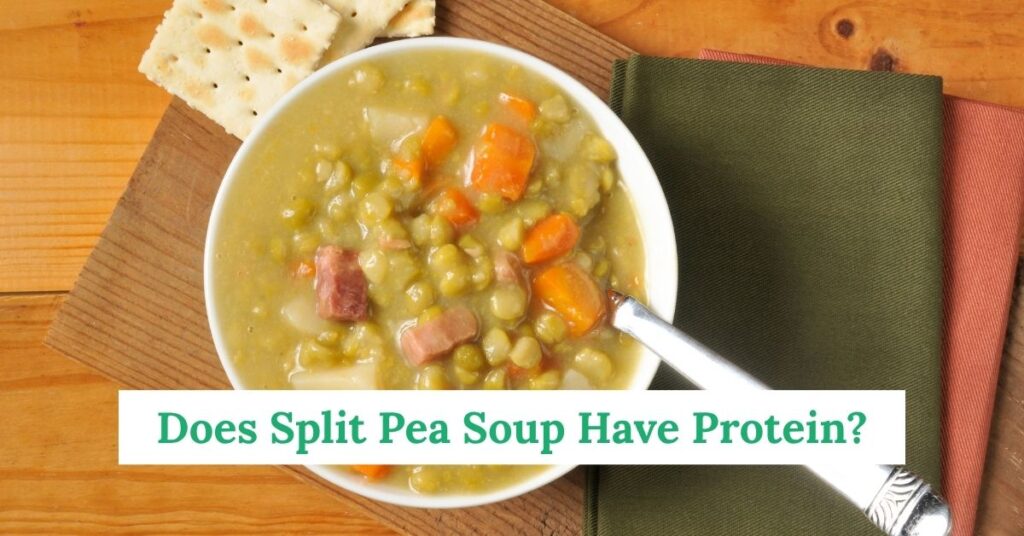
Yes, split pea soup has protein; a typical 1-cup serving provides about 9–10 g, and pea-heavy homemade bowls can reach 12–18 g.
Protein Per Cup
Typical Range
Pea-Heavy
Vegan Basic
- Split peas + veg broth
- Olive oil finish
- Blend half for body
Plant-only
Classic With Ham
- Ham bone for depth
- Lean diced ham
- Bay leaf + pepper
Meaty & smoky
Extra Protein
- Stir in chicken or tofu
- Skyr or Greek yogurt
- Keep soup thick
Boosted grams
Does Split Pea Soup Have Protein: What The Numbers Say
Short answer: yes. Split peas are pulses, the same family as lentils. They carry a generous amount of plant protein, and that carries through into the bowl. Using USDA-based data, one cup of cooked split peas delivers about 16.3 grams of protein with 231 calories. When those peas are turned into soup and blended with liquid, the protein per cup drops. A common ready-to-serve can sits near 9–10 grams, based on a typical split pea soup entry, because there are simply fewer peas in each cup of soup than in a cup of cooked peas.
Texture and dilution drive the gap. If your soup is thick, you’re closer to the whole-pea numbers. If it’s thin or stretched with broth and vegetables, you’ll land near the canned average. Meat or dairy tips the count upward. A split pea with ham version lands around 9.8 grams per cup with similar calories to the plain canned style, while a chunky brand or homemade pot with extra peas can climb well past 12 grams. These ranges line up with the USDA-referenced numbers above.
| Food (1 Cup) | Protein (g) | Calories (kcal) |
|---|---|---|
| Cooked split peas (boiled) | 16.3 | 231 |
| Split pea soup, canned, ready-to-serve | 9.6 | 178 |
| Split pea soup with ham, canned | 9.8 | 167 |
Numbers vary by brand and recipe. Use the label on a can you buy or run the math for homemade. Once you plan your daily calorie intake, it’s easy to portion bowls that fit your day while keeping protein steady.
How Split Pea Soup Builds Protein
Each pea seed stores amino acids for a new plant, so it naturally packs protein. Cooking unlocks that storehouse. In soup, you’re just dispersing the same protein through liquid. Add a ham bone or smoked turkey and you add collagen and muscle-protein from the meat. Keep it vegan and you still start with a strong base. Most cans land near 9–10 grams because manufacturers thin the texture for sipping and keep costs down by using fewer peas per cup.
Serving Size Matters
Protein is dose-based. A 1.5-cup bowl of a 9.6-gram-per-cup soup yields around 14 grams; two cups hit about 19 grams. If you scoop a thicker, pea-heavy pot that mirrors cooked peas, 1.5 cups can reach the mid-20s. That’s a lunch that actually satisfies.
What About Complete Protein?
Split peas have all nine essential amino acids, but not in the same balance as animal foods. Pairing strategies help. Serve the soup with whole-grain bread or a spoon of strained yogurt. Over a typical day, varied plant foods meet amino acid needs easily.
Protein Targets: What Counts As “Enough”
General guidance for healthy adults starts near 0.8 grams of protein per kilogram of body weight per day. Endurance training, strength work, or aging muscles push needs higher. Many people do well spreading 20–30 grams at each meal. One hearty bowl gets you a chunk of that number without leaning on meat. You can review current federal advice at the Dietary Guidelines for Americans.
Close Variant: Does Split Pea Soup Have Protein In Different Styles?
Yes, style changes the count. Canned, condensed, and ready-to-serve brands sit near the lower end. Homemade, pea-heavy pots sit higher. Adding ham or shredded chicken bumps the number per cup, while diluting with extra broth pulls it down. Dairy swirls like strained yogurt add a small lift and a creamy finish.
Brand And Recipe Factors
- Pea ratio: More peas per cup means more protein and fiber.
- Liquid choice: Stock, water, or milked legumes change thickness.
- Mix-ins: Ham, turkey, chicken, or tofu add grams fast.
- Cooking time: A long simmer breaks peas down, creating body.
- Blending: Pureeing traps starch and protein evenly in each ladle.
How To Make A Higher-Protein Bowl
Start with a 1:4 ratio of dry peas to liquid for a thicker base. Use a pressure cooker or a long stovetop simmer until the peas lose shape. Then choose an add-in that fits your plan. A cup of diced ham or shredded chicken spreads across four servings nicely. For a plant-only version, stir in white beans at the end or finish each bowl with a dollop of skyr. Blend half the pot with an immersion blender and marry it back to the chunky half for a rich texture.
Smart Pairings That Round Out The Meal
Whole-grain toast, roasted carrots, or a small salad add crunch and color. A citrus squeeze at the end sharpens flavor without extra salt. If you want smokiness without pork, try a drop of liquid smoke or a piece of smoked paprika.
Nutrition Beyond Protein
Split pea soup isn’t just about grams. The base is dense with fiber and potassium. Canned versions can be higher in sodium; look for reduced-sodium options and taste before salting. Homemade gives full control. Peas also bring folate and iron. That combo keeps a meal steady and filling.
Label Clues When You Buy
- Protein per cup: Scan the serving size. Some labels use half-cup measures. Do the quick math.
- Sodium: Aim for reduced-sodium when you can. You can add salt at the table.
- Fiber: A higher number usually signals more peas and a heartier bowl.
- Ingredients: “Split peas” near the top means a pea-forward recipe. Meat, dairy, or starchy fillers shift macros.
Protein By Bowl Size
Use these estimates to plan a meal that hits your mark. The left column matches a typical ready-to-serve can. The right column models a thick, pea-heavy homemade pot that mirrors cooked peas. Seasonings, meat, and added dairy change the totals, but the math below sets a helpful baseline.
| Serving | Canned, ready-to-serve (g) | Thick homemade, pea-heavy (g) |
|---|---|---|
| 1 cup | 9.6 | 16.3 |
| 1.5 cups | 14.4 | 24.5 |
| 2 cups | 19.2 | 32.6 |
Quick Builder: A Balanced Split Pea Meal
Step 1: Pick The Base
Choose canned when time is tight. Choose homemade when you want thicker texture and more control. Keep a bag of dry peas in the pantry. They store well and cost little.
Step 2: Add Protein If Needed
Stir in diced ham, shredded chicken, cubes of firm tofu, or white beans. Sprinkle grated cheese or swirl in strained yogurt for a small lift and a creamy finish.
Step 3: Balance The Plate
Add a slice of whole-grain bread or roasted vegetables. If you’ve planned your macros, use a kitchen scale for portions and you’ll keep the meal tidy without fuss.
Method Notes And Sources
Protein and calorie figures for cooked split peas and canned soups come from entries compiled from the USDA FoodData Central system. You can view the cooked pea record and a ready-to-serve split pea soup record at MyFoodData, which references the USDA database. The Dietary Guidelines site explains how pulses fit into the protein foods group and how to plan meals across the week.
Want a full morning lineup to go with your soup lunch? Try our high-protein breakfast ideas for simple ways to spread protein across the day.
Clear Answer On Protein In Split Pea Soup
Yes, the bowl brings protein. A canned cup gives roughly ten grams. A thicker, pea-forward pot pushes toward the mid-teens per cup, and add-ins can raise it further without changing the comfort factor. If you want steady energy at lunch, pair a 1.5-cup serving with whole-grain toast. Keep sodium in check, mind portions, and you’ll have a simple, budget-friendly meal that punches above its weight for protein and fiber.