
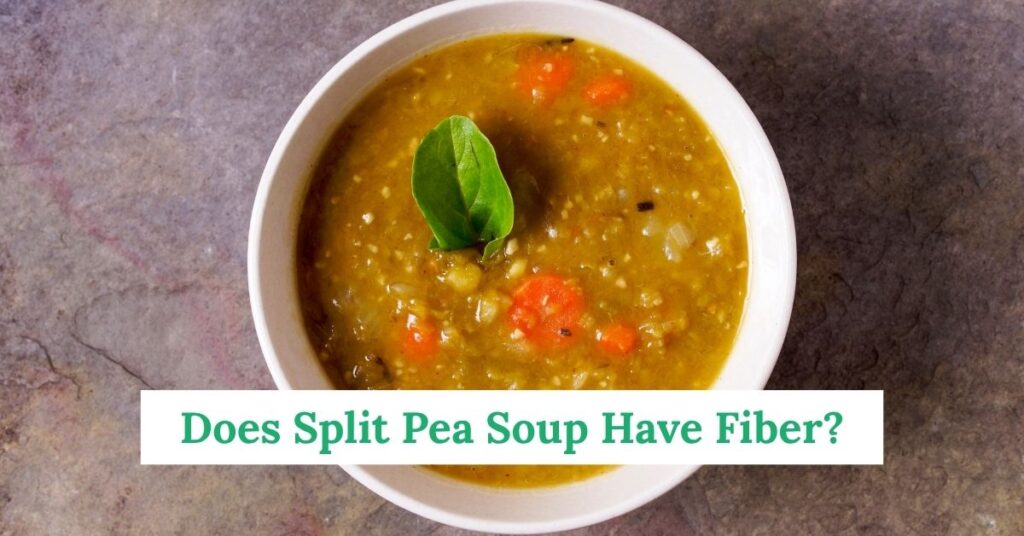
Yes, split pea soup has fiber; a 1-cup serving often delivers 10–16 grams, depending on recipe and brand.
Lower Fiber Bowl
Typical Can
Thick Homemade
Basic Homemade
- 1 lb peas to 7–8 c liquid
- Simmer till soft; partial blend
- Add onions, carrots, celery
Balanced & hearty
Reduced-Sodium Can
- Heat gently; don’t dilute
- Taste before salting
- Add greens for lift
Convenient middle
Fiber-Boosted
- Stir in cooked barley
- Fold in kale or lentils
- Keep broth on the low side
Max grams per cup
Split peas are dried field peas that cook down into a creamy, hearty base. The legumes carry both soluble and insoluble fiber, so a warm bowl does more than fill you up. You get roughage for regularity and gel-forming fiber that helps with cholesterol and steady energy. The exact gram count swings with serving size, thickness, and mix-ins.
Fiber In Split Pea Soup: How Much Per Cup?
Most ready-to-serve cans land around 11–13 grams per cup. A thick homemade pot, blended smooth and light on broth, often reaches 14–16 grams per cup. Thin, ham-heavy bowls that lean on meat and extra liquid can dip to 8–10 grams. To translate that into Daily Value, think in simple fractions: at 12 grams per cup, you’re getting about 43% of the 28-gram Daily Value. Bump the ladle to 1½ cups and you’re near two-thirds of a day’s target in one sitting.
| Style | Typical Fiber (g) | What Drives The Number |
|---|---|---|
| Thick Homemade (Vegetarian) | 14–16 | Higher pea ratio, long simmer, blended for body |
| Standard Canned (Reduced-Sodium) | 11–13 | Balanced peas and broth; labeled “ready-to-serve” |
| Thin Brothy With Ham | 8–10 | Extra liquid and meat leave less room for peas |
These ranges match what you’ll see on many labels and in home pots that center on cooked split peas. Once you spot your bowl’s style, it’s easier to slot it into your plan. Many readers sanity-check against a chart of recommended fiber intake to see how a serving stacks up.
Does Split Pea Soup Have Fiber? Serving Sizes, Brands, And Tricks
Serving size drives the experience. A café mug is usually ¾ cup, while a deep home bowl often holds 1½ cups. If the label lists fiber per 1 cup, scale up or down. Keep an eye on add-ins, too. Potatoes or carrots bring modest fiber. Extra peas, lentils, barley, or diced greens push the number higher fast.
Brands vary for good reasons: recipe ratios, purée level, and sodium targets. Ready-to-serve cans with “reduced sodium” on the front tend to keep a steady pea-to-broth balance, so fiber sits near the middle of the range. Condensed soups that you dilute at home spread the peas out, which can lower the count per cup after you add water. Homemade batches put you in control: use a higher pea-to-liquid ratio and you’ll nudge grams upward without changing the flavor profile.
Where The Fiber Comes From
Split peas carry a mix of soluble fiber and insoluble fiber. The soluble fraction thickens the broth as the peas break down, which is why the soup gains silky body without cream. The insoluble fraction stays a bit more intact, adding bulk that helps with regularity. Peas also bring plant protein, so the bowl checks more than one box for a filling lunch or dinner.
How To Read A Label Fast
Check serving size first, then fiber grams, then sodium. For a can that lists 12 grams of fiber per 1 cup, a 1½-cup pour gives 18 grams. If the label shows 9 grams per 245 grams, that’s just under 1 cup; adjust your math when you dish up. Many cans list both grams and %DV, which makes it simple to see how your bowl fits into the day.
Smart Ways To Boost Fiber In Split Pea Soup
Cook your peas until they’re soft enough to blend partially, then fold in texture. Add ½ cup cooked barley, a handful of chopped kale, or a scoop of lentils that simmered alongside the peas. Swap extra broth for water to keep the flavor, but keep the pot from getting too thin. Finish with a squeeze of lemon and fresh black pepper to brighten the earthy base.
| Serving | Estimated Fiber (g) | % Of Daily Value |
|---|---|---|
| ¾ cup | 9 | 32% |
| 1 cup | 12 | 43% |
| 1½ cups | 18 | 64% |
Homemade Vs. Canned: What Changes The Count
Blending: A longer blend doesn’t remove fiber; it just changes texture. You still get the same grams; they’re spread evenly through the bowl.
Liquid ratio: Extra broth stretches the pot. That’s handy for leftovers, but it lowers fiber per cup. If you want richer numbers, ladle thicker portions.
Add-ins: Ham adds flavor and protein but no fiber. Vegetables and whole grains add both texture and grams. If you’re watching sodium, choose unsalted broth and season at the end.
How Much Fiber Do You Need Each Day?
Adults often aim for 28 grams per day on a standard 2,000-calorie label. That figure is used on packages across the store. Many people fall short, so a hearty bowl at lunch can close the gap fast. Government pages outline foods that deliver strong numbers, and peas show up near the top for good reason.
If you want official context, the FDA lists the 28-gram figure on the label education page for the Daily Value for fiber. For ideas across food groups, the Dietary Guidelines keep practical tables of food sources of dietary fiber that make planning easier.
Safety And Digestive Comfort
Add fiber steadily, not all at once. Jumping from low to high can feel rough. Spread grams across the day, and sip water with the meal. If you’re new to legumes, start with a smaller bowl and build up across a week. A slow simmer for aromatics like onion, garlic, and celery also helps the pot sit well. Skim visible fat from meats, and go easy on salty cured cuts when you want the peas to stay in charge.
Quick Reference: Pea, Soup, And Label Terms
Split Peas
Dried peas that are hulled and split. They cook faster than whole peas and give the soup its creamy body without dairy.
Ready-To-Serve
A can that’s already at eating thickness. Heat and eat. Fiber listed per serving reflects what you’ll pour into the bowl.
Condensed
Thicker base that you dilute at home. After adding water, fiber per cup is usually lower than the number on the can’s condensed serving.
Simple Pairings For A Fiber-Rich Meal
Serve with whole-grain toast, a crisp apple, or a side salad with chickpeas. Those add-ons are easy ways to move closer to your target while keeping the meal balanced.
What About Protein, Sodium, And Calories?
Protein: A cup of split pea soup usually brings 7–12 grams, tied to thickness and recipe.
Sodium: Canned bowls can be salty. Look for reduced-sodium labels and taste before adding more. Homemade pots are easier to season late.
Calories: A cup lands near 180–230, again tied to dilution and mix-ins. If you’re chasing more fiber without extra calories, skim fat after chilling and keep the focus on peas and vegetables.
Bottom Line
Split pea soup is a reliable fiber pick. One cup usually brings double-digit grams that move you toward your daily target. Adjust thickness, choose smart add-ins, and pour the serving that fits your needs. Want a deeper read that pairs well with this soup? Try our foods to lower cholesterol guide.