
Our readers keep the lights on and the coffee maker working hard! As an Amazon Associate, I earn from qualifying purchases.
Specs are compiled from manufacturer listings and verified buyer reviews and can change over time — please confirm the key details on the product page before buying.
The right pair of trekking boots should feel broken-in from the first step, not like a punishment you endure for weeks. This guide settles the break-in and sizing debate with real owner experiences and hard specs.
I’m Mohammad — the founder and writer behind Calories Fit. This guide is built by comparing the manufacturers’ published specifications and the patterns across verified customer reviews, so you get each pick’s real strengths and trade-offs instead of marketing spin.
From waterproof membranes to sole grip and true-to-size fits, here is everything you need to choose your next pair of women’s trekking boots without wasting money on a boot that never feels right.
Our Picks at a Glance

How To Choose The Best Women’s Trekking Boots
Your ankles, knees, and entire day on the trail depend on fit, waterproofing, and the sole. A boot that fits but soaks through at the first creek crossing is a letdown, and a waterproof boot that rubs blisters is just as bad. Get the balance right, and your feet stay comfortable for hours on the trail.
Waterproofing: Full Membrane vs. Resistant Leather
A fully waterproof boot uses a liner like Gore-Tex or B-DRY (a thin membrane inside the boot that lets sweat escape while blocking outside moisture). Water-resistant leather, by contrast, beads off light rain but will eventually soak through in heavy downpours or deep puddles. If you hike in wet climates, snow, or stream crossings, a membrane boot is the safer call — and the review data shows that buyers who regularly push through rain and mud are the ones who consistently rate their boots highest.
Fit: Size Up, Go Wide, and Mind the Toe Box
Fit is where most trekking boots fail their owners, and the pattern across thousands of reviews is striking: boots that run narrow are the most common source of returns. A wide toe box lets your toes spread naturally on descents, and a half-size up leaves room for the thick wool socks you will wear in cold weather. If you have wide feet, high arches, or a narrow heel, your shortlist should start with models that explicitly accommodate them — this alone separates the boots you wear for years from the ones you send back.
Sole and Drop: Matching the Boot to the Terrain
The outsole’s lug pattern and the heel-to-toe drop determine how the boot feels on steep ground. A deeper, more aggressive tread grips loose rock and mud, while a lower drop (the height difference between heel and forefoot, measured in millimeters) feels more natural and reduces strain on your calves. Vibram outsoles are the industry standard for traction, but not all Vibram compounds are equal — some prioritize grip on wet rock, others prioritize durability on dry trails. Match the sole to the terrain you actually hike, not the one you dream about.
Quick Comparison
| Model | Best For | Waterproofing | Weight | Drop | Amazon |
|---|---|---|---|---|---|
| Columbia Transverse Hike★ Best Overall | Zero break-in comfort | Waterproof-breathable | Lightweight | — | Amazon |
| Oboz Bridger Mid B-DRYArch Support King | Arch support on long days | B-DRY membrane | 19.0 oz / 538 g | 12 mm | Amazon |
| Danner Mountain 600Recraftable Pick | First-day comfort in the backcountry | Gore-Tex liner | — | — | Amazon |
| Topo Trailventure 2 WP | Roomier toe box fans | eVent inner-bootie | 13.1 oz (W7) | 5 mm | Amazon |
| Salomon Quest Element GTX | Rocky, unstable terrain | Gore-Tex | — | — | Amazon |
| KEEN Hightrail Mid | Fast-moving day hikes | Water-resistant leather | Lightweight | — | Amazon |
| KEEN Greta 2 | Winter and snow | Waterproof leather | Lightweight | — | Amazon |
| Danner Logger 917 | Trail-to-town transitions | Gore-Tex barrier | — | — | Amazon |
| La Sportiva Nucleo High II | Multi-day backpacking | Gore-Tex | 13.4 oz / boot | — | Amazon |
| SCARPA Terra GTX | Hikers with bunion or wide forefoot | Gore-Tex Performance Comfort | 1 lb 1 oz (1/2 pair) | — | Amazon |
| Lowa Renegade GTX Mid | All-day versatility on any terrain | Gore-Tex lining | 1 kg | — | Amazon |
In‑Depth Reviews
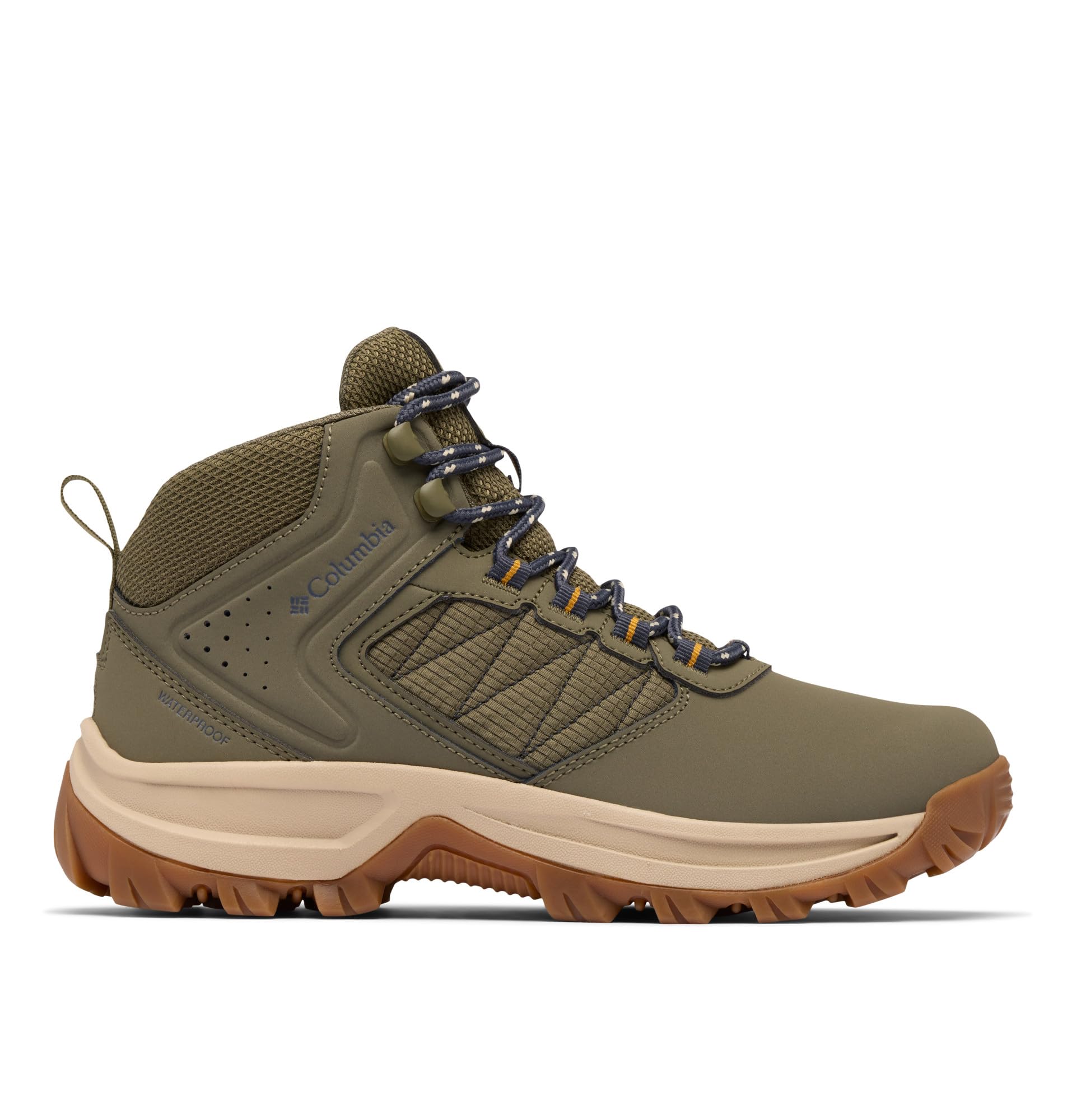
1. Columbia Women’s Transverse Hike Waterproof Hiking Boots
Our pick — over 4.5★ from 650+ verified ratings; the strongest balance of quality and price.
The crowd-pleasing boot that skips the break-in and hits the trail running
Owners describe this boot as ready straight from the start — the phrase “no break-in needed” appears again and again from people who laced them up and immediately walked miles. One owner took them directly from the box and traversed Ireland and Scotland through rain and cobblestone, and the boots handled it all with no discomfort. This out-of-the-box comfort is the defining quality, backed by a waterproof-breathable construction and a lightweight yet durable leather build.
On fit, the story is remarkably consistent: true to size, with particular praise for wide feet — the kind of fit that matters when you are logging hours on wet trails. An Alaska traveler confirmed the waterproofing held up through the trip, keeping feet “warm and dry” even without heavy arch support. The boot’s grip in mud earned its own shout-outs, so you are not just dry, you are stable.
Compared to stiffer leather hikers that demand weeks of wear to soften up, this is the pair that gets you hiking this weekend. The one trade-off in the data: a few owners note the boot runs narrow for some feet, and a small minority found it heavy with a stiff ankle collar. For most buyers, though, the comfort, quality, and waterproofing win out — this is the pair worth starting your search with.
What wins people over
- No break-in period — comfortable from the very first wear
- True-to-size fit, especially for wide feet
- Reliable waterproofing that holds up in rain and mud
Where to be careful
- Some feet find it runs narrow with a stiff ankle collar
- Not the most supportive arch in the lineup
Reach for these if: you want a waterproof boot that feels broken-in from the first step and fits wide feet without hunting for a special size.
Look elsewhere if: you need serious arch support or have a foot that needs a roomier, wider fit.
2. Oboz Women’s Bridger Mid B-DRY Hiking Boot
The serious hiker’s favorite where arch support steals the show
The Bridger Mid has been a mainstay for hikers who measure their days in miles, and the name that keeps coming up is the O-FIT insole (a molded footbed that one owner credits with instantly fixing sore feet). The proprietary insole is molded to each shoe for a fit and feel that this brand is known for, and the 12 mm heel drop (the height difference between heel and forefoot) gives you a stable, supported stance on steep descents. At 19.0 oz / 538 g, it is lighter than it looks, which makes the support feel even more impressive.
The B-DRY waterproofing (a membrane that lets sweat escape while blocking outside moisture) and the Granite Peak outsole with a lightweight TPU chassis (a tough plastic frame) and rubber toe guard take on roots and rocks with confidence. Owners repeatedly describe the quality as comparable to pricier boots, with one long-term hiker buying a second pair after “a lot of use.” The deep tread and reinforced toe and heel also earned praise for stability with no heel slippage.
But the fit is where you need to pay attention: the pattern across reviews is consistent — this boot runs narrow, and the advice is repeated over and over: order a half size up and go wide. A size 6.5 owner found it “extremely narrow” and rigid, while others confirmed the wide version is the answer. This is a superb boot for narrow feet or anyone willing to size up; if you have a naturally wide foot, the fit may fight you.
The proven strength: arch support so good one owner said it “fixed my sore feet” — the stuff of legend for anyone with flat or tired arches.
The honest catch: the narrow fit is the recurring gripe; sizing up a half is practically mandatory, not optional.
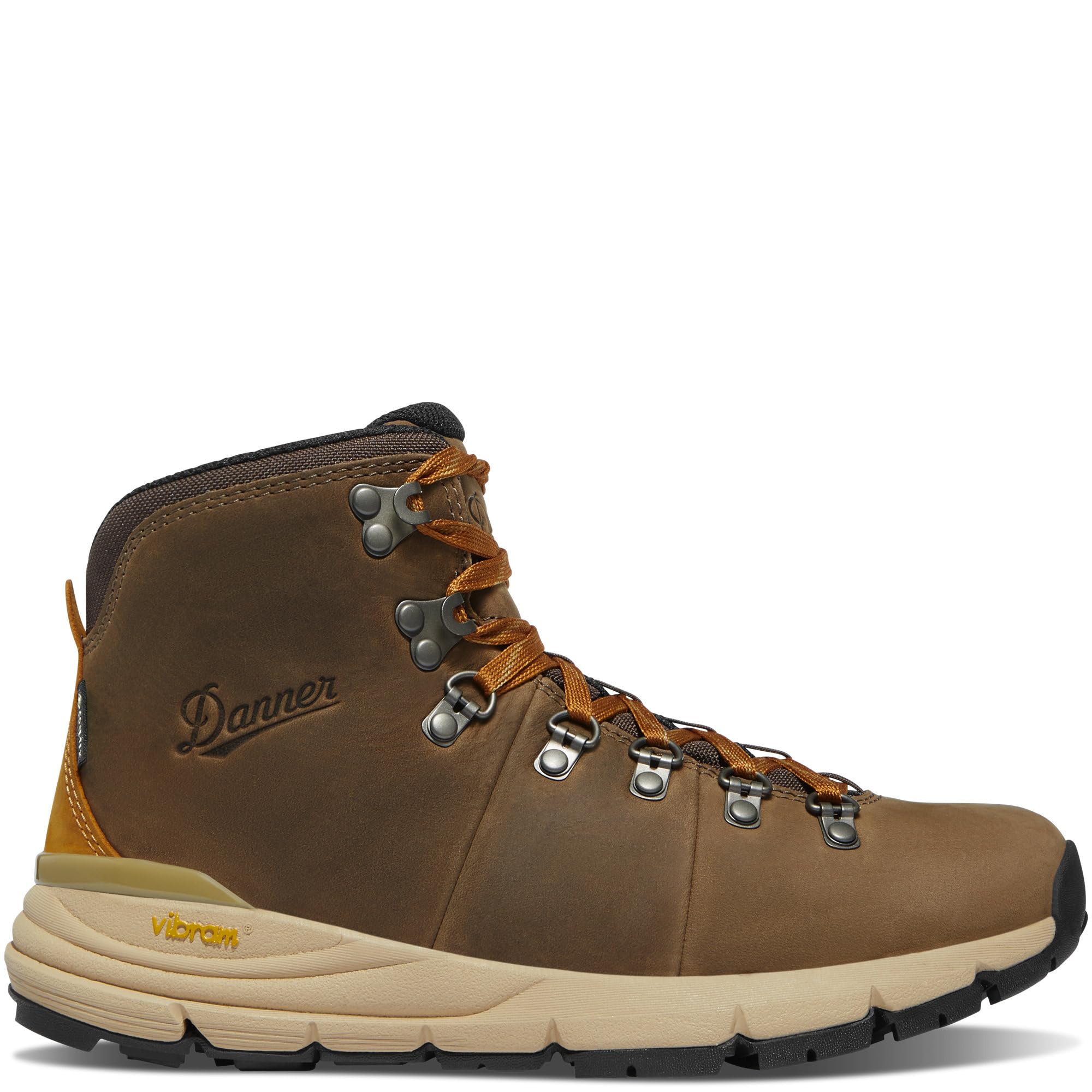
3. Danner Mountain 600 Hiking Boots for Women
A recraftable workhorse that grips slab rock and long descents
The thing that sets the Mountain 600 apart is that it is the first recraftable Mountain 600 — Danner’s team can resole and recondition the boot to keep it on the trail for years. That is a durability promise you do not hear from most brands, and it lands on top of a 100% waterproof Gore-Tex liner made from recycled materials. The rubberized EVA midsole and triple-density comfort footbed fight fatigue by absorbing shock, which owners feel on long, rocky days.
The Vibram rubber outsole with Megagrip technology (a sticky rubber compound) and self-adapting lugs is the traction highlight, and the reviews back it up with real terrain: a 20-mile Yosemite hike including Half Dome at 5,000 feet of elevation, over wet and rocky ground, with the tread holding “superb grip” the whole way. Owners describe the fit as true to size with room for thick socks, and the quality of the construction earns consistent praise — one owner said the boots held up “beautifully without needing breaking in.”
The honest trade-off is the one durability complaint in the data: after 9 months, one owner reported the leather split at the instep eyelet and the boot was “no longer waterproof.” It is a single report, not a pattern, but it is worth knowing that even a premium leather boot needs care. For anyone who wants a supportive, grippy, repairable boot for tough terrain, this is a strong mid-to-premium pick.
Why it earns its keep
- Recraftable design extends the life of the boot for years
- Vibram Megagrip outsole with self-adapting lugs grips wet rock
- True-to-size fit that accommodates thick socks
Worth knowing
- One owner saw the leather split at the eyelet after 9 months
- Premium price reflects the recraftable build and Gore-Tex liner
Best for: hikers who want a supportive, repairable boot for technical terrain and wet rock.
Think twice if: you want a budget option — the resole-able construction and Gore-Tex come at a premium.
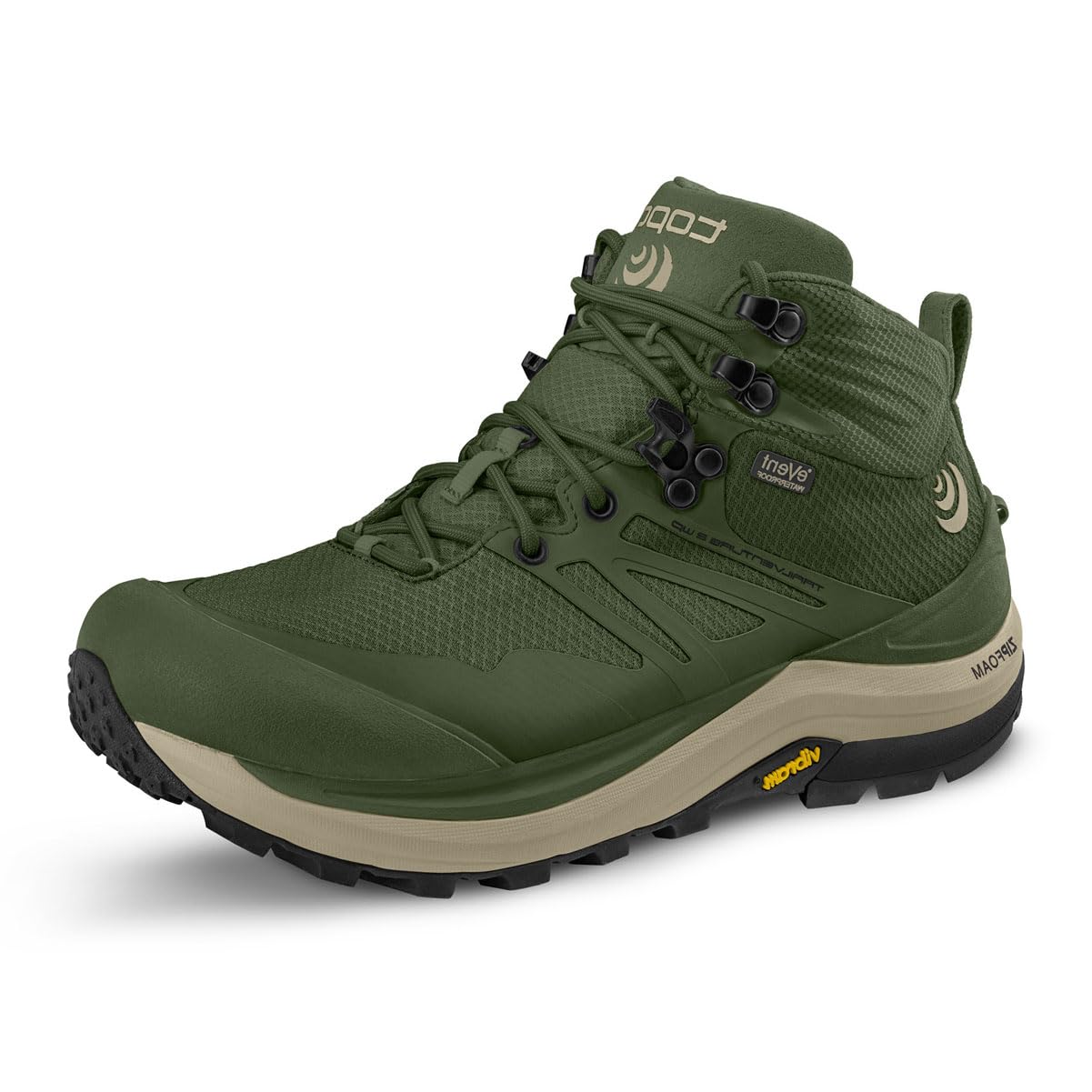
4. Topo Athletic Women’s Trailventure 2 WP
A featherweight boot that lets your toes spread like a trail runner
If your toes feel cramped in most boots, the Trailventure 2 is the answer others kept searching for — its anatomical toe box lets toes spread naturally, and owners with Morton’s neuroma or bunions found genuine relief. The 5 mm drop is the key spec here: it prevents toe bruising on descents that owners experienced with higher-drop boots. The boot weighs just 13.1 oz (W7), which puts it in trail-runner territory while still offering ankle coverage.
The waterproofing comes from a full eVent inner-bootie construction that locks water out, and the Vibram Megagrip outsole delivers grip on wet and slippery surfaces — one owner’s feet stayed dry through a rainy second hike. A full-length ESS rock plate shields your soles from sharp rocks and roots, and the OrthoLite performance insole adds odor resistance underfoot. Owners who sized up a half found the fit “pure bliss,” with high arches and narrow heels both accommodated without extra insoles.
The catch is durability and fit consistency. One owner’s upper tore after just 5 wears, and another noted the fit runs small — you will almost certainly want to size up. The flexible sole is great for comfort but offers less ankle support than a stiffer boot, so it is better for fast, light days than technical scrambling. For comfort-focused hikers who want a roomy toe box, this is a unique and worthwhile pick.
The standout trait: a toe box that ends the search for hikers with wide forefeet, bunions, or Morton’s neuroma.
The durability flag: a minority of owners saw the upper tear after light use, so treat it as a light-and-fast boot, not a bushwhacker.
5. Salomon Women’s Quest Element Gore-Tex

The go-to for hikers who live on unstable, rocky paths
Salomon’s Quest line has a loyal following for a reason, and this is the boot that dedicated hikers name as their “go-to” on unstable, rocky terrain. The premium Nubuck leather upper is paired with GORE-TEX protection and a higher cut that guards your ankles against obstacles, while the lightweight construction and stabilizing chassis keep you agile. It is built for backpacking adventures where the path is unknown.
The fit gets a key note from owners: the toe box runs wide, which is great for wide feet but not ideal for slim ones. Stability is the recurring theme — owners describe it as stable straight from the start, with one buying a second pair after wearing the first on countless hikes. For snow walks and cold conditions, the boot earns consistent praise.
The tough part of the review data is the ankle support: a few owners found the higher cut bruised their ankle bone, with one reporting the discomfort persisted even after six weeks of breaking in. It is a fit-dependent issue — the same boot that feels perfectly stable for one foot can grate on another. If you have sensitive ankles, this is a boot to try on before committing; if you have sturdy ankles and love rocky terrain, it is a top contender.
The loyal following: return buyers call it their favorite — a sign the build and stability hold up over the long haul.
The fit warning: the higher cut can bruise ankle bones for some wearers; the wide toe box suits wide feet best.
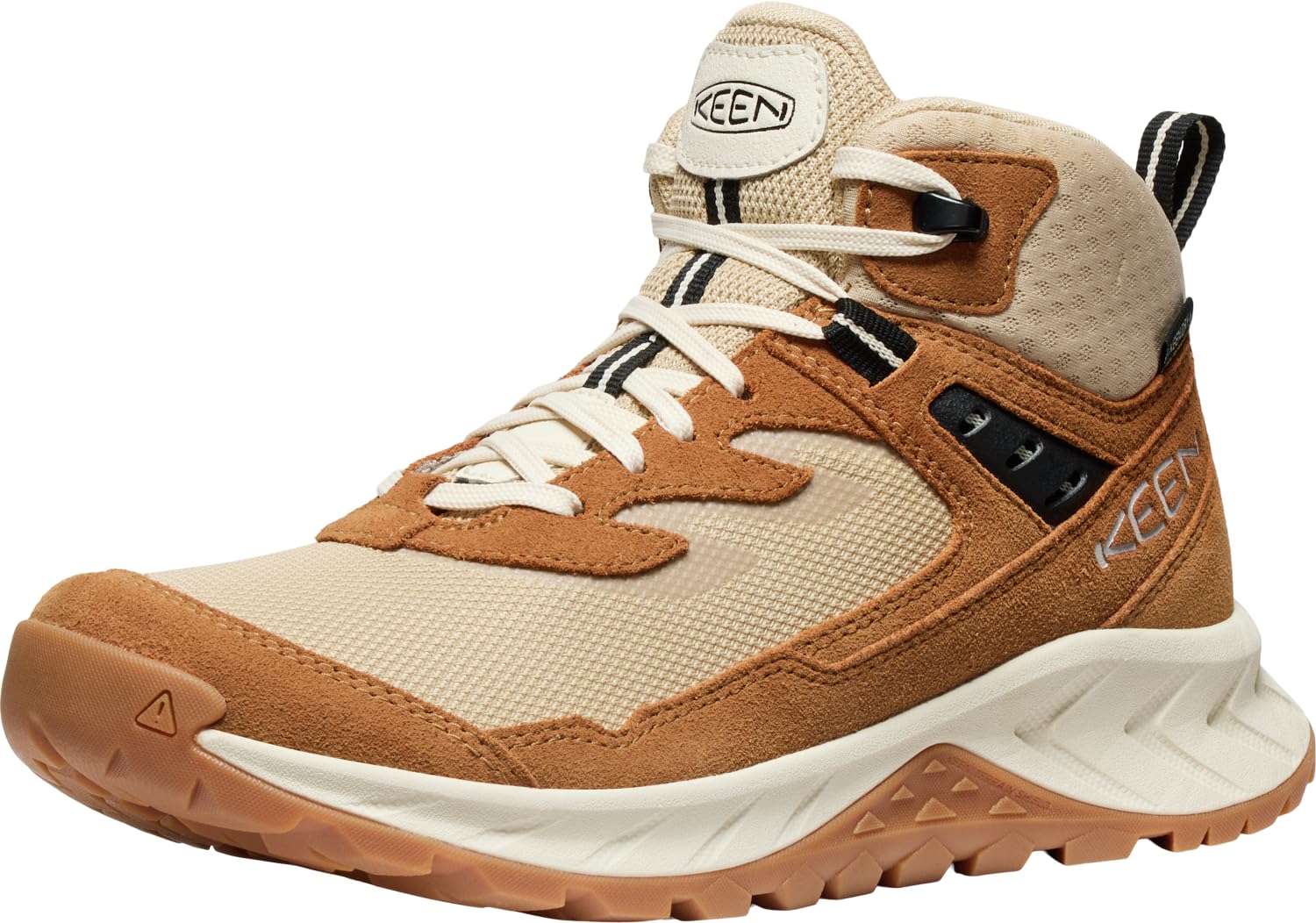
6. KEEN Women’s Hightrail Mid Height Hiking Boots
Sneaker comfort fused with leather durability for quicker days on the trail
KEEN built the Hightrail for hikers who want a classic leather boot but move at a faster pace — a sneaker-like design fused with the durability of water-resistant leather and the technical benefits of a proper hiking boot. The KEEN Contoured Fit curves with the natural shape of your foot for a more secure feel, and owners confirm it: “broken in” right out the box, with one owner praising the comfortable but structured ankle support and low break-in time. It excels on slippery rocks, with great grip that owners tested on wet Pacific Northwest creeks.
At a light weight with a wide toe box, this is a boot that disappears on your foot — one owner comfortably handled a rocky 5-mile hike in them immediately, and another swapped in orthopedic insoles with ease. The traction and stability get consistent praise, and the water-resistant leather kept feet dry through cold creek crossings.
The data splits on two points: breathability and aesthetics. One owner returned them because the boots were “absolutely unbreathable” — feet sweat profusely even at 65°F, making them feel clammy like rain boots. Others found the appearance “not very cute,” though reviews are genuinely mixed on looks. If you run warm and hike in the heat, the breathability issue is real; for fast day hikes in cooler weather, the comfort and grip win.
Where it shines
- Comfortable with zero break-in, ready for the trail immediately
- Excellent traction on slippery rocks and wet terrain
- Lightweight build with a roomy KEEN toe box
The drawbacks
- Breathability is weak — feet can get clammy and sweaty
- Looks divide opinion, and arch support is modest
Grab these for: fast day hikes and creek crossings where grip and instant comfort matter more than ventilation.
Pass if: you hike in hot weather and your feet run warm — you will feel the lack of airflow.
7. KEEN Women’s Greta 2 Classic Waterproof Insulated Boots
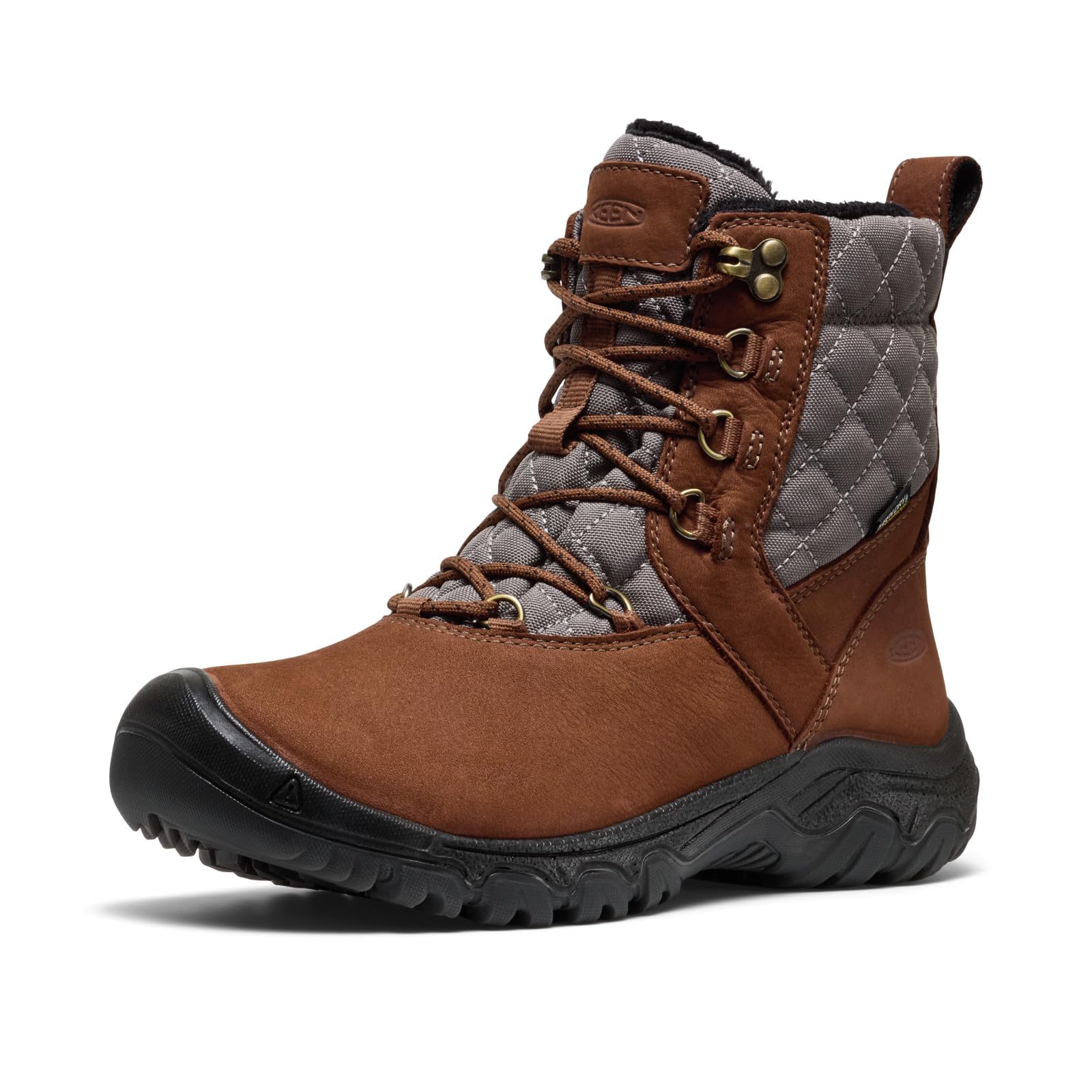
Puffy-jacket warmth wrapped in a leather boot made for snow
If your winters involve ice and snow, the Greta 2 is a different animal — a waterproof leather hiker with 200g of insulation and a quilted collar, built for cold-weather comfort. Owners praise its performance in ice and snow, with one saying the boots handle Buffalo winters without slipping or feeling unstable. It is the rare insulated boot that stays warm without overheating, with the inside material described as breathable.
The fit story is overwhelmingly positive: true to size with room for thick socks, and a roomy toe box in the wide version. One owner wears an 8 and ordered an 8.5 to fit Smartwool socks, finding the fit “perfect” with space to spare. The direct-attach construction is glue-free, which adds durability, and the whole boot feels lightweight despite the insulation — one owner called it “not too bulky” while keeping feet toasty.
The recurring complaint in the data is the laces: multiple owners note they are too short to lace all the way up, which is an easy fix but a real annoyance. A minority also found the sole too flexible with “zero support, like a slipper, not a snow boot.” For most owners, though, this is a warm, dry, stylish winter boot that earns compliments — the fig color especially. It is for winter walks and snow days, not technical winter hiking.
The winter verdict: a warm, dry, lightweight snow boot that owners genuinely love for cold-weather comfort.
The honest limit: flexibility means less support for serious terrain, and the laces come up short.
8. Danner 6″ Logger 917 Women’s Waterproof Gore-Tex Hiking Boots
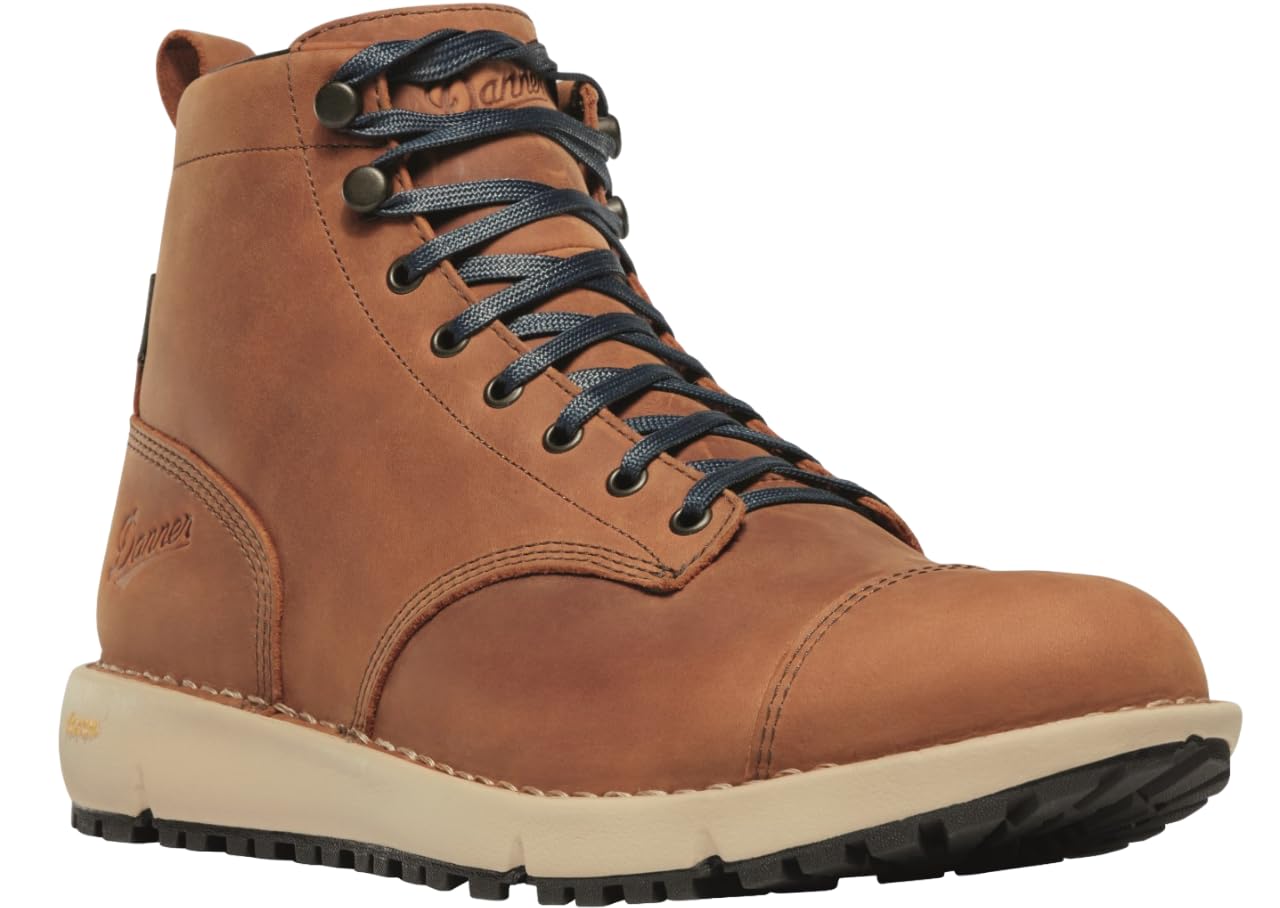
A handsome logger-style boot with sneaker comfort and Gore-Tex protection
The Logger 917 is Danner’s answer for hikers who want a boot that transitions from trail to town without looking like a clunky hiker. The suede upper is lightweight, the Vibram 917 outsole grips slick rock and loose dirt, and the removable OrthoLite footbed delivers cushioning for long miles. A full Gore-Tex waterproof barrier keeps feet dry in all weather, and the stitchdown construction is built to last with a recraftable design.
Owners uniformly praise the comfort, with one calling it a “great boot for vacation when you need a boot with a sneaker comfort” — ideal for cool, wet Alpine weather with all-day support. The fit runs small, so sizing up a half is the consistent advice, and it accommodates wider feet that have historically been too narrow in Danners. One wider-footed owner called them “worth every penny.”
The two honest caveats: the color is a thin surface layer that “wipes off easily” when wet, and a few owners noted the waterproof membrane makes feet sweaty on warm days. The “Made in USA” claim also drew criticism from one owner who found the boots made in Vietnam. None of this changes the core comfort story, but it is worth knowing before you buy for the color and the breathability.
The comfort case: an attractive, Gore-Tex-lined boot with sneaker-like feel and a recraftable build for long wear.
The real trade-offs: the surface color can scuff off easily, and the membrane runs warm in hot weather.
9. La Sportiva Women’s Nucleo High II GTX Hiking Boot

A featherlight boot that carried hikers through the Grand Canyon blister-free
The Nucleo High II is the boot that long-distance hikers swear by, with owners taking it through the Grand Canyon Rim-to-River and 25 miles without a single blister. At 13.4 oz per boot, it is remarkably light for a high-cut leather hiker, and the waterproof Gore-Tex lining keeps feet dry while the Vibram Nano outsole grips loose rock and gravel. Owners describe it as “the lightest, most durable, most comfortable boot” for arthritic feet and knees, with minimal stress on joints.
The fit is flexible, accommodating various foot widths with a roomy toe box, and owners consistently say there is zero break-in needed — it is comfortable right from the start. One owner has bought three pairs over the years, with the first lasting years with annual insole replacement. Its light weight and all-day support keep feet comfortable on rugged terrain, even at 9,000 feet of elevation.
The durability note in the data: the plastic speed hooks are a small step down from metal versions on some other models, and a few owners found lacing slightly harder because of it. For most, this is a minor gripe on an otherwise exceptional boot. If you carry an overnight pack and want a boot that disappears on your foot, this is a top-tier choice.
What makes it special
- Extremely lightweight for a leather boot at 13.4 oz per boot
- Zero break-in, with owners hiking 25 miles blister-free
- Roomy toe box that fits various foot widths
Small compromises
- Plastic speed hooks are a step down from metal on some rivals
- Premium price reflects the weight savings and Gore-Tex build
Choose this for: multi-day backpacking and long hikes where weight and blister-free comfort are everything.
Skip if: you are on a tight budget — the featherlight build and Gore-Tex come at a premium.
10. SCARPA Women’s Terra GTX Hiking Boots
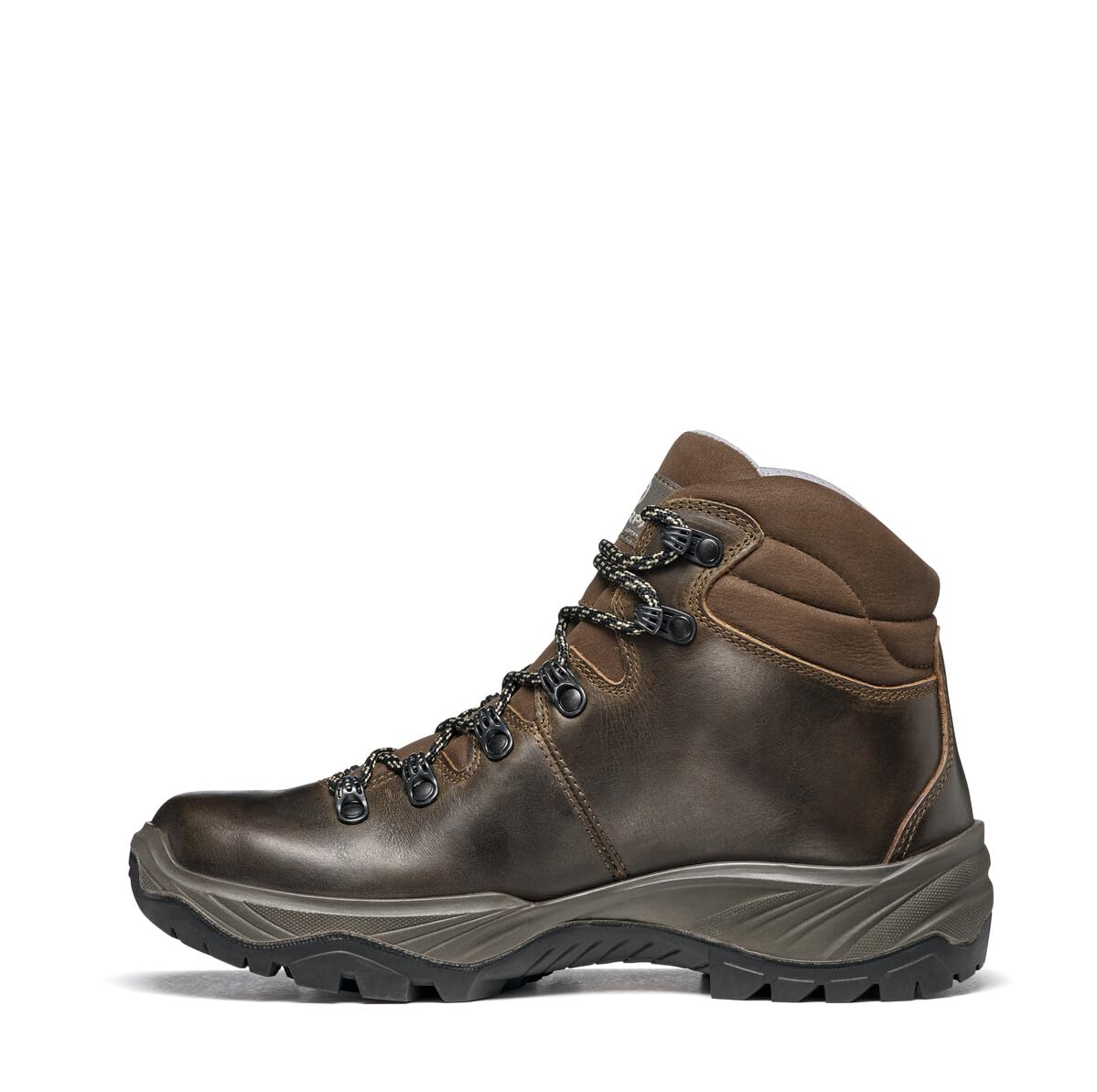
The fit-first boot for bony heels, wide forefeet, and bunion-prone toes
The Terra GTX is the boot that owners with “the worst feet ever” finally stopped searching for, with a fit that accommodates a bony narrow heel, a wide forefoot, and bunions all at once. The 2.0 mm full grain leather upper is constructed stiff enough to be thorn-proof — one owner on Mt. Kenya confirmed “no thorns will go into this boot” — while the Vibram Energy II / XS Trek outsole provides traction on mixed terrain. The Gore-Tex Performance Comfort lining keeps feet dry without the clammy feel of some membranes.
Owners describe the boots as comfortable straight from the start with “no rub or blister marks at all,” and the fit works with orthotics for those who need extra support. At 1 lb 1 oz for half a pair (size 38), it is noticeably lighter than many leather hikers, which one owner appreciated after finding Merrells “way too heavy.” The fit runs large, so sizing down is the common advice.
The honest trade-off: the boot runs warm, making it “too hot in warm weather” and best suited to cooler climates. One owner also found the grip “sketchy on descent” on Mt. Kenya without the Vibram’s best wet-rock compound. For hikers who prioritize fit and comfort for wide, finicky feet in cooler conditions, this is a standout — just respect the sizing and the warmth.
The fit magic: a last that actually works for wide forefeet, bunions, and bony heels without rubbing.
The weather limit: runs warm in hot conditions and the grip is better on dry than slick rock.
11. Lowa Women’s Renegade GTX Mid Hiking Boot

The decade-proven all-rounder that adapts to female feet specifically
The Renegade GTX is the boot that owners keep for a decade — with some reporting 15 years of near-daily use before the boot finally gave out. The synthetic upper is “specially adapted to the female anatomy,” which is why the fit feels right where other boots feel generic. A waterproof, breathable GORE-TEX lining keeps feet dry, with owners noting water does not creep in the top, and the medium shaft edge offers ankle support with a padded, comfortable hold.
The versatility is the defining trait: owners use it for everything from work to daily hikes, describing it as a “wear all day” boot that is comfortable right from the start. The removable, pre-shaped insole accommodates orthotics, and the roomy toe box gives extra space without feeling sloppy. Return buyers are common — one owner is on her second pair after a decade with the first.
The catch in the data is a real one: the fit is inconsistent. While some find it “perfect with extra room,” others report it runs too narrow, and durability draws mixed feedback. On a Nepal trek, the waterproofing failed after 6-7 hours in snow and the flexible sole felt tiring on scree. For day hikes with lighter loads, the versatility and comfort win; for heavy backpacking or deep snow, the flexible sole and membrane have limits.
What wins owners over
- A decade of daily use is the norm, not the exception
- Specifically adapted to the female foot with padded ankle hold
- Versatile enough for work, hiking, and everyday wear
The limitations
- Fit runs narrow for some feet, so sizing varies
- Flexible sole and membrane have limits in deep snow or with heavy packs
Reach for these if: you want one versatile boot that handles daily hikes, work, and casual wear for years.
Consider alternatives if: you carry heavy loads or hike in deep snow — the flexible sole shows its limits there.
Understanding the Specs
Waterproofing Membranes
Gore-Tex and B-DRY are thin liners inside the boot that let sweat escape while blocking outside water — the difference between “resistant” and truly waterproof. A boot with a membrane like Gore-Tex will keep your feet dry through stream crossings and heavy rain, while water-resistant leather will eventually soak through. The trade-off is breathability: a fully waterproof boot runs warmer, which matters on hot summer trails.
Heel-to-Toe Drop
The drop is the height difference in millimeters between the heel and the forefoot. A higher drop like 12 mm tilts you forward and feels more supportive on descents, while a lower drop like 5 mm feels more natural and lets your toes spread, reducing calf strain. It depends on personal preference and the terrain you hike most — lower drops suit fast, light hiking, while higher drops give more stability under load.
FAQ
Should you size up when buying trekking boots?
What is the difference between waterproof and water-resistant boots?
How long does a good pair of trekking boots last?
Does a higher drop mean better ankle support?
What does a break-in period actually involve?
Are wide-fit trekking boots worth the extra search?
How should trekking boots fit around the ankle?
Can you use trekking boots for everyday wear?
Final Thoughts: The Verdict
For most hikers, the women’s trekking boots winner is the Columbia Transverse Hike because it delivers waterproof comfort straight from the start at a price that makes it an easy first choice. If you need serious arch support and do not mind sizing up, the Oboz Bridger Mid is the one to grab. And for multi-day backpacking where every ounce counts, the La Sportiva Nucleo High II — at just 13.4 oz per boot — is the pair that disappears on your foot so you can focus on the trail ahead.
How We Picked
We do not accept paid placement. Every pick is matched to a real buyer and a real use-case; we do not hands-on test units.
Sources & Methodology
Specifications: manufacturer listings and product documentation. Review insights: verified customer reviews, as of August 2026. Pricing: not shown on this page (it changes often); check the current price via the retailer link.
As an Amazon Associate, Calories Fit earns from qualifying purchases. This does not affect which products we feature.