
Our readers keep the lights on and the coffee maker working hard! As an Amazon Associate, I earn from qualifying purchases.
Specs are compiled from manufacturer listings and verified buyer reviews and can change over time — please confirm the key details on the product page before buying.
Every down-dog and kneeling lunge can turn into a wince when your knees, elbows, or wrists meet a hard floor. The right cushion changes all that—it turns a painful plank into a pose you can hold, a kneeling stretch into something you actually look forward to. This guide lines up the best yoga knee cushion choices across every thickness and budget, so you can finally stop bracing for impact and start focusing on your form.
I’m Mohammad — the founder and writer behind Calories Fit. This guide is built by comparing the manufacturers’ published specifications and the patterns across verified customer reviews, so you get each pick’s real strengths and trade-offs instead of marketing spin.
The focus is squarely on the best yoga knee cushion — from the 15mm extra-thick studio favorite that nearly three thousand owners swear by to the 1.5-inch plush mega-pad designed specifically for seniors and rehab—and every practical choice in between.
Our Picks at a Glance


How To Choose The Best Yoga Knee Cushion
Your knees have zero fat padding, so a hard floor delivers the full shock straight to the joint capsule. A cushion acts as your artificial fat pad. Here are the three key specs to get right.
Thickness and Density: The Cushioning balance
Thin pads (around 13mm to 15mm, or roughly half an inch) are ideal for balance and stability — you stay connected to the floor while relieving pressure. Mega-thick pads (1 inch or more, like 25mm) eliminate hard surface contact entirely. For most yoga poses and floor exercises, a pad between 15mm and 24mm hits the balance: enough give for comfort without wobbling.
Material Matters: Foam Feel and Longevity
Most cushions use NBR foam (nitrile butadiene rubber—a dense, sweat-resistant rubber foam), TPE (thermoplastic elastomers—a soft, lightweight plastic foam), or POE (polyolefin elastomer—a firmer, less-spongy foam). NBR is dense, durable, and closed-cell — meaning it resists sweat and smells. TPE is softer to the touch but can wear faster under heavy use. POE feels like a firmer, less-spongy foam that holds its shape well over time.
Non-Slip Grip and Surface Texture
If the cushion slides while you shift weight, it isn’t working. Look for a firm underside texture that grips your yoga mat or the floor. A textured or micro-embossed surface on top also stops your hands and knees from slipping during sweaty practice. A non-slip ridge pattern is more reliable than a plain smooth surface.
Quick Comparison
| Model | Best For | Thickness | Dimensions | Material | Amazon |
|---|---|---|---|---|---|
| SukhaMat★ Best Overall | Overall Best Balance | 15mm (0.63″) | 24″ x 10″ | NBR Foam | Amazon |
| ILILIPremium Pick | Foldable Portability | 13mm (0.5″) | 24″ x 17″ | TPE | Amazon |
| IUGABest Grip | Non-Slip Grip | 13mm (0.5″) | 25.6″ x 10.3″ | TPE | Amazon |
| MRO | Eco-Friendly NBR | 15mm (0.6″) | 24″ x 10.6″ | NBR Foam | Amazon |
| Kinesis | Knee Support | 15mm (0.6″) | 24″ x 9.8″ | NBR Foam | Amazon |
| Hungdao (6-Pack) | Multi-Pad Convenience | 20mm (0.79″) | 7.87″ x 7.87″ | EVA Foam | Amazon |
| Impulse | Maximum Thickness | 25mm (1″) | 24″ x 12″ | NBR Foam | Amazon |
| Feetlu | Folding Compact Design | 13mm (0.5″) | 24″ x 12″ | POE Foam | Amazon |
| WUWAN | Plush 1.5″ Cushion | 38mm (1.5″) | 17″ x 12″ | TPE | Amazon |
In‑Depth Reviews
1. SukhaMat Yoga Knee Pad Cushion
Our pick — over 4.5★ from 3,000+ verified ratings; the strongest balance of quality and price.
The 15mm extra-thick knee pad with a crowd of nearly three thousand owners behind it.
This 15mm pad gives you a thicker layer at 15mm versus the 13mm IUGA below — and you feel that difference when you push through a long downward-dog. The 100% high-density NBR foam (nitrile butadiene rubber — a dense, sweat-resistant closed-cell foam) measures 24 inches wide by 10 inches long. That covers both knees or fits under your elbows at once. Owners describe it as firm enough for support yet plush enough for “boney knees.” The pad weighs only 6.4 ounces and rolls up easily to slide into a yoga bag. A small quirk: it arrives rolled up and may want to curl at the edges until you store it rolled in the opposite direction for a few days. The NBR foam is non-toxic, free of latex, and closed-cell so it won’t absorb sweat — just wipe it clean with a damp cloth. Reviewers consistently call it the right density for sensitive joints, with the biggest praise going to its durability across years of daily use. Compared to the 13mm ILILI, the SukhaMat is thicker but also more stable under fast transitions.
plush thick cushion
- 15mm high-density NBR foam strikes the best balance of softness and stability
- Lightweight at 6.4 ounces, easy to carry to class
- Lifetime guarantee from a Florida-based studio brand
slight initial smell
- Comes rolled tightly; may need reshaping to lie flat at first
- Some find the fabric top a bit slippery for bare knees during fast flows
best for sensitive knees: For most people, this is the one to buy. The crowd confirms it works, and the lifetime guarantee backs it up. skip it if you need a mega-thick pad (1 inch or more) for joint rehab.
2. ILILI Yoga Knee Pad Foldable
A foldable slab of TPE foam that saves your knees at the gym and folds down to the size of a book.
Unlike the 10-inch-wide SukhaMat, this one measures 24 inches by 17 inches — 17 inches wide versus the SukhaMat’s 10 inches. That extra width lets you shift side to side in a sun salutation or protect elbows, wrists, and knees all on one surface. The 13mm (0.5-inch) thickness is made from high-density POE foam (a polyolefin elastomer that feels firmer than NBR) with a micro-embossed texture on both sides for grip. Buyers confirm it works great at saving knees during yoga classes at the gym and also doubles as a cushioned spot for household cleaning. A built-in handle makes it easy to fold and tuck behind a dresser. The weight hits a nice balance: thick enough to protect joints, but not so bulky that you leave it home. A few heavier users (around 180 lbs) find the unfolded pad a bit thin for comfort during extended kneeling; folding it in half solves that and adds extra cushion right where you need it.
ideal for travel: A few heavier users (around 180 lbs) find the unfolded pad a bit thin for comfort during extended kneeling; folding it in half solves that and adds extra cushion right where you need it.
3. IUGA Yoga Knee Pads Cushion
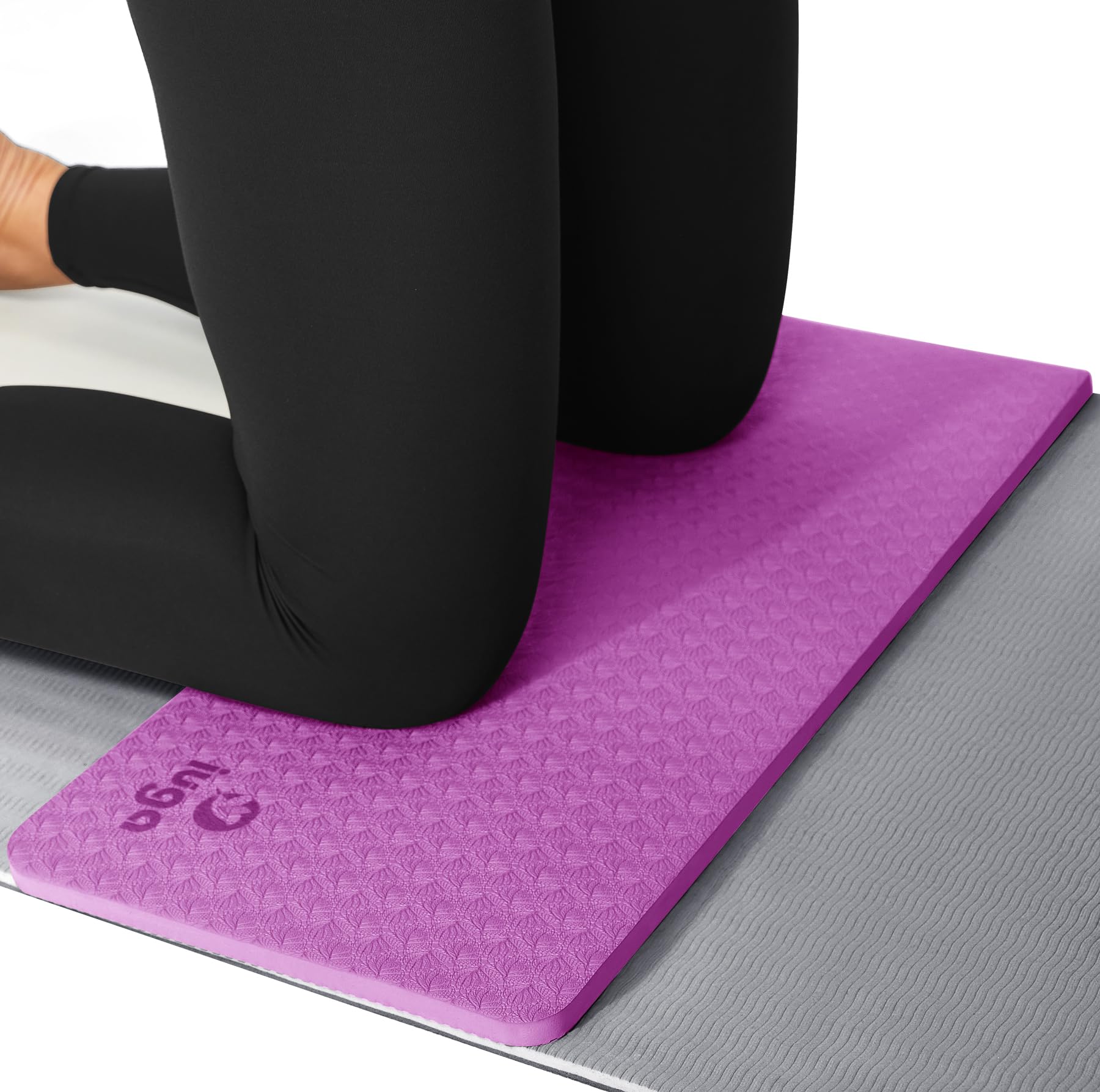
The non-slip ridge texture that grips like rubber, even during hot yoga.
This pad is 25.6 inches long and 10.3 inches wide — slightly longer and a touch narrower than the SukhaMat. The standout feature is the sticky, ridged non-slip surface on both sides. Buyers report it eliminates the dreaded sliding, which means you can transition from plank to downward-dog without the pad bunching up. The 13mm thickness (0.5 inches) is made from TPE (thermoplastic elastomers — a non-toxic, lightweight material that is softer than NBR but less dense). Owners mention it is especially helpful for sore wrists during vinyasa flows and for bony hips during Pilates. Another practical detail: it rolls with the marking surface outward to prevent the edges from curling. The mat is light enough to carry daily and a quick wipe-down with mild soap restores it instantly. The pad ships with a light protective oil coating that makes it slightly slippery for the first use or two — once that wears off, the grip kicks in and owners love it.
dual pad set: The pad ships with a light protective oil coating that makes it slightly slippery for the first use or two — once that wears off, the grip kicks in and owners love it.
great for pairs: hot yoga practitioners and anyone who hates their cushion sliding out of position mid-sequence.
avoid for durability: those who prefer the denser, less compressible feel of NBR foam over the softer TPE feel.
4. MRO Yoga Knee Pad Cushion
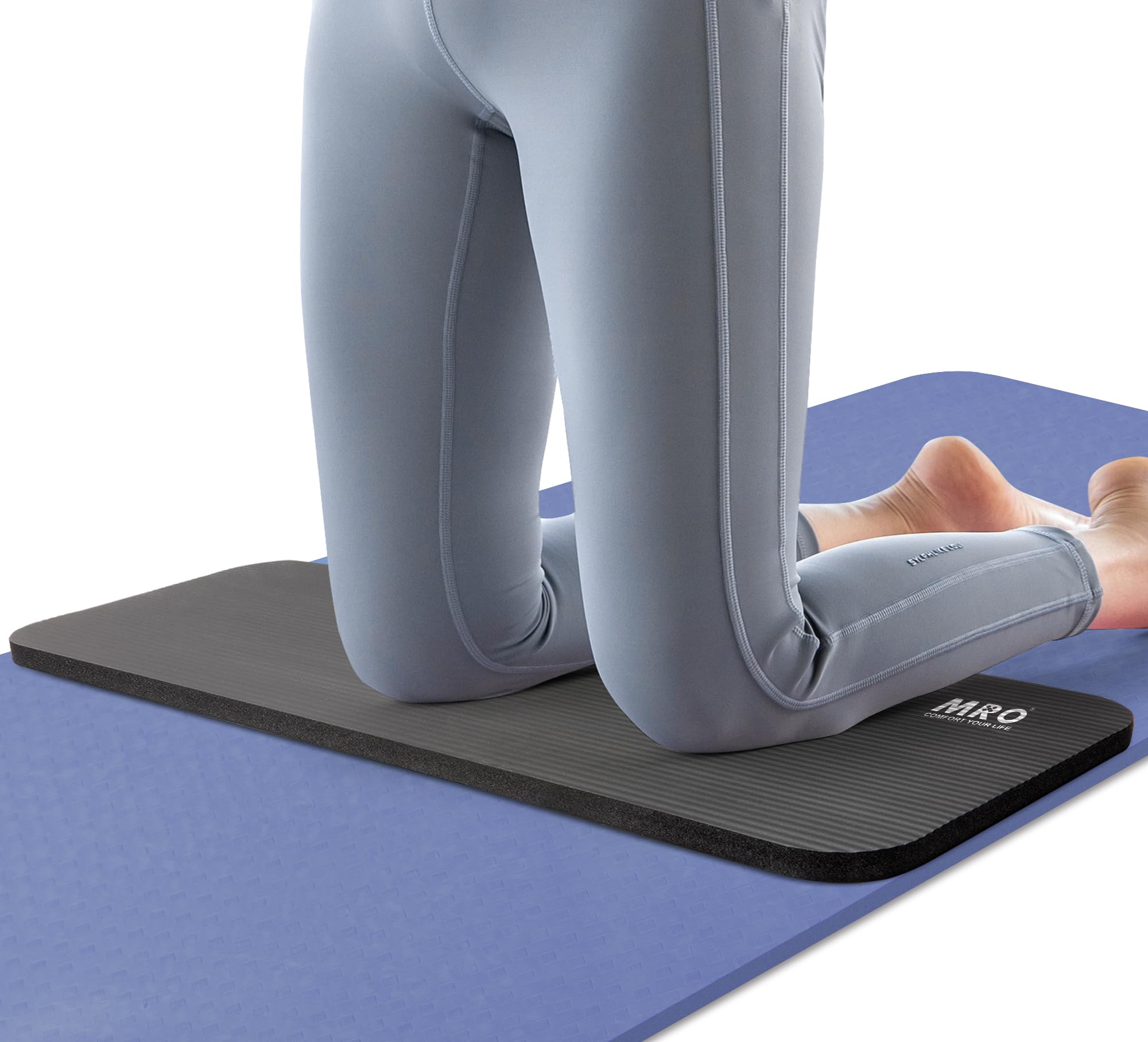
The 15mm dense NBR pad that passes the eco-friendly and non-toxic check with flying colors.
This one matches the SukhaMat on thickness at 15mm (0.6 inches) and measures 24 inches by 10.6 inches. The material is eco-friendly NBR foam — it is certified phthalates-free, PVC-free, and contains no latex. Owners consistently praise the cushioning for knees and elbows, with many calling it the perfect density: soft enough to relieve pressure during a 30-minute session, but firm enough that you don’t feel unstable. The closed-cell foam (meaning sweat and spills sit on the surface instead of soaking in) is odorless and easy to clean. It rolls up compactly to toss in a gym bag. The one trade-off that shows up in feedback: some owners wish the underside grip was stronger on very smooth floors. On a yoga mat it stays put, but directly on hardwood it can slide during active transitions.
choose for stability: you want a thick, comforting pad made from eco-friendly materials and value a brand that stands behind it with 24/7 support.
pass for lightweight: your practice is exclusively on bare hardwood and you need an aggressive non-slip texture.
5. Kinesis Yoga Knee Pad Cushion

The 15mm pad that shows up every time feedback mentions knee support as the top priority.
Kinesis leads on a specific metric: owners mention knee support more than any other aspect about this pad. The 15mm NBR foam (the same nitrile butadiene rubber used in the top two picks) is paired with a 24 by 9.8-inch surface that is narrow enough to fit right on top of a standard yoga mat without overhang. The NBR foam is closed-cell, which means it resists sweat, dries fast, and stays odor-free. Buyers describe it as versatile for everything from strength training to hip thrusts, and call it ideal for people with newly replaced knees or arthritic joints. At just 4.64 ounces, it is the lightest option here — practically weightless in a suitcase. The non-slip texture works well even during high-sweat sessions. The primary nod from the review pattern is that the pad holds its shape well over time and does not flatten out after months of use.
reach for alignment: knee protection is your primary concern and you want the lightest, most portable pad that still provides 15mm of dense comfort.
think for style: you prefer a wider pad like the ILILI for all-over elbow-and-knee coverage.
6. Hungdao 6 Pcs Knee Pads for Yoga

Six individual 20mm-thick cushioned discs that you can put under every joint at once.
Instead of one long pad, this set gives you six individual pieces — two blue, two purple, two black — each measuring 7.87 inches square and 0.79 inches (about 20mm) thick. The EVA foam (ethylene vinyl acetate — a common cushioning material that starts a little firm and softens with use) has a concave center design that cups your knees, elbows, or hands to prevent the cushion from sliding out from under you. The biggest advantage is sharing: take a set to class and hand extras to friends, or keep one at home, one in your gym bag, and one near the cleaning supplies. A few note the black discs can mark pale rugs, so stick to the lighter colors on light surfaces. The EVA foam does feel firm at first and takes a few sessions to break in.
ideal for groups: families or classes where multiple people need joint protection at the same time, and for anyone who wants to keep a pad in every location.
not for single use: full-arm-length planks or head-to-toe support — individual discs cover one joint at a time.
7. Impulse Yoga Knee Pads Cushion
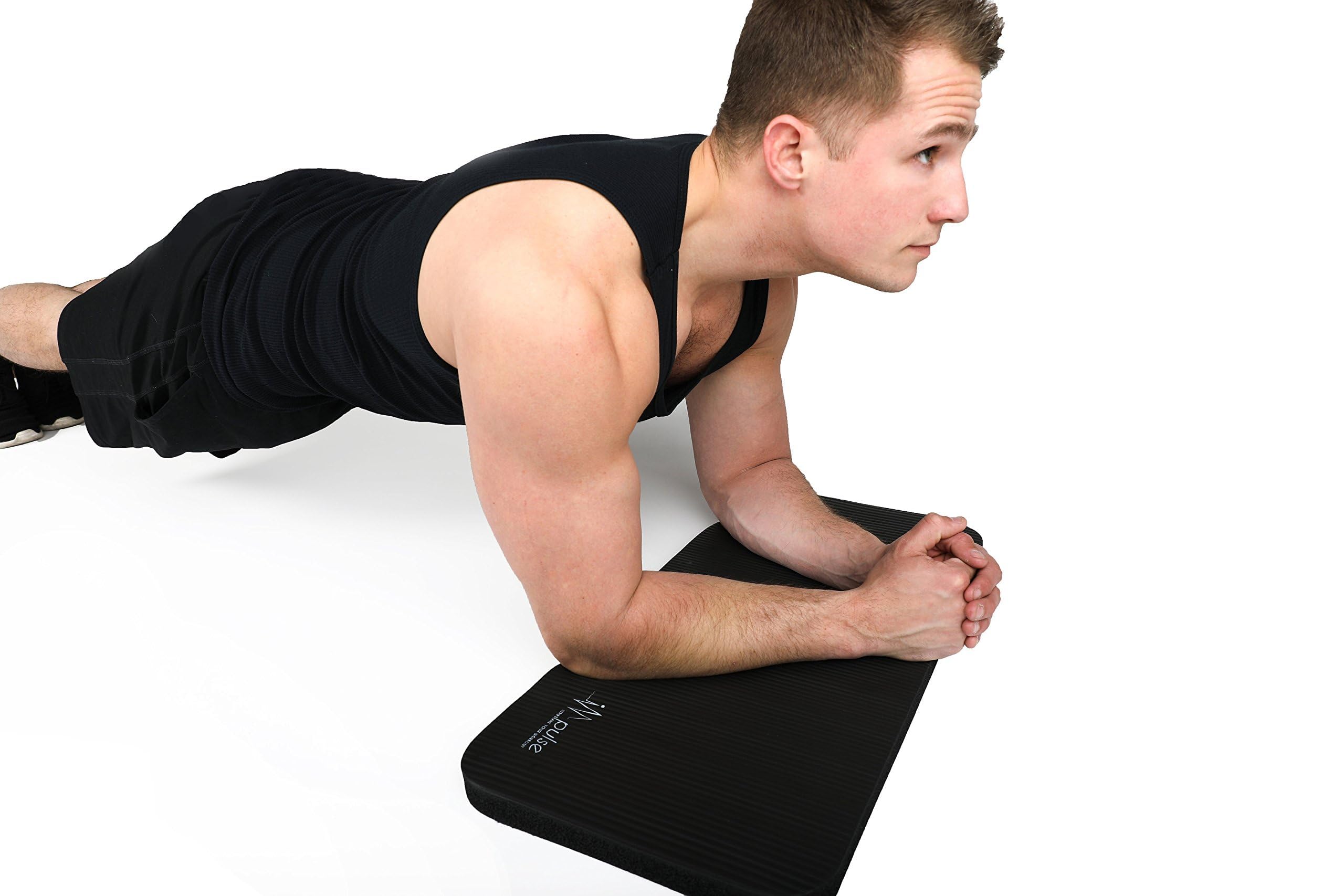
A full 1 inch (25mm) of padding that turns any hard floor into a forgiving surface.
This is the thickest standard pad in the lineup — 25mm (1 inch) of NBR foam, — 25mm (1 inch) versus the SukhaMat’s 15mm. At 24 inches by 12 inches, it is also a couple of inches wider than most pads here. The extra thickness makes this ideal for injury rehab (ACL, MCL, elbow recovery) and for anyone who finds standard mats too punishing. Owners call it “the perfect solution for old knees” and use it for everything from glute bridges to meditation. It comes with a mesh carrying bag, which replaces the old velcro strap system that many previous reviews flagged as inadequate. The NBR material is the same dense, closed-cell foam used by the SukhaMat and Kinesis, so it resists sweat and stays clean with a wipe-down. The weight is 11.68 ounces, which is noticeable but still portable. The main caveat is that the included mesh bag is quite snug — you can squeeze the pad in, but it takes a bit of effort.
best for carpet: anyone recovering from joint surgery, older practitioners who need maximum cushion, or long meditation sits on hard floors.
skip for tile: dynamic flow classes where you shift weight quickly — the thick foam can feel a bit unstable during fast transitions.
8. Feetlu Yoga Knee Pad Cushion
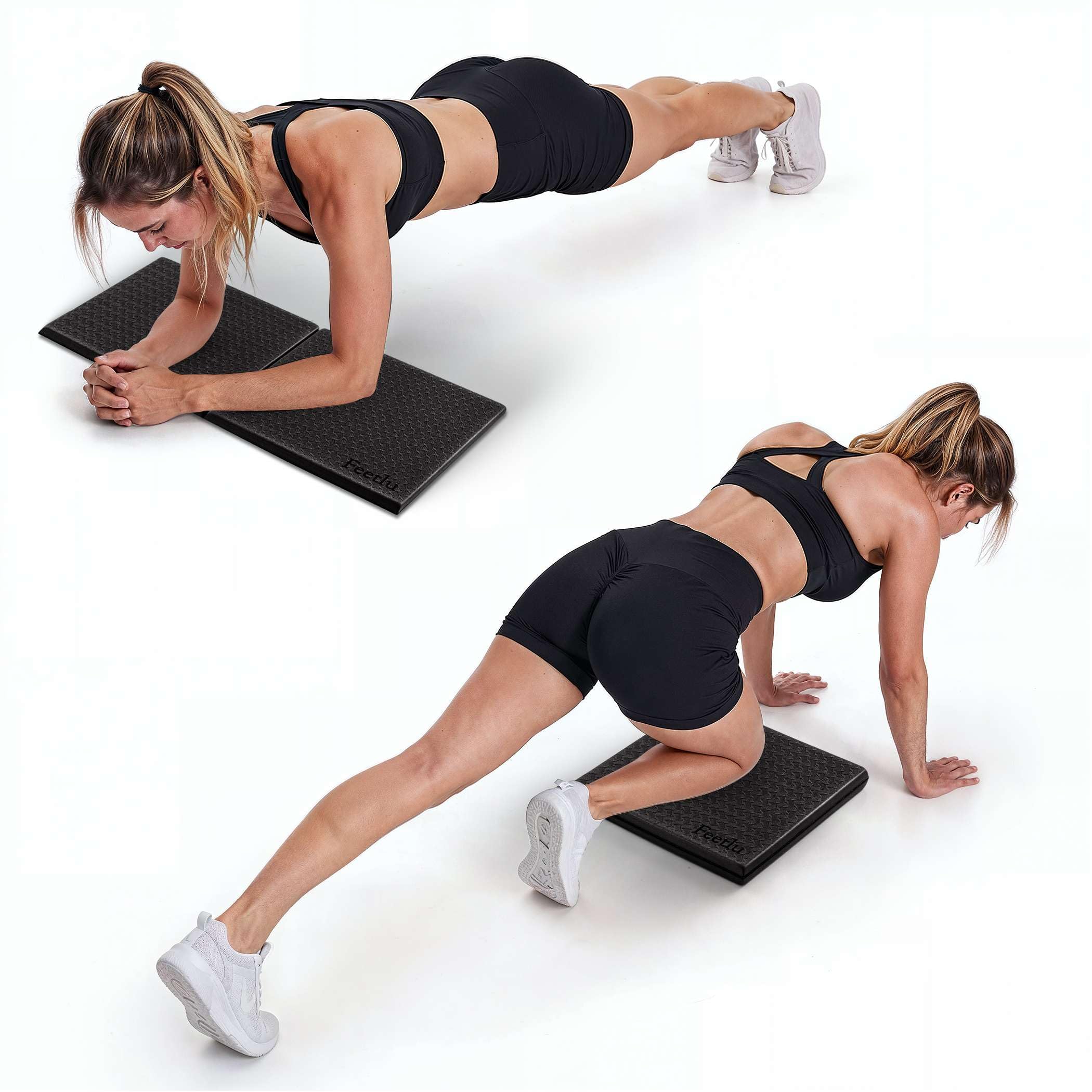
A half-inch POE foam pad that folds in half for easy carry and fits perfectly over standard yoga mats.
This pad is 24 inches by 12 inches and 13mm (half an inch) thick, made from POE foam — a polyolefin elastomer that is denser and less compressible than NBR or TPE. The textured surface provides a grippy feel that stays firmly in place during movement. It folds neatly in half to a compact 12 by 12-inch square — small enough to slide into a laptop bag or backpack. Owners use it unfolded for extra cushion under knees during yoga, and folded for a height boost under hands or feet in poses like downward dog. It has held up for years, according to several long-term owners. The POE foam is durable and resilient, meaning it won’t flatten or develop a permanent dent. The trade-off is that some users on very hard tile find the half-inch thickness only moderately cushioned — it is more about stability and support than a cloud-like feel.
go for comfort: you travel light and want a knee pad that doubles as a support wedge for balance work or stroke recovery.
look for grip: you have significant knee arthritis and need a thicker, more plush cushion than 13mm can provide.
9. WUWAN Yoga Kneeling Mat
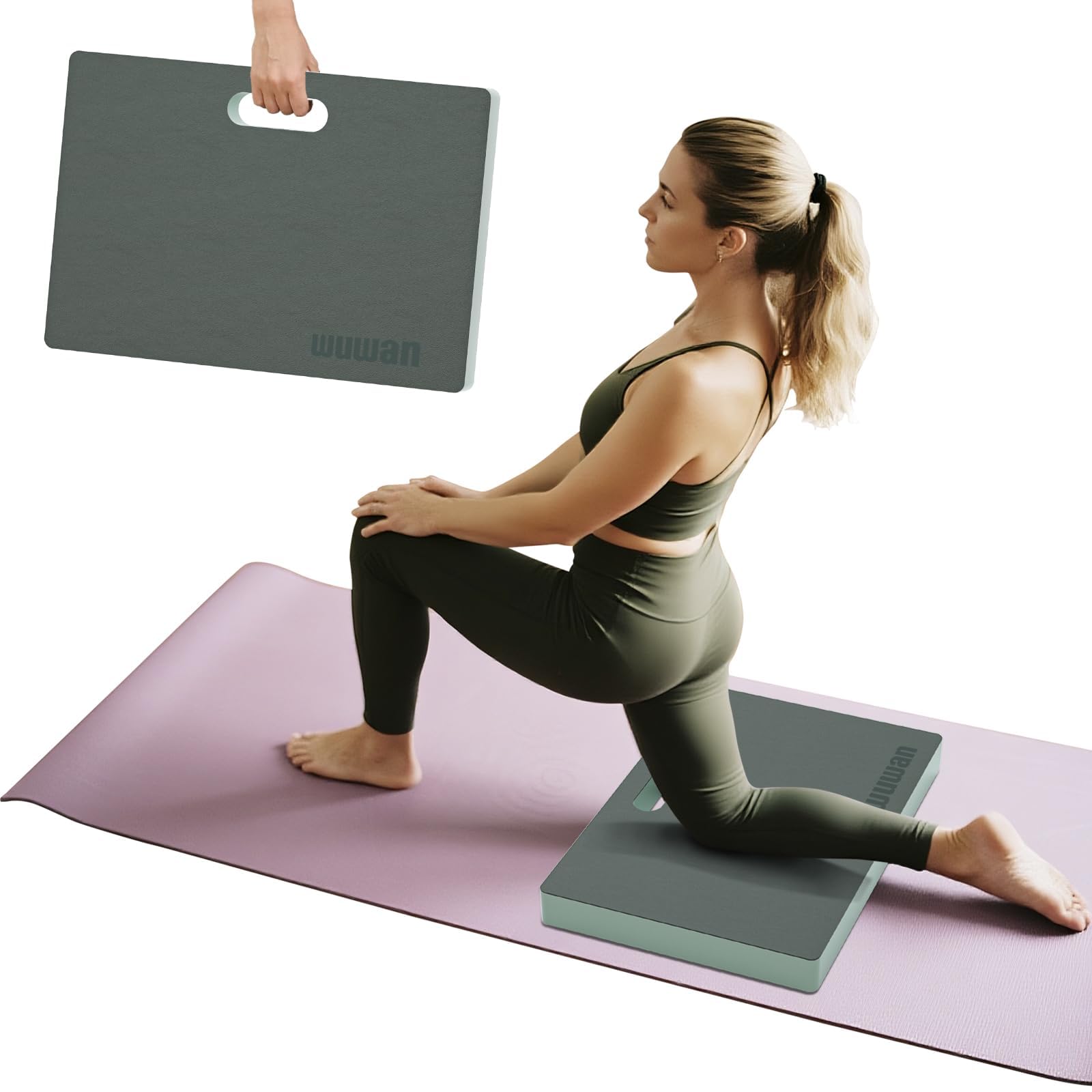
The thickest cushion of the list — 1.5 inches (38mm) of TPE foam for the deepest pressure relief.
This is the softest, tallest pad here — 1.5 inches thick, — 1.5 inches thick (38mm) versus the 15mm options. The TPE foam (thermoplastic elastomers) is softer and more compressible than NBR, and this pad sinks under your weight to cradle the joint. The surface measures 17 inches by 12 inches — shorter than the 24-inch pads, but tall enough for two knees side by side. The material includes a leather-textured front layer that looks more like a seat cushion than a yoga accessory. Owners with arthritic knees specifically praise it for hot yoga (though note it gets slippery when wet, so a towel on top helps). A few customers note the pad is not as wide as they would like for full-arm planks, but for targeted knee and elbow relief it excels. The 14.08-ounce weight is the heaviest in the group, but the squish factor is class-leading.
perfect for meditation: seniors, anyone with arthritic or replaced knees, and those who simply cannot tolerate a hard floor against bone.
not for yoga flows: active vinyasa or flow classes where you need stable ground feel and quick transitions — this pad is built for stationary comfort.
Understanding the Specs
NBR Foam
Nitrile Butadiene Rubber is a dense, closed-cell foam. “Closed-cell” means the surface does not absorb sweat or liquids — they bead up and wipe off instantly. NBR provides a firm, stable cushion that lasts for years without flattening. It is the most common material in the top-rated pads here and works well for both yoga and strength training.
Thickness and Plushness
Thickness is measured in millimeters (mm) or inches. A 13mm (0.5-inch) pad relieves pressure while keeping you connected to the floor. A 15mm (0.6-inch) pad is the balance for most people. A 25mm (1-inch) pad adds a serious layer of cushion for rehab or sensitive joints. The 38mm (1.5-inch) pad is the thickest and feels like kneeling on a soft pillow, but with less floor stability.
FAQ
Will any of these pads fit on top of my existing yoga mat?
How do I clean a yoga knee cushion?
Is a 13mm pad thick enough for arthritic knees?
Can I use a garden kneeling pad for yoga?
What does a higher density foam actually feel like?
Will these pads slide off a hardwood floor?
How long does a TPE foam knee pad last compared to NBR?
Can I use a yoga knee cushion for household chores like gardening?
Do I need an extra thick pad for Pilates or is a standard one fine?
What is the difference between a knee pad and a knee cushion?
Final Thoughts: The Verdict
For most people, the best yoga knee cushion is the SukhaMat — its 15mm high-density NBR foam strikes the ideal balance of cushioning and stability, and the crowd of thousands confirms it works. If you want a pad that folds down tiny and works double-duty at the gym or on a vibration plate, grab the ILILI. And for anyone needing the absolute thickest relief — whether for arthritic knees or joint rehab — the 1.5-inch WUWAN is the one to reach for. Each of these picks has proven itself through real use, so you can buy with confidence.
How We Picked
We do not accept paid placement. Every pick is matched to a real buyer and a real use-case; we do not hands-on test units.
Sources & Methodology
Specifications: manufacturer listings and product documentation. Review insights: verified customer reviews, as of July 2026. Pricing: not shown on this page (it changes often); check the current price via the retailer link.
As an Amazon Associate, Calories Fit earns from qualifying purchases. This does not affect which products we feature.