
Our readers keep the lights on and the coffee maker working hard! As an Amazon Associate, I earn from qualifying purchases.
Specs are compiled from manufacturer listings and verified buyer reviews and can change over time — please confirm the key details on the product page before buying.
Finding a sneaker that stops your foot from rolling inward (overpronation) without feeling like a brick is the real challenge. You need arch support that actually works, cushioning that doesn’t flatten after a few miles, and a fit that doesn’t squeeze your toes. This guide cuts through the noise to find the women’s stability sneakers that deliver on all three.
I’m Mohammad — the founder and writer behind Calories Fit. This guide is built by comparing the manufacturers’ published specifications and the patterns across verified customer reviews, so you get each pick’s real strengths and trade-offs instead of marketing spin.
Whether you’re training for a half-marathon or just need all-day relief from foot pain, these are the very best women’s stability sneakers you can buy right now — backed by real owner experiences and every critical spec.
Our Picks at a Glance


How To Choose The Best Women’s Stability Sneakers
A stability sneaker’s job is to gently guide your foot through a natural gait cycle, preventing excessive inward roll. Not all stability is created equal. Look for shoes that use dual-density foams or a support frame rather than a hard plastic post, which can feel stiff. Your foot strike and daily mileage will dictate if you need a soft, high-cushion shoe or a firmer, more responsive ride.
Understanding Pronation Control
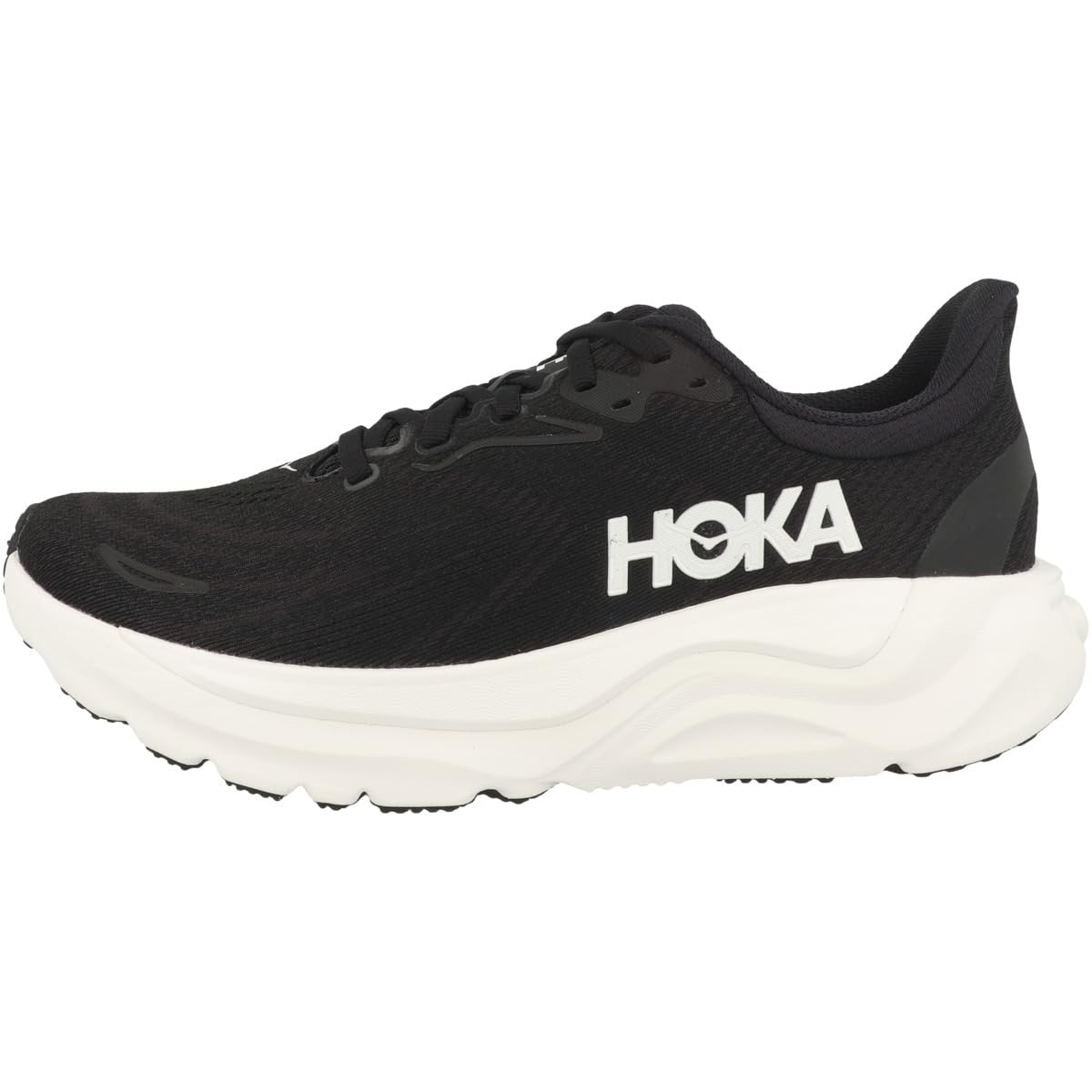
Overpronation means your ankle rolls inward too much as you push off. A stability shoe places firmer foam or a higher-density medial post along the inner arch to slow that roll. The goal is a smooth transition, not a locked-in feel. The Brooks GuideRails system, for example, is a holistic support that also protects your knees, while the Hoka H-frame uses a wider base and dual-density foam for a softer, more natural feel.
Midsole Drop and Stack Height
The “drop” is the difference in height between the heel and the toe. A 12mm drop is more traditional and encourages a heel-first strike, while a 5mm or 8mm drop promotes a midfoot strike and feels more natural for some walkers. Stack height (the total amount of foam underfoot) affects cushioning feel — 38mm is considered max cushion, while 30mm is more moderate. Heavier runners or walkers generally prefer higher stack heights for impact absorption.
Quick Comparison
| Model | Best For | Drop | Cushion | Support System | Amazon |
|---|---|---|---|---|---|
| Brooks GTS 22★ Best Overall | Top-Rated All-Rounder | 12 mm | High Energizing | GuideRails | Amazon |
| Brooks GTS 24Upgraded Classic | Upgraded Classic | 12 mm | More Protective | GuideRails | Amazon |
| Hoka Arahi 8Light & Sleek | Light & Soft Stability | — | Compression Molded EVA | H-Frame Technology | Amazon |
| Saucony Omni 21 | Budget-Friendly Stability | — | Dual-Density PWRRUN | Dual-Density Medial Post | Amazon |
| Vionic Walk Max | Walking & Everyday Wear | — | Nitrogen-Infused Rebound | VIO MOTION Technology | Amazon |
| ASICS GT-1000 14 | Best Value Entry-Level | — | FF BLAST | 3D GUIDANCE SYSTEM | Amazon |
| Nike Structure 26 | Midfoot Support & Style | — | Full-Length ReactX | Midfoot Support System | Amazon |
| Topo Athletic Aura | Wide Toe Box Stability | 5 mm | Max (ZipFoam) | Y-Frame Guidance | Amazon |
| New Balance 860 V13 | Plush Long-Distance | — | Fresh Foam X | Supportive Medial Post | Amazon |
| New Balance 860 V15 | Latest Tech Stability | — | Fresh Foam X | Stability Plane | Amazon |
In‑Depth Reviews
1. Brooks Womens Gts 22
Our pick — over 4.5★ from 23,500+ verified ratings; the strongest balance of quality and price.
The crowd-favorite stability shoe that protects your knees without sacrificing energy return
Brooks’ GuideRails system is the star here — it’s a holistic support framework that limits excess movement in your knees as well as your feet. The shoe combines BioMoGo DNA and DNA Loft cushioning in the midsole to deliver what the brand calls “high energizing cushioning,” meaning it feels soft underfoot but bounces back quickly. The engineered mesh upper with 3D Fit Print wraps around your arch securely without feeling tight, and the 12 mm heel-to-toe drop is a classic choice for those who land heel-first.
What wins people over is the comfort — the fit is so dialed that buyers report zero break-in period. The wide toe box is a recurring highlight, especially for those with wider feet or bunions. The APMA Seal of Acceptance adds clinical credibility. The only consistent complaint is short laces, which some owners replace, but that is a minor fix on an otherwise outstanding shoe. It is heavier than some of the newer models, but the stability and plush ride more than make up for it.
It’s the best-selling stability sneaker on the market for a reason: over 23,000 owners have pushed it to an average rating of 4.6 out of 5. It edges out the Adrenaline GTS 24 below in overall rating and sheer volume of positive feedback.
What owners love
- No break-in period — comfortable straight from the start
- GuideRails system effectively reduces knee strain
- Wide toe box and snug heel hold
- APMA Approved for foot health
The trade-offs
- Laces are notably short; plan to swap them
- Not the most breathable upper for hot weather
The go-to pick: If you want the most trusted stability shoe with proven knee protection and a plush, ready-to-wear feel, this is it.
Skip if: You prioritize a very low-drop shoe (5mm or less) for a midfoot strike pattern — the 12mm drop is traditional.
2. Brooks Women’s Adrenaline GTS 24 Supportive Running Shoe
The latest Adrenaline iteration with refined cushioning and the same trusted GuideRails frame
The GTS 24 is the direct successor to the GTS 22, and it upgrades the midsole to a “more protective” cushion level. It keeps the same 12 mm drop and GuideRails system but shaves a bit of weight (9.4 oz / 266.5 g vs the GTS 22’s slightly heavier build). The engineered mesh upper is now more streamlined, and the midsole feels softer than the 22 while still being responsive. The outsole uses HPR Plus rubber in high-wear areas, which should extend durability.
Owners consistently report that the GTS 24 “Massively reduced foot, knee, and back pain.” for those with chronic plantar fasciitis. The comfort for walking is highlighted by 176 people, and the arch support earns 524 mentions. The 39mm heel stack height is slightly taller than the GTS 22, giving it a more cushioned landing. The fit is a point of division — some long-time Brooks users note that sizing has shifted, with some needing a half-size up from their older Brooks models.
With a 4.4 out of 5 average across over 7,000 ratings, it trails the GTS 22 slightly in overall score but dominates in sheer volume of feedback. It’s a safe, proven upgrade.
Strengths
- Slightly lighter and more cushioned than GTS 22
- Excellent for plantar fasciitis and knee pain
- Versatile for walking, running, and hiking
- Durable outsole construction
Be aware
- Fit has changed; many need a half size larger
- Heel fabric may wear early if you don’t untie laces
Reach for this if: You want the most current version of the Adrenaline line with a slightly plusher feel and proven pain relief for overpronation.
Think twice if: You loved the precise fit of the GTS 22 and hate sizing changes — try this on before buying.
3. Hoka Womens Arahi 8
A stability shoe that feels surprisingly light and sleek — the anti-brick of the category
Hoka uses its own H-frame technology, a stabilizing system built into the dual-density compression molded EVA midsole. It combats overpronation by creating a wide, stable platform without the stiff medial post that some runners dislike. The Arahi 8 uses softer materials than its predecessor and adds a double jacquard mesh upper made from 62% recycled nylon, which is both breathable and eco-conscious. At a fraction over 1.6 pounds per pair, it is among the lightest stability options here.
One owner wore them for 10 days of all-day walking in England and reported “no complaints” — high praise for a travel shoe. The H-frame system provides a smooth entry into the gait cycle, and the super abrasion rubber outsole uses a podular design for natural flexibility. Some owners mention that the color shown online can be inaccurate — one received solid black instead of the pictured gray/black combo. The price is premium, but the lightweight, soft ride is unique in the stability category.
It holds a 4.6 out of 5 average from around 300 ratings, tying the GTS 22 for the highest rating among the top picks, though with far fewer reviews.
What gets praise
- Very light and soft for a stability shoe
- H-frame support feels natural, not intrusive
- Excellent for balance and knee replacement recovery
- Breathable, recycled mesh upper
Consider this
- Color representation can be misleading online
- Premium price point
Ideal for: Anyone who needs stability but hates heavy, stiff sneakers — this is the lightest and sleekest option here.
Not ideal if: You want maximum arch support from a rigid post; the H-frame is softer and more flexible.
4. New Balance Womens Fresh Foam X 860 V13
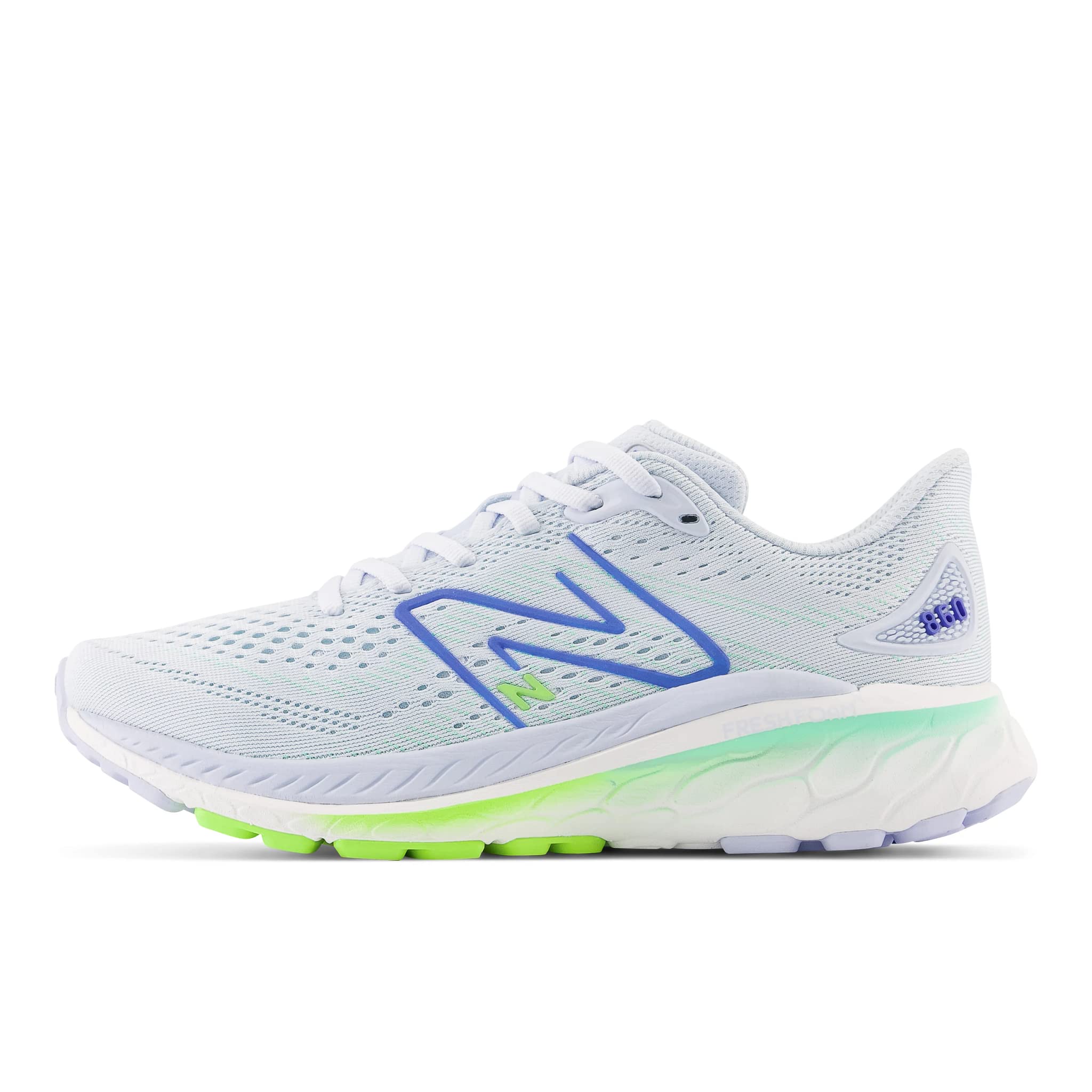
New Balance’s classic stability line gets a plush Fresh Foam X upgrade for comfortable daily miles
The 860 V13 combines Fresh Foam X — New Balance’s plushest, most forgiving foam — with a supportive medial post along the inner arch. This makes it a true workhorse for daily training, offering “reliable, sustained comfort over all distances.” The outsole sits lower on the ankle than previous versions, which some owners say makes it harder to hide socks, but the trade-off is a more streamlined look.
The cushioning and arch support are the top praise points. One owner wore them all day at Disneyland and reported “my feet did not ache even after walking all day and night.” However, several owners note that the V13 fits narrower than previous 860 versions, especially in the toe box. The company recommends trying a half-size up if you have wider feet. It is less stable for severe overpronation than the V12, making it better suited for casual wear or long walks than serious marathon training.
With a 4.4 out of 5 average from over 760 ratings, it is a well-reviewed, reliable choice for those who prioritize arch support and soft cushioning.
Strong points
- Extremely comfortable for all-day walking
- Excellent arch support for plantar fasciitis
- Fresh Foam X is plush and bouncy
- Stylish, sleek profile
Potential issues
- Narrower toe box than previous versions
- Less stable for severe overpronation than V12
Best for: Runners and walkers who want maximum arch support and a plush, forgiving ride for long distances.
skip it if: You have wide feet or need aggressive pronation control — the fit is narrower and the support is softer.
5. New Balance Womens Fresh Foam X 860v15
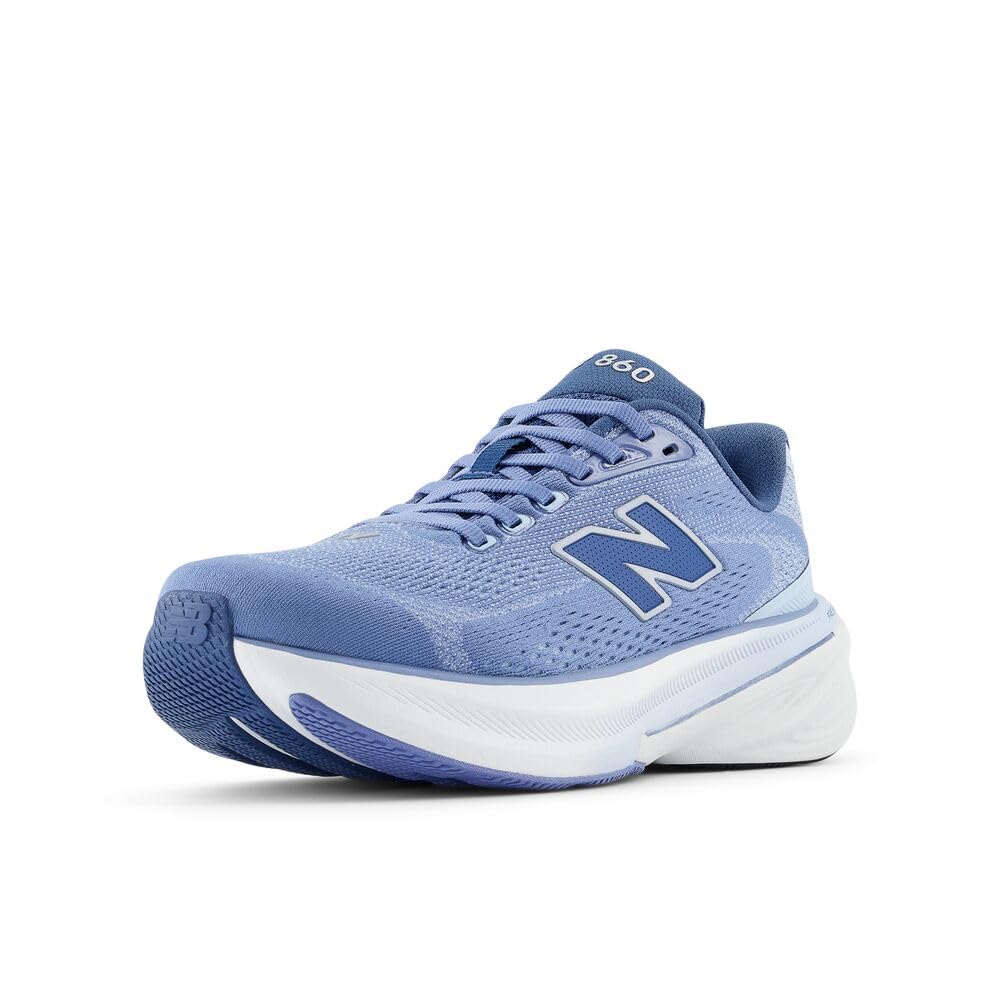
New Balance’s latest stability tech with a redesigned platform and sustainable materials
The 860v15 introduces New Balance’s “Stability Plane” technology, which replaces the traditional medial post with a broader, more integrated support structure. This is paired with the standard Fresh Foam X cushioning for premium underfoot comfort. The shoe is validated through the Sports Research lab, earning a scientific stamp of approval. The lightweight synthetic upper is designed to keep feet cool over long distances, and the shoe weighs roughly 2.1 pounds per pair.
The early owner feedback is divided. Those with flat, pronated feet love the arch support and roomy toe box, with one healthcare worker calling them “the best I’ve worn in a really long time.” But owners with high arches find them too tight around the midfoot — one reported toes going numb from the pressure. The fit is described as “a bit different than other versions,” and some long-time 860 wearers report ankle digging and a clicking noise when walking. The color schemes, however, get consistent praise.
With a 4.1 out of 5 average from just over 80 ratings, it is the lowest-scoring product here, which reflects the fit division rather than a fundamental quality problem.
What’s improved
- Stability Plane offers a broader, more natural support base
- Very comfortable for flat, pronated feet
- Fresh Foam X is plush and responsive
- Color schemes are attractive
Known drawbacks
- Too tight for high-arched feet
- Some owners mention ankle digging and clicking noise
Pick this if: You have flat, pronated feet and want the latest stability technology from New Balance with a roomy toe box.
Avoid if: You have high arches or have been happy with the previous 860 fit — the geometry is different.
6. Topo Athletic Women’s Lightweight Comfortable 5MM Drop Aura Road Running Shoes
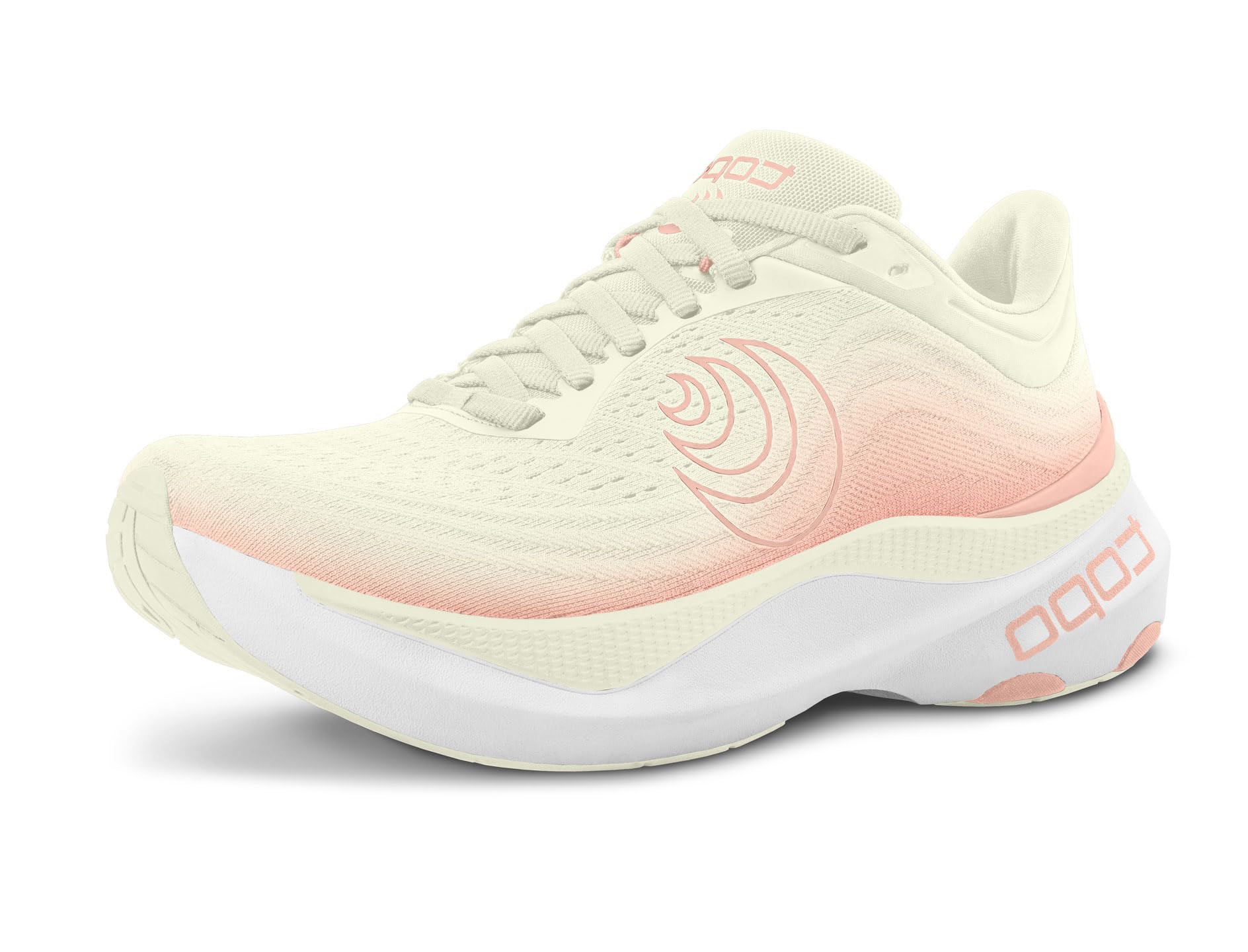
A max-cushion stability shoe built around an anatomical toe box for natural toe splay
Topo Athletic is known for its roomy toe box, and the Aura is the brand’s first max-cushion stability shoe. It uses a Y-Frame Guidance System — a support structure that cradles the medial arch without a stiff post — paired with a ZipFoam midsole that is “springier than EVA and offers more rebound over the life of the shoe.” The stack height is 38mm at the heel and 33mm at the forefoot, with a 5mm drop that encourages a midfoot strike. The shoe weighs a reasonable amount for a max-cushion shoe, though specific weight is not listed.
The wide toe box is the defining feature. Owners coming from foot surgery (sesamoidectomy, tendon reconstruction) report that the “wide toe box + minimal drop” allows for natural toe movement during recovery. A physical therapist even approved the Aura for an older patient. The short tongue is a minor annoyance for some, and the traction on wet pavement is questionable due to a smooth sole. Color representation is another point of confusion — one owner received a shade much lighter than expected.
It scores a 4.6 out of 5 from around 140 ratings, tying it with the GTS 22 and Arahi 8 for the highest rating in the guide, though with far fewer votes.
Why it’s unique
- Anatomical toe box allows toes to spread naturally
- Y-Frame support without a stiff medial post
- 5mm drop promotes midfoot strike
- Excellent for post-surgery recovery
Quirks to know
- Smooth sole may lack wet traction
- Short tongue can be annoying
- Color in photos can be inaccurate
Reach for this if: Toe splay is non-negotiable for you — whether due to bunions, surgery recovery, or simply foot health.
Skip if: You need maximum wet traction or prefer a traditional 12mm drop heel-first stride.
7. ASICS Women’s GT-1000 14 Running Shoes
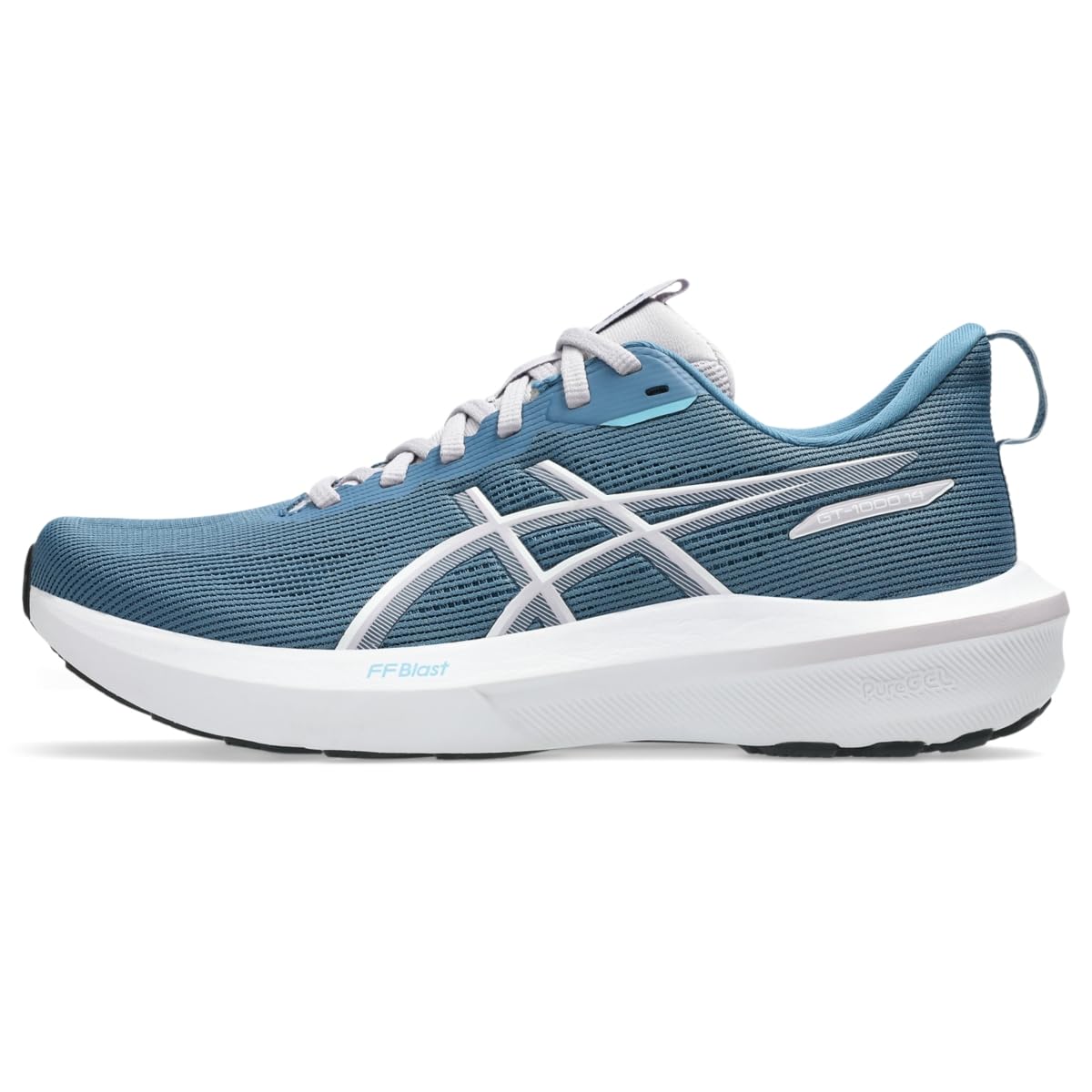
Entry-level stability with a surprisingly premium feel — the best bang for your buck
The GT-1000 14 is ASICS’ accessible stability shoe, but it doesn’t feel cheap. It uses an FF BLAST midsole that delivers a “cloud-like feel” with energizing bounce, and the 3D GUIDANCE SYSTEM boosts stability through the gait cycle. The upper is a lightweight polyester, and the outsole is durable synthetic rubber. Weighing about 1.44 pounds per pair, it’s impressively light for a stability shoe. ASICS also uses a classic lace-up closure for a secure fit.
Owners rave about the true-to-size fit, especially for narrow feet. The GT-1000 “Corrects overpronation with medial support, improving knee pain and stability.,” according to one experienced user. It is versatile enough for walking, Zumba, treadmill, and everyday wear. The only downsides are that the sole extends wider around the heel than some prefer, and a few owners note it requires a short break-in period. Durability is reported at “at least 2 years” for some pairs, which is excellent for the price tier.
It holds a 4.5 out of 5 average from over 440 ratings, placing it well above its price point in terms of owner satisfaction. It is an absolute steal for anyone new to stability shoes.
Why it delivers
- Lightweight and bouncy FF BLAST foam
- Great for narrow to medium feet
- Versatile for various activities
- Excellent reported durability (2+ years)
Minor notes
- Sole extends wider around heel than some like
- May need a short break-in period
Best for: Budget-minded buyers who don’t want to sacrifice comfort — this is the best value proposition in the guide.
Not for: Those with very wide feet; the fit leans narrow.
8. Saucony Women’s Omni 21 Running Shoes
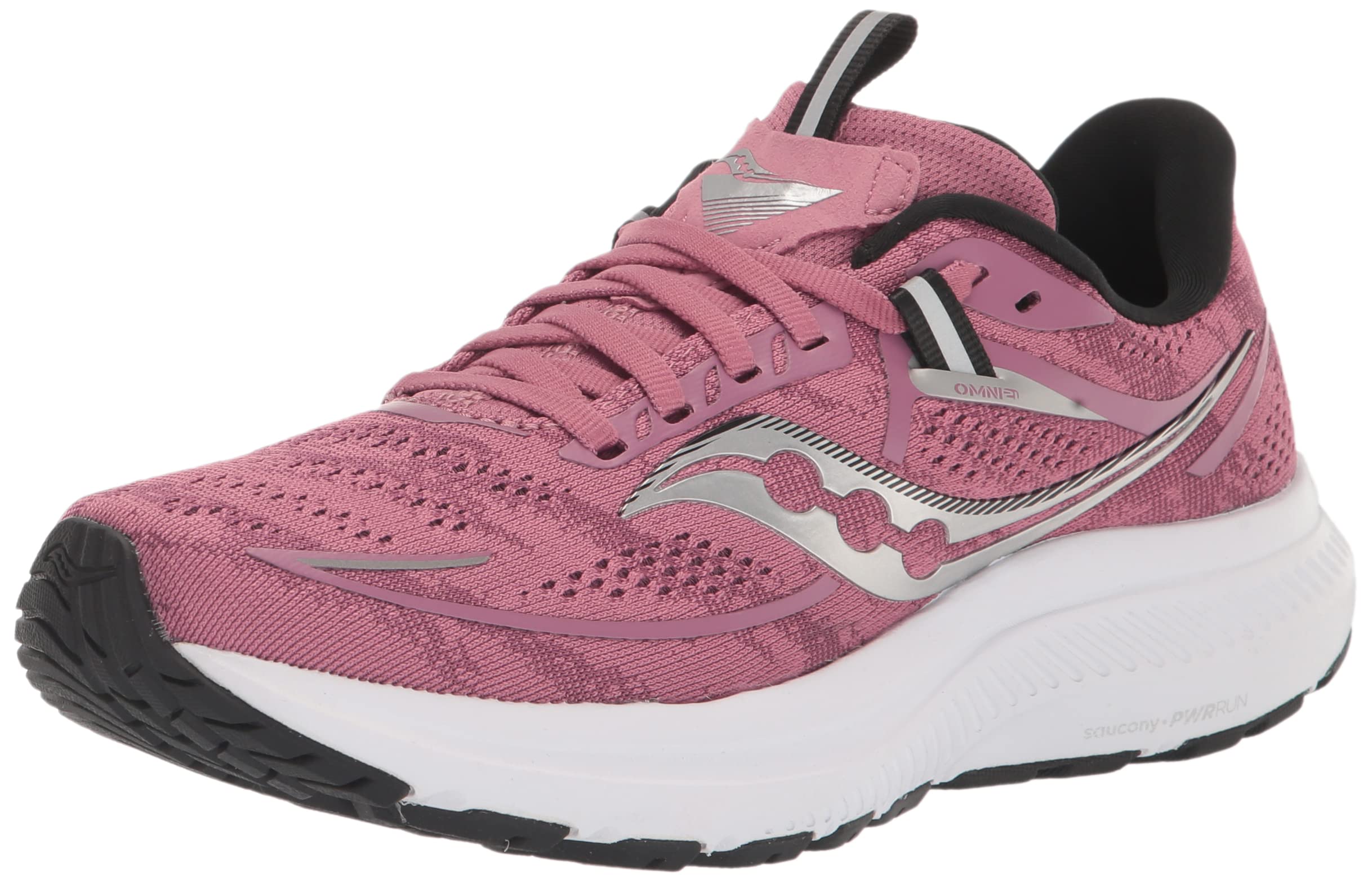
Dual-density stability at a price that leaves room for a second pair of socks
The Omni 21 uses dual-density PWRRUN cushioning — a layer of soft foam on top with a firmer density on the bottom to control pronation. It has an adaptive upper that molds to your foot, and the outsole has a hiking boot-like tread for light trail use. The shoe weighs 2.43 pounds per pair, on the heavier side, but the “spring effect” of the soles makes it feel more energetic than the weight suggests. It is designed with a roomy toe box, which is a plus for bunions.
Customers note that the shoe reduces hip stiffness and joint pressure. One owner described it as “like walking on springs,” with a large toe box and a soft step. The most common praise is that it works well for plantar fasciitis. However, there are isolated reports of color mismatches serious enough that one suspect-fake pair arrived in dingy gray-brown instead of the white/red shown. Saucony’s “wide” is also notably narrow, so wide-footed buyers may need to go up a size or consider a different brand.
With a 4.4 out of 5 average from around 500 ratings, it is a solid entry-level stability shoe that undercuts most competitors on price.
Pros
- Springy, energetic sole feel
- Good for plantar fasciitis and joint pressure
- Roomy toe box
- Versatile for walking, gym, and light trails
Cons
- Color accuracy is inconsistent
- Saucony’s “wide” is still narrow
- Heavier than many alternatives
Ideal for: Budget-conscious runners and walkers who want a springy, supportive ride and don’t mind a heavier shoe.
Think twice if: You need an accurate color match or a genuinely wide fit — order with caution on both fronts.
9. Vionic Women’s Walk Max Sneaker
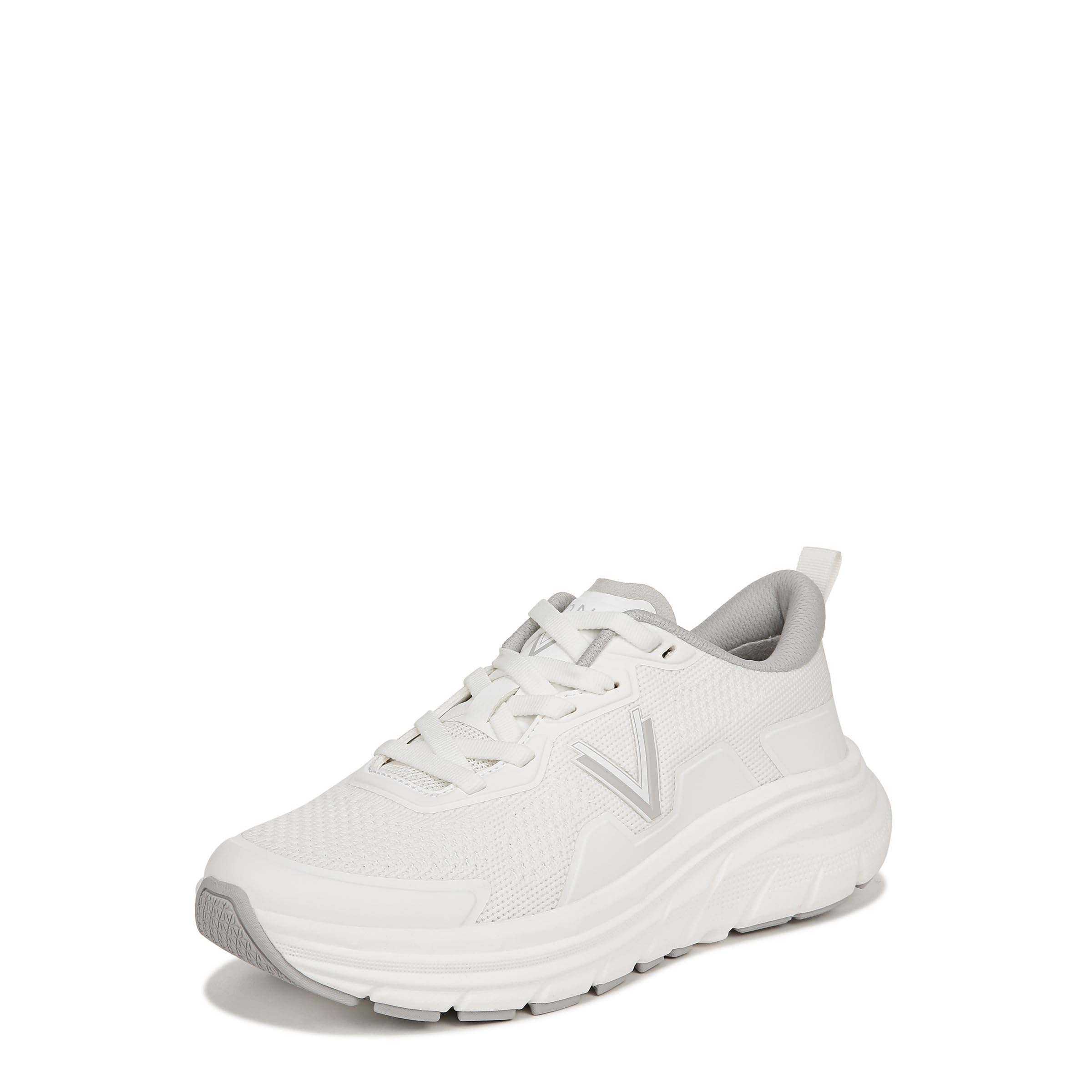
A walking-specific stability sneaker with built-in orthotic arch support
Vionic is known for its orthotic approach, and the Walk Max is no exception. It features VIO MOTION Technology — a built-in footbed with contoured arch support and forefoot flexibility that is designed to “help correct pronation and promote full-body alignment.” The midsole uses a nitrogen-infused compound that is Vionic’s lightest yet, offering high rebound. The outsole is treated with a water-repellent coating to shed rain. The heel height is 1.8 inches.
Reviewers point out that the shoe eliminates foot, back, and leg pain. One reviewer noted it is “true to size, good arch support, comfy to walk in.” However, the fit is divisive: many with medium-width feet find it runs large, while those with wide feet — even the wide width option — say it is not wide enough. The short tongue tends to curl down into the shoe, which is a common annoyance. Vionic recommends a 1-2 week adaptation period for full orthotic comfort, so be patient with the break-in.
It scores a 4.0 out of 5 from around 650 ratings — the lowest average rating in the guide, reflecting the fit challenges rather than quality issues.
Where it shines
- Excellent built-in arch support for overpronation
- Water-repellent coating adds weather protection
- Lightweight for an orthotic shoe
- Tested by Heeluxe for industry-standard comfort.
The fit gotchas
- Runs large for medium feet; size down
- Not truly wide enough for wide feet
- Tongue curls down into the shoe
Perfect for: Anyone who needs orthotic-level arch support for walking and doesn’t have very wide feet.
Not for: Wide-footed buyers or those who hate an extended break-in period — the fit and adaptation require patience.
10. Nike Womens Structure 26
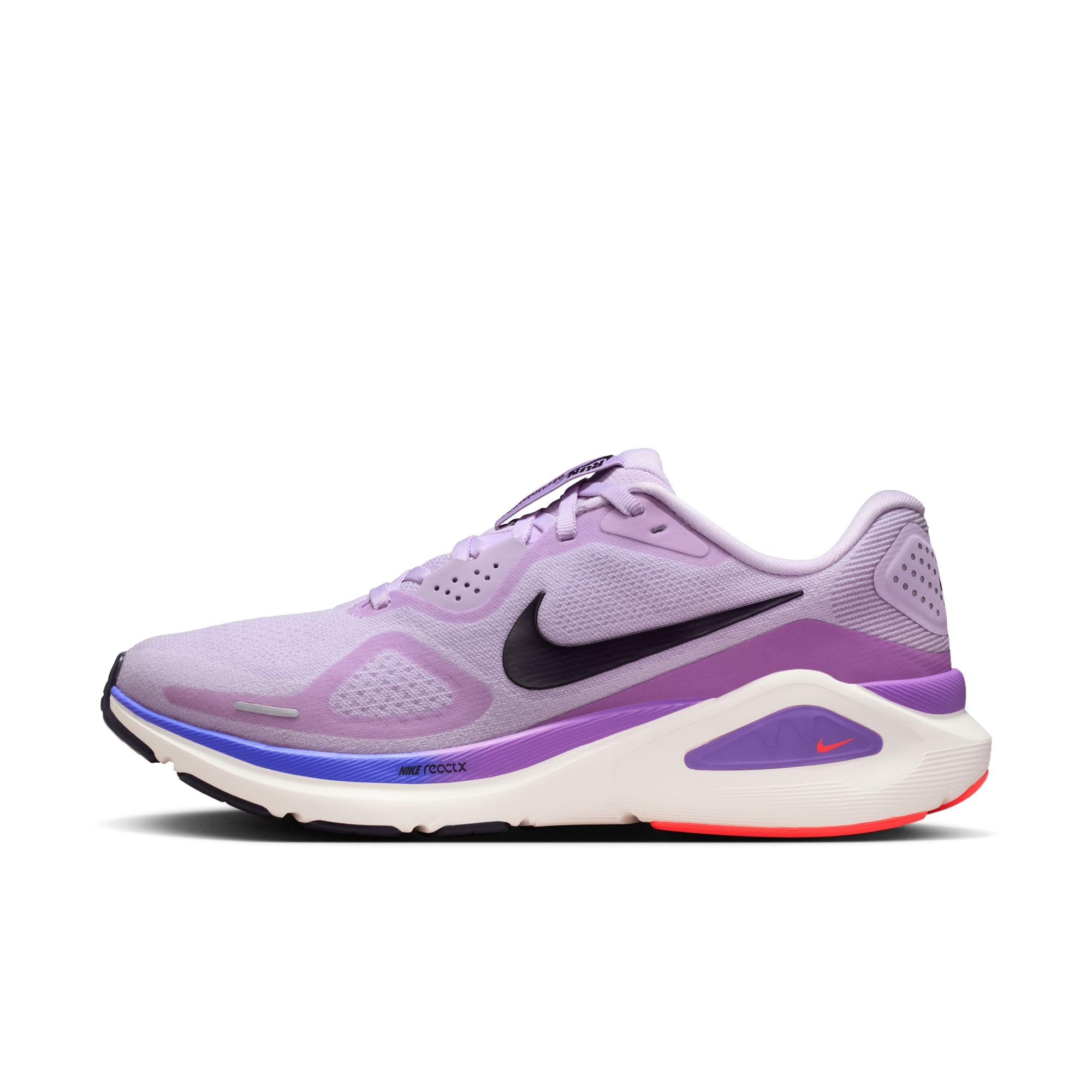
Nike’s classic stability runner with a modern ReactX midsole and a supportive midfoot wrap
The Structure 26 uses a full-length ReactX midsole that delivers “cushioned, yet stable transitions from heel to toe off.” Nike pairs this with a tried-and-true midfoot support system that wraps around your arch and heel to create a firm platform. The upper is a lightweight mesh. Unlike the GTS 22 or Arahi 8, which use a full frame, the Structure 26 relies on internal webbing in the midfoot, which some owners find quite tight. It is designed for everyday road runs, not trails.
Owners love the look — one described them as “so cute but snug,” and the colorways get frequent compliments. The shoe is particularly praised by those with arthritis or heel spurs, with one owner saying it is “the only ones I can walk in without pain.” The excellent midfoot support means the shoe only bends at the heel with force, which podiatrists sometimes recommend. The internal webbing is the main sticking point: it can feel constricting, especially for wider feet. Sizing up a half inch is a common workaround.
With a 4.5 out of 5 average from only 70 ratings, it is a strong but less-verified option compared to the Brooks and ASICS selections.
What stands out
- ReactX midsole is responsive and stable
- Great for arthritis and heel spur pain
- Sleek, stylish design with good color options
- Midfoot wrap provides a firm platform
Keep in mind
- Midfoot internal webbing can be very tight
- Fewer total reviews than other picks
Reach for this if: You want a stylish Nike stability shoe that provides excellent pain relief for feet and ankles, and you don’t mind a snug midfoot.
Skip if: You have wide feet or need a roomy forefoot — the Structure runs narrow and tight.
Understanding the Specs
Heel-Toe Drop
The drop is the difference in millimeters between the height of the heel and the forefoot. A 12mm drop (like the Brooks GTS 22 and 24) encourages a heel-first strike, which can be helpful for beginners or those with tight calves. A 5mm drop (like the Topo Aura) promotes a more natural midfoot strike and is often preferred by experienced runners or those transitioning to barefoot-style shoes. A lower drop generally places less stress on the knees and more on the Achilles and calves.
Medial Post vs. GuideRails vs. H-Frame
These are three different approaches to pronation control. A medial post is a wedge of firmer foam on the inner side of the midsole — it physically blocks the foot from rolling inward. The Brooks GuideRails system is a holistic framework that also cradles the knee. The Hoka H-frame uses dual-density foam shaped like an H to create a wide, stable platform without a hard post. GuideRails and H-frame tend to feel more natural and less intrusive than a traditional medial post.
FAQ
What is the difference between stability and motion control sneakers?
Do I need stability sneakers if I have flat feet?
What does “GuideRails” mean in Brooks sneakers?
Will a 12mm drop cause heel pain?
How long do Brooks stability sneakers last?
What size should I order for New Balance 860 v13?
Are Topo Athletic sneakers true to width?
Can I wear stability sneakers for walking every day?
How do I know if I overpronate?
Are Hoka Arahi 8 sneakers good for wide feet?
Final Thoughts: The Verdict
Across the board, the best women’s stability sneakers winner is the Brooks Womens Gts 22 because it combines the highest rating and overwhelming owner consensus with proven knee protection and instant comfort. If you want the plushest possible ride without sacrificing support, grab the Brooks Women’s Glycerin GTS 23. And for the best value, the ASICS Women’s GT-1000 14 delivers a lightweight, bouncy feel at a fraction of the premium price.
How We Picked
We do not accept paid placement. Every pick is matched to a real buyer and a real use-case; we do not hands-on test units.
Sources & Methodology
Specifications: manufacturer listings and product documentation. Review insights: verified customer reviews, as of July 2026. Pricing: not shown on this page (it changes often); check the current price via the retailer link.
As an Amazon Associate, Calories Fit earns from qualifying purchases. This does not affect which products we feature.