
Our readers keep the lights on and the coffee maker working hard! As an Amazon Associate, I earn from qualifying purchases.
Specs are compiled from manufacturer listings and verified buyer reviews and can change over time — please confirm the key details on the product page before buying.
If you want a shoe that keeps your feet dry on wet trails while letting them move the way nature intended, you’re looking for zero drop shoes that can handle water. The catch is that real waterproofing is rare in this category, and the market is full of shoes that call themselves “water-resistant” when they can’t handle a puddle. This guide cuts through that noise to help you find a genuinely waterproof, zero-drop shoe that actually fits your foot and your hiking style.
I’m Mohammad — the founder and writer behind Calories Fit. This guide is built by comparing the manufacturers’ published specifications and the patterns across verified customer reviews, so you get each pick’s real strengths and trade-offs instead of marketing spin.
We’ve examined the top contenders across price tiers to build this list of the best zero drop waterproof shoes for hiking, trail running, and daily wear, showing you exactly which ones hold up in real-world conditions.
Our Picks at a Glance

How To Choose The Best Zero Drop Waterproof Shoes
Zero drop shoes are built on a simple idea: the heel and forefoot sit at the same height, so your foot rests in a natural, flat position. This design, which mimics how your foot behaves without shoes, requires your calf muscles and Achilles tendon to do more work with every step, especially if you’re coming from shoes with a raised heel.
Verify the Drop is Actually Zero
Some brands advertise “low drop” shoes that actually have a 4mm or 8mm heel-to-toe offset. If you want a true barefoot-style experience, you need a 0mm drop, which means the heel and forefoot are completely level. Always double-check the spec because the difference between 0mm and 4mm changes your stride significantly.
Waterproof vs. Water-Resistant
Waterproof shoes use a membrane or sealed inner layer designed to keep water out entirely, letting you walk through puddles or wet grass with dry feet. Water-resistant shoes handle light mist, but they will soak through in sustained rain or deeper water. Knowing which one you’re buying — and what “waterproof” actually means for that model — prevents disappointment on the trail.
Toe Box and Fit Are Everything
Zero drop shoes almost always feature a wide, foot-shaped toe box that lets your toes spread naturally for balance. This is a feature, but it means the fit is different. Some models run narrow, some run small, and frequent buyers report you may need to size up or down compared to your regular shoes.
Quick Comparison
| Model | Best For | Toe Box | Weight (per shoe) | Waterproofing | Amazon |
|---|---|---|---|---|---|
| Merrell Wrapt Mid (Women’s)★ Best Overall | All-purpose hiking with instant comfort | Wide | 1 lb 5 oz | Yes (brand trusted) | Amazon |
| Xero Xcursion FusionTrail Rugged | Backpacking and rugged trails | Foot-shaped | 13.7 oz (Men’s 9) | Yes (seam-sealed bootie) | Amazon |
| Xero Mesa Trail WP | Water sports and fast-drying use | Wide | — | Waterproof (mixed reports) | Amazon |
| Merrell Wrapt Mid (Men’s) | Work, hunting, and long hikes | Wide | — | Yes (water beads off) | Amazon |
| Altra Lone Peak 9 WP | Trail running and wide feet | Roomiest | 13.85 oz (Men’s) | Yes (Hydroguard membrane) | Amazon |
In-Depth Reviews
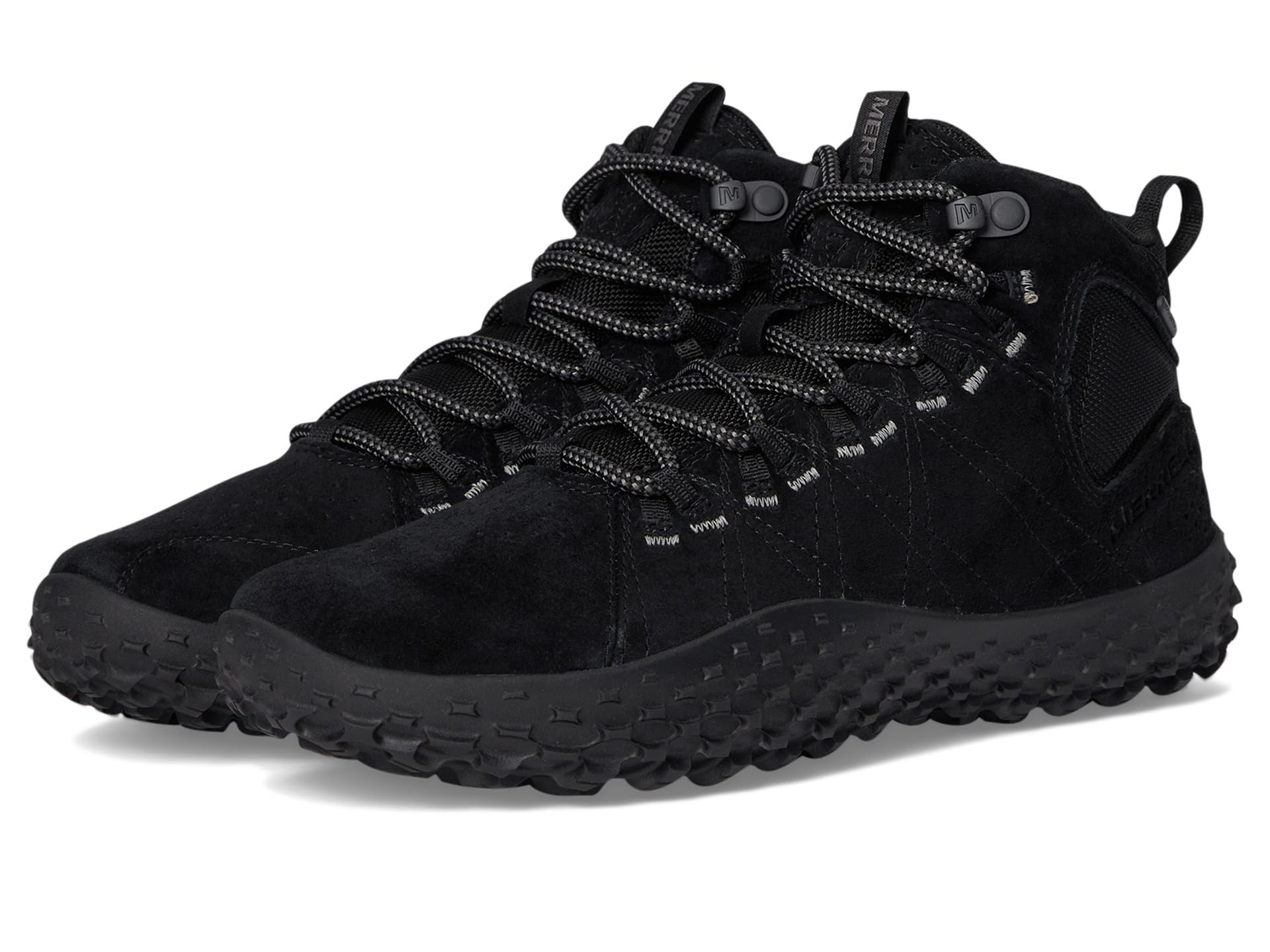
1. Merrell Women’s Wrapt Mid Waterproof Hiking Boots
Our pick — 4.5★ from 150+ verified ratings; the strongest balance of quality and price.
The crowd favorite that blends a barefoot-style feel with real ankle support you can hike in all day.
This is the pick that wins people over with its fit — owners consistently rave about the wide toe box and true-to-size comfort. At just 1 lb 5 oz per boot, it’s light enough to feel like a barefoot shoe, yet the aggressive rubber sole gives you serious grip on slippery rocks and icy patches. It’s the rare shoe that works for a light trail and a snow-covered path in the same week.
What makes it stand out from the Xero options below is the support. Several owners describe it as a great mix of barefoot freedom and structure, with one hiker reporting “Almost 50 miles in and feel great” on very rocky terrain. Another wears them constantly at work and notes there’s no break-in time needed — no blisters, no sore spots, right from the start.
The recurring note is the arch support: it’s present, which is great for some feet, but purists who want a completely flat, barefoot feel may find it a compromise. A few owners mention the fit runs slightly narrow, so if you have wide feet, go up a half size or plan for thinner socks.
Standout comfort: The fit and light weight earn the most praise by far, with dozens of owners calling it the most comfortable shoe they own.
One honest trade-off: It’s a hybrid, not a strict barefoot shoe — the built-in arch support is a dealbreaker for some purists but a blessing for most.
Reach for this if: you want a zero-drop shoe that feels broken-in from day one and handles both daily wear and real trails.
Look elsewhere if: you demand a completely flat, arch-less barefoot shoe with zero structure between you and the ground.
2. Xero Shoes Men’s Xcursion Fusion Waterproof Hiking Boots
A fully waterproof boot built for the most extreme adventures, with a sole that lets you feel the ground.
This boot earns its premium price with a 10mm FeelTrue® sole that delivers “just right” protection — enough to shield you from sharp rocks, thin enough to keep that low-to-the-ground balance Xero is famous for. At just 13.7 ounces each for a Men’s 9, it’s remarkably light for a boot that includes a seam-sealed inner bootie and a water-resistant membrane behind the mesh. The rugged dual chevron tread with 3.5mm lugs gives you serious grip on wet pavement, gravel, and light snow.
The biggest praise from owners is water resistance — dozens report keeping their feet dry in wet grass and rain, with several calling the quality surprisingly high. Long-time barefoot users find the flexible sole provides ankle stability that other minimalist boots lack, and it’s comfortable enough for 16-hour work days on a farm.
But fit is where opinions split. While some with wide feet find it perfect, reviews also note the boot runs narrow, and there are inconsistent reports about sizing — one owner found a 9 too long and an 8.5 too narrow. A few owners mention durability concerns, including one who saw the sole separate at the ankle after 8 miles of trail use. Buyers generally recommend ordering half a size up.
What wins people over
- Truly waterproof construction that keeps feet dry in wet conditions
- Lightweight at 13.7 oz with a flexible, ground-feel sole
- Break-in is quick despite some initial stiffness
The honest trade-offs
- Fit runs narrow for some; sizing can be inconsistent
- Isolated durability complaints about sole separation
- Not ideal when temperatures drop below mid-30s F
Best for: backpackers and trail hikers who want a lightweight boot with real waterproofing and a genuine barefoot feel.
Think twice if: you have a wide foot or high instep — the narrow toe box has been the most common reason for returns.
3. Xero Shoes Men’s Mesa Trail Waterproof Barefoot Trail Run Shoe
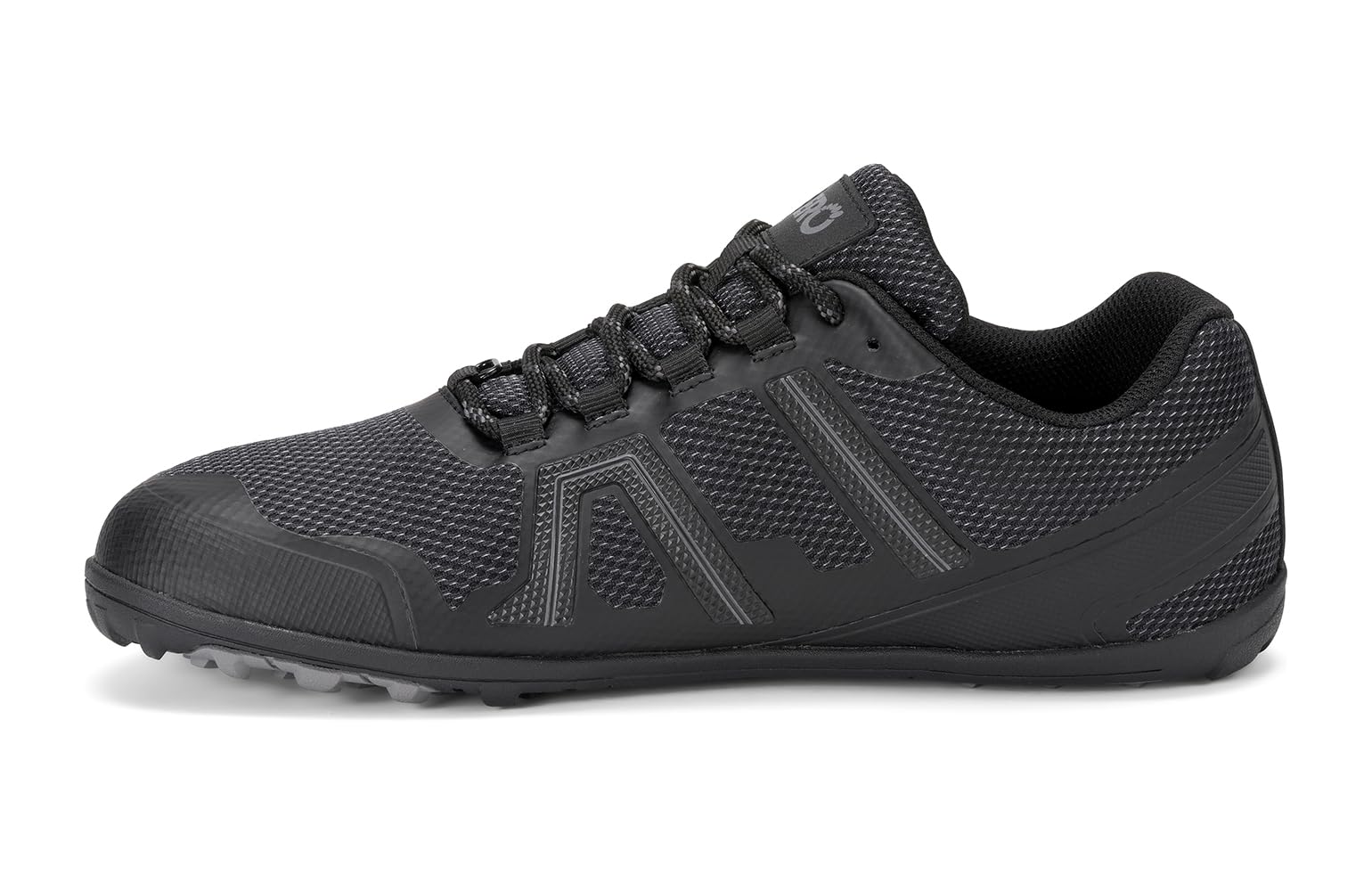
The crossover shoe that transitions from snow-covered mountain paths to your daily routine without missing a beat.
This is the shoe for people who want one pair that does everything. Owners use it for serious hikes on snowy trails in South Korea, for daily street wear, for softball, and even for rafting and kayaking. It’s fast-drying, lightweight, and the traction gets consistent praise — one owner playing sports reported feeling secure with good grip right away.
The waterproofing is where this shoe gets complicated. While it’s marketed as waterproof and some owners confirm they can walk over wet grass without issue, there are also recurring reports of the waterproofing failing. Customers note “Waterproofing failed after 2 weeks; feet damp in wet grass,” and another owner found water getting in through the seams. Treat this as water-resistant rather than fully waterproof and you won’t be disappointed.
Fit is another mixed bag. One owner found the toe box nice and wide and comfortable, while another said toes were “crammed in” and the toe box too small. The general consensus is that this model runs slightly small, so sizing up by half a size is the safe move if you’re between sizes.
Versatile performer: The design and traction make it a great all-rounder, from water sports to daily wear — the “epic traction” is a recurring theme.
Know the limit: Durability and waterproofing get mixed reports, so it’s best for lighter use rather than as your primary rain hiker.
Choose it for: a flexible, fast-drying zero-drop shoe that works on trails, in water, and around town.
skip it if: you need guaranteed waterproofing for sustained rain or deep puddles — this one has inconsistent results.
4. Merrell Men’s Wrapt Mid Waterproof
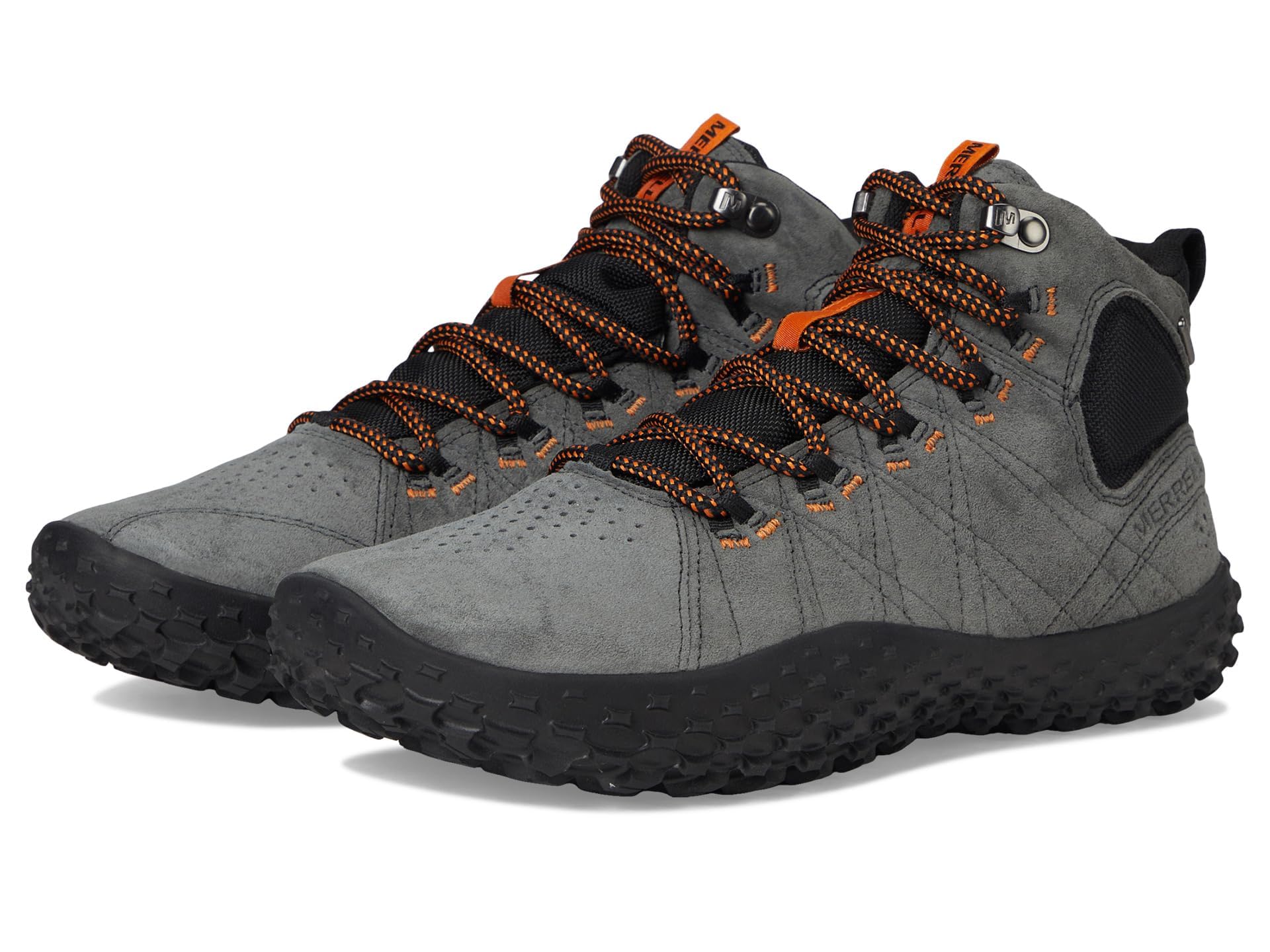
The zero-drop boot that fixes foot pain for hikers who spend five miles a day on their feet.
This men’s version of the Wrapt Mid is the shoe that owners credit with genuinely changing their daily comfort. A 69-year-old hiker reported these shoes eliminated their foot pain entirely, and they’ve now lasted about 3 seasons at 5 miles per day. The comfort is the most-praised aspect across reviews, with a water resistance that’s so effective that owners describe water beading right off the surface.
Compared to the women’s version above, this one gets even stronger reviews on grip and design. Owners describe the traction as “unbelievable” and note it’s great for hunting and exploring, with the flexibility comparable to wrestling shoes. It’s comfortable for cross-country hiking and breathable enough for long days without foot ache.
The trade-off is the arch support. It suits low arches well, but owners who need support for high arches find it lacking, and the boot runs narrow for some. Sizing runs large for some — one owner who normally wears an 11 found an 11 fit tight and should have gone to an 11.5. A few owners mention the laces come loose consistently.
Why it earns its keep
- Extreme grip that owners describe as unbelievable on rugged terrain
- Waterproofing so effective water beads off the surface
- Comfort that holds up for 5-mile daily hikes over multiple seasons
Where it falls short
- Arch support is best for low arches only
- Runs narrow for wider feet; sizing can be inconsistent
- Laces may need replacing for some owners
Best for: hikers and workers who log serious daily mileage and want reliable waterproofing with a supportive barefoot feel.
Not for: those with high arches needing serious arch support, or wide-footed buyers who can’t size up.
5. Altra Men’s Lone Peak 9 Waterproof Low Hiking Shoe
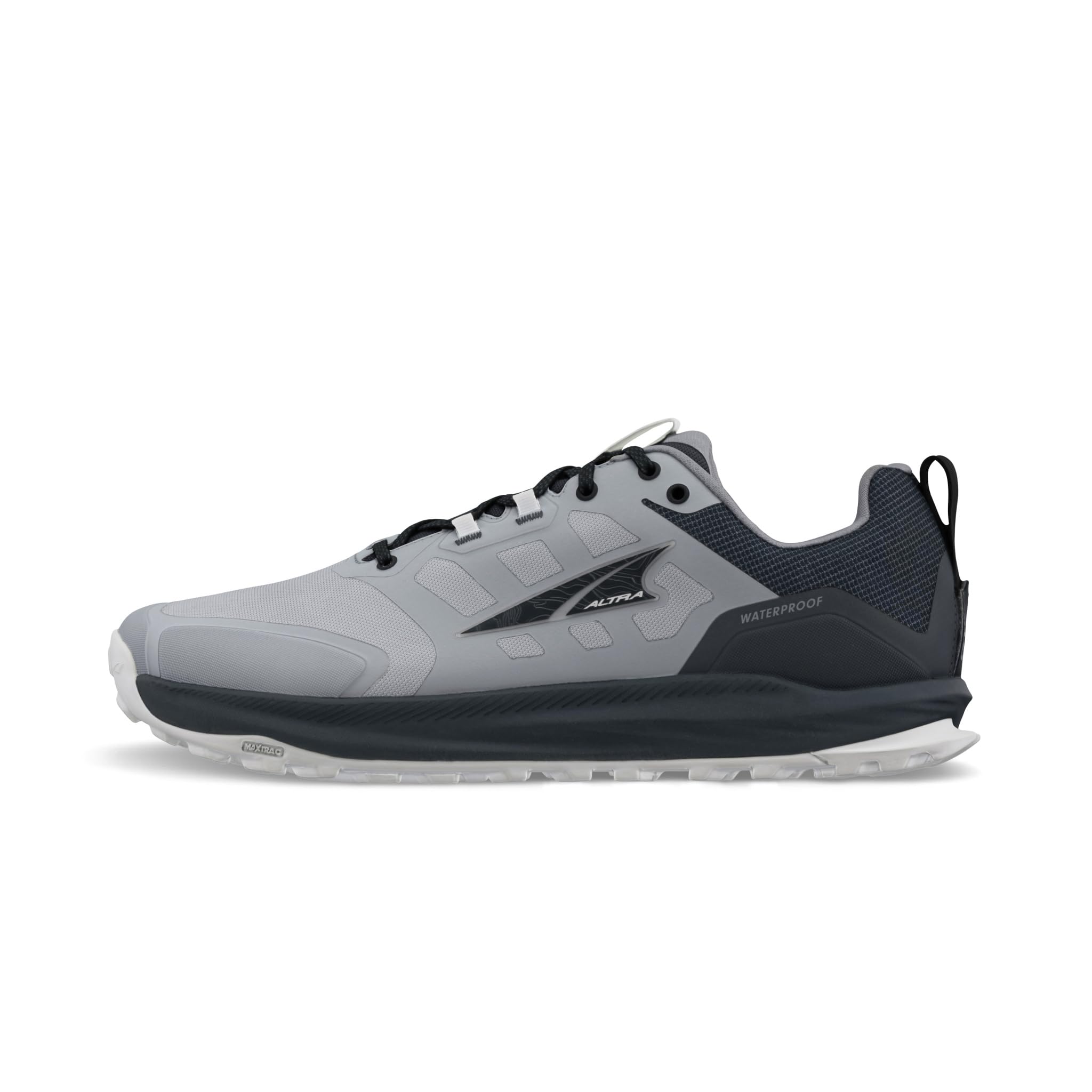
The famous Lone Peak gets a waterproof upgrade, keeping its legendary roomy toe box for natural movement.
If your toes need space, this is the shoe. Altra’s FootShape design gives this the roomiest toe box of any pick here, and it’s a huge part of why loyal owners keep coming back. One nurse who switched from Hokas (which crushed their toes) says the wide toe box makes a real difference during 10 km shifts, and the waterproofing handles spills and puddles with ease. The Hydroguard waterproof membrane keeps feet dry in puddles, and the MaxTrac outsole delivers the grip you need on dirt and mud.
The midsole uses Altra EGO foam for a responsive feel, while the Stoneguard insert protects your feet from rocks and debris underfoot. At 13.85 oz for a men’s shoe, it’s a touch heavier than the Xero Xcursion Fusion’s 13.7 oz, but owners say the cushioning makes it worth it for long trail runs. It runs big, so sizing down a half size is the common advice.
Durability is the honest concern here. Some owners say the shoe lasts for years and is the most durable they’ve owned, with older pairs still in rotation as daily shoes. But others report the Lone Peak 9 coming apart after about 5 months of daily trail running. Fit also gets mixed feedback — one owner with wide forefoot found it runs snug across the top of the toes, while another with big feet loves the width.
Quality and comfort: These are the two most-discussed strengths, with the toe box getting specific callouts from owners who need the extra width.
The durability split: Some owners get years of use, others see it fall apart in months — treat it as a single-season trail shoe and you’ll be happy.
Best for: trail runners and wide-footed hikers who want the roomiest zero-drop toe box with real waterproofing.
Think twice if: you’re hard on shoes — durability reports are split, and the price is the highest of any pick here.
Understanding the Specs
What “Zero Drop” Actually Means
Zero drop means the heel and the ball of your foot sit at the exact same height, so your foot rests flat on the ground just as it would barefoot. This forces your calf muscles and Achilles tendon to stretch and work with each step, which can feel strange for the first week — expect some muscle soreness as your body adjusts to a more natural stride.
Waterproofing Membranes
Waterproof shoes typically use a thin membrane or a sealed inner bootie that blocks water from getting in while still letting sweat escape. A seam-sealed inner bootie, like the one in the Xero Xcursion Fusion, is a stronger construction than a simple coating. Remember that no membrane is permanent — heavy use and flexing eventually wear down any waterproofing, so consistent reports of “water beads off” (like the Merrell men’s boot) are a good sign of a quality membrane.
Wide Toe Box and Foot Shape
A foot-shaped or wide toe box lets your toes spread naturally, which improves balance and prevents the cramped feeling many traditional shoes cause. Brands like Altra and Xero design their shoes around this principle, and for zero drop shoes it’s a core feature — the wide toe box is what makes the flat sole feel stable and comfortable rather than awkward.
Ground Feel and Sole Thickness
Zero drop shoes vary in how much sole you get between your foot and the ground, measured in millimeters. A 10mm sole like the Xero Xcursion Fusion offers “just right” protection that shields you from sharp rocks while still letting you feel the terrain underfoot. Shoes with more cushioning, like the Altra Lone Peak 9, offer more comfort at the cost of some ground feedback.
FAQ
What is the difference between zero drop and barefoot shoes?
Will zero drop shoes hurt my feet at first?
How do I know if a shoe is actually waterproof and not just water-resistant?
Should I size up in zero drop waterproof shoes?
Can I use zero drop hiking shoes for trail running?
How long do waterproof zero drop shoes last?
Are zero drop shoes good for people with flat feet or low arches?
Can I wear zero drop shoes every day?
How do I treat a waterproof shoe to keep it waterproof?
Can I return zero drop shoes if the fit isn’t right?
Final Thoughts: The Verdict
For the majority of shoppers, the best zero drop waterproof shoes are the Merrell Women’s Wrapt Mid for its unbeatable combination of instant comfort, wide toe box, and real trail grip. If you want a lighter, more rugged barefoot boot with verified waterproofing for serious adventures, the Xero Xcursion Fusion is the one to beat. And for trail runners with wide feet who want the roomiest toe box on the market, the Altra Lone Peak 9 Waterproof is the standout pick — just be mindful of the mixed durability reports before you commit. Whichever you choose, allow a week for your feet to adapt to the zero-drop feel, and you’ll likely prefer it over raised heels.
How We Picked
We do not accept paid placement. Every pick is matched to a real buyer and a real use-case; we do not hands-on test units.
Sources & Methodology
Specifications: manufacturer listings and product documentation. Review insights: verified customer reviews, as of August 2026. Pricing: not shown on this page (it changes often); check the current price via the retailer link.
As an Amazon Associate, Calories Fit earns from qualifying purchases. This does not affect which products we feature.