
Our readers keep the lights on and the coffee maker working hard! As an Amazon Associate, I earn from qualifying purchases.
Specs are compiled from manufacturer listings and verified buyer reviews and can change over time — please confirm the key details on the product page before buying.
A zero-drop boot has the same sole height at the heel and the toe — nothing lifts your heel the way a typical boot does. If you have spent years in standard boots with a raised heel, switching to zero drop can feel like tilting forward at first. But for hikers, ruckers, and anyone who wants their foot to land more naturally, this flat platform is a deliberate upgrade. The hard part is finding a pair that is genuinely zero drop (not just “low drop”) and built tough enough for the miles you plan to walk. This guide covers the five strongest candidates, from tactical duty to trail hiking, using real owner feedback and published specs to sort them out.
I’m Mohammad — the founder and writer behind Calories Fit. This guide is built by comparing the manufacturers’ published specifications and the patterns across verified customer reviews, so you get each pick’s real strengths and trade-offs instead of marketing spin.
After weeks of digging through the data, one thing is clear: finding the best zero drop boots for men means deciding how much ground feel and durability you actually need for your daily terrain.
Our Picks at a Glance
How To Choose The Best Zero Drop Boots for Men
Buying a zero-drop boot is a different process than grabbing a standard pair. You are not just looking for a comfortable boot — you are looking for a specific foot angle that changes how your calf, Achilles, and knee absorb impact. Here is what to check before you click add to cart.
Drop Height vs. Stack Height
“Zero drop” means the vertical distance from the floor to your heel is identical to the distance from the floor to your forefoot — a flat platform. Do not confuse this with “stack height,” which is how much cushion sits between your foot and the ground. A boot can be zero drop but still have a thick, plush midsole (like a 25mm stack), or it can be zero drop and very thin (like a 10mm stack). More cushion soaks up rocks but reduces ground feel. Less cushion gives you better proprioception but can be jarring on hard surfaces.
Toe Box Shape — Why It Matters for Zero Drop
A heel-to-toe drop change shifts your weight forward, so your toes naturally splay more when you land. If the toe box is too narrow or tapered, your toes will cramp. Look for terms like “wide toe box” or “FootShape fit” in the specs. A boot that feels tight across the toes on first try is likely the wrong shape for zero-drop walking.
Midsole Material and Flexibility
A zero-drop boot with a stiff, highly structured midsole can fight the natural foot motion you are trying to encourage. Softer midsoles (EVA, expanded TPU) allow the foot to flex more naturally. But softer also wears faster if you are carrying a heavy pack. Decide which trade-off fits your weight and use-case before buying.
Quick Comparison
| Model | Best For | Weight | Upper Material | Stack Height | Amazon |
|---|---|---|---|---|---|
| Belleville TR501 AMRAP★ Best Overall | Rucking & long shifts | Very light (tennis-shoe feel) | Leather/Nylon | Removable EVA insole | Amazon |
| Merrell Wrapt Mid WaterproofBest for Trails | Trail hiking with ankle support | Lightweight | Leather/Textile | Zero-drop hybrid | Amazon |
| ALTRA Lone Peak Hiker 3 | All-day trail walking | 12 oz | Polyester mesh / suede | 25 mm / 25 mm | Amazon |
| Belleville Mini-Mil TR102 | Minimalist barefoot transition | 2.31 lbs per pair | Leather & Nylon | 2mm die-cut EVA cushion | Amazon |
In‑Depth Reviews
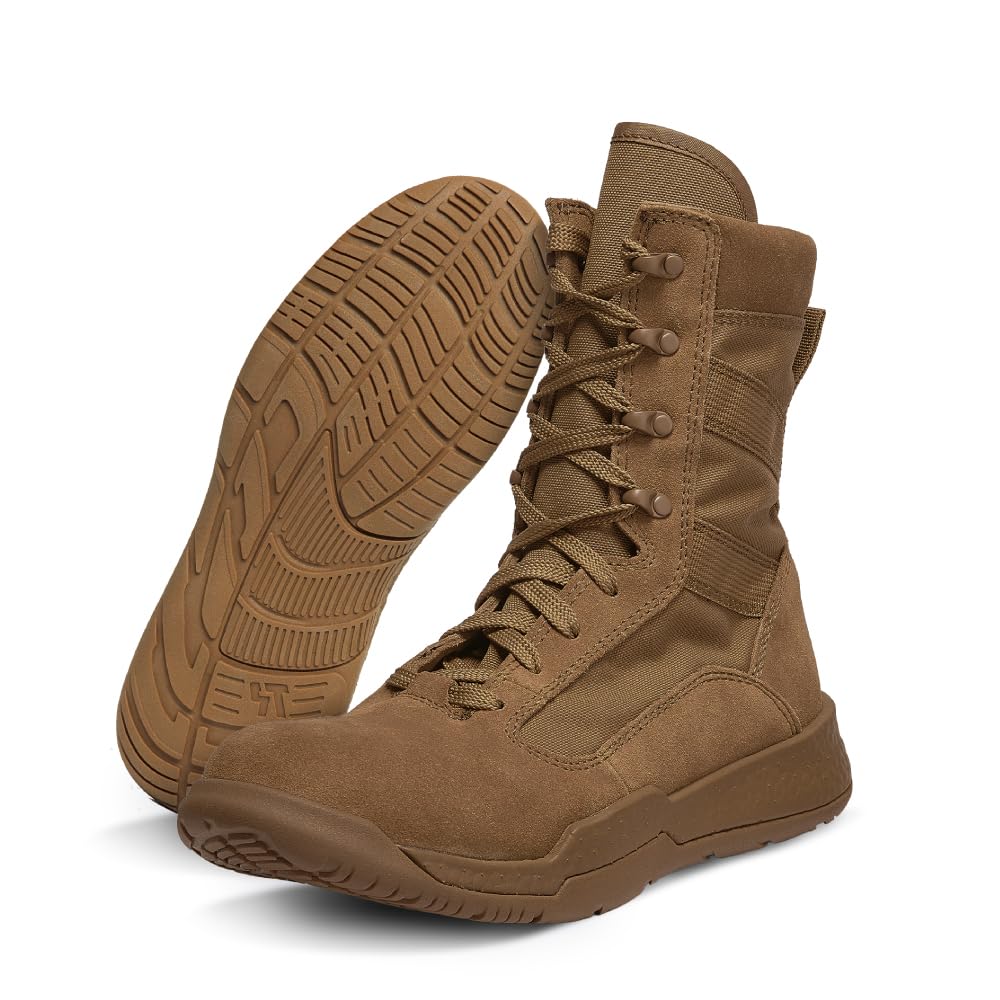
1. Belleville TR501 AMRAP Military Boots
Our pick — over 4.5★ from 500+ verified ratings; the strongest balance of quality and price.
The crowd favorite that feels like a tennis shoe but holds up under a ruck
This is the boot that keeps showing up on top of the list for a reason. With a zero-drop platform, a removable molded EVA insole, and a moisture-wicking lining, the TR501 is built to disappear on your foot. The upper is leather and nylon, giving it a classic combat boot look while staying breathable. The midsole is expanded TPU — a material that offers more bounce and durability than standard EVA without adding weight. The outsole is a rubber compound that grips dirt and gravel well but, as buyers report, is “very slippery on any wet/slick surface” — a real caveat if your route includes polished floors or wet concrete.
Comfort is the most-praised feature here, with 70 owners praising comfort compared to 41 for quality. Many say the break-in is almost nonexistent. A 19-year Army veteran calls them “the best boots I’ve ever owned, this is my third pair.” But there is a consistent sizing quirk: most owners advise ordering a half-size down, because the boot stretches slightly after ruck marches. One experienced user noted their size 8 “expanded half-size after ruck marches, causing blisters.” A smaller group of flat-footed owners found the arch support insufficient for 18-hour days and swapped in their own orthotic insole — a fix that worked well.
Compared to the Mini-Mil TR102 below, the TR501 offers more cushion and a more conventional fit, making it the better pick for someone new to zero drop. The main durability concern is the outsole: several owners mention it wears faster than they expected on pavement. But given the high rating and the sheer number of repeat buyers, this is the safest starting point for anyone who wants the zero-drop benefit without going truly minimal.
What wins people over
- Nearly zero break-in — wear them from the start
- Extremely lightweight for a tactical boot (owners call it a “tennis shoe feel”)
- Removable EVA insole lets you add custom orthotics
- Versatile across rucking, gym, and everyday standing
The honest trade-offs
- Outsole loses grip on wet or slick surfaces
- Runs large — plan to order a half-size down
- Some flat-footed users need extra arch support for very long days
Reach for this if: you want a zero-drop boot that feels familiar, requires almost no break-in, and works for rucking, the gym, or a full shift on your feet.
Think twice if: you regularly walk on wet tile or smooth concrete, or you have very high arches and need built-in support without an insole swap.
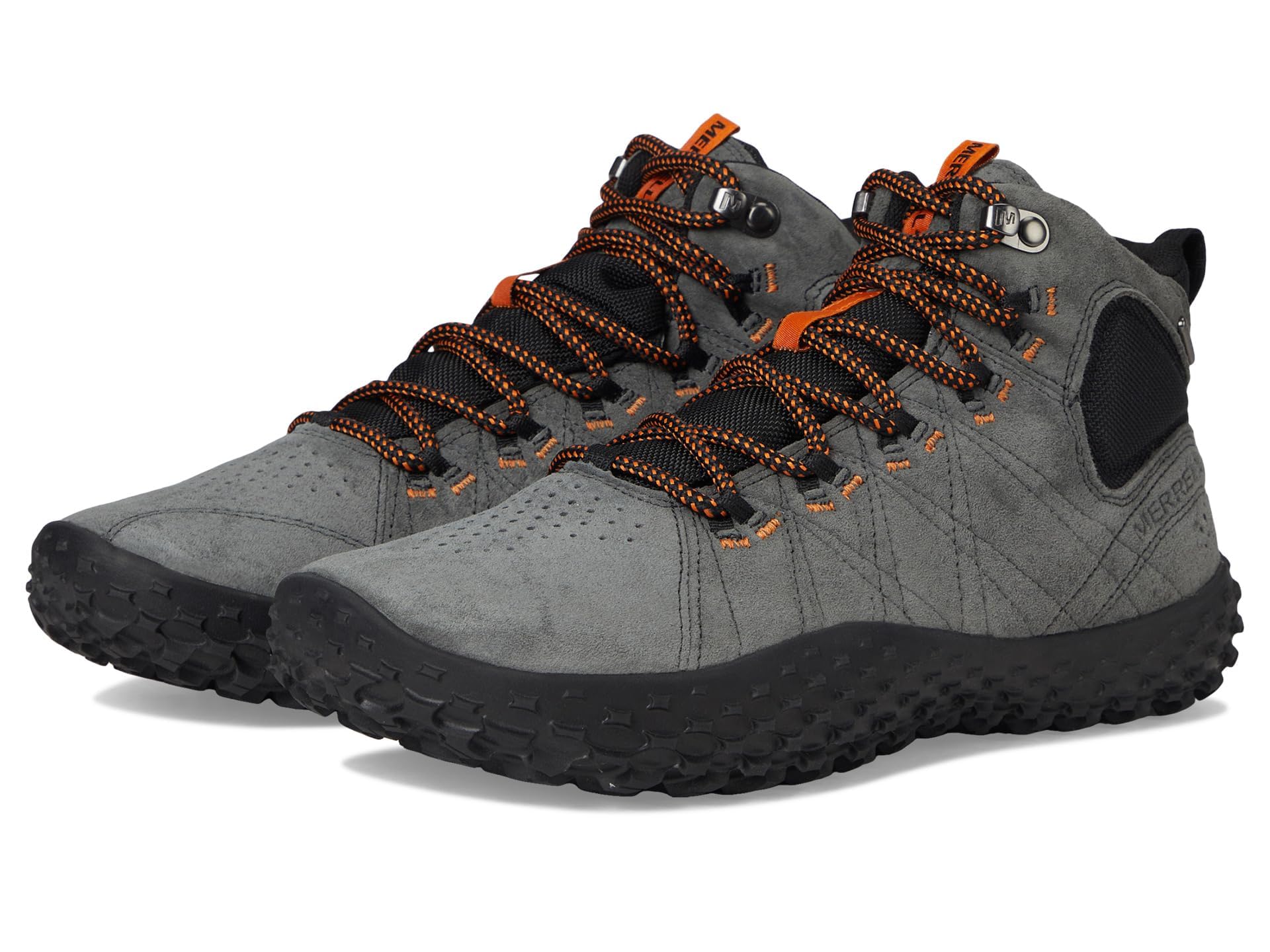
2. Merrell Mens Wrapt Mid Waterproof
A zero-drop hiker that wraps your foot like a glove and shrugs off water
This boot is built on Merrell’s barefoot collection last — meaning the shape inside is designed to mimic the natural human foot, with the toe box staying in the position it would be without shoes. The aggressive rubber outsole bites into loose terrain, and the waterproof membrane does exactly what it says: customers note water “beads right off the surface.” The zero-drop platform is paired with a mid-height collar that provides ankle support without forcing your foot into a raised heel position.
Comfort and fit are the two most-discussed aspects, and the praise is consistent. One owner who wore them for four months of work says they are “extremely comfortable and breathable,” with excellent grip and waterproofing. Another took them to Arizona for hiking and was “surprised how nice and comfortable they were.” The arch support is noticeable — good for low arches, but a few with high arches found it lacking. The main downside is the lace system: some owners note the laces come off consistently during the day, which is a minor irritation on a long hike. The break-in also took longer for a few buyers, with one reporting side foot pain for the first few wears.
Compared to the ALTRA Lone Peak below, the Merrell offers a more structured midsole and a tougher outsole, so it feels more planted on rocky descents. But it is heavier than the Lone Peak, and the fit runs slightly narrow for those who need a truly wide toe box. The consensus is clear: if your feet are average-width and you want a zero-drop boot that keeps water out and grips well, this is your pick.
Strong points
- Excellent waterproofing — water beads right off the surface
- Good arch support for low arches
- Aggressive rubber outsole grips well on loose terrain
- Breathable even in warm weather
Know before you buy
- Laces can come undone during the day
- May feel narrow for feet needing a wide toe box
- Break-in period longer than some zero-drop boots
- Not a minimalist barefoot shoe — has real arch support
Grab these if: your priority is a waterproof, zero-drop hiker with proper ankle support and reliable traction for cross-country trails.
Skip them if: you need a barefoot-minimalist experience with a completely flat, unsupported footbed, or you have wide feet that need a spacious toe box.
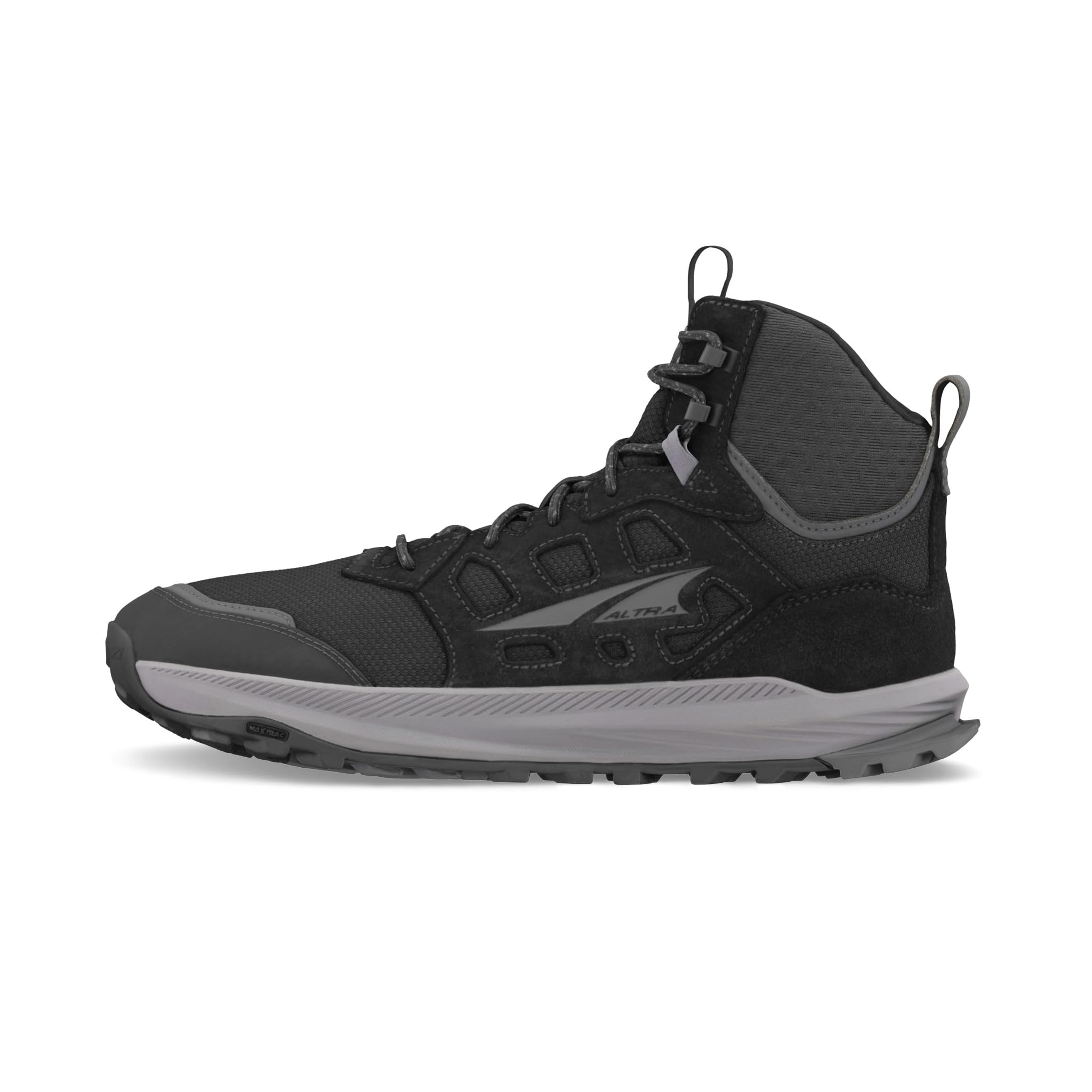
3. ALTRA Men’s Lone Peak Hiker 3
A 25mm cushioned platform that gives your toes room to spread naturally
ALTRA is a name that built its reputation on zero-drop and wide toe boxes, and the Lone Peak Hiker 3 doubles down on both. The stack height is 25mm at both the heel and the forefoot — that is a legitimate zero-drop platform with a moderate amount of cushion. The FootShape fit gives you “our roomiest toe box with plenty of room to help your toes move more freely,” according to the brand. The MaxTrac outsole is designed for grip on dirt and gravel, and the polyester mesh upper with a rubberized toe cap adds protection without weight. At 12 oz per boot, this is one of the lighter zero-drop hikers you can buy.
Comfort and quality are the top two praised aspects, but the fit is where opinions split. Several owners say the boots fit perfectly and are “very comfortable” for hiking in places like Zion National Park. One owner who stands 6’4″ and weighs 390 lbs calls them “the most comfortable shoes ever” for foot and ankle pain. But others report the tongue is too narrow at the top, rubbing the ankle at the top lace hook. One owner loved the zero drop but had to unlace the top hook to stop the irritation. Another owner’s first pair was great, but a second pair had uneven heels — a quality-control inconsistency. Durability also draws mixed notes: some report “stitching coming apart at the toe,” while others describe them as “very durable.”
Compared to the Merrell Wrapt, the Lone Peak runs wider and lighter, making it a better choice for people who need the anatomical toe-box shape. The trade-off is less aggressive tread and a softer midsole that feels less stable on sharp rocks. The catch is the price — at, it competes directly with the Belleville TR501 but offers less outsole durability for heavy pack use.
Standout features
- Widest toe box in the category — toes splay naturally
- Genuine 25mm zero-drop platform (25/25 stack)
- Lightweight at just 12 oz per boot
- Loved by heavy users for foot pain relief
Watch for
- Tongue can rub the ankle at the top lace hook
- Some quality-control variation between pairs
- Sand and small particles can get through the mesh upper
- Midsole is softer and less protective on sharp rocks
Ideal for: hikers who want the most natural foot splay possible in a zero-drop boot, plus enough cushion for all-day walking.
Not for: rocky, technical terrain where you need a stiffer sole and more aggressive tread, or anyone who dislikes a soft cushioned feel underfoot.
4. Belleville Mini-Mil TR102 Tactical Boot

A true zero-drop barefoot boot for those who want maximum ground feel
This is the boot that bridges tactical duty and minimalist philosophy. The TR102 features a 2mm die-cut EVA cushion midsole and a Vibram Tarsus outsole, meaning there is very little between your foot and the ground. The upper is leather and nylon, giving it a traditional boot profile, while the inside remains unlined for breathability. The zero-drop platform is genuine — no heel lift at all — and the removable PU cushion insole lets you fine-tune the feel or go completely flat.
The most consistent praise is about stability and ground feel on technical terrain when carrying a load: one owner who wore them with a 40lb pack reports “no foot fatigue after 12.5 hours.” Another working in EMS says they are “comfortable for 12+ hour shifts” with better grip on wet floors than Haix or Danner boots. But the durability of the upper draws frequent criticism. Multiple reviewers point out the leather coating scuffs and flakes within a month of use. The lace loops dig into the top of the foot for some, and the heel counter initially digs in until broken in. Sizing is described as “wonky” — one owner who wears a women’s 7.5 needed a 6.5 wide — and a few experienced uneven sizing between the left and right boot.
Compared to the cushioned TR501, the TR102 is a different animal entirely. The thin sole means you feel every rock and pebble, which is exactly what barefoot enthusiasts want but can be punishing for someone transitioning to zero drop. The TR501 is the easier daily wear; the TR102 is the specialist tool. The sole can last about a year of heavy use before the tread goes, but the upper may need attention sooner. The crowd of 950+ ratings confirms this is a well-known product, but the 4.0 average reflects the polarizing nature of true minimalist footwear.
What it does best
- Excellent ground feel and stability on technical terrain
- Very lightweight at 2.31 lbs per pair
- Zero-drop platform is genuine and uninterrupted
- Works well for flat feet with wide toe box
Real downsides
- Upper leather coating scuffs and flakes within a month
- Sizing is inconsistent — plan for returns
- Thin sole offers almost no protection from sharp rocks
- Not waterproof — canvas upper lets water through in rain
Best for: experienced minimalist or barefoot users who need a tactical boot with zero drop and a wide toe box for long shifts or rucking.
skip it if: you are new to zero drop, walk on rough or rocky terrain regularly, or need a boot that can survive a year without the upper deteriorating.
Understanding the Specs
Drop (Heel-Toe Offset)
This is the spec that defines the entire category. Drop is the height difference between the heel and the forefoot of the midsole. A zero-drop boot measures 0mm — meaning your heel sits at the exact same height as your toes. For comparison, a typical running shoe has an 8-12mm drop, which lifts your heel and tilts your pelvis forward. Going to zero drop can take a few weeks of gradual wear while your calves and Achilles adjust.
Stack Height
This is the total thickness of the midsole material between your foot and the ground. A higher stack (like 25mm on the ALTRA Lone Peak) gives more cushion and reduces impact, so you feel less of the rocks and roots below. A lower stack (like 2mm on the Belleville Mini-Mil boots) gives more ground feel and stability but can be jarring on hard surfaces. Stack height is measured separately at the heel and forefoot; for zero-drop boots, both numbers will be the same.
Midsole Material
The midsole is the foam layer that provides cushion. Common materials include EVA (ethylene-vinyl acetate — a soft, lightweight foam) and expanded TPU (thermoplastic polyurethane — a bouncier, more durable foam that holds its shape longer). A boot with a 2mm die-cut EVA midsole is extremely minimal; one with a full expanded TPU midsole offers more rebound and lasts longer before packing out.
Toe Box Shape
Zero-drop boots shift some of your weight forward, which causes your toes to splay more with each step. A narrow or pointed toe box will squeeze your toes together. Brands like ALTRA use a “FootShape” fit that provides the widest toe box in this category. Belleville’s Mini-Mil line also offers a wide toe box, but buyers report it is not as spacious as ALTRA’s. The shape of the toe box can make or break a zero-drop experience.
FAQ
Can I switch from regular boots to zero-drop boots overnight?
Are zero-drop boots the same as barefoot boots?
Will zero-drop boots help with plantar fasciitis or heel pain?
Do I need to size down for zero-drop boots?
How long does it take to break in a zero-drop boot?
Are zero-drop boots good for rucking with a heavy pack?
Why do some zero-drop boots have a removable insole?
Are zero-drop boots waterproof?
How long do zero-drop boots typically last?
Can zero-drop boots be worn for everyday work on concrete floors?
Final Thoughts: The Verdict
The Belleville TR501 AMRAP is the easiest recommendation for the widest range of buyers — it is comfortable from day one, supportive enough for rucking and all-day wear, and the removable insole lets you dial in the arch support you need. If your priority is waterproof trail hiking with structure, the Merrell Wrapt Mid Waterproof is a solid choice that handles wet terrain without a fuss. And for the believer in true minimalist zero drop who needs a tactical boot, the Belleville TR102 is the most faithful to the barefoot philosophy, with the understanding that its upper durability is a compromise.
How We Picked
We do not accept paid placement. Every pick is matched to a real buyer and a real use-case; we do not hands-on test units.
Sources & Methodology
Specifications: manufacturer listings and product documentation. Review insights: verified customer reviews, as of July 2026. Pricing: not shown on this page (it changes often); check the current price via the retailer link.
As an Amazon Associate, Calories Fit earns from qualifying purchases. This does not affect which products we feature.