
Our readers keep the lights on and the coffee maker working hard! As an Amazon Associate, I earn from qualifying purchases.
Specs are compiled from manufacturer listings and verified buyer reviews and can change over time — please confirm the key details on the product page before buying.
A sweetener that tastes like sugar, dissolves cleanly, and leaves no bitter echo is harder to find than you might think. But a handful of options actually deliver real sweetness without the calories or the chemical ghost. This guide cuts through the noise to show you exactly which ones deliver on flavor, value, and real-world performance—so you can make the switch for good.
I’m Mohammad — the founder and writer behind Calories Fit. This guide is built by comparing the manufacturers’ published specifications and the patterns across verified customer reviews, so you get each pick’s real strengths and trade-offs instead of marketing spin.
If you manage diabetes, follow a keto diet, or simply want to cut empty calories, the right zero calorie sugar can make or break your meal plan — and the nine below each earn a spot in your pantry.
Our Picks at a Glance
How To Choose The Best Zero Calorie Sugar
The zero-calorie sweetener aisle can feel overwhelming — stevia, allulose, monk fruit, saccharin, and a dozen blends compete for your attention. But the right choice really depends on three things: how you plan to use it, your tolerance for aftertaste, and whether you care about ingredient simplicity.
Match the sweetener type to your use
Stevia and monk fruit blends are excellent for coffee, tea, and no-bake recipes because they dissolve quickly. Allulose behaves nearly identically to sugar in baking — it caramelizes, browns, and gives cookies the right texture. Saccharin-based sweeteners (the pink packets) are a classic choice for beverages and last almost forever on the shelf, but some people detect a distinct aftertaste.
Check the serving size and sweetness ratio
Not all packets are created equal. One packet of stevia might equal two teaspoons of sugar, while an allulose serving may only match two teaspoons. If you are switching from sugar, understanding this ratio prevents under-sweetened drinks and over-pouring. A blend with erythritol can also create a “cooling” sensation on your tongue — fine for some, off-putting for others.
Review the ingredient list for fillers and additives
Some zero-calorie sweeteners contain dextrose, maltodextrin, or other bulking agents that add minimal calories but can affect blood sugar. If you need a truly calorie-free option with no glycemic impact, look for single-ingredient stevia, allulose, or monk fruit products. The shorter the ingredient list, the fewer surprises.
Quick Comparison
| Model | Best For | Sweetener Type | Packet Count | Sweetness Ratio | Amazon |
|---|---|---|---|---|---|
| Truvia Stevia Leaf Packets★ Best Overall | Best Overall | Stevia & Erythritol | 140 | 1 packet = 2 tsp sugar | Amazon |
| Happy Belly Pink SaccharinBulk Value King | Bulk Value | Saccharin | 1000 | 1 packet = 2 tsp sugar | Amazon |
| EQUAL 0 CalorieClassic Choice | Classic Taste | Aspartame & Acesulfame-K | 800 | 1 packet = 2 tsp sugar | Amazon |
| SPLENDA Stevia | Plant-Based | Stevia | 500 | — | Amazon |
| Amazon Grocery Stevia & Erythritol | Budget Bulk | Stevia & Erythritol | 1000 | 1 packet = 1.5 tsp sugar | Amazon |
| Monin Sugar Free Sweetener | Liquid Syrup | Sucralose | — | — | Amazon |
| Truvia Allulose Sweetener | Baking & Coffee | 100% Allulose | — | 1 tbsp = 2 tsp sugar | Amazon |
| Viva Doria Allulose | Large Batch Baking | 100% Allulose | — | About 70% as sweet as sugar | Amazon |
| Micro Ingredients Golden Monk Fruit | Brown Sugar Substitute | Monk Fruit & Allulose | — | 1:1 brown sugar | Amazon |
In‑Depth Reviews
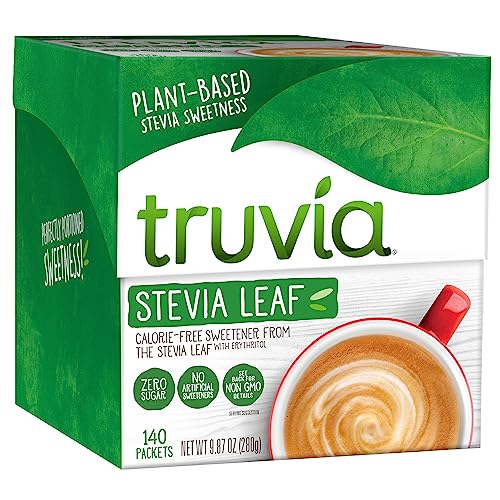
1. Truvia Calorie-Free Sweetener Stevia Leaf Packets, 140 Count
Our pick — over 4.5★ from 20,000+ verified ratings; the strongest balance of quality and price.
It avoids the bitter, metallic aftertaste that ruins most stevia, and buyers report it tastes more like sugar than any other zero-calorie option.
Truvia’s 140-count box has earned a devoted following among people who have tried every sweetener on the shelf. The blend of stevia leaf extract and erythritol (a sugar alcohol that adds bulk) delivers a sweetness that mirrors sugar closely — each packet equals two teaspoons of the real thing — without the bitter, metallic linger that plagues cheaper stevia brands. Owners consistently call it the best-tasting stevia on the market, noting that it dissolves cleanly in both hot coffee and iced tea without leaving a grainy residue.
At 140 packets, this is a solid mid-range buy — not the biggest box, but the flavor consistency means you use less than you might with weaker alternatives. The 4.6 x 5.3 x 4.8-inch carton is compact enough to fit in a kitchen drawer or an office desk. Unlike the Happy Belly 1000-count bulk box below, this is the pick if taste purity matters more than stockpiling.
The trade-off? Truvia is costlier per packet than some store-brand rivals. If you are going through dozens of cups a day, the value gap becomes noticeable. But for the person who has hated every sweetener until now, this one usually changes the conversation.
Why people love it
- Taste is the most-praised feature — over 370 owners call it out for having no aftertaste
- Each packet sweetens like 2 teaspoons of sugar, so a little goes a long way
- Non-GMO, gluten-free, and kosher certified
The honest trade-off
- Erythritol can cause a cooling sensation in some drinks
- Smaller packet count means more frequent reordering for heavy users
Reach for it if: you want a naturally-derived sweetener that disappears into your drink with no weird aftertaste — and you prioritize flavor over sheer quantity.
Think twice if: you need a budget-friendly bulk option for a high-traffic kitchen; the per-packet cost adds up.
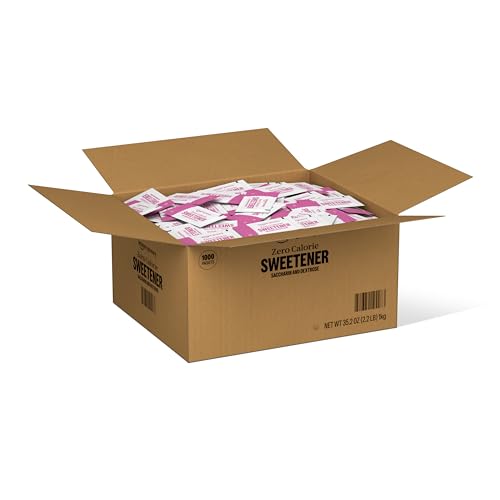
2. Amazon Brand – Happy Belly Zero Calorie Pink Saccharin Sweetener, 1000 Count
For the price of a few fancy coffees, you get a thousand servings of classic pink-packet sweetness that lasts months.
If you grew up on saccharin-based sweeteners (the classic pink packets), the Happy Belly version delivers the exact same taste profile for significantly less money. Each 35.2-ounce box holds a full 1000 individually wrapped packets, making it a marathon option for offices, break rooms, or households where coffee runs all day. The formula uses saccharin and zero calories — no aspartame, no erythritol, no cooling effect.
Owners note that it dissolves quickly in hot drinks and tastes indistinguishable from the expensive name-brand pink sweeteners. The value for money is the standout feature here, with over 60 people singling it out. While the Truvia box above holds 140 packets, this box holds 1000 packets. If you are feeding a family or a workplace, that difference is enormous.
The catch is that saccharin does have a distinct aftertaste that some people detect more strongly than others. A few customers also reported inconsistent packet counts, so it is worth giving the box a quick inventory check when it arrives. But if you already like pink sweetener and want the lowest cost per packet, this is the one.
Bottom line: Indistinguishable from pricier pink brands, and the 1000-count box will last most people months. The trade-off is that saccharin’s classic bite is not for everyone — if you hate the aftertaste of artificial sweeteners, look at the allulose or monk fruit picks below.
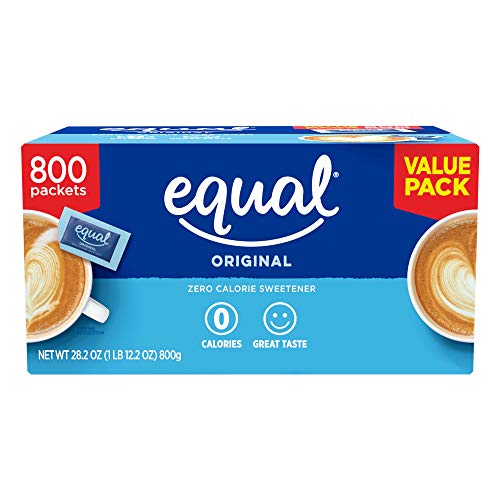
3. EQUAL 0 Calorie Sweetener, Aspartame and Acesulfame-K Sweetener Packets, 800 Ct
The blue packet that has anchored coffee counters for decades now comes in a massive 800-count box with a dispenser that works.
Equal’s formula blends aspartame with acesulfame-K (acesulfame potassium, a high-intensity sweetener that helps the aspartame taste more like sugar) to create a sweetness profile that many people find the closest to sugar’s actual taste — no bitter vegetable notes, no cooling after-sensation. The 800-count box is designed for heavy daily use; the packaging itself doubles as a dispenser, with a bottom opening that lets you pull packets one at a time without digging through a pile. It is a thoughtful touch that matters when you are making coffee before your brain is fully awake.
Owners mention the packets dissolve almost instantly without stirring, which is a genuine advantage over some stevia products that need aggressive mixing. The value here is striking — 450 praise it as a great buy, making value the most-discussed aspect by a wide margin. Each packet matches the sweetness of two teaspoons of sugar, so the math is simple for anyone tracking their intake.
The honest downside is that aspartame remains controversial for some users, particularly those with phenylketonuria (PKU) who must avoid it entirely. And while the majority find no aftertaste, a minority detect a faint chemical note that stevia and allulose avoid. Still, if you have used Equal for years and just want the biggest box available, this 800-count option is tough to top.
What wins people over
- Value for money is the #1 praised feature — 450 owners call it out
- Dispenser box design makes daily use easy
- Dissolves instantly in both hot and cold beverages
Who should skip it
- Not suitable for those avoiding aspartame or with PKU
- A minority detect a chemical aftertaste
Grab it if: you know you like Equal and want to buy in bulk — the 800-count box and built-in dispenser make it the easiest classic sweetener on this list.
Pass if: you are trying to avoid artificial sweeteners entirely; stevia or allulose are cleaner picks for you.
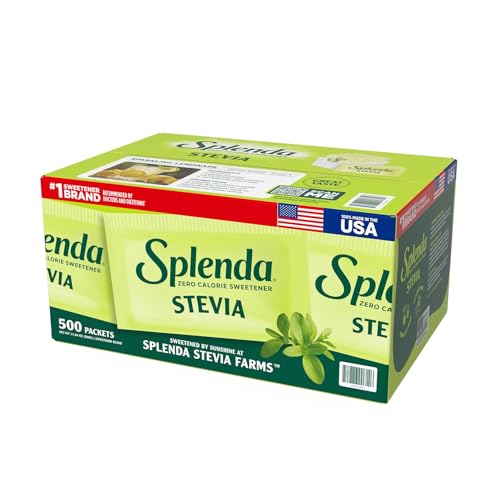
4. SPLENDA Stevia Zero Calorie Sweetener, Plant Based Sugar Substitute Granulated Powder, 500 Count
Splenda grows its own stevia in Florida to avoid the bitter, licorice flavor that ruins cheaper imports — and 500 packets back it up.
Splenda took a different approach with this product: instead of importing stevia, they grow it on their own farm in central Florida, which gives them control over the plant variety and the final taste. The result is a stevia that manages to avoid the bitter, licorice-like punch that turns some people off. Owners describe it as tasting like sugar with no aftertaste, and many say the serving size feels generous compared to competitors.
At 500 packets in a box that measures 9.65 x 10 x 4.72 inches, this is a substantial pantry item. At 9.65 x 10 x 4.72 inches, that size is noticeably larger than the Truvia box at 4.6 x 5.3 x 4.8 inches. — so plan your storage space accordingly. The packet fill is heavier than some rivals too; several owners note that one Splenda Stevia packet delivers more sweetening power than a competitor’s packet, which means you may use fewer per drink.
The recurring practical gripe is that some packets arrive broken — likely from shipping pressure — though owners who repurchase regularly still call it their go-to. If you want a stevia that comes from a transparent, domestic supply chain and you value packet size over packet count, this is a strong contender.
One-sentence verdict: Better-tasting than most stevia options thanks to US-grown plants, and the 500-count box offers a good middle ground between the small Truvia pack and the massive bulk boxes.
5. Amazon Grocery, Zero Calorie Stevia and Erythritol Sweetener Packets, 1000 Ct
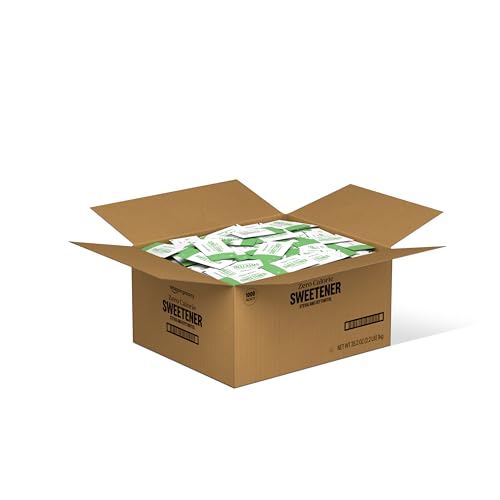
A thousand packets for a low price, but with a catch: each packet is noticeably smaller.
This Amazon Grocery sweetener blends stevia with erythritol and comes in a 1000-count box weighing 2.2 pounds — the same heft as the Happy Belly saccharin box above, but with a plant-based formula. Each packet delivers the sweetness equivalent of 1.5 teaspoons of sugar, which is slightly weaker than Truvia’s 2-teaspoon ratio. That difference matters: you may need an extra packet per drink to hit the same sweetness level.
The biggest practical concern here is packet fill inconsistency. Some owners find the packets match a standard Truvia portion; others report them noticeably smaller, On the plus side, if you are okay using a little more per cup, the overall value still works out.
This is a decent budget-friendly option for someone who goes through sweeteners quickly and does not mind adjusting their pour. But if consistency from packet to packet matters — or if you want a stronger single-serving hit — the Truvia or Splenda options above are more reliable.
Best for: cost-conscious buyers who use sweetener throughout the day and are flexible with the packet size. The value-for-money rating is strong, but sweetness level is the most mixed aspect — test one box before committing to a subscription.
6. Monin – Sugar Free Sweetener, Zero Sugar Liquid Sweetener, 1 Liter
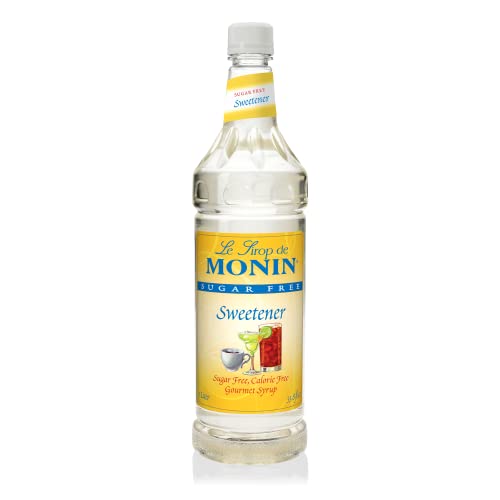
It dissolves instantly in iced coffee and cocktails — no grit, no stirring, no waiting.
Monin’s sugar-free syrup takes a completely different approach from the packet-based options above. It is a liquid made with sucralose (the sweetener in Splenda) that you pump or pour directly into drinks — no paper wrapper, no dissolving time. The 1-liter bottle is tall and slender at 11.77 x 3.19 x 3.03 inches, designed to sit behind a coffee bar or on a countertop. Owners use it for everything from morning coffee to mint juleps and margaritas, reporting that it has no metallic or medicinal aftertaste.
The biggest selling point is versatility: because it is liquid, it integrates instantly into cold beverages where granulated sweeteners can sink to the bottom. Tasters note that a small amount goes a long way — the syrup is very concentrated. And unlike many zero-calorie options, Monin’s formula is allergen-free, dairy-free, gluten-free, non-GMO, and packaged in BPA-free bottles with recyclable boxes.
The value topic is polarizing. Some find the price high compared to a box of packets, while others argue the bottle lasts so long that the cost-per-serving is actually competitive. If you are someone who drinks iced coffee year-round or makes cocktails at home, the convenience of a liquid sweetener that mixes instantly is worth the premium. But if you just need a simple, no-fuss sweetener for hot coffee, a packet box is simpler and cheaper.
Standout strengths
- No gritty residue — dissolves instantly in cold drinks
- Great for cocktails, iced tea, and cold brew where packets struggle
- Non-GMO, kosher, halal, and free of artificial colors
What holds it back
- Value for money is mixed — some find it expensive per bottle
- Not portable like packets; best for home or office use
Reach for this if: you primarily drink iced or cold beverages and hate the gritty texture of powdered sweeteners. The liquid format dissolves instantly in iced coffee and cocktails.
skip it if: you want the lowest possible cost per serving and don’t mind packets.
7. Truvia Allulose Sweetener, Sugar Substitute, 3 lb Bag
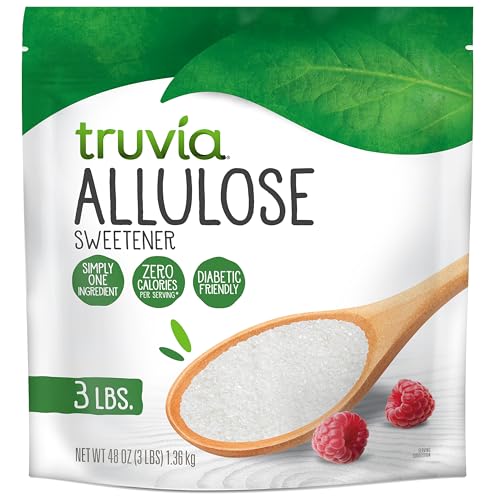
It browns, caramelizes, and bakes like cane sugar — something stevia and erythritol simply cannot do.
Truvia’s version is 100% allulose — a single-ingredient sweetener with zero calories per serving and a taste that owners describe as indistinguishable from sugar in baked goods. One tablespoon sweetens like two teaspoons of sugar, and it dissolves cleanly in coffee and tea. Unlike erythritol-based sweeteners, allulose does not produce that cooling sensation on your tongue.
Where this product truly shines is baking. Owners use it for cheesecake, brownies, ice cream, and even bread, reporting that it caramelizes and browns just like cane sugar. The 3-pound bag (48 ounces) is a generous quantity for anyone who bakes regularly. The product is also diabetic-friendly and tooth-friendly —.
The honest trade-off is that allulose is noticeably less sweet than sugar. You will use more volume to achieve the same sweetness, which can push up the cost per recipe. Some owners also note a slight off-taste in coffee specifically, and one cautions that overconsumption can cause digestive discomfort. If you bake keto or low-carb desserts multiple times a week, this bag is a worthwhile investment. For purely sweetening morning coffee, the packet options above are more convenient.
Verdict: The best allulose option for baking — it browns, caramelizes, and delivers a sugar-like texture that stevia blends cannot match. Just be aware that it is less sweet than sugar, so factor that into your recipes.
8. Viva Doria Allulose Sweetener, 5 lb (2.27 kg)
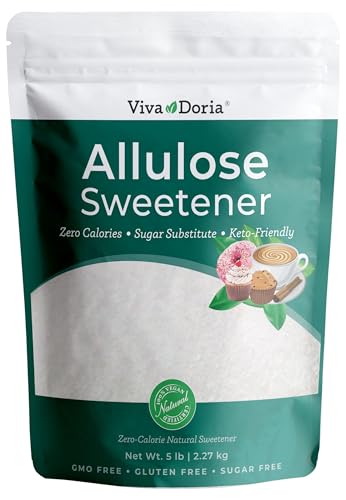
A 5-pound allulose supply that keeps the baker’s kitchen stocked for months — at about 70% of sugar’s sweetness, you will need more volume.
Viva Doria offers the largest allulose bag on this list at a full 5 pounds (80 ounces). Like the Truvia version, it is 100% allulose — non-GMO, gluten-free, and vegan — with no artificial flavors or preservatives. Owners describe it as about 70% as sweet as regular sugar, so you will need to adjust your recipes upward by roughly a third.
Customers note excellent results in ice cream, smoothies, coffee, and baked goods. One enthusiast uses 4-5 tablespoons per loaf of bread to achieve a dark, caramelized crust. Others note it dissolves well with no strange aftertaste and no digestive issues. The cooling sensation that some erythritol blends create is absent here. For keto or diabetic cooks who need a sugar replacement that behaves like sugar in every way except blood sugar impact, this bag delivers.
The biggest practical consideration is that allulose is a carbohydrate by chemical structure, even though it does not spike blood glucose. If you track net carbs strictly, you will need to account for it. And at about 70% of sugar’s sweetness, your recipes will require more volume — which means this 5-pound bag may not last as long as you expect if you are heavy-handed.
Bottom line: The best value in pure allulose for serious home bakers and keto cooks. If you just need a packet for your coffee, it is overkill — but if you are making cheesecakes, cookies, and ice cream from scratch, this 5-pound bag is exactly what you need.
9. Micro Ingredients Golden Monk Fruit Sweetener with Allulose, 2 lbs
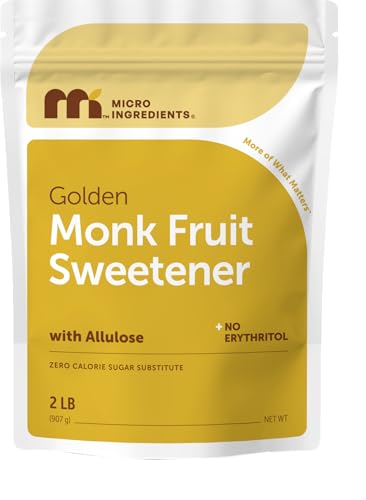
It mimics brown sugar’s molasses-like flavor without the cooling aftertaste of erythritol — 94 buyers call the taste excellent.
Micro Ingredients blends monk fruit with allulose to create a golden, granulated sweetener that mimics brown sugar’s rich, molasses-like flavor. It is erythritol-free, which means no cooling aftertaste on your tongue — a common complaint with stevia-erythritol blends. The maker positions this as a 1:1 brown sugar substitute, meaning you can swap it cup-for-cup in recipes without recalculating sweetness levels. Each 2-pound pouch provides up to 226 servings.
Owners are particularly enthusiastic about its baking performance: cookies stay soft, coffee does not turn bitter, and the blend caramelizes like cane sugar (though it browns a bit faster, so watch your bake times). The taste is the most-praised feature — 94 owners call it out positively, and there is no detectable aftertaste. It dissolves easily in both hot and cold drinks, which separates it from some granulated stevia products that clump in iced beverages.
And at a premium price point, using extra volume pushes the cost higher. If you are looking for a clean-ingredient brown sugar replacement that works in coffee and baked goods alike, this is a standout choice. But if you are on a tight sweetener budget, the pure allulose options above give you more volume for your money.
Why it stands out
- Taste is the #1 praised feature — 94 call it out as excellent with no aftertaste
- 1:1 brown sugar substitution makes recipe conversion simple
- No erythritol, so no cooling tongue sensation
The honest trade-off
- Some find it less sweet than expected — the 1:1 ratio may need adjusting
- Value for money is mixed; it is pricier than allulose-only options
Best for: bakers who miss brown sugar’s deep flavor and want a zero-calorie swap that caramelizes without chemical off-notes. Use it for cookies, coffee, oatmeal, and any recipe where brown sugar’s character matters.
pass on it if: your priority is maximum volume at minimum cost; the 2-pound pouch goes fast if you bake often.
Understanding the Specs
Sweetener Type
The base ingredient determines the taste, aftertaste, and heat stability. Stevia (from the stevia leaf) is plant-based but can have a bitter licorice note if not well-processed. Allulose is a rare sugar that bakes and browns like table sugar, though it is only about 70% as sweet. Monk fruit blends often combine with allulose to round out the flavor. Saccharin and aspartame are artificial sweeteners with a long track record but distinct taste profiles that some people love and others avoid.
Packet Count and Sweetness Ratio
The number of packets in a box is only useful if you know how much each packet sweetens. A 140-count box where one packet equals two teaspoons of sugar is roughly equivalent to a 1000-count box where one packet equals one teaspoon — the math changes everything. Always check the sweetness ratio before comparing prices. For bagged sweeteners like allulose, the ounce weight and the cup-for-cup replacement ratio are the numbers that matter for baking.
FAQ
What is the difference between stevia and allulose for baking?
Will these sweeteners raise my blood sugar?
Which sweetener dissolves best in iced coffee?
How long does a 1000-count box of sweetener last?
Is there any aftertaste with monk fruit sweeteners?
Can I use these sweeteners in diabetic meal plans?
What is the cooling effect I keep reading about?
Which sweetener is best for keto and low-carb diets?
How do I store opened bags of allulose or monk fruit sweetener?
Are these sweeteners safe for children?
Final Thoughts: The Verdict
For most people, the best zero calorie sugar is the Truvia Calorie-Free Sweetener because it delivers the cleanest taste with no bitter aftertaste and has impressed tens of thousands of owners. If you need bulk quantity at the lowest cost per packet, the Happy Belly Pink Saccharin 1000-count box is unbeatable. And for bakers who want a true sugar replacement that caramelizes and browns, the Truvia Allulose 3-pound bag is the one to reach for — each has a