
Our readers keep the lights on and the coffee maker working hard! As an Amazon Associate, I earn from qualifying purchases.
Specs are compiled from manufacturer listings and verified buyer reviews and can change over time — please confirm the key details on the product page before buying.
Your kid is vibrating with excitement for the bunny hill, but that excitement turns cold fast when a borrowed helmet wobbles, pinches, or leaves their ears stinging. Finding a youth ski helmet that actually fits a child’s head shape — and stays comfortable all day — is the real gatekeeper between a great first day on the slopes and a miserable one. This guide breaks down the top options by fit accuracy, safety certs, and the features that keep kids warm and parents calm.
I’m Mohammad — the founder and writer behind Calories Fit. This guide is built by comparing the manufacturers’ published specifications and the patterns across verified customer reviews, so you get each pick’s real strengths and trade-offs instead of marketing spin.
Whether you are outfitting a toddler or a ten-year-old, the best youth ski helmet is the one that meets ASTM F2040 safety standards, uses a simple dial-fit system, weighs little enough for a small neck, and comes with ear pads thick enough to stay warm at 15°F without feeling like a vice.
Our Picks at a Glance


How To Choose The Best Youth Ski Helmet
Picking a helmet for a child is different from buying your own. Kids’ heads grow fast, their necks are weaker, and they are far less willing to tolerate a pinch or a scrape. The right helmet should be almost invisible to them — warm enough to forget about, light enough to ignore, and snug enough that it does not shift during a fall. Here is what to check before you add to cart.
Fit is Everything
A helmet that rocks side-to-side is unsafe — it can expose the forehead or back of the head in a crash. Look for a dial-fit system (an adjustable wheel at the back of the helmet) that lets you tighten or loosen the fit in seconds, even with gloves on. Measure your child’s head circumference just above the eyebrows and ears, then check the helmet’s size chart. Most youth helmets cover 51–54 cm for a small and 55–58 cm for a medium.
Safety Certifications Matter
In the US, look for ASTM F2040 certification — that is the standard for downhill ski and snowboard helmets. The European equivalent, CE EN 1077, is also common on multi-certified helmets. Both guarantee the helmet has passed impact tests and strap-strength tests. A few helmets now include MIPS (a low-friction slip-plane inside the helmet that helps reduce rotational forces to the brain during angled impacts), which adds a layer of protection without adding noticeable bulk.
Ventilation and Warmth
Children overheat and sweat faster than adults, then that sweat freezes when they stop moving. Eight to twelve vents with a toggle to open or close them is the balance — you can let air in during an active run and seal it shut on a cold chairlift. Look for a moisture-wicking liner (a mesh fabric that pulls sweat away from the skin) and removable ear pads so you can wash the helmet after a long season.
Goggle Integration
A gap between the helmet and goggles — what skiers call “gaper gap” — lets cold air hit the forehead and causes goggles to fog. The best youth helmets have a goggle clip at the back and a shape that sits flush with most kids’ goggles. If you are buying a helmet-only option, check that it is compatible with your child’s existing goggles.
Quick Comparison
| Model | Best For | Shell Material | Vents | Safety Cert | Amazon |
|---|---|---|---|---|---|
| OutdoorMaster Kids Helmet & Goggles Set★ Best Overall | Best Overall | Polycarbonate (In-Mold) | 12 | ASTM F2040 | Amazon |
| Comstock Kids HelmetBudget Champion | Budget Champion | ABS | 10 | N/A | Amazon |
| RIOROO Ski HelmetVersatile Fit | Versatile Fit | ABS | 12 | N/A | Amazon |
| Smith Zoom Jr. | Lightweight Fit | Polycarbonate | — | N/A | Amazon |
| Giro Surface-S | Visor Protection | Hard Shell | 6 | N/A | Amazon |
| Findway Helmet Set | Premium Set | ABS | 20 | N/A | Amazon |
| OutdoorMaster Diamond II MIPS | Top Safety | Polycarbonate (PC) | 8 | ASTM F2040, CE EN 1077 | Amazon |
| Odoland Snowboard Helmet Set | Best Value Set | Polycarbonate (PC) | 10 | N/A | Amazon |
| Giro Launch Youth | Toddler Fit | Hard Shell | — | N/A | Amazon |
In‑Depth Reviews
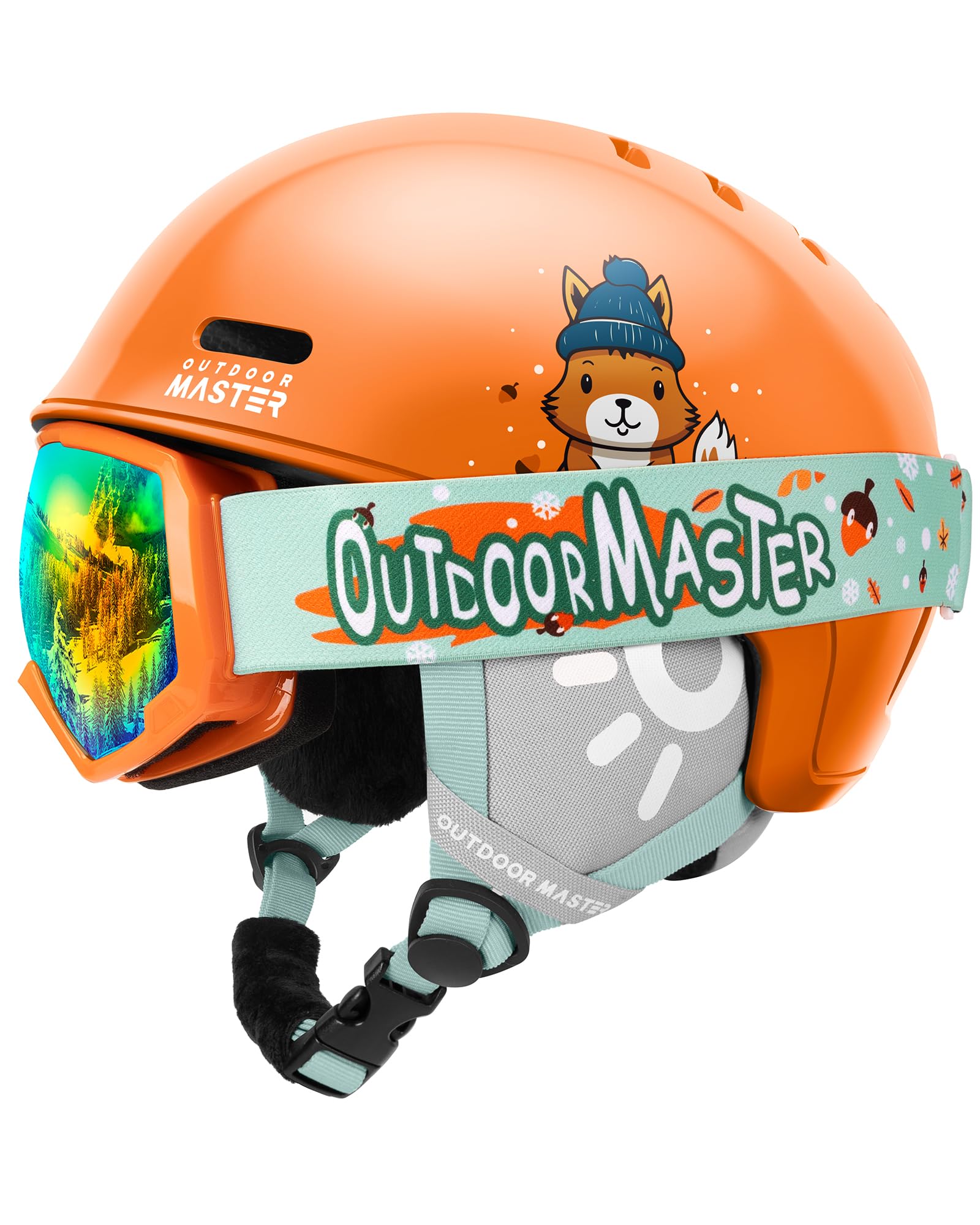
1. OutdoorMaster Kids Ski Helmet and Goggles Set
Our pick — over 4.5★ from 350+ verified ratings; the strongest balance of quality and price.
The complete set that makes morning gear-chaos a single zipper pull.
This is the crowd-favorite for a reason — it pairs a tough polycarbonate shell fused to an EPS foam liner (an in-mold construction that keeps the helmet thin and light) with a pair of anti-fog goggles that actually fit flush against the helmet. Twelve vents channel airflow to keep a sweaty head dry, and the fleece lining pulls off for washing. The adjustable dial at the back turns easily, even with mittens on, so your child can dial in the fit themselves.
Unlike the rioroo helmet further down this list, which is a helmet-only buy, this OutdoorMaster set includes the goggles and eliminates the compatibility guesswork. The goggles use a double-layer lens with UV protection, and owners say they do not fog even during long chairlift rides. The recurring note across the feedback is that it fits consistently true to size — perfect for a 5-year-old beginner or a 10-year-old hitting blue runs.
The one thing to be aware of: the fleece lining is cozy but if your child runs very hot, the 12 vents (which are fixed, not adjustable) may not open wide enough on a sunny spring day. For most families, though, the warmth is a feature, not a bug.
Why It Wins
- In-mold PC+EPS shell meets ASTM F2040 safety standards
- Goggles included — anti-fog, UV-protected double-layer lens
- 12 fixed vents keep airflow moving without letting in snow
- Removable fleece liner and plush earmuffs for easy washing
One Trade-Off
- Vents are not adjustable — no way to close them on the coldest days
Reach for this if: you want one box that delivers a certified helmet plus no-fog goggles, especially for a first-time young skier.
Look elsewhere if: your child overheats easily and you need fully adjustable vents to open and close on the fly.
2. Comstock Kids Ski & Snowboard Helmet with ABS Shell
The dense, well-padded option that buyers report matches shop helmets.
Several owners who know their gear compared this Retrospec-made Comstock helmet directly to premium ski-shop brands and found no meaningful difference in padding density, strap quality, or warmth. It uses a tough ABS outer shell over EPS impact foam, plus ten vents with a moisture-wicking mesh to keep kids from overheating. The goggle clip at the back holds the strap securely, so you are not chasing a lost pair of goggles mid-run.
The adjustable fit system is simple — a rear dial tightens the inner cradle — and the plush ear pads keep small ears warm even when temperatures dip. At 0.49 kg (about 1.1 lbs), it is light enough for a young neck to carry all day without complaints. What really stands out is the sizing: parents report that the XS fits a 3-year-old with a 49 cm head snugly, while the small fits an 8-year-old with a 52 cm head, and there is room to grow into the next size.
The adjustability aspect gets mixed feedback — a few owners say the dial can feel stiff at first. It loosens up after a couple of wears, but if you need a tool-free micro-adjust that gives instantly, the OutdoorMaster above has a smoother dial from the start.
What Owners Love
- Dense, high-density padding rivals far more expensive helmets
- Removable liner and ear pads for seasonal washing
- Fits a wide range — XS works for a 49 cm head, small for 52 cm
- Ten cooling vents with moisture-wicking mesh layer
What to Know
- Rear adjustment dial can be stiff initially for smaller hands
Best for: parents who want -level build quality at a fraction of the cost and a helmet that grows with their child over two seasons.
Think twice if: your child needs a one-handed, ultra-smooth dial that is easy to turn while wearing mittens.
3. RIOROO Ski Helmet for Women Men Youth
A budget-friendly helmet that actually fits older kids and teens while staying affordable.
The RIOROO is a helmet-only option (no goggles included), but it covers a broad age range by sizing up to adult medium. The shell is reinforced ABS over an EPS core, and the 12 individual vents are adjustable — you can slide them open for a sunny bluebird day or closed for a freezing chairlift ride. The thermal liner and ear pads are fully removable, which is a big deal when the helmet has been sitting in a damp car all weekend.
The adjustment dial at the back turns smoothly, and the chin strap has enough padding that it does not rub a child’s jaw raw. On the durability front, opinions are split — some owners say it held up through multiple falls on hardpack, while a few note the outer shell can chip if dropped on concrete. Overall, it is a solid, lightweight helmet for a 12-year-old who is between youth and adult sizing, and the warm fuzzy fabric on the ears gets consistent praise from parents of cold-sensitive kids.
The Value Verdict: For the money, this delivers a comfortable, well-ventilated shell with a one-year warranty. It is not the toughest in the lineup — the ABS shell is more prone to cosmetic scuffs than the OutdoorMaster’s polycarbonate — but for a young skier who is careful with their gear, it is a smart buy.
Reach for this if: your child is on the cusp of adult sizing and you want adjustable vents plus a removable liner for easy cleaning.
Look elsewhere if: you need a helmet that can take rough-and-tumble abuse season after season without showing wear.
4. Smith Optics Zoom Junior Helmet
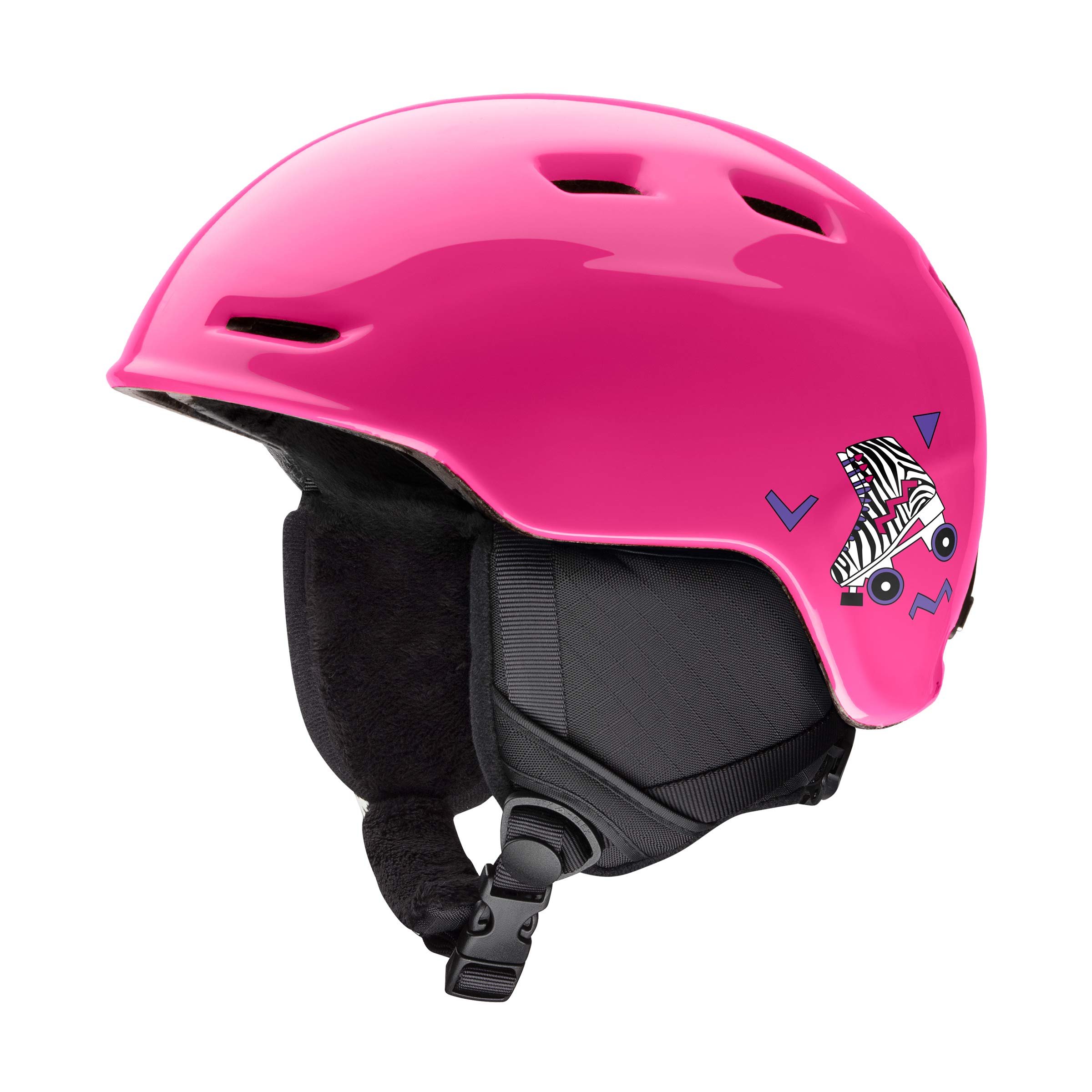
The lightest junior design in the roundup, built for narrow, long-headed kids.
Smith is a household name in snow sports, and the Zoom Jr. brings that brand confidence down to youth sizing. It uses a super-soft fleece liner that kids consistently describe as comfortable — one owner noted their child preferred this helmet over their regular bike helmet for cold-weather biking. The AirEvac ventilation system works hand-in-hand with Smith goggles to push warm, moist air out and keep lenses fog-free. The adjustable dial fit system is as smooth as you would expect from a legacy brand, letting a child fine-tune the tension without parental help.
Parents of kids with a large forehead or a longer head shape report that the Zoom Jr. is the best fit they have found — the interior shape accommodates heads that other helmets pinch at the front. The weight is low enough that a petite 10-year-old can wear it all day without neck fatigue. The trade-off is that sizing runs small: the small fits more like a medium in other brands, so measuring your child’s head circumference is essential before ordering.
The Catch: Price is higher than the Comstock without including goggles. You pay for the Smith engineering, the low weight, and the goggle integration — if your child already owns Smith goggles, this is the obvious pairing.
Best for: kids with longer or narrower head shapes who need an ultra-light helmet and already use Smith goggles.
Think twice if: you need a budget-friendly all-in-one set that includes goggles.
5. Giro Surface Ski Helmet

The half-shell with a built-in visor that blocks the gap between helmet and goggles.
What makes the Giro Surface different from every other helmet on this list is the half-shell brim design — it extends slightly forward to block snow, branches, and the dreaded gaper gap. That brim alone earns it loyal fans, especially among kids who hate feeling cold air hit their forehead. The In Form Fit System (Giro’s name for its rear dial) offers up to 6 cm of vertical tuning as well, so you can adjust how high or low the helmet sits on the head for a perfect seal with goggles.
Fit is the most-discussed aspect here, and it is a mixed bag. The helmet runs on the smaller side: a small fits kids with a 7 3/8 hat size well, but adults with a larger head may need a medium or large. Owners praise the quality — the hard shell construction feels solid — and several owners mention the helmet saved them from concussions as beginner snowboarders.
The Real-World Scene: The ear pads have room for audio speakers (not included), making this a favorite among kids who ski with a communicator or music. The goggle strap clip at the back is sturdy and holds even during tumbles.
Reach for this if: your child wears a smaller size, hates cold foreheads, and uses Giro goggles for a smooth seal.
Look elsewhere if: your kid has a head shape that falls between sizes — the Surface runs small, so measure carefully.
6. Findway Ski Helmet Set with Goggles
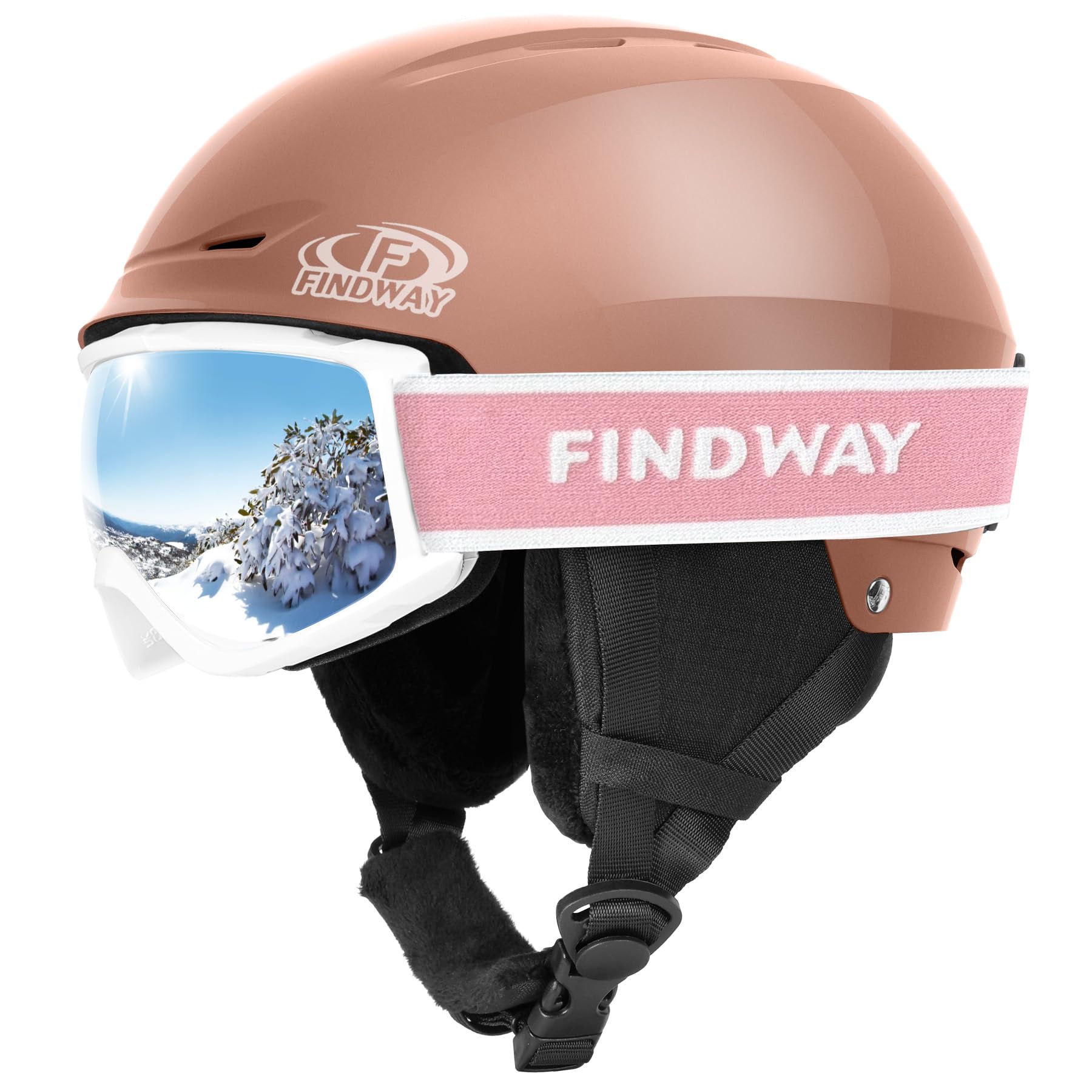
The set with 20 vents — nearly double the airflow of most competitors here.
If your kid runs hot and sweats under a standard helmet, the Findway stands out with 20 ventilation holes that create a strong chimney effect inside the shell. The helmet uses a shock-absorbing ABS outer shell and an EPS inner foam, while the included goggles feature an anti-fog double-layer lens that tune airflow to reduce fogging. Everything is adjustable: the straps, the rear dial, and the removable ear covers and chin strap.
Owners who bought this set for the family often ended up buying multiple — the rose-gold color is a hit with young girls, and the sizing runs true. The warmth is notable: customers note the padding is thick enough that kids stay comfortable without needing a separate balaclava on most days. The return and exchange policy covers 180 days, which is longer than any other helmet here and gives you a full season to test the fit.
The catch is that the goggles can fog in very humid conditions if the child is breathing heavily. For typical dry mountain air, the clarity holds up well, but it is something to note for kids who ski in the Pacific Northwest or other wet-snow regions.
Best for: a child who complains about being too hot in a standard helmet, or a family that wants matching sets with a long return window.
Think twice if: you ski exclusively in high-humidity or wet snow conditions where goggle fogging is a constant battle.
7. OutdoorMaster Diamond II MIPS Ski Helmet
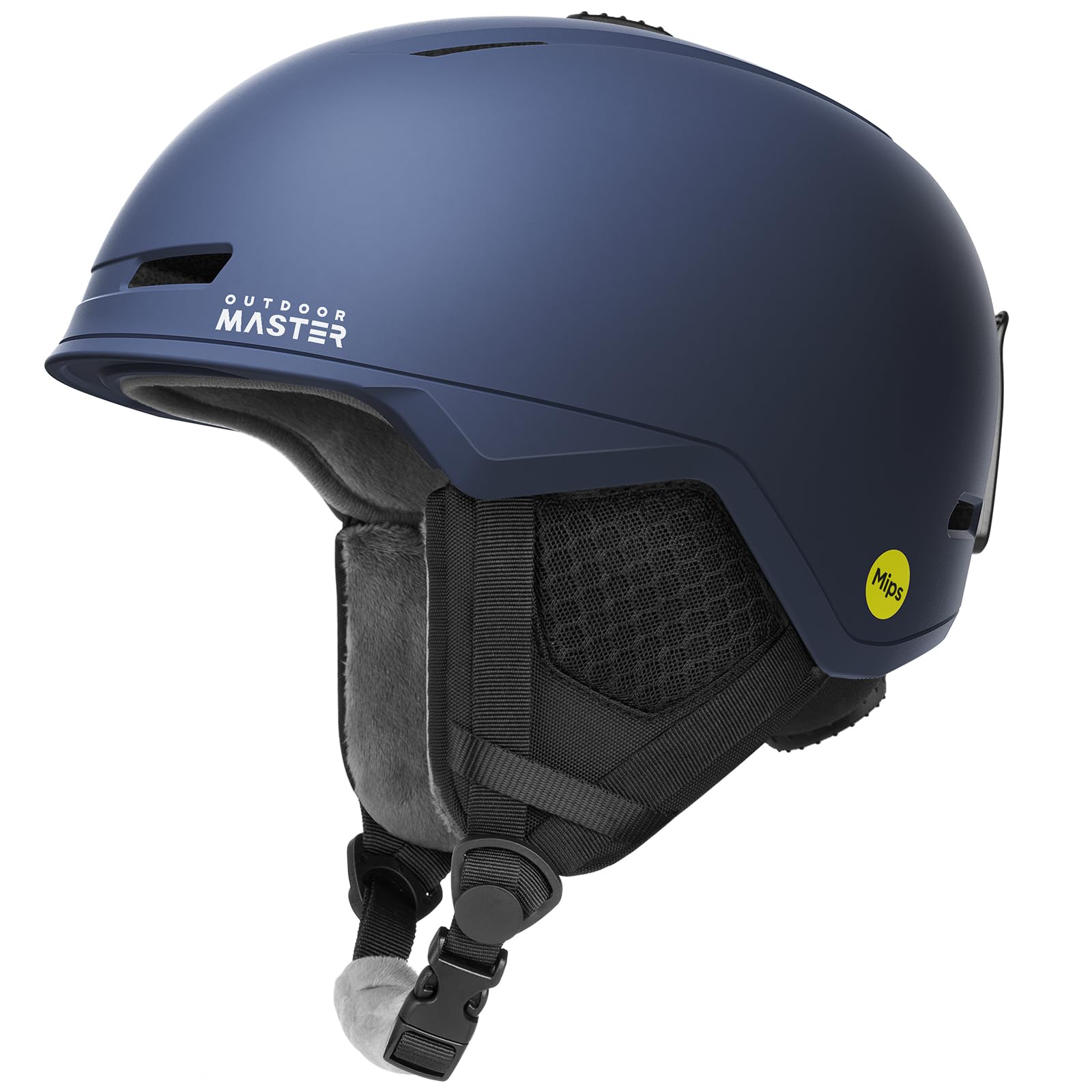
The only helmet here with both MIPS and dual ASTM/CE certification for serious confidence.
MIPS (the low-friction slip-plane layer) is the headline feature here — it is designed to reduce rotational forces on the brain during an angled impact, and it is becoming the gold standard for parents who want the most advanced protection. The Diamond II adds a polycarbonate outer shell bonded to high-density EPS foam, and it carries both ASTM F2040 and CE EN 1077 certifications. That dual certification means it has passed impact tests on both sides of the Atlantic.
Beyond the safety tech, the helmet has 8 individual vents, four of which are adjustable via a toggle switch that is easy to operate with gloves on. The removable fleece liner and thick earmuffs keep kids warm at temperatures as low as 7°F, and the ear pads have small speaker pockets for audio devices. The adjustable dial system creates a snug fit, and owners say the helmet stays comfortable for 5+ hours on the mountain. It runs slightly small — measure your child’s head carefully, as some buyers had to size up.
The Safety Edge
- MIPS layer for added rotational-impact protection
- Dual certified: ASTM F2040 and CE EN 1077
- Four adjustable vents plus four fixed for customizable airflow
- Audio-compatible earpads for communicators or music
The Fit Note
- Tends to run small — verify head circumference against the size chart before ordering
Reach for this if: maximum protection (MIPS + dual certs) is your top priority and your child is willing to wear a helmet for hours at freezing temps.
Look elsewhere if: your child has a larger-than-average head — the XL may still be tight for some.
8. Odoland Snowboard Helmet with Ski Goggles
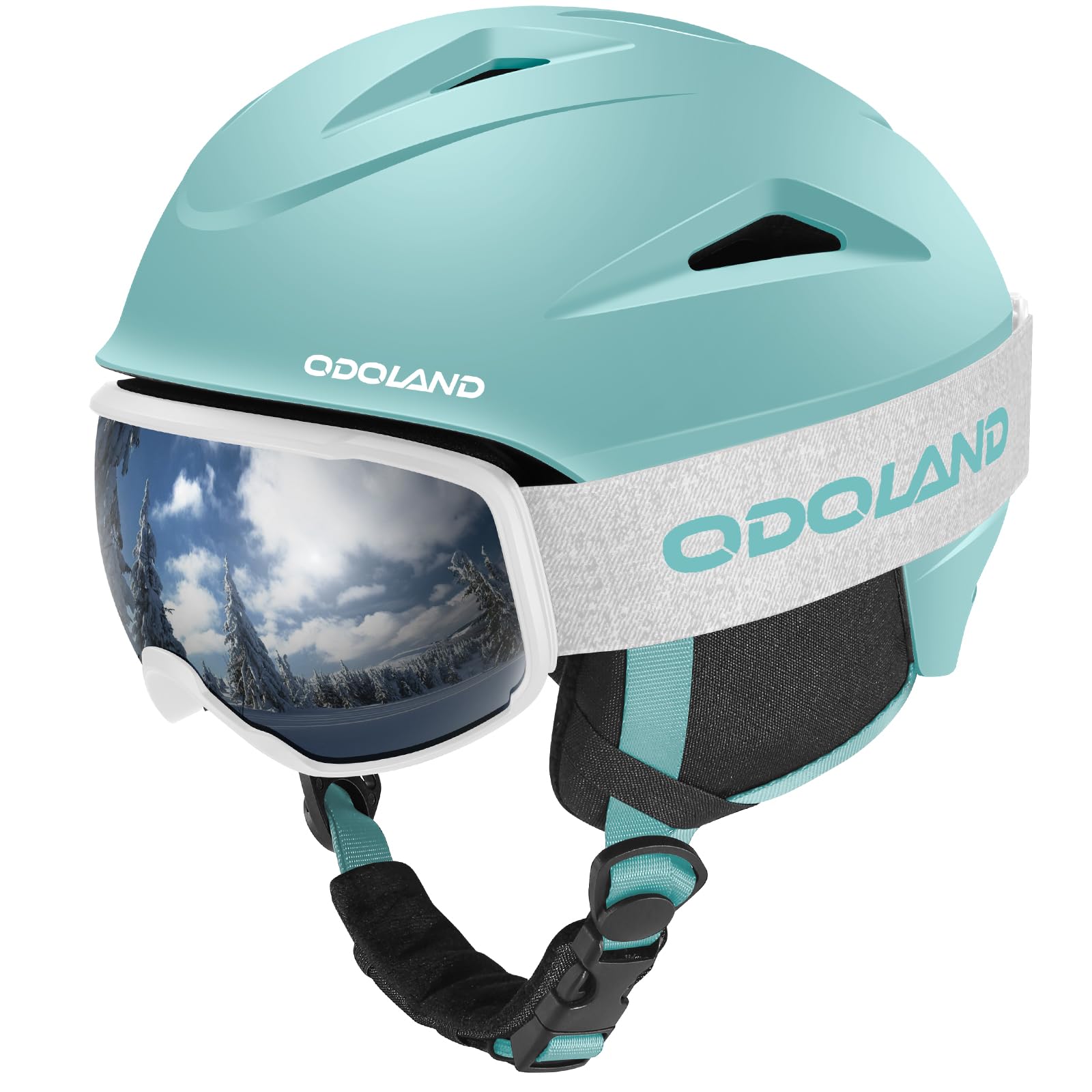
A high-scoring set with a carry bag — ideal for the family that grabs and goes.
With a rating close to the top of the list and hundreds of owners backing it, the Odoland gives you a reliable PC-shell helmet and a pair of Flow-Tech vented goggles in one purchase. The polycarbonate outer shell is penetration-resistant, and the EPS inner foam keeps the weight down. Ten air vent holes funnel airflow out the top, and the goggles use a venting design that reduces fog during active runs. The rear dial tightens the fit securely, and the chin strap is padded so it does not dig in.
The bonus is a carry bag that protects the helmet and goggles during travel — a detail that matters when you are stuffing gear into an overhead bin or a trunk full of luggage. Owners consistently praise the color options and the looks, with several saying the helmet earned compliments on the slopes. One honest note: a few reviewers point out that the goggles can fog up faster than expected in very cold weather (around 16°F), especially if the child is breathing heavily while stopping on the chairlift. You may want to apply an aftermarket anti-fog wipe if you ski in bitter conditions.
Best for: families who want a stylish, all-in-one set with a travel bag and a mid-range price that still feels premium.
Think twice if: you regularly ski in sub-20°F weather and need goggles that will not ice up on lift rides.
9. Giro Launch Youth Snow Helmet
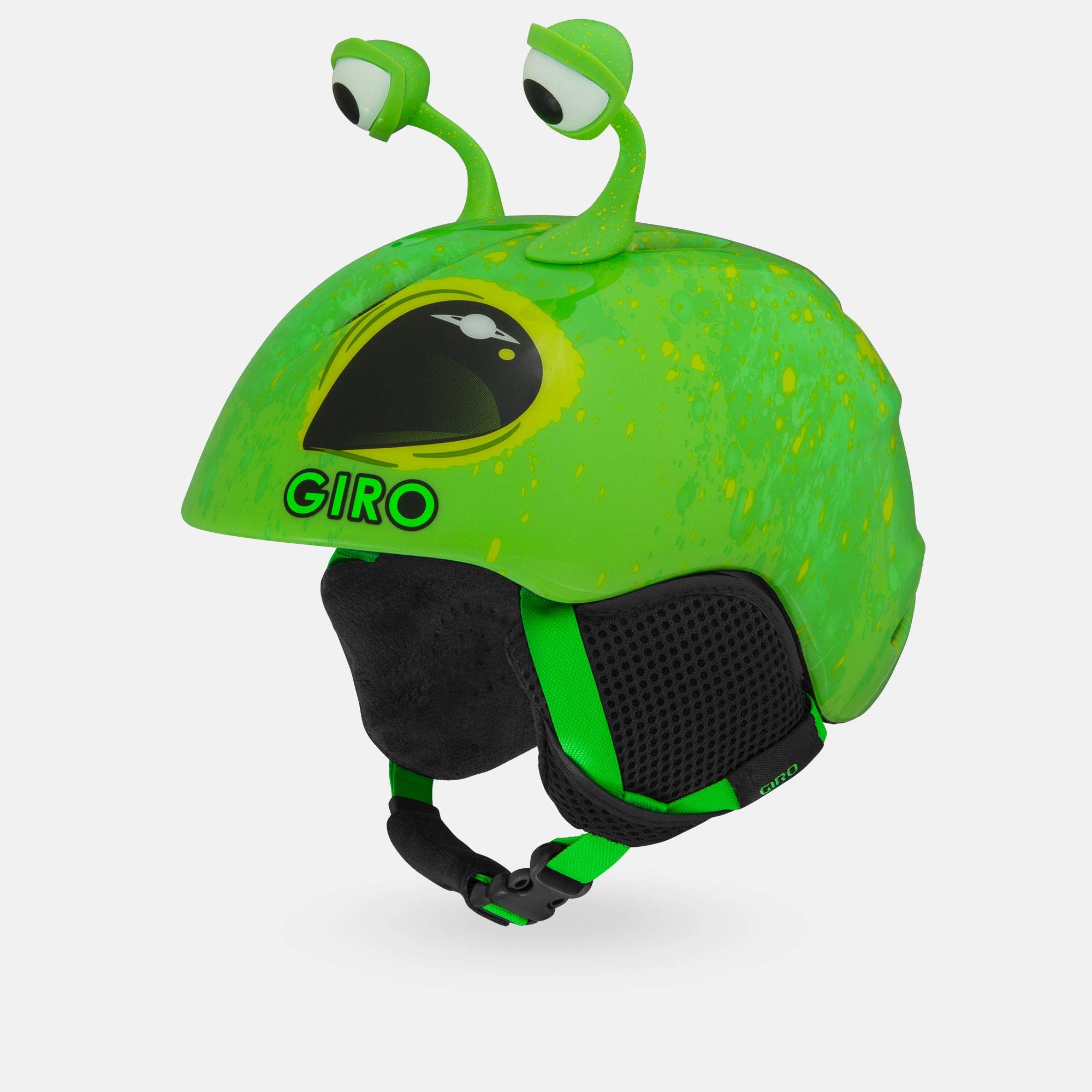
The go-to for toddlers — the XS fits a head circumference as small as a 3-year-old’s.
The Giro Launch is the smallest helmet on this list, and it is a lifesaver for parents of kids under age 4 who have struggled to find gear that does not wobble. It uses Giro’s Hard Shell construction (a rugged outer shell molded separately and attached to the EPS foam liner) and the In Form Fit System with up to 6 cm of adjustment plus Vertical Tuning, which lets you raise or lower the helmet on the head to eliminate the gaper gap. At 300 grams (about 10.6 ounces), it is light enough that even a 30-pound toddler can wear it comfortably.
The plush liner and earpads are soft against sensitive skin, and the fun designs — like the Matte Bright Green Aliens pattern with little alien faces — get kids excited to wear it. Several owners note that their toddlers were willing to wear it for days of skiing without fussing, which is the highest compliment a toddler helmet can receive. The fit favors smaller heads: the XS works for a 35-month-old on the petite side, while the youth small fits a 7-year-old with room to grow. Giro recommends pairing the Launch size S with their Rev youth goggles and the XS with their Chico toddler goggles for a perfect seal.
The One Complaint: There is no rear goggle clip or lip to hold goggles when they are pushed up onto the helmet. Goggles can slide off the back when not in use, so you will want to store them in the pocket or use a strap lock.
Reach for this if: you are outfitting a toddler or small preschooler who needs an ultra-light, comfortable helmet that fits a 49 cm head.
Look elsewhere if: your child needs a goggle-clip to keep goggles from falling off when lifted to the forehead.
Understanding the Specs
MIPS — What Is It?
MIPS stands for Multi-Directional Impact Protection System. It is a thin, low-friction layer inside the helmet that sits between the outer shell and the inner padding. When you hit the snow at an angle (which is how most ski and snowboard falls happen), the MIPS layer rotates slightly, helping redirect rotational forces that would otherwise transfer to the brain. It adds a few grams of weight and a small premium in price, but for parents who want the most advanced protection, it is the feature to look for. The OutdoorMaster Diamond II is the only helmet on this list that includes it.
ASTM F2040 and CE EN 1077
These are the safety certification standards for ski and snowboard helmets. ASTM F2040 is the American standard, and it tests for impact attenuation (how much force reaches the head during a fall) and strap/retention system strength. CE EN 1077 is the European equivalent and covers similar ground. A helmet that carries both — like the OutdoorMaster Diamond II — has been independently tested by labs on both continents. Most helmets on this list meet ASTM F2040. If a product listing does not mention a cert, it likely has not been submitted for one, meaning the manufacturer is relying on its own internal testing.
In-Mold vs Hard Shell Construction
In-mold construction fuses the polycarbonate outer shell directly to the EPS foam liner during manufacturing. This produces a thinner, lighter helmet because there is no separate glued layer — the materials bond at the molecular level. In-mold helmets tend to be more expensive and less bulky. Hard shell construction molds the ABS outer shell separately, then attaches it to the EPS foam liner. It is heavier and slightly bulkier but often more affordable and can survive more cosmetic abuse. The OutdoorMaster Kids Helmet uses in-mold; the Comstock and RIOROO use hard shell ABS.
Dial Fit Systems
A dial fit system is a wheel or knob at the back of the helmet that tightens or loosens an internal cradle around the head. A good dial gives you micro-adjustments — meaning you can dial in a precise, even tension around the entire circumference rather than just tightening one spot. This is critical for kids because their head circumference changes seasonally. Giro’s In Form Fit System offers 6 cm of adjustment range plus Vertical Tuning (up-and-down positioning), which is the most advanced of the bunch. The OutdoorMaster and Comstock dials are simpler but effective for most kids.
FAQ
How do I measure my child’s head for a youth ski helmet?
Does my child really need MIPS?
Can my child use a bike helmet for skiing?
How tight should a youth ski helmet fit?
What age and head size does each helmet fit?
What does ASTM F2040 certified mean for a youth helmet?
How long does a youth ski helmet last before it needs replacing?
Can I wash the liner and ear pads?
What is the gaper gap and why should I care?
How do I store a youth ski helmet in the off-season?
Final Thoughts: The Verdict
For most families, the best y