
Our readers keep the lights on and the coffee maker working hard! As an Amazon Associate, I earn from qualifying purchases.
Specs are compiled from manufacturer listings and verified buyer reviews and can change over time — please confirm the key details on the product page before buying.
Getting your kid suited up for lacrosse for the first time raises one question above all others: which pieces actually protect them without weighing them down or emptying your wallet? Youth lacrosse gear has to juggle three tough jobs at once — it needs to absorb hard checks, fit a growing body, and feel comfortable enough that your child actually wants to wear it for a full practice. This guide cuts through the brand noise to show you the specific pads, sticks, bags, and goggles that real families have put through a full season of abuse and found worthy.
I’m Mohammad — the founder and writer behind Calories Fit. This guide is built by comparing the manufacturers’ published specifications and the patterns across verified customer reviews, so you get each pick’s real strengths and trade-offs instead of marketing spin.
Whether you are outfitting a first-time midfielder or replacing worn-out gear from last spring, this breakdown of the best youth lacrosse gear focuses on the models that survive real practices and deliver genuine value for growing players.
Our Picks at a Glance


How To Choose The Best Youth Lacrosse Gear
The biggest mistake parents make is buying gear that fits the child at the register rather than checking the size chart against their actual height and build. With school-age lacrosse, a piece that fits perfectly in August can feel restrictive by October. Lean toward adjustable straps and modular pieces (like removable bicep pads) to stretch the usable window across multiple seasons.
Prioritize Safety Certifications
For head and torso protection, look for the NOCSAE (National Operating Committee on Standards for Athletic Equipment) seal — it is the benchmark that means the gear has been tested to withstand game-level impacts. Goggles worn by girls should carry an SEI certification mark so you know they meet current playing rules without blocking your daughter’s peripheral vision.
Know the Stick Length by Position
Attack and midfield players typically use a stick around 40 to 42 inches long, while defenders go longer (up to 60 inches in some leagues). For younger kids still learning fundamentals, a stick in the 26-to-41-inch range keeps the head low enough to scoop ground balls easily without the shaft dragging on the turf.
Quick Comparison
| Model | Best For | Weight | Material | Key Feature | Amazon |
|---|---|---|---|---|---|
| STX Stallion 75 Shoulder Pad★ Best Overall | Best Overall | 0.49 kg | Polyester | NOCSAE-certified chest protection | Amazon |
| KAVIGOR Lacrosse BackpackBest Value | Best Value Gear Bag | 0.85 kg | 900D Oxford | 40L capacity, helmet pocket | Amazon |
| STX Rookie-S GoggleTop Goggle | Girls Eye Protection | Lightweight | Lightweight frame | Smallest cage, SEI certified | Amazon |
| CAKLOR Attack/Midfield Stick | Entry-Level Stick | 15.8 oz | 6000 series alloy | 41-inch, softer head material | Amazon |
| ChalkTalkSPORTS Performance Shorts | Practice Comfort | — | 100% moisture-wicking polyester | Deep side pockets, elastic waist | Amazon |
| Franklin Sports Ambush Stick | Youth Stick (26″) | 0.34 kg | Aluminum | Neo-Grip surface texture | Amazon |
| Silverfin Lacrosse Bag | Premium Gear Bag | — | 100% Polyester | Converts to duffel / backpack | Amazon |
| Franklin Sports Backyard Goal | Backyard Practice | 5 lbs | Alloy Steel / Polyester net | 4×4 ft, snap-lock frame | Amazon |
| StringKing Complete 2 Jr. 10U Stick | Serious 10U Player | 0.25 kg | Aluminum | Thinner shaft, Type 3 mesh | Amazon |
In‑Depth Reviews
1. STX Lacrosse Stallion 75 Shoulder Pad
Our pick — over 4.5★ from 250+ verified ratings; the strongest balance of quality and price.
The shoulder pad that earns its keep by stopping rib bruises cold without turning a kid into a stiff board.
Buyers report a 12-year-old who stands 5-foot-4 found the large size a perfect fit right from the start, calling it more comfortable than other pads he had worn. The NOCSAE chest-protection standard (the same benchmark used for high-school level gear) gives a parent real confidence. At 0.49 kg (just over a pound) the chest pad is strikingly light — a 6th-grader can put it on and forget about it by the second drill. The adjustable straps and modular bicep pads let you dial the fit in across a growth spurt or two.
The recurring sizing note is honest: some families found it runs small and recommend ordering up one size. A beginner’s set that holds up through a full season — the polyester build shows little wear after a month of practice. It leaves the kid mobile and protected, which is everything.
sturdy shoulder protection
- NOCSAE-certified chest protection means impact is absorbed, not transferred
- Modular bicep pads allow a custom fit for different body shapes
- High-quality polyester construction that buyers call durable enough for multiple seasons
limited arm mobility
- Runs small for some — check the size chart and size up if in between
- A few buyers found the chest area snug for broader 14-year-olds
reliable for contact: If your child is in elementary or early middle school and needs protection that actually works without bulk, this is the one.
restrictive fit: Your player is on the taller side with a wider chest — size up or consider a larger adult model.
2. KAVIGOR Lacrosse Backpack for Youth
A 40-liter backpack that swallows pads, cleats, helmet, and two sticks without a single struggle.
The 40L capacity is generous for a bag this size, and buyers confirm a full set of youth pads plus a pair of cleats fits inside without cramming. The separate wet/dry compartment is a genuine boon for sweaty practice jerseys — you can toss them in without wetting the rest of the gear. Made from tear-resistant 900D Oxford fabric with a waterproof coating, it shrugs off rain showers and field-parking-lot spills. The adjustable chest strap helps distribute the load so the bag feels lighter on the walk to the car. Owners consistently report a 7-year-old or 9-year-old can pack and carry it independently, which is huge for building responsibility.
The trade-off is that the fit for youth-sized pads is, as buyers put it, “tight.” It works for standard youth gear, but players on the bigger side may wish for a larger main compartment. The 2-year guarantee from KAVIGOR is a nice backstop.
spacious youth backpack
- 40L main compartment plus hidden helmet pocket and shoe sleeve
- 900D Oxford fabric with waterproof coating survives wet days
- Adjustable chest strap and ventilated back panel keep kids cool and comfortable
small main pocket
- Feels tight when packing larger youth pads — may require careful arrangement
- Side stick holder is not sealed at the bottom; sticks can slip out if not cinched
youth independence: Children aged 7 to 12 who walk to and from practice on their own will love the balanced load and all-in-one packing.
cramped storage: Your child uses adult-sized pads or carries a goalie helmet — the interior may be too snug.
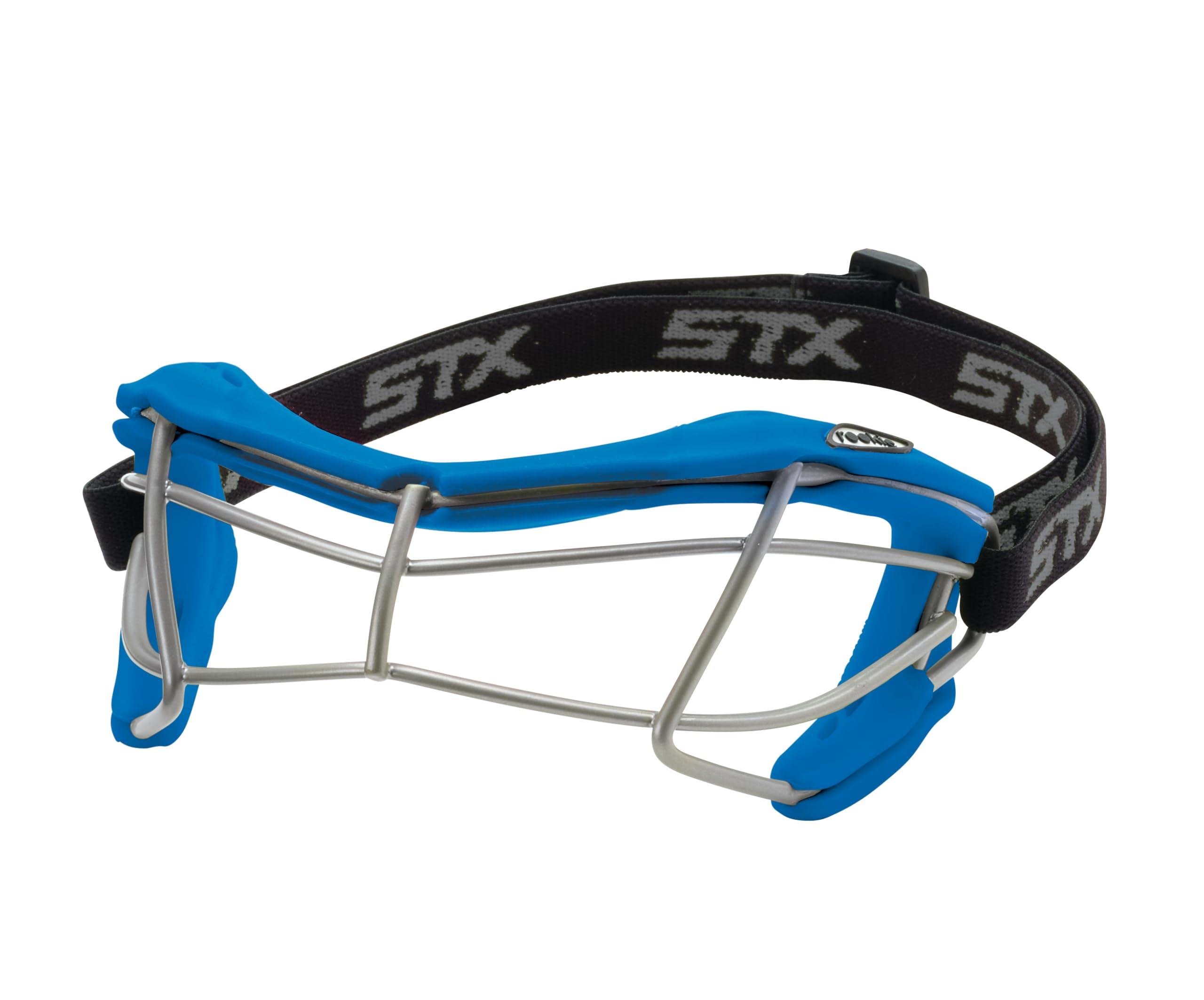
3. STX Lacrosse Rookie-S Goggle
The smallest cage in the STX lineup gives a 7-year-old girl a clear line of sight without pinching or fogging.
This goggle is SEI certified to meet the latest 2020 playing rules, so it passes league scrutiny while being purpose-built for girls aged 9 and under. The ultra-compact frame is noticeably smaller than standard youth goggles — owners mention it fits a 4- to 5-year-old beautifully, and a 7-year-old wore it all season without complaints. The patented oval wire design ensures the cage stays out of the field of view. A pink color option is widely popular; one owner said her daughter “loved the color.” The adjustable buckle closure makes it easy to fine-tune fit without needing tools. Quality materials that hold up well over a full season have earned this goggle a strong reputation among parents.
The caveat is size: some 6- and 7-year-olds found it a bit tight at the temples. Check fit before buying, as a snug goggle can make a child lose interest in playing. It is definitely not for kids over 9 or those with a larger face.
youth-sized goggle
- SEI certified for 2020 rules — league compliant for girls’ lacrosse
- Smallest cage of any STX model for maximum visibility
- Buckle closure adjusts easily without tools (a 7-year-old can manage it)
tight face fit
- Very small frame — may pinch temples on a 6-year-old with a rounder face
- Best suited for ages 4 to 8, not for kids older than 9
tiny midfielders: 4- to 8-year-old girls starting lacrosse will get the best combination of safety and comfort from this goggle.
uncomfortable wear: Your daughter is older than 9 or has a wider face — the frame will be too small.
4. CAKLOR Lacrosse Complete Attack/Midfield Stick

A 41-inch attack stick with a softer head that forgives a beginner’s poor aim and makes catching easier from day one.
The 6000 series alloy handle is both light and durable, holding up to middle-school abuse without denting. The head is molded from a softer material, which gives a forgiving response — balls are less likely to pop out on a misplayed pass. The professionally strung mesh requires a brief break-in period (customers note the pocket firms up after a few sessions), but once set, it offers solid ball retention for ground balls and cradling. At 15.8 ounces it feels light in the hand, allowing for quick stick movement. The stick meets NCAA and NFHS rules, so it is legal for school play. Buyers call it a “great quality youth lacrosse stick” and “perfect beginning lacrosse stick” for a middle school beginner.
The pocket does need to be worked in to match an experienced player’s preference, but that is standard across all new mesh heads. Some users found the shaft length better suited for midfield/attack rather than defense — a 41-inch stick will not cover a long-pole role.
entry-level choice: Middle school players new to the sport will learn correct catching mechanics faster with this forgiving head.
advanced play: Defenders who need a longer shaft (60-inch range) or experienced players who want a stiffer head.
5. ChalkTalkSPORTS Lacrosse Performance Shorts
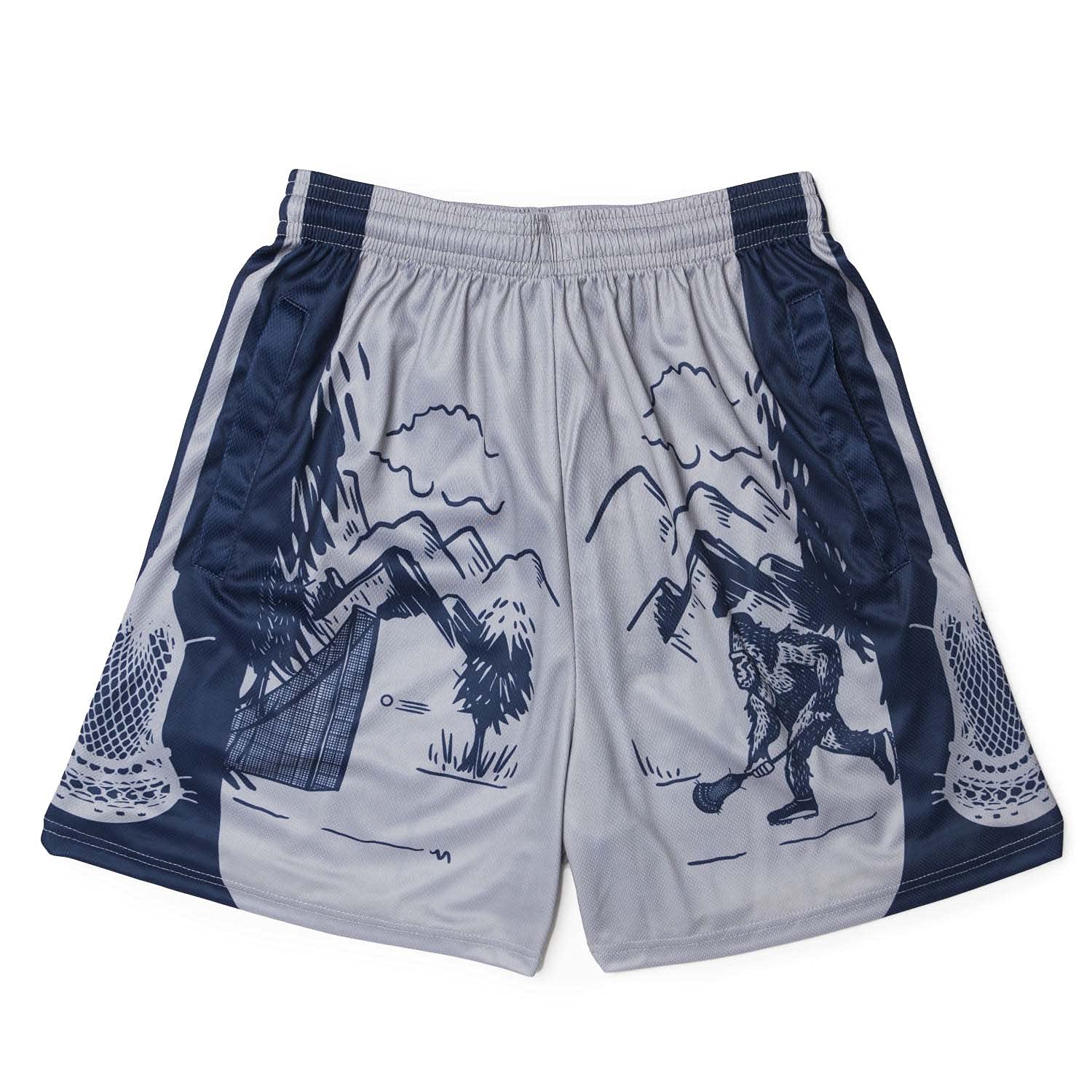
Shorts that pull double duty — tough enough for practice, relaxed enough for the car ride home.
The 100% moisture-wicking polyester fabric keeps a kid dry during a sweaty practice, and the above-the-knee cut aligns with the typical lacrosse aesthetic. The adjustable elastic waistband is a standout feature for growing kids: parents of 9- and 10-year-old boys (lean, average height) report the kids’ large fits comfortably, and the elastic allows two more inches of room as they grow. The deep side pockets are genuinely useful for carrying a phone or a mouthguard between drills. Buyers rave about the quality, calling them comfortable, thick, and well-made. One family noted the tie-dye design is popular with kids, which is a nice bonus for getting a reluctant player excited.
The sizing is polarizing: some parents found the youth sizing runs very small, while others say it runs true to size. An 11-year-old at 5 feet and 115 pounds needed an adult small rather than the youth medium. Try the children’s size chart before buying, and size up if in doubt.
casual wear: Kids aged 8-12 who need a durable short that works from warm-up to dinner will love these.
intense games: Your child is on the taller side for their age — go straight to adult sizing.
6. Franklin Sports Ambush Youth Lacrosse Stick (26-Inch)

A 26-inch mini stick designed so young attackers can cradle and pass with precision on a smaller frame.
This is the shortest stick in the roundup, built specifically for smaller kids who need a shaft that matches their height. The Neo-Grip surface texture on the aluminum shaft prevents the stick from slipping during a wet practice or a sweaty afternoon. The semi-soft 10 Diamond mesh pocket breaks in quickly — reviewers point out it is ready for play right from the start. At 0.34 kg (about 12 ounces), the weight is light enough that a child can maintain proper stick speed. The head is built for attackers and midfielders, featuring a narrower shape for quick passes rather than wide defensive scoops. Buyers consistently call it good quality and sturdy for the price, with one parent noting a son “plays hard and it is holding out.”
This stick is intended for beginners and intermediate players. More advanced youth who have developed a strong cradle may find the pocket too shallow for deep ball retention. At 26 inches it is definitely not for defenders or taller kids.
basic skills: Kindergarten through 2nd-grade beginners learning to scoop and cradle will find this stick a perfect training companion.
competitive use: Experienced players who need a regulation-length stick for league play (40+ inches).
7. Silverfin Lacrosse Bag

A convertible bag that holds a full goalie helmet plus all pads and still leaves room for cleats.
This is the bag for families who value organization over simple volume. It converts between a backpack and a duffel bag, so a child can switch based on how far the walk is from the parking lot. The interior fits a complete set of gear — shoulder pads, elbow pads, gloves, goggles, cleats, and two sticks in the external holders — with buyers confirming it swallows a full goalie helmet. The reinforced stitching and improved zipper construction (a recent update) have earned praise from families who have used it for two full lacrosse seasons. The 100% polyester build feels durable. Parents note the bag has held up to “teenage abuse” and looks new after a season.
The stick holders are described as a bit tight, and the zipper quality receives mixed feedback — some shoppers say issues over extended use. The bag is not cheap, but it is a solid investment for a player who will be hauling gear for several years.
team trips: If your child plays multiple sports or tournaments and needs to carry everything in one bag, this is the one to reach for.
daily carry: You need a completely waterproof bag — the 100% polyester is not coated. Also, the zippers require care.
8. Franklin Sports Backyard Lacrosse Goal (4×4 ft)

A 4-foot square goal that survives 2,000-plus shots in the backyard and folds away when practice ends.
This goal is built for recreational play — the 4×4 foot size is smaller than a regulation goal, making it ideal for a backyard or cul-de-sac. The steel posts use a built-in snap-locking system that allows assembly without tools, and buyers report the frame holds up well even after being left outdoors for a couple of months. The net is made from durable polyester with a tarpaulin back pocket that wraps securely around the frame for tension. At 5 pounds the goal is lightweight, and kids can move it around the yard easily. Buyers confirm it survived 2,000 shots without structural failure, making it a solid value for regular practice. The frame is sturdy enough for middle-school shooters.
The netting installation is the chore: stringing the net to the poles is tedious, and once it is on, you cannot easily take the frame apart. Some owners use zip ties or straps to simplify the job. The net itself may not last all the way to high-school-level shooting speeds, but for elementary and middle school it is perfectly fine.
backyard drills: Kids aged 6 to 12 who need a realistic shooting target that can take a beating will love this goal.
full-field use: You need a regulation-size goal for league practice, or if you need to disassemble and store it flat frequently.
9. StringKing Complete 2 Junior 10U Lacrosse Stick
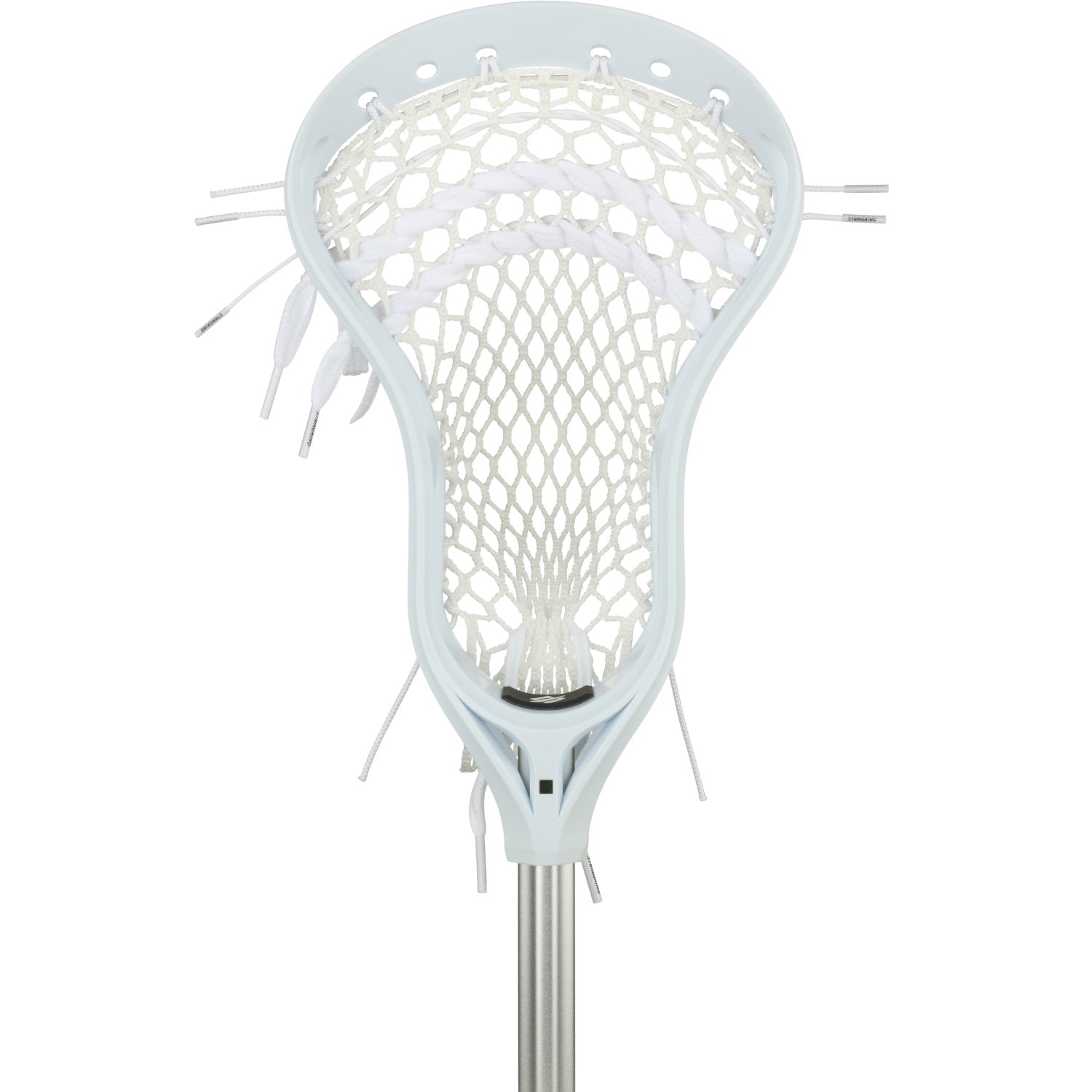
The stick that experienced youth coaches reach for — a thinner shaft and performance mesh designed specifically for players up to 10U.
This is a step up from the entry-level sticks. StringKing designed the Complete 2 Jr. from the ground up for developing players, with a thinner diameter shaft that is easier for small hands to grip and control. The pocket comes perfectly strung with Type 3 mesh, which provides a consistent release that owners mention is class-leading for its class — “no other stick compares for youth players,” as one owner put it. The stick is legal for league play up to 10U, so a child can use it in games from the moment they open the box. The aluminum shaft is light (0.25 kg) and the head is designed to help scoop ground balls and cradle with less effort. The warranty is a selling point: StringKing offers a durability guarantee — if it breaks within the warranty period, they replace it for free.
This stick is specifically for 10U and younger. The thinner shaft is not designed for the stress of older youth or high school play. At a premium price point, it is a serious investment for a serious young player.
top-tier pick: If your child is in a competitive 10U league and you want to give them the best tool for learning proper technique, this is it.
budget buys: Kids older than 10U, or beginners who are not sure they will stick with the sport yet — the price is an investment.
Understanding the Specs
NOCSAE Standard
NOCSAE (National Operating Committee on Standards for Athletic Equipment) is the safety benchmark for chest and shoulder protection in lacrosse. A pad that meets NOCSAE has been tested to absorb the force of a lacrosse ball shot at game speed. For parents of youth players, this certification is the simplest way to know a pad will protect a child’s ribs and sternum during a game. Without it, you are relying on the brand’s own marketing material rather than an independent test.
SEI Certification (Goggles)
SEI (Safety Equipment Institute) certification for goggles means they comply with the current ASTM standard and the latest playing rules. For girls’ lacrosse, this is non-negotiable for league play. The mark confirms the cage wire spacing and frame strength have been tested against ball impact at game velocities. A goggle without SEI certification may not be allowed at a tournament or school game.
Stick Length & Weight
Stick length dictates position suitability. Attack/midfield sticks typically run 40-42 inches, while defenders use a longer (52-60 inches) shaft. Lighter sticks (around 0.3 kg or 10-12 oz) reduce fatigue during practice for younger players. Heavier sticks (14-16 oz) offer more power on passes but can strain a small arm. A 41-inch stick at 15.8 ounces is a good middle ground for a middle-schooler who is still building strength.
Bag Capacity & Compartments
Bag capacity, measured in liters, tells you how much gear fits. For youth lacrosse, 40L is the balance — enough for pads, helmet, cleats, and two sticks, but not so large that it drags on a kid’s back. Separate compartments (wet/dry sections, shoe sleeves, helmet pockets) are more useful than raw volume, because they keep sweaty gear from soaking the rest of the bag. Look for compartments that are sewn, not just stitched on, to avoid one season of wear causing a split seam.
FAQ
Does my youth lacrosse player need shoulder pads that meet NOCSAE standards?
What size goal should I get for my backyard?
What is the difference between a 26-inch youth stick and a 41-inch attack stick?
How tight should a youth lacrosse goggle fit?
Can I use a youth lacrosse stick for a teenage beginner?
What is the best way to store a lacrosse goal in the off-season?
How long does a youth lacrosse bag typically last?
What size lacrosse shoulder pads does my 11-year-old need?
Can girls use the same lacrosse stick as boys?
What is the most important piece of protection for a beginning youth lacrosse player?
Final Thoughts: The Verdict
For most families, the best youth lacrosse gear package starts with the STX Stallion 75 shoulder pad — it offers NOCSAE-certified protection, a light 0.49 kg build, and adjustability that grows with a child. Pair it with the KAVIGOR 40L bag for practical hauling and the STX Rookie-S goggle for girls. If you want a stick that truly helps a beginner develop proper technique, the StringKing Complete 2 Jr. is the premium choice for 10U players. For backyard practice, the Franklin Sports 4×4 goal is the solid value. Pick the pieces that match your child’s age, position, and league requirements, and you will have gear that lasts from the first practice through the end-of-season tournament.
How We Picked
We do not accept paid placement. Every pick is matched to a real buyer and a real use-case; we do not hands-on test units.
Sources & Methodology
Specifications: manufacturer listings and product documentation. Review insights: verified customer reviews, as of July 2026. Pricing: not shown on this page (it changes often); check the current price via the retailer link.
As an Amazon Associate, Calories Fit earns from qualifying purchases. This does not affect which products we feature.