9 Best Youth Baseball Pitching Machine | Ready for the Real Pitch

Our readers keep the lights on and the coffee maker working hard! As an Amazon Associate, I earn from qualifying purchases.

Specs are compiled from manufacturer listings and verified buyer reviews and can change over time — please confirm the key details on the product page before buying.

Your young player needs hundreds of batting reps to build a confident swing, but your arm can only throw maybe fifty strikes before it aches. A pitching machine fixes that, as long as you pick one whose speed, wheel type, and ball requirements match your child’s age and skill level — not just the highest MPH number on the box. This guide breaks down nine top-rated machines, from a simple spring-loaded tosser to a cordless 70-MPH beast, so you can pick the one that makes practice click.

I’m Mohammad — the founder and writer behind Calories Fit. This guide is built by comparing the manufacturers’ published specifications and the patterns across verified customer reviews, so you get each pick’s real strengths and trade-offs instead of marketing spin.

Whether you are a travel-ball coach or a parent tired of sore shoulders, these are the youth baseball pitching machine options that owners and players consistently call their favorites.
Our Picks at a Glance

Sports Attack Junior Hack Attack
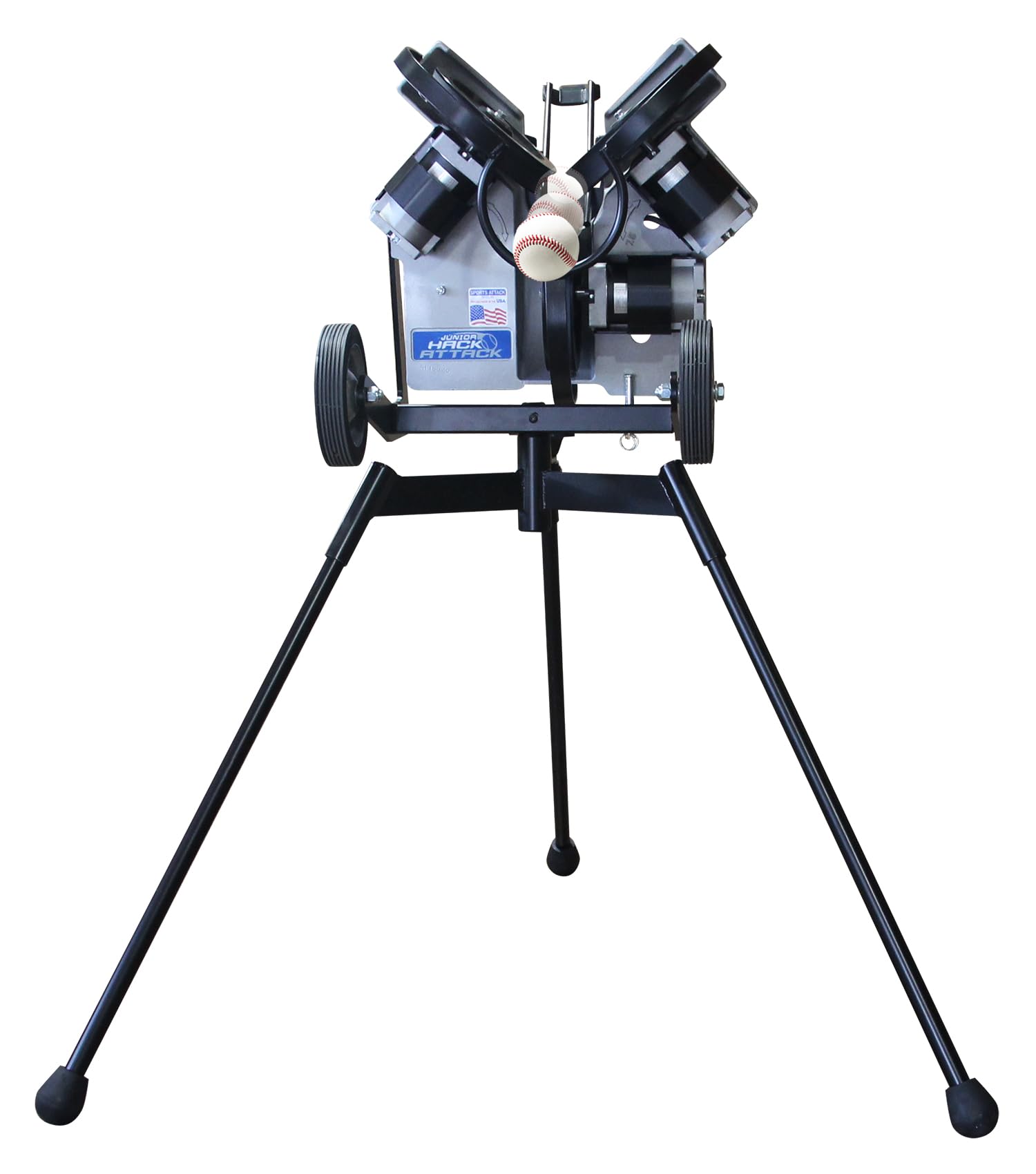
Best OverallSports Attack Junior Hack Attack4.7★312 ratingsYou get the most versatile pitch arsenal from a single machine because of its 3-wheel design that throws fastballs, curveballs, sliders, and knuckleballs up to 70 MPH. The Junior Hack Attack is the clear crowd favorite, and for good reason.Check Price on Amazon
Zooka ZS740 Baseball Pitching Machine
Best CordlessZooka ZS740 Baseball Pitching Machine4.1★75 ratingsYou get full-field freedom because it runs on battery power — 700 to 900 pitches per charge with no extension cord needed. The Zooka ZS740 is the machine for families who practice at parks, empty fields, or anywhere without a wall outlet.Check Price on Amazon
Mound Yeti 2-Wheel Pitching Machine
Dual-Sport PickMound Yeti 2-Wheel Pitching Machine4.6★32 ratingsYou switch from baseball to softball in seconds because it has two ball chutes — one for each sport — and the release height adjusts automatically. The Mound Yeti is built for serious programs that train both baseball and softball players.Check Price on Amazon

How To Choose The Best Youth Baseball Pitching Machine

A pitching machine is a long-term investment in your kid’s swing. Picking the right one starts with knowing the three specs that actually matter for youth play: speed range, wheel design, and ball type. Here is what to look for.

Match Speed to Age and Distance

A machine that tops out at 45 MPH works great for a 7-year-old standing 35 feet away, but a 12-year-old facing live pitching at 50+ MPH needs more. Look for a machine with a wide, adjustable speed range (15 to 70 MPH or more) so it grows with the player. Remember: speed at the machine is faster than what the batter sees at the plate — distance slows it down.

Wheel Design Determines Pitch Quality

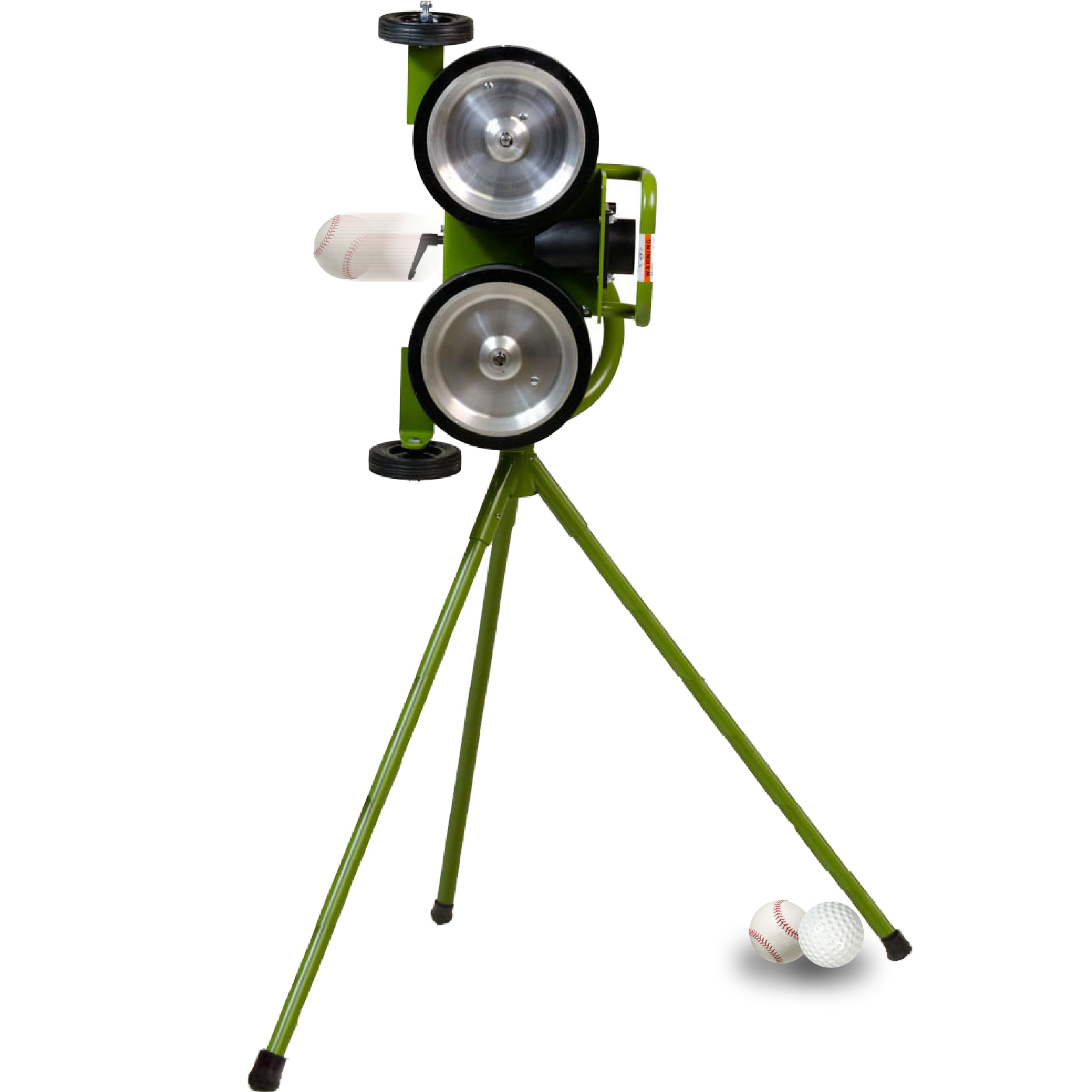
Single-wheel machines are simple and affordable, throwing mostly fastballs. Two-wheel machines add the ability to throw curves and sliders by spinning each wheel at a different speed. Three-wheel designs, like the top-rated Sports Attack models, give you the most control over spin and movement — they can throw knuckleballs, sinkers, and sweeping curves that mimic a real pitcher’s arsenal.

Know the Ball Rules

Some machines are baseball-only, while others accept softballs or dimpled training balls. A few, like the PowerNet Launch F-lite, will void the warranty if you feed them anything other than their own branded ultra-lite balls. Check the fine print: buying a machine that needs expensive proprietary balls can add a recurring cost you did not plan for.

Quick Comparison

Model Best For Speed Range Wheel Type Ball Type Amazon
Sports Attack Junior Hack Attack★ Best Overall All-around precision & versatility Up to 70 MPH 3-Wheel Baseballs only Amazon
Zooka ZS740Best Cordless Cordless on-field versatility 10 to 70 MPH Single Baseballs, dimple, safety, tennis Amazon
Mound Yeti 2-WheelDual-Sport Pick Premium dual-sport accuracy 45 to 95 MPH Dual-Wheel Baseballs & softballs Amazon
Franklin Sports Total Pitcher No-power backyard drills Spring-launch N/A (Spring) Baseballs, softballs, teeballs Amazon
Heater Sports Perfect Pitch Lightweight & portable practice 15 to 45 MPH Single (Mechanical) Baseballs, softballs, Lite/plastic Amazon
Heater Sports Junior Baseball Affordable motorized starter 15 to 48 MPH Single Dimpled balls recommended Amazon
PowerNet Launch F-lite Baseball & softball dual sport Simulates 40-90 MPH Single (Overhand) Launch F-lite balls only Amazon
Furlihong 737BH High-speed pro-style training Up to 95 MPH Dual-Wheel Regulation or PU balls Amazon
BSN Sports Bulldog Budget-friendly team machine 30 to 60 MPH Single Baseballs, 11″ & 12″ softballs Amazon

In‑Depth Reviews

★ Best Overall

1. Sports Attack Junior Hack Attack

Our pick — over 4.5★ from 300+ verified ratings; the strongest balance of quality and price.

3-WheelUp to 70 MPH

You get the most versatile pitch arsenal from a single machine because of its 3-wheel design that throws fastballs, curveballs, sliders, and knuckleballs up to 70 MPH.

The Junior Hack Attack is the clear crowd favorite, and for good reason. Its three-wheel design (which buyers consistently say is superior to one- or two-wheel machines) lets it throw fastballs, curveballs, sliders, split-fingers, and even knuckleballs — all the way up to 70 MPH. You can also pivot the head for ground balls, line drives, and fly balls reaching up to 250 feet, making it a full defensive practice tool, not just a batting aid. At 37 feet and 37-45 MPH, owners describe it as “accurate but not overly precise, using the full strike zone.” The machine runs on standard 110V power (a common household voltage in the US) and draws roughly 60W at 50 MPH, which means it can run for over 8 hours on a portable power station.

What wins people over is the rock-solid consistency and commercial-level build. Owners have logged hundreds of hours without a single breakdown — one review after a full year called it “rock solid.” The 96-pound weight makes it a beast to lug around, but the reputation is that the 3-wheel design’s versatility and accuracy far outpace the lighter, cheaper alternatives. It is a whole different class: compared to the 12-pound Heater Sports Perfect Pitch, this machine weighs eight times as much, and the max speed gap is a significant 70 MPH versus 45 MPH.

Junior Hack Attack

  • Throws every pitch type (fastball, curve, slider, knuckleball) for realistic at-bats.
  • Pivots for grounders, line drives, and pop flies up to 250 ft — one machine replaces three drills.
  • Commercial-grade build that owners say survives direct hits from 60+ MPH balls.

Heavy to move

  • 96 lbs is heavy; plan for a rolling cart or a helper to move it.
  • Baseball-only — softballs will not fit in this model.
  • Price is a serious investment; it is the most expensive pick on this list.

Coaches’ top pick: you want the one machine that does everything from fastballs to fungos and will last through years of heavy team or family use.

Not for travel: portability is your top priority or you need to pitch softballs — the 96-pound weight and baseball-only feed are real limits.

Best Cordless

2. Zooka ZS740 Baseball Pitching Machine

Cordless10-70 MPH

You get full-field freedom because it runs on battery power — 700 to 900 pitches per charge with no extension cord needed.

The Zooka ZS740 is the machine for families who practice at parks, empty fields, or anywhere without a wall outlet. It pitches from 10 to 70 MPH and throws 700 to 900 pitches on a single charge — buyers report the battery lasts about two hours of nonstop use at half speed. Its tall telescoping tripod (a stand that extends upward) adjusts to replicate throwing angles for kids, teens, and adults, and it tosses grounders, fly balls, line drives, and strikes. It accepts baseballs, dimple balls, safety balls, and even tennis balls, which makes it a versatile tool for different skill levels and surfaces.

The battery freedom is the main draw, but the accuracy is a split topic. Owners consistently praise the fly-ball capability and portability (it fits in a trunk), and the built-in pitch-alert beeper adds a safety layer for younger hitters. On the other hand, a number of owners mention erratic pitch placement, with one saying the unit arrived defective but was replaced with great customer service. The trade-off for cordless convenience is that you give up the pinpoint strike-zone repeatability of a heavy, wheeled machine like the Junior Hack Attack.

What owners consistently agree on: the Zooka excels at fly-ball practice and is the most portable high-speed option on the list. One owner summed up the experience: “Easy to transport, accurate, battery lasts hours — great for pitching and fly balls.”

Zooka ZS740 freedom

  • 700-900 pitches per charge — ditch the generator and extension cords.
  • Adjustable speed from 10 MPH (t-ball friendly) to 70 MPH (high school level).
  • Accepts baseballs, dimple balls, safety balls, and tennis balls for varied training.

Battery limits use

  • Accuracy can be inconsistent; some units arrive with issues that require customer support.
  • 38 pounds is still heavy to carry any distance without the telescoping tripod handle.
  • Beeper and password system adds complexity some parents find unnecessary.

Portable choice: the coach or parent who needs a cordless machine for field practice, especially fly-ball work.

Short sessions: you demand dead-nuts consistent strikes every time — the Zooka’s accuracy is more variable than a corded three-wheel machine.

Dual-Sport Pick

3. Mound Yeti 2-Wheel Pitching Machine

2-Wheel45-95 MPH

You switch from baseball to softball in seconds because it has two ball chutes — one for each sport — and the release height adjusts automatically.

The Mound Yeti is built for serious programs that train both baseball and softball players. It has two ball chutes — one for baseballs and one for softballs — and the release height changes with the legs: 48 inches for baseball, 30 inches for softball. Speed adjusts from 45 to 95 MPH, and the dual wheels let it throw fastballs, sliders, curveballs, knuckleballs, pop flies, and grounders. Owners say it is “extremely accurate” and “consistent,” with one buyer noting it “shoots pop flies and ground balls effectively.” The 110-pound weight and sturdy steel construction make it a permanent fixture in a cage or field, though owners recommend buying a rolling cart for transport.

The build quality and accuracy earn top marks from the small but enthusiastic owner base. Performance and quality are the most-praised aspects, and owners call it a “great investment.” The catch is the legs: the standard legs are not adjustable, which one owner found too short for a batting cage opening. And at 110 lbs, portability is a real chore — this is not a machine you throw in a trunk. It is a premium pick that belongs to a team, a facility, or a parent with a dedicated practice area. The 2-year limited warranty provides some confidence for that investment.

Budget buy: you coach both baseball and softball players and want one machine that does both without changing wheels or heads.

No speed adjust: you need a portable machine to take to the park — the Yeti’s 110 lbs demands a cart or a permanent home.

Versatile Pro Trainer

4. Furlihong 737BH Dual-Wheel Pitching Machine

Dual-WheelUp to 95 MPH

You get pro-style breaking balls because the dual-wheel design lets you set each wheel’s speed independently — 10 levels per wheel for precise movement.

The Furlihong 737BH brings a professional-grade dual-wheel design to the youth market at a middle-tier price. Each wheel has 10 separate speed levels, allowing you to dial in fastballs and curveballs with independent wheel speeds. The machine hits up to 95 MPH with regulation baseballs (85 MPH with PU training balls), and the head tilts up/down and rotates side-to-side so you can simulate any pitch trajectory. Owners say it is “amazing” for batting practice and fielding drills, and the quick assembly and breakdown make it convenient for home or cage use.

The big caveat reported by owners is accuracy with regulation balls. One notes the machine is “extremely inaccurate with regulation hard or soft practice baseballs unless they are PRISTINE (basically new).” The recommendation is to use yellow dimpled balls for consistent performance. It also collects dirt and debris easily, requiring regular cleaning to keep the ball feed running smoothly. This is a capable machine for the price, but it demands the right ball and a clean environment to shine.

Versatile machine: you want dual-wheel breaking-ball capability without spending premium-tier money.

Setup time: you plan to use old or worn regulation baseballs — this machine is picky about ball condition.

Best Value

5. BSN Sports Bulldog Baseball/Softball Pitching Machine

Single-Wheel30-60 MPH

You get a tough, budget-friendly machine for both sports — it throws baseballs, 11-inch softballs, and 12-inch softballs from 30 to 60 MPH.

The Bulldog is a no-nonsense machine for teams or families who need a reliable practice pitcher without the complexity or cost of multi-wheel designs. It runs 30 to 60 MPH and throws baseballs, 11-inch softballs, and 12-inch softballs using a durable urethane wheel that never goes flat. Owners consistently call it a good value for a backyard batting cage, praising its accuracy when using same-weight balls and the precise speed and height controls. The heavy-duty legs convert for baseball or softball, and at 50.6 pounds, it is easier to move than the 96-pound Junior Hack Attack but significantly heavier than the 12-pound Heater options.

The pitching performance and overall value are strong positives, with owners saying it is “very accurate” with dimple balls and that it “consistently pitches right down the middle.” The durability score is mixed — a few customers note screws and bolts loosening over time and some machines arriving with damage. The rubber wheel also leaves marks on balls and bats. At roughly half the price of the top two premium machines, the Bulldog is a sensible middle ground for the coach who needs a machine that works for both baseball and softball without the hefty investment.

Heavy duty: a budget-conscious team or family that needs a durable single-wheel machine for both baseball and softball practice.

Noisy for home: you need extreme portability (50.6 lbs) or breaking-ball capability — this is a fastball-only single-wheeler.

Dual-Sport Starter

6. PowerNet Launch F-lite Pitching Machine

Single-WheelSimulates 40-90 MPH

You switch between baseball and softball by swapping the tripod legs — the machine is calibrated to throw strikes in both sports.

PowerNet’s Launch F-lite is designed to be a consistent, low-maintenance practice partner for both baseball and softball. It comes with two sets of tripod legs that you swap to change the pitch height between sports, and the machine is calibrated to throw strikes consistently. The speed simulates 40 to 90 MPH at 25 feet, with four adjustable speed settings. It also launches pop flies and line drives for fielding drills. Reviewers point out their kids love using it, calling it “sturdy, reliable, and absolutely beneficial for our baseball program” for ages from 10U to 16U. The machine includes six Launch F-lite baseballs and six softballs to get you started.

The most significant limitation: this machine is tune to work ONLY with PowerNet’s own Launch F-lite balls. Using any other brand of ball “may affect durability and performance” and voids the warranty. That proprietary ball requirement means you are locked into a recurring purchase. A smaller number of owners also report a 3-4 minute startup delay before the machine begins pitching, and some had trouble reaching customer support. If you are okay with the ongoing ball cost, the convenience of switching sports and the consistent accuracy make it a solid mid-range pick.

Easy carry: you need a reliable, accurate machine for kids who play both baseball and softball and you are fine with the proprietary ball system.

Weak throws: you want to feed it whatever balls you have lying around — the warranty and performance rely on using only Launch F-lite balls.

Budget Motorized

7. Heater Sports Junior Baseball Pitching Machine

Single-Wheel15-48 MPH

You get an affordable motorized machine for young hitters — it runs 15 to 48 MPH and drops a ball automatically every 10 seconds from its 12-ball feeder.

The Heater Sports Junior is the entry point for parents who want a real motorized machine without spending over a grand. A 1/4 horsepower DC motor (a small electric motor that runs on direct current) drives a single wheel from 15 to 48 MPH, and the 12-ball automatic feeder drops a ball every 10 seconds for hands-free practice. The heavy-duty tripod stand keeps it stable, and the air-filled tires are fully enclosed for safety. Owners say it is “great value for ages 7-10” and “works great for a 9-year-old.” The machine is popular for grounders, pop flies, and batting practice, and it disassembles easily for portability.

The catch: owners strongly recommend using only dimpled balls (training balls with a textured surface that feed better through the machine) because real baseballs can damage the machine. The autofeeder gets described as “flimsy and junky” by some, and the tire pressure recommendation is a point of confusion (the manual says 20-22 PSI, but experienced owners say the tires need 40 PSI for proper performance). Accuracy is also mixed — the machine is more consistent on grass than on dirt. Still, for the price, this is the most affordable way to get a motorized pitcher for a young player who is not yet facing 50+ MPH heat.

Simple design: parents of 7-to-10-year-olds who want an affordable motorized machine for consistent batting practice at home.

No auto feed: your child needs a machine that throws 50+ MPH, or you do not want to buy dimpled balls — this machine lives in the youth speed band only.

No-Power Starter

8. Heater Sports Perfect Pitch 45 MPH

Mechanical15-45 MPH

You do not need batteries or an outlet — at 12 pounds, this wind-up machine is the lightest option, but its accuracy is unpredictable.

The Perfect Pitch is the lightest option on this list at just 12 pounds, and it is the only purely mechanical (non-electric) pitching machine in the lineup. You wind it up manually, and it pitches real baseballs from 15 to 45 MPH. It also handles lite balls and plastic baseballs up to 60 MPH and even does slow-pitch softball arcs. The simplicity is its biggest draw: no battery, no motor, and no outlet required. Owners say it is “great for kids 10 and above” and works well for outfielding and ground ball drills.

The trade-off is severe for anyone expecting consistent strikes. Shoppers say that the machine “pitches all over the place” even when you keep the settings identical. Another owner wrote, “no matter if you keep the settings exactly the same, this thing pitches all over the place.” The lack of a motor means every pitch is subject to the mechanical tension you set, which makes repeatability poor compared to any motorized wheel machine. It is best viewed as a fun tosser for backyard fielding practice rather than a serious strike-throwing tool for batting practice. The 12-pound weight and 36 x 18 x 36-inch dimensions (71% larger in volume than the Junior Hack Attack’s footprint) make it easy to carry but hard to store neatly.

Youth ideal: a lightweight, no-electricity option for fielding practice and casual backyard tosses for kids 10 and up.

Too slow: consistent batting practice — the mechanical design makes strike-zone accuracy unreliable.

Budget Spring Launcher

9. Franklin Sports Total Pitcher

Spring-PoweredBattery-Free

You get the cheapest entry point into pitching machines — a spring-loaded launcher that runs on zero electricity, but its welded joints are prone to failure.

The Franklin Sports Total Pitcher is the most affordable entry point on the list, using a spring-loaded launching mechanism instead of wheels or motors. It throws batting practice pitches, grounders, and pop flies for baseballs, softballs, and teeballs with no batteries or electricity required. The color-coded speed chart makes adjustments intuitive, and the detachable basket collects and stores balls between reps. A handful of coaches found it durable and consistent — one calling it a “great tool for coaching” that reloads in under 3 seconds.

The durability issues are real and repeated in the reviews. A buyer reported the “throwing arm snapped at joint after 3 sessions (under 1 week) with standard softballs.” Another said a weld “broke right off the arm during the first use.” These failures clearly represent a pattern of assembly and material concerns. For the lowest price on the list, you get a device that can work well for light, occasional use, but it is not built for the reps a team practice requires. Think of it as a fun tosser for a young kid learning to recognize pitches, not a machine that will survive a season of travel ball.

Complete kit: you want a cheap, battery-free way to introduce a young child to different pitch heights and speeds in the backyard.

Fragile build: you need a machine that will hold up for regular team practice — the welded joints have a record of early failure.

Understanding the Specs

Wheel Configuration (1, 2, or 3 Wheels)

This is the single most important spec for determining what a machine can pitch. A single-wheel machine (like the BSN Bulldog or Heater Junior) only throws fastballs and straight pitches — the ball just goes straight through the wheel. A two-wheel machine (like the Mound Yeti or Furlihong 737BH) lets you spin each wheel at a different speed, which creates movement: a curveball breaks one way, a slider breaks the other. A three-wheel machine (like the Sports Attack Junior Hack Attack) gives you the most control, allowing the machine to throw curves, sliders, sinkers, and even knuckleballs that move like a real human pitcher’s arsenal.

Speed Range and Real Distance

The MPH number printed on the box is measured at the machine’s wheels, not at the plate. A machine throwing 50 MPH from 35 feet is much slower at the plate than the same machine at 25 feet. For youth players, a machine with a range of 15 to 48 MPH (like the Heater Junior) is perfect for 7-to-10-year-olds. As kids get older and move back to 40+ feet, you need a machine that reaches 60-70 MPH. Machines that claim 95 MPH, like the Furlihong, are useful for high school practice but are overkill for most youth players — you would have to move them much closer to get a realistic game speed.

FAQ

What age is a youth pitching machine designed for?
Most youth pitching machines are designed for players aged 6 to 14. Machines with speed ranges from 15 to 45 MPH, like the Heater Sports Junior, are ideal for 7-to-10-year-olds. Machines that reach 70 MPH, like the Junior Hack Attack, work well for 10U and up through middle school. Always match the speed to the child’s comfort and skill level, not just their age.
Can I use regular baseballs in a pitching machine?
It depends on the machine. The Sports Attack Junior Hack Attack and BSN Bulldog handle regulation baseballs fine. The Heater Sports Junior is designed for dimpled balls — real baseballs can damage the wheels over time. The PowerNet Launch F-lite will void the warranty if you use any ball other than its own branded Launch F-lite balls. Always check the manufacturer’s ball compatibility before buying a bucket of baseballs.
Do I need electricity for a pitching machine?
Not all of them. The Franklin Sports Total Pitcher and Heater Sports Perfect Pitch are purely mechanical — no battery or wall outlet needed. The Zooka ZS740 is battery-powered (700-900 pitches per charge). Most other machines, including the Sports Attack Junior Hack Attack and BSN Bulldog, need a standard 110V outlet or a portable generator to run.
What is the best pitching machine for a 10-year-old?
The Heater Sports Junior Baseball Pitching Machine is a popular choice for 10U players. It throws 15 to 48 MPH, has a 12-ball autofeeder, and is relatively affordable. For families who want more growth room, the Sports Attack Junior Hack Attack works well for 10U and up, with owners praising its accuracy at 37-45 MPH from 37 feet.
How heavy are pitching machines, and can I move them alone?
Machines vary from 12 pounds (Heater Sports Perfect Pitch) to 110 pounds (Mound Yeti). The 12-pound models are easy to carry, but their accuracy is poor. The 96-pound Junior Hack Attack is described as portable (fits in a trunk) but is a two-person lift for most people. The 50.6-pound BSN Bulldog is manageable for one person with a dolly. The 110-pound Mound Yeti needs a dedicated rolling cart.
What is the difference between dimpled balls and regular baseballs?
Dimpled balls have a textured surface with small indentations, similar to a golf ball, which creates less friction. This allows them to feed more reliably through pitching machines and reduces wear on the machine’s wheels. Many youth machines, like the Heater Sports Junior, perform best with dimpled balls. Regular baseballs are heavier and can damage certain single-wheel machines. Always follow the manufacturer’s ball recommendation.
Can a pitching machine throw curveballs and sliders?
Only multi-wheel machines can throw breaking balls. A single-wheel machine can only throw straight fastballs. Two-wheel machines (like the Mound Yeti and Furlihong 737BH) can create curveballs and sliders by spinning each wheel at a different speed. Three-wheel machines (like the Sports Attack Junior Hack Attack) can throw even more movement types, including knuckleballs and sinkers. If you want your player to practice reading spin, you need at least a two-wheel machine.
What is the warranty on a typical youth pitching machine?
Warranties vary widely. The Mound Yeti comes with a 2-year limited warranty. The Furlihong 737BH has a 12-month warranty. Other machines vary by seller and manufacturer. A few buyers reported difficulty getting replacements for defective units, while others (like Zooka owners) praised responsive customer service. Always check the warranty details and seller return policy before purchasing.
Is a pitching machine worth it for backyard practice?
For a parent who wants to give a young player hundreds of quality reps without destroying their own arm, a pitching machine is a fantastic investment. The best value options — the Heater Sports Junior and BSN Bulldog — offer motorized consistency for a few hundred dollars. Even the affordable spring-launcher Franklin Total Pitcher can make practice more efficient than a tired arm throwing wild pitches. The right machine depends on your space, budget, and how seriously the player trains.
How do I maintain a pitching machine?
The most common maintenance tasks are cleaning the wheel and ball feed path of dirt and debris (the Furlihong 737BH in particular collects dust), checking tire pressure if the machine has air-filled tires (the Heater Junior’s manual says 20-22 PSI, but owners recommend 40 PSI), and lubricating the motor or pivot points as recommended in the manual. For single-wheel machines, keep an eye on wheel wear — the BSN Bulldog’s replacement wheel costs roughly half the machine’s price.

Final Thoughts: The Verdict

Across the board, the youth baseball pitching machine winner is the Sports Attack Junior Hack Attack because it combines pro-level pitch variety (3-wheel design), a useful 70 MPH ceiling, and the 96-pound build quality that survives years of heavy team use. If you need cordless versatility for field practice, grab the Zooka ZS740. And for an affordable motorized starter that works great for 7-to-10-year-olds, the Heater Sports Junior is the one to reach for.

How We Picked

We do not accept paid placement. Every pick is matched to a real buyer and a real use-case; we do not hands-on test units.

Sources & Methodology

Specifications: manufacturer listings and product documentation. Review insights: verified customer reviews, as of July 2026. Pricing: not shown on this page (it changes often); check the current price via the retailer link.

As an Amazon Associate, Calories Fit earns from qualifying purchases. This does not affect which products we feature.

Related Guides

Please use a real email you check. If it's fake or mistyped, your message won't reach us and we can't reply — wrong addresses are rejected automatically.