
Our readers keep the lights on and the coffee maker working hard! As an Amazon Associate, I earn from qualifying purchases.
Specs are compiled from manufacturer listings and verified buyer reviews and can change over time — please confirm the key details on the product page before buying.
Your hands slip on a sweaty mat, your knees ache on a hard floor, and the corner keeps curling up, breaking your focus. To fix that, you need a grippy, cushioned, floor-hugging surface. That is exactly what a well-chosen yoga mat exercise mat delivers — a stable, non-slip platform for every pose and plank.
I’m Mohammad — the founder and writer behind Calories Fit. This guide is built by comparing the manufacturers’ published specifications and the patterns across verified customer reviews, so you get each pick’s real strengths and trade-offs instead of marketing spin.
The honest difference between a mat you love and one you tolerate depends on three things: thickness for joint protection, grip material for wet and dry practice, and width so you can stretch without your hands hitting the floor. After combing through real owner experiences, these are the models worth your time.
Our Picks at a Glance


How To Choose The Best Yoga Mat Exercise Mat
Your mat is your platform — pick the right one and you skip a lot of frustration. The three specs that matter most are thickness, grip material, and surface area. Here is what to look for in each.
Thickness — Comfort vs. Stability
You want comfort for your knees, but not so much squish that you wobble in tree pose. A thicker mat (10mm or more) coddles your knees and elbows during floor work and stretching, but your weight sinks in, making balance poses like tree or warrior III less stable. A thinner mat (4mm to 6mm) gives you a firm connection to the floor — excellent for balance — but offers less padding for sensitive joints. If you mainly do gentle yoga, Pilates, or recovery work, go thicker. For vinyasa or standing poses, medium thickness is the balance.
Grip and Material — What Stops the Slip
Materials tell you how the mat behaves when you sweat. NBR foam (Nitrile Butadiene Rubber) is soft and cheap but can feel slippery when wet. TPE (Thermoplastic Elastomer) is lighter, more eco-friendly, and offers decent dry grip. Natural rubber and polyurethane blends (like the Liforme material) are the gold standard for wet grip — they get tackier as you sweat. If you practice hot yoga or have naturally sweaty hands, skip the budget foam and go for a mat with a dedicated grip layer.
Size — Room to Move
You need room to stretch without your hands hitting the floor. Most standard mats are 24 inches wide and 68 to 72 inches long. That works fine for many people, but taller users (over 5’10”) often find their feet or hands hanging off the ends. Extra-wide mats — 32 or 36 inches — are a standout for broad-shouldered men, plus-size practitioners, or anyone who likes a wide stance in lunges and squats. Length is equally important: look for a mat that is at least 72 inches if you are tall, or you will be adjusting mid-flow.
Quick Comparison
| Model | Best For | Thickness | Width | Weight | Amazon |
|---|---|---|---|---|---|
| Liforme Special Yoga Mat★ Best Overall | Ultimate Wet Grip | 4.2mm | Standard | 5.5 lb | Amazon |
| Gaiam Thick Yoga MatPlush Comfort | Joint Cushioning | 10mm | 24″ | 2 lb | Amazon |
| Amazon Basics TPE MatTerrific Value | Budget All-Rounder | 6mm (1/4″) | 24″ | 2 lb | Amazon |
| PRIMASOLE Yoga Mat | Soft Cushion for Seniors | 12mm (1/2″) | 24″ | 3.3 lb | Amazon |
| KEEP Extra Wide Mat | Wide Space | 7mm | 32″ | 2.8 lb | Amazon |
| Gogokiwi XL Mat | Plus-Size Room | 6mm (1/4″) | 36″ | 2.7 lb | Amazon |
| HAPBEAR XL Mat | Tall Practitioners | 6mm | 36″ | 2.6 lb | Amazon |
| Karma Fitness Large Mat | Intense Floor Workouts | 10mm | 32″ | 4 lb | Amazon |
| Manduka GRP Adapt | Hot Yoga Grip | 5mm | 26″ | 5.5 lb | Amazon |
In‑Depth Reviews
1. Liforme Special Yoga Mat
Our pick — over 4.5★ from 600+ verified ratings; the strongest balance of quality and price.
The mat that actually grips harder the more you sweat — a hot-yoga essential.
You stay planted even as you heat up, because the Liforme uses a proprietary “GripForMe” material — a blend of eco-polyurethane over rubber — that gets tackier when wet rather than slippery. Owners confirm the grip is the defining feature; even during hot flow there is no need for a towel over the mat. At 4.2mm thick, it sits much thinner than the Gaiam (at 4.2mm versus the Gaiam at 10mm), which means excellent floor feel for balance poses but less cushion for bony knees. The built-in alignment guide lines are subtly printed on the surface, and practitioners say they speed up foot and hand placement without distracting from the flow.
Reviewers really value the size — the mat is longer and wider than standard, making it a favorite for taller users, though one 5’11” owner found head and feet still hang off the ends. The trade-off is price, which is noticeably higher than most picks here. That investment buys a PVC-free, planet-friendly construction and a free carrying bag. A small number of owners reported the top layer bubbling after months of use, but the company acknowledged the defect and handled replacements easily. If you practice daily or do hot yoga, this is the mat that earns its place.
Grippy alignment mat
- class-leading grip even when “sweaty-wet” — no towel needed
- Alignment system speeds up pose transitions
- Eco-friendly, PVC-free materials
Heavy to carry
- Premium price — a real investment for casual users
- Thin cushion (4.2mm) may feel hard on concrete floors
- Very occasional top-layer bubbling defect reported
For stability seekers: you practice hot yoga or vinyasa daily and want zero slippage.
If portability matters: you need thick joint padding for floor-based or restorative work — the 4.2mm is firm.
2. Gaiam Thick Yoga Mat
10mm of cushion that turns a hard floor into a forgiving surface.
If your knees complain during lunges or your hips ache in seated folds, this mat fixes that directly. The 10mm NBR foam (Nitrile Butadiene Rubber — a dense, soft synthetic rubber) delivers plush cushioning that the owner crowd calls “superior to thinner ones,” particularly for insulating against cold floors. It measures 72 inches long and 24 inches wide — standard dimensions — and at just 2 pounds, it is easy to carry with the included Easy-Cinch carrying strap. Buyers report the textured foam surface reduces slipping during dry workouts, though it is noticeably softer than a rubber mat, so advanced balance poses feel less stable.
The biggest real-world knock against the Gaiam is durability. While over a thousand owners mention quality positively, a fair number also flag that the NBR foam can tear or dent over time with heavy use. A fresh roll has a distinct chemical smell that needs 24 to 48 hours to air out, and the mat sometimes keeps a permanent curl from being stored rolled.
Cushioned budget pick: the 10mm thickness is the standout — it cushions knees, hips, and elbows better than any other pick here, making it ideal for older users or anyone recovering from joint pain.
Wears quickly: the NBR foam is not built for daily high-intensity wear; treat it gently and it will last, but aggressive use may leave indentations.
For gentle practice: beginners, seniors, or anyone prioritizing joint comfort over a super-firm grip.
For frequent use: you practice hot yoga or dynamic vinyasa — the foam gets slippery when wet.
3. Amazon Basics 1/4 Inch Thick TPE Exercise Yoga Mat
A featherlight TPE mat that rolls up tight and costs less than a dinner out.
This entry-level mat does not feel entry-level. It uses TPE (thermoplastic elastomer — a recyclable plastic-rubber blend that is lighter than NBR and has a spring-back elasticity) to give you 6mm of padding that owners call “perfect thickness for support without bulk.” At 73.6 inches long it is at 73.6 inches long versus the Gaiam at 72 inches, so your head stays on the mat if you are tall. The carrying strap is included, and the mat rolls up very compactly — much tighter than a thick foam mat — so it is easy to stash or take to the gym. The non-slip surface holds well during dry practice, and multiple owners note there is no strong odor, unlike many cheaper foam mats.
The major caveat is the same as any budget TPE mat: durability is a question mark after heavy daily use. The color — a soft Aqua — gets mixed feedback; some find it paler than the listing photos. But for the price, the value is tough to top. It is not as grippy as the Liforme or Manduka when wet, so it is not a hot-yoga mat, but for basic home practice, stretching, or Pilates it does everything you need without fuss.
Affordable thick mat: the combination of price, weight, and portability — it is the lightest mat here at roughly 2 pounds, and owners confirm it is “lightweight, supportive, affordable.”
Slight chemical smell: anyone practicing on hard tile who needs serious knee padding — the 6mm is adequate but not plush.
For beginners: a spare mat, a travel mat, or a first mat if you are just starting yoga.
If sensitive to odors: hot yoga or anyone who wants a thick, pillow-like cushion.
4. PRIMASOLE Yoga Mat Eco-Friendly Material

Half an inch of memory-foam-like softness that coddles sensitive joints during floor work.
At 12mm (half an inch), the PRIMASOLE is the thickest mat on this list — thicker even than the Gaiam, which is 10mm. It is made from PER (polymer environmental resin), a PVC-free material the brand says is non-toxic. The double-layer embossed surface is designed for core strength, posture, and balance work. Owners who use it for stretching and gentle yoga love the soft feel, describing it as “memory foam” that is comfortable for planks and easy on knees. It comes with both a carrying case and a strap, which is a nice bonus at this price point.
There is a clear split in owner feedback on grip. Some find it stays put on wood floors, while others report hands and feet “slip like crazy,” especially during sweatier sessions. The mat is also shorter than most at 68 inches — if you are over 5’8″, your head or feet may hang off the end. One amusing detail the crowd noticed: the mat has the word “eco-friendry” printed on it instead of “eco-friendly,” which suggests some QC gaps. Still, for the price and the plush cushioning, this is a strong pick for seniors, recovery work, or anyone who just wants to stretch without joint pain.
For green yogis: gentle stretching, floor Pilates, or post-injury recovery where softness is the priority.
For joint protection: you practice hot yoga, need a long mat, or require a confident grip.
5. KEEP Extra Wide Yoga Mat
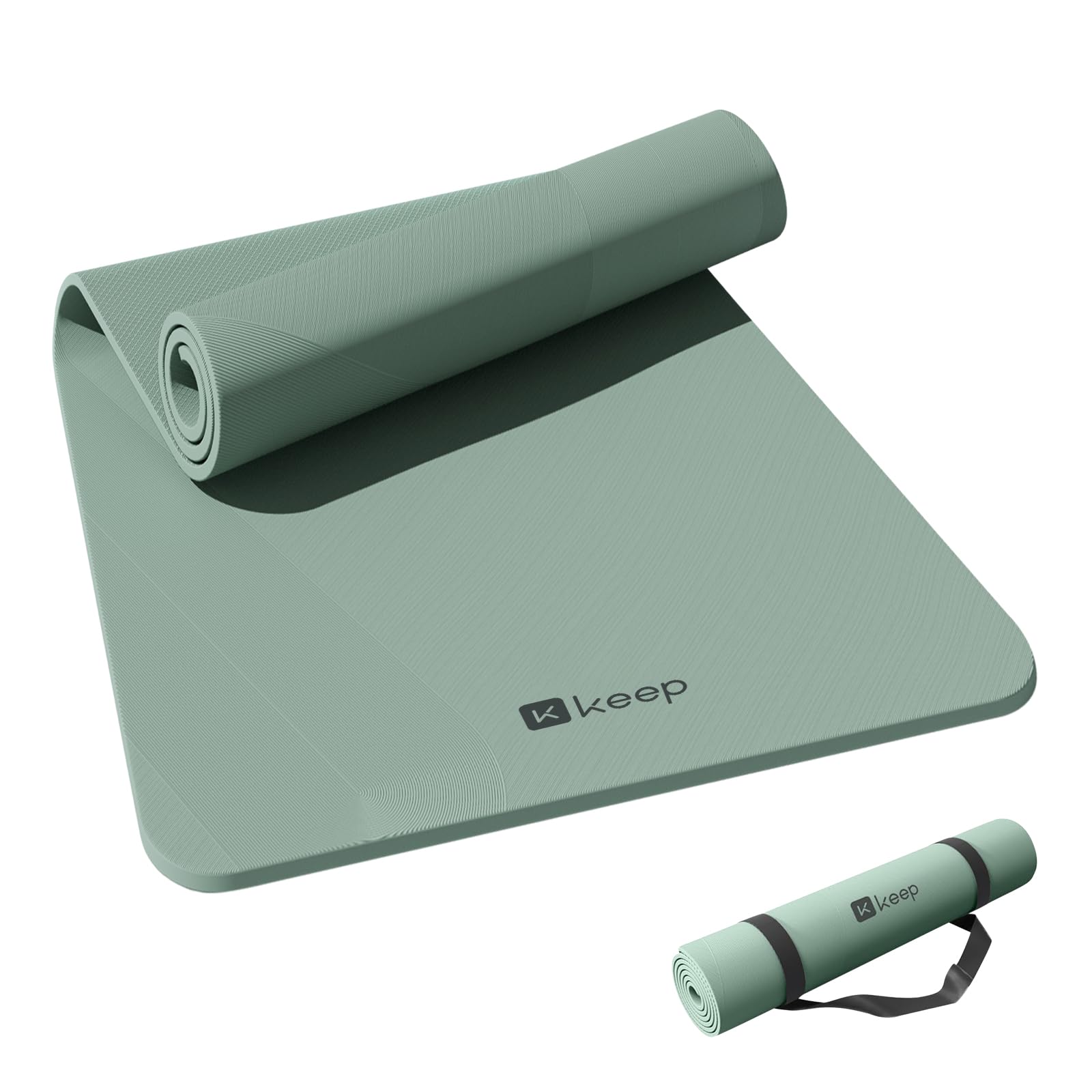
Generous 32-inch width at a price that undercuts most premium wide mats.
You get an extra 8 inches of room compared with standard mats, which are 24 inches wide — fine for narrow frames, but restrictive if you have broad shoulders or like a wide stance in squats. The KEEP widens that to 32 inches. It is 7mm thick (about 9/32 of an inch) — a middle ground between the thin Liforme and the thick Gaiam — and uses a double-sided non-slip texture: a fingerprint-like pattern on top for grip and a comprehensive anti-slip pattern on the bottom. Owners confirm the mat stays planted even on smooth surfaces, and at 2.8 pounds it is easy to carry with the included polyester strap. The TPE material is free of plasticizers and formamide, so it is safe to rest your face on during child’s pose.
The main complaint is that the mat does not lay perfectly flat on carpet — it tends to develop waves and wrinkles when stepped on. It is also softer than the 2020 version, according to repeat buyers. But for the price, the value is undeniable. The width is the hero feature here: it makes pushups, lateral lunges, and wide-legged stretches much more comfortable than a standard mat allows.
For tall practitioners: strength training, HIIT, or yoga flows where you need extra horizontal space.
For small spaces: carpeted floors — this mat performs best on hard, smooth surfaces.
6. Gogokiwi Extra Wide Yoga Mat
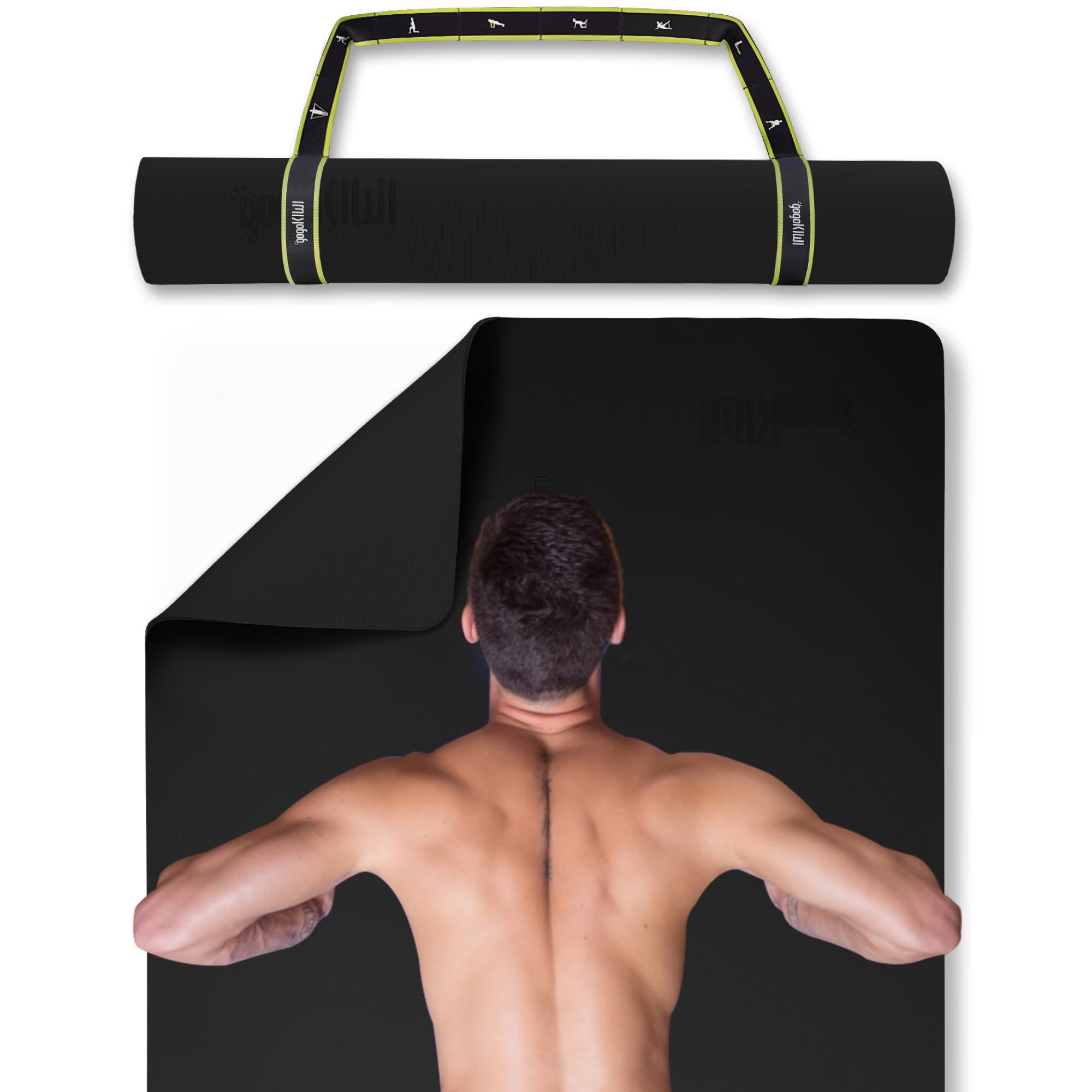
A full 36 inches wide — 36 inches wide, compared to a standard 24-inch mat — built for big bodies and dynamic flows.
The Gogokiwi is the widest mat on this list at 36 inches — that is 36 inches wide, while standard mats are 24 inches wide, so your hands stay on the mat during wide stances. It is made from Recfoam, which the brand says is 100% recyclable, and weighs just 2.7 pounds despite its generous surface area. The dual-sided non-slip design gives you two color options to flip between, and the center alignment line helps you place your feet and hands symmetrically without looking. Owners who are 6’3″ and 220 pounds report it fits their full body for everything from pushups to lunges, with only their feet hanging off during the widest stretches.
The durability feedback is more mixed than the initial praise — some owners mention the mat starts to come apart after several months of consistent use. It is also 6mm thick, which is fine for most home workouts but can feel thin on very hard floors for people with sensitive knees. The included yoga strap can double as a stretch band, a small bonus that owners appreciate. For the money, this is the most spacious option available — if width is your main concern, this is the one.
For side stretches: big and tall practitioners who need every inch of width for comfortable ground-based movement.
For hot yoga: durability over many years is your priority — some units show wear faster than expected.
7. HAPBEAR Large Yoga Mat
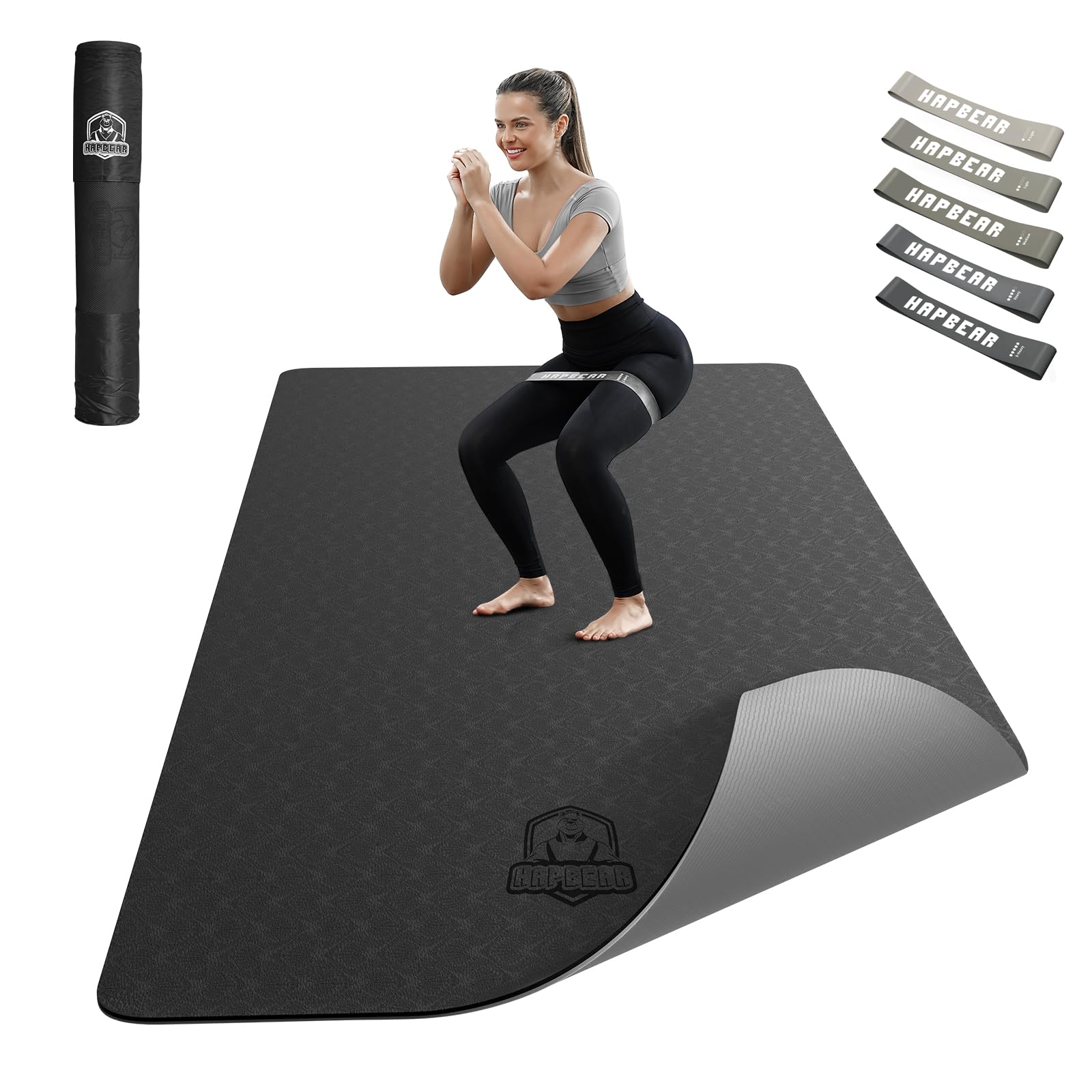
A 36-inch-wide TPE mat with a bonus carry bag — the generous space at a mid-range price.
Like the Gogokiwi, the HAPBEAR gives you a 36-inch-wide surface — at 36 inches wide, compared to the KEEP’s 32 inches — but it uses high-grade TPE material that owners describe as smooth and durable. At 6mm thick, it provides what the brand calls “a strong balance of cushioning and support” — enough to ease knee and wrist strain during floor work, but firm enough for standing poses. The double-sided textured grip is designed to stay put on hard floors, though the brand explicitly notes it is not for use on carpet. Owners appreciate the extra room for foam rolling, Tai Chi, and full pushups without feeling confined.
The mixed feedback centers on thickness. Some owners find 6mm too thin for comfortable kneeling on concrete, and the mat has an initial scent that needs a day or two to air out. It rolls up well for storage, though the 36-inch width makes it slightly bulkier than a standard mat. The included carry bag adds real portability — useful for taking it to a studio or gym. If you need generous width but prefer TPE over heavy rubber, this is a compelling option.
For floor coverage: wide-range dynamic workouts, stretching, and Tai Chi on hard, smooth surfaces.
For hard floors: you practice on carpet or need thick padding for prolonged kneeling.
8. Karma Fitness Large Exercise Mat

Thick 10mm double-layered TPE that feels premium and stays grippy during sweaty HIIT.
For sweaty floor workouts, you get 10mm of cushion from a double-layered TPE construction (two bonded TPE layers for extra density and durability) in a 32-inch-wide format — matching the KEEP’s width but with thicker padding than the KEEP’s 7mm. The brand says TPE is denser and more durable than standard NBR foam, and owners agree that the mat holds up well to daily use. The bespoke diamond-textured grip on both sides gives traction in all directions during high-intensity movements — a step up from the smooth foam of the Gaiam. A free carry bag with an over-the-shoulder strap makes transport simple, and the reversible design (black on one side, pink on the other) gives you two looks from one mat.
A few quality-control issues pop up in reviews. One owner received a mat with a stain and puncture hole that looked like a repackaged return, and the actual width measured slightly under the advertised 32 inches. The 10mm thickness also means it is bulkier to roll up and store than thinner mats. But for anyone doing HIIT, strength training, or dynamic floor workouts who wants substantial cushion without the heavy weight of rubber, the Karma Fitness mat punches well above its price point.
For gym workouts: sweaty floor workouts, HIIT, and cross-training where grip and density matter.
For gentle yoga: inspect upon arrival — a small number of units arrive with cosmetic defects from storage.
9. Manduka GRP Adapt Yoga Mat
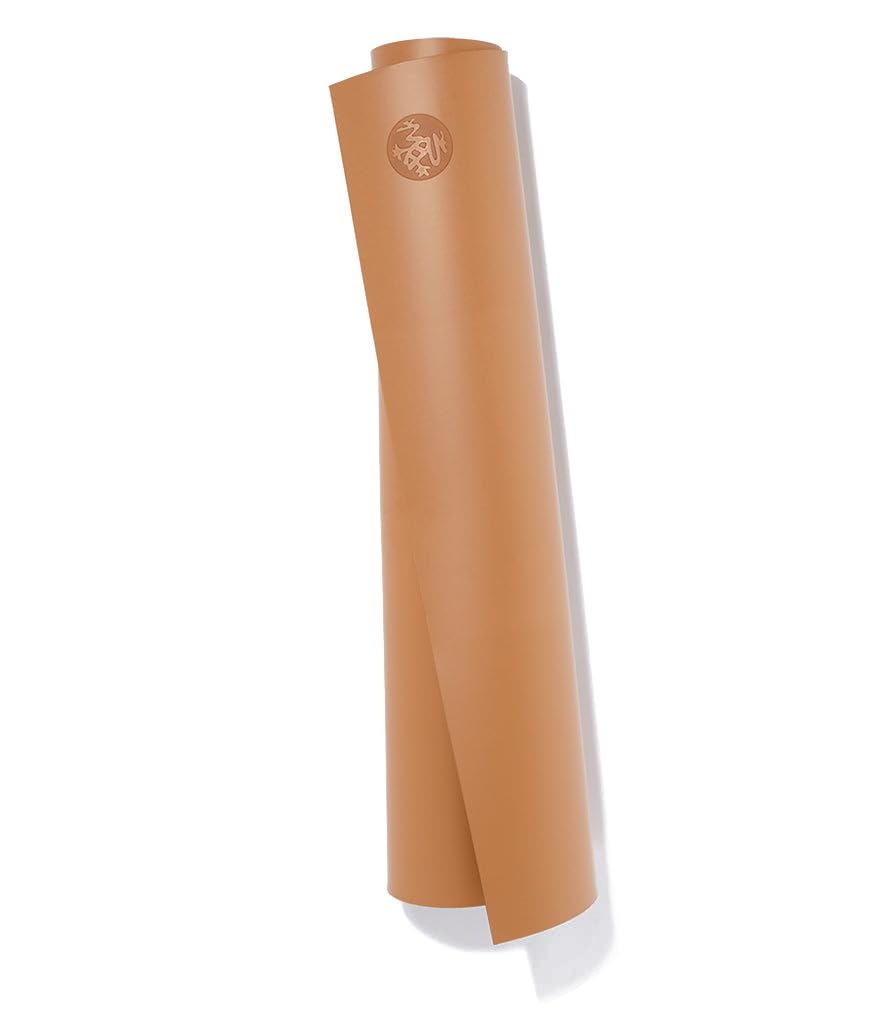
A satin-grip surface that absorbs double the sweat — engineered for the hottest rooms.
Manduka is a trusted name in yoga, and the GRP Adapt delivers exactly what the name promises: grip that adapts to moisture. The top layer is a Satin Grip material paired with a Moisture Flow scrim (a thin internal layer that wicks sweat away from the surface) that the brand says absorbs twice as much sweat as competing mats. The result is a dry, slip-free surface that owners confirm works in intense hot yoga without needing a towel — similar to the Liforme, but with a dedicated sweat-wicking layer. At 5mm thick, it is thinner than the Gaiam or Karma Fitness mats, but the dense rubber-and-polyurethane construction feels substantial and stable underfoot. It measures 71 inches long and 26 inches wide — slightly wider than standard, which helps during broad stances.
The biggest recurring feedback from owners is about stability on hard floors: some report the mat moves a lot during class despite the grippy top surface. The odor from the rubber is noticeable at first but fades over a few sessions. At 5.5 pounds, it is noticeably heavier than the TPE mats on this list, so it is less convenient for daily schlepping to the studio. But for dedicated yogis who sweat heavily and demand zero slip, the Manduka is one of the few mats that truly delivers on that promise.
For serious yogis: you practice hot yoga and want a mat that stays dry and sticky without a towel.
On tight budget: you need a mat for gentle stretching or floor work — the 5mm padding is firm.
Understanding the Specs
Thickness (mm)
This is the single biggest comfort factor. A 4mm mat like the Liforme gives you excellent floor feel for balancing poses, but your knees will feel every hard tile. A 10mm mat like the Gaiam or Karma Fitness protects joints beautifully — people with sensitive knees or a history of injury almost always prefer this range — but the extra squish can make standing balances trickier. The middle ground, 6mm to 7mm, works for most general-purpose practice.
Material — NBR vs. TPE vs. Rubber
NBR foam (the Gaiam) is soft, cheap, and thick, but it can tear over time and gets slick when wet. TPE (the Amazon Basics, Keep, HAPBEAR) is lighter, recyclable, and springier — a great everyday choice with decent dry grip. Natural rubber blends with polyurethane (the Liforme and Manduka) are heavier and pricier but provide the best wet grip by far. If you sweat a lot or do hot yoga, rubber-polyurethane is your only serious option.
FAQ
How do I clean my yoga mat without damaging it?
Is a thicker yoga mat better for beginners?
Will a yoga mat fit in a standard gym locker?
What is the difference between NBR and TPE yoga mats?
Can I use a yoga mat for HIIT or strength training?
How long does a yoga mat typically last?
What does the alignment guide on a yoga mat do?
Is it safe to use a yoga mat on carpet?
My new mat smells strongly of rubber — is that normal?
Are extra-wide yoga mats worth the extra cost?
Final Thoughts: The Verdict
For most buyers, the best yoga mat exercise mat is the Liforme Special Yoga Mat — its grip in sweat is class-leading and the alignment system genuinely helps, as hundreds of owners confirm. If you want thick cushioning for floor work on a budget, the Gaiam Thick Yoga Mat is the crowd favorite with tens of thousands of positive reviews. And for generous 32-inch width at a fair price, the KEEP Extra Wide Yoga Mat gives you room to move without spending extra.
How We Picked
We do not accept paid placement. Every pick is matched to a real buyer and a real use-case; we do not hands-on test units.
Sources & Methodology
Specifications: manufacturer listings and product documentation. Review insights: verified customer reviews, as of July 2026. Pricing: not shown on this page (it changes often); check the current price via the retailer link.
As an Amazon Associate, Calories Fit earns from qualifying purchases. This does not affect which products we feature.