
Our readers keep the lights on and the coffee maker working hard! As an Amazon Associate, I earn from qualifying purchases.
Specs are compiled from manufacturer listings and verified buyer reviews and can change over time — please confirm the key details on the product page before buying.
Choosing a yoga floor mat is a battle between two things that rarely get along: enough cushion to save your knees, and enough grip to keep you planted when you sweat. The good news is that you don’t have to settle for a mat that excels at one and fails at the other. This guide breaks down nine top contenders, focusing on the thickness, width, and surface texture that actually decide whether your practice feels stable or slippery.
I’m Mohammad — the founder and writer behind Calories Fit. This guide is built by comparing the manufacturers’ published specifications and the patterns across verified customer reviews, so you get each pick’s real strengths and trade-offs instead of marketing spin.
From plush joint-saving foam to sweat-ready surfaces built for hot yoga, this is the breakdown of the finest yoga floor mat choices to match your practice.
Our Picks at a Glance

How To Choose The Best Yoga Floor Mat
Before you pick a mat, you need to match it to the kind of practice you actually do. A restorative stretch session asks for softness, while a sweaty vinyasa flow demands grip. Here is the plain-English math on the three specs that matter.
Thickness: The Comfort-Stability Balance
Thickness controls how much padding you feel and how stable you stand. A thicker mat, like a 10mm or 12mm option, protects knees and elbows during kneeling poses. The trade-off is that very thick foam can feel unsteady underfoot during balancing poses. A 5mm to 7mm mat offers a firmer base for balance, but you’ll feel the floor more.
Width: Room to Move Without Rolling Off
Standard mats are 24 inches wide, but if you’re tall, broad-shouldered, or just like to spread out, an extra-wide 32-inch or 36-inch surface means your hands and feet stay on the mat. Going wider adds a little weight, but for many people, the extra coverage is worth it.
Quick Comparison
| Model | Best For | Thickness | Width | Material | Amazon |
|---|---|---|---|---|---|
| Gaiam Thick Yoga Mat★ Best Overall | Joint comfort on hard floors | 0.39” (10mm) | 24” | NBR Foam | Amazon |
| Gruper Yoga MatGrip Specialist | Sweat-proof hot yoga grip | 0.24”/0.32” | 24” | TPE | Amazon |
| YOTTOY Extra WideWide Comfort | Spacious beginner practice | 0.34” (8mm) | 32” | TPE | Amazon |
| Amazon Basics TPE Mat | Budget-friendly portability | 0.24” (1/4”) | 24” | TPE | Amazon |
| YOTTOY Extra Thick | Maximum knee protection | 0.5” (12mm) | 24” | TPE | Amazon |
| KEEP Extra Wide Mat | Balanced cushion for all bodies | 0.28” (7mm) | 32” | TPE | Amazon |
| Gogokiwi Extra Wide Mat | Tall and plus-size practitioners | 0.25” | 36” | RecFoam | Amazon |
| Karma Fitness Large Mat | High-intensity home workouts | 0.39” (10mm) | 32” | TPE | Amazon |
| Manduka GRP Adapt | Serious hot yoga grip | 0.24” (5mm) | 26” | PU & Rubber | Amazon |
In‑Depth Reviews
1. Gaiam Thick Yoga Mat
Our pick — over 4.5★ from 46,000+ verified ratings; the strongest balance of quality and price.
A 10mm NBR foam mat that cushions joints on hard floors.
This is the mat for anyone who practices on wood, tile, or concrete and wants a buffer between their joints and the hard floor. Its defining feature is the 0.39-inch (10mm) layer of high-density NBR foam (a soft, springy rubber foam) — and buyers confirm this generously thick surface delivers “excellent cushioning for joints.”
At 24 inches wide, it is a standard-width mat, and it noticeably lacks the extra real estate of the wider picks below. What it lacks in width, it makes up for in sheer popularity — the 4.6-star score comes from thousands of owners who consistently praise the quality and thickness above all else.
The catch is odor and durability. A strong chemical smell is common from the start, typically fading after 24–48 hours of airing out. Some buyers report the foam tearing with heavy use, so treat it gently if you practice daily. The adjustable carrying strap makes it easy to tote between rooms, and the textured surface keeps you from slipping during dry, low-impact routines.
Why It Wins the Crowd
- Plush 10mm cushioning absorbs impact for knees, hips, and elbows
- Reliable grip on most hard floors during dry workouts
- Includes a handy adjustable carrying strap for easy transport
Fair Caveats
- Some owners note the foam can tear with rigorous use
- Initial foam odor needs airing out for a day or two
- Softer surface is less stable for advanced balancing poses
Your best pick if: you’re a beginner or recovering from joint pain and you practice on hard surfaces where cushion matters more than razor-sharp balance.
Think twice if: you need a wide mat or a highly stable base for advanced standing balances.
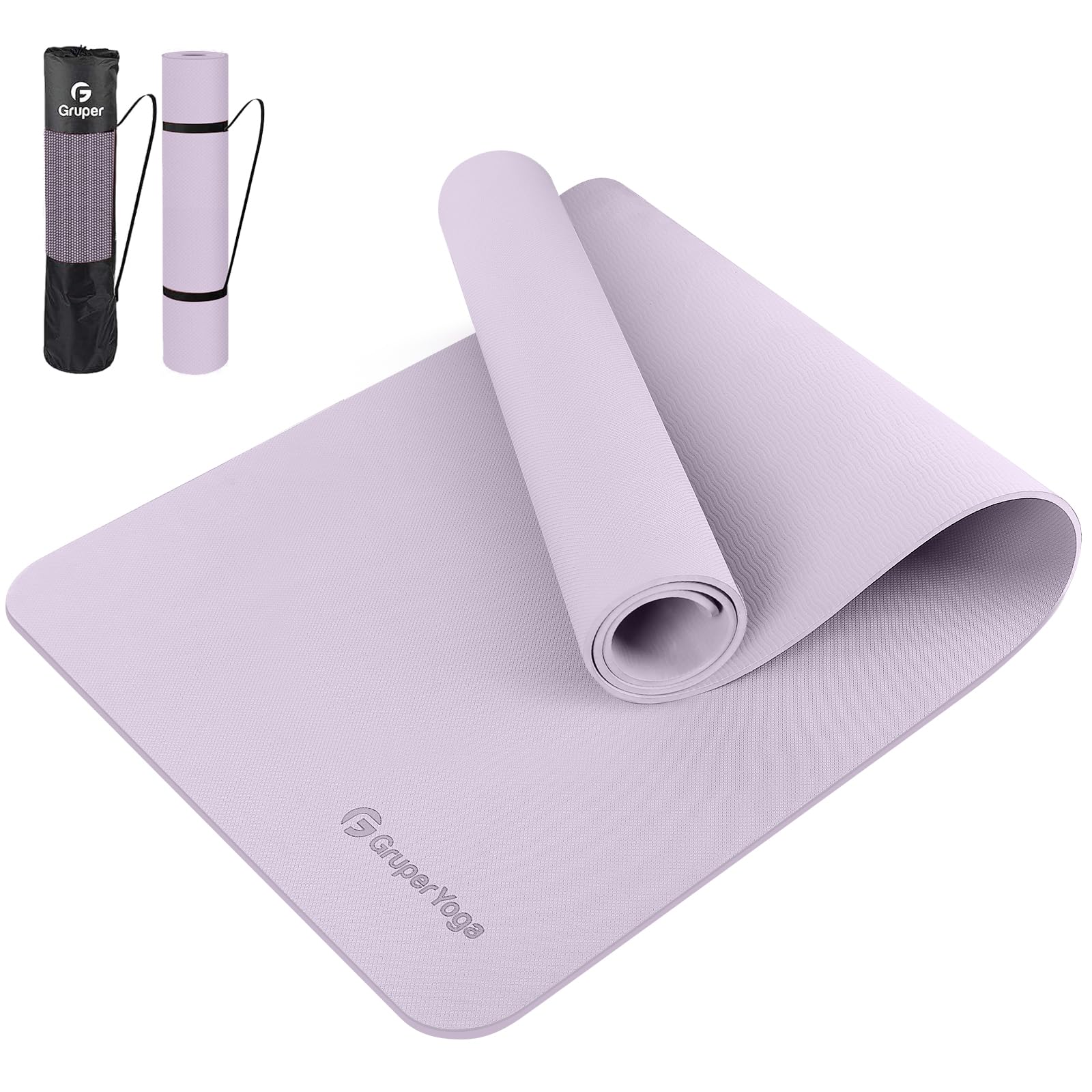
2. Gruper Yoga Mat
A dual-sided TPE mat with a textured top that grips during sweaty flows.
The Gruper is built around one obsession: grip. It uses a double-sided non-slip design, with a textured top layer that keeps hands and feet locked in place, and wavy undersides that grip the floor. Buyers confirm the “phenomenal grip, no slipping even in hot yoga with sweaty hands” — a rare feat at this price point.
Where it differs from the Gaiam is thickness. At 0.24 inches (6mm) standard or 0.32 inches (8mm) in the thickened version, it’s noticeably slimmer, offering a firmer, more stable base for balancing poses than the 10mm Gaiam’s softer foam.
Made from TPE (a skin-friendly, non-toxic thermoplastic that’s lighter than traditional PVC), it weighs just 2.6lb in the standard size. It comes with both a carrying strap and a storage bag, though one owner found the bag too small and tough to squeeze the mat back into. Early reports also mention some material deterioration after the first few uses.
Standout: Grip. The anti-skid texture is what everyone raves about most, making it the best budget-friendly choice if slippage is your pet peeve.
The Fine Print: it’s lighter on cushioning than the thicker mats, so it’s best for floor types where you need stability over softness.
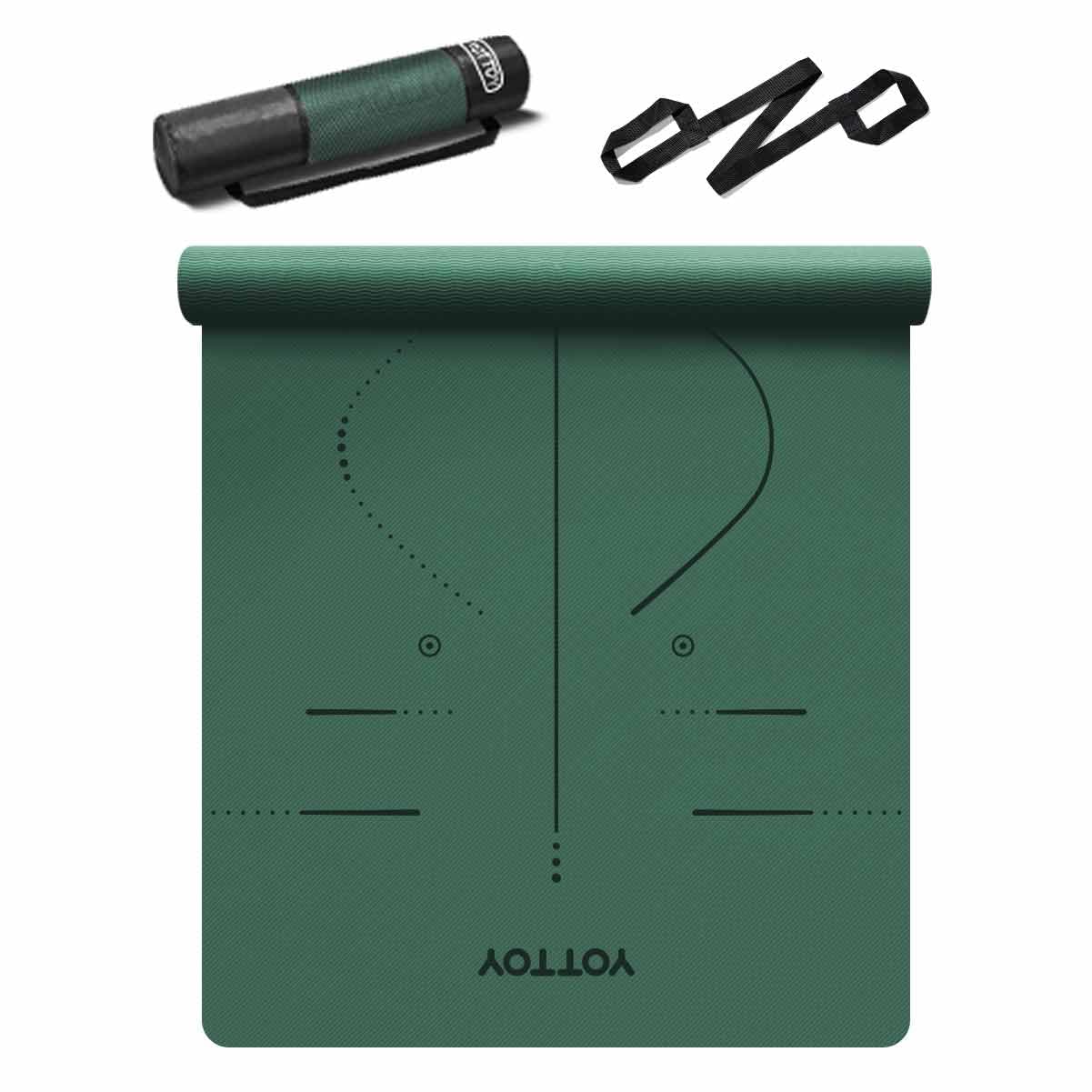
3. YOTTOY Yoga Mat (Extra Wide)
A 32-inch-wide TPE mat that keeps hands and feet on the surface.
If you’ve ever felt cramped on a standard 24-inch mat, this YOTTOY is a revelation. Its 32-inch width is a 33% more gap over the Gaiam’s 24 inches, giving your hands and feet plenty of room to move during wide-legged poses and dynamic flows.
The 0.34-inch (8mm) thickness finds a solid middle ground — softer than the 6mm Gruper but firmer than the 10mm Gaiam. It’s comfortable enough for knee-heavy poses, and an alignment mark down the center helps beginners line up their footing.
Owners consistently call it perfect in size and quality, though the grip draws mixed feedback. Some find it slip-resistant even in sweaty conditions, while others note it gets slippery in hot yoga. The included carrying strap and bag are handy, but a few owners mention the bag tearing after a month of use.
The Spacious Appeal
- Generous 32-inch width prevents your body from spilling off the edges
- SGS & TUV certified eco-friendly TPE, free of toxins (safety marks from independent testing groups)
- 8mm thickness balances cushioning with stability
Watch For
- Grip quality varies; it’s better for dry practice than hot sweaty flows
- Heavier than standard mats due to the wider size
- Carry bag durability has been questioned
Grab this for: taller or broader bodies that want extra width and a balanced cushion without going full premium.
Look elsewhere if: you’re a hot yoga regular who sweats heavily and needs absolute traction.
4. Amazon Basics TPE Exercise Yoga Mat
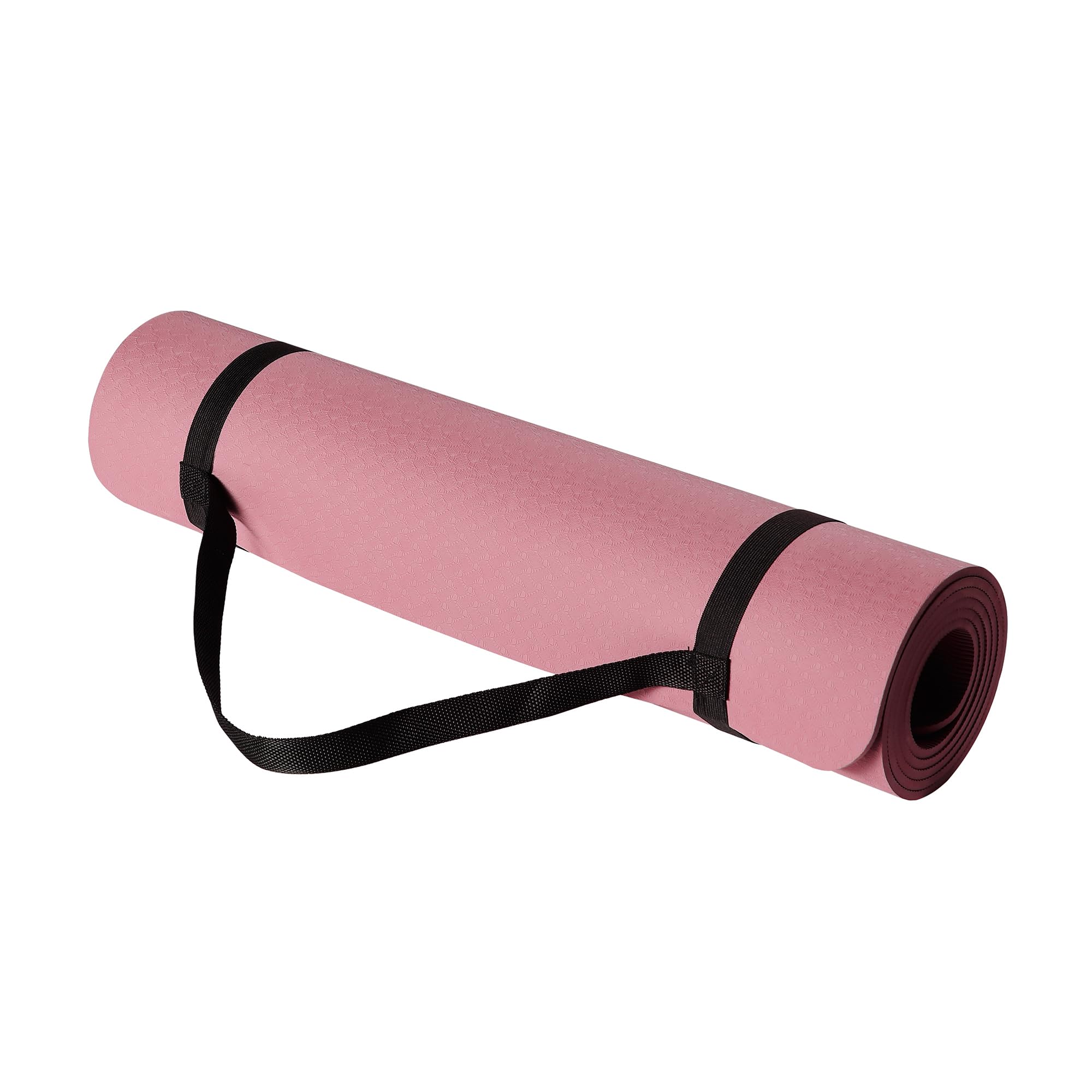
A budget TPE mat that offers solid cushioning without the premium price.
The Amazon Basics mat is the smart-money pick for beginners who want a dependable surface without a premium tag. At 0.24 inches (1/4 inch) thick, it’s slim and rolls up tight, making it far less bulky to carry than the thicker NBR mats.
Its key advantage is length. At 73.6 inches, it’s longer than most standard mats, giving taller users extra coverage head-to-toe. The TPE material (a lightweight, non-toxic foam) has a spring-back elasticity that helps it maintain its shape during workouts.
Owner feedback is positive overall, with quality and thickness earning the most praise. The main caveat is that the grip isn’t its strongest suit — a few owners find it slightly slippery, and it can stretch during deep poses, making balance feel less locked-in.
Smart Value: if you are new to yoga and want joint protection without overspending, this mat’s 1/4-inch cushioning absorbs impact well enough for most routines, and the price stays low.
Reach for it: if portability and a tight roll are more important than plush cushioning or intense grip.
5. YOTTOY Yoga Mat (Extra Thick)

A 12mm TPE mat that provides maximum cushioning for sensitive joints.
This is the thickest mat in the lineup, with a 0.5-inch (12mm) profile that shields joints like nothing else here. Buyers with hip and knee pain praise the 12mm cushioning for floor-based poses and Pilates.
The one-piece TPE foam is certified by SGS & TUV (independent testing bodies) to be free of heavy metals and 10 types of harmful phthalates (chemicals used to soften plastics). It’s also waterproof and sweat-proof, making clean-up a simple wipe-down.
This mat is a clear pick for comfort-focused practice, but it’s not for everyone. It’s heavier at 4 pounds, and a few owners mention the grip is mixed, especially on top of the foam softness. One 60-year-old user found it “2 inches shorter each dimension than advertised” and noted a strong chemical smell that improved after airing out.
The Plush Payoff
- 12mm of cushioning is heavenly for knees, elbows, and sitting bones
- Certified free of heavy metals and 10 harmful phthalates
- Waterproof and sweat-proof for easy care
Know Before You Buy
- At 4 pounds, it’s one of the heavier mats to carry around
- Ultra-soft foam can feel less stable for balancing poses
- Some customers note a strong initial chemical smell
Choose this one: if you have existing knee, hip, or joint sensitivity and your practice is mostly floor-based stretching and gentle yoga.
skip it if: you’re a hot yoga devotee or need a firm, highly stable base for standing balances.
6. KEEP Extra Wide Yoga Mat
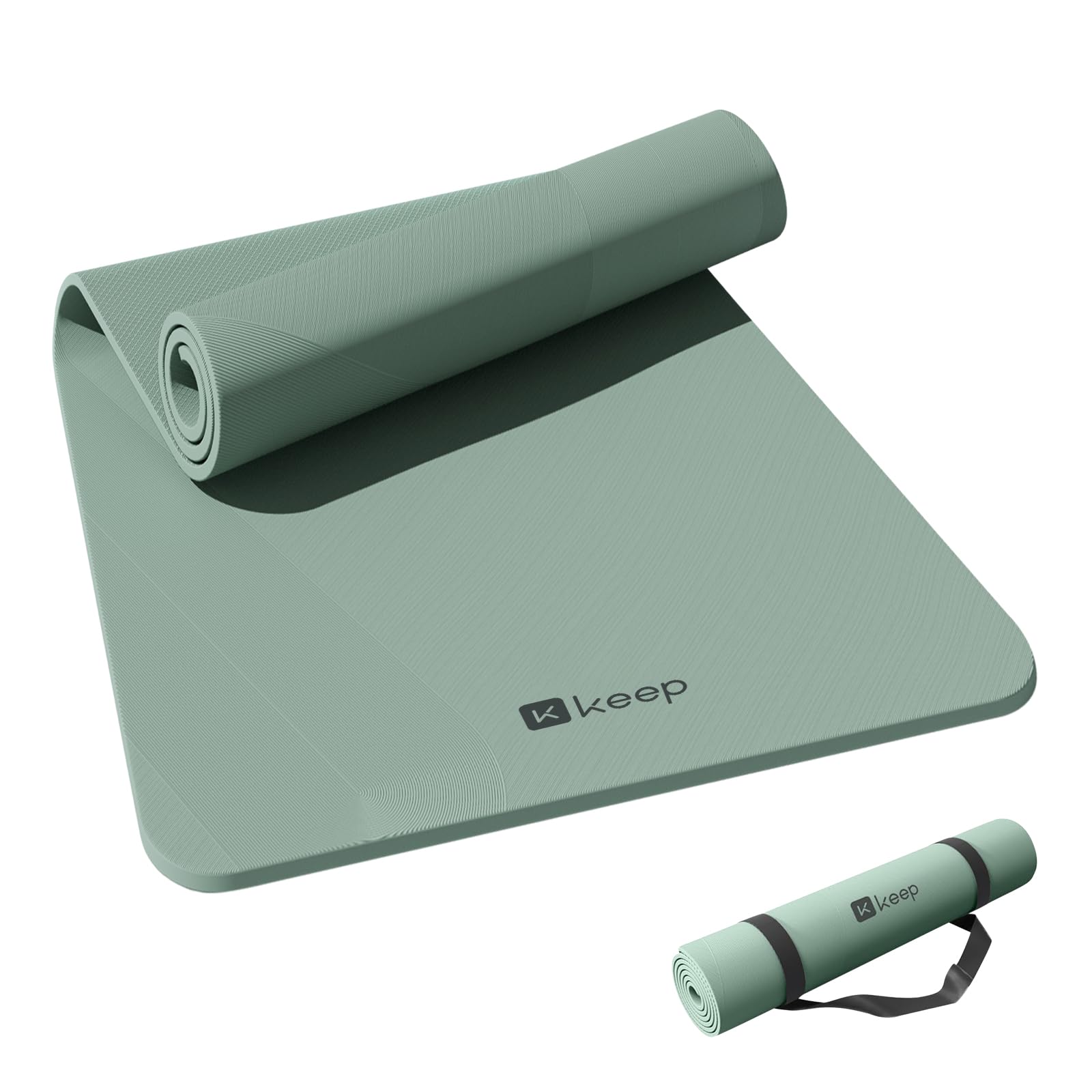
A 7mm, 32-inch-wide TPE mat with a double-sided grip for balanced comfort.
The KEEP mat slots neatly between the skinny grip mats and the ultra-plush ones. Its 0.28-inch (7mm) padding provides solid joint protection without the mushy feel of thicker foam, making it a great all-rounder for yoga and Pilates.
At 32 inches wide, it offers the same generous coverage as the YOTTOY wide mat, but at a lighter 2.86 pounds. The fingerprint-like texture on top and the full anti-slip pattern underneath means it holds steady on both dry and slightly damp surfaces.
Owners appreciate the size for taller users, with one noting it’s “big enough for someone over 6 feet tall.” The main trade-off is that on carpet, it doesn’t always lay perfectly flat and can wrinkle underfoot. It comes with a free adjustable polyester strap for easy transport.
the balance: for most practitioners, the 7mm thickness cushions your knees and hips, while the 32-inch width gives you extra room to spread out—together, they offer the best balance of comfort and stability in this list.
Closest Comparison: it beats the standard-width Gaiam for coverage and the ultra-thick YOTTOY for balance stability.
7. Gogokiwi Extra Wide Yoga Mat
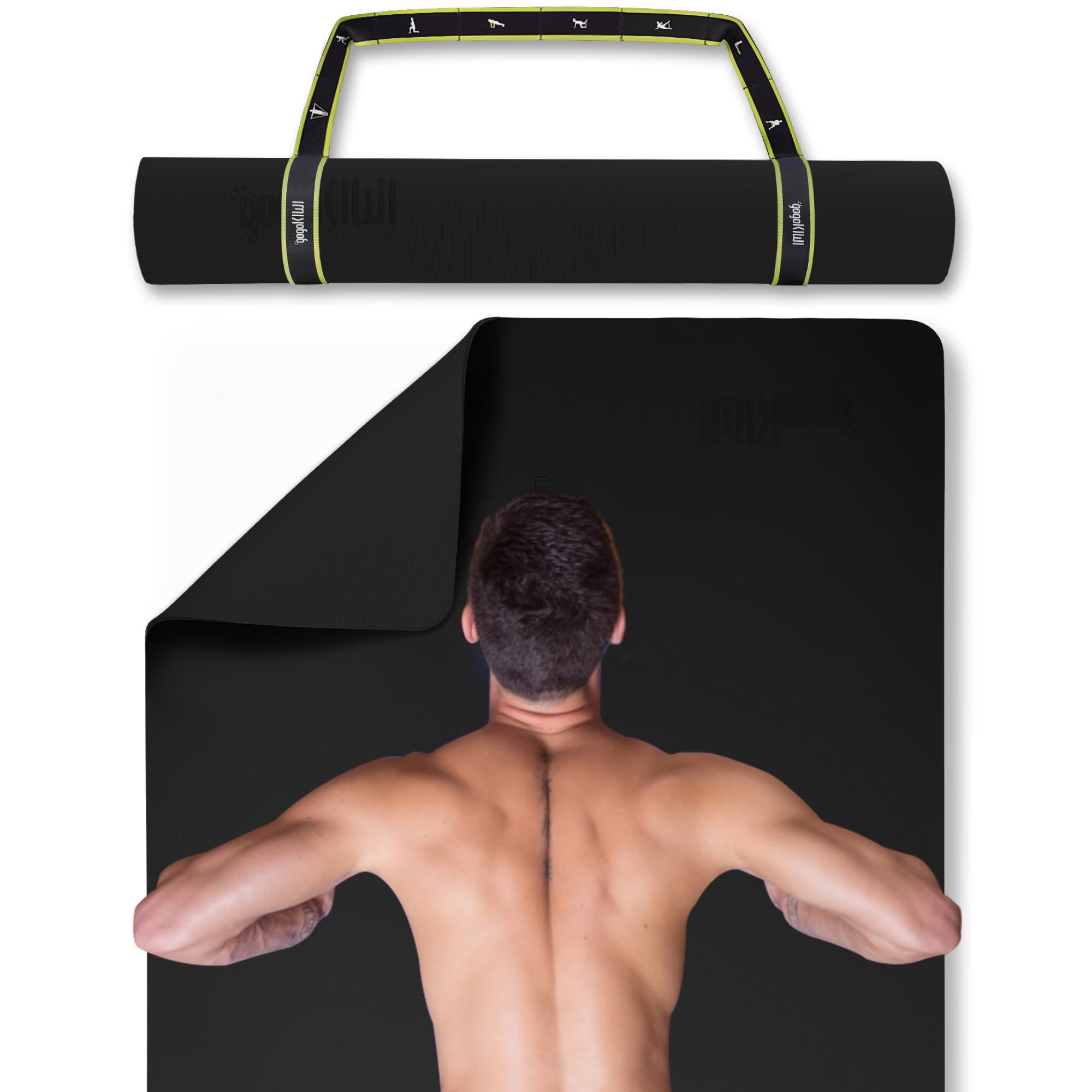
A 36-inch-wide RecFoam mat that offers the most coverage for tall and plus-size users.
At 72 x 36 inches, the Gogokiwi is a full 50% wider than a traditional 24-inch mat, and it’s the only one here that truly fits a 6’3″ frame with room to spare. Reviewers point out it works for full push-up form with only their feet occasionally off the edge.
It’s made from 100% recyclable RecFoam, a durable material that holds up well to daily use. The dual-sided design features different colors and patterns on each side, so you can flip it based on mood, and the center alignment line helps you keep your form honest.
Despite its size, it weighs just 2.7 pounds, making it surprisingly portable. The included strap doubles as a stretch band. The one recurring complaint is that the thickness, at 0.25 inches, is on the slimmer side, so it offers comfort but not the deep cushioning of a 10mm mat.
The Big Appeal
- 36-inch width is class-leading for tall, broad, or plus-size practitioners
- 100% recyclable RecFoam is durable and eco-friendly
- Light for its size at 2.7 pounds, with a dual-purpose carry strap
Height Over Softness
- 0.25-inch thickness provides less cushion than the 10mm picks
- Some durability concerns reported after extended use
- Heavier feel than slim standard mats
Built for: taller men and plus-size women who feel cramped on standard mats and want maximum coverage for dynamic moves.
Consider something thicker if: you have sensitive joints and need serious shock absorption over pure width.
8. Karma Fitness Large Workout Mat

A dense 10mm mat that bridges the gap between yoga cushion and gym-floor stability.
The Karma Fitness mat is designed for more than just yoga. Its 72″ x 32″ surface is 33% wider than a standard 24-inch mat, giving you room for press-ups, sumo squats, and lateral lunges without your hands slipping off.
The secret is its custom dual-layer TPE construction. It’s denser than standard NBR foam, which means it offers the thick 0.39-inch (10mm) cushioning of the Gaiam but with a firmer, more supportive feel that holds up to high-intensity movement. The diamond texture provides multi-directional grip on both sides.
Owners who love it praise the balance of size and quality, with one calling it the “best mat in 20 years.” It comes with a carry bag and adjustable shoulder strap, so you can haul it to class without struggling, even though it is heavier than a slim standard mat. The main trade-off is that bulk—you will feel it on your shoulder during a long walk.
Versatile Power: the denser foam handles strength training better than soft mats, while the 10mm thickness keeps your back and knees happy.
Who it suits: people who want one mat for yoga, Pilates, HIIT, and stretching without swapping equipment.
9. Manduka GRP Adapt Yoga Mat
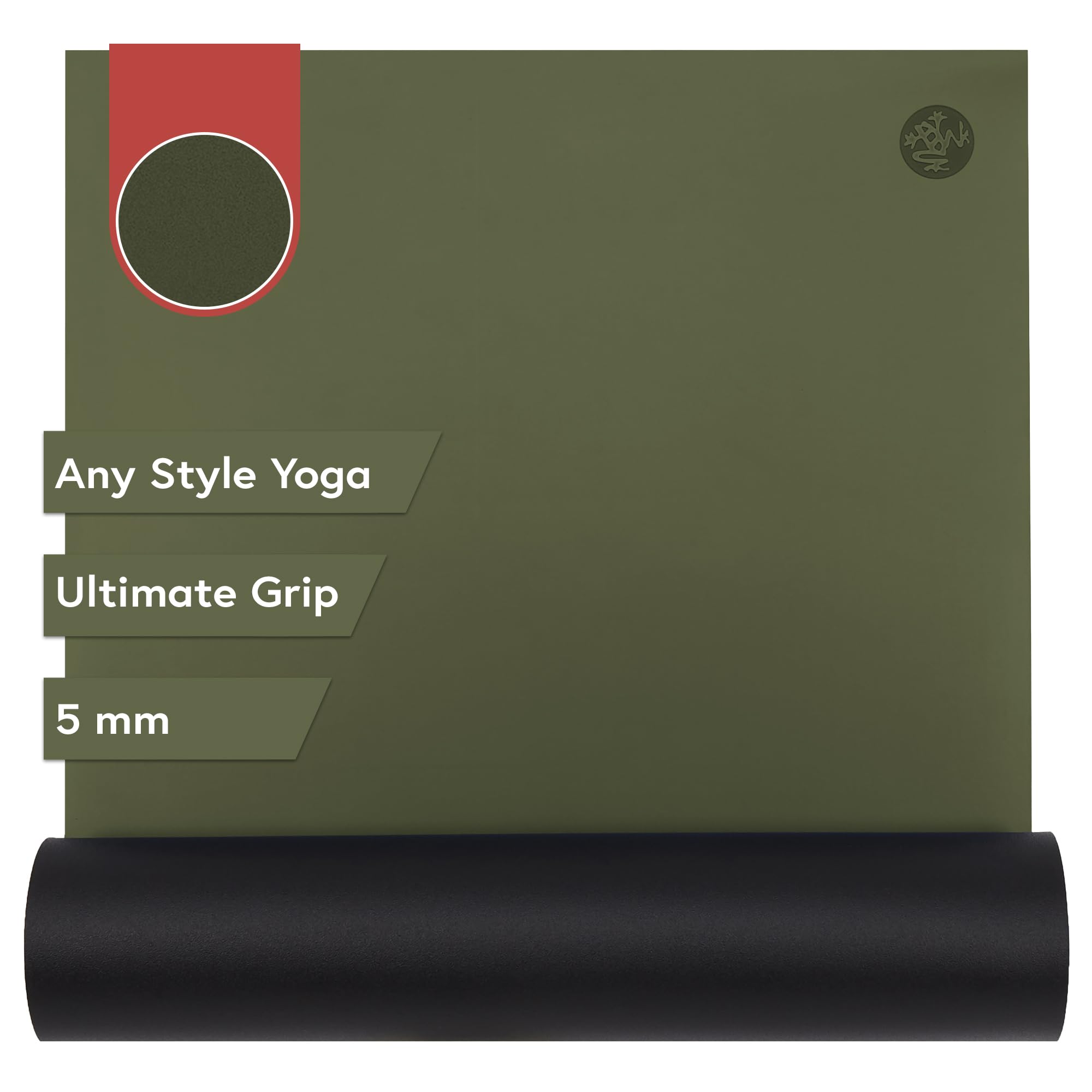
The gold standard for hot yoga, with a moisture-wicking top that needs no towel.
For dedicated hot yogis, this is the ultimate upgrade. The GRP Adapt’s defining feature is its Satin Grip top layer, which uses a “Moisture Flow scrim”—a special inner layer that pulls sweat away from the surface—so your hands and feet stay dry and slip-free even when you are dripping in a 105°F studio.
Unlike the budget TPE mats, this one is built from polyurethane and natural rubber. It’s denser, more durable, and delivers what owners call “truly slip-proof” traction that lasts even after a year of intense use. At 71 x 26 inches, it’s slightly wider than a standard 24-inch mat, giving you a bit more room without the bulk of the 32-inch options.
The trade-off is weight and price. At 5.5 pounds, it’s the heaviest mat here, and the premium price tag places it firmly at the top end. A few owners also note some mild rubber smell initially and report it can move slightly on hard floors during vigorous class.
The Hot Yoga Edge
- Unique moisture-wicking top absorbs 2x more sweat than competitors (brand claim)
- Satin Grip texture needs no towel, even in intense hot yoga
- Durable polyurethane and natural rubber construction
The Premium Cost
- 5.5-pound weight makes it the least portable option here
- Significantly higher price than every other mat in this guide
- 5mm thickness means less cushioning for sensitive joints
Worth the splurge if: you practice hot yoga regularly and slippage ruins your flow — no other mat here matches this grip.
pass on it if: you need plush joint cushioning or a budget-friendly price for occasional home use.
Understanding the Specs
Thickness (mm)
Thickness is the single biggest factor in comfort. Mats range from 5mm to 12mm. A 5mm mat is firm and stable, great for balance poses and portability, but hard on knees. An 8mm mat is a good middle ground. A 10mm or 12mm mat feels like a cushion, protecting joints but sacrificing some balance stability.
Material (TPE vs NBR vs Rubber)
TPE (thermoplastic elastomer) is lightweight, non-toxic, and offers good grip with a spring-back feel. NBR (nitrile butadiene rubber) is heavier, spongier, and provides superior cushioning. Natural rubber and polyurethane are the premium option, offering the best grip and durability but at a higher weight and cost.
FAQ
How thick should my yoga floor mat be?
Is a wider yoga mat worth it?
What is the best material for a hot yoga mat?
Why does my new yoga mat smell?
Are TPE yoga mats better than PVC mats?
How do I clean my yoga floor mat?
Will a yoga mat work for Pilates and other floor workouts?
How long will a high-quality yoga mat last?
Final Thoughts: The Verdict
Across the board, the yoga floor mat winner is the Gaiam Thick Yoga Mat because its 10mm cushioning offers the most universally appreciated joint comfort at a budget-friendly price. If you sweat heavily and need a grip that won’t quit, the Gruper Yoga Mat is a standout. And for tall or plus-size practitioners who need maximum coverage, the Gogokiwi Extra Wide Mat is the one to reach for.
How We Picked
We do not accept paid placement. Every pick is matched to a real buyer and a real use-case; we do not hands-on test units.
Sources & Methodology
Specifications: manufacturer listings and product documentation. Review insights: verified customer reviews, as of August 2026. Pricing: not shown on this page (it changes often); check the current price via the retailer link.
As an Amazon Associate, Calories Fit earns from qualifying purchases. This does not affect which products we feature.