
Our readers keep the lights on and the coffee maker working hard! As an Amazon Associate, I earn from qualifying purchases.
Specs are compiled from manufacturer listings and verified buyer reviews and can change over time — please confirm the key details on the product page before buying.
Every yoga pose starts from your mat, and if that mat slides, bunches up, or feels too thin on a hardwood floor, your focus breaks instantly. The real difference between a good session and a frustrating one often depends on grip, cushion, and whether the mat stays put when your palms start to sweat. You need a surface that lets you hold warrior two without wondering if your hands are about to slip.
I’m Mohammad — the founder and writer behind Calories Fit. This guide is built by comparing the manufacturers’ published specifications and the patterns across verified customer reviews, so you get each pick’s real strengths and trade-offs instead of marketing spin.
Whether you flow through hot vinyasa, hold deep yin stretches, or just want a comfortable floor for Pilates and strength work, the best yoga exercise mat for you balances traction, thickness, and the right material for your space. best yoga exercise mat choices range from ultra-grippy premium picks to budget-friendly extra-thick mats — we break down what each one does best so you can match your practice.
Our Picks at a Glance


How To Choose The Best Yoga Exercise Mat
The best yoga exercise mat is the one that stays under you, not the one that bunches up mid-pose. Three things decide that: the grip material, the thickness, and whether the size actually fits your body and the floor you practice on. Here is what each one means in a real class or home session.
Grip material — the surface that holds you
Natural rubber and polyurethane tops give the stickiest grip, especially when wet from sweat — that is why hot-yoga mats use them. NBR (nitrile butadiene rubber) foam feels soft and thick but can get slippery when damp. TPE (thermoplastic elastomer) strikes a middle ground: lighter, non-slip in dry use, and fully recyclable. If your palms sweat in down dog, you want a mat that gets grippier with moisture, not the opposite.
Thickness — cushion versus stability
Thicker mats (10mm or 1/2-inch) protect your knees, hips, and elbows on hard floors, making them a good fit for beginners or anyone with joint sensitivity. The trade-off is that very thick foam can feel wobbly during standing balances — your feet sink in slightly. Thinner mats (4mm to 6mm) keep you closer to the floor for stable balance and are easier to roll and carry, but offer less impact protection for bony areas.
Size — room to move
Standard mats are 24 inches wide and 68 to 72 inches long. If you are taller than 5’10” or have a broad build, look for a mat that is 26, 32, or even 36 inches wide — that extra space means your hands and feet stay on the mat during wide-legged poses and lunges. Tall users also need at least 72 inches in length so their head and toes do not hang off the ends in savasana.
Quick Comparison
| Model | Best For | Thickness | Dimensions | Material | Amazon |
|---|---|---|---|---|---|
| Liforme Special Yoga Mat★ Best Overall | Premium grip in hot yoga | 4.2mm | 72.8″ x 26.8″ | Eco-polyurethane / rubber | Amazon |
| Fitvids Yoga MatBest Value | Thick cushion on a budget | 1/2-inch (12.7mm) | 71″ x 24″ | NBR foam | Amazon |
| Gaiam Thick Yoga MatComfort Champ | Joint-friendly comfort | 10mm | 72″ x 24″ | NBR foam | Amazon |
| Amazon Basics TPE Mat | Lightweight portability | 1/4-inch (6mm) | 73.6″ x 24″ | TPE | Amazon |
| Gogokiwi Extra Wide Mat | Plus-size / tall users | 1/4-inch (6mm) | 72″ x 36″ | RecFoam | Amazon |
| HAPBEAR Large Yoga Mat | Wide practice space | 6mm | 72″ x 36″ | TPE | Amazon |
| Karma Fitness Large Mat | Extra-wide with carry bag | 10mm | 72″ x 32″ | Double-layered TPE | Amazon |
| Hatha Yoga Large TPE Mat | Maximum floor coverage | 1/2-inch (12.7mm) | 72″ x 48″ | TPE | Amazon |
| Manduka GRP Adapt | Sweat-proof hot yoga | 5mm | 71″ x 26″ | Polyurethane / rubber | Amazon |
In‑Depth Reviews
1. Liforme Special Yoga Mat
Our pick — over 4.5★ from 600+ verified ratings; the strongest balance of quality and price.
The premium mat that turns sweaty palms into locked-in stability.
What sets the Liforme apart is its “GripForMe” surface — a polyurethane top layer that actually gets stickier when wet rather than slippery. The 4.2mm thickness strikes a tight balance: enough padding for knees on a wood floor, but thin enough that you never lose the floor feel during balancing poses. The entire mat measures 72.83 inches long by 26.77 inches wide, giving broad-shouldered yogis noticeably more room than a standard 24-inch mat. It is PVC-free and made from natural rubber and eco-polyurethane, so there is no chemical smell during practice.
The built-in alignment system is a subtle printed guide that helps you square your hands and feet without glancing around the room. Owners consistently call out grip as the defining strength — it holds through heated 90-minute flows where other mats turn into slip-and-slides. The trade-off is the price, and a small number of users report bubbling on the top layer after heavy use, though the company handles those cases directly. At roughly 5.5 pounds with the included bag, it is not the lightest travel mat, but for home practice or studio work, the grip alone justifies the investment.
Why the crowd picks it
- Exceptional wet grip that outperforms Manduka and cork mats per owner experience
- Alignment guide helps posture without being distracting
- Eco-friendly, PVC-free rubber build with no chemical odor
The honest caveats
- Top layer can bubble or separate after months of frequent use — though company support is responsive
- At 72.8 inches, some taller users find their arms rest on the floor above the head
Pick it if: hot yoga is your main practice and you want a mat that eliminates the towel-and-sweat shuffle entirely.
Look elsewhere if: you are on a tight budget or prefer a thicker cushion for joint-heavy floor work.
2. Fitvids Yoga Mat
Half an inch of forgiving foam that makes hard floors feel padded.
At 71 inches long and 24 inches wide with a full half-inch of high-density NBR foam, the Fitvids is the go-to for anyone who finds standard thin mats punishing on their knees, hips, and elbows. The double-sided anti-slip surface provides enough traction for basic flows and floor exercises, though it can get slick when wet — so it is better suited for dry practice or gentle stretching. The material is moisture-resistant, so a quick wipe-down with soap and water after class keeps it fresh.
The included carrying strap makes it easy to roll and transport, although the foam is bulky when rolled. Buyers report that the mat holds up remarkably well over time — a few mention using it for years without tearing or losing shape, which is impressive at this price point. The main downsides are that the soft foam can dent under heavy pressure and there is a slight chemical smell when new that fades after a few days. It is considerably thicker than the Liforme at half an inch versus 4.2mm, so expect a softer, less stable feel for balance poses.
What owners love
- Extremely durable anti-tear material — several owners mention 7 years of regular use
- Thick cushioning protects knees and elbows on concrete or tile
- Lightweight enough to carry with the strap anywhere
Where it gives ground
- Grip fades when damp; not ideal for hot or sweaty practice
- Foam surface marks easily and shows wear over time
Best for: budget-conscious beginners or anyone doing floor-based stretching and Pilates who needs joint-friendly thickness.
skip it if: you sweat heavily in practice and need a non-slip surface that performs when wet.
3. Gaiam Thick Yoga Mat
A pillowy 10mm layer that feels like a gentle floor for older joints.
Gaiam is a well-known name in home fitness, and this 72 by 24-inch mat uses high-density NBR foam to deliver what buyers call “superior cushioning for joints” and genuine insulation from cold tile or concrete floors. The 10mm thickness makes it noticeably softer than the Fitvids half-inch mat (which is roughly 12.7mm) but still provides excellent shock absorption for floor-based routines. The surface has a textured finish that helps reduce slipping during dry practice, though it is not designed for the wet conditions of hot yoga.
The easy-cinch carrying strap with Velcro makes rolling and storage simple. Owners consistently say this mat is a perfect fit for older practitioners or anyone recovering from joint pain. The main caution is durability — opinions are split, with many reporting the NBR foam tears or compresses over time. A strong chemical smell when new is common and requires airing out for 24 to 48 hours. Quality and thickness are the most-praised aspects, with over a thousand owners calling out each one positively.
Why it stands out
- Plush 10mm cushion that reduces pressure on knees, hips, and elbows
- Low-odor NBR foam that gets manageable after airing out
- Trusted brand with adjustable carrying strap included
The trade-off
- Durability is mixed — some customers note tearing after moderate use
- Thick foam makes standing balances feel less stable
Best for: beginners, seniors, or anyone doing low-impact stretching and Pilates who wants joint comfort above all.
Look elsewhere if: you practice hot yoga or need a mat that stays non-slip when wet.
4. Amazon Basics 1/4 Inch Thick TPE Exercise Yoga Mat

A trim, portable mat that rolls tight and costs less than a tank of gas.
The Amazon Basics mat is aimed at the yogi who values portability above all else. At 1/4-inch (roughly 6mm) thick and made from TPE, it is lighter and less bulky than the NBR mats above, making it easy to strap and carry to a studio or park. The surface is non-slip for dry practice, and the TPE material has a “spring-back elasticity” that helps it lay flat without curling at the edges. At 73.6 inches long, it is actually longer than the Fitvids and Gaiam mats, which is a nice bonus for taller users.
Owners praise the quality and thickness — the mat provides adequate cushioning for joints without the sinking feeling of softer foams. A few note that the color in person can be slightly different from the listing photo. Durability is a mixed bag with TPE; it is not as tough as rubber or NBR, but at this price point, it is easy to replace. Compared to the Liforme, this mat has far less grip when wet and offers minimal impact absorption, so it suits gentle practice rather than sweaty flows.
What works
- Lightweight and rolls up tight for easy transport and storage
- Non-slip surface with good stability for dry yoga and Pilates
- Longer than many budget mats at 73.6 inches
What it lacks
- Not enough cushion for bony areas on very hard floors
- Durability concerns over long-term use
Best for: occasional practice, travel, or as a secondary mat for outdoor sessions.
pass on it if: you need joint-padding thickness or wet-weather grip for hot yoga.
5. Gogokiwi Extra Wide Yoga Mat
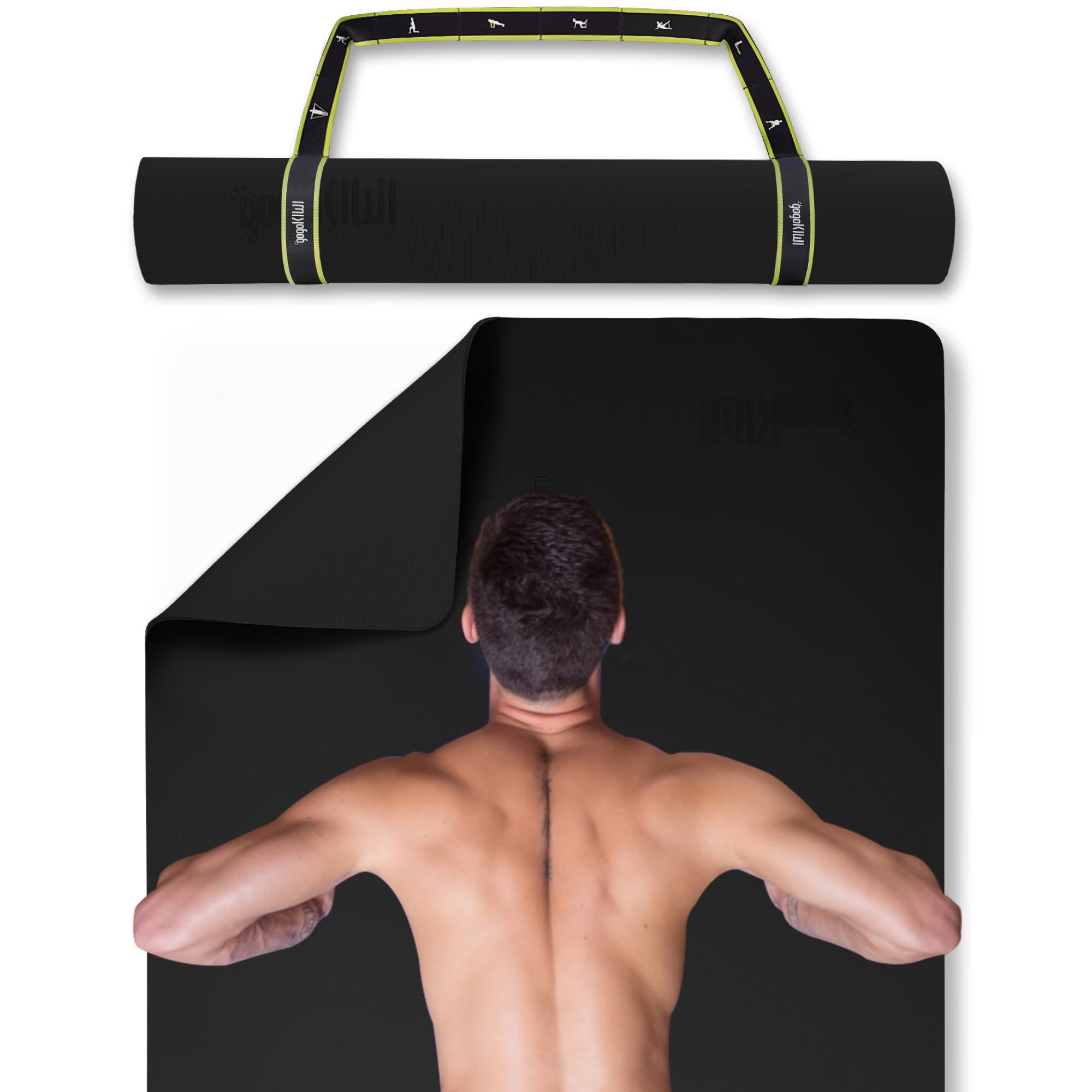
A full 36 inches wide — room for big frames and wide-legged poses.
Standard mats at 24 inches force taller and plus-size practitioners to constantly adjust their hands and feet to stay on the mat. The Gogokiwi solves that with a 72 by 36-inch surface that is 50% wider than a traditional mat, providing what buyers call “ample space for men and plus-size women to move freely.” The material is a 100% recyclable “RecFoam” that feels dense and supportive, and the dual-sided design lets you flip between two different patterns. A center alignment line printed down the middle helps you center your body without looking.
At 2.7 pounds, it is lightweight enough to carry with the included yoga strap, which can double as a stretch band. Owners praise the quality and size — a 6’3″, 220-pound reviewer reports that it fits all but his feet during pushups and protects his back on concrete. The 1/4-inch thickness is on the thinner side, so joint comfort is decent but not plush. Durability gets mixed feedback; some reviewers point out the material starts to come apart after extended use, though many others say it shows excellent wear-resistance without crumbling or indentations.
Why it fits
- Extra-wide 36-inch surface eliminates “falling off the mat” during side stretches
- Recyclable RecFoam material with dual-sided non-slip design
- Center alignment line aids positioning without looking
Watch for
- Thin profile offers less cushion for hard floors compared to 10mm mats
- Durability receives mixed long-term feedback
Best for: tall men, plus-size women, or anyone who feels cramped on a standard mat.
Look elsewhere if: you prioritize thick joint cushioning over floor space.
6. HAPBEAR Large Yoga Mat

A 36-inch-wide surface with the right balance of cushion and portability.
The HAPBEAR mat matches the Gogokiwi’s generous 72 by 36-inch footprint but uses TPE material at 6mm thick, which is slightly thinner than the Amazon Basics mat but still provides enough cushion to reduce knee and wrist strain for most floor exercises. The double-sided textured grip is designed to stay firmly in place on smooth surfaces, though the manufacturer notes it is not for use on carpet. It includes a carry bag for easy transport, making it a practical choice for taking to a studio or gym.
Owners highlight the spacious size — it provides enough room for two people or for one person to perform full pushups and side lunges without leaving the mat. The TPE material is sturdy and easy to clean, though a brief initial scent is normal and should dissipate after a day or two. The main point of mixed feedback is the thickness: some find 6mm ideal, while others say it is almost nonexistent for pressure-sensitive joints. Compared to the Gogokiwi, the HAPBEAR is made from a different TPE formulation and comes with a proper carry bag rather than a strap.
What owners like
- Generous width and length for unrestricted movement during dynamic flows
- TPE material is durable, easy to clean, and resists tearing from sneakers
- Includes carry bag for home and studio use
Consider this
- Thickness is adequate but not plush — some find it thin for sensitive knees
- Not designed for carpet; grips best on hard floors
Best for: practitioners who want extra width for freedom of movement without the bulk of a very thick mat.
it’s not for you if: you need maximum joint cushioning and practice primarily on hard concrete.
7. Karma Fitness Large Exercise Mat

A thick, wide mat that feels solid underfoot for HIIT as much as yoga.
Karma Fitness designed this mat with a double-layered TPE construction that is denser than standard NBR mats, giving you the best of both worlds: substantial 10mm thickness for joint comfort and a firm feel that does not let your feet sink in during lunges or pushups. The surface measures 72 by 32 inches, making it 33% wider than the standard 24-inch mats, so you can perform sumo squats and lateral lunges without stepping off. The diamond-textured grip on both sides provides traction in all directions, and the material is waterproof for easy cleaning and sweat resistance.
The included carry bag with an over-the-shoulder strap makes transport straightforward. Owners call it the best mat they have used in years — one person with 20 years of practice says it is the best they have found. The 10mm thickness makes it bulkier to carry than thinner mats, and a single owner received a unit with a stain and puncture, suggesting an occasional quality-control issue. Compared to the Gaiam mat which is also 10mm, the Karma Fitness uses denser TPE rather than NBR, giving it a less spongy, more stable feel for strength work.
Why it earns praise
- Dense double-layered TPE provides cushion without sacrificing stability
- Wide 32-inch surface and textured grip suit both yoga and HIIT
- Waterproof and easy to clean with included carry bag
The honest downsides
- Bulky to carry due to the 10mm thickness
- Rare QC issues reported with some units arriving damaged
Best for: athletes who cross-train with yoga, Pilates, and bodyweight exercises on a single mat.
Look elsewhere if: you travel light and need something that rolls down to a small package.
8. Hatha Yoga Large TPE Mat

A 4-foot wide mat that turns your floor into a personal yoga studio.
Most mats cap out at 24 to 36 inches wide. The Hatha Yoga mat is a full 48 inches wide by 72 inches long with a half-inch thickness, offering the single largest practice surface on this list — enough room for two adults side by side or for one person to stretch out in every direction without ever touching the floor. The TPE material is phthalate-free, lightweight for its size, and fully recyclable. The non-slip texture on both sides keeps the mat planted on hard floors, and the high-density construction resists punctures and markings.
Owners consistently call out the size and thickness as standouts — it provides plenty of room for children to play alongside a stretching adult, and the half-inch cushion relieves joint pain without being overly soft. The mat includes two bundling ribbons for storage, though at 8.8 pounds it is not a travel mat. Some owners note a slight off-gassing smell that requires airing out. Compared to the Karma Fitness mat, this one is 16 inches wider and offers a larger usable area, making it the clear choice for shared spaces or very tall individuals who want maximum coverage.
what separates it
- Massive 48-inch width provides the most coverage of any mat here
- Half-inch TPE construction is firm, thick, and easy on joints
- Non-slip grip that owners say stays put on hard floors
The catch
- Heavy and bulky — not suitable for carrying to a studio
- Initial off-gassing smell may require airing out
Best for: home-only practice where space allows a permanent mat, especially for tall or broad users.
look elsewhere if: you need a portable mat for classes or have limited storage.
9. Manduka GRP Adapt Yoga Mat
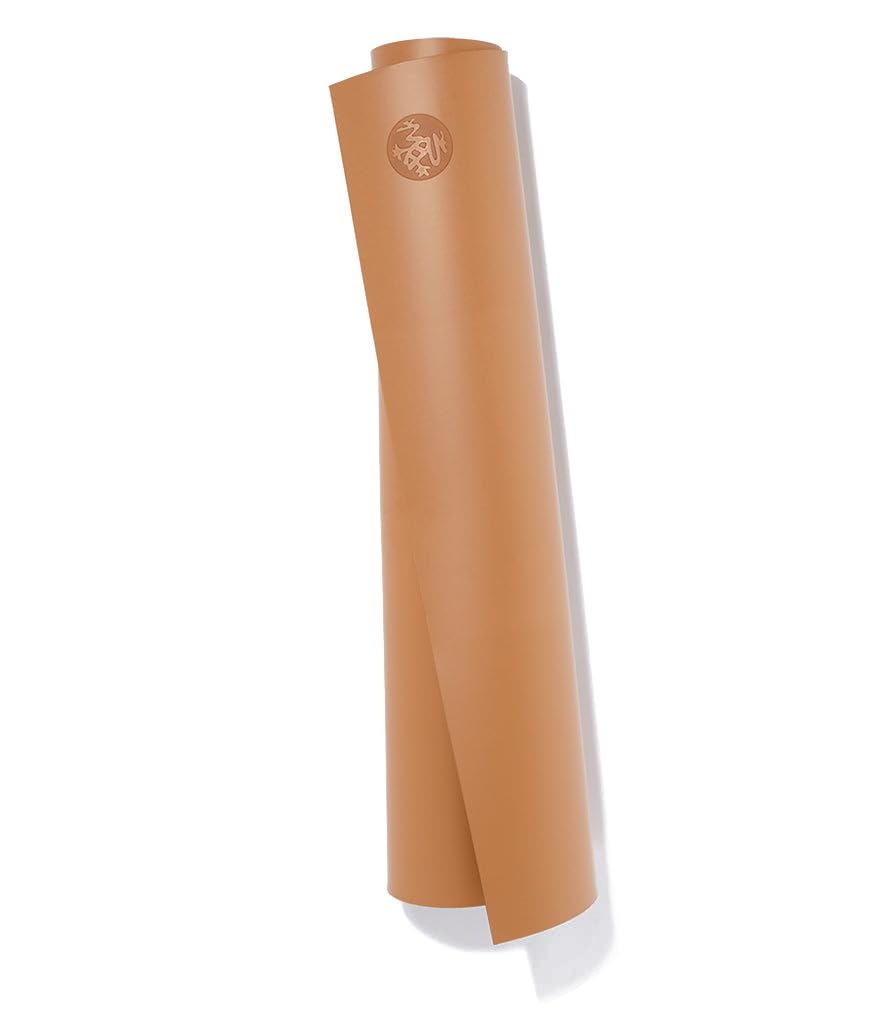
The mat that stays dry and grippy when everyone else is dripping.
Manduka is a staple in the hot-yoga community, and the GRP Adapt delivers what they call their “best grip yet” with a Satin Grip top layer that works in any condition without needing a towel. The secret is a Moisture Flow scrim that absorbs 2x more sweat than competitors — it pulls moisture into the mat so the surface stays dry and slip-free. The mat measures 71 by 26 inches with a 5mm thickness, making it slightly wider than a standard mat but still portable at 5.5 pounds. The polyurethane top layer over a natural rubber base gives it a satiny feel that owners describe as “cushiony” and “grippy.”
The crowd favorite aspect is grip — owners who struggle with slipping in hot vinyasa classes report zero movement even during intense flows. A 6-foot, 220-pound user says the bottom grips a wood floor without shifting, and after a year of use, the texture and performance remain excellent. The main notes of caution: some report a mild rubbery smell that dissipates, and stability on very smooth floors can be mixed — a few owners say it still moves slightly during class. Compared to the Liforme, the Manduka has a different feel: slightly thinner at 5mm versus 4.2mm (the Liforme is actually thicker), with a focus on moisture management rather than alignment guides. It is priced in the premium tier and requires simple care — spray with yoga mat wash and wipe — no soap or machine washing.
Why it dominates
- Satin Grip top layer stays non-slip even when soaking wet — no towel needed
- Moisture Flow technology absorbs sweat deep into the mat
- Durable after a year of frequent hot yoga with no performance loss
Consider this
- Some shoppers say the mat shifts slightly on certain floors
- Initial rubber odor needs time to air out
Best for: dedicated hot-yoga practitioners who want the most sweat-proof grip available in a travel-friendly package.
Look elsewhere if: you need a wide mat (26 inches is modest) or want built-in alignment guides.
Understanding the Specs
Mat thickness — the millimeter trade-off
The thickness of a yoga exercise mat directly affects how much joint cushioning you get versus how stable you feel in standing poses. Thicker mats, around 10mm or 1/2-inch, are excellent for protecting your knees and elbows on hard floors during floor poses and stretches — beginners and anyone with joint sensitivity usually prefer this. The trade-off is that the foam compresses under your feet, which can make balancing poses like tree or warrior three feel slightly less steady. Thinner mats in the 4mm to 6mm range give you a firmer connection to the floor, improving balance, but offer less padding for bony contact points.
Material — how grip and durability change
Natural rubber and polyurethane top layers provide the highest wet grip, getting tackier as you sweat — this is why hot-yoga mats like the Manduka GRP and Liforme use them. NBR (nitrile butadiene rubber) foam is the softest and most affordable material, great for cushion but prone to getting slippery when wet and holding onto odors over time. TPE (thermoplastic elastomer) sits in the middle: it is lighter than rubber, fully recyclable, and offers good dry grip with decent durability, but it does not match rubber for wet-weather traction. If you practice hot yoga, prioritize a polyurethane top layer. If you stretch at home in a dry room, TPE or NBR will serve you well.
FAQ
What thickness is best for a yoga exercise mat for beginners?
Is a thicker yoga mat always better for joint pain?
Will a yoga mat with alignment lines improve my form?
How do I clean and care for my yoga exercise mat?
What is the difference between TPE and NBR yoga mats?
Will a 72-inch long yoga mat be long enough for someone who is 6 feet tall?
Can I use a thick yoga mat for HIIT or strength workouts?
How do I stop a yoga mat from slipping on hardwood floors?
What is the best yoga exercise mat for hot yoga?
How long should a yoga exercise mat last?
Final Thoughts: The Verdict
Across the board, the best yoga exercise mat winner is the Liforme Special Yoga Mat because it delivers the best wet grip in the list, a thoughtful alignment guide, and an eco-friendly build that serious practitioners swear by across thousands of reviews. If you want the thickest cushion on a budget, grab the Fitvids Yoga Mat. And for dedicated hot yoga where sweat management is everything, the Manduka GRP Adapt is the one to reach for.
How We Picked
We do not accept paid placement. Every pick is matched to a real buyer and a real use-case; we do not hands-on test units.
Sources & Methodology
Specifications: manufacturer listings and product documentation. Review insights: verified customer reviews, as of July 2026. Pricing: not shown on this page (it changes often); check the current price via the retailer link.
As an Amazon Associate, Calories Fit earns from qualifying purchases. This does not affect which products we feature.