
Our readers keep the lights on and the coffee maker working hard! As an Amazon Associate, I earn from qualifying purchases.
Specs are compiled from manufacturer listings and verified buyer reviews and can change over time — please confirm the key details on the product page before buying.
A yoga balance board looks simple, but choosing one is where people slip up. The right board quietly strengthens your core, ankles, and posture during desk work or home practice. The wrong one wobbles too hard, collects dust, or sends you stumbling off. This guide cuts through the options to match you with the board that fits your yoga, rehab, or standing-desk routine.
I’m Mohammad — the founder and writer behind Calories Fit. This guide is built by comparing the manufacturers’ published specifications and the patterns across verified customer reviews, so you get each pick’s real strengths and trade-offs instead of marketing spin.
From a 350-pound maple trainer to a 660-pound inflatable half ball, these are the best choices for building stability at home, in the gym, or under your standing desk. This is my guide to the yoga balance board models that genuinely earn their place in your routine.
Our Picks at a Glance

How To Choose The Best Yoga Balance Board
Before you add one to your cart, understand that balance boards are not one-size-fits-all. The design — roller, ball, or rocker — dictates the difficulty, the muscles involved, and the risk of frustration for a first-timer. Match the board to your goal, not just the price tag.
Understand the Three Core Designs
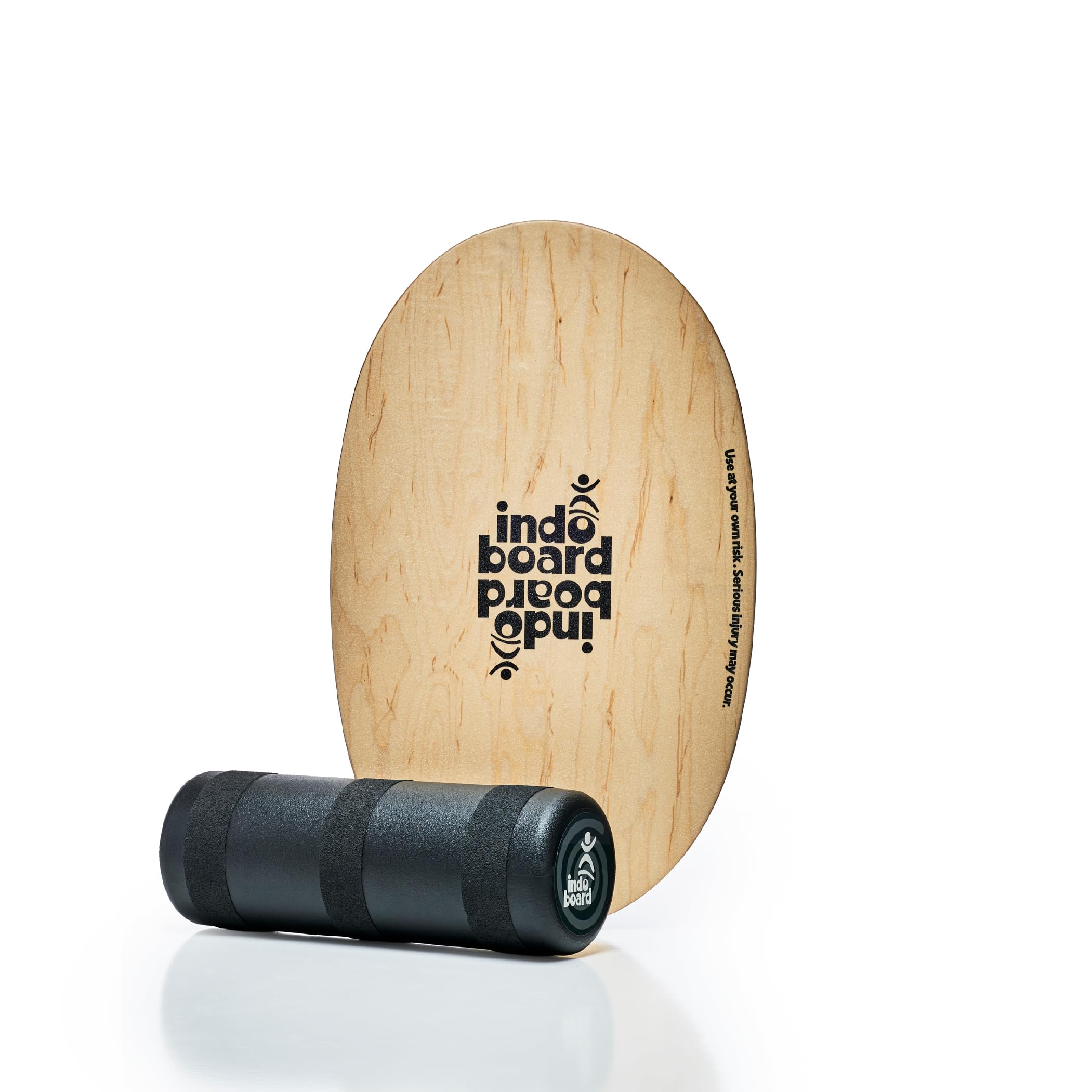
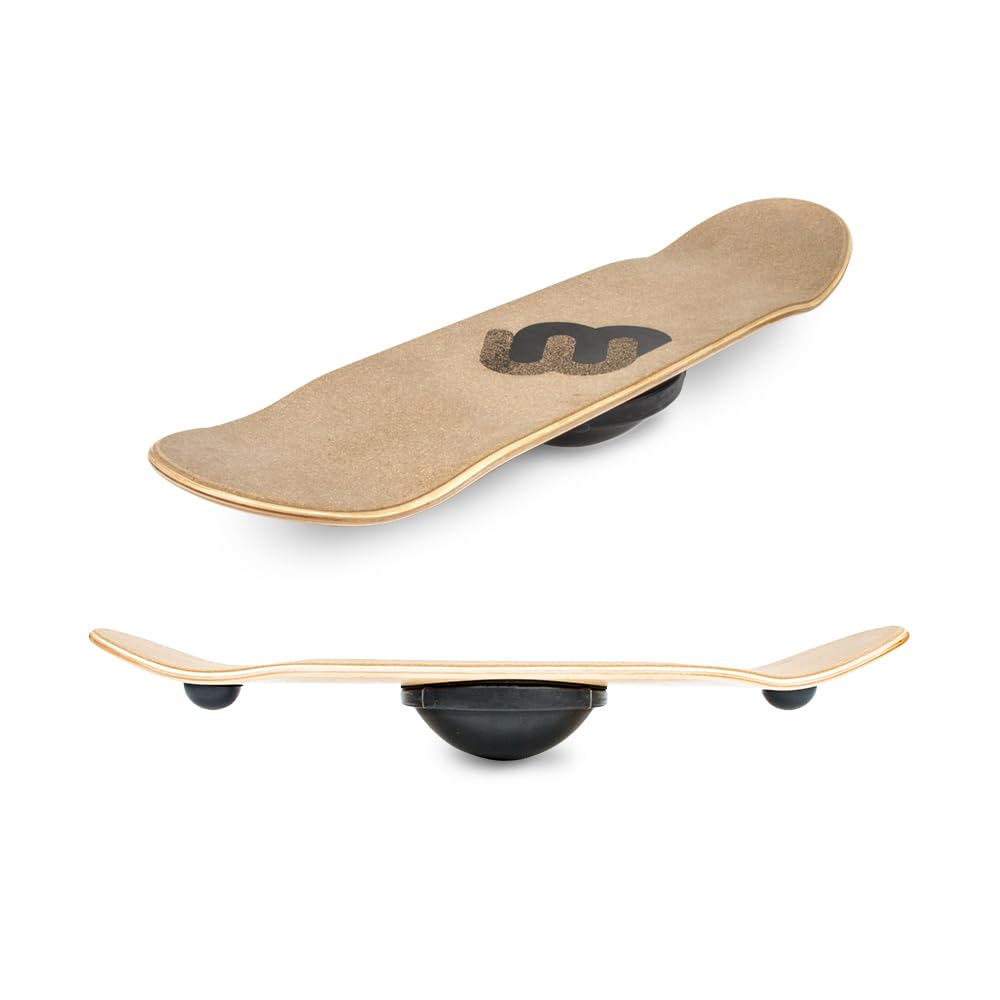
A rocker board moves only front-to-back, making it the gentlest and most approachable place to start. A wobble board uses a round base or ball underneath for 360° movement, which challenges more muscles at once and suits intermediate users. An Indo-style board pairs a flat deck with a separate cylindrical roller, delivering the most advanced, surf-inspired instability. Beginners who pick a roller first often find it too difficult; the smart move is starting on a rocker or cross-base board and progressing later.
Match the Weight Limit to Your Needs
Every board has a stated maximum weight, and it directly affects your safety margin. Lighter boards rated around 250–300 pounds are fine for average adults but leave zero room for adding dumbbells during a workout. Heavier boards rated 350–480 pounds handle larger users and allow you to hold weights while balancing. If you plan to use the board for intense squats or weighted exercises, aim for a capacity well above your body weight.
Check the Surface You’ll Train On
Grip is everything, but the floor underneath matters just as much. Several boards with great top-surface traction slide on hardwood or smooth concrete because their bases lack grip. Owners frequently recommend placing the board on a rug or mat in the first few sessions. If your home is all hardwood, look for a board with a rubber or TPR base mat, or plan to buy a separate non-slip pad. The glossy marketing photos never show the board sliding — the reviews do.
Quick Comparison
| Model | Best For | Design Type | Weight Capacity | Board Weight | Amazon |
|---|---|---|---|---|---|
| The Original Indo Board★ Best Overall | Serious athletes & surf training | Deck + Roller | 350 lb | 3 lb | Amazon |
| Fitterfirst Professional Rocker BoardTherapist Pick | Physical therapy & rehab | Rocker (adjustable) | 350 lb | 7.5 lb | Amazon |
| Whirly Board Spinning Balance BoardMost Dynamic | Standing desks & agility drills | Spinning 360° | 400 lb | — | Amazon |
| WOOD CITY Wobble Board | Toddlers & family play | Curvy Rocker | 480 lb | 4.6 lb | Amazon |
| Sportneer Balance Board | Progressive home workouts | Roller + Ball (7 modes) | 450 lb | 5.9 kg | Amazon |
| StrongTek Balance Board | Standing desks & ankle rehab | Cross-base 360° | 350 lb | 2.23 kg | Amazon |
| ProsourceFit Wooden Balance Board | Budget-friendly family training | Round Wobble 360° | 300 lb | 1.44 kg | Amazon |
| ZELUS Balance Ball | Half-ball core & rehab work | Inflatable Half Ball | 660 lb | — | Amazon |
| Gaiam Evolve Balance Board | Standing desk anti-fatigue | Rocker | 250 lb | 6.5 lb | Amazon |
In‑Depth Reviews
1. The Original Indo Board | Deck & Roller
Our pick — over 4.5★ from 900+ verified ratings; the strongest balance of quality and price.
The gold-standard deck that turns your living room into a surf workout.
The Indo Board is the board every other balance trainer gets compared to, and for good reason. It pairs a 30″L x 18″W maple deck with a separate trackless roller, so you control the instability yourself instead of a fixed base doing it for you. At a 350-pound weight capacity, it has real headroom for bigger athletes and weighted exercises. The deck weighs just 3 pounds, yet the build is famously tough — buyers report it feels thick and heavy-duty, with grip that holds your feet securely even as the board tilts.
This is the trainer that launched surf conditioning, and athletes have kept it at the top of the pile. What wins people over is the balance training itself — over a hundred owners single it out as the board’s core strength, with the maple construction a close second. The catch is honesty: this is an advanced board, not a beginner toy. Some starters find the wide roller genuinely intimidating and safely step up from an easier board first, or switch to the brand’s Flo Cushion for a more forgiving challenge.
Families love it too — one household bought it for snowboard prep and found it perfect for the kids and for helping with knee discomfort. It is built to last for years, and the wood grain is genuinely beautiful enough to leave out. If you want the benchmark for balance training, this is the one.
Why It Wins
- 308 ratings hold a rare 4.9-star average — the crowd favorite on this list
- Trackless roller glides smoothly on carpet and won’t damage floors
- Serious cross-training for surf, snowboard, and knee health
The Honest Trade-Off
- Advanced difficulty — beginners should expect a real learning curve
- Premium price puts it well above basic wobble boards
Who it suits: Intermediate-to-advanced users and athletes who want the authentic roller-based challenge that built the category.
Think twice if: You are a complete beginner — start on a rocker board to build confidence before stepping onto this deck.
2. Fitterfirst Professional Rocker Board | 20″
The rehab-room workhorse with three tilt angles you control.
If your balance board purchase is really about ankle or knee recovery, this is the board you want. The Fitterfirst Professional Rocker is 20″ wide with two adjustable spheres underneath that change the tilt between 10, 12, and 15 degrees. That adjustability is exactly why physical therapy offices keep them on hand — you progress the challenge as your strength returns, instead of being stuck at one difficulty. The Baltic birch plywood deck supports up to 350 pounds and is heavy enough at 7.5 pounds to feel planted underfoot.
Owners mention this model is the exact one used in their local PT clinics, praising its sturdy plywood and the non-slip top that keeps feet secure through the rocking motion. On the downside, it pitches only front-to-back — there is no 360° wobble — so it is a targeted single-plane trainer rather than a total core mover. Several owners found it slippery on bare wood floors and use a rug underneath. The price also draws mixed reactions: it costs about the same as one or two PT sessions, which is fair value if you use it daily, but steep for a casual buyer.
For pure recovery, the adjustability is the feature that matters. It targets the small stabilizing muscles around the knee, ankle, and hip that plain squats miss, and one owner noted it reveals weak spots you did not know you had. It is a specialist tool, and it does the job better than anything else here.
Built for recovery: You can adjust the tilt to 10, 12, or 15 degrees, so you can start easy and increase the challenge as your joint heals — something no fixed-angle board in this guide offers.
Know the limits: Single-plane rocking only, so it will not replace a 360° board for general core work; pair it with a mat on hardwood floors.
3. Whirly Board Spinning Balance Board | 32″
A 360° spinning deck that challenges your hips, thighs, and spatial awareness at once.
Standing on the Whirly Board is nothing like a standard wobble board — the deck spins in a full 360° circle, forcing your hips and thighs to fire constantly to keep you centered. Made in Northern Wisconsin from premium 7-ply Canadian maple, it carries a 400-pound weight capacity and a high-traction grip tape top, and it comes with a lifetime replacement promise. At 32″L x 8.25″W, this is the narrow, surfboard-style profile that skaters and hockey players gravitate toward for agility drills.
What owners rave about is the balance practice itself — beginners report going from barely 3 seconds of balance to holding 30–60 seconds within a week. It is also a favorite under standing desks, where the constant subtle motion keeps knees from locking up during long typing sessions. The honest trade-offs: the cork grip tape feels firm, and several larger-footed riders (size 11 and up) found it uncomfortable barefoot, with socks making the deck slippery. Owners advise checking the wider version if you plan to stand on it all day or have bigger feet.
This is a movement trainer, not a rehab aid — it builds agility and spatial awareness for sports like pickleball and tennis as much as it works your core. The challenge is addictive, the USA build quality is evident, and the included interaction with the inventor reflects a company that stands behind its product. Just keep it off hardwood and smooth concrete.
The engagement factor: The spinning motion keeps your stabilizer muscles on alert the entire session — no passive standing allowed.
Footwear note: Best enjoyed in grippy socks or barefoot with average-width feet; wide-footed riders should choose the wider deck version.
4. WOOD CITY Wobble Board | 35″

An open-ended wooden arch that goes from toddler toy to adult yoga prop in seconds.
The WOOD CITY board does not look like a typical balance trainer — it is a 35-inch-long curved rocker that works as a balance board, a bridge, a ramp, a seat, or whatever your kid imagines. That versatility is the headline: owners mention it far more than any other feature, with dozens of families using it daily as a play staple. But do not mistake it for a kids-only toy. The solid wood build holds up to 480 pounds, so adults stand, stretch, and balance on it right alongside the little ones.
It measures 11.8 inches wide and 0.66 inches thick, with a gentle rise to 6 inches at its highest point, making it far more approachable than a roller deck for beginners. Because it is a rocker, it moves mostly front-to-back, which is exactly the right difficulty for kids aged 18 months and up and for adults returning to balance work. The natural wood finish uses eco-friendly lacquers and gives each board a unique grain. Durability earns praise too, with families reporting no signs of wear even after rough daily play.
The trade-off is the open design: the curved ends can pinch little toes and fingers when kids play around the edges, and its length makes it more of a floor piece than something you tuck away in a drawer. For a family that wants one piece of gear everyone can use, this is the most played-with board in the guide.
One board, whole family: The 480-pound capacity means parents and kids train together, while the curved rocker motion stays gentle enough for toddlers.
The pinch watch: Supervise small children around the curved ends — the design invites creative play that can catch fingers.
5. Sportneer Balance Board | 7-Mode Trainer

Seven challenge modes in one box — the progressive trainer that grows with your skill.
The Sportneer is the Swiss Army knife of balance boards. It comes with a roller, a 2.8″ ball, and four magnetic removable stoppers, letting you reconfigure the difficulty seven different ways without any tools. You can start on the roller for surf-style practice, swap in the ball for a 360° wobble, or add the stopper rails to limit the range of motion. That adjustability gets genuine praise from owners, who appreciate progressing from beginner to expert on a single board instead of buying three.
Built from high-quality birch wood with a 450-pound weight capacity, it is sturdy enough for weighted squats yet light enough to store in a closet — at 5.9 kg it is the heaviest board here, but the mass adds stability underfoot. The textured non-slip EVA surface feels cushioned and grippy in socks, shoes, or bare feet, and the rubber roller won’t damage floors or collect hair the way some plastic rollers do. Owners consistently note how quiet it is during use, a real bonus for apartment living.
Compared to the larger Sportneer and Revbalance models, this one offers similar usable surface area but in a narrower, easier-to-store footprint. The half-circle stopper rails lack the indentions of the straight ones, so they can be tricky to pull off — a minor gripe in an otherwise well-executed design. If you want one board that scales with you from shaky beginner to confident pro, this is it.
The Flexibility
- 7 modes via roller, ball, and magnetic stoppers — no tools needed
- Cushioned EVA top is comfortable and grippy for all footwear
- Quiet operation makes it living-room friendly
The Gripes
- Half-circle rails are harder to remove than straight ones
- Heaviest board here at 5.9 kg, though stability benefits from it
Reach for it if: You want a single board that adapts as your balance improves, from basic rocking to advanced ball wobble.
Look elsewhere if: You need a compact board for travel — the Sportneer is built for home use, not packing.
6. StrongTek Wooden Balance Board | Cross-Base
The middle-step board with a cross base that feels controlled even as it wobbles 360°.
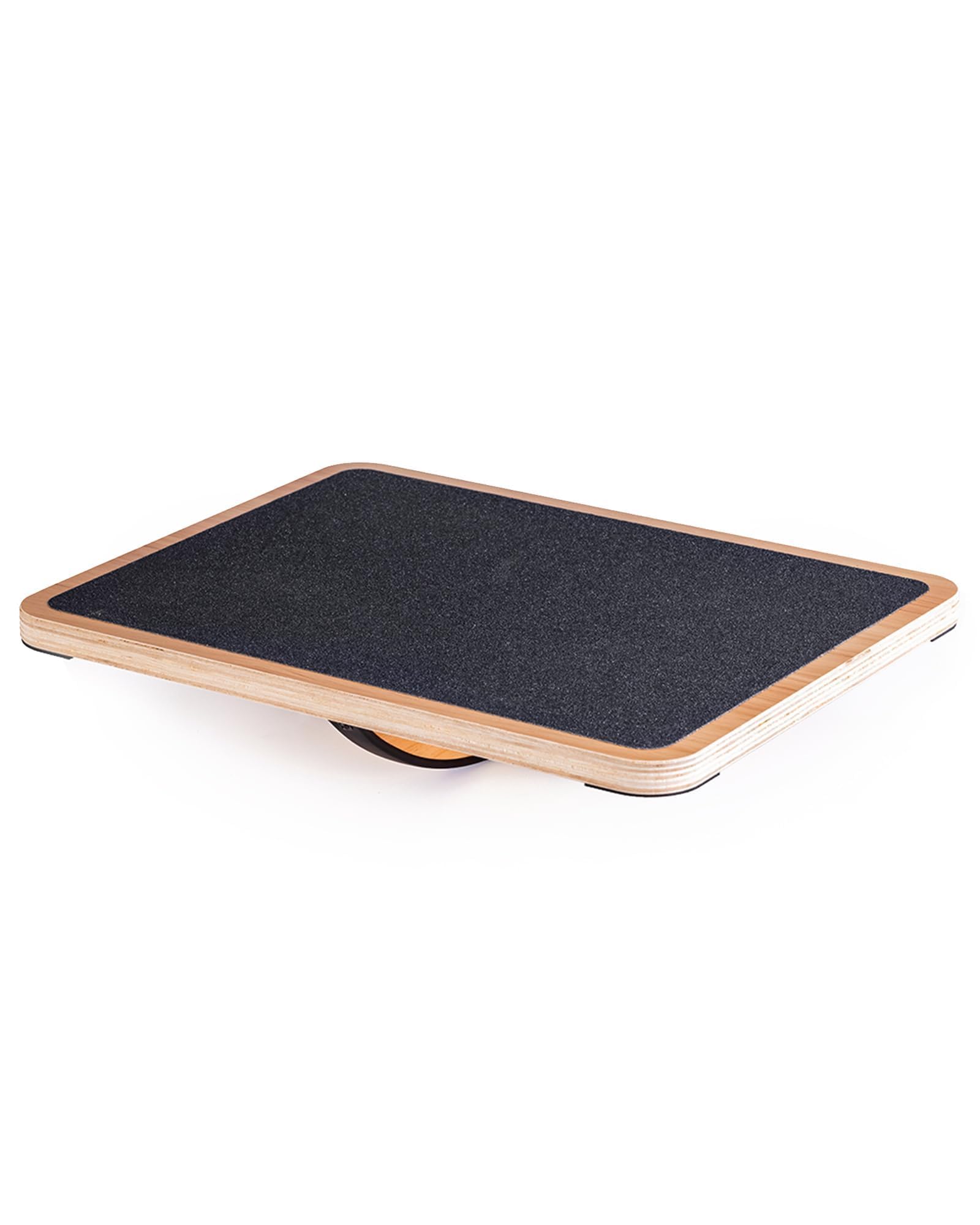
The StrongTek sits in the smart middle ground between a basic rocker and a daunting round-base wobble board. Its cross-style base creates a larger floor contact area than a traditional round base, so you get 360° directional tilt without the frantic instability. That design makes it the ideal first step before moving to a full round-base board, and it earns consistent praise for quality and sturdiness from owners. The 17.5″ x 13.5″ lauan hardwood platform supports up to 350 pounds.
For standing desk users, this is a favorite — the compact footprint and perfect height fit easily under a desk, and the textured top surface keeps your feet secure as you shift weight during the workday. It is also a legitimate rehab tool: owners use it for post-knee-surgery physical therapy and calf stretches, noting the 360° tilt provides a solid challenge while remaining manageable. At 2.23 kg it is light enough to move between rooms.
The recurring complaint is the four bottom edge protectors — their adhesive backing is weak, and the pads tend to fall off over time. It is a minor annoyance, not a structural flaw, and the board works perfectly well without them. Compared to the ProsourceFit below, the StrongTek holds more weight (350 lb vs 300 lb) and tips the scale 55% heavier, which many owners read as extra durability. For the price, it is a remarkably capable all-rounder.
The smart middle step: The cross-base gives you 360° wobble training with a control level beginners can actually handle.
Watch the pads: The bottom edge protectors come loose due to weak adhesive — treat them gently or remove them entirely.
7. ProsourceFit Wooden Balance Board | 15.75″
A compact, affordable 360° wobble board that gets the whole family moving.
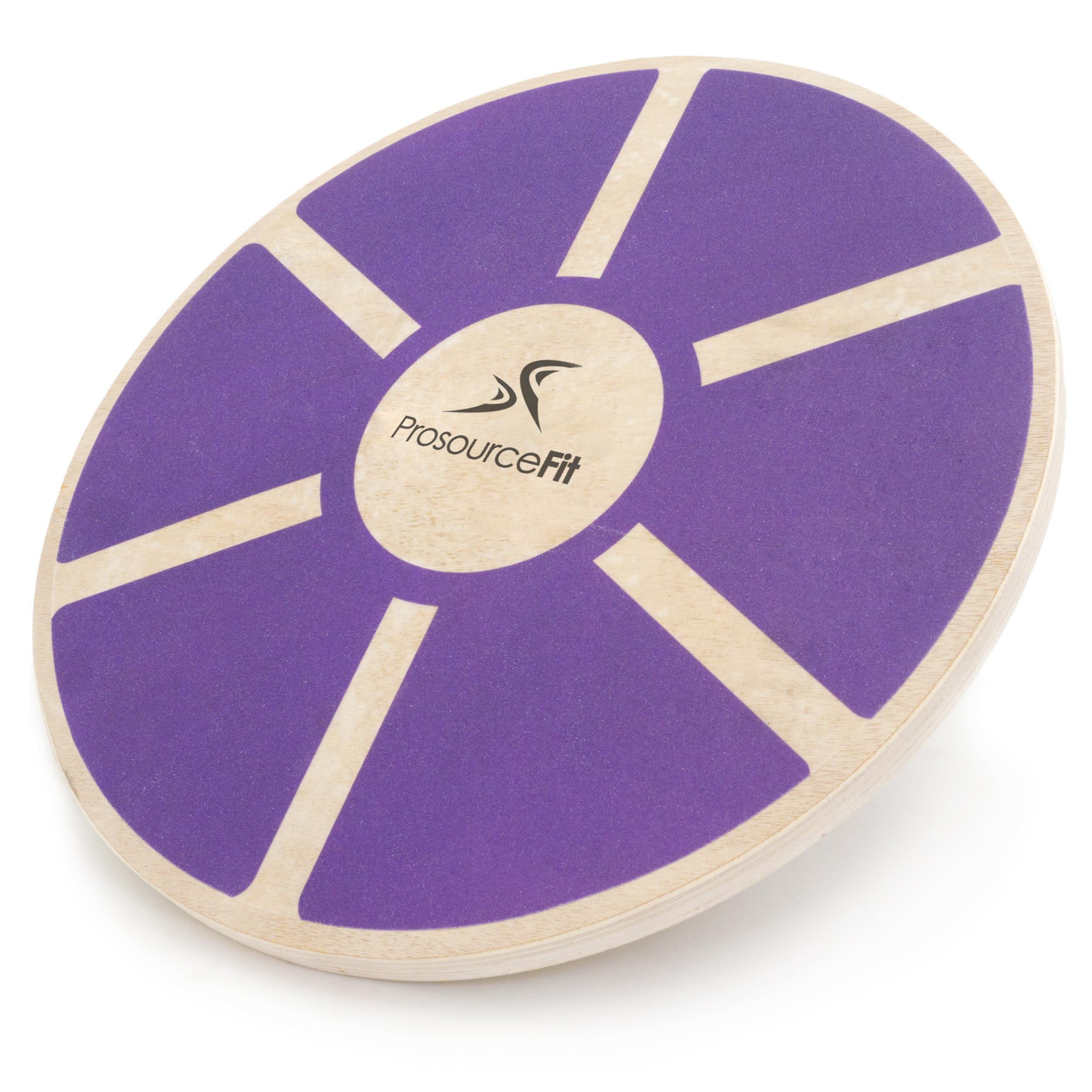
At just 15.75 inches across and 1.44 kg, this ProsourceFit board is the most budget-friendly way to try 360° wobble training. The solid wood and PP plastic construction feels sturdier than the plastic disks at similar prices, and owners confirm it holds up well — one even loaded it with over 200 pounds of weights during workouts. The textured top surface provides real grip, with families noting the traction is strong enough that nobody slips off during play.
Because it moves in all directions, it works your core, legs, and ankles more completely than a simple rocker. It is light enough to carry anywhere, making it the easiest board here to bring to the office or on a trip. The 300-pound weight capacity covers most adults, though it leaves less room for adding dumbbells than the stronger boards above. Owner feedback is split on grip: some find it extremely non-slip, while others report it sliding on hardwood — the base benefits from a rug underneath.
Its compact size is both the appeal and the limitation. Larger-footed users find the 15.75-inch diameter a bit snug, and the all-direction movement is genuinely hard for beginners — one owner returned it for a side-to-side rocker because the 360° challenge was too steep. If you want a low-cost entry to wobble training or a board the kids can use without fear, this is the smart pick.
Price-to-value winner: You get genuine 360° core training at a fraction of the cost of premium decks.
Start carefully: The all-direction wobble is harder than it looks; hold onto a counter when you first step on, and use it over a rug.
8. ZELUS 25in Balance Ball | 660 lb

A 660-pound-capacity half ball that doubles as a yoga prop and a rehab tool.
If you want the balance challenge of instability but with a larger, softer contact surface, the ZELUS Balance Ball is the curveball of this list. It is an 8-inch-tall half exercise ball mounted on a 25″ wide flat ABS base, with an anti-slip TPR mat underneath to keep it planted on the floor. The textured PVC ball surface provides traction whether you stand on it or use it for push-ups, planks, and core work. At a 660-pound weight capacity, it is the highest-rated board here by a wide margin — substantial enough that owners have had kids jump on it alongside weighted workouts without issue.
The included accessories improve the value: two resistance bands with cushioned grips for arm and core toning, a foot pump for inflation, and a bonus yoga ball. Owners use it for everything from ankle and foot rehab to pitching drills, noting the partial inflation option creates extra instability for advanced training. The round side works for standing balance work, while the flat side serves as a rocker for controlled movement. Complete beginners find the 8″ height adds a different challenge than a flat board — you are standing on a dome, not a plank.
The honest downsides: the ball deflates slowly over time and needs periodic re-inflating, and some units shipped missing the small metal clamp that attaches the resistance band straps. The included foot pump makes the inflation easy to manage. This is not a traditional balance board, but if you want a multi-purpose prop that works for yoga, strength, and rehab, it is an excellent alternative.
The Strengths
- Highest weight capacity in this guide at 660 pounds
- Includes 2 resistance bands, a foot pump, and a bonus yoga ball
- Dual-use: stand on the dome or rock on the flat base
The Caveats
- Needs periodic re-inflation as the ball slowly deflates
- A few units arrive missing the strap clamp — check the box
Grab it if: You want a multi-purpose half ball for yoga flows, core work, and gentle joint rehab all in one.
Skip if: You want a classic flat wooden board for surf or skate training — this is a different animal.
9. Gaiam Evolve Balance Board | Standing Desk Rocker
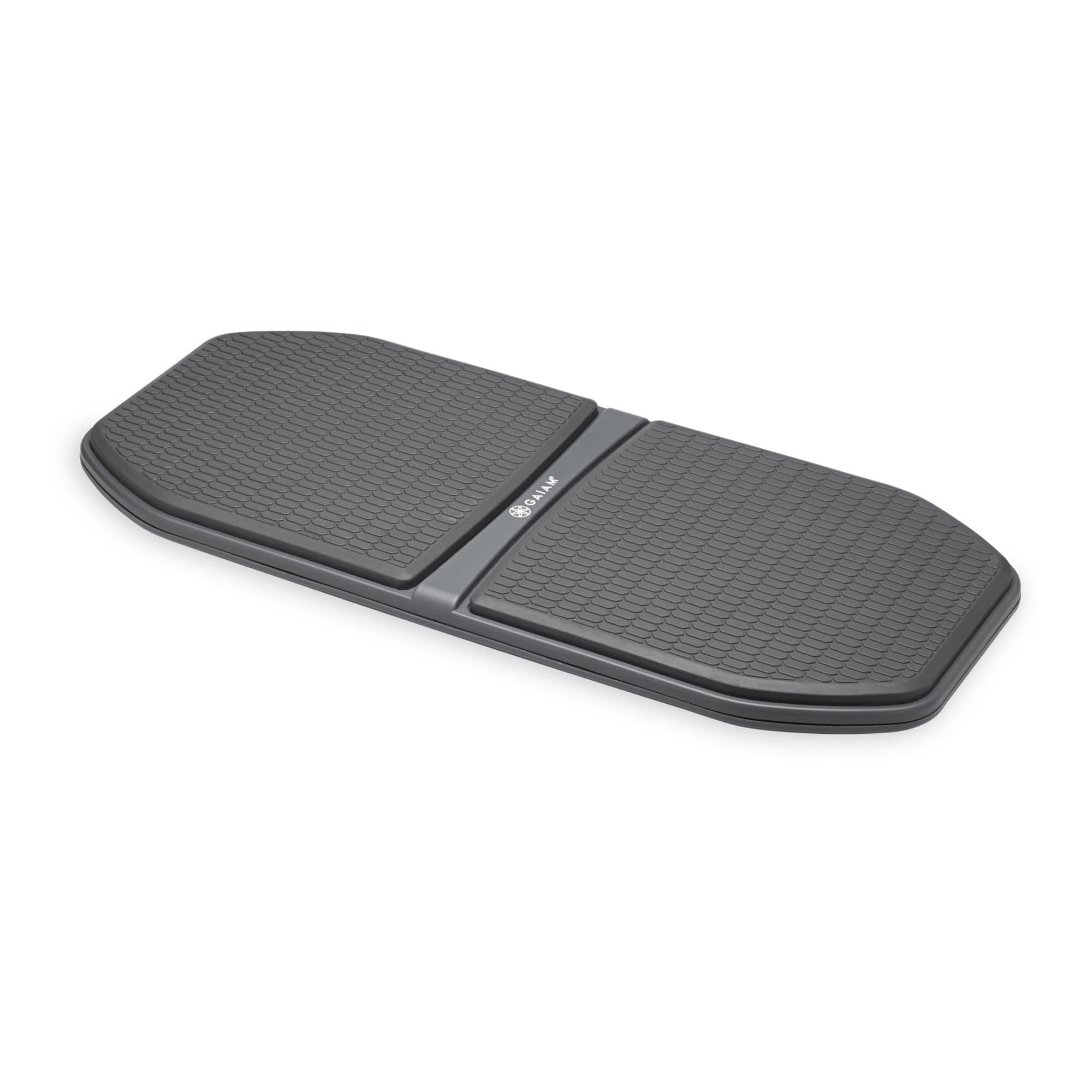
The subtle rocker that keeps your legs moving during long standing-desk shifts.
The Gaiam Evolve is built for one specific job: keeping you in constant, low-impact motion while you stand at a desk. Its 27″ x 12″ platform rocks gently front-to-back, engaging your calves, ankles, and core without the dramatic instability of a 360° board. The honeycomb non-slip texture provides a secure base on both hard floors and carpet, and the ergonomic design promotes neutral ankle positioning. At 6.5 pounds it is solid enough to feel stable but easy to reposition under a desk.
Owners consistently report that it lets them stand for much longer periods without knee locking or fatigue — the subtle motion prevents the stiffness that comes from standing completely still. It works brilliantly in socks, doubles as a footrest when you need a break, and the corner grips prevent it from sliding during use. The quality earns strong praise, with the gentle rocking motion easily controlled even while typing. It is also a legitimate anti-fatigue tool for cashiers, clerks, and anyone whose job keeps them on their feet.
The trade-offs: this is not a core-blasting wobble board — it is a movement tool, not a workout. At a 250-pound weight capacity it is the lightest-duty board on this list, and the top cushion has been known to peel near the center after extended use. It also adds a few inches of height, so check your desk clearance before buying. For standing-desk workers who want subtle movement without distraction, this is the pick.
Made for the workday: The controlled rocker motion keeps your legs engaged and knees from locking during hours at a standing desk.
Not a workout board: A 250-pound limit and gentle motion mean it suits fidgeting and fatigue relief, not intense core training.
Understanding the Specs
Rocker vs. Wobble vs. Roller
The design determines the difficulty and the muscles you target. Rockers move only front-to-back, making them ideal for beginners, ankle rehab, and standing desks. Wobble boards use a round base or ball for 360° movement, engaging more stabilizer muscles in the core, hips, and ankles. Roller decks, like the Indo Board and Sportneer, place a separate cylinder under the platform for the most advanced surf-style instability. If you are new to balance training, start with a rocker or cross-base board before stepping up to a roller.
Weight Capacity and Board Weight
Your body weight and the board’s capacity should leave a comfortable margin. A 250-pound-rated board suits average adults but leaves no room for holding weights during exercises. Boards rated 350–480 pounds allow for weighted squats and bigger users. The board’s own weight matters too — a lighter board (under 3 pounds) is easier to move and store but can feel less planted, while heavier boards (6–7 pounds) feel more stable underfoot at the cost of portability. Match both numbers to how you actually plan to use it.
FAQ
How do I know if I should buy a rocker or a 360° wobble board?
Can I use a balance board on hardwood floors?
What is the difference between a balance board and a wobble board?
How much weight can these boards actually hold?
Are balance boards safe for kids and toddlers?
How long does it take to see results from using a balance board?
Can a balance board help with ankle or knee rehabilitation?
Which balance board is best for a standing desk?
Why is the Indo Board so much more expensive than other balance boards?
Board height and stability — how do they relate?
Final Thoughts: The Verdict
For most people, the yoga balance board winner is the The Original Indo Board because it delivers the most authentic and effective balance training, backed by the strongest owner satisfaction on the list. If you want the adjustable rehab tool that physical therapists actually use, grab the Fitterfirst Professional Rocker. And for a budget-friendly entry into 360° training the whole family can enjoy, the ProsourceFit Wooden Balance Board is the one to reach for.
How We Picked
We do not accept paid placement. Every pick is matched to a real buyer and a real use-case; we do not hands-on test units.
Sources & Methodology
Specifications: manufacturer listings and product documentation. Review insights: verified customer reviews, as of August 2026. Pricing: not shown on this page (it changes often); check the current price via the retailer link.
As an Amazon Associate, Calories Fit earns from qualifying purchases. This does not affect which products we feature.