
Our readers keep the lights on and the coffee maker working hard! As an Amazon Associate, I earn from qualifying purchases.
Specs are compiled from manufacturer listings and verified buyer reviews and can change over time — please confirm the key details on the product page before buying.
You want real yakitori at home, and the one thing that matters most is a small grill that gets seriously hot and holds that heat for skewer after skewer. That is what separates a proper Japanese-style barbecue from a backyard grill that burns half your dinner. The best picks here are tabletop charcoal units — mostly heavy cast iron or ceramic — sized for one to two people, because that focus is exactly what makes the food taste right.
I’m Mohammad — the founder and writer behind Calories Fit. This guide is built by comparing the manufacturers’ published specifications and the patterns across verified customer reviews, so you get each pick’s real strengths and trade-offs instead of marketing spin.
Whether you’re after a weekend camping companion or a permanent patio centerpiece, this breakdown of the best yakitori barbecue grill options cuts through the noise and points you to the right buy for your space and cooking style.
Our Picks at a Glance


How To Choose The Best Yakitori Barbecue Grill
Finding the right charcoal grill for Japanese cooking isn’t about size or brand. It’s about three things: the material of the firebox, how much heat it can hold, and how easily you can control the airflow. Get those right and you’ll be turning out juicy, charred skewers that taste like they came from a tiny Tokyo alley joint.
Material: Cast Iron vs. Ceramic
Cast iron is the classic choice — it’s heavy, absorbs heat beautifully, and, with basic care, lasts a lifetime. The trade-off is rust: you’ll need to brush it, dry it, and wipe it with oil after each cook. Ceramic is lighter on upkeep and won’t rust, but thinner ceramic bodies can crack under extreme heat or over a few seasons of use. If you want zero maintenance, ceramic wins; if you want a generational heirloom that you don’t mind babying, go cast iron.
Size and Cooking Surface
Most of these grills are designed for one to two people, with cooking areas between 96 and 144 square inches. That’s enough for a few skewers at a time or a couple of small burgers. If you regularly host more than four people, you’ll need to cook in batches or look at the larger end of this range.
Quick Comparison
| Model | Best For | Heating Power | Cooking Area | Materials | Amazon |
|---|---|---|---|---|---|
| IronMaster Hibachi★ Best Overall | 2-person cast iron classic | 18,000 BTU | 109 sq in | Cast Iron | Amazon |
| RV77 Japanese BBQ GrillBudget Pick | Budget tabletop starter | — | 669 sq cm (≈104 sq in) | Alloy Steel | Amazon |
| IRONMAX Hibachi Grill | Top-rated cast iron value | 15,000 BTU | 96 sq in | Cast Iron | Amazon |
| ONLYFIRE GS305 Ceramic | Compact ceramic starter | — | — | Ceramic | Amazon |
| ONLYFIRE GS306 Ceramic | Larger 2-level ceramic grilling | — | 144 sq in | Ceramic | Amazon |
| AUPLEX Ceramic Grill | Indoor/outdoor ceramic with shield | — | 113.2 sq in | Ceramic, Bamboo | Amazon |
| The Bincho Grill 16″ | Premium stainless steel precision | — | 128 sq in | Stainless Steel | Amazon |
In‑Depth Reviews
1. IronMaster Hibachi Grill
Our pick — 4.5★ from 400+ verified ratings; the strongest balance of quality and price.
The two-person cast iron workhorse that brings serious heat and easy assembly in one sturdy package
If you’re cooking for one or two and want the most heat per dollar, this IronMaster is the pick to beat. It pushes 18,000 BTU (the measure of heating power) onto a 109 square inch surface — the most grilling area and the strongest heat output of any cast iron option here, beating the IRONMAX below by a 20% margin in power and a 14% margin in space. That means you can sear four 1lb fillets or 5-6 shrimp skewers in one go, as buyers report, making it genuinely useful for small batch cooking without constant waiting.
The all-cast-iron body holds heat for a long time, which is what wins people over — owners rave about the build quality more than any other feature. Assembly is surprisingly simple, and the two adjustable height settings plus a draft door give you real control over how hot the surface gets. It’s not a large grill by any stretch: two ears of corn and two burgers fill it completely, so think of it as a focused two-person cooker, not a party machine.
Cast iron means it needs a few minutes of care after each use — a quick brush, a dry, and a light oil wipe to keep rust at bay. With that basic upkeep, owners mention it lasts a lifetime, and the overall satisfaction is high: this is the crowd favorite, with a 4.5-star average across 400+ owners. It’s a simple, honest design that does exactly what a yakitori grill should.
Why it wins
- Strongest heat output in its class at 18,000 BTU
- Cast iron holds temperature for long cooking sessions
- Two height settings and draft door for flame control
- Side coal door lets you add fuel mid-cook
The honest trade-offs
- At 20 lbs, it’s heavy to carry around
- Small surface only fits 2 people comfortably
- Needs regular oiling to avoid rust
Your best bet if: you want a durable cast iron grill for two-person yakitori nights with strong, even heat.
Think twice if: you’re cooking for more than four or you want something you can stash in a backpack.
2. RV77 Japanese Style BBQ Grill
An entry-level tabletop stove that keeps the price low but asks you to manage its limits
This is the cheapest way to get a yakitori-style tabletop grill onto your patio. It’s a compact alloy steel stove with a 669 square centimeter grate and a separate plate, designed for individual portions of yakiniku, robata, or yakitori. At just 4.92 x 9.45 x 5.31 inches, it’s tiny — noticeably smaller than the 9.5 x 14.8 x 7.25 inch cast iron grills above, a 1.9x gap in footprint. If you’re grilling for one and want something that disappears into a cupboard, this fits the bill.
The catch is performance. The alloy steel body is light and heats up fast, but it doesn’t hold heat the way cast iron or ceramic does, so you’ll need to manage the charcoal carefully. Customers note the biggest issue is airflow — without side ventilation, the fire struggles to get strong and can die out. There’s also a caution that thin metal can warp under high heat, so you’ll want to keep the flames gentle.
For skewers and small sausages, it does the job, and the hand-wash cleanup is straightforward. But if you plan to cook regularly or want consistent high heat, the cast iron options above are worth the extra cost. This is a starter grill for occasional use, not a daily driver.
Keep expectations small: it’s a light, affordable tabletop stove that suits occasional single-person cooks, but its thin steel and airflow limits mean it can’t match cast iron on heat retention.
Best left on the shelf if: you want reliable high heat or plan to grill more than once a week.
3. IRONMAX Hibachi Grill
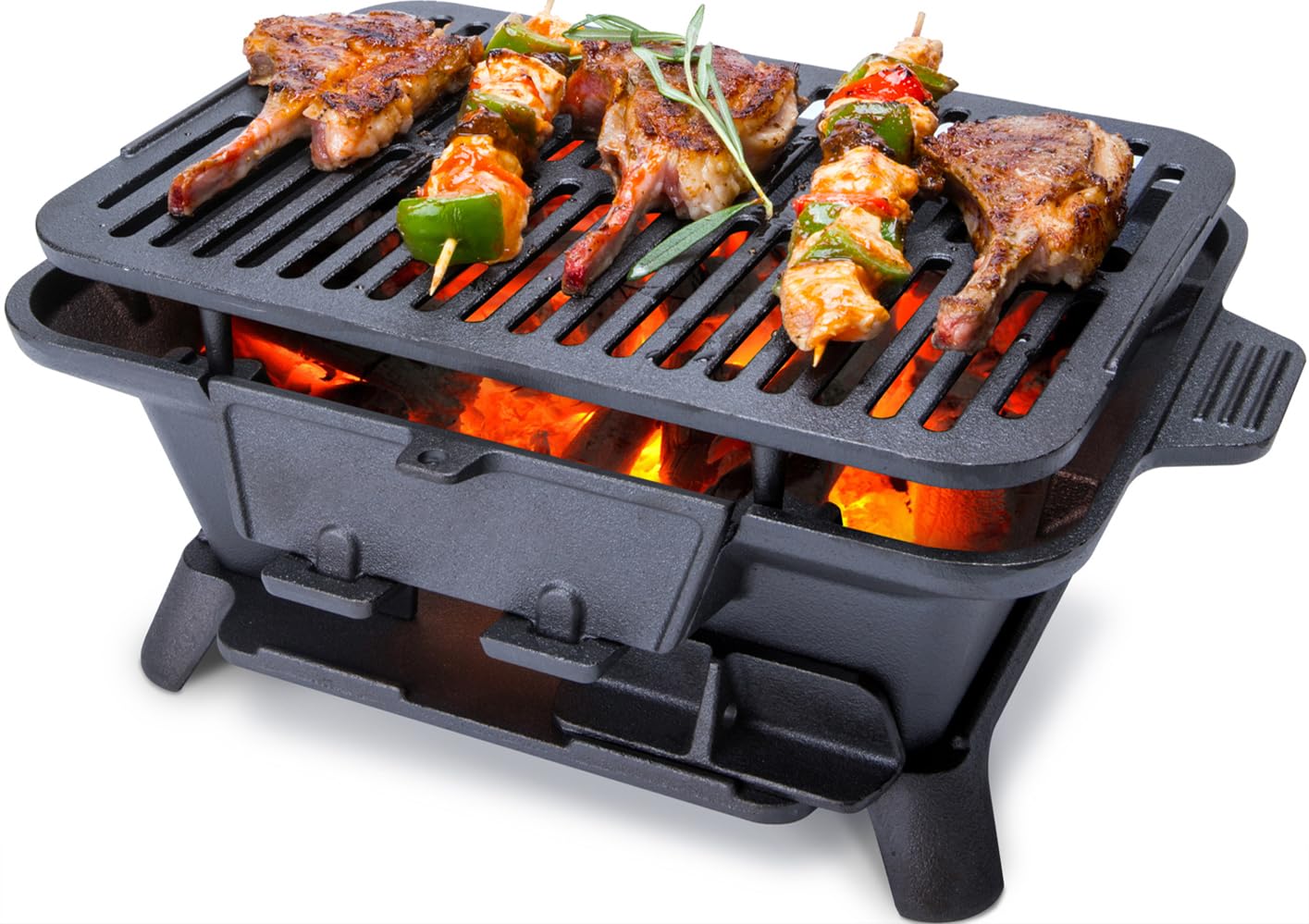
The highest-rated cast iron grill in this lineup, praised for build quality and easy cleanup
If ratings are your guide, this IRONMAX is the one to beat — it holds a 4.6-star average, the highest in this entire list, across nearly 100 owners. It’s a 100% cast iron hibachi with a 96 square inch cooking surface and 15,000 BTU of heat output, putting it slightly below the IronMaster above on both power and space (a 14% smaller area and 20% less heat). But what it lacks in raw numbers it makes up for in polish: the cast iron has a finer finish that makes cleaning noticeably easier, and it arrives pre-seasoned with 100% natural vegetable oil.
The thing everyone raves about is the build quality — owners call it “super heavy-duty” and note it’s built to last generations. It’s stable on its three legs without wobbling, and the design handles both charcoal and wood as fuel without issue. At 20 lbs, it’s heavy enough to feel solid but portable enough for camping or road trips. The included user manual and simple assembly mean you can be grilling within minutes of unboxing.
Size is the honest fit-note here: at 96 square inches, it barely fits two pork chops, and owners say it holds two burgers plus two hotdogs at most. Think of it as a two-person grill, perfect for yakitori skewers one batch at a time. The only missing pieces are a storage box and a vent-opening stick — minor, but worth knowing before you buy. The pre-seasoning, easy cleanup, and stellar build make this the value king of the cast iron club.
The value champion: top-tier cast iron build, pre-seasoned surface, and the highest owner satisfaction in this guide — all at a mid-range price.
Know its limit: the 96 sq in surface is strictly for two people, so big batches mean multiple rounds on the grill.
4. ONLYFIRE GRILLS GS305 Ceramic Hibachi

A 14-inch ceramic cube that’s efficient on a tabletop and great for skewers or Korean BBQ
This ONLYFIRE brings a different material into the mix: thickened ceramic clay instead of cast iron. That means no rust to worry about, and the ceramic naturally holds high heat well. It’s sized at 14 x 14 x 7 inches and weighs 26 lbs, making it a compact tabletop option that works great on a patio table big enough for two people. Reviewers point out it makes great tacos and is “very efficient” for skewer-style cooking.
The included grid lifter is a genuine safety win — you can lift the hot stainless steel grate to add charcoal without burning your hands. There’s also an anti-scalding wooden handle and a ventilation door for flame control, plus a drip pan to catch the juices. It works equally well as a Japanese grill, Korean grill, or yakitori grill, so it’s versatile if you like switching cuisines.
The honest downside is durability. While some owners love it, others report the ceramic can crack on first use or the bottom may not last beyond two years with moderate use. It’s not insulated either, so the ceramic exterior gets very hot during cooking. This is a fun, efficient tabletop grill for occasional use, but it won’t match the longevity of a solid cast iron piece.
Reach for this if: you want a rust-free ceramic tabletop grill with a handy grid lifter for skewers and tacos.
Look elsewhere if: you expect years of heavy weekly use — ceramic durability here is a genuine question mark.
5. ONLYFIRE GRILLS GS306 Ceramic Hibachi

The bigger ceramic sibling with the largest cooking area here — 144 square inches of two-level grilling
If you want the most surface area of any grill in this guide, this is it. The GS306 offers 144 square inches of cooking space on a stainless steel grate that measures 13.8 x 6.9 inches, with a two-level configuration that lets you raise or lower the grate to control heat. It’s sized at 20 x 8.8 x 6.3 inches and weighs 22 lbs, so it’s a larger footprint than the GS305 but still portable enough for camping. Owners rave about the grill quality more than anything else, calling it great for 1-4 people and perfect for small group yakitori sessions.
The heavy-duty ceramic retains heat impressively well, which is what makes it such a capable yakitori machine. It works with both lump charcoal and briquettes, and the bottom vents give you effective flame control to avoid excessive smoke. The included grid lifter and wooden handles make it safe to move and adjust, even when it’s roaring hot. Unlike cast iron, the ceramic body won’t rust, which is a real selling point if you’re tired of oiling a grill after every use.
But there are real trade-offs. Owners are split on durability — some find it sturdy, while others report the ceramic body cracked down the center after fewer than 10 uses. It’s also heavy and the grate is genuinely hard to clean once teriyaki sauce gets baked on. If you’re willing to accept that ceramic is more fragile than cast iron, this gives you the most grilling space and excellent heat retention for bigger groups.
The space leader: the biggest cooking area in this guide at 144 sq in, with ceramic heat retention that holds for long yakitori sessions.
The catch: ceramic fragility is real — treat it gently and expect the grate to need a good scrub after saucy cooks.
6. AUPLEX Yakitori Ceramic Grill

A round 14-inch ceramic grill with a bamboo heat shield, built for both indoor and outdoor tables
This AUPLEX stands out for two reasons: it’s one of the few grills here rated for both indoor and outdoor use, and it comes with a bamboo heat shield that protects your table from burns. The round ceramic body is 3.5cm thick — made from cordierite and mullite, materials chosen for high-temperature strength and thermal shock resistance — giving it a 113.2 square inch grilling area. The included 201 stainless steel stand is rust and corrosion resistant, and the whole unit weighs 7.1kg (about 15.6 lbs), making it genuinely portable with handles on each side.
Owners are drawn to the authentic retro Japanese hibachi look, and the quality is the most-praised aspect. It’s a star at parties, with guests drawn to the beautiful design. The bottom damper lets you adjust temperature on the fly, and the maker says it can reach 350 degrees within 15 minutes, producing juicier results. Everything you need is in the box: the ceramic oven body, stainless steel base and grid, cast iron charcoal plate, bamboo base, and a grid lifter.
The honest concerns are fit and finish. Some units arrive with the ceramic oven slightly too narrow on one side for the cast iron grate, and the top metal grill can slide around because it’s marginally smaller than the base. It’s a quality control question, not a design flaw — most owners are delighted, but a few get a defective unit. If you want a beautiful tabletop grill that looks as good as it cooks and can live indoors, this is a strong contender.
Buy it for the vibe: a gorgeous round ceramic hibachi with a bamboo heat shield that’s safe for indoor tables and party-ready.
Check yours on arrival: quality control varies, so inspect the fit between the grate and oven body before your first cook.
7. The Bincho Grill 16″ Mini Yakitori
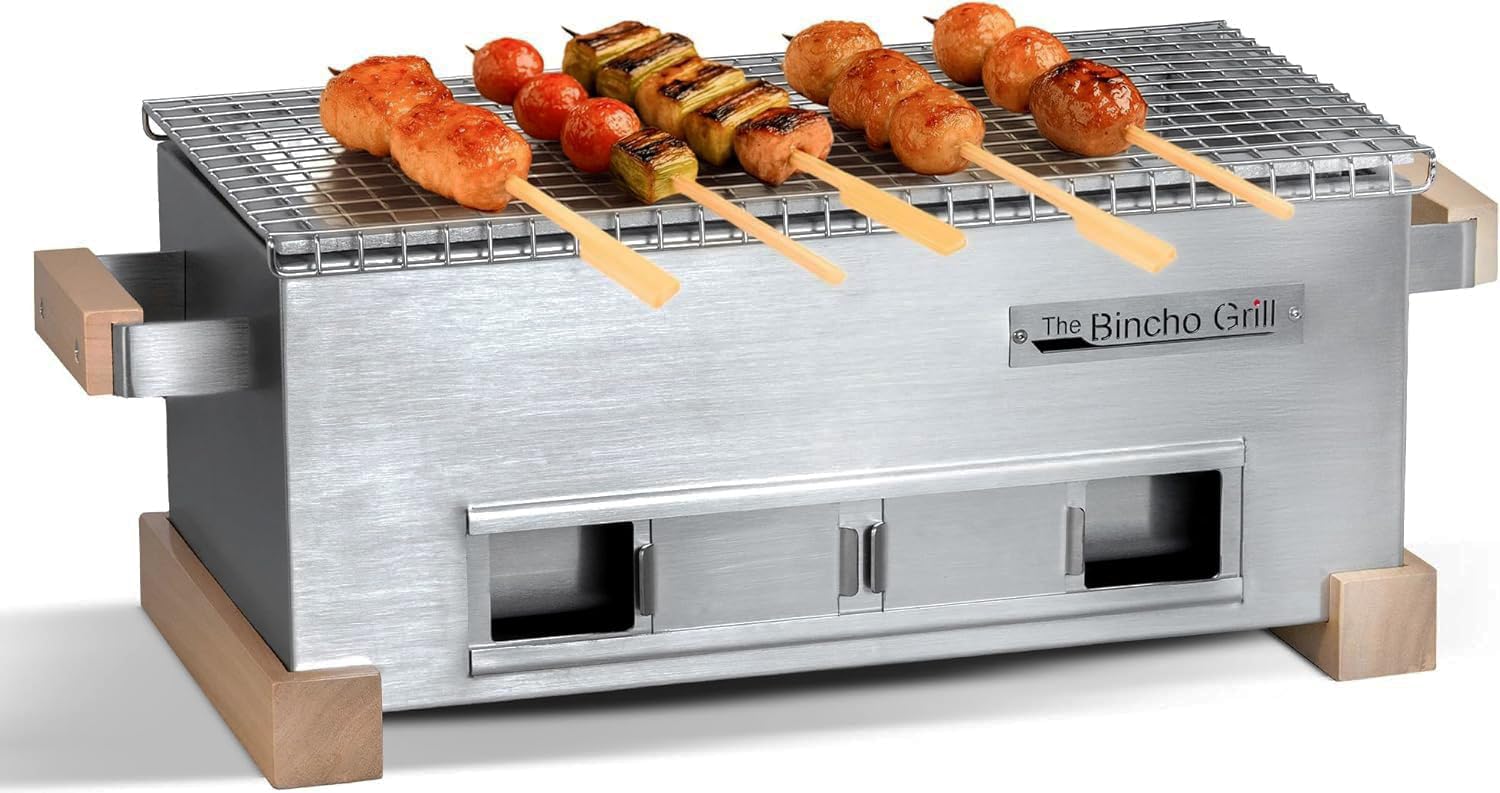
The premium stainless steel grill built like a tank for serious yakitori and restaurant-quality sears
This is the grill you buy when you want the closest thing to a professional Japanese yakitori setup without building a restaurant kitchen. The Bincho Grill is a 16-inch stainless steel tabletop unit with a 128 square inch surface, an aluminum charcoal box lined with stainless steel, and poplar wood accents. It’s engineered with an tune airflow system that supports efficient charcoal burning, longer burns, and reliable high heat. With binchotan charcoal (the traditional white oak charcoal used in Japan), shoppers say searing steaks to restaurant quality in 3 minutes per side.
The build quality is the headline — owners consistently say it’s “built like a tank” and will last a lifetime. The cool-touch base and poplar wood accents protect your table, making it safe on wood surfaces. Cleanup is genuinely easy: the removable charcoal liner and ash tray simplify disposal, and the outside wipes clean with a cloth. The included stainless steel grate and sturdy aluminum insert mean you have everything you need right in the box. It’s ideal for single portions and saves fuel compared to firing up a full-sized grill.
This is the priciest grill in the guide, and it earns that premium with precision engineering and materials that won’t rust or crack. Owners say it’s perfect for yakitori, Korean BBQ, and any small-batch grilling. The only limitation is size — at 16 inches, it’s still a tabletop unit for one or two people at a time. If you want the best-made, most refined yakitori experience and don’t mind paying for it, this is the one.
The connoisseur’s choice: stainless steel that won’t rust, tune airflow for binchotan, and a cool-touch base — the most refined grilling experience here.
Worth it only if: you grill regularly and want a lifetime tool; casual users will find the price hard to justify.
Understanding the Specs
Heating Power (BTU)
BTU, or British Thermal Units, measures how much heat the grill can generate. Higher numbers mean more heat output — so a grill rated at 18,000 BTU (like the IronMaster) will get hotter and sear faster than one rated at 15,000 BTU (like the IRONMAX). For yakitori, you want high heat to char the outside of skewers quickly while keeping the inside juicy. A grill that can’t get hot enough will steam your meat instead of searing it.
Cooking Surface Area
This tells you how much food you can fit at once, measured in square inches. A 96 square inch surface (IRONMAX) fits two burgers and two hotdogs, while a 144 square inch surface (ONLYFIRE GS306) handles more skewers in a single batch. Bigger isn’t always better — a larger surface needs more charcoal to heat evenly. Match the size to how many people you typically cook for: 96-113 sq in suits 1-2 people, 128-144 sq in handles 3-4.
Materials: Cast Iron vs. Ceramic vs. Stainless
Cast iron holds heat superbly but rusts without care — you’ll brush, dry, and oil it after each cook. Ceramic (cordierite and mullite) won’t rust and holds heat well, but it can crack if handled roughly or exposed to sudden temperature changes. Stainless steel (like The Bincho Grill) resists rust completely and cleans easily, but needs thicker construction to hold heat as well as cast iron. Choose based on how much maintenance you’re willing to do.
Airflow and Temperature Control
Look for a draft door (also called a vent or damper) that lets you adjust airflow to control the fire’s intensity. More airflow means a hotter flame; less airflow cools it down. The side coal door is a convenience feature that lets you add charcoal mid-cook without lifting the grate and spilling ash. These controls matter because yakitori requires precise heat management — you want to sear hot, then reduce heat to cook through without burning.
FAQ
What is the best material for a yakitori barbecue grill?
How many people can a yakitori grill feed at once?
Can I use a yakitori grill indoors?
How long does a cast iron yakitori grill last?
What kind of charcoal should I use for yakitori?
How do I clean a yakitori grill?
Is a ceramic yakitori grill better than cast iron?
What size yakitori grill should I buy for camping?
Do I need a chimney starter for a yakitori grill?
Can I grill foods other than yakitori on these grills?
Final Thoughts: The Verdict
If you want one dependable pick, the yakitori barbecue grill winner is the IronMaster Hibachi because it delivers the strongest heat output (18,000 BTU) and the most cast iron durability at a mid-range price. If you want the highest owner satisfaction and best value, grab the IRONMAX with its 4.6-star average and pre-seasoned surface. And for the premium purist who wants a rust-free, precision-engineered tool, The Bincho Grill is the one to reach for — built like a tank and ready for restaurant-quality sears.
How We Picked
We do not accept paid placement. Every pick is matched to a real buyer and a real use-case; we do not hands-on test units.
Sources & Methodology
Specifications: manufacturer listings and product documentation. Review insights: verified customer reviews, as of August 2026. Pricing: not shown on this page (it changes often); check the current price via the retailer link.
As an Amazon Associate, Calories Fit earns from qualifying purchases. This does not affect which products we feature.