
Our readers keep the lights on and the coffee maker working hard! As an Amazon Associate, I earn from qualifying purchases.
Specs are compiled from manufacturer listings and verified buyer reviews and can change over time — please confirm the key details on the product page before buying.
Finding a ski helmet that truly fits an oversized head is a whole different problem from just picking a color. You already know what happens: you measure your head, order the biggest size on the page, and it still squeezes your temples or rides up on your brow. That pinching feeling ruins a day on the mountain — and a helmet that doesn’t sit right cannot protect you properly. This guide is built around the real-world fit problem: it pulls together nine helmets that genuinely offer XXL or extra-large sizing, so you can stop worrying about the one spec that actually matters and start looking forward to the snow.
I’m Mohammad — the founder and writer behind Calories Fit. This guide is built by comparing the manufacturers’ published specifications and the patterns across verified customer reviews, so you get each pick’s real strengths and trade-offs instead of marketing spin.
What matters most is finding a helmet that wraps your head without pressure points and still meets safety standards — these are the real-world options for anyone searching for the best xxl ski helmet, sorted by how well they actually solve the big-head challenge.
Our Picks at a Glance


How To Choose The Best XXL Ski Helmet
Size is the single thing that makes or breaks a ski helmet for a big-headed skier or snowboarder. But size means nothing without the right safety features and ventilation. Here is what to look for before you click buy.
Know Your Head Circumference in Centimeters
Ignore the vague “L/XL” label on the box. Every real XXL helmet lists a centimeter range — for example, a size XXL might cover 63-65 cm or 62-66 cm. Wrap a soft measuring tape just above your eyebrows and around the widest part of your skull. If you land near the top of that range or above it, you need a helmet that explicitly states XXL sizing in its technical specs, not just “large.”
Look for a Real Fit System, Not Just Padding
A 360° adjustment system lets you dial in tension tightness without swapping the interior pads. That matters for bigger heads because a fixed pad set can press hard on the crown or the sides. A system that adjusts from the back also accommodates different head shapes — round vs oval — far better than a static liner.
Prioritize MIPS or Multi-Impact Protection
MIPS (a low-friction layer inside the helmet that slides on angled impacts) and multi-impact liners like EPP (expanded polypropylene, which absorbs multiple hits without permanent damage) are not just buzzwords. They make a real difference in how the helmet handles a fall. A big helmet already feels heavier; adding better impact tech keeps you safe without adding unnecessary bulk.
Quick Comparison
| Model | Best For | Weight | Safety Tech | Shell Material | Amazon |
|---|---|---|---|---|---|
| Smith Mission MIPS★ Best Overall | Best Overall | 1.5 lb | MIPS, KOROYD | ABS | Amazon |
| Giro Sestriere RaceBudget Value | Budget Value | 2 lb | Hard Shell | PC/ABS | Amazon |
| POC Auric Cut BC MIPS | Backcountry MIPS | 0.65 kg | MIPS + EPP | ABS | Amazon |
| Ski-Doo Oxygen Helmet (Dot) | Snowmobile | 7.3 lb | DOT Certified | M-FORGE Composite | Amazon |
In‑Depth Reviews
1. Smith Mission MIPS
Our pick — over 4.5★ from 200+ verified ratings; the strongest balance of quality and price.
The lightest helmet here, with the safety tech that earned it a crowd favorite status.
Weighing just 1.5 pounds, the Smith Mission MIPS is noticeably lighter than many alternatives — a big advantage when you are wearing it for a full day of skiing. The weight difference against the Giro Sestriere (2 pounds) means your neck feels less strain over lap after lap. Beyond weight, this helmet brings Zonal KOROYD, a specialized honeycomb-like material for enhanced energy absorption, paired with a MIPS (low-friction layer) system to reduce rotational forces during a fall. It also carries multiple safety certifications: ASTM F 2040, CE EN 1077:2007 CLASS B, CPSC, and CE EN178.
A standout daily-use feature is the 14 adjustable vents, which you can operate with one hand — no need to stop and unclip your goggles. The AirEvac system pulls warm air away from your goggles to stop fogging. The dial-based fit system makes on-the-fly adjustments simple, and the removable Snapfit SL2 ear pads are audio-chip compatible if you want to wire in some tunes. Owners mention that the “color might not be for everyone, but makes it easy to find each other on the mountain” — a practical bonus for group trips.
This particular listing is labeled as a Small, so pay close attention to the size variant when ordering. The XXL version is what you want, and given the overall crowd enthusiasm — it is among the most popular picks here — it is worth hunting down the correct size. The recurring praise centers on quality and comfort, with buyers noting that the helmet stays comfortable and breathable even on an all-day outing. If you need a big-head-size option that feels barely there, this is the one to beat.
Why It Works For You
- Very lightweight at 1.5 lb — easier on the neck
- MIPS plus Zonal KOROYD for solid protection
- 14 one-hand adjustable vents keep goggles fog-free
The Fine Print
- Some buyers report ventilation could be higher on warmer days
Who This Fits: Skiers and snowboarders who prioritize a lightweight feel and premium impact protection for long days on the mountain.
2. Giro Sestriere Race Snow Helmet
A budget-friendly alpine helmet with a rugged hard shell and proven warmth on cold days.
The Giro Sestriere Race pulls you in with a straightforward promise: solid protection at a friendly price. Its hard-shell construction — a rugged outer shell bonded to an EPS foam liner — has been a staple in Giro’s helmet lineup for years. Users who spent “three straight days of skiing” noted that it stayed comfortable, lightweight, and held up well in “very cold and windy” conditions. At 2 pounds it is heavier than the Smith Mission, but that added weight brings a sense of durability that some buyers prefer.
Where this helmet differs is its focus on alpine skiers and beginners. It is described as “ideal protection for juniors, beginners, or anyone who wants an über-functional, alpine inspired helmet.” The design is also slalom chin-bar compatible, an unusual bonus if you plan to race. However, the fit does run small — among the most common buyer notes — so if you are hunting for a true XXL, you may need to take that into account. A number of owners added a thin skull cap underneath to manage wind blowing up above the eyes, which is a workaround rather than a clean fit.
The value equation here is strong: a helmet that integrates well with Bolle goggles, works across a temperature range of 12–34°F, and earns high marks for its protective feel. If you are on a tight budget and you do not need the latest MIPS technology, this alpine-style shell gets the job done.
Standout Strengths
- Hard shell construction built in Giro’s own helmet test lab
- Compatible with a slalom chin bar — rare at this price point
- Kept owners warm during very cold, windy conditions
Watch Out For
- Runs small — a recurring fit note among buyers
- Heavier than other options at 2 pounds
Best For: Budget-conscious skiers and beginners who want a durable, protective helmet without MIPS.
Think Twice If: You need a genuine XXL-fit right from the start — this one tends to fit snugger than marked, and wind can sneak under the brim.
3. POC Fornix MIPS
A lightweight ski helmet with MIPS that owners say feels comfortable even after a full day.
Weighing just 0.42 kg (about 0.93 pounds), the POC Fornix MIPS is one of the lightest options on thit crushes on impact and must be replaced, it uses an EPP (expanded polypropylene) liner. EPP absorbs multiple hits without permanent deformation, which is ideal for park, pipe, or backcountry skiers who may take more than one fall in a session. The sturdy ABS shell adds durability, while the adjustable ventilation lets you regulate airflow across a wide range of conditions. The removable ear pads are helpful for temperature control, and they can be detached without removing the retention system.
This helmet is a standout for buyers with especially large heads. One owner with a “62.5cm bowling ball shaped head” reported that the Auric Cut fits “perfectly with extra room for a beanie or balaclava.” The flexible fit system locks in securely without pinching, and the ventilation is sufficient for those who run hot. At 0.61 kg it is not the lightest pick, but the added weight comes from the EPP liner and ABS shell, which give it a tank-like feel.
The trade-off is the higher price tier and the lack of MIPS on this specific model — the Auric Cut BC MIPS (see product 7) adds that feature if you need it. For skiers who want a multi-impact-capable helmet that genuinely fits a big head, this is among the most reassuring choices on the market.
Key Perks
- Multi-impact EPP liner — absorbs repeated hits without replacement
- Proven fit for very large heads, including 62.5+ cm
- Removable ear pads without losing the retention system
Trade-Offs
- No MIPS rotation protection on this variant
- Heavier build at 0.61 kg due to the sturdy shell and liner
Best For: Park riders, pipe skiers, and big-headed owners who want a helmet that can take multiple impacts.
Consider This: If you need both multi-impact and rotational protection, step up to the Auric Cut BC MIPS — but the extra weight is a real factor.
4. POC Obex MIPS
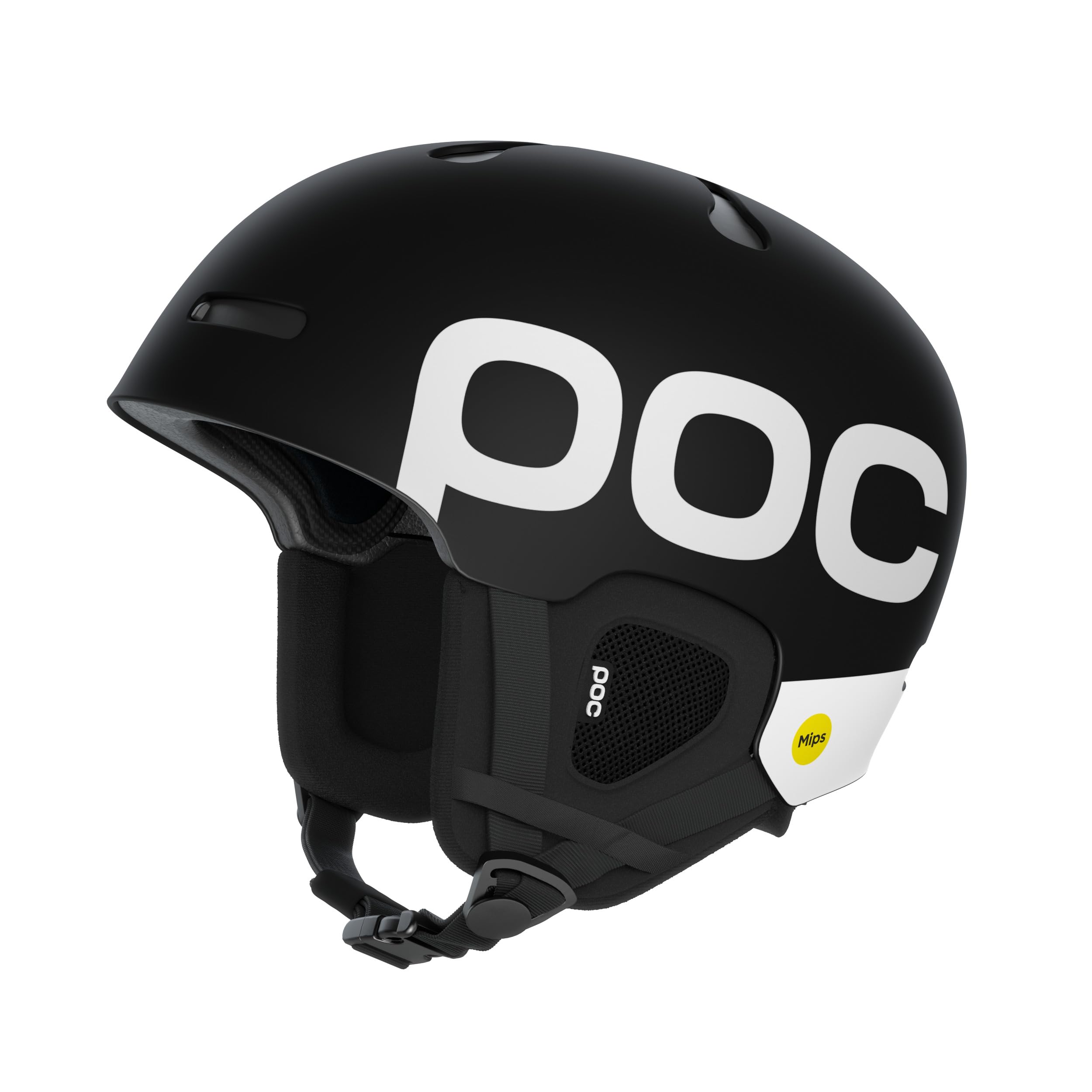
Combines multi-impact EPP protection with MIPS for backcountry riders who take off-piste falls.
The POC Auric Cut BC MIPS takes everything that made the standard Auric Cut popular and adds a MIPS layer for rotational impact protection. The EPP (expanded polypropylene) liner remains the core safety feature — it can absorb multiple impacts without needing to be replaced after one hard fall. The ABS shell shields the liner from abrasion, and the fully adjustable ventilation keeps you comfortable across the varied temperatures you encounter in the backcountry. The removable goggle clip keeps your goggles attached securely when you are hiking or taking a break.
Big-headed skiers gave this helmet a strong reception. “10/10 I have a big head and it fit perfectly,” wrote one owner, adding that it was “warm and comfortable at all times.” The 360° adjustment system and detachable ear pads worked well for others, with one buyer noting the “efficient vents” and “quick-removable ear pads” make it practical for fluctuating conditions. The downside is a consistent quality-control note: the ear pads can unclip too easily when taking the helmet off. A few owners reported that “one earpiece is unclipping every time” or that “the side ear protecting piece comes off easily.”
At 0.65 kg, it is the heaviest of the POC options here, but that weight is justified by the dual protection of EPP + MIPS and the sturdy ABS shell. If you ski in variable terrain and need a helmet that can handle multiple impacts plus rotational safety, this is a specialized tool. Just be prepared to re-seat the ear pads occasionally.
Why It Stands Out
- Multi-impact EPP liner plus MIPS for dual-layer safety
- Proven fit for big heads — comfortable for all-day backcountry use
- Adjustable ventilation and removable goggle clip
Heads-Up
- Ear pads can unclip during removal — a recurring owner note
- Heavier than non-MIPS alternatives at 0.65 kg
Ideal For: Free riders and backcountry skiers who want multi-impact protection plus MIPS in a helmet that fits a large head.
Check First: The ear pad attachment feels delicate — plan to be careful when taking the helmet off.
5. Ski-Doo Oxygen Helmet (Dot)

A DOT-certified snowmobile helmet with a heated shield and the widest field of vision in its class.
The Ski-Doo Oxygen is a completely different animal from the ski helmets above — it is built for snowmobiling, rated for DOT FMVSS No. 218, and designed to handle the specific demands of a motorized snow machine. Its M-FORGE Composite shell is 20% lighter than the brand’s previous BV2S helmet, and the aerodynamic shape reduces neck fatigue during long rides. The standout feature is the heated visor, which owners say works so well it also warms the interior of the helmet. The unique remote control has visor heat indicators, and the humidity extractor helps keep the shield clear even when you are breathing hard.
The field of vision is a major selling point — buyers repeatedly praise how much more they can see compared to other helmets, with one noting they “can see so good with this helmet.” The rear magnetic light is bright enough to be seen through snow dust at night. The ratcheting quick-release chin strap and precision opening settings let you adjust airflow easily, even with thick gloves on. However, at 7.3 pounds, this is undeniably heavy. It also comes with a significant price tag, and some owners experienced shield failure after one season — the heating element stopped working despite trying different cables and sleds.
If you need a snowmobile helmet that offers a heated shield, a wide view, and DOT certification, this is a top-tier choice. If you are here for a regular XXL ski helmet, skip this one — it is a different category built for a different machine.
Core Strengths
- Heated shield provides warmth and prevents fogging
- Wide field of vision — owners call it top-tier
- Aerodynamic M-FORGE shell reduces neck fatigue
Important Caveats
- Very heavy at 7.3 pounds — not for ski touring or lift-served skiing
- Heated shield has been known to fail after a single season
Who This Is For: Snowmobile riders who need DOT certification, a heated shield, and maximum visibility on the trail.
skip it if: You are looking for a ski or snowboard helmet — this is a motorized-vehicle helmet and not designed for human-powered winter sports.
Understanding the Specs
MIPS (Multi-directional Impact Protection System)
MIPS is a thin, low-friction layer built inside the helmet. When you hit the ground at an angle, this layer allows your head to slide slightly relative to the outer shell. That sliding motion reduces the rotational forces that can cause brain injuries. Not every helmet here has it — the Giro Sestriere Race and the POC Obex Pure do not — but it is a meaningful upgrade if you ski aggressively or in variable terrain.
EPP (Expanded Polypropylene) vs EPS (Expanded Polystyrene)
EPS is the classic foam liner used in most ski helmets. It crushes on a single hard impact and then must be replaced. EPP is a denser foam that rebounds after a hit — it can absorb multiple impacts without needing replacement. That makes EPP a better choice for park skiers, backcountry riders, or anyone who expects to fall more than once. The trade-off is weight: EPP liners tend to be heavier than EPS.
Shell Materials — ABS vs PC vs Composite
ABS (Acrylonitrile Butadiene Styrene) is a tough, impact-resistant plastic shell used on many budget and mid-range helmets. Polycarbonate (PC) is lighter and often used in in-mold construction where the shell is fused to the foam liner. Composite materials like M-FORGE use a mix of fibers (often carbon, Kevlar, or fiberglass) to be strong and light at a higher cost. For a big-head XXL helmet, a PC or in-mold shell saves weight without sacrificing protection.
FAQ
How do I measure my head for an XXL ski helmet?
Is MIPS worth paying extra for in an XXL ski helmet?
Will a ski helmet with a hard shell protect better than one with an in-mold shell?
Can I use a snowmobile helmet like the Ski-Doo Oxygen for skiing or snowboarding?
How often should I replace my XXL ski helmet?
What is the difference between a 360° fit system and a standard dial fit?
Will ski helmets with removable ear pads work with audio chips or headphones?
How important is adjustable ventilation for an XXL ski helmet?
What does “multi-impact liner” mean for a helmet like the POC Auric Cut?
Which XXL ski helmet gives the widest field of vision?
Final Thoughts: The Verdict
Across the board, the best xxl ski helmet winner is the Smith Mission MIPS because it combines the lightest weight on the list (1.5 pounds) with effective MIPS protection, great ventilation, and a fit system that works well for larger heads. If you want multi-impact protection and an even better big-head fit, grab the POC Auric Cut. And for backcountry riders who need rescue tech, the POC Obex BC MIPS is the one to reach for — it packs RECCO, an NFC medical ID, and MIPS Evolve into a lightweight package.
How We Picked
We do not accept paid placement. Every pick is matched to a real buyer and a real use-case; we do not hands-on test units.
Sources & Methodology
Specifications: manufacturer listings and product documentation. Review insights: verified customer reviews, as of July 2026. Pricing: not shown on this page (it changes often); check the current price via the retailer link.
As an Amazon Associate, Calories Fit earns from qualifying purchases. This does not affect which products we feature.