
Our readers keep the lights on and the coffee maker working hard! As an Amazon Associate, I earn from qualifying purchases.
Specs are compiled from manufacturer listings and verified buyer reviews and can change over time — please confirm the key details on the product page before buying.
If you have a larger head, most bike helmets end up feeling like a vice—tight in the temples, awkward on the forehead, and never quite secure. A true XL bike helmet solves that by offering a genuine 61-63 cm fit range with adjustable dials, deep coverage, and safety features that do not compromise just because the shell is bigger. This guide compares models that offer extended sizing, from commuter-friendly shells with integrated lights to trail-ready designs with MIPS impact protection (a low-friction layer that shifts slightly on impact to reduce twisting forces on your brain).
I’m Mohammad — the founder and writer behind Calories Fit. This guide is built by comparing the manufacturers’ published specifications and the patterns across verified customer reviews, so you get each pick’s real strengths and trade-offs instead of marketing spin.
if you need a commuter helmet with rechargeable turn signals or a lightweight trail lid with rotational-impact protection, this breakdown of what matters in a true xl bike helmet helps you avoid the headache of a bad fit and find one you will actually want to wear every ride.
Our Picks at a Glance

How To Choose The Best XL Bike Helmet
A larger head circumference changes how the helmet sits, how the straps fall, and how much airflow you get.
Real Sizing vs. Stretch Fit
Many helmets labeled “XL” only cover up to 61 cm, which is tight for anyone closer to 63 cm. Look for a model that lists its exact range in centimeters or inches—ideally 61-63 cm for a true XL—and one with a rear dial that allows micro-adjustments rather than a single click-lock. A dial that turns 360 degrees gives you a finer fit than a simple ratchet.
Safety Certifications and Impact Systems
All helmets sold in the US must meet CPSC standards (Consumer Product Safety Commission, the minimum safety rule for bike helmets). But the differences come from added protection. MIPS (a low-friction layer inside the shell that rotates slightly on impact) reduces rotational forces in angled falls. KinetiCore uses crumple zones built into the EPS foam (the hard foam liner that absorbs hits) instead of a separate layer. Both are meaningful upgrades for trail riding or higher-speed commuting. Check for ASTM F1447 (a standard for recreational biking and roller skating) or CE EN 1078 (the European safety standard for helmets) too if you ride off-road or in Europe.
Weight, Vents, and Real-World Comfort
An XL helmet naturally holds more foam, so weight matters. Look for models around 300-400 grams; anything pushing 500 grams or more can cause neck fatigue on longer rides. Vents should number at least 14-18 for decent airflow, but count alone is not enough—internal channeling that pulls hot air out the back matters just as much. A removable, washable liner also makes a difference if you ride in hot weather or commute daily.
Quick Comparison
| Model | Best For | Weight | Protection System | Size Range (cm) | Amazon |
|---|---|---|---|---|---|
| BATFOX LA303★ Best Overall | All-round trail & commuter | 390 g | EPS + Polycarbonate shell | 54-63 | Amazon |
| DKONI LEDBest Value | Night-time commuter | 450 g | EPS + ABS shell | 48-61 | Amazon |
| Troy Lee Flowline MIPSTrail Champion | Aggressive trail riding | 450 g | MIPS B-Series | — | Amazon |
| Bell 4Forty MIPS | Big-head trail rider | 381 g | MIPS + Float Fit | — | Amazon |
| LAZER Tonic KinetiCore | Road & light trail, max ventilation | 240 g | KinetiCore crumple zones | — | Amazon |
| O’Neal Sonus Deft | Downhill & scooter | — | ABS shell + EPP liner | — | Amazon |
| Triple Eight Gotham MIPS | Multi-sport (skate, bike, derby) | 680 g | MIPS + ABS shell | 48-61 | Amazon |
| Lumos Ultra | High-tech commute with signals | 390 g | EPS + PC shell | — | Amazon |
| Smith Persist MIPS | Road cycling with premium safety | 310 g | MIPS + Zonal Koroyd | — | Amazon |
In‑Depth Reviews
1. BATFOX LA303 Mountain Bike Helmet
Our pick — over 4.5★ from 650+ verified ratings; the strongest balance of quality and price.
The crowd favorite for XL heads that rides light and survives hard.
This BATFOX LA303 shell spans a remarkable 54-63 cm, meaning it covers medium heads and true extra-large heads in one dial-adjustable package. The 390-gram weight keeps it from feeling like a brick on your neck, and the 18 wind-tunnel vents with internal channeling pull heat out effectively on warm climbs.
The polycarbonate outer shell is fused to an EPS foam liner (the impact-absorbing foam core) —a process that adds durability without piling on grams. Buyers report it surviving a high-speed rocky trail crash without a crack, and the screw-mounted visor avoids the broken-snap issue that plagues cheaper helmets. The chin pad is capped and the padding is washable, which keeps it fresh after sweaty summer rides.
The quality-to-price ratio wins people over. Owners consistently praise the fit, look, and construction, noting it feels far more expensive than its price tier suggests. The only trade-off is the visor: it attaches with screws rather than a magnetic system, so adjusting it takes two hands instead of one.
affordable trail protection
- True XL range of 61-63 cm with an easy-turn dial
- Lightweight at 390 g with 18 ventilation channels
- Crash-tested survival in real-world trail falls
- Washable, removable liner and chin pad
basic ventilation
- Visor uses screws, not a quick-release magnetic mount
budget choice: you want a do-it-all helmet with genuine XL sizing, excellent ventilation, and crash-tested durability that does not break the bank.
limited airflow: you need integrated LED lights or a magnetic visor—those features are not here.
2. DKONI LED Bike Helmet
Built-in front and rear lights that make you stand out, day or night.
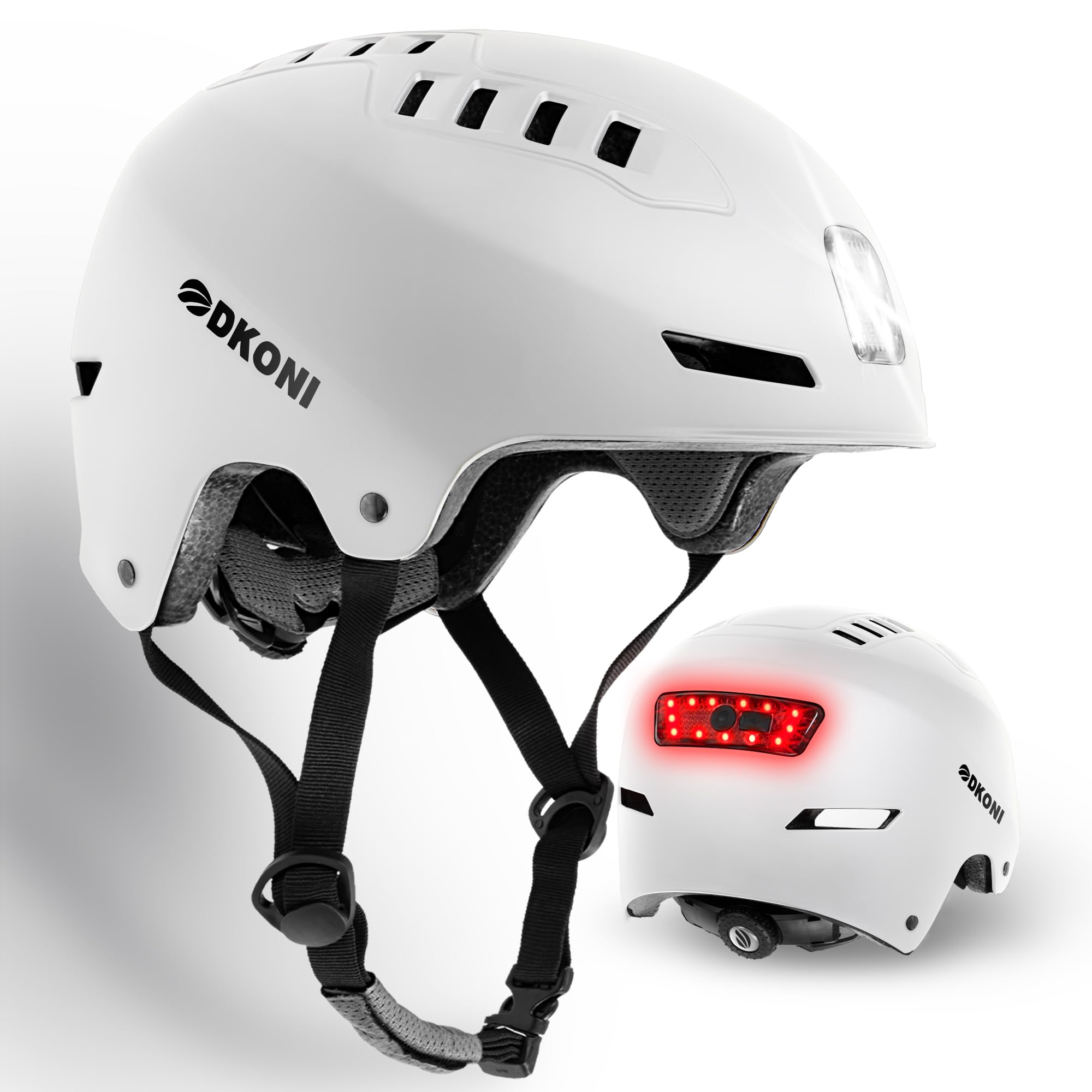
The large size fits 56-61 cm, so it reaches the lower end of XL territory—ideal if your head is around the 60 cm mark. what separates it is the lighting system: 5 white LEDs up front and 13 red LEDs in the rear, with four flashing modes including a snake-shaped pattern. The whole thing is USB rechargeable.
The shell uses a high-density ABS outer layer (a tough plastic used for impact resistance) over EPS foam, meeting CPSC, CE, and ASTM standards (ASTM F1447 for biking/skating). Owners mention it surviving street falls with no cracks, and the rear dial combined with adjustable side straps locks the helmet in place at higher speeds. The 20 tune vent holes with airflow channels keep your head cool even on hot commutes.
Drivers see the rear turn signals and flashing modes clearly. A common buying pattern is families picking up three at a time because the fit works across different head shapes and the color options appeal to everyone.
integrated LED safety: The 450 g weight is slightly heavier than the BATFOX LA303, but you gain integrated lighting that doubles as a safety beacon. The micro-USB charging port shows its age—this would feel more premium with USB-C.
commuter essential: you commute in low light or at night and want a helmet that replaces a separate bike light.
trail use: your head is closer to 63 cm—the size caps at 61 cm.
3. Troy Lee Designs Flowline MIPS
Forty years of racing DNA packed into a trail-ready MIPS lid.
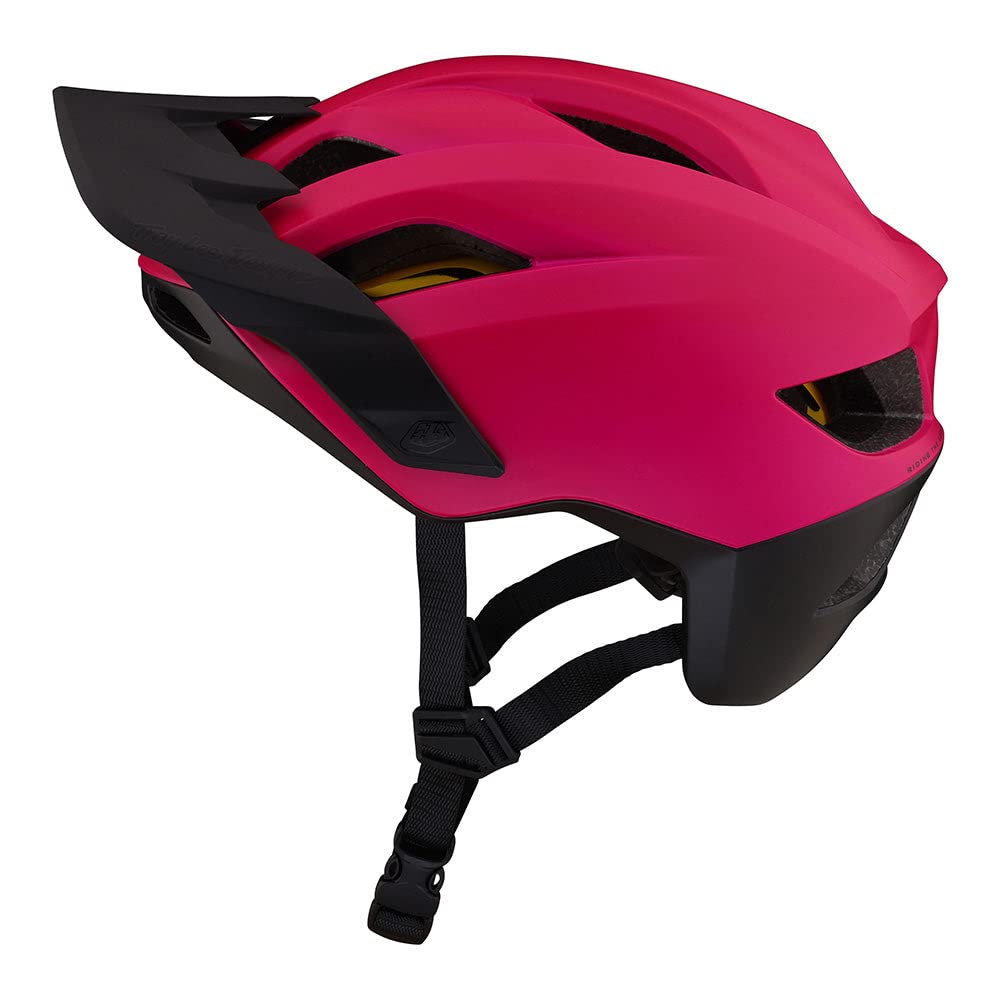
This Troy Lee Flowline helmet uses a dual-density EPS liner—one density for low-speed impacts, another for high-speed hits—paired with MIPS B-Series rotational protection (a MIPS version designed for trail helmets). That means in an angled fall, the low-friction layer inside the shell shifts slightly to reduce twisting forces on your brain.
The fit system goes 360 degrees around your head with a 3-way rear height adjustment, so you can dial in the exact vertical position. The screwless visor also adjusts in three positions—no tools needed. Owners say it fits true to size, feels lightweight enough to forget you are wearing it, and the 14 strategically placed vents keep airflow consistent on steep climbs.
Riders compare it favorably to helmets costing twice as much, noting the MIPS system, premium liner, and sustainable packaging. At 450 g it is not the lightest in the list, but most trail riders find it acceptable for all-day use.
off-road MIPS design: The dual-density EPS and MIPS work together to handle both slow-speed tree-branch hits and faster crashes. Great ventilation, secure fit, and a 40-year racing pedigree behind the design.
trail rider: you ride technical singletrack and want MIPS without paying premium-tier prices.
road use: you need an integrated light system or a full-face shell—this is an open-face trail helmet only.
4. Bell 4Forty MIPS Helmet
Trail-ready MIPS protection that finally fits an 8-inch hat size.
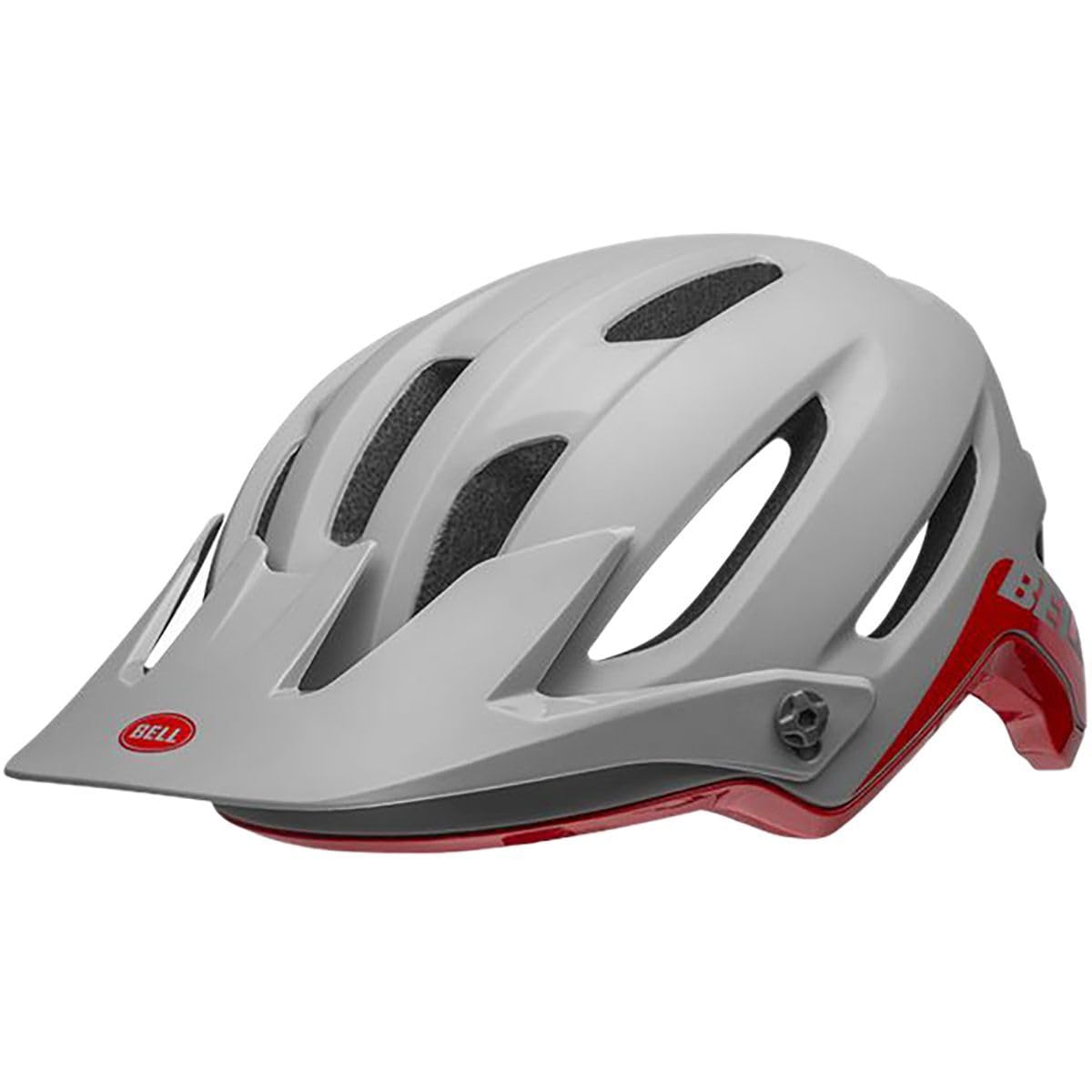
Bell pioneered the fusion in-molding process that bonds the polycarbonate shell directly to the EPS foam liner, creating a helmet that is both sturdier and lighter. The result here is a striking 381 grams—one of the lightest trail-oriented MIPS helmets in this roundup, and lighter than the Troy Lee Flowline (450 g).
Owners with size-8 heads report the XL variant fits with room to spare, and the Float Fit dial (integrated with MIPS) tightens evenly around the full circumference rather than pressing on a single point. The No-Twist Tri-Glides keep straps flat and properly positioned, while the Sweat Guide pad design pulls moisture away from the brow pad and away from your eyewear. The GoggleGuide visor accommodates both goggles and glasses.
Buyers appreciate the combination of MIPS safety with a shell that does not look or feel bulky. The large size in the measurement chart runs slightly big, so if you sit between sizes, the Bell tends to accommodate rather than squeeze.
lightweight MIPS shell: Beats the heavier Troy Lee Flowline on raw weight while offering the same MIPS protection. The visor system is more versatile than the BATFOX LA303, adjusting for glasses or goggles. A few owners note the MIPS system can press on skull nodules if the fit is not dialed perfectly.
lightweight pick: riders with large heads (size 8+) who want a lightweight MIPS trail helmet with good sweat management.
style seekers: you wear a hat size under 7—the sizing runs large, and you may need to tighten uncomfortably far.
5. LAZER Tonic KinetiCore Helmet

Weighs less than a standard water bottle but packs crumple-zone protection.
At just 240 grams, this LAZER Tonic is the lightest helmet in the entire list—an achievement that matters if you ride long road miles or hate feeling anything on your head. The KinetiCore system uses structural crumple zones built into the EPS foam, rather than a separate plastic layer like MIPS, which is what keeps the weight so low.
The fit system uses a rear adjustment knob that covers a broad range, and owners with larger heads consistently call it the best-fitting helmet they have tried. The ventilation is exceptional, with internal channels that push warm air out through the rear exhaust ports. LAZER’s safety rating at the Virginia Tech helmet lab (a university that independently tests impact protection) gives buyers additional confidence.
Riders love how easily the helmet disappears during a ride—no shifting, no pressure points, just consistent comfort. The price point is mid-range, but many owners feel it outperforms more popular brands on ventilation and fit.
safety first: weight is your top priority and you want a helmet that disappears on your head during long road rides or hot commutes.
wide heads: you need MIPS-specific rotational protection—KinetiCore is a different system and some riders prefer the slip-plane design of MIPS.
6. O’Neal Sonus Deft Mountain Bike Helmet

A full-face-style shell with a magnetic buckle that clicks one-handed.
The ABS outer shell (acrylonitrile butadiene styrene, a hard plastic tougher than standard polycarbonate) makes this O’Neal Sonus Deft a good fit for downhill riding, scooter use, or rough terrain. The Fidlock magnetic buckle lets you fasten and release the chin strap with one hand—a small luxury that becomes essential when you are wearing gloves.
The inner EPP liner (expanded polypropylene foam that absorbs sweat and impact) is sweat-absorbing, removable, and washable. The 10 screen-covered air-flow vents keep things breathable even during aggressive climbing sections. Customers note the fit is true to size and the helmet feels solid without being too heavy, though the exact weight is not published.
This model lacks MIPS but compensates with a multi-impact ABS design. Several owners share stories of the helmet surviving high-speed crashes with no structural damage. The ventilation is praised as “good for glasses,” and the magnetic latch is universally called out as a standout feature.
budget off-road: you ride downhill or use a scooter at speed and want a tough ABS shell with a convenient magnetic buckle.
long rides: MIPS is a must-have for you—this helmet relies on a thick ABS shell and EVA foam instead.
7. Triple Eight Gotham MIPS Helmet

Certified for skateboarding, biking, and roller derby—one shell, three sports.
The Gotham meets CPSC, ASTM F1447, and ASTM F1492 standards (a specific standard for skateboarding and trick skating, meaning higher multi-impact protection), making it usable across biking, skateboarding, inline skating, and roller derby. The MIPS technology adds rotational-impact protection, and the vented ABS outer shell includes a subtle brim for added coverage.
The L/XL size fits 59-61 cm, placing it at the lower end of XL. It includes two sets of fit pads and a reflective dial for low-light adjustment. Owners like the matte black finish and the overall build quality, noting it feels premium and well-protected. The weight is substantial at 680 grams, but the dual certification requires thicker foam and a tougher shell.
The main fit feedback is that it runs slightly small—if your head is at the upper edge of the size range, you may need to remove a fit pad to get comfortable. Owners with 23-inch heads found the L/XL too large and sized down successfully.
urban style: you skateboard, bike, or rollerblade and want one MIPS helmet that covers all three sports.
trail riding: pure road cyclists—the weight and thicker shell feel like overkill for smooth pavement riding.
8. Lumos Ultra Bike Helmet
TÜV-certified 360-degree visibility with wireless turn signals you control from the handlebar.
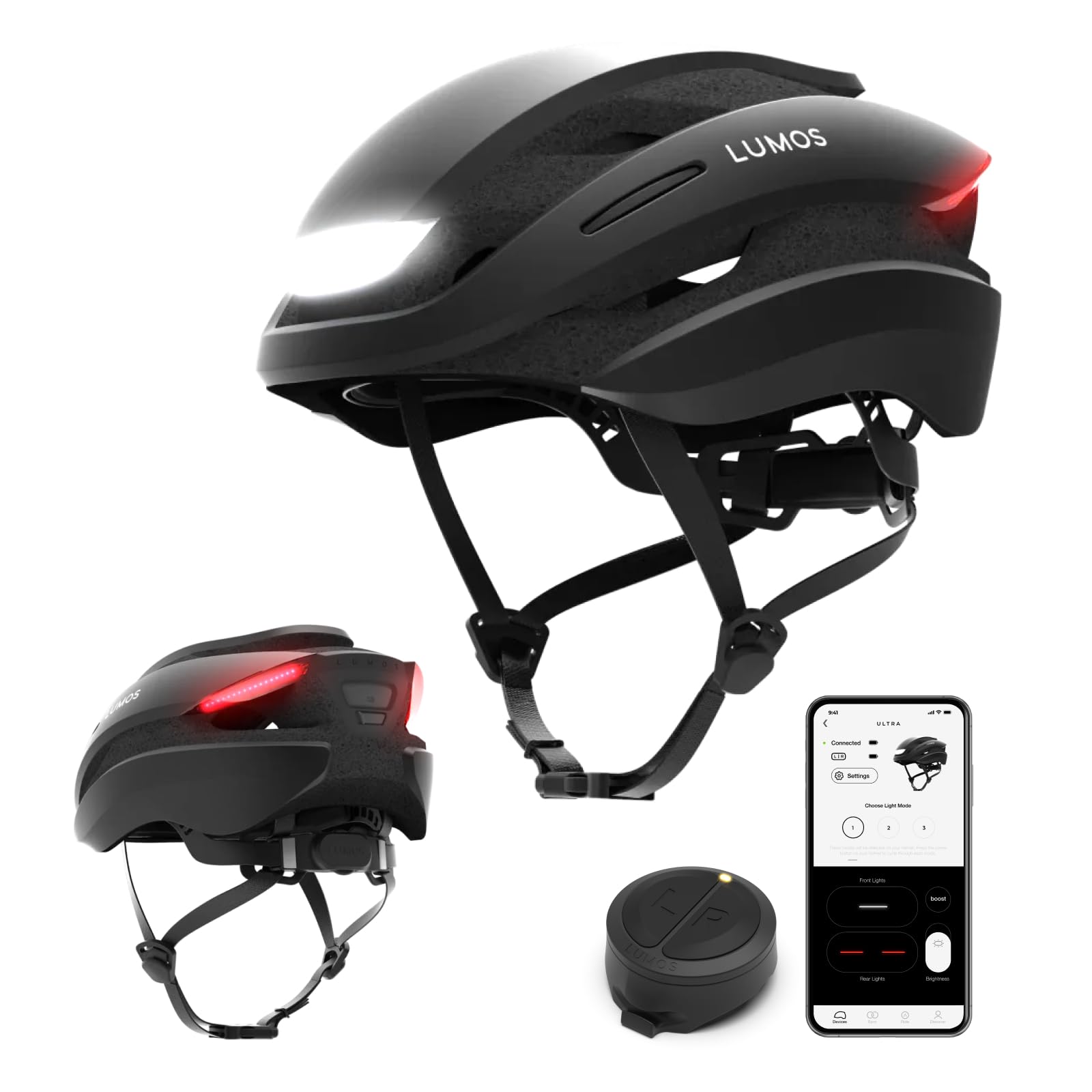
The Lumos Ultra integrates front and rear LED lights directly into the shell, with a wireless Remote Lite (a handlebar remote that activates turn signals) that activates turn signals. Pair it with the separate Lumos Remote to open up automatic brake lights and synchronized flashing with other Lumos accessories. The entire system is USB rechargeable and offers up to 10 hours of battery life depending on the lighting mode.
At 390 grams, it matches the BATFOX LA303 on weight despite carrying electronics. The CPSC-certified EPS and polycarbonate shell provide standard crash protection, and the fit system is adjustable enough for most head shapes. Buyers highlight that the turn signals genuinely catch drivers’ attention, and the matte charcoal finish looks modern on any bike.
The battery life receives mixed feedback—some owners get close to the claimed 10 hours, others see less in bright flashing mode. There is no sun shield, and the electronics add a layer of complexity if you simply want a no-fuss helmet.
night rider: commuters who want integrated turn signals and brake lights that replace separate bike lights.
day use: your head exceeds 61 cm—the published size dimensions stop short of a true XXL fit.
9. Smith Persist MIPS Helmet

MIPS plus Zonal Koroyd coverage in a 310-gram package designed for long road miles.
The Smith Persist pairs a MIPS slip-plane layer with Zonal Koroyd (a welded-tube structure that crumples on impact to absorb energy while maintaining airflow, different from standard EPS foam). The result is a helmet that passes CPSC, CE EN 1078, and AS/NZS 2063 standards (the Australian/New Zealand safety standard for helmets) while weighing only 310 grams.
Twenty-one fixed vents work with the AirEvac system to pull warm air away from your head and keep eyewear fog-free. The rear dial adjusts smoothly, and owners with larger heads find the fit accommodating without pressure points. Smith’s reputation for quality shows in the materials—the Koroyd tubes are visible through the vents, adding a distinctive look.
What buyers appreciate is the light weight combined with premium protection. Riders note the helmet feels like it is not there, even on 60-mile weekend rides. The trade-off: no integrated electronics or visor, and some report a “mushroom” aesthetic on larger head sizes.
high-end choice: you prioritize ultimate lightweight protection with MIPS and Koroyd for long road cycling or fast group rides.
tight budget: you need a visor, integrated lights, or a trail-oriented shell—this is a pure road bike design.
Understanding the Specs
MIPS vs. KinetiCore vs. Standard EPS
MIPS (Multi-directional Impact Protection System) is a low-friction layer inside the shell that rotates slightly on angled impact, reducing rotational forces to the brain. KinetiCore uses specially shaped crumple zones within the EPS foam itself to absorb energy without a separate plastic layer—this keeps the helmet lighter. Standard EPS helmets (like the BATFOX LA303 or O’Neal Sonus Deft) rely on foam compression alone; they meet CPSC standards but lack rotational protection. If you ride trails or commute in traffic, MIPS or KinetiCore adds a meaningful safety layer.
Weight and Ventilation Relationship
More vents usually mean less foam, which is lighter but potentially less protective in a multi-impact crash. A helmet with 20+ vents (like the DKONI LED or Smith Persist) provides excellent airflow but may weigh slightly more due to the internal reinforcement needed. The LAZER Tonic at 240 g proves that KinetiCore allows for both light weight and good ventilation. A heavier helmet (680 g for the Triple Eight Gotham) suggests a thicker shell and dual certifications, useful for multi-sport use but tiring on long rides.
FAQ
What head circumference counts as a true XL bike helmet?
Will a MIPS helmet fit differently than a standard one?
Can I use a mountain bike helmet for road cycling?
How long does the battery last on an LED helmet like the Lumos Ultra?
Do all XL bike helmets work with ponytails or long hair?
What is the difference between CPSC and ASTM safety standards?
Is a heavier helmet more protective than a lighter one?
How often should I replace an XL bike helmet?
Can I use a bike helmet for skateboarding or rollerblading?
What does the visor actually do on a mountain bike helmet?
Final Thoughts: The Verdict
For most riders, the xl bike helmet that checks every box is the BATFOX LA303 because it combines a genuine 61-63 cm size range, 390-gram weight, and excellent ventilation at a price that leaves room for other gear. If you ride at night or commute in traffic, grab the DKONI LED for its integrated front and rear lights and turn signals. And for long road miles where every gram counts, the LAZER Tonic KinetiCore is the one to reach for—it is tough to top a 240-gram helmet that still earns top safety marks from independent labs.
How We Picked
We do not accept paid placement. Every pick is matched to a real buyer and a real use-case; we do not hands-on test units.
Sources & Methodology
Specifications: manufacturer listings and product documentation. Review insights: verified customer reviews, as of July 2026. Pricing: not shown on this page (it changes often); check the current price via the retailer link.
As an Amazon Associate, Calories Fit earns from qualifying purchases. This does not affect which products we feature.