
Our readers keep the lights on and the coffee maker working hard! As an Amazon Associate, I earn from qualifying purchases.
Specs are compiled from manufacturer listings and verified buyer reviews and can change over time — please confirm the key details on the product page before buying.
You deserve to wake up feeling rested, but figuring out what actually happens while you sleep is hard without a tool on your wrist. A wrist-worn sleep monitor changes that by tracking your heart rate, movement, and oxygen levels all night, then showing you your sleep stages and quality each morning. The trick is finding the right one for you — battery life, sensor accuracy, and software features vary wildly between a budget tracker and a premium sports watch.
I’m Mohammad — the founder and writer behind Calories Fit. This guide is built by comparing the manufacturers’ published specifications and the patterns across verified customer reviews, so you get each pick’s real strengths and trade-offs instead of marketing spin.
After digging through the specs and real-world owner experiences across nine leading models — from the simple, long-lasting Fitbit to the ultra-rugged Garmin Solar — one watch stands out for the depth of its sleep analysis and its smooth daily use. Here is my breakdown of the best wrist watch sleep monitor options for every budget and lifestyle.
Our Picks at a Glance
![Apple Watch Series 11 [GPS 42mm]](https://m.media-amazon.com/images/I/61S+1BEQ8DL.jpg)

How To Choose The Best Wrist Watch Sleep Monitor
Finding a good sleep tracker isn’t just about finding any watch with a heart rate sensor. The best ones give you a daily sleep score, break your night into light, deep, and REM stages, and even offer coaching tips. Here is what to look for.
Sensor Accuracy and Sleep Stages
The core of any wrist watch sleep monitor is the optical heart rate sensor. A reliable sensor combined with an accelerometer (a sensor that detects movement) is what allows the watch to estimate when you are in light sleep, deep sleep, or REM (rapid eye movement) sleep — the stage where dreaming happens. Watches that also measure SpO2 (blood oxygen saturation) can detect breathing disturbances, which is important for spotting potential sleep apnea.
Battery Life vs. Features
This is the biggest trade-off. A premium smartwatch with a bright AMOLED (an advanced, vivid screen) display and always-on health sensors may need charging every day or two. A simpler fitness tracker or a solar-powered watch can easily run for 10 days or even weeks. If you want to track sleep every night without worrying about charging, battery life is your most important spec. If you need features like ECG (an electrocardiogram for heart rhythm analysis) or cellular connectivity, you will likely be charging the watch daily.
Comfort and Wrist Fit
You wear a sleep monitor for eight hours every night. A bulky 50mm case can feel uncomfortable if you toss and turn, especially for those with smaller wrists. Look at the case size (measured in millimeters) and weight. Silicone bands are standard and handle sweat well, but a lighter, slimmer watch (around 40-42mm) is often the most comfortable for all-night wear.
Quick Comparison
| Model | Best For | Battery Life | Display Type | Health Sensors | Amazon |
|---|---|---|---|---|---|
| Apple Watch Series 11★ Best Overall | Deep Health Insights | 24 hours | Always-On Retina | ECG, HR, SpO2 | Amazon |
| Google Fitbit Inspire 3Budget Champion | Simple & Long-Lasting | 10 days | Color AMOLED | HR, SpO2 | Amazon |
| Google Fitbit Versa 4Fitness + Sleep | Fitness & Sleep Combo | 6+ days | Color AMOLED | HR, SpO2, GPS | Amazon |
| Samsung Galaxy Watch 7 | AI Sleep Analysis | 30 hours | Super AMOLED | HR, Sleep Apnea, Energy Score | Amazon |
| Samsung Galaxy Watch Ultra (Renewed) | Durability & LTE | 40 hours | Super AMOLED | HR, BP, Vascular | Amazon |
| Apple Watch SE 3 (Cellular) | Family & Safety | All-day | Retina LTPO OLED | HR, Fall Detection | Amazon |
| Garmin Instinct 3 Solar | Off-Grid Endurance | Unlimited (Solar) | 1.1″ MIP Solar | HR, Pulse Ox, 3-Axis Compass | Amazon |
| Garmin Forerunner 570 | Serious Runners | 10 days | 1.2″ AMOLED | HR, HRV, Training Readiness | Amazon |
In‑Depth Reviews
1. Apple Watch Series 11 [GPS 42mm]
Our pick — over 4.5★ from 550+ verified ratings; the strongest balance of quality and price.
The definitive health dashboard that tracks sleep with clinical-grade sensors.
Your sleep quality gets a daily score here, but the Apple Watch Series 11 goes far deeper than a simple percentage. It runs overnight health metrics through a dedicated Vitals app, and it can even notify you of possible sleep apnea by analyzing breathing patterns. For heart health, you can take an ECG anytime you want — a feature most sleep-focused trackers skip entirely. The display is super-durable glass and it is water resistant to 50 meters (164 feet), so a lap in the pool won’t stop your data collection.
Battery life is the big talking point here. You get up to 24 hours of normal use, and a fast 15-minute charge gives you 8 hours of use — enough for a full night’s tracking if you forgot to plug it in. Reviewers average 4.7 stars and say the experience is polished and reliable. Fast charging supports a 12-15 hour work day plus a full night of sleep, according to real-world reports. The catch is that this is an iPhone-only device; if you use Android, you are locked out. Also, the 42mm case is the smaller size, so it fits very comfortably for all-night wear, but the battery still demands a nightly top-up for most users.
What Wins People Over
- Advanced sleep apnea notifications and overnight Vitals app for detailed health insights
- Super-durable, scratch-resistant glass and swim-proof 50m water resistance for low-maintenance daily wear
- Fast charging gives you 8 hours of use from just a 15-minute charge
The Trade-Offs
- Battery life tops out at 24 hours, requiring a daily charge
- Compatible only with iPhone, not Android phones
Reach for this if: you want the deepest health sensor suite — ECG, sleep apnea detection, and overnight vitals — all in a comfortable 42mm case.
Look elsewhere if: you use an Android phone or you want a sleep tracker that only needs charging once a week.
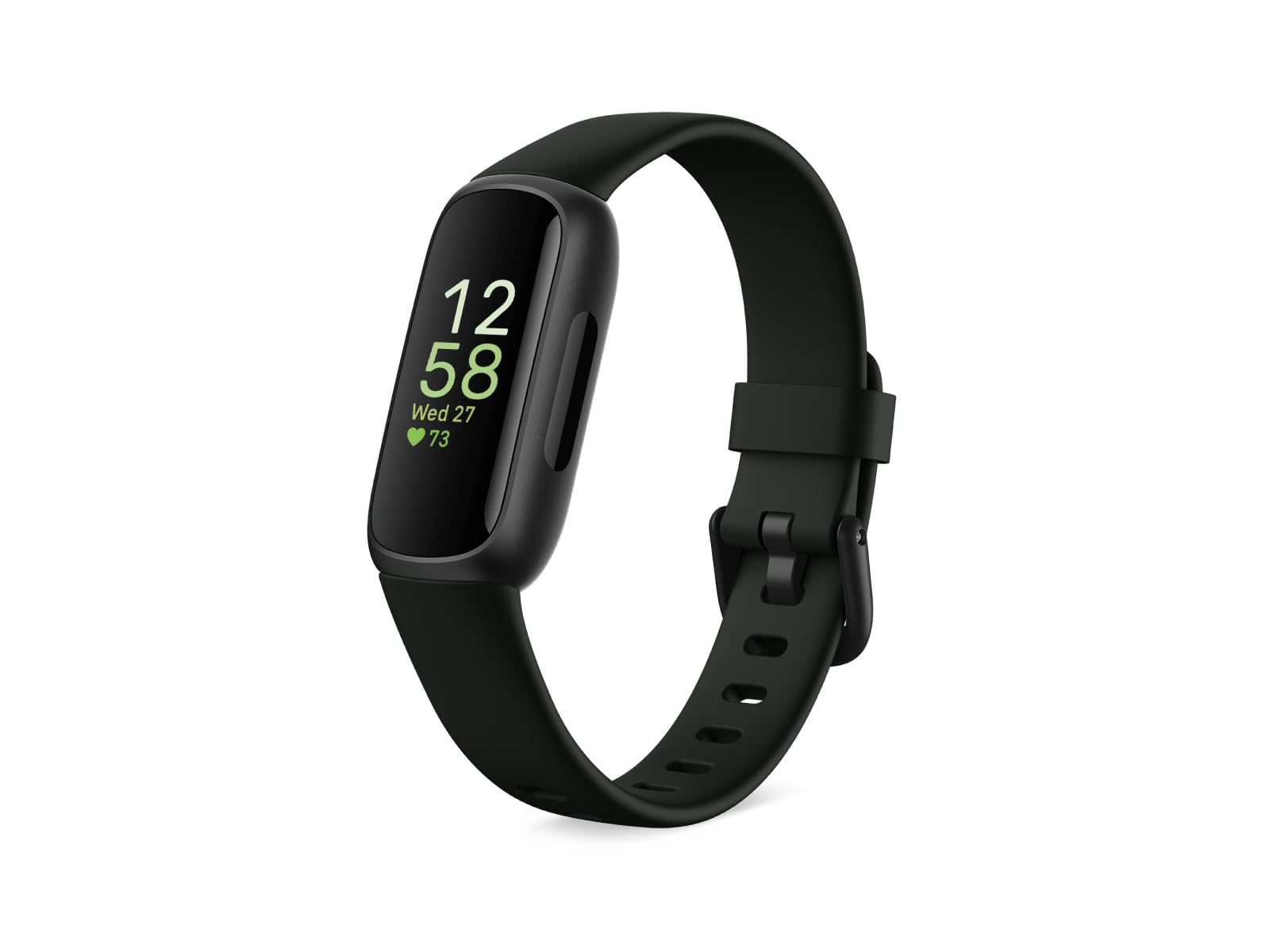
2. Google Fitbit Inspire 3
The featherweight sleep tracker that vanishes on your wrist for over a week.
If your main goal is automatic sleep tracking with a daily Sleep Score and you do not need a smartwatch screen or GPS, the Inspire 3 is the most budget-friendly path to get there. The band is a slim 39.32 millimeters and it comes in two sizes (small and large bands included), so it fits small wrists comfortably without bulk. It gives you automatic sleep tracking with a detailed daily Sleep Score and a smart wake vibrating alarm that wakes you during light sleep. Unlike bulkier watches, the Inspire 3 also tracks your Stress Management Score and offers guided breathing sessions, making it a tool for winding down before bed, not just analyzing it.
The battery truly delivers on its promise — you can expect 8-9 days of use after disabling the always-on display, and it charges in just 2 hours. Some owners found the strap hinge could be fragile after several months of use, and the proprietary charging cable is a long-term dependency. But for pure, distraction-free sleep and activity tracking at a low cost, it is tough to top.
The Verdict in 50 Words: This is the entry-level winner for sleep tracking without the smartwatch fluff. It is slim, lasts 8-9 days on a charge, and gives you a clear Sleep Score and stress management tools. Just be gentle with the band pins.
Best for: first-time sleep trackers and anyone on a budget who wants reliable sleep stage data without daily charging.
Think twice if: you need built-in GPS for run tracking without a phone, or watch-based music control.
3. Google Fitbit Versa 4
The mid-range hybrid that bridges detailed sleep data with workout mapping.
Unlike the slim Inspire 3, the Versa 4 adds built-in GPS (a global positioning system for tracking routes without a phone) and a Daily Readiness Score that tells you whether to train or recover. That readiness score relies heavily on your sleep quality and HRV (heart rate variability), so the sleep tracking here is integrated into your fitness routine, not siloed. The watch tracks daily sleep stages, gives you a Sleep Score each morning, and has a Do Not Disturb mode to keep notifications quiet while you rest.
The 40.5 millimeter case is still relatively compact for a smartwatch, and it is water resistant to 50 meters so you can wear it swimming. Reviewers average 4.2 stars, and ease of use is the top positive aspect by a wide margin. The battery is rated at 6+ days, which is excellent for a watch with GPS and a bright AMOLED screen. The main complaint is that reliability has mixed reviews — some units had syncing issues after months of use.
Strengths
- Built-in GPS for phone-free run and bike tracking, paired with sleep data for a readiness score
- Water resistant to 50 meters for swim tracking and pool use
- 6+ day battery life balances always-on sensors with a color AMOLED display
Caveats
- Customer feedback on long-term reliability is divided — some units lose sync or stop working
- GPS accuracy for running is reported as poor by a few owners
Grab this if: you want a do-it-all fitness watch with solid sleep analysis and phone-free GPS, all without paying premium flagship prices.
skip it if: you prioritize long-term durability above all else, as some buyers report syncing issues after extended use.
4. Samsung Galaxy Watch 7 (44mm, 2024)

Galaxy AI interprets your sleep data to suggest better habits each morning.
The Galaxy Watch 7 takes a smarter approach to sleep by using Galaxy AI to analyze your rest patterns and provide Wellness Tips. It can also detect moderate to severe sleep apnea — a strong health tool that turns the watch from a simple tracker into a screening device. The 1.5-inch Super AMOLED display is stunning, and the BioActive sensor (an optical sensor that reads heart rate, heart rate variability, and body composition) delivers accurate heart rate tracking that filters out body movement for a cleaner reading.
Battery life is the familiar Samsung trade-off. The 425 milliamp-hour battery lasts about 30 hours with typical use, so you will charge it daily if you track sleep. Some owners find the battery lasts only 1 day with constant health monitoring, while others get 3 days by switching off the always-on display. The watch is water resistant to 5 ATM (50 meters) and has an IP68 dust rating, so it is built for rugged daily wear. The sapphire crystal glass on the display is highly scratch-resistant.
What Stands Out
- Sleep apnea detection and AI-powered Wellness Tips give you actionable health insights
- Sapphire crystal glass and 5ATM/IP68 durability make it tough enough for daily abuse
- Fast charging battery and smooth integration with the Samsung ecosystem
The Shortcomings
- Battery life hovers around 1-2 days with sleep tracking and always-on display
- Watch band is notoriously difficult to remove without the proper quick-release tool
Reach for this if: you want the most advanced sleep health tools Samsung offers, especially sleep apnea detection, and you are already in the Android ecosystem.
pass on it if: you cannot tolerate a watch that needs charging every night to keep tracking your sleep.
5. Samsung Galaxy Watch Ultra (47mm, Renewed)
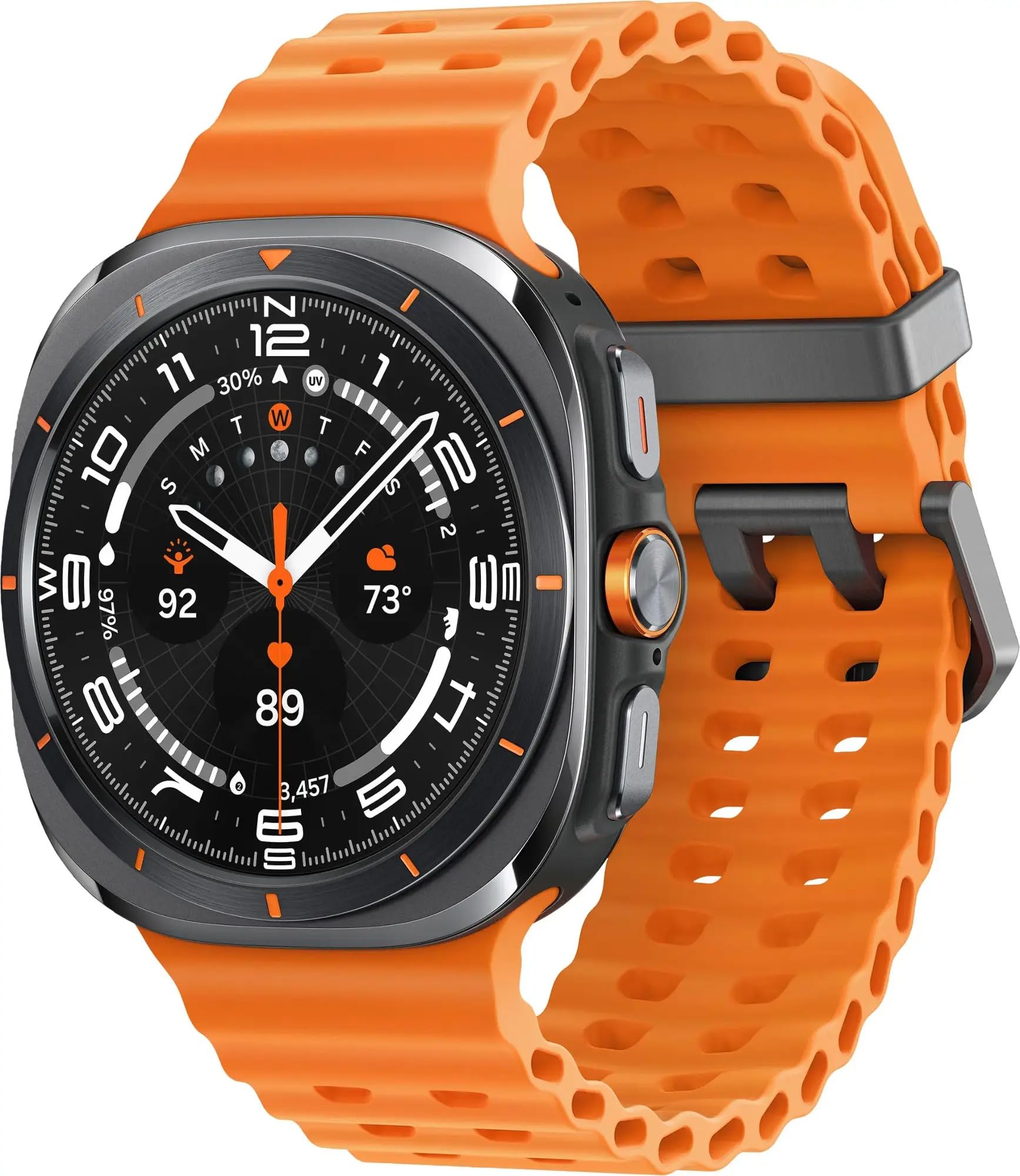
A titanium-clad powerhouse that monitors five heart systems through the night.
The Galaxy Watch Ultra is Samsung’s answer to the Garmin Fenix — a 47mm Titanium Gray watch built for extreme conditions. The case is titanium, and the band is an orange marine silicone or rubber that stands out. Sleep tracking here is augmented by advanced vascular load monitoring, blood pressure tracking (requiring calibration), and emergency alerts. The 590 milliamp-hour battery is the largest in this lineup, delivering up to 40 hours of battery life, which is solid for a smartwatch with LTE cellular connectivity.
As a renewed unit, owners mention it arrives in like-new condition with no scratches, though some units were previously registered to another user’s accounts, causing a lengthy 12-hour setup process. The battery life is decent — about a couple of days — and the functionality and quality are praised. However, the screen is not a sapphire crystal like the Galaxy Watch 7, and a few owners mention the watch may not hold up to diving despite its water resistance claims. It is a niche pick for those who need extreme durability and health monitoring in one package.
Final Take: This is the go-to for Samsung users who need the toughest build and LTE connectivity. The 40-hour battery is a step up from standard Galaxy Watches, but it still isn’t a one-week device.
Best for: adventurers and heavy-duty users who want Samsung’s health tracking in a titanium case with LTE for phone-free operation.
Think twice if: you prefer a lighter, smaller watch for sleep, or you are concerned about the refurbished setup process.
6. Apple Watch SE 3 [GPS + Cellular 44mm]
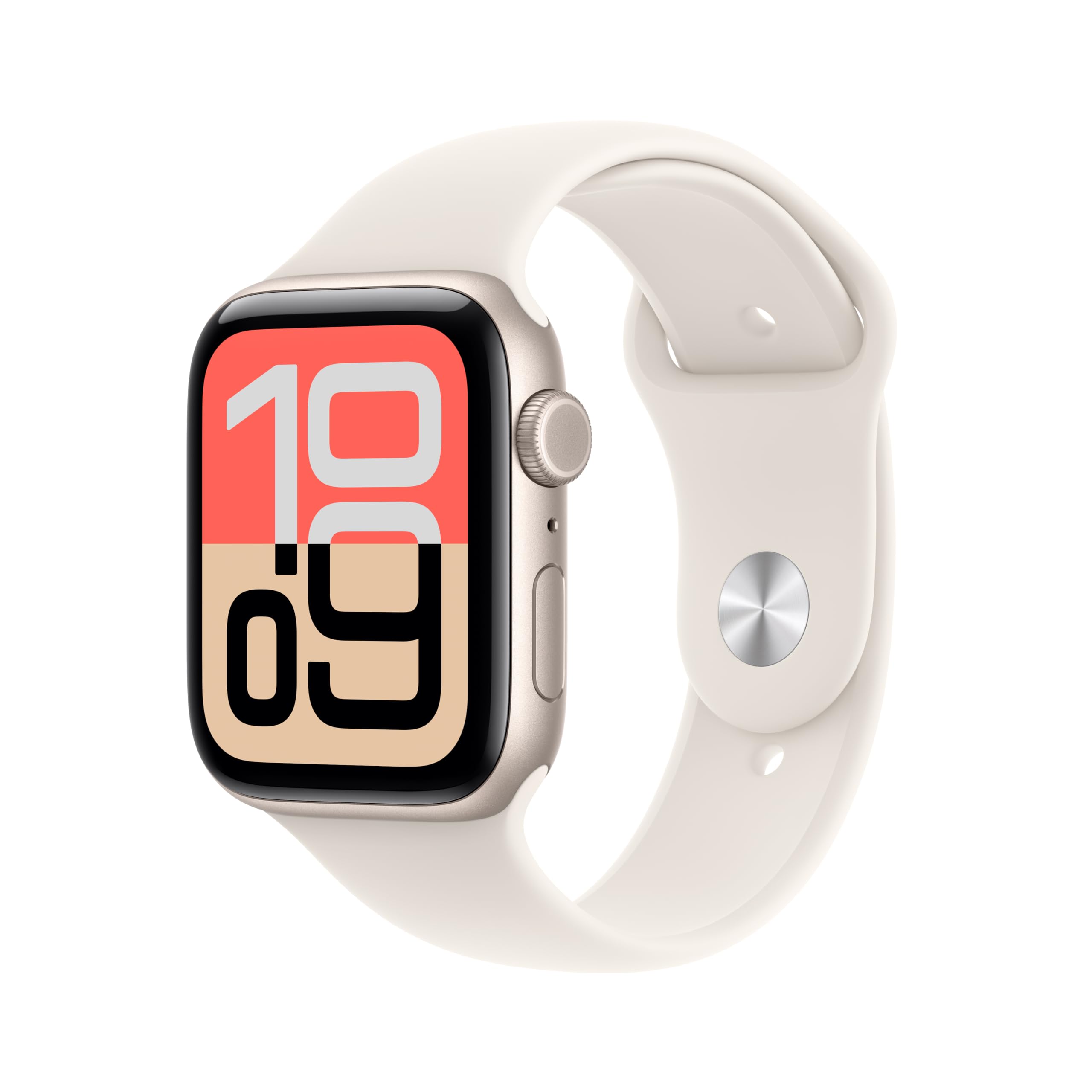
The family-friendly Apple Watch that tracks sleep and safety in one slim design.
The Apple Watch SE 3 is the most affordable entry into the Apple Watch ecosystem, and it still delivers solid sleep tracking alongside core safety features like Fall Detection and Crash Detection. The 44mm starlight aluminum case is comfortable for all-night wear, and the retail price for the GPS + Cellular model means your kids can stay connected without a phone. Sleep monitoring here is simple and effective — it tracks your sleep duration and consistency, though it lacks the advanced sleep apnea detection and ECG of the Series 11.
The all-day battery life is typical for Apple — it will last from morning wake-up to bedtime, but you will need to charge it every day. Owners consistently praise the build quality and the smooth pairing with iPhones. The lack of an always-on display and the absence of blood oxygen monitoring are the main feature gaps compared to the flagship Series 11. This is an excellent pick if you are buying for a family member or just want a reliable, safe sleep tracker at a lower cost than the flagship.
Pros
- sturdy safety features including Fall Detection, Crash Detection, and Check In for confidence
- GPS + Cellular model allows phone-free calls and texts, great for kids or phone-free errands
- Consistent, user-friendly sleep and activity tracking with easy iPhone pairing
Cons
- No ECG, blood oxygen, or always-on display — you get the core features, not the extras
- Requires daily charging, which is the norm for this category
Reach for this if: you want a reliable, safe sleep tracker for yourself or your children, with the security of cellular connectivity and crash detection.
it’s not for you if: you need advanced sleep apnea detection or health monitoring beyond heart rate and sleep stages.
7. Garmin Instinct 3 Solar (50mm)

The rugged solar-powered watch that only needs sunlight to keep tracking your sleep.
The Garmin Instinct 3 Solar is built for a completely different kind of user — someone who spends weeks outdoors, miles from a wall outlet. The 1.1-inch display has a solar charging lens that, with 3 hours per day in 50,000 lux conditions (bright sunlight), delivers unlimited battery life in smartwatch mode. This is a huge advantage for uninterrupted sleep tracking: you put it on, it monitors your sleep stages and Pulse Ox (blood oxygen saturation), and it never needs a charger. The 50mm fiber-reinforced polymer case with a metal-reinforced bezel is MIL-STD-810 rated for thermal and shock resistance.
It also includes a built-in LED flashlight with variable intensities — a surprisingly useful feature for camping and nighttime navigation. The sleep monitoring is accurate, and the watch pairs with the Garmin Connect app for detailed morning reports. The trade-offs are clear: the display is a basic MIP (memory-in-pixel) screen, not a vibrant AMOLED, and there are no maps, music storage, or fancy smartwatch features. It is also 50mm, which is large for smaller wrists and not the most comfortable for side-sleepers. The step tracking is also less accurate than phone-paired tracking, as some owners note.
What Excels
- Unlimited battery life with solar charging — practically never needs a wall outlet
- Military-grade durability (MIL-STD-810) and 10 ATM water resistance for extreme conditions
- Built-in LED flashlight with variable strobe modes for outdoor safety
The Caveats
- Large 50mm case is bulky on small wrists and can be uncomfortable for side-sleepers
- No AMOLED display, maps, or on-wrist music — this is a tool, not a luxury smartwatch
Best for: hikers, campers, and off-grid adventurers who want uninterrupted sleep and health tracking for weeks on end without a charger.
Not for: everyday users who prefer a sleek AMOLED smartwatch and do not spend their days in direct sunlight.
8. Garmin Forerunner 570 (42mm)

The runners’ favorite that ties your sleep recovery directly to your next workout.
Garmin’s Forerunner 570 is the top pick for athletes because it connects sleep quality directly to training performance. The Training Readiness score uses your sleep quality, recovery, training load, and HRV (heart rate variability) status to tell you if you are ready for a hard workout or need an easy day. The 42mm aluminum case with a bright AMOLED touchscreen display is the perfect size for smaller wrists, and it weighs very little — comfortable enough to wear through the night without noticing it.
The battery life is 10 days in smartwatch mode and 18 hours in GPS mode, which is excellent for a watch with this level of analysis. It includes 30+ built-in activity profiles, phone call support via a built-in speaker and microphone, and personalized daily suggested workouts that adapt to your recovery state. The morning report gives you a full overview of your sleep, recovery, and training outlook. Reviewers average 4.7 stars and confirm its accuracy and functionality are top-tier. Some owners note the user interface is less intuitive than an Apple Watch, and music storage is limited compared to a phone.
Strengths
- Training Readiness score links your sleep quality directly to your daily workout intensity
- 10-day battery life in smartwatch mode — far better than almost any full smartwatch
- Bright AMOLED touchscreen with button controls, plus built-in speaker and microphone for phone calls
Limits
- Music apps are poor compared to a phone — you load your own music files
- Higher price than the Fitbit Versa 4 or Galaxy Watch 7
Grab this if: you are a serious runner or triathlete who wants to train smart by letting your sleep quality dictate your workout plan.
look elsewhere if: you just want a general smartwatch with basic sleep tracking and do not need the deep training and recovery metrics.
Understanding the Specs
Sleep Stages vs. Sleep Score
Most wrist watch sleep monitors give you a single daily Sleep Score — a percentage that summarizes your night. More advanced trackers also break your night into Sleep Stages: light sleep, deep sleep (the restorative phase), and REM (rapid eye movement) sleep where dreaming and memory consolidation happen. A watch that tracks stages gives you richer context beyond a simple number.
HRV and Training Readiness
HRV (heart rate variability) measures the tiny variation in time between each heartbeat. A higher HRV is usually associated with good recovery and readiness for exercise. Many sports-focused watches, like the Garmin Forerunner 570, use your overnight HRV data to calculate a Training Readiness score. This is a key spec if you use sleep data to tune your workout schedule.
FAQ
Can a wrist watch sleep monitor detect sleep apnea?
Will wearing a sleep monitor affect my sleep quality?
How accurate is a wrist-based sleep monitor compared to a medical sleep study?
Which has better battery life for sleep tracking: a Fitbit or a Garmin?
Do I need a cellular watch for sleep tracking?
What does a Smart Wake alarm do?
Can I use a wrist watch sleep monitor with an Android phone?
What is the difference between SpO2 and Pulse Ox?
Final Thoughts: The Verdict
For most buyers, the best wrist watch sleep monitor winner is the Apple Watch Series 11 because it combines the deepest sleep analysis tools (including sleep apnea notifications) with the most polished daily experience and a 4.7-star owner reputation. If you want a device that lasts two weeks without charging and works with Android, grab the Google Fitbit Inspire 3. And for serious runners who need their sleep data to guide their next workout, the Garmin Forerunner 570 is the one to reach for.
How We Picked
We do not accept paid placement. Every pick is matched to a real buyer and a real use-case; we do not hands-on test units.
Sources & Methodology
Specifications: manufacturer listings and product documentation. Review insights: verified customer reviews, as of July 2026. Pricing: not shown on this page (it changes often); check the current price via the retailer link.
As an Amazon Associate, Calories Fit earns from qualifying purchases. This does not affect which products we feature.