
Our readers keep the lights on and the coffee maker working hard! As an Amazon Associate, I earn from qualifying purchases.
Specs are compiled from manufacturer listings and verified buyer reviews and can change over time — please confirm the key details on the product page before buying.
If your home workouts need a core-shattering challenge that spares your lower back, you are in the right place. Most workout wheel rollers look alike, but the difference between an effective tool and a dust collector lies in wheel width, bearing quality, weight capacity, and roll stability.
I’m Mohammad — the founder and writer behind Calories Fit. This guide is built by comparing the manufacturers’ published specifications and the patterns across verified customer reviews, so you get each pick’s real strengths and trade-offs instead of marketing spin.
Your ideal workout wheel roller depends on if you want class-leading stability, a beginner-friendly resistance system, or a board that can double as a mini-reformer for total-body moves.
Our Picks at a Glance


How To Choose The Best Workout Wheel Roller
A workout wheel roller looks simple, but the wrong one causes poor form, wrist fatigue, or wobbles.
Wheel Width and Design
A single narrow wheel is easy to tip sideways — that forces your arms to work overtime just to stay upright. A dual wheel (usually 3.2 to 4.4 inches across) or a four-wheel board gives you a much wider base, so the motion stays in your core where it belongs. For your first roller, a wider wheel is safer and more effective.
Weight Capacity and Shaft Material
You are not hanging from this thing like a pull-up bar, so do not ignore the maximum weight recommendation. It tells you how much stress the central shaft can take. A steel shaft rated for 440 lbs or more means the axle will not bend or snap even during aggressive rollouts. Hollow plastic shafts flex and squeak; solid steel or stainless steel holds up for years.
Added Features: Resistance, Rebound, or Foot Straps
Some rollers come with resistance bands that shorten the rollout for beginners and get longer as you get stronger. Others use an automatic rebound (a spring that pulls the wheel back) so your lower back does not have to work as hard on the return. A few designs are basically slide boards with foot straps, turning a simple ab wheel into a full-body glute-and-core machine. Consider your body’s needs before choosing a feature set.
Quick Comparison
| Model | Best For | Wheel Type | Weight Capacity | Item Weight | Amazon |
|---|---|---|---|---|---|
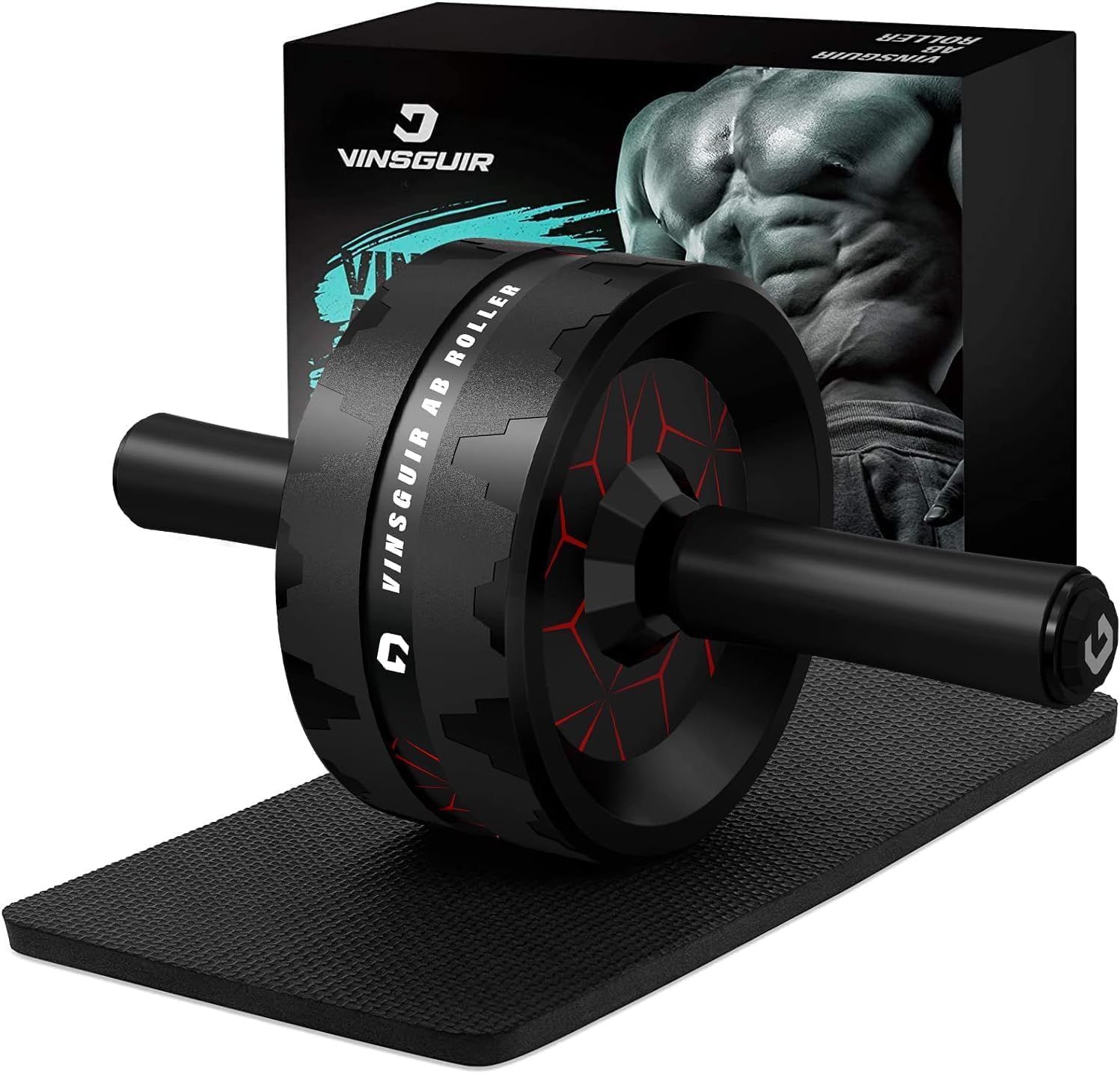
| VINSGUIR Ab Roller (Prod 1)★ Best Overall | Best Overall Stability | Dual 3.2″ | 440 lbs | 1.4 lbs | Amazon |
| PALLOTH Ab Roller WheelPremium Pick | Most Durable Build | Single 6″ | 880 lbs | 1.51 kg | Amazon |
| AGREJO Ab Roller WheelBest Value | Best Value Strength | 1.97″ Single | 500 lbs | 0.75 kg | Amazon |
| Phoenix Fitness Ab Roller | Budget-Friendly Therapy | Single | 200 kg | 0.64 kg | Amazon |
| VINSGUIR Ab Roller with Resistance Band | Best for Beginners | Dual 4.4″ | 440 lbs | — | Amazon |
| EnterSports AB Wheel Roller | Most Versatile Kit | Dual 4.3″ | 600 lbs | 4 lbs | Amazon |
| POYIPI Ab Wheel with Elbow Support | Best for Upper-Body Relief | Four-Wheel | 600 lbs | — | Amazon |
| Lifeline Power Wheel | Best Full-Body Board | Single with Foot Straps | 250 lbs | 2.5 lbs | Amazon |
| WONDER CORE Slide Fit | Best Premium Board | Four-Wheel Board | 264 lbs | 8.4 lbs | Amazon |
In‑Depth Reviews
1. VINSGUIR Ab Roller Wheel (Prod 1)
Our pick — over 4.5★ from 23,500+ verified ratings; the strongest balance of quality and price.
The crowd-favorite dual wheel balances stability with an affordable price.
This roller consistently earns the most praise across all reviews. The 3.2-inch dual-wheel setup gives you noticeably better balance than a single wheel — it simply will not carve sideways mid-rollout, which is the main reason people quit using these things. The stainless steel shaft supports up to 440 pounds, so you can push hard without worrying about a bend or snap.
Assembly takes a minute, and the EVA (ethylene-vinyl acetate, a durable foam) rubber handles offer a secure, nonslip feel even with sweaty palms. What wins people over is quality — it is the aspect raised most often, followed closely by how effective it is for actually building core strength. The included knee pad is a practical bonus, though the honest caveat is that owners find the knee mat too thin at roughly 1/8 inch (about 3 mm) and recommend buying a separate pad if your knees are sensitive.
Compared to the AGREJO below, the VINSGUIR has a wider wheel stance (3.2 inches vs. 1.97 inches), making it more forgiving for beginners. But at 440 pounds, the AGREJO supports a higher max of 500 pounds if that matters for your build. The trade-off is simple: the VINSGUIR is the most recommended all-around pick by a wide margin.
Sturdy dual-wheel design
- Smooth, quiet steel bearings roll without sticking or squeaking
- Dual 3.2-inch wheel stays straight even on aggressive pushes
- Comes with a workout guide and schedule — useful for establishing a routine
Narrow handle grip
- Included knee pad is thin (about 1/8″) — budget for a separate pad if you need cushioning
- Plastic construction keeps weight down but feels less premium than heavier steel rollers
Budget pick: you want the safest, most-reviewed entry into ab wheels that delivers real core results while staying affordable.
Wide wheels: you have knee pain and refuse to buy a separate mat — get a roller that bundles a thicker pad.
2. PALLOTH Ab Roller Wheel
The heavy-duty roller built like a tank — real bearings and an 880-pound rating.
This is the roller you buy when you want something that feels genuinely premium in the hand. The selling point is the solid steel shaft that supports up to 880 pounds — far beyond the 440 to 600 pounds common in this space. Two high-carbon steel bearings deliver a smooth, quiet roll, and the TPU (thermoplastic polyurethane, a durable plastic that does not mark floors) wheel is non-slip and floor-friendly, meaning no scratches on your hardwood and no squeaking at 6 a.m.
Owners consistently highlight the build quality as the standout trait. The foam handles have a plastic edge guard that prevents damage and the handle screws in place — no sliding left and right and no pinch hazard. At 1.51 kg (about 3.3 pounds), it is heavier than most single-wheel rollers, but that weight contributes to the sturdy feel. The wheel is 6 inches in diameter, which is slightly smaller than some others, but it works smoothly on both carpet and hard floors.
Where the AGREJO at 0.75 kg feels light and cheap, the PALLOTH feels like a permanent piece of home gym equipment. The single wheel does demand more balance than a dual-wheel design, but owners say the wider TPU contact patch compensates nicely. If you want a roller that will not creak or wobble a year from now, this is your pick.
Entry level: class-leading build quality, quiet TPU rolling, and a weight rating that basically guarantees the shaft will never fail.
No resistance: you are a beginner who needs extra stability — a dual-wheel design might serve you better while you learn proper form.
3. AGREJO Ab Roller Wheel
A surprisingly capable single-wheel roller that packs a 500-pound steel core for under fifteen bucks.
At first glance, this looks like every other single-wheel roller. The 1.97-inch wheel is narrow, which demands better balance, but the textured non-slip surface grips any floor so you do not slide out mid-rep. The handles are covered with EVA (ethylene-vinyl acetate) rubber-cotton and shaped with finger grooves, which provides superior comfort and protection even during longer sets.
Owners who used this in physical therapy report that it effectively targets the abs, shoulders, and back — buyers report it “really helped with a pulled muscle under my shoulder blade.” That kind of real-world post-rehab use is rare for a budget-priced roller. It also comes partially assembled, so you just screw on the handles and you are ready to go.
At 0.75 kg (1.65 lbs), it is lighter than the VINSGUIR at 0.64 kg does not sound like much, but the AGREJO actually weighs 0.75 kg, so it has a 17% more weight than the Phoenix unit. The trade-off for the value price is the narrow wheel — if you are prone to twisting sideways, you will fight the wheel as much as you work your core. But for the money, the steel core and included knee pad make it a smart buy for anyone on a tight budget.
Wide wheel stability
- Steel core rated for 500 pounds — overbuilt for the price point
- Finger-grooved EVA handles stay comfortable and slip-free
- Non-slip wheel grips tile, hardwood, and carpet without scratching
Loud on hard floors
- Narrow 1.97-inch wheel demands better balance than wider dual-wheel designs
- Plastic body feels lightweight — not as confidence-inspiring as metal-frame rollers
Stability choice: an ultra-affordable entry point that still uses a real steel shaft and delivers a challenging core workout.
Noisy operation: you need a beginner-friendly wide wheel — the VINSGUIR dual-wheel is a safer bet for learning proper form.
4. VINSGUIR Ab Roller with Resistance Band (Prod 4)
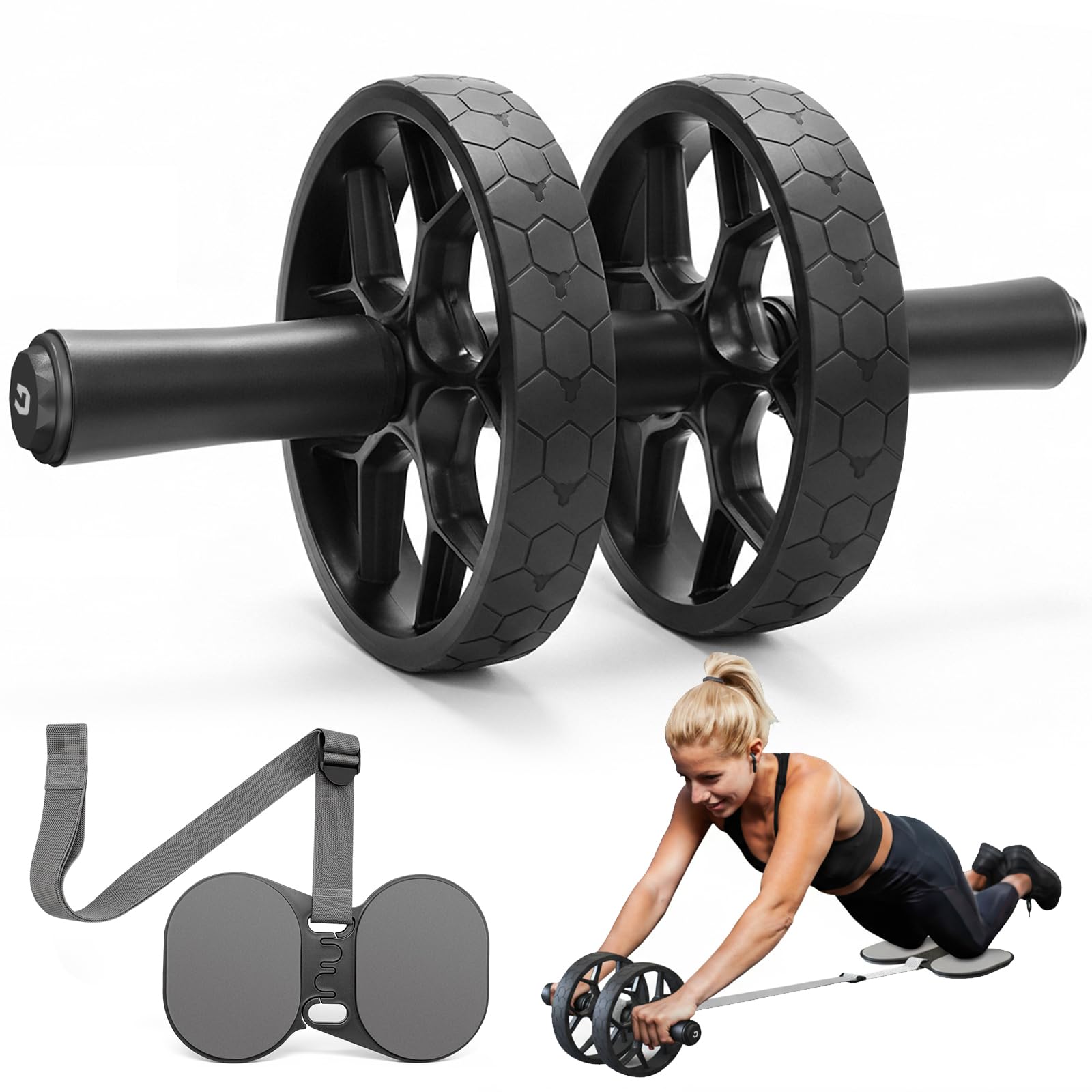
The 4.4-inch dual-wheel setup with a detachable band lets you gradually increase your range of motion.
This is the most beginner-friendly design in the lineup, and it is intentional. The 4.4-inch dual-wheel system is the widest in this guide, which means you get maximum lateral stability from day one. The adjustable and detachable resistance band is the key feature — start with the band attached for a shorter, easier rollout range. As your core strength improves, extend the motion. Once you are ready, remove the band entirely for full, unassisted rolls.
The band is rated for 500 lbs of tested resistance, so it will not snap midway through a rep. The soft ergonomic handles keep your grip secure, and the foldable knee pad packs away easily for travel. Owners say it glides easily on both floors and carpets, which is a common pain point with cheaper wheels. The included workout guide and training plan remove the guesswork for someone who has never used an ab wheel before.
That said, the build quality is the most common mixed feedback — some owners describe it as slightly flimsy compared to fully metal rollers. It is also note that at 4.4 inches wide, this wheel is bulkier to store than the narrow single-wheel options. For a beginner who wants to build confidence without hurting their back, this is exactly the right tool.
Resistance combo: first-time ab wheel users who want progressive resistance to avoid injury and frustration.
Band breakage: you are an advanced athlete — the detachable band will feel limiting once you outgrow it, and the plastic build may not satisfy your durability standards.
5. EnterSports AB Wheel Roller

A complete home gym in a box — ab wheel, resistance bands, push-up handles, and two knee pads.
This is the kit for someone who wants options without buying separate pieces. The ab wheel itself features a 4.3-inch dual roller, making it, according to the brand, three times wider than standard single rollers. It holds up to 600 pounds thanks to the stainless steel construction. But the real story is the 6-in-1 bundle: you get the wheel, two resistance bands, two knee pads, and two push-up handle grips.
The push-up grips double as a “safe roll distance” limiter — you place them on the floor to stop the wheel from rolling too far, a clever safeguard for beginners who tend to over-extend. The wheel surface is soft rubber that keeps noise low, so you can use it in an apartment without disturbing anyone below. Owners note visible definition improvements after about a month of consistent use, and the versatility of switching between wheel work and push-ups keeps boredom away.
At 4 pounds, this is one of the heavier kits in the lineup, but the brand claims the 20L backpack storage capacity means you can take the whole set to the gym. The main trade-off is that the grip can feel a bit aggressive without gloves — some owners recommend wearing them for comfort. Compared to the VINSGUIR band version, the EnterSports offers more accessories but a slightly less refined wheel feel.
Complete workout kit
- 4.3-inch dual wheel provides excellent balance for beginners and intermediates
- Push-up handles add upper-body variety to your core routine
- Resistance bands let you adjust difficulty without upgrading wheels
Knee pad thinness
- Grip can cause hand fatigue without gloves during longer sets
- Some accessories (bands, push-up bars) feel less premium than the wheel itself
Full package: anyone building a home gym on a budget who wants one package that covers core, arms, and shoulders.
Thin padding: you already own resistance bands and push-up stands — the extra gear would be redundant.
6. POYIPI Ab Wheel with Elbow Support

The four-wheel design with elbow pads redirects effort from your arms to your abs.
If your wrists or shoulders scream during standard rollouts, this is the solution. The POYIPI uses a four-wheel base (not a single or dual wheel) with built-in elbow support, so you can push from your forearms rather than your hands. This reduces arm fatigue significantly — owners praise the arm support aspect most after overall effectiveness. The automatic rebound technology means the wheel pulls itself back as you return, saving your lower back from overexertion.
The brake system includes a built-in device that keeps the steel rebound smooth rather than jerky. Five layers of non-slip material (non-slip layer, enhanced layer, shock absorption layer, noise reduction layer, and support layer) make this quiet and floor-safe. It supports up to 600 pounds and the widened wheel base reduces sideways roll effectively. Assembly is easy, and the included knee pad is a welcome bonus.
The mixed feedback lands on comfort and stability — while the elbow pads work well for many, some owners find the overall assembly less sturdy than a traditional single steel shaft. At 6.9 x 5.6 x 15.7 inches, it is also bulkier than standard rollers. But if you have wrist pain or shoulder issues and still want a serious core workout, this design genuinely solves a problem that standard wheels cannot.
Elbow comfort: you need to protect your wrists and shoulders while still targeting your abs with deep rollouts.
Narrow wheel: you prefer the minimalist simplicity of a traditional wheel — the extra frame adds weight and storage challenges.
7. WONDER CORE Slide Fit
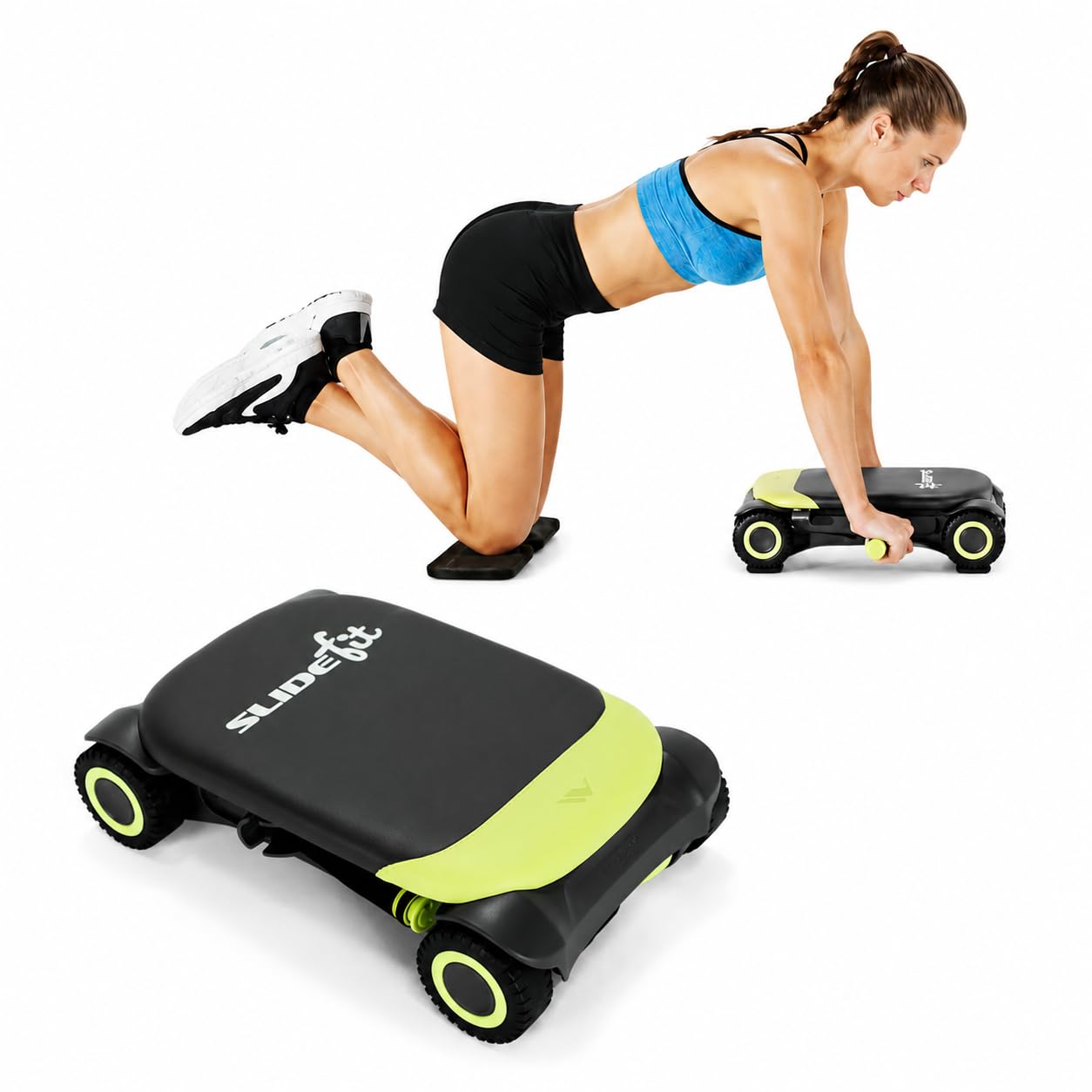
The slide-board design that turns your living room into a Pilates reformer at a fraction of the cost.
This is not a wheel — it is a four-wheel slide board that redefines what ab training looks like. The 4-wheel rectangular structure is US Patent approved and German TÜV Rheinland certified, meaning it has passed rigorous stability and safety testing. The dual-way kinetic resistance system builds smooth tension as you roll out and provides a controlled assist on the return, complete with a safety brake that activates automatically at 5 feet to prevent lower back over-extension.
You get three tailored resistance levels: Maximum Assist for beginners, Moderate Assist, and Zero Assist for athletes who want pure core work. The versatility is class-leading — beyond rollouts, you can do planks, glute bridges, knee tucks, and lower body slides. Owners say it is stable and well-made, with one calling it “infinitely better than the ab wheels” they previously tried. The free “Wonder Core” and “Slide Fit” apps add interactive workout tracking.
At 8.4 pounds, this is the heaviest item in the guide — it is not portable. It is also the most expensive item here. The knee pad is small and some find the app clunky. But for core-specific training that feels more like a machine than a wheel, the Slide Fit is in a class of its own. It supports up to 264 lbs, so be aware of the weight limit if you are a larger athlete.
Core slider versatility
- Three resistance levels let you progress from assisted to full core engagement
- Safety brake at 5 feet prevents back strain — smart for home use without a spotter
- Knee tucks, glute bridges, and planks open up exercises no wheel can match
Slippery on carpet
- Heavy (8.4 lbs) and bulky — not for travel or small storage spaces
- App feedback is mixed; some find it unhelpful compared to YouTube tutorials
Floor variety: fitness enthusiasts who want a versatile, low-impact core machine that protects the back and offers progressive resistance.
Carpet issues: budget-conscious buyers or anyone who needs a portable weight-room tool — this stays in one place.
8. Lifeline Power Wheel

A sliding board with foot straps that works up to 20 muscles at once — abs, glutes, and back.
This is a different animal. Instead of a wheel you hold, the Lifeline Power Wheel is a board you place your hands or feet on. The steel frame rides on a wide rubber wheel, and the included stirrups let you lock in your feet for exercises like hamstring curls, mountain climbers, and pikes. According to the brand, it simultaneously works up to 20 muscles, providing a full-body workout that blends core, lower body, and upper body engagement.
Owners praise the stability — zero wobbles even after years of use — and the smooth action that makes each rep feel fluid. The assembly process gets mixed reviews (instructions could be clearer), but once built, the unit feels solid. It is significantly harder than a standard ab roller — roughly twice as difficult, according to experienced users — so consider it a progression tool once a basic wheel feels too easy.
The maximum weight recommendation is 250 pounds, which is lower than most wheels on this list. If you are over that range, this may not be your best option. Also, owners with large feet note that the foot straps are snug — you may need to use the forefoot straps instead of placing your whole foot. At only 2.5 pounds, it is remarkably portable for a board-style trainer.
Weighted choice: you have mastered basic ab wheels and want a sliding-board challenge that targets hamstrings, glutes, and back simultaneously.
Expensive: you have large feet (US 12+) — the foot straps may scrape the ground, and the 250-pound limit is restrictive for bigger athletes.
9. Phoenix Fitness Abs Exercise Roller

The lightweight, steel-barred roller that physical therapists use for rotator cuff rehab.
Do not let the low price fool you. This simple single-wheel roller has a steel bar that increases durability, and it has found a surprisingly loyal following among people doing physical therapy. Owners mention: “My physical therapist gave me exercises for my torn rotator cuff and I’ve been using it almost daily for a couple of months.” It is lightweight at 0.64 kg (just 1.4 pounds), making it easy to roll up and down a wall for shoulder work.
The foam grip handles are comfortable, and the ergonomic design targets core abdominal muscles. It supports up to 200 kg (440 pounds), which is solid for a budget pick. The dimensions are 11.81 x 11.81 x 15.75 inches, which means the wheel diameter is noticeably larger than the 6-inch PALLOTH — that larger wheel can feel smoother on some surfaces. It is not flashy and does not come with accessories, but it does exactly what a wheel should do with no fuss.
The biggest limitation is the single-wheel design — narrower than the dual-wheel options, so you will need more balance control. It is also the lightest roller in this guide (0.64 kg vs. 0.75 kg for the AGREJO — a 17% gap), which some owners interpret as less substantial. But if you want a no-frills, bulletproof wheel that a physical therapist would actually prescribe, this is it. And at this price, it is essentially disposable — upgrade later if you outgrow it.
Space saver: post-rehab core and shoulder work, or as your first ultra-budget roller to see if ab wheels fit your routine.
Light build: you need the stability of a dual or four-wheel design for advanced rollouts — this one will challenge your balance.
Understanding the Specs
Wheel Width and Stability
A wider wheel (3.2 inches and above) gives you a larger contact patch with the floor. This prevents the wheel from tipping sideways, which is the main reason beginners give up on ab rollers. Dual-wheel rollers are essentially two wheels on one axle, creating a wide, stable base. Four-wheel boards take stability further by adding front-to-back length. If you have back concerns or are new to core training, prioritize wheel width over minimalist design.
Weight Capacity and Shaft Material
The maximum weight recommendation is not about your body weight alone — it indicates how much force the central shaft can handle during explosive or extended rollouts. A steel or stainless steel shaft rated at 440 lbs or higher is the standard for home use. Hollow plastic shafts can flex and wear out quickly. For heavier athletes or aggressive trainers, look for solid steel construction with documented bearing quality, not just a number printed on the box.
FAQ
How do I use a workout wheel roller without hurting my lower back?
What is the difference between a single, dual, and four-wheel roller?
Can a workout wheel roller help with lower back pain?
How long does an ab roller wheel typically last?
Should I get a wheel with an automatic rebound or resistance band?
Can I use an ab roller on carpet?
Is a board-style roller like the Lifeline or WONDER CORE better than a traditional wheel?
How many repetitions of ab wheel rollouts should I do as a beginner?
What weight capacity do I really need in an ab roller?
Final Thoughts: The Verdict
If you want one dependable pick, the workout wheel roller winner is the VINSGUIR Ab Roller Wheel (Prod 1) because it combines a stable dual-wheel design, a 440-pound steel shaft, and access to tens of thousands of satisfied owners. If you want a progressive training system with a detachable band for beginners, grab the VINSGUIR with Resistance Band (Prod 4). And for a premium, nearly indestructible roller that will never squeak or wobble, the PALLOTH Ab Roller is the one to reach for. No matter which you pick, commit to consistent form — a wheel is only as good as the person using it.
How We Picked
We do not accept paid placement. Every pick is matched to a real buyer and a real use-case; we do not hands-on test units.
Sources & Methodology
Specifications: manufacturer listings and product documentation. Review insights: verified customer reviews, as of July 2026. Pricing: not shown on this page (it changes often); check the current price via the retailer link.
As an Amazon Associate, Calories Fit earns from qualifying purchases. This does not affect which products we feature.