
Our readers keep the lights on and the coffee maker working hard! As an Amazon Associate, I earn from qualifying purchases.
Specs are compiled from manufacturer listings and verified buyer reviews and can change over time — please confirm the key details on the product page before buying.
You want a workout tracker watch you can forget you’re wearing, one that turns raw data into a clear “go hard or rest” verdict without needing a nightly recharge. The difference between a great pick and a frustrating one depends on three things: battery life that outlasts your longest training block, a screen you can read mid-run, and recovery metrics that tell you when to push versus when to back off.
I’m Mohammad — the founder and writer behind Calories Fit. This guide is built by comparing the manufacturers’ published specifications and the patterns across verified customer reviews, so you get each pick’s real strengths and trade-offs instead of marketing spin.
If you’re a marathoner, a hybrid athlete, or just starting a morning walk routine, the right workout tracker watch should match your training style, phone, and daily routine without forcing you to compromise on the metrics that actually drive progress.
Our Picks at a Glance
![Apple Watch Series 11 [GPS 46mm]](https://m.media-amazon.com/images/I/6129OfG4gfL.jpg)
How To Choose The Best Workout Tracker Watch
Your phone’s operating system is the first filter. An Apple Watch only pairs with an iPhone, while the Amazfit and Garmin models work with both iOS and Android. The Samsung Galaxy Watch Ultra is built for Android phones, so check that before you fall in love with a feature set.
Battery Life: The Real Differentiator
This is the spec that dictates whether your watch becomes a daily companion or a desk ornament. A 20-day battery lets you forget the charger exists; a 24-hour battery means you’re building a new nightly habit. If you track sleep, a watch that needs charging every night will never get accurate sleep data — you’ll be charging it during the only hours you wear it for that purpose.
Recovery and Training Metrics
Step counts are table stakes now. The watches worth buying go further, analyzing your heart rate variability, sleep quality, and recent workload to produce a readiness score. This tells you whether your body is primed for a hard interval session or needs an easy recovery run — the difference between making progress and digging a hole.
Screen and GPS
An AMOLED display is bright and crisp, but it drains battery faster than a low-power memory screen. For runners who want route maps on their wrist, built-in GPS with multi-band support locks onto satellites faster in dense city streets or tree-covered trails. Ask yourself if you need offline maps — that feature pushes you toward a dedicated multisport watch.
Quick Comparison
| Model | Best For | Battery Life | Screen Size | GPS | Amazon |
|---|---|---|---|---|---|
| Apple Watch Series 11 (GPS 46mm)★ Best Overall | iPhone users who want full health monitoring | Up to 24 hours | Always-On display | Built-in GPS | Amazon |
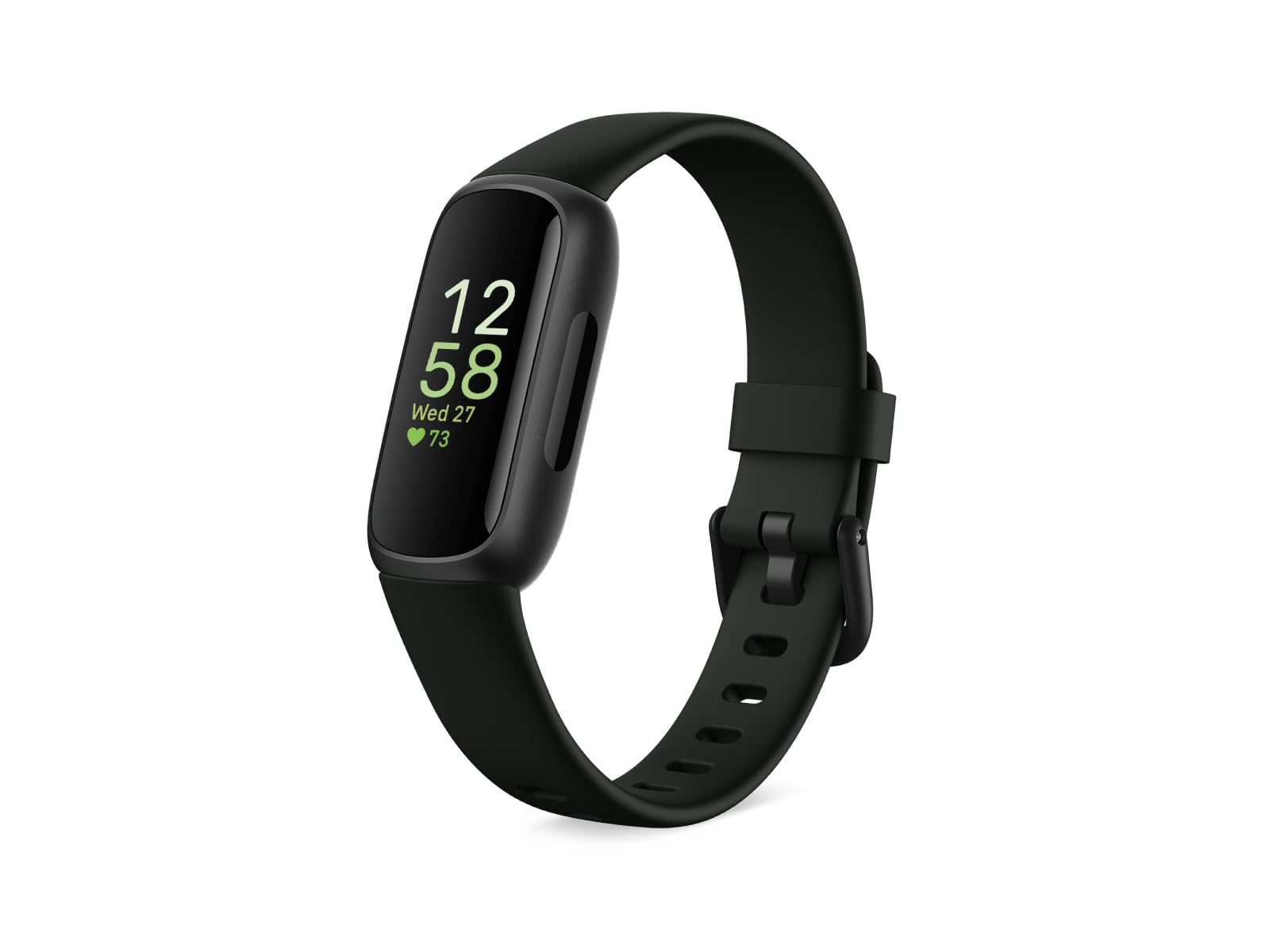
| Google Fitbit Inspire 3Budget Champion | Budget-friendly, slim daily tracking | 10 days | Bright AMOLED | Connected GPS | Amazon |
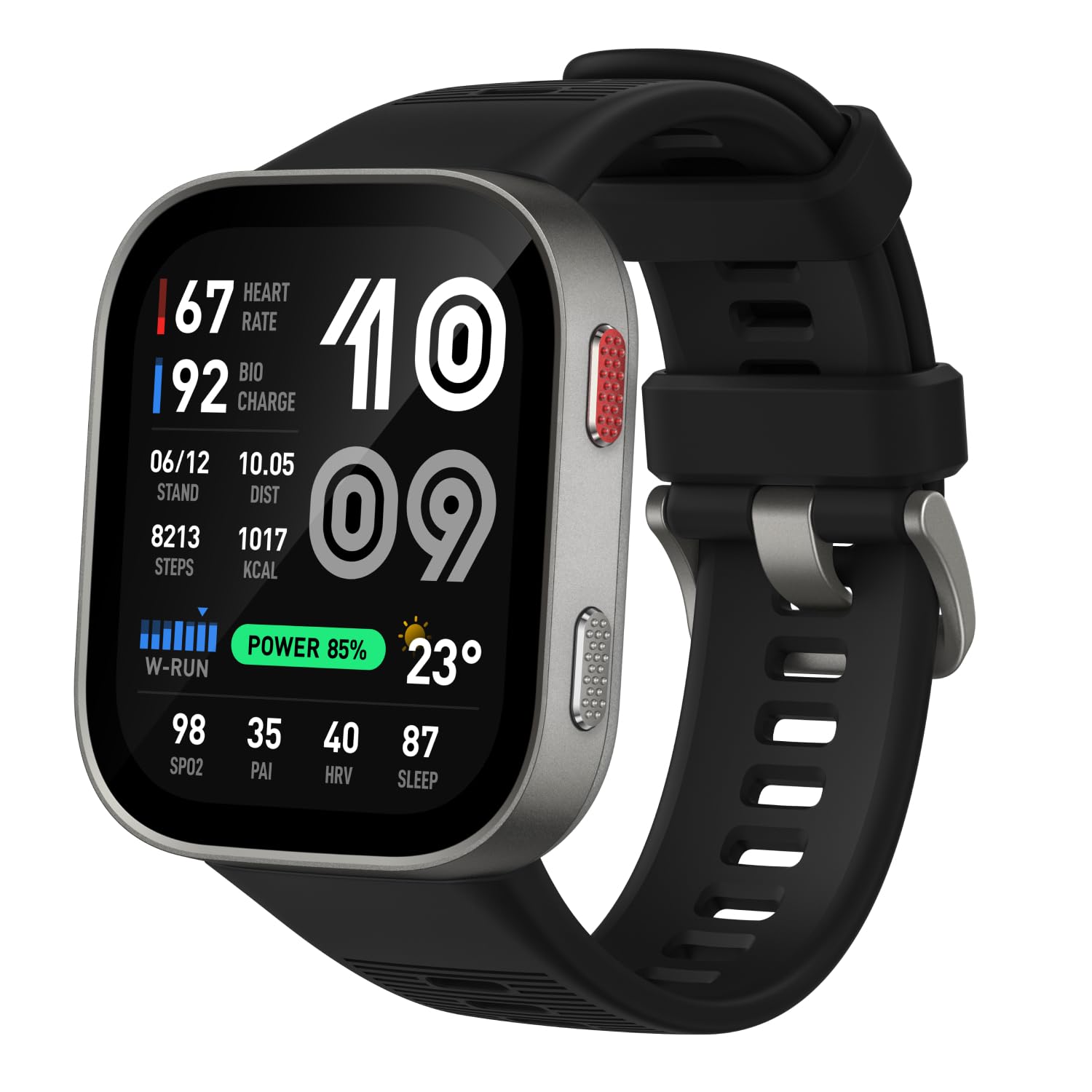
| Amazfit Bip MaxDisplay King | Huge screen and marathon-level battery | 20 days | 2.07″ AMOLED | 5 satellite systems | Amazon |
| Google Fitbit Versa 4 | Fitbit users who want a full smartwatch | 6+ days | AMOLED | Built-in GPS | Amazon |
| Amazfit Active Max | Outdoor athletes wanting offline maps | 25 days | 1.5″ AMOLED | 5 satellite systems | Amazon |
| Apple Watch Series 11 (GPS+Cellular 42mm) | iPhone users wanting phone-free connectivity | Up to 24 hours | Always-On display | Built-in GPS | Amazon |
| Garmin Forerunner 570 | Serious runners and triathletes | Up to 10 days | 42mm AMOLED | Multi-band GPS | Amazon |
| Samsung Galaxy Watch Ultra | Android users who want rugged durability | Longest-lasting yet | 47mm display | Dual-frequency GPS | Amazon |
| Garmin Forerunner 970 | Elite runners and triathletes wanting premium data | Up to 15 days | 47mm AMOLED | Multi-band GPS | Amazon |
In‑Depth Reviews
1. Apple Watch Series 11 [GPS 46mm]
Our pick — over 4.5★ from 2,500+ verified ratings; the strongest balance of quality and price.
The full-featured health lab for iPhone owners that recharges in the time it takes to shower.
The Apple Watch Series 11 packs ECG, irregular-rhythm alerts, and sleep apnea detection into a 1.28-ounce case. Take on-demand ECGs, receive high/low heart-rate and irregular-rhythm alerts, and review overnight Vitals for sleep apnea signs. For gym-goers, the fitness tracking includes Pacer, Heart Rate Zones, training load, and Workout Buddy — all powered by Apple Intelligence from your nearby iPhone.
Battery life here is the headline improvement. You get up to 24 hours of normal use, and a 15-minute fast charge delivers up to 8 hours of normal use — so a quick top-up before a workout is all you need. Buyers report: “Battery life is really long,” and it charges quickly, syncing with iPhones and iPads easily. The display glass is 2x more scratch-resistant than the Series 10., and it’s water resistant up to 50m, so swimming and paddle-boarding are on the table. It’s also IP6X dust resistant.
What wins people over is the health monitoring accuracy, particularly heart rate tracking. Owners describe it as sleek, comfortable for sleep tracking, and easy to pair. The recurring praise centers on the bright, responsive display that stays readable in direct sun. Weight is just 1.28 ounces, thin enough that you forget it’s there overnight.
What you gain
- ECG, sleep apnea, and hypertension alerts on-wrist
- 15-minute fast charge restores up to 8 hours of use
- 50m water resistance for swimming and paddle-boarding
What to weigh
- 24-hour battery demands a daily charging habit
- Requires an iPhone for the full feature set
The starting point: The top choice for iPhone owners seeking ECG, sleep apnea, and hypertension alerts plus reliable workout tracking.
One real trade-off: You’ll charge it nightly — the 24-hour run time is a daily rhythm, not a weekly one.
2. Google Fitbit Inspire 3
The featherweight band that outlasts your training week and barely whispers on small wrists.
The Inspire 3 is the tracker that reminds you that “more” isn’t always better. It delivers a Daily Readiness Score, Active Zone Minutes, all-day activity tracking, and 24/7 heart rate in a package slim enough to disappear on your wrist. You get 40+ exercise modes, automatic exercise tracking, and reminders to move — all without the bulk or the price of a full smartwatch.
Battery life is the signature here: 10 days of typical use. Owners mention “battery lasts weeks, quick charge” in real-world conditions, which is a 2.0x gap versus the Amazfit Bip Max’s 20 days but still two full work weeks of wear. The stress management suite includes a daily Stress Management Score, mindfulness sessions, relax breathing sessions, irregular heart rhythm notifications, SpO2 (blood oxygen), and menstrual health tracking. Automatic sleep tracking and a smart wake vibrating alarm round out the wellness picture.
The review pages sum it up: the battery, the bright screen, and the easy setup are what win people over. A recurring note is that the O2 sat readings can be off, and the proprietary charging cable is a minor annoyance. Sleep mode requires Bluetooth to be on, which is worth knowing before you set it up. This is a tracker, not a smartwatch — don’t expect on-wrist calls or a music player, and that’s the point.
Why it endures
- 10-day battery with quick charging
- 40+ exercise modes with automatic tracking
- Includes 3-month Google Health Premium
Keep in mind
- No built-in GPS — relies on your phone for pace maps
- Proprietary charging cable
Reach for this if: You want a slim, low-cost daily tracker with strong battery life and stress/sleep tools.
Look elsewhere if: You need on-wrist GPS for phone-free runs — you’ll want a watch with built-in satellite tracking.
3. Amazfit Bip Max
A massive 2.07-inch canvas that shows your stats without glasses and lasts 20 days between charges.
The Amazfit Bip Max leads with its screen: a 2.07-inch AMOLED display so large and bright that customers note reading stats “without glasses.” The aluminum alloy body keeps it comfortable despite the size, and the clean two-button layout is simple. This is the watch for anyone tired of squinting at tiny fitness data.
Battery life is the second headline. Up to 20 days of typical use means no nightly charging ritual, and the 4GB onboard storage holds offline maps so you can leave your phone behind. GPS tracking is backed by 5 satellite systems for fast connection, and you can download free detailed maps from the Zepp App with turn-by-turn directions and off-track alerts. The hybrid training system in the Zepp App balances endurance, strength, and recovery without any subscription fee.
With 150+ sports modes, including dedicated HYROX, strength training, and yoga, it covers nearly any activity you throw at it. The design earns the most praise — owners single it out more than any other feature — with battery life a close second. The BioCharge recovery score tells you each morning whether to push or rest based on your sleep quality, workouts, and stress. Workouts are accurate, the app is free, and it works on both Apple and Android. The main trade-off? Few screen protectors exist for the large display, so treat it carefully.
Screen-first verdict: If you want a huge, readable display with marathon-level battery, this is the value pick that beats many watches twice its price.
One honest note: The large screen means standard screen protectors are scarce, so a case or careful habits are wise.
4. Google Fitbit Versa 4

A full smartwatch for Fitbit loyalists that adds on-wrist calls and built-in GPS to the familiar app.
The Versa 4 bridges the gap between a simple tracker and a full smartwatch. It keeps the Fitbit ecosystem you know — Daily Readiness Score, Active Zone Minutes, 24/7 heart rate, 40+ exercise modes — and adds on-wrist Bluetooth calls, texts, and phone notifications. Amazon Alexa is built in, alongside Google Wallet & Maps support, so it handles everyday tasks beyond fitness.
It’s water resistant to 50 meters and includes built-in GPS with a workout intensity map, making it a capable swim and run companion. Battery life is rated at 6+ days, which owners confirm, with one noting it lasted 7-8 days for two years before dropping. Sleep tracking is a highlight — the daily Sleep Score, smart wake alarm, and do-not-disturb mode help you manage rest. The Stress Management Score, SpO2, guided breathing, and menstrual health tracking round out the wellness suite.
The thing everyone raves about is ease of use — it’s the most-mentioned positive, with features second. The recurring gripe is battery life over the long haul: some units see capacity fade after a couple of years. Connectivity can be finicky for a minority of owners. This is a daily-driver smartwatch with solid fitness fundamentals, not a dedicated training computer.
Balanced take: A comfortable, easy-to-use smartwatch with strong sleep and step tracking for daily fitness, plus the convenience of on-wrist calls.
Honest fit note: Multi-day battery fades over years, and some units struggle with connectivity — it’s best for those who value simplicity over extreme training data.
5. Amazfit Active Max

The outdoor athlete’s ally with a 3,000-nit screen you can read on the brightest peak.
The Active Max is built for conditions that punish lesser screens. Its 3,000-nit AMOLED display is engineered for clarity under harsh sunlight — a spec that matters when you’re navigating a trail at noon. The 1.5-inch screen sits in a 48mm case, giving you a large, readable canvas without the bulk of a 50mm monster.
Battery life is the endurance headline: up to 25 days of typical use. Reviewers point out 9-10 days even with the always-on display active and continuous heart rate monitoring, which still beats most premium smartwatches. The 4GB onboard storage holds music and downloaded maps with turn-by-turn directions, and you can pull terrain and ski maps with no signal needed. Five satellite systems ensure fast, accurate positioning wherever you roam.
The quality is what owners praise most — it’s the top-mentioned aspect — with battery life second. Shoppers say it rivals watches in the -600 range for a fraction of the cost, with a scratch-resistant bezel and clear call audio through the built-in speaker and mic. Zepp Coach delivers personalized AI-driven plans for 3K, 5K, 10K, half, and full marathons. The main limitation is the app ecosystem — it’s leaner than Garmin or Apple, and advanced health metrics can be less precise during intense workouts.
Built for the outdoors
- 25-day battery with offline maps on board
- 3,000-nit screen readable in full sun
- 170+ workout modes with Zepp Coach plans
Consider this
- Limited third-party app ecosystem
- Some advanced metrics less precise during intense effort
Who it beats: Runners and hikers who want Garmin-like battery and offline navigation without the premium price tag.
Not for: Anyone heavily invested in a specific app ecosystem like Garmin Connect or Apple Health integrations.
6. Apple Watch Series 11 [GPS + Cellular 42mm]
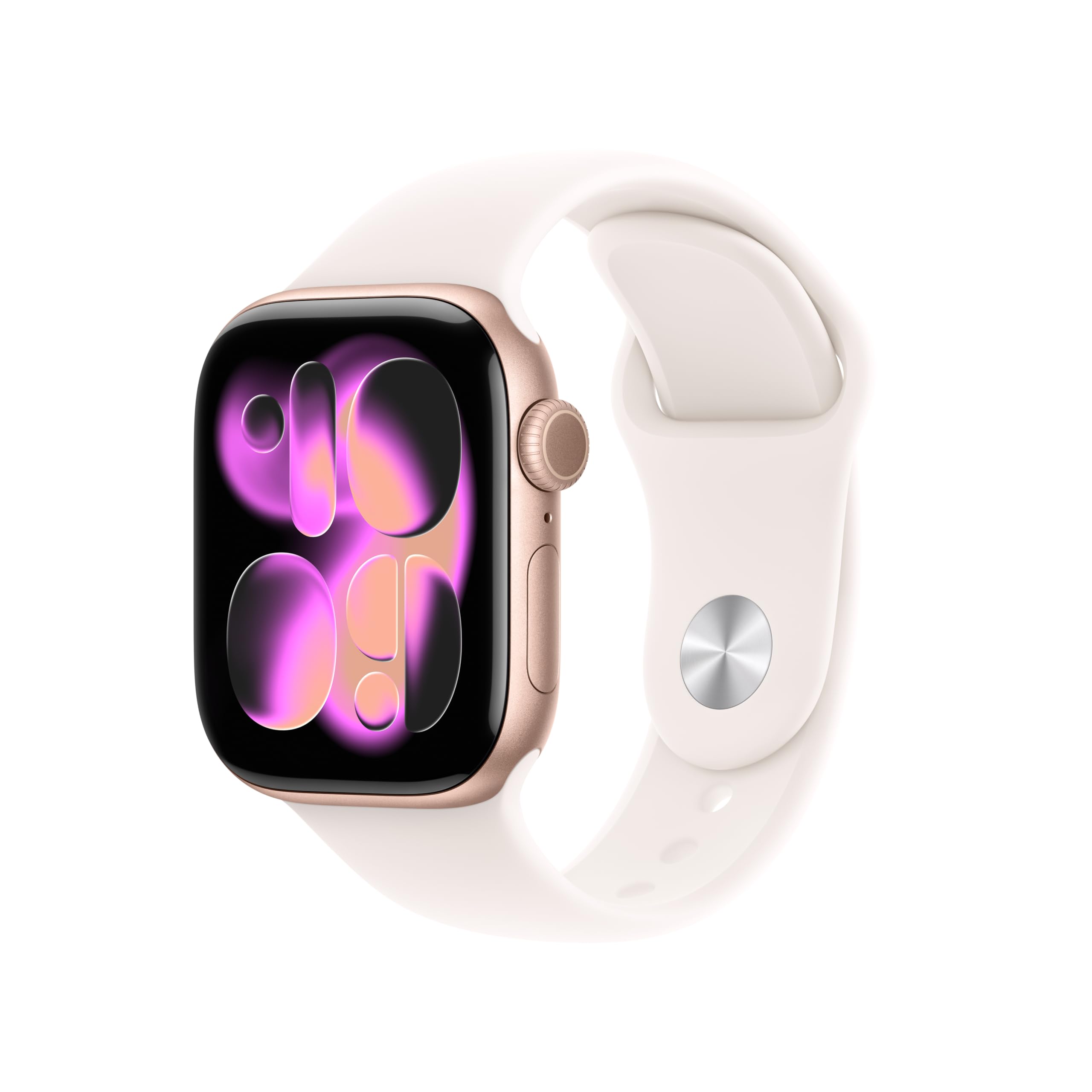
The freedom of a phone-free run with cellular fallback, wrapped in a lighter 1.12-ounce rose gold case.
This 42mm Series 11 takes the full health suite of its larger sibling and adds cellular connectivity, so you can leave your iPhone at home and still make calls, text, and stream. The rose gold aluminum case with the light blush sport band is the style standout — that’s the detail owners mention most. At 1.12 ounces, it’s lighter than the 46mm version and sits comfortably on smaller wrists.
All the Series 11 health features are here: ECG, high/low heart rate alerts, irregular rhythm notifications, Vitals app for overnight metrics, and sleep apnea notifications. The sleep score and advanced sleep tracking give you a daily quality read. Battery life matches the larger model at up to 24 hours, with the same 15-minute fast charge delivering up to 8 hours of use — owners confirm the 24-hour runtime and super-fast charging in daily use.
This is the watch that replaces a fall-alert necklace for an older owner, who shares heart data with a doctor and values the confidence. The cellular version is praised for being “better than Fitbit” at tracking steps and calories accurately, and it survived four days at Disney without issues. The trade-off: the price reflects the cellular hardware, and you’ll want a screen protector given the investment. This is the pick for iPhone users who want true independence from their phone during workouts.
The independence angle: LTE means you can run, hike, or swim with just the watch — calls and messages still reach you.
Worth knowing: The 42mm case is lighter than the 46mm, but at a premium — consider whether you’ll actually use the cellular plan.
7. Garmin Forerunner 570

The coaching companion that tells you when you’re primed to go hard — or need a recovery day.
The Forerunner 570 is Garmin’s answer for runners and triathletes who want serious training data without a huge case. The 42mm size with an aluminum bezel fits smaller wrists comfortably, and the AMOLED touchscreen with button controls gives you both modern gestures and physical buttons for sweaty runs. Battery life reaches up to 10 days in smartwatch mode and 18 hours in GPS mode — enough for a full race day with navigation.
The training readiness score is the star feature. It combines sleep quality, recovery, training load, and HRV status (heart rate variability, a measure of your nervous system’s recovery) to tell you if you’re primed for a hard session. Garmin Coach creates personalized running and triathlon plans that adapt based on your performance. The morning report summarizes your sleep, recovery, and training outlook; the evening report reminds you of sleep needs and tomorrow’s workout.
What owners praise most is the sheer functionality — the top-mentioned aspect — with training insights second. Hybrid athletes report it’s “superior to Apple Watch” for accurate running metrics and high-intensity tracking, with a week-long battery versus Apple’s 10-12 hours of GPS. Women specifically praise the smaller bands that fit their wrist sizes. The value-for-money score is mixed for some, but for dedicated runners, this is a purpose-built tool. The trade-off is the learning curve — the UI is less intuitive than an Apple Watch.
Why runners choose it
- Training readiness and daily suggested workouts
- 30+ activity profiles including triathlon
- 7-day real-world battery vs. Apple’s 10-12 hours GPS
Know before you buy
- Steeper learning curve than consumer smartwatches
- Music app options are limited
The coaching angle: This is the pick for runners who want a personal coach on their wrist — not just a step counter.
skip it if: You want a simple, app-rich smartwatch experience and don’t need deep training metrics.
8. Samsung Galaxy Watch Ultra (2025)
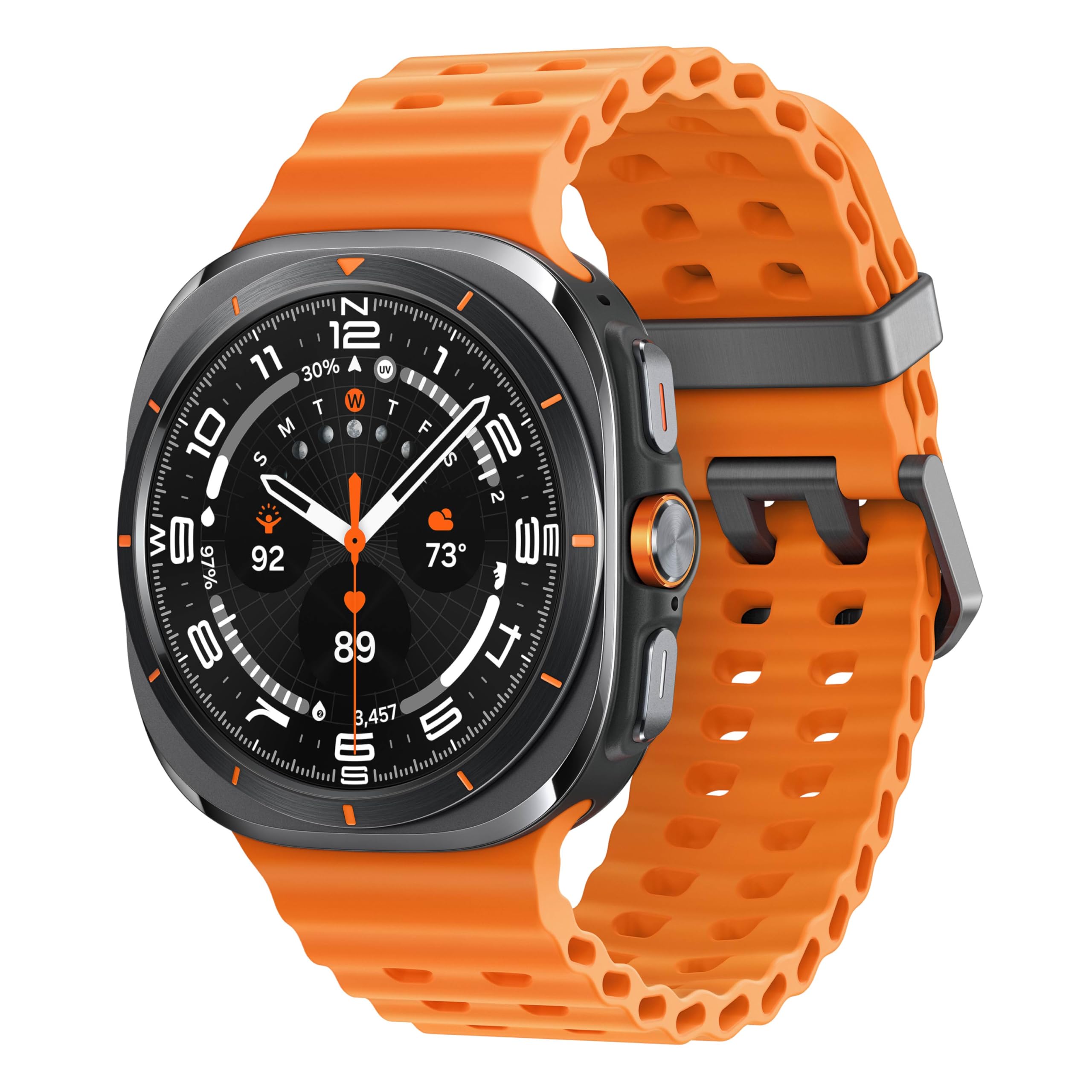
The rugged Android titan that tracks blood pressure and guides runs with dual-frequency GPS.
The Galaxy Watch Ultra is Samsung’s toughest watch yet, built for the athlete who doesn’t baby their gear. The durable titanium casing is rated 10ATM water resistance, meaning it’s safe for ocean swimming and dusty trails. The LTE model keeps you connected without your phone, and dual-frequency GPS locks onto your location with precision even in challenging environments.
The health suite goes beyond basics. Advanced Sleep Coaching helps you fuel tomorrow’s performance, while Running Coach analyzes your age, weight, oxygen levels, and heart rate to guide your run in real time. The Energy Score with Galaxy AI summarizes your sleep, activity, and heart rate into a single wellness number updated several times a day. Blood pressure monitoring requires a separate cuff for calibration, then readings appear in the Samsung Health Monitor app.
The build quality is what owners praise most — it’s the top-mentioned positive. One owner’s ECG caught an A-fib episode, confirming the heart monitor’s accuracy. Battery life is the biggest variable: some report incredible endurance, while others find it drains quickly, especially when you leave your phone behind and map runs with music on Bluetooth headphones. It pairs smoothly with Samsung phones and works with other Android devices.
Built to endure: Titanium case, 10ATM water resistance, and blood pressure tracking make this the adventure-ready pick for Android users.
The honest caveat: Battery life splits opinion — expect to charge every other day if you use GPS and music heavily.
9. Garmin Forerunner 970

The pro-grade triathlon computer with a built-in flashlight for pre-dawn starts and 15 days of battery.
The Forerunner 970 is the watch you buy when you take training seriously. It combines a lightweight titanium bezel with a sapphire lens — scratch-resistant enough for years of abuse — and adds a built-in LED flashlight for early morning or late-night runs. Battery life reaches up to 15 days in smartwatch mode and 26 hours in GPS mode, so even an ultramarathon won’t drain it.
The data depth is what separates it from consumer watches. You get running economy, step speed loss, and running tolerance to understand your body’s true impact. Wrist-based running dynamics measure cadence, stride length, and ground contact time, plus wrist-based running power — a continuous measure of the power you apply to the ground. The ECG app records heart rhythm and flags atrial fibrillation. Multisport auto-transition detects changes between swim, bike, and run so it records splits for you in a triathlon.
The design earns the most praise — it’s the top-mentioned aspect — with functionality second. Triathletes call it the perfect race companion, tracking all three sports plus transitions, and sync with Edge bike computers, HR straps, and Zwift. Buyers report a 10-14 day battery in real use versus Samsung’s 1.5 days, and a ~1-hour full charge. The sapphire lens shrugs off scratches. The trade-offs: it’s the most expensive pick here, and there’s a steeper learning curve than an Apple Watch. For a dedicated triathlete or serious runner, this is the definitive tool.
The pro advantage
- 26-hour GPS battery with 15-day smartwatch mode
- Built-in flashlight and sapphire lens for durability
- Wrist-based running power and dynamics
Before you commit
- Premium price reflects the pro-grade feature set
- Learning curve for the deep training metrics
For the committed: This is the ultimate training companion for triathletes and serious runners who want every metric available.
Think twice if: You just want steps and notifications — the depth here would be wasted on casual daily wear.
Understanding the Specs
Battery Life (Days vs. Hours)
A “day” of battery in smartwatch mode means normal mixed use — notifications, occasional GPS, sleep tracking. GPS mode is the intensive drain: that’s continuous satellite tracking during a run or ride. A 10-day battery means you charge weekly; a 20-day battery means you might forget the charger exists. If you track sleep nightly, longer battery is a genuine feature, not a luxury, because you’re never forced to charge during your wear time.
Training Readiness & Recovery Scores
These are the metrics that separate a tracker from a coach. A readiness score combines your sleep quality, recent training load, and HRV status (the variation in time between your heartbeats, which reflects nervous system recovery) into a single “go hard or rest” verdict. An Energy Score or BioCharge does similar work. When the watch tells you to take it easy, it’s reading your body’s signals, not guessing.
GPS and Offline Maps
Built-in GPS means your watch tracks your route without your phone. “Multi-band” or “dual-frequency” GPS locks onto more satellite signals, which gives better accuracy under trees and between tall buildings. Offline maps — like the 4GB storage on Amazfit and the full-color maps on Garmin — let you navigate without any signal. If you run the same local loop, basic GPS is plenty; if you explore new trails, offline maps are worth their weight.
Water Resistance Ratings
You’ll see “50m” and “10ATM” thrown around. Both mean the watch is safe for swimming, showering, and most water sports. The rating describes static pressure resistance, not depth you should dive to. Anything rated 50m or 5ATM is fine for pool swims and open water; the Galaxy Watch Ultra’s 10ATM adds confidence for ocean swimming and rough conditions.
FAQ
Will a workout tracker watch work with my iPhone or Android phone?
How long does the battery actually last on these watches?
What is the difference between a fitness tracker and a smartwatch?
Does the Fitbit Inspire 3 have built-in GPS?
Can I answer calls from my workout watch?
What is a training readiness score?
Is the Garmin Forerunner 970 worth the premium price over the 570?
Which watch is best for tracking sleep?
Can these watches track swimming and triathlons?
Do I need offline maps on a workout watch?
Final Thoughts: The Verdict
For the majority of shoppers, the best workout tracker watch is the Apple Watch Series 11 because it blends medical-grade health monitoring — ECG, sleep apnea alerts, hypertension notifications — with polished fitness tracking and a fast charge that fits any routine. If you want marathon-level battery and a huge screen without the premium price, grab the Amazfit Bip Max. And for dedicated runners and triathletes who want a personal coach on their wrist, the Garmin Forerunner 570 is the one to reach for — it tells you when to push and when to rest, which is what serious training is all about.
How We Picked
We do not accept paid placement. Every pick is matched to a real buyer and a real use-case; we do not hands-on test units.
Sources & Methodology
Specifications: manufacturer listings and product documentation. Review insights: verified customer reviews, as of August 2026. Pricing: not shown on this page (it changes often); check the current price via the retailer link.
As an Amazon Associate, Calories Fit earns from qualifying purchases. This does not affect which products we feature.