
Our readers keep the lights on and the coffee maker working hard! As an Amazon Associate, I earn from qualifying purchases.
Specs are compiled from manufacturer listings and verified buyer reviews and can change over time — please confirm the key details on the product page before buying.
You need a shoe that handles a heavy squat without wobbling, then lets you cut on the tennis court without rolling an ankle. Modern workout tennis shoes blur the line between gym and court, but the wrong pair makes you pay for it in balance or grip. That means finding a pair with the right balance of stability for lifting, cushioning for impact, and enough flexibility to keep you nimble during quick cuts.
I’m Mohammad — the founder and writer behind Calories Fit. This guide is built by comparing the manufacturers’ published specifications and the patterns across verified customer reviews, so you get each pick’s real strengths and trade-offs instead of marketing spin.
if you need a durable everyday cross-trainer or a zero-drop shoe for heavy lifting, here is everything you should consider before buying the best workout tennis shoes for your routine.
Our Picks at a Glance


How To Choose The Best Workout Tennis Shoes
You need a shoe that supports your foot under a loaded barbell and lets you pivot without rolling an ankle.
Stability and Heel Stack for Lifting
A thick, marshmallow-like sole might feel great for a jog, but it is terrible for squats or deadlifts because your foot sinks and your balance wobbles. Look for a shoe with a moderate to low stack height (the distance between your foot and the ground) and a firm, flat platform. Many buyers find a 0mm drop keeps their heel from lifting, which promotes better squat mechanics.
Toe-Box Room and FootShape
When you push laterally or brace for a lift, your toes need room to splay out naturally for stability. A cramped toe box forces your foot into an unstable position. Brands like Altra build their shoes around a FootShape fit, giving your toes plenty of space without making the midfoot loose. This also helps prevent blisters during high-rep workouts.
Outsole Grip for Multi-Surface Use
Gym flooring, tennis courts, and concrete all require different tread patterns. A herringbone rubber outsole is classic for court sports because it offers multidirectional traction that helps you stop and cut quickly. Flat gym floors demand a rubber compound that does not mark the floor but still grips during lateral slides. If you plan to jump between surfaces, look for zoned rubber traction that wraps up the sides for extra bite during sharp cuts.
Quick Comparison
| Model | Best For | Drop (mm) | Weight | Outsole Type | Amazon |
|---|---|---|---|---|---|
| New Balance 608 V5★ Best Overall | All-day comfort & light gym | — | 2.14 lb | Rubber | Amazon |
| ALTRA Solstice XT 3Premium Pick | Zero-drop lifting & HIIT | 0 mm | 9.5 oz | Rubber | Amazon |
| SDolphin Running ShoesBest Value | Budget walking & jogging | — | Lightweight | Non-slip Rubber | Amazon |
| Vilanva Walking Shoes | Wide-foot comfort on a budget | — | Lightweight | Thick Rubber Sole | Amazon |
| Nike Flex Train | Light gym & daily wear | — | Very light (size 13) | Rubber w/ flex cutouts | Amazon |
| Puma Softride Sera | Cross training with cushion | — | Lightweight | Zoned Rubber Traction | Amazon |
| K-Swiss ST329 CMF | Wide-foot court & work | — | 13 oz | Rubber Herringbone | Amazon |
| Nike MC Trainer 3 | Versatile gym & court | Low drop | Lightweight | Flat Rubber w/ flex grooves | Amazon |
| Reebok Nano Court | Pickleball & court sports | — | Lightweight | Herringbone Griptonite | Amazon |
In‑Depth Reviews
1. New Balance Men’s 608 V5 Casual Comfort Cross Trainer
Our pick — over 4.5★ from 91,000+ verified ratings; the strongest balance of quality and price.
The crowd-tested workhorse that makes “comfort from the first wear” a verifiable fact.
You feel the ABZORB heel crash pad (a dense foam pad in the heel that soaks up shock) on every step, making standing all day or a quick treadmill session noticeably easier on your joints. The molded PU (polyurethane) insert and relaxed fit last give an underfoot feel that owners describe as genuinely comfortable right from the start, with no break-in period needed. Add a sturdy suede upper and Phantom Liner interior with minimal seaming, and you have a shoe that reduces irritation even during long shifts on your feet.
The trade-off is durability — the sole can separate at the toe after heavy daily use, with some owners replacing them around the six-month mark. Also, the laces are notably thick and long, which a few find annoying. Still, the overwhelming consensus is that these are far better quality than the price suggests, with comfort being the top reason people buy them — and many buy multiple pairs.
What wins people over
- Exceptional out-of-box comfort with no break-in — the ABZORB heel pad and PU insert work immediately
- Fantastic fit for wide feet; the relaxed last gives ample toe room without feeling sloppy
- Sturdy suede and synthetic upper holds up well to daily wear and gym use
The honest limitations
- Durability is not infinite — expect sole separation at the toe after months of heavy use
- Thick, long laces annoy some owners who prefer a cleaner look
- Not designed for high-speed running or intense court sports; it is a casual trainer
Reach for these if: you want a comfortable, supportive cross-trainer for walking, light gym work, and all-day wear, especially if you have wide feet.
Look elsewhere if: you need a shoe for frequent running or high-intensity court sports where sole durability under heavy abrasion is critical.
2. ALTRA Women’s Solstice XT 3 Cross Training Shoe
The zero-drop specialist built for lifters who demand a stable platform and natural toe splay.
If you have ever felt unstable under a heavy barbell, the Solstice XT 3 is the antidote. Its 0 mm drop (heel and forefoot at the same height) puts your foot in a natural, flat position that promotes better squat form and balance during lateral HIIT (high-intensity interval training) moves. The signature FootShape fit lets your toes spread out, directly helping stability during plyometric drills and heavy lifts. The InnerFlex midsole uses grid-like grooves to keep the shoe flexible despite its firm platform, and the padded heel collar locks your foot in comfortably.
The consensus among owners is that the shoe is not built for extreme longevity — some report the outer sole and heel cuff fabric wearing down after three months of daily walks, and the inner frame lining giving way at five months. It is also not plush enough for high-mileage walking, as the cushioning is deliberately moderate to keep a ground connection. But for its intended job — lifting, CrossFit, and HIIT — it is a clear favorite that owners buy again and again.
Why lifters love it
- True 0 mm drop and a wide toe box create a stable foundation for squats and deadlifts
- Lightweight at 9.5 oz, so you can move quickly during HIIT without feeling weighed down
- Ample toe splay praised by podiatrists and owners with foot issues
The realistic trade-off
- Durability is a concern — some owners see sole wear around the 3-month mark with daily use
- Cushioning is moderate; not the best choice for long-distance walking or standing all day
- Fit can be polarizing: some find it narrow despite the wide toe box
Best for: lifters, CrossFitters, and HIIT enthusiasts who prioritize a flat, stable base and natural foot movement over plush cushioning.
skip it if: you need a shoe that will survive heavy daily walking for a year without showing wear, or you prefer thick, bouncy cushioning.
3. SDolphin Running Shoes Women Sneakers
The budget-conscious option that proves “walking on air” is not just a marketing phrase.
The memory foam insole (foam that molds to your foot shape after a few wears) gives an immediate soft, cushioned feel that owners compare to walking on clouds. The shock-proof midsole and flexible rubber sole make them a natural choice for long walks, light jogging, and treadmill work. The breathable mesh upper dries quickly after a sweaty session and keeps your foot ventilated, which is a big plus for warmer workouts. Buyers report these last an impressive three years with over 1,000 miles of walking and jogging, making the price-to-longevity ratio genuinely hard to argue with.
The biggest downside is the laces — several owners mention they shred after about a month, requiring a replacement pair. Also, the manufacturer specifically warns that these are not suitable for wet, slippery, or oily surfaces like a kitchen floor, so you will want to keep them to gym floors and dry pavement. The fit can run slightly large for some, so sizing half a size down is a common trick among returning buyers.
Owner-verified reality: The comfort and lightweight build win nearly everyone over, with memory foam being the top reason people buy. Durability is a mixed bag — some pairs last three years, while others show toe holes at six months. The laces are the clear weak point, so budget for a cheap lace replacement.
Reach for these if: you want an affordable, lightweight walking and jogging shoe with a plush feel and are prepared to swap the laces.
Look elsewhere if: you need a shoe for wet surfaces, heavy gym lifting, or high-intensity court sports where lateral support is critical.
4. Vilanva Women’s Comfortable Walking Shoes
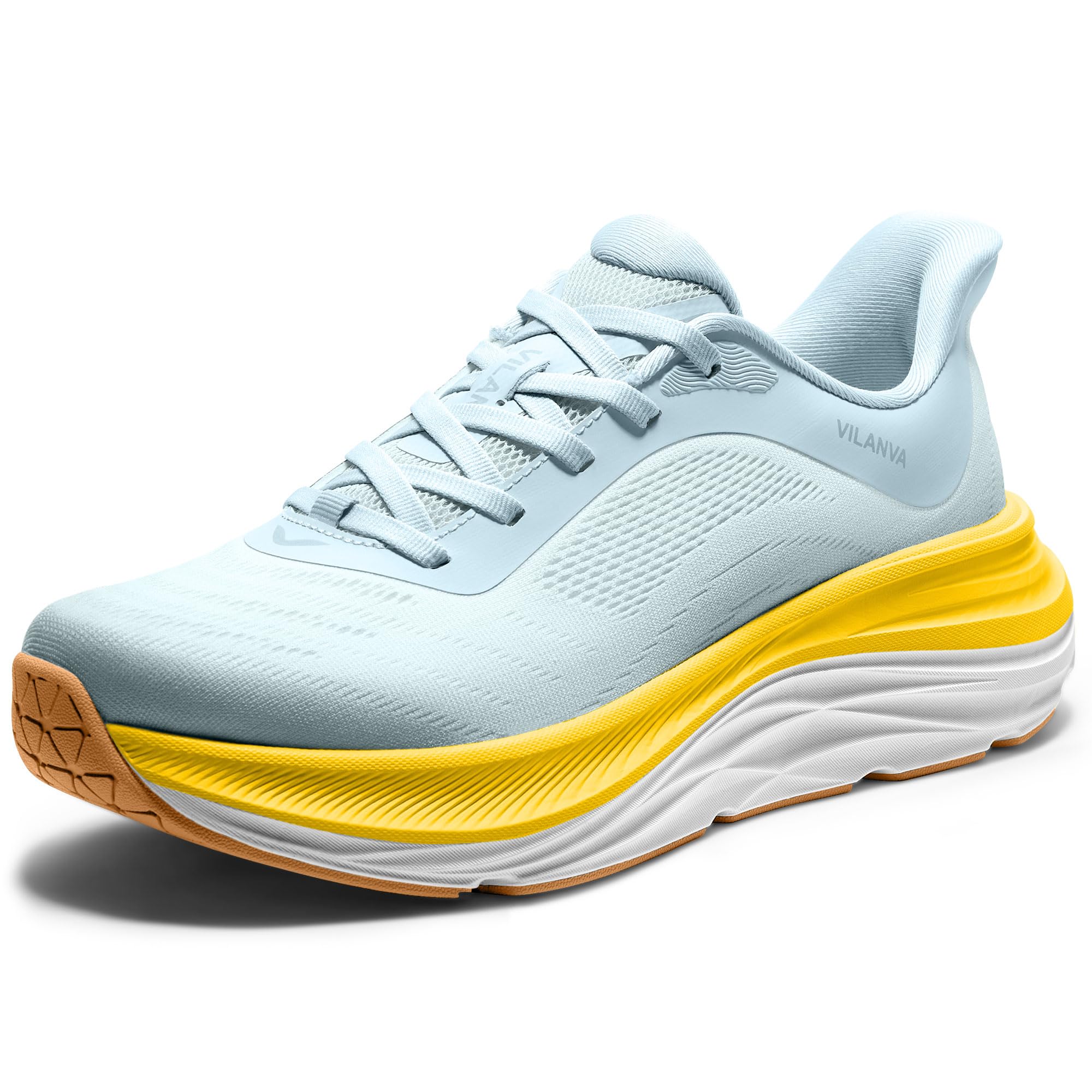
The Hoka-style dupe that delivers thick cushion and a wide toe box without the triple-digit price.
If you have looked at Hoka Bondis or Cliftons but balked at the price, these are the shoe owners are calling a genuine knockoff at roughly a third of the cost. The thick sole and wide toe box are the defining features — buyers with wide feet, plantar fasciitis (a heel-pain condition), or those who spend 12-14 hour shifts on their feet in healthcare report these hold up beautifully. One owner walked all over Washington DC for three days straight without foot pain, and another found the arch support superior to Brooks Ghost shoes when paired with their own orthotics.
The trade-off is that they lack some premium features — the arch support is not built-in enough for everyone, and the sole is not as responsive for high-intensity training. Also, they do not come in half sizes, so those between sizes may need to size up or down. But as a budget-friendly option with genuine comfort for long walks and standing work, the value proposition is strong.
Shoe for the money: Comfort is the most-praised feature — the cushion and roomy toe box win over owners who previously spent much more on name-brand athletic shoes. A few note the arch support is lacking, so if you need significant arch support, plan to add an orthotic insole.
Best for: walkers, healthcare workers, and anyone on their feet all day who needs a wide toe box and thick cushion on a budget.
pass on it if: you need a shoe for heavy lifting, sprinting, or if you have narrow feet that would slide around in the roomy toe box.
5. Nike Men’s Flex Train Workout Shoes
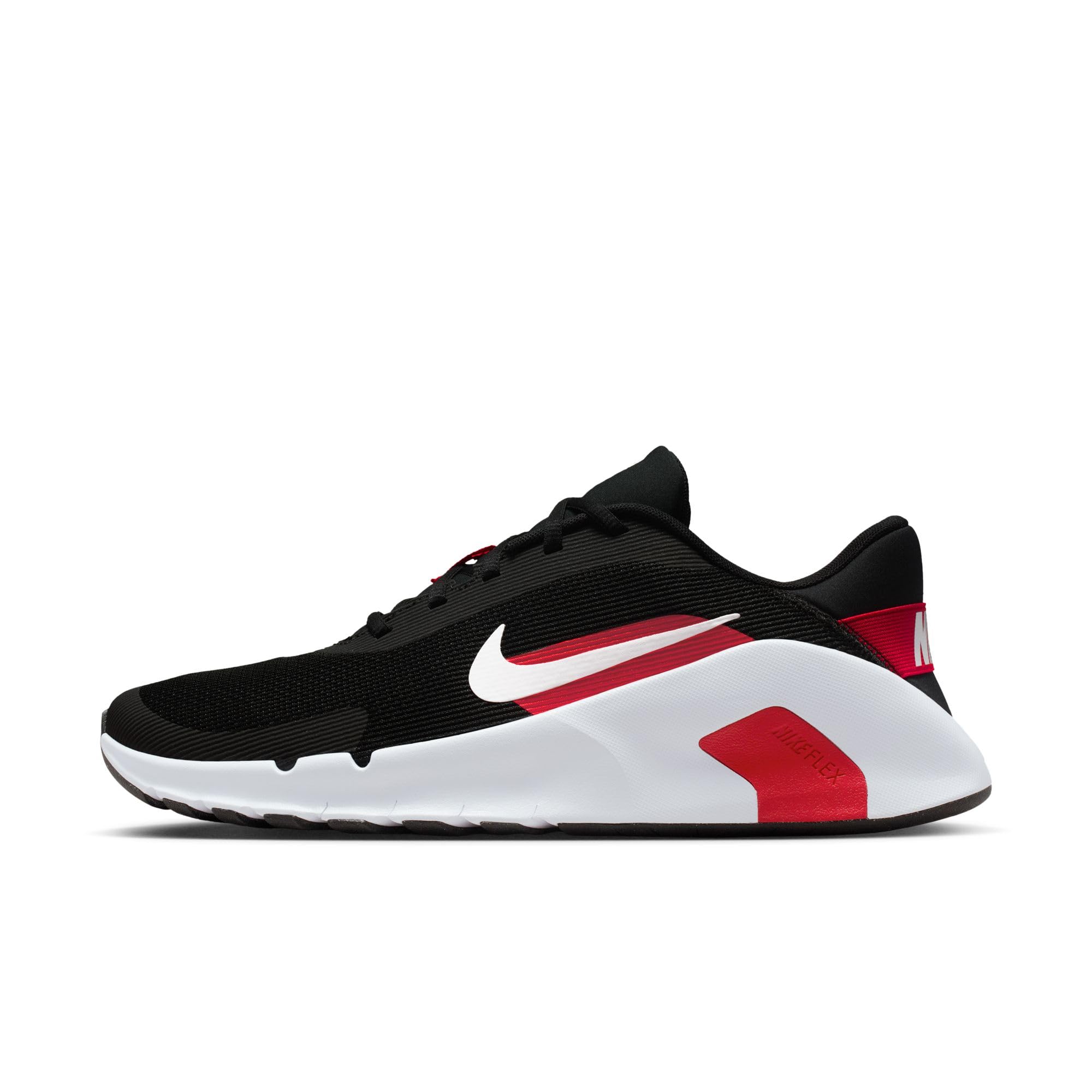
The lightweight daily trainer that feels more like a flexible sock than a rigid gym shoe.
The defining feature here is the rubber outsole with built-in cutouts that allow the shoe to bend naturally with your foot. That, combined with a full-length foam midsole and a breathable mesh upper, makes this among the most flexible shoes on the list. Owners note it is “super light” even in a men’s size 13, and the material gives enough support for your foot and ankle without feeling restrictive. It works well for power walking, light running on the treadmill, and everyday tasks — some owners even use it for casual weightlifting.
Where it falls short is in pure stability for heavy lifting. The flexible sole does not provide the rigid platform you want for heavy deadlifts or squats, and a few owners mention the toe box is slightly wider, which can feel loose for narrow-footed buyers. It is a great all-rounder for light gym-goers, but not a specialist shoe for either heavy lifting or serious court sports.
Standout spec: The flex grooves in the outsole give exceptional natural movement, making this among the most comfortable shoes for walking and light treadmill work. Comfort and build quality are the top reasons owners praise it, with many calling it a great value for the price.
Reach for these if: you want a flexible, lightweight shoe for daily wear, light gym sessions, and walking, especially in a larger size.
Think twice if: you need a stable platform for heavy weightlifting or a grippy outsole for high-intensity court sports.
6. Puma Women’s Softride Sera Cross Training Shoes
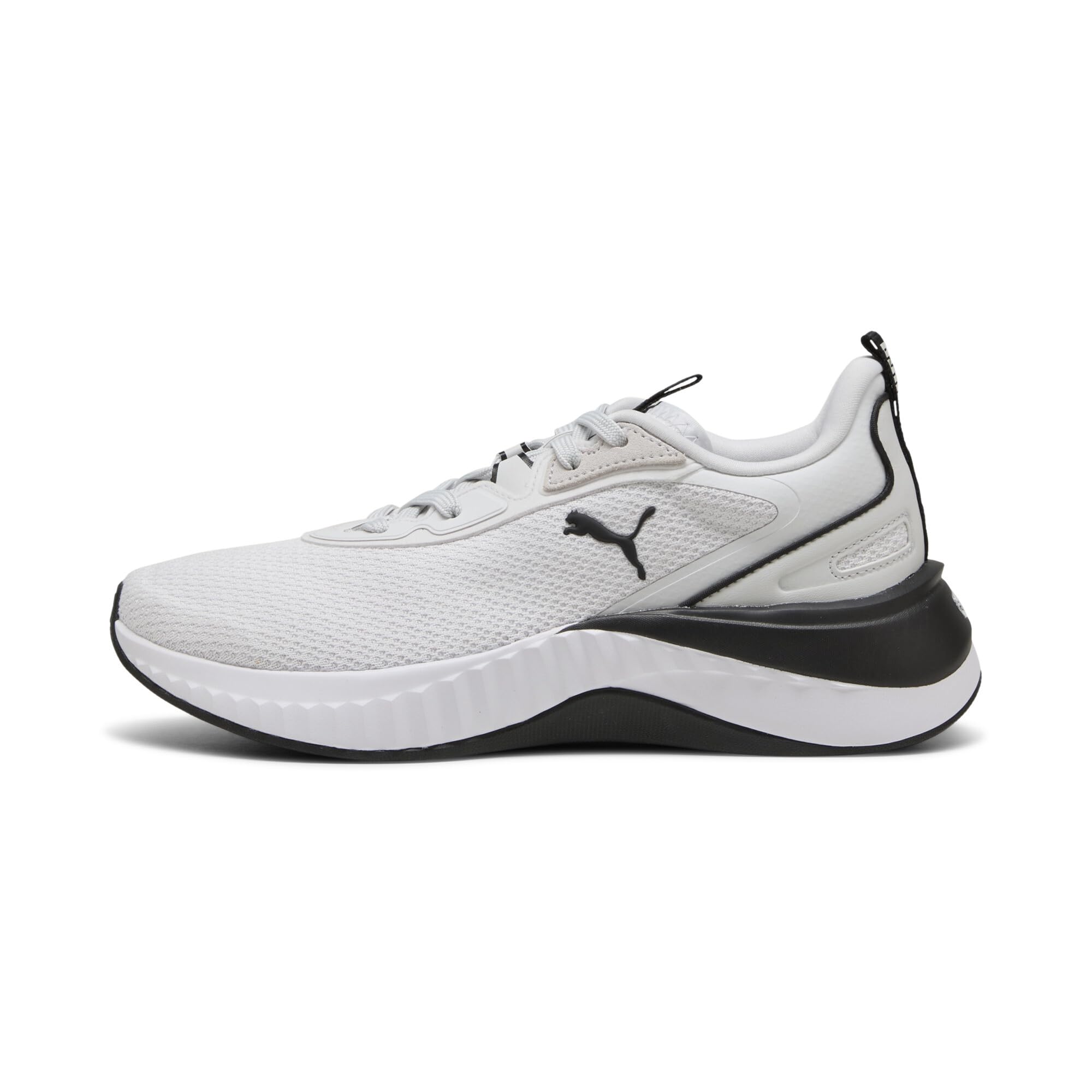
The sustainable cross-trainer that balances plush cushioning with zoned grip for versatile workouts.
Puma packed SoftFoam+ cushioning (a plush foam that returns energy with each step) into this shoe, giving it a noticeably soft feel that owners love for both running and cross training. The zoned rubber traction on the outsole provides grip exactly where you need it, which helps during lateral movements and quick direction changes on the gym floor. Made with at least 20% recycled materials, it is a more eco-conscious choice that still looks sharp. Owners consistently describe it as comfortable, supportive, and true to size for most foot shapes, with an excellent value for the price.
The main caveat is that it is more of a neutral-foot shoe — owners note that it lacks significant built-in arch support, so if you have high arches or overpronate (your foot rolls inward when you walk), you may need an orthotic insert. Some also find it runs slightly wide, which is great for wide feet but might feel loose for narrow ones. It is a well-rounded option for women who want a single shoe that can handle running, walking, and gym classes while staying affordable.
Owner insight: Superior cushioning and versatile performance are the most-praised aspects, with owners reporting it works well for running, walking, and cross training. The lack of arch support is the most common trade-off, but overall satisfaction is high.
Best for: women looking for a versatile, cushioned cross-trainer for running, gym classes, and casual wear with an eco-friendly design.
it’s not for you if: you require significant built-in arch support or have very narrow feet.
7. K-Swiss Men’s ST329 CMF Sneaker

The classic leather court shoe that doubles as a durable work boot for the gym floor.
Unlike the lightweight mesh trainers dominating the list, the K-Swiss ST329 CMF goes the other direction with a full leather upper that gives a distinctly sturdy, old-school feel. That leather construction, combined with exceptional traction and a plush memory foam insole, makes this a favorite among men who want a single shoe for the gym, casual work, and walking. Owners with wide feet and plantar fasciitis specifically praise the wide toe box and heel cup for providing all-day comfort, with several calling it the best shoe they have owned for foot pain.
The weight is the biggest practical difference — at 13 ounces, it is noticeably heavier than modern trainers like the Nike Flex Train, which owners confirm makes it less suitable for running or fast-paced court sports. The leather also means it is not rain-resistant, and some report the sole can separate at the toe after several months of heavy abuse. But for durability, style, and straight-up comfort for wide-footed buyers, it has a devoted following of repeat purchasers.
What owners praise most
- Excellent comfort for wide feet and plantar fasciitis — the memory foam insole and wide toe box are top-rated
- Sturdy leather construction holds up well to daily gym and work use
- Classic styling that works at the gym and in casual office settings
The honest trade-off
- Heavier than most modern trainers — not ideal for running or fast lateral movements
- Leather is not rain-resistant; sole separation at the toe is a reported pattern after heavy use
- Runs slightly large; some owners prefer to size down
Reach for these if: you have wide feet or need a durable, comfortable shoe for the gym and casual wear that does not look like a running shoe.
Think twice if: your training includes running, sprints, or fast-paced court sports where light weight matters.
8. Nike Men’s MC Trainer 3 Training/Workout Shoes
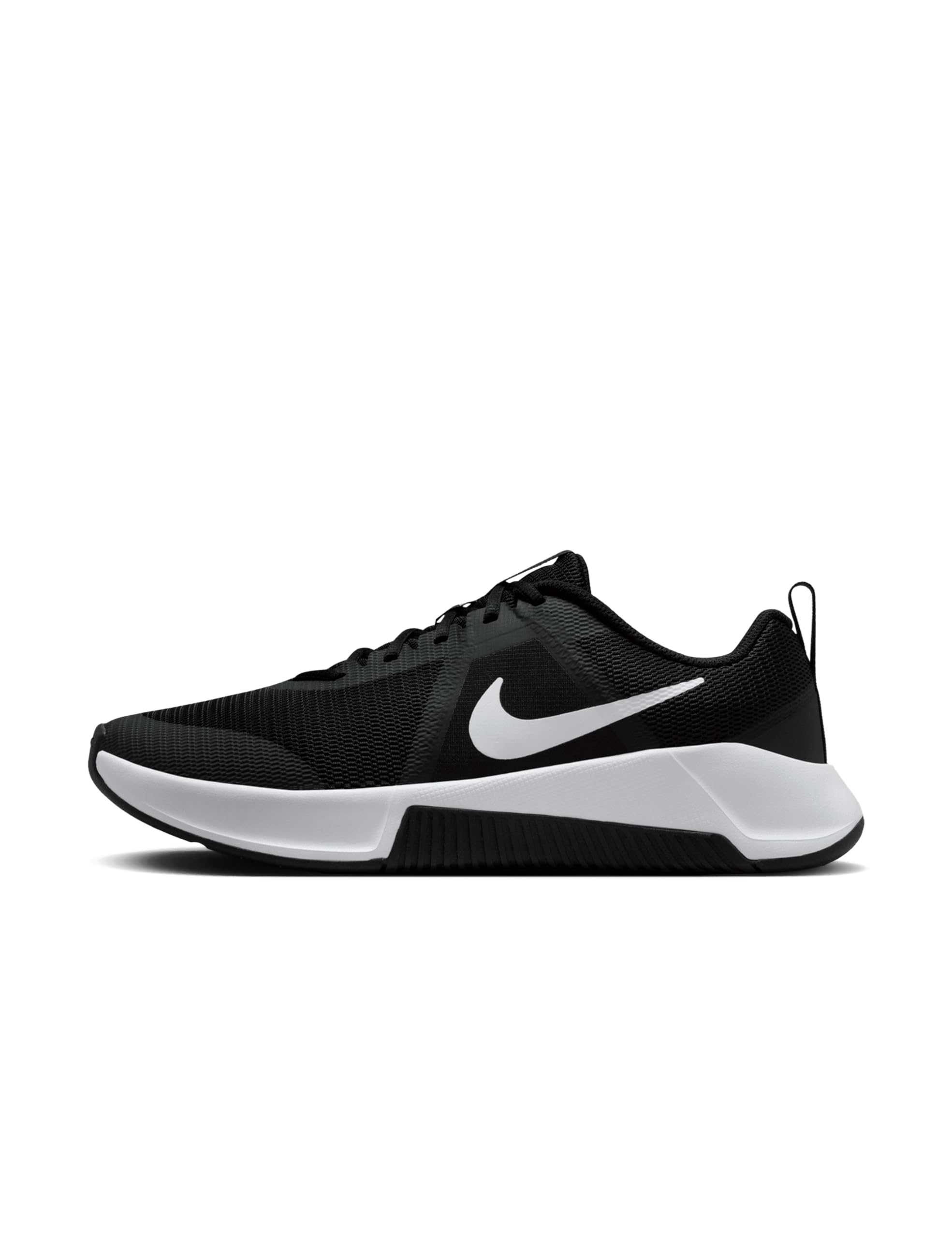
The “one shoe for everything” trainer that handles squats, sprints, and pickup basketball without complaint.
Nike designed the MC Trainer 3 with a flat, stable base that keeps you grounded during lateral movements and lifting, while forefoot flex grooves give you enough bend for running on the treadmill or playing pickup basketball. The foam midsole provides moderate cushioning that is firm enough for deadlifts and squats but not so hard that it punishes your joints during a run. Owners confirm it is a truly versatile shoe, with one calling it usable for running, rowing, biking, stairs, deadlifts, squats, and burpees — a rare claim to multi-sport competence.
The most common complaint is the heel cup, which some find feels cheap and fragile when putting the shoe on. A few also note that the material around the toe is not built for extreme durability over many months.
What the reviews say: Comfort and fit are the top-rated aspects, with owners praising the wide toe box and stable base for lifting. The heel cup construction and long-term durability are the most common caveats, but for the price, it is considered a solid all-purpose gym shoe.
Best for: men who want a single shoe for the gym that can handle lifting, cardio, and casual court time without needing to switch footwear.
look elsewhere if: you need a heavy-duty shoe for daily high-mileage running or a rigid lifting-specific platform for max-effort squats and deadlifts.
9. Reebok Nano Court Sport Men’s Pickleball or Tennis Shoes

The court-first shoe built for pickleball, tennis, and racquet sports where grip is everything.
Created specifically for court games, the Nano Court uses a herringbone Griptonite rubber outsole (a zig-zag tread pattern that grabs the floor in all directions) that wraps up the sides to keep you planted during aggressive lateral movements. The Flexweave upper provides targeted support without the bulk of a tongue — the shoe fits more like a neoprene boot, giving a snug, supportive feel that owners say is great for pickleball and table tennis. Floatride Energy Foam in the midsole ensures all-game comfort, and the lightweight, breathable engineered knit mesh upper keeps your feet cool during long matches.
The durability feedback is a serious consideration — multiple customers note the fabric at the toe tears quickly, with one noting it did not survive tournament play. The fit is also polarizing: while the neoprene-boot design gives a locked-in feel, many find it runs narrow. Stability opinions are split between those who find it sturdy and others who do not. If your primary sport is court-based and you prioritize lateral support over longevity, this is a compelling option.
Owner consensus: Great lateral support and the no-tongue design are the standout features for court players. The biggest caveat is durability — the toe fabric is a weak point that does not hold up to heavy use on hard courts.
Reach for these if: you are a pickleball, tennis, or racquetball player who needs a lightweight shoe with excellent lateral grip and a snug, tongue-free fit.
Look elsewhere if: you need a shoe for mixed gym and court use, or if you have wide feet — the fit tends to run narrow.
Understanding the Specs
Drop (Heel-Toe Offset)
Measured in millimeters, this is the difference in height between the heel and the forefoot. A higher drop (8-12 mm) takes pressure off your Achilles and calves, which is common in running shoes. A lower drop (0-4 mm) places your foot in a more natural, flat position, which is preferred for weightlifting and CrossFit because it keeps your heels grounded during squats and deadlifts. A 0 mm drop, like the ALTRA Solstice XT 3 offers, means your foot sits level with the ground, mimicking barefoot biomechanics.
Toe-Box Width and FootShape
This refers to how much room your toes have to spread out inside the shoe. A wide toe box allows your toes to splay naturally, which improves balance and stability during lateral movements and heavy lifts. Some brands, like ALTRA with their FootShape fit, engineer their shoes to match the natural shape of a human foot rather than tapering it into a point. This can prevent blisters, cramping, and the feeling that your toes are being crushed during quick changes of direction.
Outsole Tread Pattern
The pattern and material of the bottom of the shoe determine how well it grips different surfaces. A herringbone pattern (zig-zag lines) is the gold standard for court sports because it grabs the floor in all directions, helping you stop and cut without slipping. A flat rubber outsole with flex grooves, like you find on the Nike Flex Train, is better for gym floors and treadmills where multidirectional grip is less critical. Zoned rubber traction, as used on the Puma Softride Sera, places grip material just where the foot pushes off, saving weight while keeping traction where it matters.
Cushioning Types
Not all cushioning is created equal. Memory foam insoles conform to your foot shape over time, offering personalized comfort but less energy return. EVA foam (like the New Balance 608 uses) is lightweight and provides a balanced mix of softness and support. Floatride Energy Foam (Reebok) and SoftFoam+ (Puma) are higher-performance foams that aim to return more energy with each step, making them better for running and dynamic movement. If you lift heavy, you generally want less cushion and a firmer platform — too much squishiness destabilizes your foot under load.
FAQ
Can I use running shoes for weightlifting and court sports?
What does zero drop mean and do I need it?
How do I know if I need a wide toe box?
Are workout tennis shoes good for walking all day?
How long should a pair of workout tennis shoes last?
Can I wear court-specific shoes like the Reebok Nano Court for lifting?
Do I need arch support built into the shoe?
What is the difference between a cross-trainer and a workout tennis shoe?
How can I make my workout shoes last longer?
Should I size up or down for workout tennis shoes?
Final Thoughts: The Verdict
For most people, the best workout tennis shoes are the New Balance 608 V5 because they deliver proven comfort and wide-foot support at a price that undercuts the competition, backed by the highest owner satisfaction in the category. If your training revolves around heavy lifting and HIIT, the ALTRA Solstice XT 3 is the clear winner with its zero-drop platform and FootShape fit. And for court-specific sports like pickleball and tennis, the Reebok Nano Court brings the lateral support you need to play confidently, just be mindful of the durability reports on the toe.
How We Picked
We do not accept paid placement. Every pick is matched to a real buyer and a real use-case; we do not hands-on test units.
Sources & Methodology
Specifications: manufacturer listings and product documentation. Review insights: verified customer reviews, as of July 2026. Pricing: not shown on this page (it changes often); check the current price via the retailer link.
As an Amazon Associate, Calories Fit earns from qualifying purchases. This does not affect which products we feature.