
Our readers keep the lights on and the coffee maker working hard! As an Amazon Associate, I earn from qualifying purchases.
Specs are compiled from manufacturer listings and verified buyer reviews and can change over time — please confirm the key details on the product page before buying.
A workout belt turns a heavy squat from a lower-back gamble into a controlled, braced lift. The right belt lets you brace your core hard, so you lift with confidence instead of fear. The wrong one digs into your ribs, slides around, or fails to hold — which is why picking from the best workout belt for men beats grabbing any random strap.
I’m Mohammad — the founder and writer behind Calories Fit. This guide is built by comparing the manufacturers’ published specifications and the patterns across verified customer reviews, so you get each pick’s real strengths and trade-offs instead of marketing spin.
We break down leather thickness, buckle style, and sizing so you can confidently buy the right workout belt for men and never waste money on one that doesn’t fit.
Our Picks at a Glance

How To Choose The Best Workout Belt for Men
A belt is a simple tool, but the wrong choice can ruin your sessions. Focus on how you lift, not just how the belt looks. Your body weight, main exercises, and training frequency all point to one clear style.
Match the Thickness to Your Lifting
Thicker leather means more rigid support, but it also means a longer break-in period and less flexibility. A 10mm belt is for heavy squats and deadlifts where you need maximum bracing. A thinner 6mm or 7mm belt bends more easily, making it more comfortable for overhead presses and Olympic lifts where you move through a fuller range of motion.
Choose Your Closure: Prong, Lever, or Velcro
A single-prong or double-prong buckle gives you fine adjustments and a classic feel, but it takes a few seconds to fasten between sets. A lever buckle snaps shut instantly and holds tight, which is why powerlifters love it — but you can only adjust it in set hole increments. Velcro straps are the quickest to put on and take off, though they generally offer less rigid support for maximal heavy lifts.
Quick Comparison
| Model | Best For | Thickness | Material | Closure | Amazon |
|---|---|---|---|---|---|
| Stoic★ Best Overall | Heavy Powerlifting | 6mm | Leather | Buckle | Amazon |
| Iron BullBest Value | Competition Lifting | 7mm | Leather | Buckle | Amazon |
| DEFYTop Performer | Instant Lock Support | 10mm | Leather | Lever | Amazon |
| Harbinger | Light Workouts | Foam | Blend | Hook & Loop | Amazon |
| DMoose | Quick Adjustments | Nylon | Nylon | Auto-Lock | Amazon |
| RDX | Versatile Lifting | 7mm | Leather | Buckle | Amazon |
| GurZinn | Slender Builds | 9mm | Leather | Buckle | Amazon |
| Nike | Everyday Training | Structured | Blend | Belt | Amazon |
| MANUEKLEAR | Serious Deadlifts | 10mm | Leather | Lever | Amazon |
In‑Depth Reviews
1. Stoic Weight Lifting Belt
Our pick — over 4.5★ from 550+ verified ratings; the strongest balance of quality and price.
The 6mm leather lifter that holds up to years of heavy abuse without flinching.
This is the belt serious lifters eventually land on. It uses a full 6mm of vegetable-tanned, full-grain leather — with only 1.2mm of that being suede — so what you feel against your core is real, dense support. The 4-inch width stays uniform all the way around, which reduces stress on your back during squats and deadlifts by letting both your abs and back brace together firmly.
You can trust this belt to last for years, not months. Buyers report using it for over 3.5 years with nothing wearing out, even while pulling 585-pound deadlifts, and one owner calls it “excellent quality, durable after 6 months 3x/week for squats/deadlifts.” The ultra-heavy 2mm thick single prong buckle (a classic pin-and-hole closure) with a smooth roller holds the belt in place without slipping, so you stay locked in during heavy sets. The trade-off is the break-in — it arrives stiff and needs about a month of use before it molds to your body.
This belt is the crowd favorite for good reason, holding a 4.7-star score backed by hundreds of owners who praise its quality above everything else. What wins people over is the construction: neat double-stitching and a stitched logo on high-quality leather that looks and feels premium. Sizing runs true, but you should size up if you’re planning to bulk, and size down if you’re cutting.
Built for the Long Haul
- 6mm full-grain leather offers serious rigidity for heavy compound lifts
- 2mm thick single prong buckle holds tight through intense sessions
- Owners mention years of daily use with zero wear
Consider This First
- Stiff from the start and needs a break-in period of about a month
- Tongue can be hard to push through the loop when it’s new
- Sizing requires careful measurement — the wrong size ruins the fit
Reach for it if: you train heavy multiple times a week and want one belt that will outlast your gym membership.
Look elsewhere if: you want a plush, padded belt you can wear for long casual workouts — this one stays firm by design.
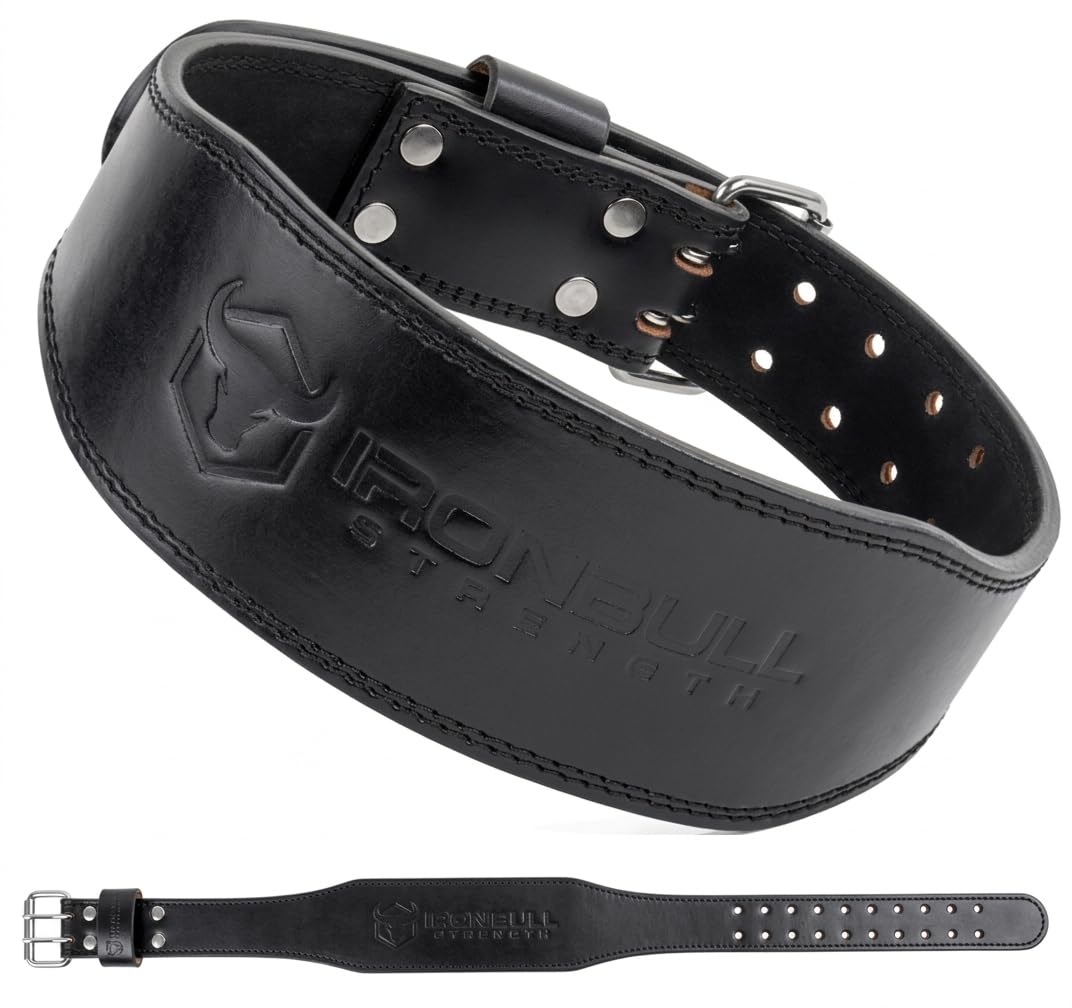
2. Iron Bull Strength 7mm Leather Weight Lifting Belt
A competition-legal, competition-grade 7mm belt that feels broken in from day one.
This belt is for lifters who take their training seriously. It’s made from genuine A-grade leather cut from single pieces, not glued scraps, which gives you a steady 7mm thickness all the way around for consistent support. The 4-inch to 2-inch tapered design gives you excellent lower back stability while staying flexible enough for front squats and Olympic lifts where a bulky belt gets in the way.
Owners note it’s a top-tier choice that needs no conditioning — it arrives supple and molds to your body as you wear it, unlike many prong belts that take weeks to soften. It’s competition-approved for IPF, USAP, USPA, IPL, USAW, and IWF certifications, and the double roller steel buckle prongs with black coating add durability. The double stitching throughout the belt reinforces every stress point.
The quality here is what buyers praise most, and it easily matches belts at double the price. The company backs it with a lifetime warranty against manufacturing defects and a 30-day satisfaction guarantee. Just remember to measure your true waist with a tape measure — ordering by pant size is the most common mistake.
Serious Value: Competition-approved certifications at a mid-range price make this the smart buy for lifters who want federation-legal gear without the premium brand markup.
One Caveat: A few customers note it runs small, so if your measurement sits between sizes, it’s wise to order up.
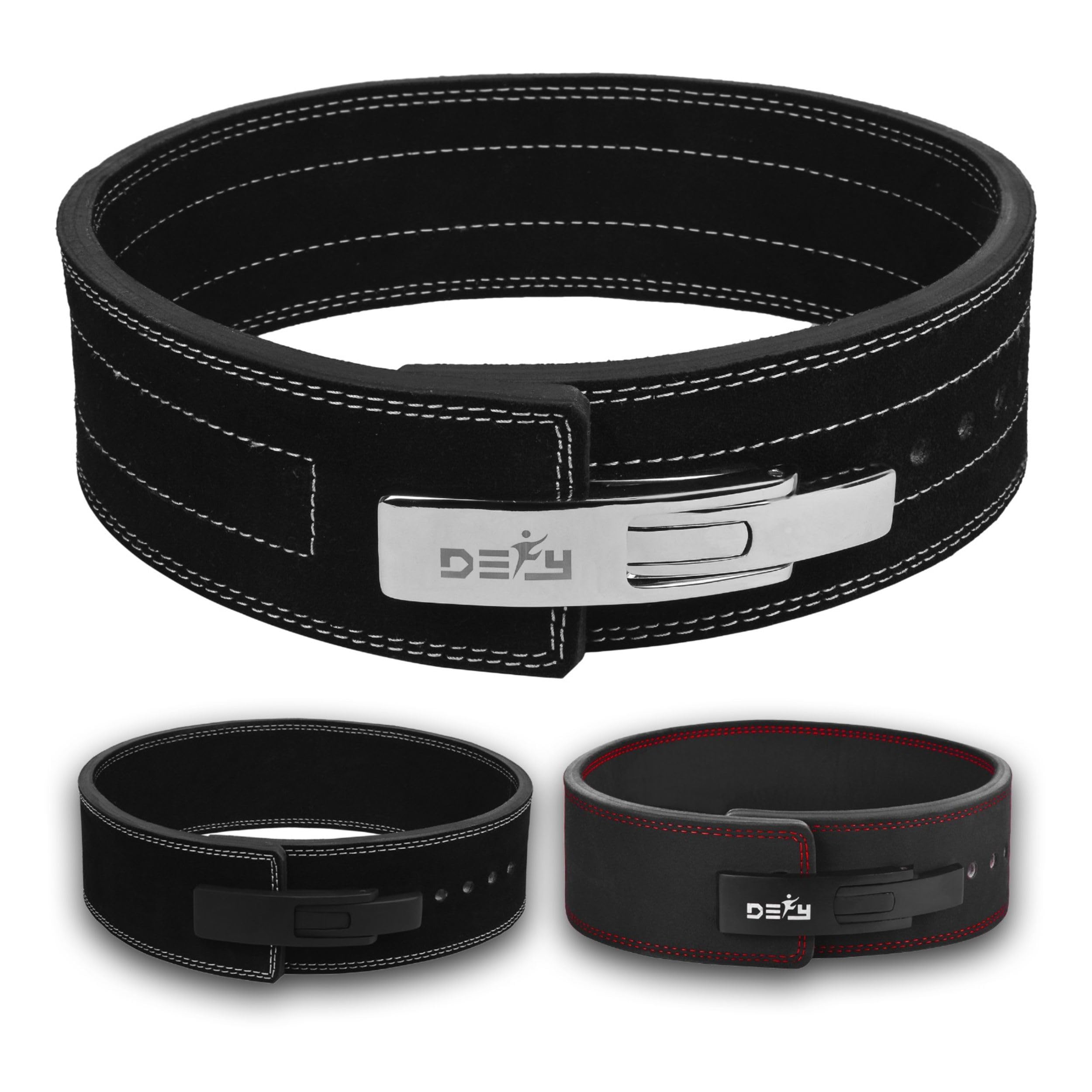
3. DEFY Weightlifting Lever Belt
The instant-lock 10mm lever belt that keeps you braced between heavy sets.
If you hate fumbling with prongs between sets, this lever belt is your answer. The 10mm oil-tanned cowhide leather provides maximum back support, and the lever buckle snaps shut with one motion so you stay locked in and focused. It’s built with a heavy-duty chrome buckle and dual stitching for longevity, and the 4-inch back support stabilizes your core, abs, and back on heavy lifts.
Reviewers point out it supported a 405-pound deadlift without issue, and it holds up well for casual lifters and hobbyists. The belt is compliant with powerlifting federations like USPA, IPL, WPC, and GPC. The ten precision-spaced holes let you dial in the fit, and once buckled, it won’t slip or slide out of position.
The quality stands out as the top praise from owners, alongside strong value for the money. It does have a break-in period where it digs into your ribs, but that fades with use. Assembly is simple with two screws, and the lever action gets easier as you learn the correct adjustment for your waist.
Why It Wins
- Instant lever closure makes it easy to get tight before heavy lifts
- 10mm leather offers serious rigidity for maximal bracing
- Federation-compliant for USPA, IPL, WPC, and GPC competition
Things to Know
- Digs into your ribs initially until the leather breaks in
- Lever needs precise adjustment — some find the fit hard to dial in exactly
- A few units arrive with less-than-perfect screws
Choose this if: you want competition-style support and speed between sets for a reasonable price.
Pass if: you need micro-adjustments mid-session — the lever only moves in set hole increments.
4. GurZinn 9mm Leather Fitness Weight Lifting Belt
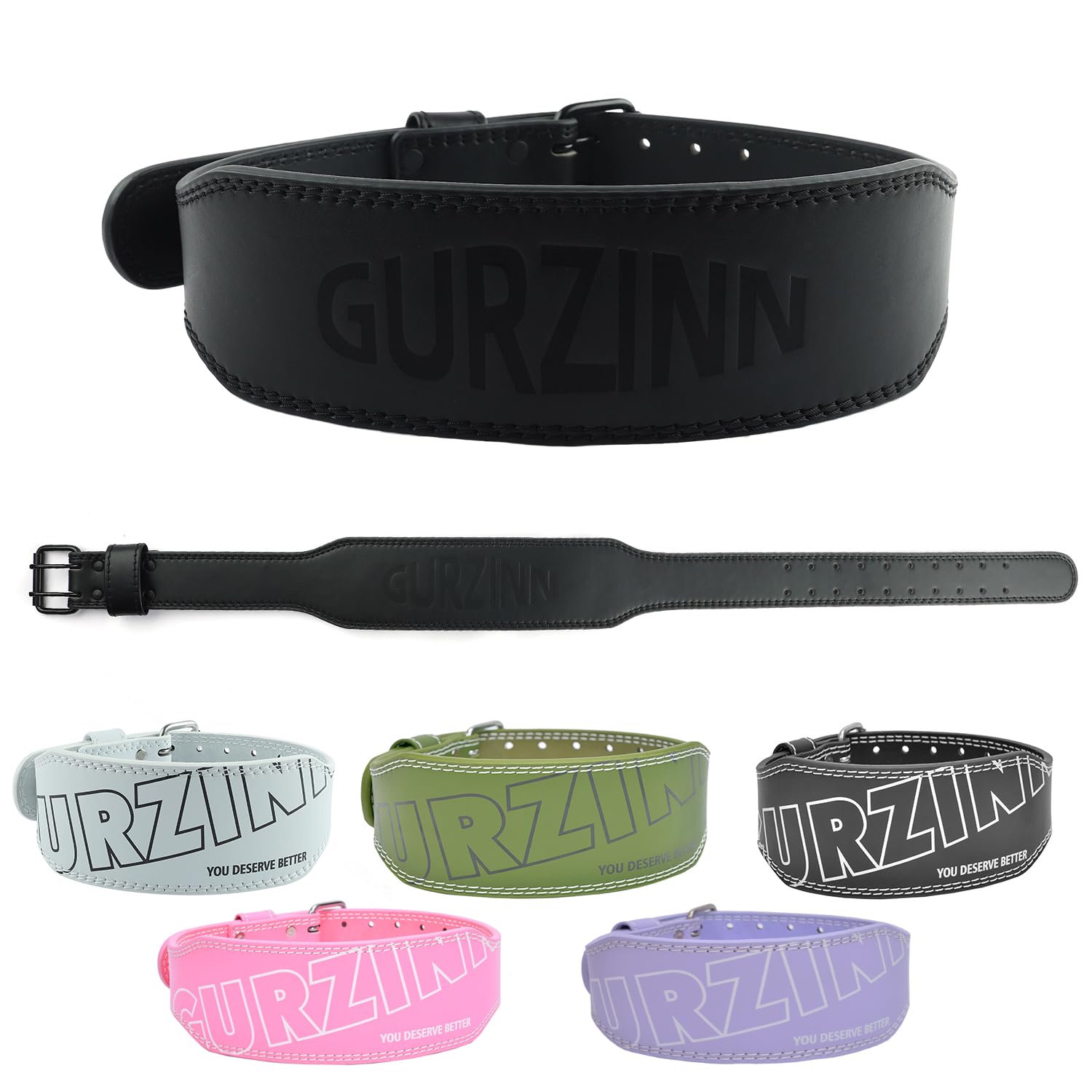
A thick 9mm belt that finally fits slender waists without swimming on you.
Most heavy leather belts start at sizes that swallow a slim frame. This one starts at XS, which fits a 21.3-to-28.3-inch waist, making it a rare find for thinner lifters who still want real support. The belt is made from high-quality double-sided leather with reinforced top stitches, giving you 9mm of thickness for high-intensity, load-bearing training.
The 4-inch width has a sponge pad that supports your waist during heavy squats and deadlifts. A buyer who uses it as a work belt found it “comfortable enough to work in and move around all day,” noting the padding distributes weight better than a normal belt. The six stainless steel rivets and 10 rows of holes give you plenty of adjustment room for waist changes.
Owners praise the quality and fit most, and the design keeps friction low so it sits gently around your waist. It is stiff when new, but shoppers say it “can be worked in for comfort.” The XS sizing also makes this a practical option for women or teens looking for real leather support.
Niche Fit: The standout quality here is that genuine 9mm leather support finally comes in sizes small enough for slender builds.
Fair Warning: The extra thickness means a real break-in period, and comfort is a point of disagreement among owners.
5. RDX 7mm Leather Padded Lumbar Belt

The 7mm all-rounder with a wide padded back that adapts to any training style.
This RDX belt is a jack-of-all-trades that handles powerlifting, bodybuilding, and cross-training with equal ease. The genuine cowhide leather is 7mm thick for solid pressure absorption, and the wide padded back offers superior lumbar support to help you brace before lifting. The suede leather inner makes it comfortable enough for long-term gym use.
Durability is a big theme in owner feedback, with buyers reporting the belt lasted them over 5 years while providing excellent back support. The industrial-grade steel roller buckle with twin prongs prevents slipping and riding, and the reinforced rivets work with the buckle to boost support. Ten precision-drilled holes give you fine adjustment, while the leather flap keeps the buckle from pressing directly into your body.
Quality and support are the aspects owners mention most, with many noting it feels like a belt that costs significantly more. Unlike the tapered competition belts, the RDX is a straight 4-inch or 6-inch design, and this model comes in the 6-inch version for extra back coverage. It runs small, so order up — the size chart measures around your lower back, not your pant size.
All-Purpose Strength: With genuine cowhide, a twin-prong steel buckle, and a padded back, this covers nearly every lifting discipline you can throw at it.
Fit Warning: Sizing runs small, and the XL fits a 38-inch waist tightly — measure carefully and choose the upper size.
6. Nike Structured Training Belt 3.0
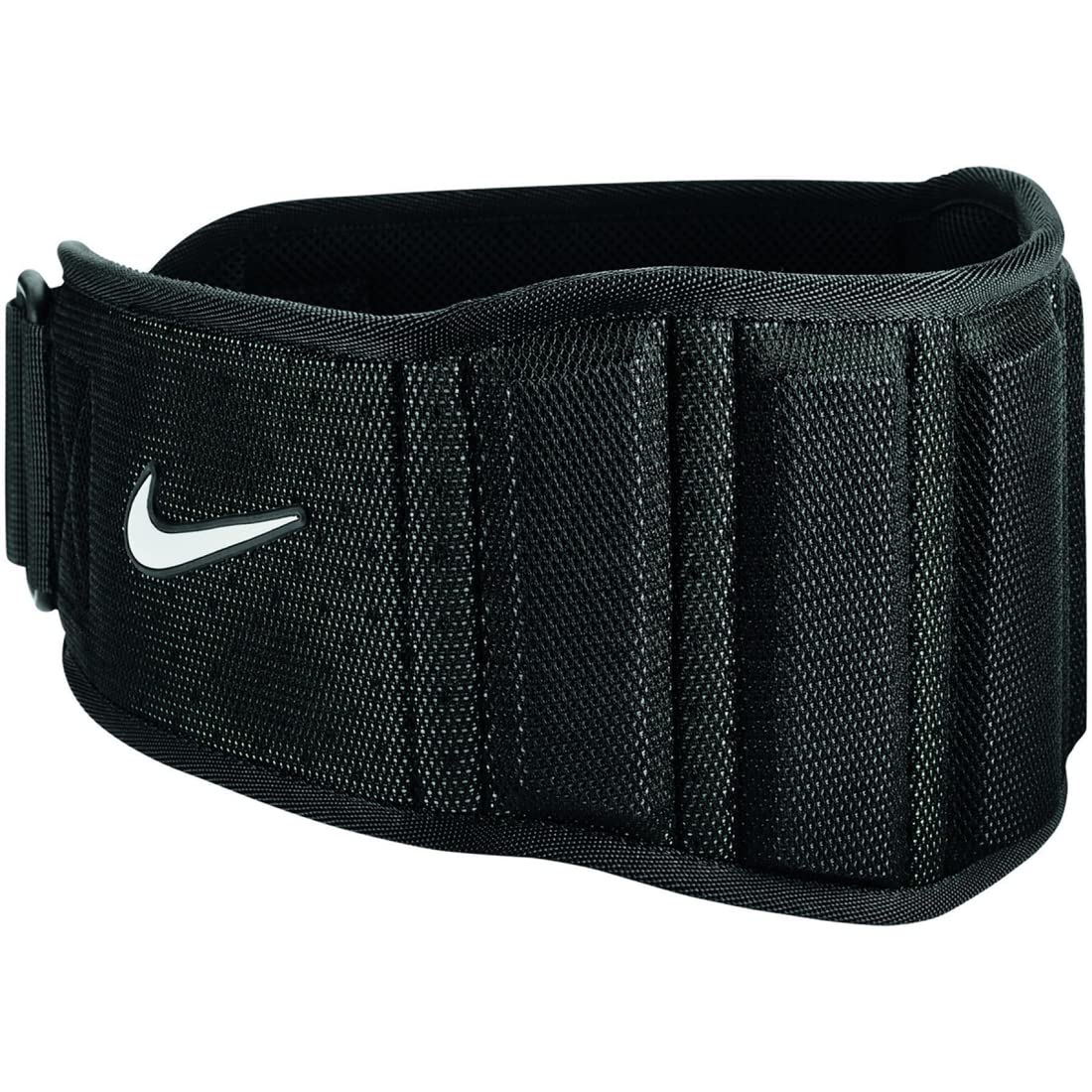
The brand-name training belt that reduces back strain without the leather bulk.
This Nike belt takes a different approach from the heavy leather options. Instead of thick cowhide, it uses rigid inserts at the lower back to enhance support, giving you structure in a lighter, more flexible package. It’s designed for lifters who want back support during training without the stiffness of a traditional leather powerlifting belt.
Buyers report it’s “easy on, easy off” and that it “greatly reduced back strain” during workouts. It’s built for general strength training and lighter sets, not maximal one-rep max attempts. The blend material and belt closure make it simple to adjust between exercises, and it carries the trusted Nike name for quality.
This belt holds a strong 4.7-star average from hundreds of owners, making it one of the highest-rated options here. It’s an excellent choice if you want something you can throw on for a full workout without a long break-in period. But if you’re pulling heavy deadlifts or squatting near your max, the rigid inserts won’t give you the same unyielding brace as a 10mm leather lever belt.
Comfort Focus: The rigid lower-back inserts provide support that flexes with your body, making this ideal for varied training sessions.
Know the Limit: This isn’t a maximal-strength tool — buy a leather belt if your main goal is heavy powerlifting.
7. Harbinger Weightlifting Belt, Foam, 4.5″ Width

A budget-friendly 4.5-inch belt that’s perfect for your first year of training.
If you’re new to lifting or just want something for lighter workout days, this Harbinger belt delivers solid value. The 4.5-inch width stabilizes your core and supports your lower back during lifts, while the hook-and-loop fastener is quick to put on and take off. The low-profile steel roller buckle won’t interfere with your lifts or dig into you during exercises.
Owners find it comfortable and easy to use, with many mentioning the velcro makes it very simple to fasten. It’s built from a blend of polypropylene, polyethylene, nylon, iron, and polyester — a softer, more flexible feel than rigid leather. This makes it a great fit for exercise classes, yard work, or general fitness routines where you want support without the bulk of a powerlifting belt.
The quality gets praise, but the honest take from the review pages is that this is not a belt for serious heavy lifting. As owners put it: “The belt is fine, but it’s not meant for a serious workout routine.” The adhesive strap runs small for the belt, so it doesn’t feel completely supportive under maximal loads. Sizing is the most common complaint, with several finding it runs too small.
Easy All-Day Wear
- Velcro closure makes it easy to get on and off between sets
- 4.5-inch width gives good coverage for lighter lifting and classes
- Flexible foam design is comfortable for long sessions
Before You Commit
- Not built for maximal heavy lifts or serious powerlifting routines
- Adhesive strap is small for the belt and limits how tight you can go
- Sizing runs small in many cases — check the chart carefully
Start here if: you’re new to lifting or need a comfortable belt for mixed workouts, not maximal attempts.
Move up if: you’re regularly squatting or deadlifting heavy — the velcro strap won’t hold you tight enough.
8. DMoose Fitness Auto Locking Weight Lifting Belt
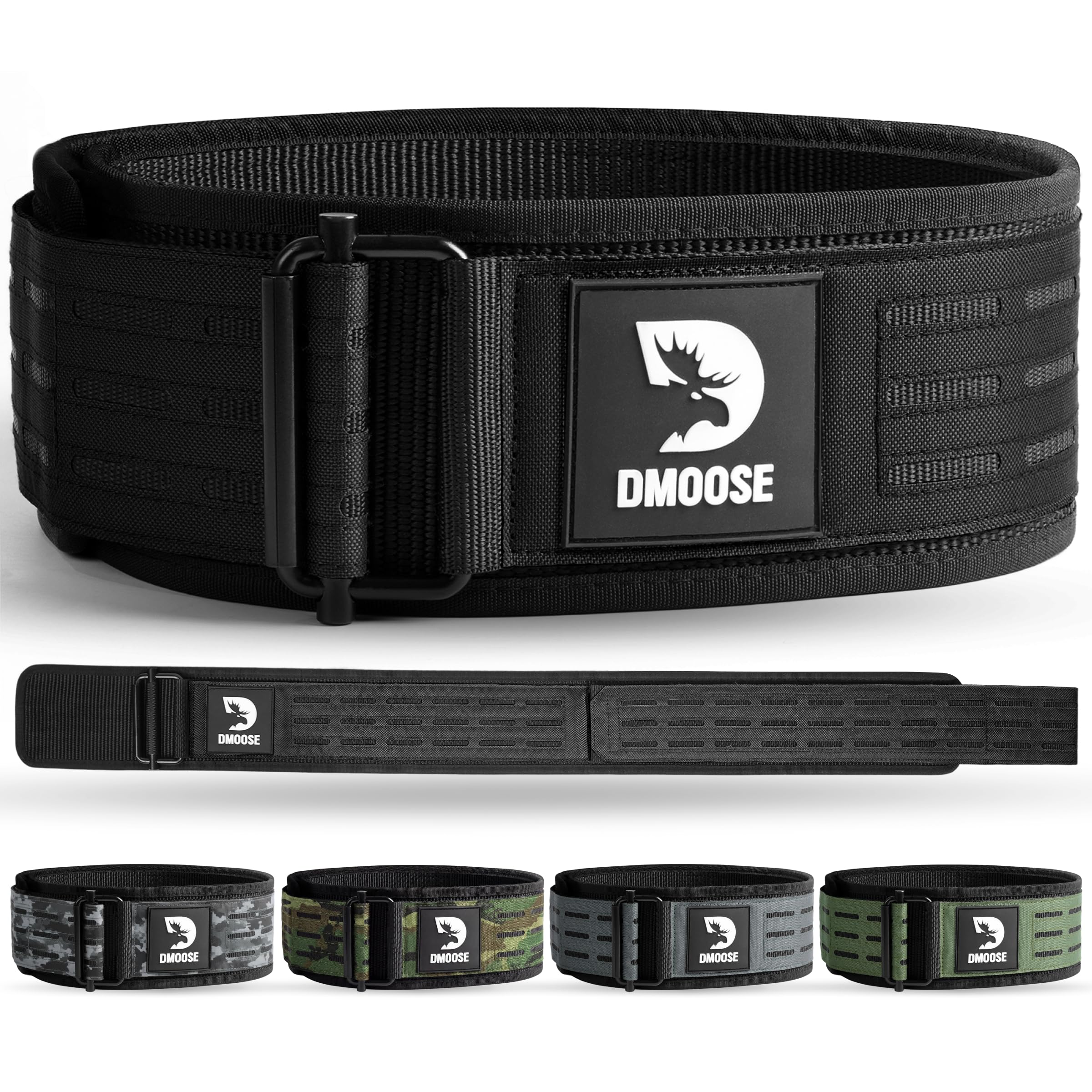
The nylon belt with a self-locking buckle that’s cheap, comfortable, and genuinely supportive.
This DMoose belt nails the balance between price and performance. The self-locking buckle cinches tight and holds through your heaviest squats and deadlifts, and a quick flick loosens it between sets in seconds. The 4-inch uniform-width nylon design distributes pressure evenly across your lower back, helping you brace your core properly.
This belt’s nylon construction (a flexible fabric, not stiff leather) flexes with your body instead of digging in, so you stay comfortable through long sessions. Buyers call it out directly: “Why pay more for a belt when this one is fantastic!” Owners mention it works exactly as it should, is easy to put on and take off, and provides great support while staying comfortable. It fits both men and women and comes backed by a 1-year warranty, so you’re covered if anything fails.
Quality and support are what owners praise most, with durability and value for money also getting strong mentions. The trade-off is the fit: some find it difficult to get sufficiently tight, and getting it snug isn’t quite as easy as other designs. But for the price, it’s a reliable belt for both beginners and experienced lifters.
Nylon Convenience: The flexible material and auto-lock buckle make this a great everyday gym companion that won’t dig into your hips.
Fit Note: The auto-lock design can make it tricky to get a perfectly tight fit — measure around your navel, not your pant size.
9. MANUEKLEAR Lever Lifting Belt
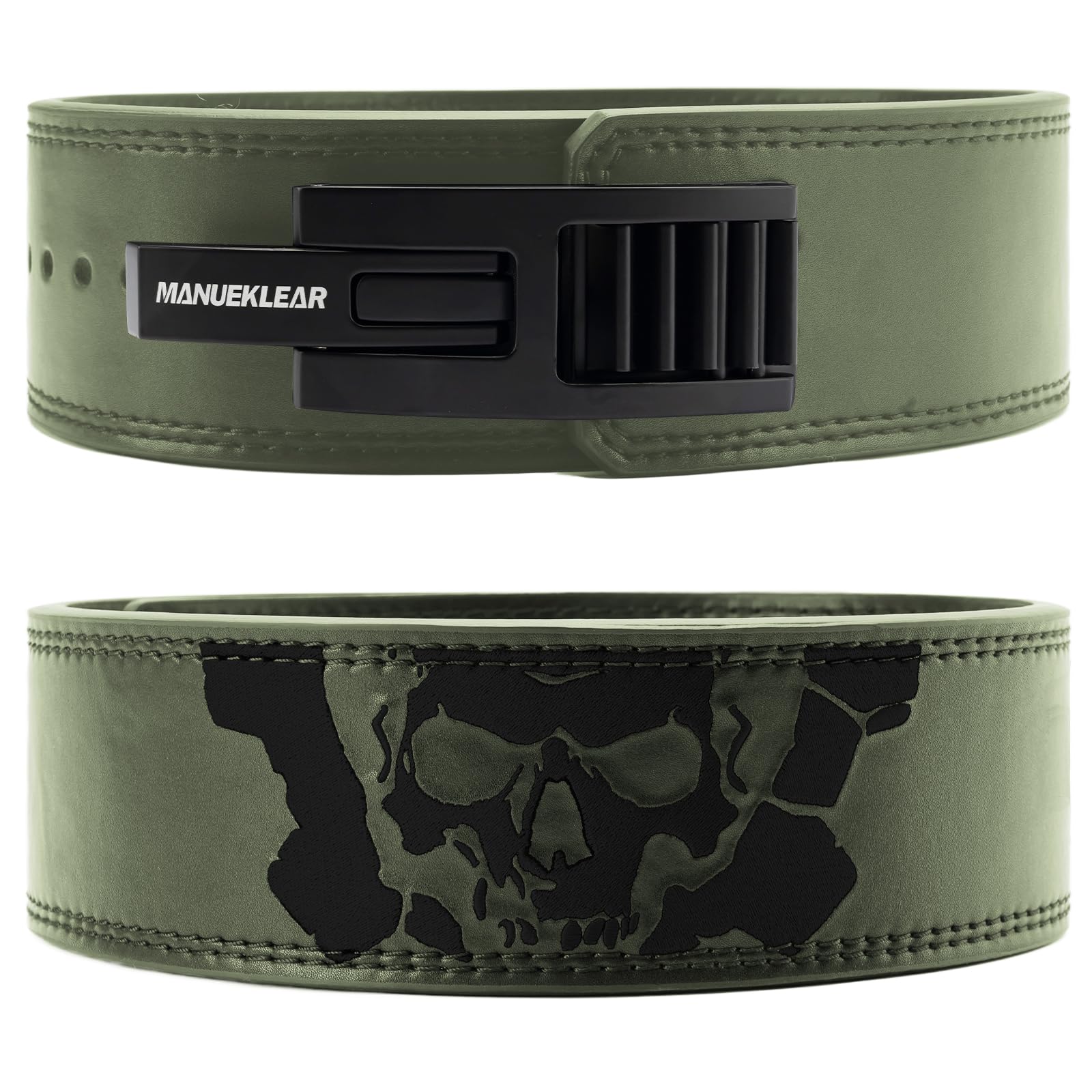
A 10mm lever belt that feels like it was built for a 345-pound deadlift — because it was.
This MANUEKLEAR belt is serious equipment for serious lifters. The patented quick-locking lever buckle (a metal clamp that opens and closes fast) allows rapid adjustments between exercises, so you can switch movements without missing a beat. The sturdy 10mm thickness (about 0.4 inches) gives you maximum support and stability for hitting new personal records or perfecting your technique.
Owners are emphatic about the quality: a buyer hit a 345-pound deadlift in it and called it “nice and heavy and honestly very sustainable,” while another reports it “still works perfectly after a year” and credits it with improving back pain. The high-quality leather and steel lever lock feel heavy-duty in hand, and the wide adjustability range fits different body types, so you can dial in a snug fit whether you’re lean or bulky.
Quality is the aspect owners mention by far the most, with support and durability following close behind. It comes with a 7-day free return policy if it’s not right for you. The main learning curve is sizing — a 35-inch waist fits a Medium, not a Large — and resizing the lever screws takes patience.
The Heavy Lifts
- 10mm leather gives unyielding support for maximal deadlifts and squats
- Quick-locking lever keeps you braced without fumbling between sets
- Heavy-duty steel construction feels built to last for years
The Fine Print
- Sizing confuses some buyers — measure your waist, don’t guess from pants size
- The belt is heavy at 3.5 lbs, which takes getting used to
- Resizing the lever screws is tricky and needs patience
Grab this if: you’re a powerlifter or strongman who wants competition-grade support at a fraction of premium brand prices.
Think twice if: you want micro-adjustable fit between every set — the lever locks into fixed hole positions.
Understanding the Specs
Belt Thickness in Millimeters
Thickness determines how rigid the belt is against your core. A 6mm belt bends more and suits Olympic lifting and general training. A 10mm belt is stiff and unyielding, made for maximal squats and deadlifts where you want a solid wall to brace against. Thicker leather also means a longer break-in period and a heavier belt around your waist.
Width and Taper
Width affects how much of your torso the belt covers. A uniform 4-inch width gives consistent support all the way around. A tapered belt — wider in the back, narrower in the front — lets you bend forward more easily at the hips, which is important for deadlifts. A 6-inch back width covers more of your lumbar spine but can dig into your ribs during squats.
Closure Types
The closure determines how quickly you can get in and out of the belt. Single and double prong buckles offer fine adjustment but take time to fasten. Lever buckles snap shut instantly and hold tightly, but only adjust in set hole increments. Velcro closures are the fastest to use but generally offer less rigid support for maximal lifting.
Break-In Period
Leather belts arrive stiff and need time to mold to your body. A break-in period of a few weeks to a month is normal; during this time the belt may dig into your ribs or hips. Nylon and foam belts need no break-in and are comfortable immediately, which is a major advantage for casual lifters. Consider how patient you are when choosing between materials.
FAQ
What size workout belt should I buy?
Is a 10mm belt better than a 6mm belt?
How tight should a lifting belt be?
How long does a leather weight belt last?
Should I get a prong or lever belt?
Do workout belts help prevent back injuries?
What’s the difference between a 4-inch and 6-inch belt?
Can I use a nylon belt for heavy powerlifting?
Is a tapered belt better for deadlifts?
Final Thoughts: The Verdict
For most buyers, the workout belt for men winner is the Stoic because it delivers competition-grade 6mm leather support that owners confirm lasts for years of heavy training. If you want a competition-approved belt that’s comfortable from the first wear, grab the Iron Bull Strength. And for faster transitions between sets at a friendly price, the MANUEKLEAR lever belt is the one to reach for.
How We Picked
We do not accept paid placement. Every pick is matched to a real buyer and a real use-case; we do not hands-on test units.
Sources & Methodology
Specifications: manufacturer listings and product documentation. Review insights: verified customer reviews, as of August 2026. Pricing: not shown on this page (it changes often); check the current price via the retailer link.
As an Amazon Associate, Calories Fit earns from qualifying purchases. This does not affect which products we feature.