
Our readers keep the lights on and the coffee maker working hard! As an Amazon Associate, I earn from qualifying purchases.
Specs are compiled from manufacturer listings and verified buyer reviews and can change over time — please confirm the key details on the product page before buying.
Every step on an uneven jobsite, a ladder rung, or a concrete slab sends a jolt straight through your ankles — and if your boots can’t lock that joint down, you are just one bad shift of gravel away from a rolled ankle and a week of hobbling. The real decision here is the height of the collar, the stiffness of the shank, and whether the boot’s padding actually wraps your ankle instead of just looking tall in the box.
I’m Mohammad — the founder and writer behind Calories Fit. This guide is built by comparing the manufacturers’ published specifications and the patterns across verified customer reviews, so you get each pick’s real strengths and trade-offs instead of marketing spin.
I have focused on boots that deliver a locked-in heel, a supportive shaft, and real-world durability that keeps you upright shift after shift — the work boots with ankle support that actually earn their keep under a tool belt.
Our Picks at a Glance

How To Choose The Best Work Boots With Ankle Support
Ankle support in a work boot does not come from a single magic number — it comes from the interplay of shaft height, internal shank stiffness, and how the boot locks your heel in place. Here is what to look for.
Start with the Shaft Height
Shaft height is the most obvious factor. A 6-inch boot covers the ankle bone and gives moderate lateral support for flat-site work. An 8-inch boot wraps higher up the shin and provides noticeably more resistance against rolling — the extra 2 inches make a real difference when you are walking over loose rock, climbing ladders, or carrying heavy loads on uneven ground.
Check for a Shank
A shank (a stiff piece of steel or nylon embedded between the outsole and midsole) gives the boot torsional rigidity. Without it, the boot twists too easily, and that twist transfers straight to your ankle. Steel shanks are heavier but extremely rigid. Nylon shanks are lighter while still offering good support; they are a smart pick if you are on your feet all day but do not need maximum stability.
Look at the Ankle Collar Padding
A tall boot with no padding around the collar is just a tall stiff tube. The best boots have foam padding that wraps the ankle, cushioning the bone while keeping your heel locked in the heel pocket. This padding also prevents the top edge of the boot from digging into your shin during repeated squatting or kneeling.
Quick Comparison
| Model | Best For | Shaft Height | Shank Type | Toe Type | Amazon |
|---|---|---|---|---|---|
| Georgia Boot Men’s Wedge★ Best Overall | All-day comfort on flat surfaces | 6 in | Steel | Steel toe (optional) | Amazon |
| EVERBOOTS Waterproof 8″Premium Pick | Maximum ankle wrap + budget | 8 in | Steel (welt-stiched) | Steel toe | Amazon |
| Under Armour Micro G Stellar Mid | Lightweight tactical duty | 6 in | Nylon | Composite toe | Amazon |
| Timberland PRO Pit Boss Steel Toe | Heavy industry & value | 6 in | Steel | Steel toe | Amazon |
| DC Shoes Pure Work Composite Toe | Skate-shoe comfort on site | 6 in | Nylon | Composite toe | Amazon |
| Timberland PRO Endurance Steel Toe | Full met-guard & puncture protection | 6 in | Steel | Steel toe | Amazon |
| Wolverine Blade Lx Waterproof | Lightweight composite-toe for long shifts | 6.5 in | Nylon | Composite toe | Amazon |
In‑Depth Reviews
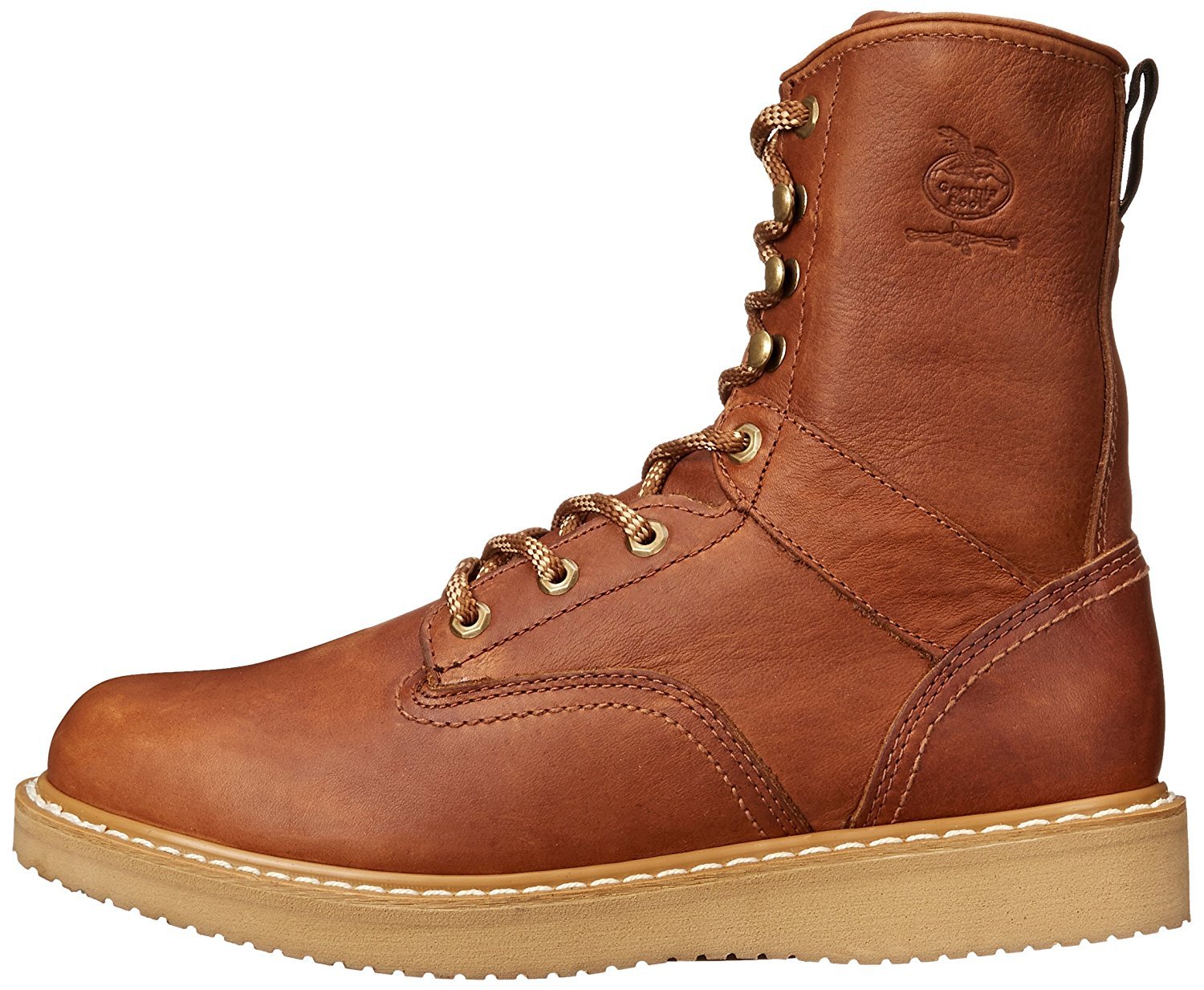
1. Georgia Boot Men’s Wedge Work Boots
Our pick — over 4.5★ from 750+ verified ratings; the strongest balance of quality and price.
The wedge-sole workhorse that makes ladders feel less scary and floors feel like carpet.
If you spend your days walking on concrete or climbing ladders, the wedge sole is a revelation — it spreads your weight across a flat surface instead of digging in with a heel. Buyers report that this design makes climbing ladders noticeably easier. The SPR leather is the real headline here: it is roughly 3 times stronger than traditional leather and resists abrasion 2.5 times as well, so barnyard chemicals and worksite grime are not wrecking these boots anytime soon.
The Goodyear welt construction gives you a boot that can be re-soled, which is rare at this price point. A steel shank runs through the midsole, providing the torsional rigidity that keeps your ankle stable when you step on a rock or a loose pipe. Comfort is the most-discussed trait here — the wedge sole offers flexibility and cushioning for 10 to 12-hour workdays, and owners say they are comfortable straight from the start with only a 7 to 10-day break-in. At 4.5 pounds per pair, they are not light, but that weight is the price of real durability. The recurring gripe is stitching: a few pairs arrive with uneven internal stitching near the heel, but it is a minor annoyance that disappears after break-in.
Georgia Wedge Comfort
- SPR leather resists chemicals and abrasion better than traditional leather
- Goodyear welt allows resoling, massively extending the boot’s life
- Wedge sole cushions every step on concrete and makes ladder work safer
Stitching Durability
- Some pairs have uneven internal stitching near the heel that needs a short break-in
- At 4.5 pounds, not the lightest option for walking long distances
Comfort Seekers: you work on hard flat surfaces and want a comfortable, resoleable boot that will last years.
Precision Workers: you need a lightweight, low-profile boot for crawling through tight spaces all day.
2. EVERBOOTS Men’s Waterproof Leather Work Boots 8″
The 8-inch shaft that cups your ankle like a brace and disappears under your jeans.
This is the only boot in the lineup with an 8-inch shaft, and that extra height changes everything for ankle support. Owners mention that the 8-inch height provides genuine ankle support and even overlaps with jeans, keeping debris out. The boots are welt-stitched rather than glued, which makes them more water-resistant and harder-wearing over time — a construction method usually found on boots costing twice as much.
Quality and comfort are the top positives owners mention. The boots are watertight in a few inches of standing water, according to buyers, and they require almost no break-in if you leave the top eyelet open. The trade-off is that they run large — most buyers recommend ordering half a size down or adding a thin insole. Durability is a mixed point: the leather can shrivel and harden if exposed to road salt or calcium spread in icy weather, so you need to condition them if you work around de-icers. Below 25°F, the insulation is thin; cold radiates through the sole. But if you need a tall, supportive boot for mild-weather work, this one beats more expensive brands on value.
Waterproof Leather Build
- 8-inch shaft delivers noticeably better ankle stability than standard 6-inch boots
- Welt-stitched construction gives genuine water resistance without glue failure
- Near-zero break-in if you leave the top eyelet loose
Break-In Period
- Runs large; most buyers size down half a size
- Leather can harden and curl if exposed to road salt or calcium spread
All-Weather Use: you want maximum ankle wrap in a budget-friendly tall boot for mild-weather work.
Quick Fit: you work in sub-freezing temperatures or around de-icing chemicals regularly.
3. Under Armour Men’s Micro G Stellar Mid Military and Tactical Boot
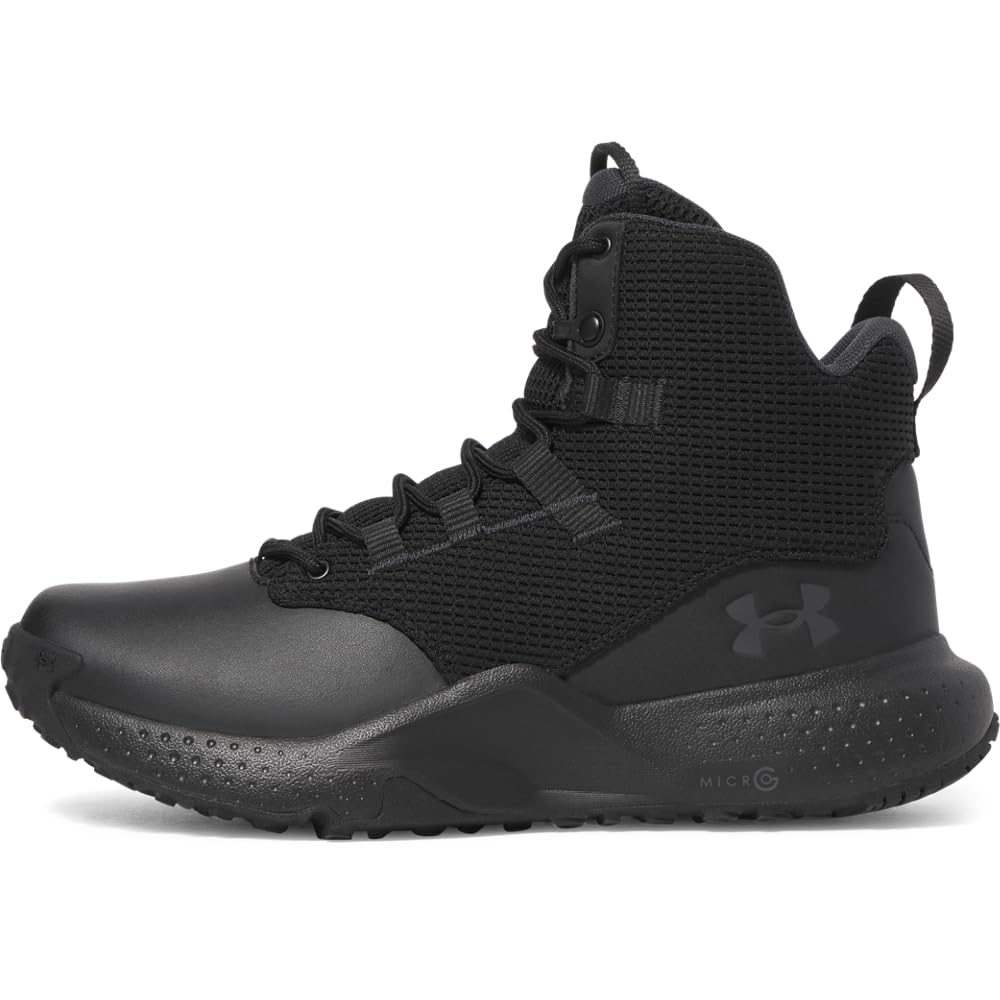
A tactical boot that feels like a running shoe but stands up to an 8-hour patrol.
This boot is built around Micro G foam, a cushioning system that makes the 6-inch mid profile feel remarkably light — buyers describe it as “light as a cloud.” The payoff is that you get ankle coverage without the heavy, stiff feel of a traditional work boot. The nylon shank keeps torsional rigidity in check, so your ankle does not roll when you pivot, while the wide toe box gives your toes room to splay.
Comfort is the most-praised aspect by a wide margin: owners regularly wear these for 8-hour shifts and report no foot pain or fatigue. The traction handles rain and snow well, and the water-resistant upper keeps light moisture out. The main downsides are that the sole wears down faster than heavier boots — noticeable wear after 1.5 months of indoor use — and the laces need to be double-knotted to stay tight. Some buyers also find the ankle stiffness noticeable during the first few wears. If you are on your feet all day and prioritize light weight over maximum ankle rigidity, this boot is a standout.
Lightweight Tactical
- Micro G foam cushioning makes long shifts on concrete bearable
- Wide toe box prevents pinching even after hours of standing
- Side zipper makes on/off fast and easy for tactical duty
Limited Support
- Sole wears faster than heavier boots; noticeable wear on indoor surfaces after about 6 weeks
- Ankle area feels stiff initially, requiring a short break-in
Active Duty: you need a lightweight, cushioned boot for long hours on your feet in a tactical or warehouse setting.
Heavy Lifting: you work in heavy construction where sole durability and maximum ankle stiffness are non-negotiable.
4. Timberland PRO Men’s Pit Boss 6 Inch Steel Safety Toe Industrial Work Boot

The roomy steel-toe workhorse that mechanics and warehouse crews keep buying over and over.
The Pit Boss has a reputation that speaks through its numbers — it is the most-reviewed boot in this lineup, and buyers keep coming back for more. The steel-toe construction meets ANSI safety standards and features a roomier toe box than most steel-toe boots, so your toes are not crammed inside a tight cage. Nylon shock-diffusion plates run through the midsole, providing torsional support that helps stabilize your ankle on uneven ground without adding excessive weight.
Durability is the consistent theme here. The Goodyear welt construction makes these boots heavier than the competition — buyers describe them as “very heavy” — but that weight translates into a boot that survives 1 to 2 years of heavy daily use. The rubber outsole has a hard, durable tread that shows minimal wear even after 30 days of abuse. The catch is that they are stiff from the start; expect a 3-day break-in period. Some buyers find them slightly wide in the standard width, so consider sizing down half a size if you need a snug fit. For the price, this is the best pure value in the list for someone who needs a steel toe and does not mind extra weight.
Steel Toe Classic
- Roomy steel toe box prevents pinching during long shifts
- Nylon shock-diffusion plates add torsional stability without making the boot clunky
- Goodyear welt construction makes them resoleable and incredibly durable
Heel Slippage
- Very heavy; not ideal for jobs that require constant ladder climbing or long walking
- Stiff straight from the start; requires a few days of wear to break in
Industrial Sites: you need a budget-friendly steel toe that can take abuse in a shop or warehouse for years.
Long Walks: you are on your feet all day walking long distances and need a lighter boot.
5. DC Shoes Mens Pure Work Dark Gray Composite Toe Boots
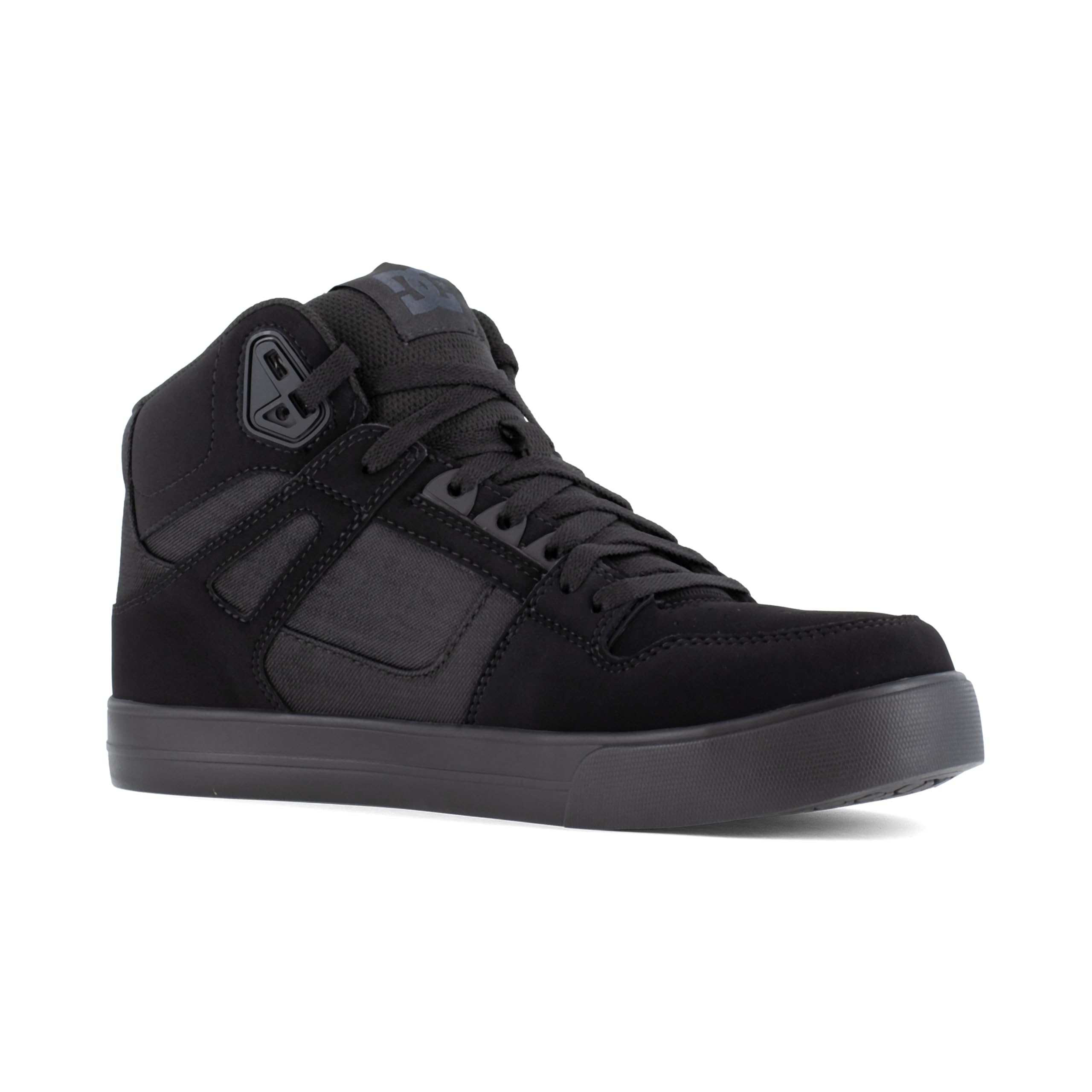
A work boot that feels exactly like your favorite skate shoes, but with a composite toe for safety.
DC took the familiar skate-shoe silhouette and added a composite toe that meets ASTM F2413 impact and compression standards — so your toes are protected without the heavy metal cap. The foam-padded tongue and collar provide the ankle wrap that skate-shoe fans expect, and the Pill Pattern tread gives you slip resistance that meets ASTM F3445 standards. Moisture-wicking nylon mesh lines the interior and a PU molded insole adds all-day cushioning.
Comfort is the standout here, and buyers are emphatic about it. Commercial electricians and mechanics report that these boots eliminated foot, leg, and hip pain they had with traditional work boots. The composite toe is well-padded and does not dig, and the boots feel light and flexible. The catch is that the interior does not breathe well — multiple customers note that their feet get sweaty and develop a strong odor by the end of the day. If you prioritize the feel of a sneaker over maximum ankle rigidity and do not mind swapping socks mid-day, this is a unique and effective option.
Breathable Composite
- Composite toe meets ASTM F2413 standards while staying light and flexible
- Foam-padded tongue and collar provide a locked-in feel without being stiff
- Pill Pattern tread meets ASTM F3445 slip resistance for wet jobsites
Thin Sole
- Minimal ventilation; feet get hot and develop odor during long shifts
- Suede upper shows wear faster in rough environments
Warm Climates: you want a safety toe boot that feels like a sneaker for warehouse, electrical, or light construction work.
Rough Terrain: you are in wet conditions all day or have strong sensitivity to foot sweat.
6. Timberland PRO Men’s 6 Endurance Steel Toe Met-Guard Puncture Resistant SR Boot
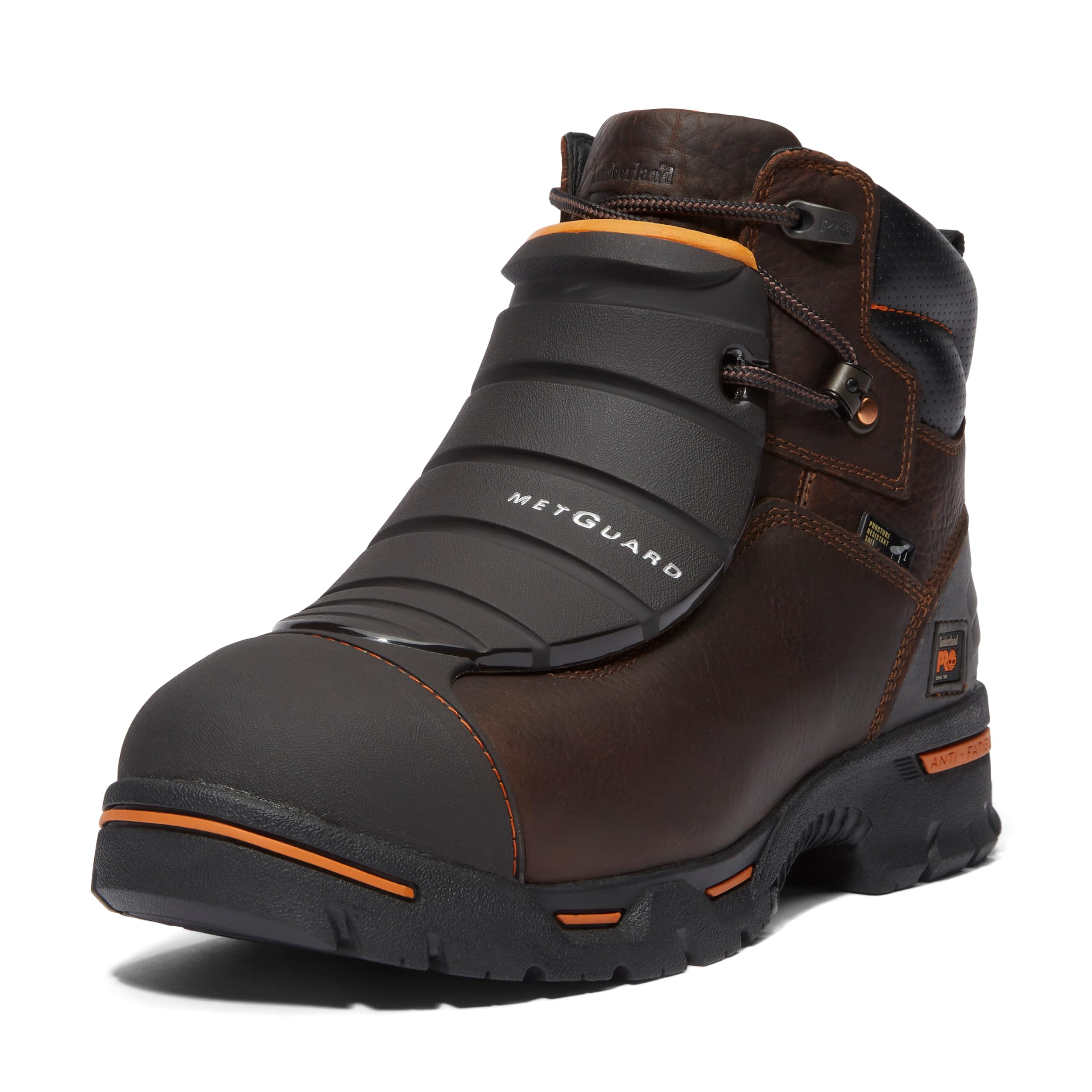
A steel-toe boot with an external met-guard that does not dig in when you squat.
This boot packs more safety features than anything else in the list — steel toe, external metatarsal guard, puncture-resistant plate, and a slip-resistant outsole with Ladder Lock heels that grip rungs. The external met-guard is a clever design choice: because it sits on the outside of the boot, it does not press into the top of your foot when you squat or kneel, which is a common complaint with internal guards. The Premium Timberland full-grain leather upper is reinforced with a rubber toe and backstay for extra abrasion resistance.
Comfort and quality are the top positives, with buyers specifically praising the roomy toe box that eliminates toe pressure. The Anti-Fatigue Technology footbed absorbs shock and returns energy, which makes a real difference on concrete floors. The catch is the weight — these are heavy boots, and owners say they are best for flat land and short walks, not for climbing or covering long distances quickly. Durability is mixed: some reviewers point out the soles falling apart before 7 months, while others are satisfied after 6 months of heavy use. For a welder or a worker who needs metatarsal protection without the usual discomfort, this boot is a strong pick.
Met Guard Protection
- External met-guard provides protection without pressing on your foot when kneeling
- Puncture-resistant plate and Ladder Lock heel add protection on hazardous sites
- Anti-Fatigue Technology footbed makes concrete floors easier to stand on all day
Stiff Upper
- Very heavy; not suitable for frequent climbing or long-distance walking
- Durability is inconsistent; some buyers see sole separation in under 7 months
Hazard Zones: you need metatarsal and puncture protection for welding, framing, or heavy industrial work.
Flexibility: you walk long distances or climb ladders throughout your shift.
7. Wolverine Men’s Blade Lx Waterproof Comp Toe Work Boots

A lightweight composite-toe boot with enough ankle support to keep you steady on a ladder.
The Wolverine Blade Lx uses Carbonmax nanotechnology to create a composite toe that meets ASTM F2413-11 M I/75 C75 EH standards while staying noticeably lighter than steel. The 6.5-inch shaft is a half-inch taller than the standard 6-inch boot, which gives your ankle a little more wrap without jumping to a full 8-inch profile. A nylon shank provides the torsional support you need for stability, and the EPX footbed cushions every step while flexing with your foot.
Fit is the most-praised aspect of this boot — a large number of owners mention it fits well straight from the start, with good support for plantar fasciitis and a toe box that does not pinch. The direct-attach construction seals out water effectively, and the slip-resistant rubber lug outsole handles wet surfaces well. The trade-off is that the breathability is poor; shoppers say that after an 8-hour shift, their feet are soaked with sweat. Durability is also mixed: some owners see the insole come apart quickly, and the toe area can wear down within a month if you are crawling on concrete. If you want a lightweight composite toe with good ankle support for moderate conditions, this boot fits the bill.
Blade Traction
- Carbonmax composite toe is lighter than steel while meeting ASTM safety standards
- 6.5-inch shaft offers slightly more ankle wrap than standard 6-inch boots
- EPX footbed provides good support for plantar fasciitis and long shifts
Narrow Fit
- Poor breathability; feet get uncomfortably sweaty during full shifts
- Toe area can wear down fast if you crawl on concrete surfaces regularly
Wet Surfaces: you want a lightweight, waterproof composite toe with good ankle support for warehouse or light construction work.
Wide Feet: you work in hot environments or need a boot that breathes during a full 8-hour shift.
Understanding the Specs
Shaft Height
The height of the boot shaft — measured from the bottom of the sole to the top collar — determines how much of your ankle and lower shin is covered. A 6-inch boot gives moderate lateral support and works well for flat, even surfaces. An 8-inch boot extends higher up the leg, providing significantly more resistance against rolling, which is why it is the preferred choice for rough terrain, ladder work, and heavy loads. Half-inch increments (like 6.5 inches on the Wolverine Blade Lx) offer a middle ground that is worth considering if you want extra coverage without the full 8-inch profile.
Shank Material
The shank is a rigid piece of material (steel or nylon) embedded between the outsole and midsole that prevents the boot from twisting during lateral movement. A steel shank provides maximum torsional rigidity, which is why it is standard in heavy-duty work boots — it keeps your ankle stable when you step on uneven ground. A nylon shank is lighter and still provides good support, but it is less rigid than steel. For jobs that involve significant side-hill walking, climbing, or carrying heavy loads, a steel shank is the safer choice. For flat-site work where weight matters more, a nylon shank is adequate.
Toe Type
Work boots typically come with either a steel toe or a composite (non-metal) toe. Steel toes are heavier but offer the highest impact and compression protection — they meet ANSI and ASTM standards for crushing hazards. Composite toes are made from materials like carbon fiber, Kevlar, or plastic; they meet the same safety standards but are lighter and do not conduct heat or cold, making them more comfortable in extreme temperatures. Composite toes also do not set off metal detectors, which matters for jobs that require passing through security checkpoints. The trade-off is that composite toes are thicker and can feel bulkier inside the boot.
FAQ
What is the best boot height for ankle support?
Can a steel shank really prevent ankle injuries?
How do I know if a work boot has good ankle padding?
Do composite toes provide enough protection compared to steel?
How long should a work boot with ankle support last?
Are waterproof work boots less breathable?
What does electrical hazard protection mean in a work boot?
Should I size up or down in work boots with ankle support?
Do wedge sole boots provide less ankle support?
How do I break in stiff work boots without pain?
Final Thoughts: The Verdict
For most people, the work boots with ankle support winner is the Georgia Boot Men’s Wedge because its SPR leather, Goodyear welt construction, and steel shank deliver a rare combination of durability, comfort, and resoleability at a mid-range price. If you want maximum ankle wrap, grab the EVERBOOTS 8-Inch Waterproof. And for a lightweight composite-toe option that feels like a sneaker, the DC Shoes Pure Work is the one to reach for.
How We Picked
We do not accept paid placement. Every pick is matched to a real buyer and a real use-case; we do not hands-on test units.
Sources & Methodology
Specifications: manufacturer listings and product documentation. Review insights: verified customer reviews, as of July 2026. Pricing: not shown on this page (it changes often); check the current price via the retailer link.
As an Amazon Associate, Calories Fit earns from qualifying purchases. This does not affect which products we feature.