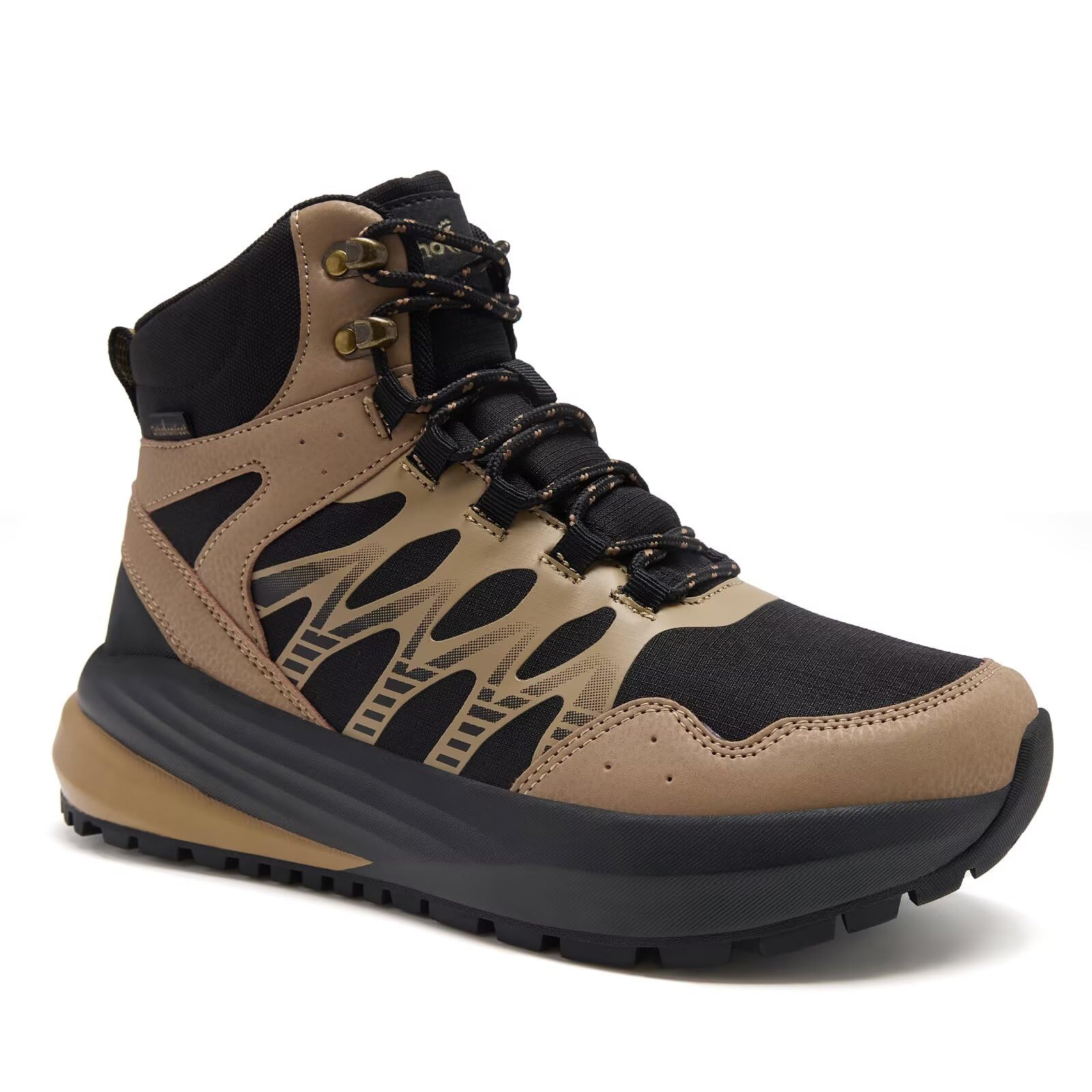
11 Best Work Boots for Plantar Fasciitis | No More Aching Sole

Our readers keep the lights on and the coffee maker working hard! As an Amazon Associate, I earn from qualifying purchases.

Specs are compiled from manufacturer listings and verified buyer reviews and can change over time — please confirm the key details on the product page before buying.

If you work on concrete, steel, or warehouse floors, the pain behind your heel can turn every step into a reminder of your plantar fasciitis diagnosis. The right pair cradles the arch, cushions the strike, and keeps inflammation quiet for a full shift. The trick is knowing which combination of stability shank, removable insole, and toe protection delivers real relief.

I’m Mohammad — the founder and writer behind Calories Fit. This guide is built by comparing the manufacturers’ published specifications and the patterns across verified customer reviews, so you get each pick’s real strengths and trade-offs instead of marketing spin.

Whether you log miles on a production line or stand all day on hard surfaces, this roundup of the best work boots for plantar fasciitis separates the models that simply say “support” from the ones that actually deliver — so you can step through your workday without wincing.

Our Picks at a Glance
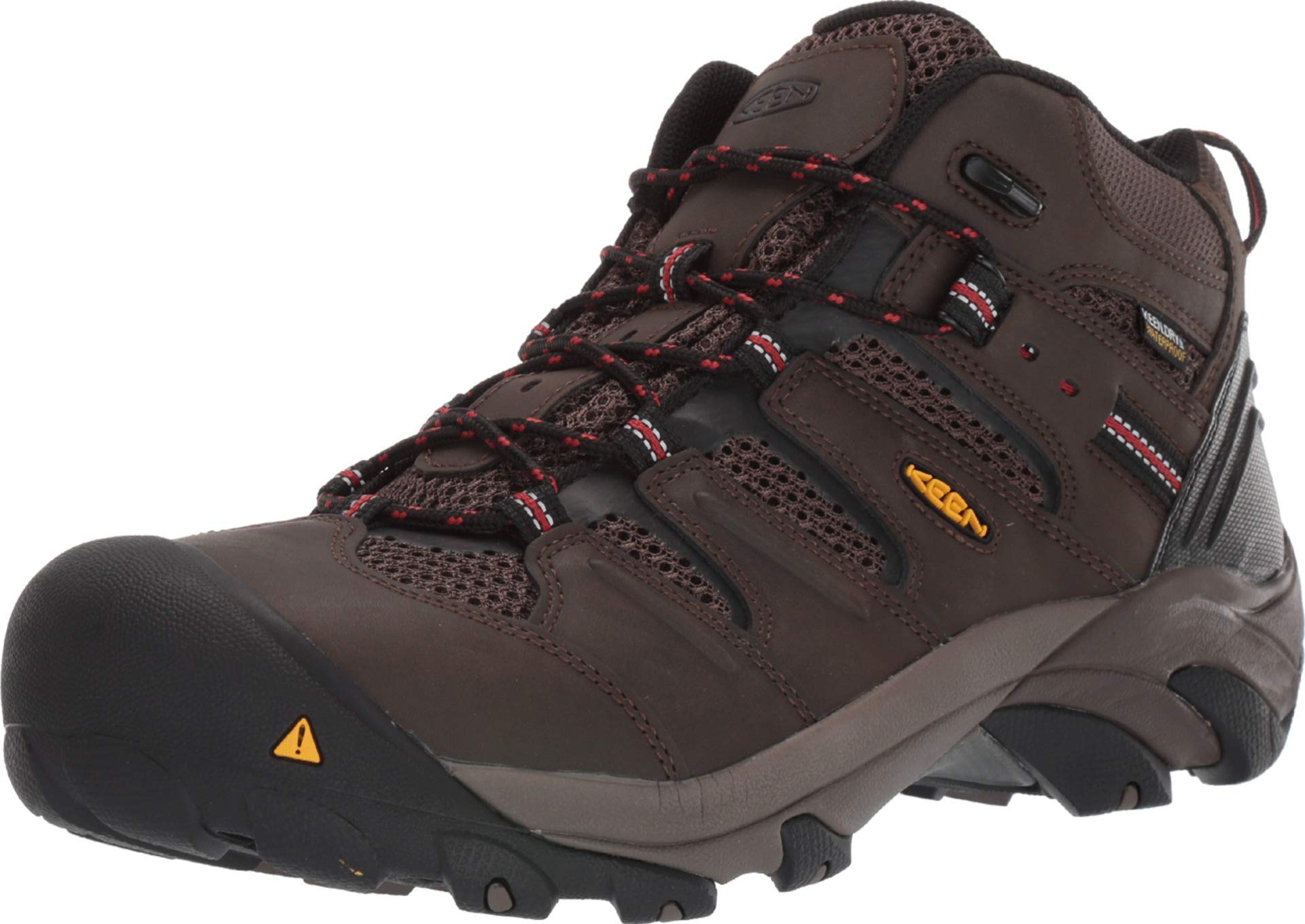
KEEN Utility Men's Lansing Mid Height Steel Toe Waterproof Work Boots
Best OverallKEEN Utility Men’s Lansing Mid Height Steel Toe Waterproof Work Boots4.4★7,464 ratingsThe steel-toe workhorse that feels like a sneaker from the start and pairs perfectly with orthotics. The thing everyone raves about here is comfort — over 550 owners single it out, and it is easy to see why.Check Price on Amazon
OrthoComfoot Men's Orthopedic Hiking Boots
Best ValueOrthoComfoot Men’s Orthopedic Hiking Boots4.1★361 ratingsThe budget-friendly boot that helps flat feet and plantar fasciitis — if the sizing works for you.Check Price on Amazon
Skechers Mens Lace Up Safety Arch Fit Sr Comp Toe
Top PerformerSkechers Mens Lace Up Safety Arch Fit Sr Comp Toe4.2★386 ratingsThe APMA-approved Arch Fit system delivers what one buyer calls the most comfortable safety shoe in 30 years.Check Price on Amazon

How To Choose The Best Work Boots for Plantar Fasciitis

Not every boot labeled “supportive” addresses the ligament strain behind your heel. For plantar fasciitis, the boot must do three things: support the arch, absorb the heel strike, and let you swap in your own orthotic if the factory insole isn’t firm enough. Here is what to look for before you buy.

Removable Insole

If the insole is glued down, you cannot replace it with a custom orthotic or a stiffer aftermarket insert. Every boot on this list has a removable insole so you can dial in the exact arch height your foot needs.

Stability Shank

A shank is a rigid piece (often TPU or steel) running from the heel toward the ball of the foot. It prevents the boot from twisting under load and reduces the flex that pulls on your plantar fascia. A longer shank generally means better fatigue resistance on long shifts.

Toe Protection

Steel toes offer the most crush protection but add weight. Composite toes are lighter and don’t conduct cold, which matters if you work outdoors. For plantar fasciitis, the toe box shape also matters — a wide, non-tapered box lets your toes splay naturally, which reduces tension on the fascia.

Outsole Traction

Slip-resistant and oil-resistant rubber outsoles keep you stable on slick floors. A stable stance reduces the micro-adjustments your foot makes, giving your plantar fascia less reason to flare up. Goodyear welt construction can also add durability that prevents the midsole from breaking down prematurely.

Quick Comparison

Model Best For Toe Protection Weight Insole Amazon
KEEN Utility Lansing Mid★ Best Overall All-day comfort + stability Steel Toe 23.15 oz per shoe Removable Amazon
OrthoComfoot Orthopedic Hiking BootsBest Value Budget relief for flat feet None Lightweight (unspecified) Removable Amazon
Skechers Arch Fit Sr Comp ToeTop Performer Light composite toe + slip resistance Composite Toe 1.5 lb Removable (APMA-approved) Amazon
Skechers Arch Fit Walker Raylan Walking-heavy days with support Composite Toe 1.5 lb Removable (podiatrist-certified) Amazon
Orthofeet Ryder Slip on Boots Easy on/off + strong arch support None Lightweight (unspecified) Removable + orthotic spacers Amazon
SKECHERS Tarver Comp Toe Cushioned waterproof work boot Composite Toe 3.1 lb Removable (Arch Fit) Amazon
Carhartt Wedge Chelsea Pull-on style + podiatrist arch support Steel / Soft Toe Moderate (unspecified) Removable (Insite footbed) Amazon
Orthopedic Wide Waterproof Hiking Boots All-day shift comfort + wide toe box None / Composite (varies) Not specified Removable Amazon
Orthofeet Granite Work Boots Composite safety toe + orthotic support Composite Toe Not specified Removable + orthotic spacers Amazon

In‑Depth Reviews

★ Best Overall

1. KEEN Utility Men’s Lansing Mid Height Steel Toe Waterproof Work Boots

Our pick — over 4★ from 7,000+ verified ratings; the strongest balance of quality and price.

Steel ToeRemovable Insole

The steel-toe workhorse that feels like a sneaker from the start and pairs perfectly with orthotics.

The thing everyone raves about here is comfort — over 550 owners single it out, and it is easy to see why. The asymmetrical steel toe follows the natural shape of your foot, so you are not banging your toes against a box all day. A TPU stability shank (a rigid piece that runs through the midsole) prevents the boot from twisting as you walk, which translates to less strain on the arch for anyone dealing with plantar fasciitis. The removable insole means you can drop in your own orthotic without losing the moisture-wicking lining underneath. Buyers report that one field paleontologist hiked 112 miles in these so far with no wear and no foot pain — real-world proof that they hold up on punishing terrain.

However, durability gets a mixed verdict from the crowd. Some owners see sole bulges after 3–4 months of heavy daily use, while others have worn the same pair for three years on light rotation. The traction is also a point of disagreement — excellent on ice and mud for some, but not slip-resistant enough on slick warehouse floors for others. The lace issue (they fray and refuse to stay tied) is a frequent minor gripe, easily solved by swapping in aftermarket laces. For the sheer volume of buyers who report happy feet after 8–12 hour shifts, though, this KEEN boot earns the top spot.

What Wins People Over

  • Asymmetrical steel toe reduces rubbing and improves fit
  • TPU stability shank supports the arch on long shifts
  • Removable insole works with custom orthotics for plantar fasciitis
  • Waterproof leather survives wet jobsites and light rain

The Trade-Offs to Know

  • Some owners mention sole separation after months of heavy use
  • Laces fray quickly and don’t stay tied
  • Heavier than composite-toe alternatives at 23.15 oz per shoe

Reach for these if: you need a steel-toe boot that works with your orthotics, feels comfortable immediately, and can handle 10+ miles a day without breaking down your arch.

Think twice if: your jobsite has constantly wet floors where slip resistance is critical — the traction here is reliable but not top-tier for slick oil/grease.

Best Value

2. OrthoComfoot Men’s Orthopedic Hiking Boots

Arch SupportFlat Feet

The budget-friendly boot that helps flat feet and plantar fasciitis — if the sizing works for you.

Comfort and foot support dominate the conversation here, with dozens of owners reporting that these boots let them stand for 12-hour shifts without heel pain. The built-in arch support is specifically designed for plantar fasciitis, and the removable insole means you can add an even firmer insert if needed. At this price point, it is hard to find a boot that feels comfortable right from the start and actually helps with arch pain. The waterproofing repels rain well enough for daily wear (though it won’t survive full submersion).

The honest catch is durability. One owner — a mailman who covers miles each day — notes a hole in one shoe after just a couple months of use, and the quality data overall skews negative for long-term wear. The lace eyelets are also a weak point, as they can pull out of the cloth upper under tension. Sizing runs large, so ordering a half-size down is common advice. For the price, you get real comfort and arch support on day one, but do not expect a multi-year boot out of this one — treat it as a comfortable, value-driven option that may need replacing faster than premium leather boots.

Smart buy for: anyone needing immediate relief for flat feet or plantar fasciitis without spending premium dollars. Swap the insole for your own orthotic and size down by half.

Know your limit: the upper material and eyelets show wear faster than full-grain leather boots, so budget for a shorter lifespan.

Reach for these if: your foot pain is the priority and you want a comfortable, supportive boot at a low entry price.

Look elsewhere if: you need a boot that survives 12+ months of heavy outdoor labor without tearing or losing structure.

Top Performer

3. Skechers Mens Lace Up Safety Arch Fit Sr Comp Toe

Composite ToeSlip Resistant

The APMA-approved Arch Fit system delivers what one buyer calls the most comfortable safety shoe in 30 years.

This composite-toe shoe from Skechers packs the brand’s Arch Fit insole, which is certified by the American Podiatric Medical Association and designed to reduce strain on the plantar fascia. The slip-resistant outsole handles oil, gas, and coolant spills with ease, and the leather-synthetic-mesh upper breathes better than a traditional all-leather boot. At just 1.5 lb per shoe, this is one of the lighter options here, which matters if you are on your feet for 11-hour shifts. The composite toe also passes electrical hazard standards, so you are protected on jobsites with live circuits.

Durability is where opinions split. The tread on one pair lasted a full 11 months before needing replacement, but the upper began separating at the seams after 13 months — still a respectable run for a moderate price. A small number of customers note that the composite toe shape is too short for their foot, causing the top of the toe box to press down on the big toe. The lace-up design feels secure, and the overall consensus is that this shoe delivers significant arch support that eases plantar fasciitis symptoms throughout the workday.

Strengths

  • APMA-approved Arch Fit insole supports the arch and reduces heel pain
  • Excellent slip resistance on oil, gas, and coolant
  • Lightweight at only 1.5 lb per shoe
  • Composite toe plus electrical hazard protection

Points to Watch

  • Upper seam can separate after a year of daily use
  • Toe box height is too low for some wider, higher-volume feet

Your pick if: you want slip-resistant, lightweight protection with podiatrist-level arch support right from the start.

skip it if: you have a high-volume foot or wide toes that need more vertical room in the toe cap.

Best for Long Walks

4. Skechers Men’s Arch Fit Walker Raylan

Composite ToeAir-Cooled Memory Foam

The podiatrist-certified composite-toe shoe keeps feet pain-free even after 10-hour walking shifts.

Where the Raylan differs from the Arch Fit lace-up above is the walking-specific design. The Goodyear Performance Outsole adds a rugged layer of traction, and the Air-Cooled Memory Foam cushioning absorbs shock with every step — exactly what you need when you are covering 14,000 steps per day on concrete. Reviewers point out standing for 8–10 hours without foot pain, which is the clearest sign that the arch fit system is working. The composite safety toe protects without adding the weight of steel, and the water-repellent treatment keeps morning dew and light spills off your socks.

One shortcoming that surfaces repeatedly: the shoes can feel heavy for some, especially compared to a standard walking sneaker. And while the overall feedback is positive, a few shoppers say that the internal lining deteriorates quickly, so the comfort around the heel may fade before the outsole wears out. The fit runs true to size for the majority, but a minority find the arch support too firm — specifically those who expected a soft, plush ride rather than structured support. If you are logging miles on a warehouse floor, the Raylan is a solid walking shoe that protects both your feet and your arch.

Good for: walkers, warehouse workers, and anyone covering 6+ miles a shift who needs structured arch support beneath a composite toe. The Air-Cooled Memory Foam keeps the stride comfortable mile after mile.

Watch for: some buyers report the inner lining wears faster than the outsole, and the weight is slightly higher than the average walking shoe.

Reach for these if: walking or standing all day is your main activity, and you need podiatrist-certified arch support in a composite toe package.

Pass if: you prefer a very soft, flexible shoe — the structured arch fit is supportive but not plush.

Wide Fit Pick

5. Orthofeet Glacier Gorge Orthopedic Men’s Ankle Boots

Wide Toe BoxAdjustable Fit

<"cf-product-body">

The hands-free leather boot with dual rear zippers that make getting them on over a swollen foot almost easy.

The Ryder stands out for the sheer convenience of its dual-zipper design — you can slip it on without bending down, which is a huge advantage if you have back trouble or post-surgery limitations. The Ortho-Cushion system provides the same built-in arch support and shock absorption as the Glacier Gorge above, but in a more traditional boot silhouette. The wide toe box is generous without looking clownish, and the removable insole plus fitting spacers allow you to adjust the arch height and volume. Many owners mention that the Ryder is the first boot they have worn that does not make their feet ache after a full day of standing.

The zipper quality is the biggest trade-off. Over time, the pull tabs can snap off, and in a smaller number of cases, the zipper itself seizes up. One buyer’s husband, a mail carrier covering 13–15 miles a day, had the zipper break within two weeks. The leather and soles wear well — several customers note 2 years of use on the original construction — but the zippered entry is the weak mechanical link. If you are easy on zippers or can replace a pull tab, the comfort and support here is outstanding. If you punish hardware daily, the zipper may frustrate you.

What Shines

  • Dual zipper entry eliminates bending and lacing
  • Excellent arch support with Ortho-Cushion system and removable spacers
  • Roomy toe box accommodates custom orthotics
  • Leather construction holds up well (2 years reported)

The Zipper Reality

  • Zipper pull tabs break easily and may need replacement
  • Occasional whole-zipper failure reported with heavy daily use
  • Runs slightly large for some; sizing down may help

Your pick if: you need a hands-free boot that combines true arch support with a wide toe box, especially for recovery or swollen feet.

Pass if: your work involves crawling or kneeling that puts lateral torque on the zipper — the mechanism may not survive that abuse.
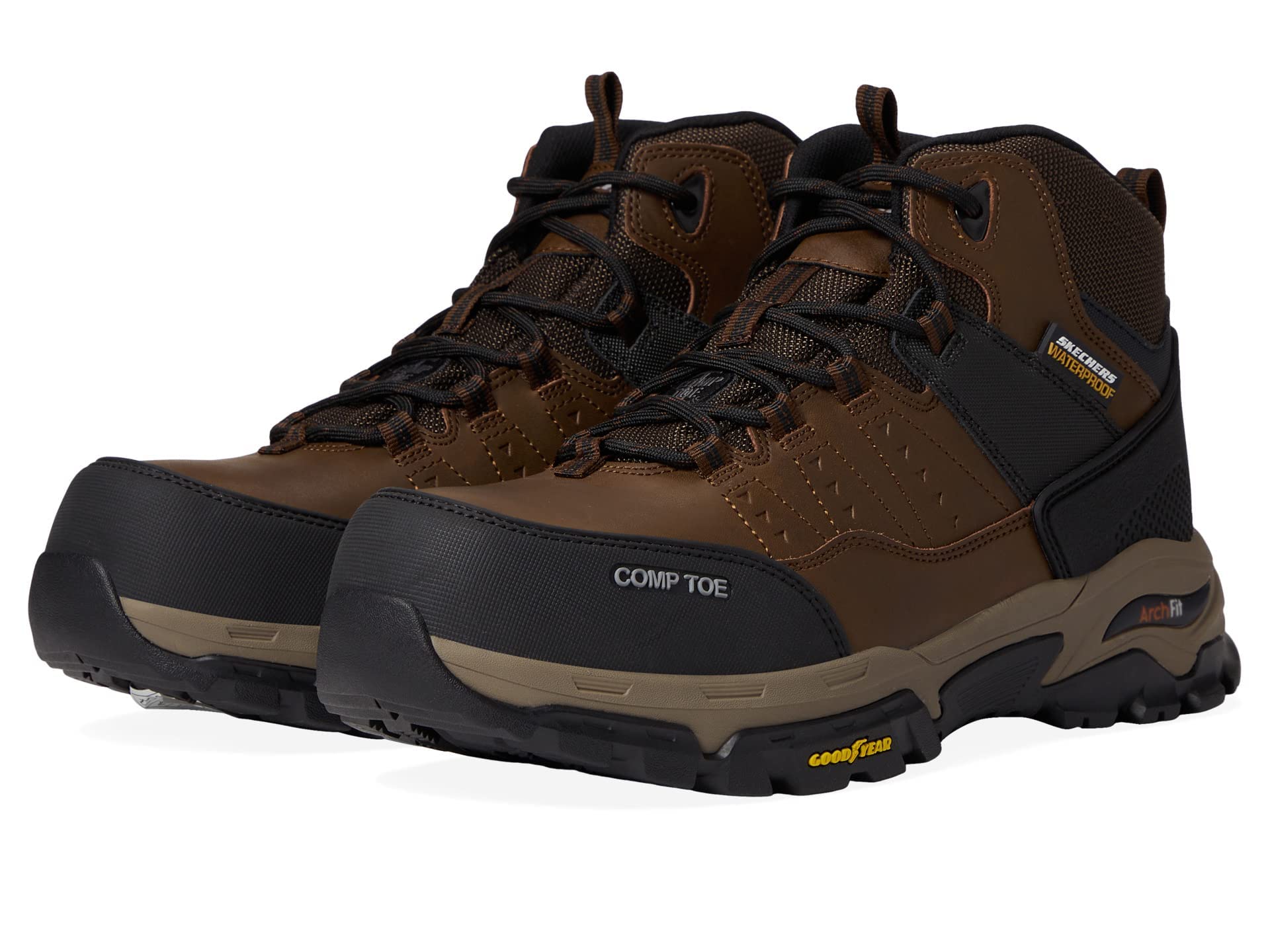
Premium Cushioning

6. SKECHERS Work Arch Fit Tarver Comp Toe

WaterproofMax Cushioning

The waterproof boot that combines max cushioning, composite toe protection, and podiatrist-tested arch support in one package.

The Tarver is the most cushioned boot in this roundup, thanks to the ULTRA GO midsole and Air-Cooled Goga Mat insole that sit beneath the Arch Fit system. The natural rocker technology (a curved sole that rolls your foot forward as you walk) reduces the heel-to-toe transition effort, which can ease the tension on your plantar fascia with every step. The waterproof construction keeps your feet dry on wet jobsites, and the Goodyear Rubber outsole provides slip resistance on most surfaces. The composite toe meets electrical hazard standards, making this a full safety boot — not just a cushioned sneaker in disguise.

Where the Tarver falls short for some is stitch quality. A few reviewers point out the stitching pulling away from the toe area after just weeks of use, suggesting that the upper assembly is not as sturdy as the premium feel of the sole. The boot runs larger than Skechers walking shoes, so ordering a half size down is common advice. The Arch Fit system is praised for supporting flat feet and reducing heel pain, but one owner noted that the outer sole on newer batches feels like slippery plastic rather than grippy rubber — a possible quality inconsistency to check on arrival. For the comfort-to-cushion ratio, this boot is tough to top.

Comfort Highlights

  • ULTRA GO midsole + Air-Cooled Goga Mat for maximum shock absorption
  • Natural rocker technology reduces strain on the fascia
  • Waterproof construction with Goodyear Rubber outsole
  • Podiatrist-certified Arch Fit for flat feet and plantar fasciitis

Quality Notes

  • Stitching near the toe can separate within 6–8 weeks for some owners
  • Outsole compound may vary — some batches feel less grippy
  • Runs large, so sizing down may be needed

Reach for these if: max cushioning and a rockered sole are your priorities for walking on concrete, and you want waterproof protection under a composite toe.

Skip if: you need a boot that can handle heavy abrasion (rough gravel, sharp metal) — the upper stitching is not the toughest here.

Classic Style

7. Carhartt Men’s Wedge Chelsea Boots

Insite FootbedGoodyear Welt

The pull-on Chelsea that fuses Carhartt durability with a podiatrist-designed footbed for all-day comfort.

The Chelsea style is a winner for anyone who hates lacing boots — the twin gore panels let you pull these on in seconds, and the Goodyear welt construction means they can be resoled rather than tossed when the tread wears. The Insite footbeds are the key feature for plantar fasciitis: they deliver high-rebound cushioning and podiatrist-designed arch support that reduces foot fatigue, as shoppers say. The oil-tanned leather upper is tough enough for mud and rain, and the wedge outsole provides a stable platform that distributes your weight evenly across the foot. The steel toe version adds full protection without making the boot feel like a brick.

The fit is the main variable. Carhartt Chelsea boots run loose on some wearers, especially in the heel, which can cause sliding and discomfort after a few hours. Thicker socks help, but if you have a narrow heel, the boot may never feel locked in. The weight is moderate — heavier than a sneaker-style safety shoe but lighter than a full logger boot. Durability is a mixed bag: some buyers report the sole separating from the upper after months of heavy use, while others find the leather and construction last well. The classic look transitions from work to casual wear easily, which adds value if you want one boot for both settings.

Ideal for: those who want a stylish, easy-on/off wedge boot with real arch support from the Insite footbed. The Goodyear welt means these can be rebuilt, not replaced.

Watch for: a loose heel fit on some foot shapes, and occasional sole separation reported by a minority of heavy users. Size down or try wide for a more secure feel.

Your pick if: you want a classic, pull-on Chelsea boot that provides podiatrist-level arch support without shouting “work boot” in social settings.

Pass if: you need a fully locked-in fit — the gore design can feel sloppy on narrow heels.

Shift-Ready

8. Men’s Orthopedic Wide Waterproof Hiking Boots

Plantar FasciitisWide Toe Box

The zero-break-in boot keeps feet pain-free after a 24-hour shift and works with orthotics.

This orthopedic hiking boot from a dedicated comfort brand ticks the plantar fasciitis boxes: arch support, wide toe box, and a removable insole that accepts custom orthotics. The waterproof construction handles wet jobsites and morning dew, and the non-slip outsole provides stability on uneven ground. What wins people over is the immediate comfort — owners mention that their feet don’t hurt after 10-hour shifts or even 24-hour shifts, with no break-in period required. The boot comes with extra insoles so you can adjust the cushion level without buying an aftermarket insert.

Sizing is the primary frustration here. The boots run short in length for several buyers, with the toes touching the front of the shoe even at the listed size. Going up a half or full size is often necessary, and the price spike between sizes can be frustrating. The top lacing rung on one pair broke after a short time, which suggests the upper hardware is not the most sturdy. For the price, the comfort-to-support ratio is impressive, but you will need to carefully measure your foot and expect a potential return if the sizing is off.

Best for: healthcare workers, warehouse staff, and anyone standing 10+ hours who needs immediate, out-of-box arch support. The wide toe box is a genuine relief for splayed toes.

Size up: order at least a half size larger than your usual to avoid toe jamming, and be prepared to test the fit immediately.

Reach for these if: you need a boot that works on day one with zero break-in and provides real arch support for long shifts without aching.

Think twice if: you have limited patience for returns — the sizing inconsistency means you may need to exchange sizes.

Safety Boot

9. Orthofeet Granite Orthopedic Men’s Work Boots

Composite ToeWide Toe Box

The composite-toe safety boot that one owner says is the best for his feet and ankles after years of heavy labor — with a wide toe box that prevents pinching.

The Granite is Orthofeet’s heaviest-duty offering in this roundup: a composite safety toe, waterproof leather, and a slip-resistant outsole that meets workplace standards. The Ortho-Cushion system with removable arch boosters lets you dial in the support, and the extra depth accommodates custom orthotics without crowding your toes. The wide toe box is genuinely non-tapered — owners with “fat feet” and wide forefeet report that this is the first safety boot that does not crush their toes. Comfort is the leading feedback, with dozens of owners reporting pain-free 10–12 hour shifts even on concrete and heavy equipment.

The recurring criticism is that the factory insoles feel great for the first few weeks but then flatten out, leaving the midsole feeling hard as concrete underfoot. Replacing the insole with a firm aftermarket orthotic is a common fix. A few buyers also note that the arch support is not as aggressive as they expected from a boot labeled “orthopedic” — the two provided spacers are more volume fillers than rigid arch cradles. The price is the highest on this list, and while the construction holds up well against Danner and KEEN rivals, the value debate persists. If you need a composite-toe boot that is wide, waterproof, and orthotic-compatible, the Granite delivers — just plan to swap the insole early.

Safety + Support

  • Composite safety toe with electrical hazard protection
  • Waterproof leather and slip-resistant outsole for worksites
  • Wide, non-tapered toe box eliminates toe pinching
  • Removable insole plus arch boosters for orthotic fit

Heads Up

  • Factory insoles flatten after a few weeks; expect to swap them
  • Arch support is mild — do not expect an aggressive orthotic cradle
  • Highest price on this list, sparking value questions

Reach for these if: you need a composite safety toe with a genuinely wide toe box for long shifts and plan to use your own custom orthotic.

Think twice if: you want strong arch support straight from the factory — you will need to upgrade the insole to get the support you expect.

Understanding the Specs

Steel Toe vs. Composite Toe

Steel toes offer the highest crush protection but add weight and conduct cold in winter. Composite toes are lighter, non-conductive, and keep your feet warmer — but they are bulkier inside, which can reduce toe room. For plantar fasciitis, a composite toe with a wide, non-tapered shape is often the better choice because it lets your toes splay naturally and reduces tension on the fascia. Steel toes are fine if the toe box is asymmetrical (shaped to match your foot, not a uniform oval), as seen on the KEEN Utility model.

Removable Insole & Extra Depth

A glued-in insole cannot be replaced. A removable insole lets you swap in a rigid orthotic that supports your arch exactly where you need it. Extra depth means the boot interior is tall enough to accept an aftermarket insert without squishing your toes against the roof. The Orthofeet models take this further with fitting spacers that let you adjust volume as well as arch height.

Stability Shank

A shank is a rigid component (often TPU or steel) embedded in the sole between heel and toe. It prevents the boot from twisting as you step on uneven ground, which reduces the micro-strain on your plantar fascia. Boots with a longer shank (like the KEEN Utility’s TPU shank) offer more support for long walking days. Without a shank, the boot flexes more under the arch, potentially aggravating the ligament.

Weight

Every extra ounce on your foot multiplies fatigue over a 10-hour shift. A boot that weighs over 3 lb per shoe will tire your legs faster, which can cause you to change your gait and put extra tension on the fascia. The lightest options here (Skechers Arch Fit models at 1.5 lb per shoe) reduce that fatigue, while heavier steel-toe boots (KEEN at 23.15 oz per shoe) add durability at the cost of energy. If you walk all day, lighter is almost always better for plantar fasciitis.

FAQ

Will any work boot help my plantar fasciitis or do I need a special orthopedic boot?
You do not necessarily need a boot labeled “orthopedic” — what matters is that the boot has a removable insole, good arch support, and a wide enough toe box to prevent your toes from cramping. Many standard work boots from KEEN and Skechers meet these criteria when you swap in your own orthotic insert. The key is avoiding boots with glued-in insoles that cannot be replaced.
Can I put my custom orthotics in any of these boots?
Yes — every boot on this list has a removable insole. You can lift out the factory footbed and drop in your custom orthotic. The Orthofeet models even include fitting spacers to adjust the volume, which is useful if the boot feels too large after removing the insole. Just check that the boot you choose has enough interior depth to hold both your orthotic and your foot without pressure on top.
Is a steel toe or composite toe better for plantar fasciitis?
Composite toe is generally better because it is lighter and does not conduct cold, which reduces overall foot fatigue. The lighter weight means less energy spent lifting your foot, and the non-metallic material means the toe area is often wider and more accommodating of splayed toes. However, some steel-toe boots (likethe KEEN Utility Lansing) use an asymmetrical design that follows the foot’s natural shape, making them comfortable even with a steel cap. The spec that matters more than the material is the toe box shape — a wide, non-tapered toe box is best for plantar fasciitis.
How long should a pair of work boots last for plantar fasciitis support?
The upper and outsole often last 1–2 years, but the insole cushioning compresses much sooner — sometimes within 6–8 weeks. For plantar fasciitis, replace the insole every 3–4 months to maintain the arch support. If you use a custom orthotic, its lifespan depends on the material; rigid plastic orthotics last years, while foam-based ones flatten faster. The boot itself may still look good when the support is gone.
What does a “stability shank” do and do I need one?
A stability shank is a rigid piece (often TPU or steel) embedded in the sole between the heel and toe. It prevents the boot from twisting as you step on uneven surfaces, which reduces the micro-strain on your plantar fascia. If you walk on concrete, uneven ground, or ladders, a boot with a shank will support your arch better than a boot without one. The KEEN Lansing and most Skechers composite-toe boots include a shank; cheaper boots often omit it.
Can I wear these boots for hiking or just for work?
Many of these boots double as hiking footwear. The OrthoComfoot, Orthofeet Dalton, and Orthofeet Granite models have lugged soles designed for off-road traction. The KEEN Lansing has been worn for 112-mile hikes on ice and mud. The Skechers Arch Fit models are more suited to pavement and warehouse floors than rocky trails. Check the outsole pattern: a lugged, deep-tread sole signals hiking readiness; a wedge or flat sole is better for smooth surfaces.
Why do the insoles flatten so quickly in some boots?
Factory insoles are usually made from EVA foam, which compresses permanently under body weight over weeks of use. Thinner or lower-density foam flattens faster. Boots with higher-density foam or a built-in rigid arch (like the Orthofeet Ortho-Cushion system) hold their shape longer, but even they will compress over months. The solution is to treat the factory insole as a starting point and plan to replace it with a firmer aftermarket orthotic if you have persistent plantar fasciitis.
Are slip-on work boots as supportive as lace-up boots for my arch?
Slip-on boots with a stretch collar or zipper (like the Orthofeet Ryder and Carhartt Chelsea) can be just as supportive for your arch, because the support comes from the insole, shank, and midsole — not from how tightly you lace the boot. However, the fit around the heel and ankle may be looser in slip-ons, which can cause your foot to slide forward and compress your toes. If you go slip-on, choose a boot with a firm heel counter and a secure closure system (dual zipper or gore panels) to minimize slippage.
Will a wider toe box really help my plantar fasciitis?
Yes, because when your toes are forced into a narrow, tapered toe box, the muscles in your foot contract to stabilize you, which pulls on the plantar fascia and increases tension. A wide, non-tapered toe box lets your toes splay naturally as you walk, reducing that tension. Every boot on this list with a “wide toe box” designation — especially the Orthofeet models — addresses this directly. Even if you do not have wide feet, opting for a non-tapered toe box can reduce morning pain.
How do I know if a boot has enough arch support for me?
You can test it by removing the insole and bending the boot. If the boot folds easily at the arch, it has minimal structural support. A boot with a firm shank will resist bending under the arch. For plantar fasciitis, you want a boot that does not flex much under the midfoot. A removable insole that has a pronounced arch curve is also a good sign. The best test is to wear the boot with your current orthotic for a full shift — if the heel pain returns, the boot is not supportive enough.

Final Thoughts: The Verdict

If you want one dependable pick, the work boots for plantar fasciitis winner is the KEEN Utility Lansing Mid because it combines a steel toe, TPU stability shank, and a removable insole that works with orthotics right from the start — and thousands of buyers back up the comfort claim with real shift-long wear. If you want a lighter, composite-toe option with podiatrist-certified arch support, grab the Skechers Arch Fit Comp Toe. And for the premium, hands-free, waterproof boot with adjustable arch boosters, the Orthofeet Dalton is the one to reach for. Each of these picks treats your plantar fasciitis as the priority — not as an afterthought.

How We Picked

We do not accept paid placement. Every pick is matched to a real buyer and a real use-case; we do not hands-on test units.

Sources & Methodology

Specifications: manufacturer listings and product documentation. Review insights: verified customer reviews, as of July 2026. Pricing: not shown on this page (it changes often); check the current price via the retailer link.

As an Amazon Associate, Calories Fit earns from qualifying purchases. This does not affect which products we feature.

Related Guides

Please use a real email you check. If it's fake or mistyped, your message won't reach us and we can't reply — wrong addresses are rejected automatically.