
Our readers keep the lights on and the coffee maker working hard! As an Amazon Associate, I earn from qualifying purchases.
Specs are compiled from manufacturer listings and verified buyer reviews and can change over time — please confirm the key details on the product page before buying.
You have probably tried rolling out pie dough with a pin that sticks, wobbles, or makes lopsided crusts. The right wooden rolling pin turns lumpy dough into an even sheet without frustration. The key differences are wood type, shape (tapered or straight), and handle preference. This guide covers nine reliable wooden rolling pins, from lightweight French models to hefty American-made maple dowels, to match your baking style.
I’m Mohammad — the founder and writer behind Calories Fit. This guide is built by comparing the manufacturers’ published specifications and the patterns across verified customer reviews, so you get each pick’s real strengths and trade-offs instead of marketing spin.
If you mostly bake cookies or pies, the best wooden rolling pin for most people is the Muso Wood Walnut French Pin — its light weight and tapered shape give you easy control without handles. A straight dowel like the Etens works better for pizza, and a fixed-depth pin like the Ann Clark takes the guesswork out of sugar cookies.
Our Picks at a Glance


How To Choose The Best Wooden Rolling Pin
The right rolling pin depends on what you bake most. A French-tapered pin (one that narrows at the ends) lets you feel the dough and control thickness for thin pastries. A straight dowel (a constant-thickness rod) works for general rolling. Fixed-depth pins take the guesswork out of cookie thickness. Wood type matters — maple and walnut are dense and smooth, while beech is lighter and more affordable.
French Tapered vs Straight Dowel vs Handled
A French tapered rolling pin narrows at each end, which lets your hands sit directly on the wood and feel the dough’s resistance — great for delicate pastries where you need to adjust thickness mid-roll, like a croissant that should be thicker at the center. A straight dowel (cylindrical rod) gives uniform contact across the full length, which makes it easier to roll large sheets of pizza or pasta dough evenly. Handled pins spin on a rod, which can reduce control and often push dough unevenly at the edges. Most bakers who upgrade from handled to a French or dowel style never go back.
Wood Type: Maple, Walnut, Beech, and Sapele
Maple is dense, hard, and fine-grained — it resists absorbing moisture and holds up to years of use. Walnut is slightly lighter and has a rich dark color that looks striking in the kitchen. Beech is a workhorse wood, moderately hard and smooth, often used for mid-range pins. Sapele is a tropical hardwood similar to mahogany, dense and naturally lustrous. All four take mineral oil well, which keeps the surface non-stick and safe for food contact.
Length and Diameter
Most rolling pins fall between 15 and 24 inches long. A 15-to-17-inch pin fits standard kitchen drawers and is easy to maneuver. An 18-to-20-inch pin gives you enough length to roll a full pie crust or a large pizza without the dough overhanging the edges. A 24-inch pin handles big batches but may require dedicated storage like a hanging rack. Diameter typically ranges from 1.5 to 1.75 inches — thicker pins feel heftier and require less downward force to roll dough flat.
Fixed-Depth Rings vs Free Rolling
If you bake cut-out sugar cookies or gingerbread that needs a consistent thickness for even baking, a rolling pin with fixed-depth rings or knobs removes the guesswork. These rings sit on the ends and stop the pin from pressing the dough thinner than a set height (usually 1/4-inch or 1/8-inch). The trade-off is that you cannot taper the thickness mid-roll — every part of the dough ends up the same height. For pies and pastries where a variable thickness helps create flaky edges, a free-rolling pin is better.
Quick Comparison
| Model | Best For | Length | Diameter | Wood Type | Amazon |
|---|---|---|---|---|---|
| Muso Wood Walnut French Pin★ Best Overall | French rolling control | 15.7 in | Tapered | Walnut | Amazon |
| Muso Wood Sapele French PinPremium Feel | Heftier French taper | 17.5 in | Tapered | Sapele | Amazon |
| Etens Straight Dowel PinBest Value | Uniform thickness rolling | 17.3 in | 1.73 in | Beech | Amazon |
| KARRYOUNG Walnut French Pin | Compact French taper | 17 in | Tapered | Walnut | Amazon |
| Fletchers’ Mill Bakery Pin | Classic heavy dowel | 18.5 in | 2.75 in | Maple | Amazon |
| J.K. Adams Lovely Maple Pin | Fixed-thickness rolling | 24 in | 1.75 in | Maple | Amazon |
| Ateco Maple Dowel Pin | Professional dowel use | 19 in | 1.75 in | Maple | Amazon |
| Ann Clark Perfect Cookie Pin | 1/4-inch cookie thickness | 16 in | Fixed depth | Maple | Amazon |
| Frieling Roller Pin | Large-barrel handled pin | 15 in barrel | 2.75 in | Maple | Amazon |
In‑Depth Reviews
1. Muso Wood Decorative French Rolling Pin (Walnut)
Our pick — over 4.5★ from 850+ verified ratings; the strongest balance of quality and price.
The walnut French roller that turns dough work into a delightfully smooth affair.
This pin is the one that converts dough-fearers into confident bakers. Its tapered ends (narrower at each end) let you control thickness simply by shifting your hands — no guide rings, no handles, just your palms and the wood. The surface is polished three times and treated with mineral oil three times, so dough slides rather than sticks, even with sticky pie crusts or fondant (a sugar paste used to cover cakes). At 8.48 ounces, it is noticeably lighter than a marble or heavy maple pin like the Fletchers’ Mill, which buyers report makes a real difference when you are rolling batch after batch. One reviewer noted it makes “the old handled pin a thing of the past.”
The 15.7-inch length keeps it easy to store in a standard kitchen drawer — a win for anyone short on counter space. Owners mention that a quick rinse with water and a wipe-down is all it needs — no soaking, no soap, no fuss. A few note that it is not long enough for extra-wide dough sheets, so if you habitually roll pizza dough for a 16-inch pie, you may want the longer 17.5-inch Muso sapele pin below. But for everyday cookies, pie crusts, bread, and fondant, this walnut pin outclasses just about everything near its price tier. The customer consensus is overwhelming: it looks great, rolls beautifully, and cleans in seconds.
Your Hands Will Thank You: A lightweight, well-finished French pin that makes even rolling intuitive for bakers of any skill level.
One Real Limit: If your go-to bake is a very large pizza or a massive puff pastry sheet, the 15.7-inch length may feel a touch short — the 17.5-inch sapele pin next up is a better fit.
2. Muso Wood Sapele French Rolling Pin
The heavier, longer French pin for bakers who want heft with their taper.
If the walnut pin above feels too light, this sapele-wood version is the natural upgrade. It is crafted from solid sapele — a dense, durable tropical hardwood — and its 17.5-inch length gives you a 13% longer rolling surface than the 15.75-inch walnut pin, which means one roll covers more dough. Owners rave about its weight: reviewers describe it as “sturdy” and “heavy,” which translates to more momentum with less muscle effort. The surface is hand-sanded three times for an exceptionally smooth finish that resists sticking without needing a heavy dusting of flour.
The tapered ends, like all French-style pins, give you fine control over dough thickness — press harder on the center for a thicker disc, ease up at the edges for a tapered sheet. Customers note it is “perfect for pizza making” and note that it makes “the old handled pin a thing of the past.” The one honest caveat several reviews mention is the length: at 17.5 inches, you need a big drawer to store it. If your kitchen storage is tight, the smaller walnut pin is a smarter fit. Otherwise, this sapele pin is a beautiful, durable investment that feels like it will last a lifetime.
A Heavier Dancer: Sapele wood adds welcome heft and length for serious bakers who roll large doughs — pizza, pasta, pie crust.
Drawer Space Check: The 17.5-inch total length demands a deep drawer or cabinet shelf; not ideal for cramped kitchens.
3. Etens Professional Dowel Rolling Pin
A straight, uniform-diameter beech pin that gives you consistent thickness without the taper.
This 17.3-inch dowel pin is the opposite of the French tapers above — it maintains a perfect 1.73-inch diameter from end to end, making it ideal for rolling a sheet of dough to a uniform thickness across its entire surface. Owners who make pasta, tortillas, or large batches of cookie dough swear by this shape because there is no variable taper to compensate for. The beech wood is hand-finished and solid: the pin weighs 1.1 pounds, which provides a pleasant heft that helps flatten dough without bearing down hard.
A recurring note from the review pages is the slight texture of the surface. Unlike the glass-like finish of the Muso walnut pin, this one has a micro-roughness that reviewers point out actually helps hold flour and prevents dough from sliding around. One serious home baker describes it as “perfect for pastry or cookie dough which needs to be evenly rolled.” The trade-off is that die-hard French pin fans miss the tactile control of a taper. If you know you want a straight dowel — for pasta, dumplings, or pizza — this is one of the best values you will find, backed by overwhelmingly positive owner feedback.
Consistency King: A straight 1.73-inch diameter delivers even thickness every roll — ideal for pasta, pizza, and dumplings.
Not For Taper Fans: If you prefer adjusting dough thickness with your hand position (French style), the fixed diameter may feel restrictive.
4. KARRYOUNG Walnut French Rolling Pin

A slim 17-inch walnut pin that fits small counters and rolls just as well as the bigger ones.
At 9.4 ounces, this is another lightweight French taper that is easy to maneuver one-handed if needed. It is made from solid walnut wood and measures 17 inches end to end with a classic European tapered profile that allows for precise thickness control. The surface is smooth with no crevices, so dough does not get trapped or make a mess. Buyers consistently mention that after rubbing it down with mineral oil the night before first use, even sticky dough released cleanly.
The 17-inch length is a practical middle ground — longer than the 15.7-inch Muso walnut pin but shorter than the 18-plus-inch dowels, making it a comfortable fit for most kitchen drawers. The owner feedback highlights its “perfect size for small kitchen counters” and notes that it helps roll dough evenly without the awkwardness of handled pins. The narrow 1.57-inch width is worth noting: if you prefer a thicker pin for more leverage, the Etens or Ateco options give you more diameter. But for compact storage and a genuine French rolling experience at a fair price, this is a solid choice.
Countertop-Friendly: A 17-inch walnut pin that fits neatly into small kitchens while delivering classic French taper control.
Slimmer Barrel: At 1.57 inches wide, it is slightly thinner than typical dowels — bakers with large hands may prefer a thicker pin.
5. Fletchers’ Mill Bakery Rolling Pin

A handcrafted rock maple dowel from Maine that feels like a true heirloom piece.
Fletchers’ Mill has been making wood products in Maine for generations, and this 18.5-inch rolling pin reflects that heritage. It is turned from solid rock maple — one of the hardest, tightest-grained woods for kitchen tools — and it shows in the finish. The surface is extraordinarily smooth, dead flat, and straight-grained. Owners describe it as a “heavy, straight, long enough for wide dough” pin that is “well-balanced, easy to maneuver despite size, even with arthritic hands.” At 1 pound, it offers the kind of rolling momentum that makes quick work of pie crusts and cookie dough.
The pin is 2.75 inches wide at its widest point, which is a generous diameter that covers more dough per stroke than the 1.57-inch KARRYOUNG pin. Unlike the French tapers, this is a straight dowel, so the entire length contacts the dough evenly. The wood is untreated from the factory, so owners recommend sealing it with food-grade mineral oil before first use and occasionally thereafter. The only real pushback is the price relative to the mid-range options above — you pay a premium for the rock maple and the Made-in-USA craftsmanship. But for bakers who want one pin that will outlast everything else in the kitchen, this is it.
Heirloom Quality: Rock maple, American-made, dead-flat surface — a dowel pin built to roll for decades.
Requires Oiling: Untreated wood needs mineral oil seasoning before use; not as grab-and-go as some pre-oiled pins.
6. J.K. Adams Lovely Maple Wood Rolling Pin
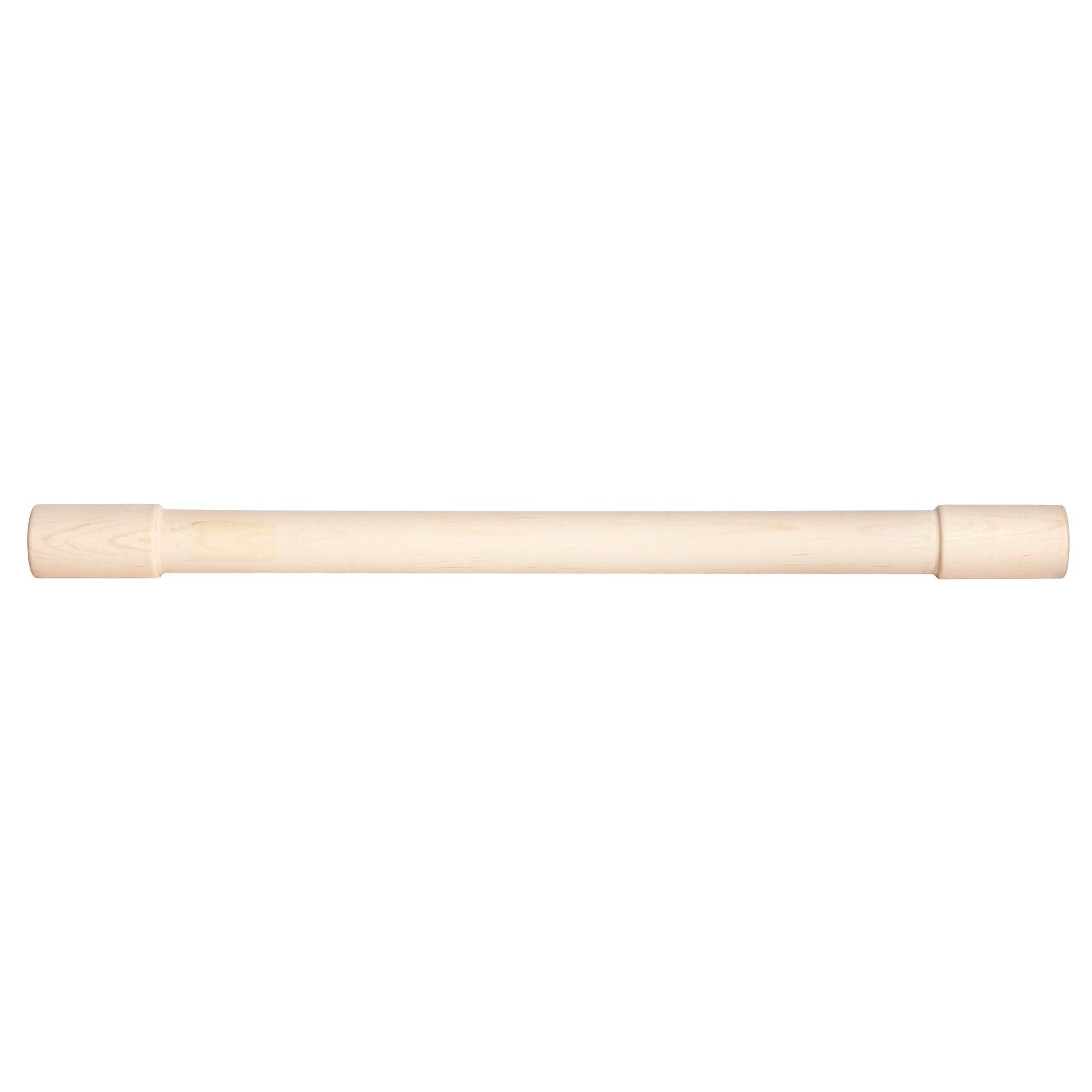
The 24-inch ruler that turns uneven dough into a perfectly level 1/8-inch sheet.
This pin from J.K. Adams solves among the most annoying problems in baking: rolling dough to an even thickness without constantly stopping to measure. It is precision-machined from maple hardwood and features fixed gauge guides that yield a consistent 1/8-inch dough thickness — no rings to attach, no guesswork. One owner even mentions it can handle 140 cookies at once. The 24-inch length is generous, allowing you to roll large batches of sugar cookie or pie dough in one pass without the dough overhanging the edges.
The visible downside is the length: at 24 inches, this is not a pin you can toss in a standard 18-inch kitchen drawer. Owners recommend the 18-inch version if storage is tight. But compared to the Ann Clark pin below (which only rolls at 1/4-inch), this one gives you a thinner 1/8-inch option. If you bake cut-out cookies or pies frequently and want perfect, repeatable thickness without the fiddling of adjustable rings, this pre-notched maple pin is a standout. The consensus among owners is clear: “they are so well made and make rolling so much faster and more reliable.”
Flawless Thickness: Pre-notched to 1/8-inch — zero guesswork, perfect for sugar cookies and even pie crusts.
Storage-Hungry: The 24-inch length does not fit in standard drawers; the 18-inch version is more practical for most kitchens.
7. Ateco Maple Wood Rolling Pin

A 19-inch solid maple dowel that pastry chefs and home bakers both reach for.
Ateco has been making professional baking tools for over 100 years, and this 19-inch maple dowel pin is the kind of simple, durable design that explains the longevity. It has no handles, no rings, no moving parts — just a 1.75-inch diameter cylinder of solid maple wood, perfectly round and smooth. At 1.2 pounds, it offers a satisfying heft that helps roll pasta dough and pie crusts without needing to push hard. Owners consistently praise its “perfect weight and 19-inch length” and note that it is “superior to handled ones” because the no-handle design allows you to feel the dough directly and apply even pressure.
The 19-inch length is a balance: it is long enough to handle a full pie crust or a large pizza base, yet short enough to store in most drawers (if you have a roughly 20-inch drawer). The one complaint that surfaces repeatedly is the “Made In Canada” sticker — shoppers say that it adheres stubbornly and leaves a sticky residue that takes effort to remove without damaging the wood. A few seconds with a hair dryer solves this, but it is an annoying first step. Beyond that, this pin offers a similar straight-dowel experience to the Fletchers’ Mill but at a slightly lower price, and it serves as a great upgrade from the Etens if you want a finer maple surface.
No-Handle Precision: Perfectly round maple dowel gives you direct feel for the dough — ideal for delicate pastries and pasta.
Sticker Frustration: The adhesive label leaves residue; plan to remove it carefully with heat before first use.
8. Ann Clark Perfect Cookie Rolling Pin

A 1/4-inch fixed-depth pin that removes every ounce of guesswork from sugar cookie baking.
If your main baking project is cut-out sugar cookies, this pin from Ann Clark is designed specifically for you. It features precision depth knobs on the ends that hold the rolling surface at exactly 1/4-inch above the table, so every cookie comes out the same thickness and bakes evenly. The 16-inch barrel is made from solid maple hardwood and crafted in the USA. Owners who bought it alongside the company’s cookie cutters report a dramatic improvement in their results: “it comes out perfectly every time.”
The maintenance is simple but critical — the manufacturer and owners both stress that you should treat it with food-grade mineral oil before the first use and never wash it with water or soap. A dry brush or paper towel wipe is all it needs. The 1/4-inch fixed depth is ideal for standard sugar cookies, but some owners note that they prefer a thinner 1/8-inch or thicker 5/8-inch for different recipes — Ann Clark sells other sizes separately. If you only bake one type of cookie at one thickness, this is a brilliant tool. If you need variable thickness for different projects, a free-rolling pin like the Ateco may be more versatile.
Perfectly Even Cookies: Fixed 1/4-inch depth knobs deliver uniform thickness for consistent baking every time.
One-Trick Specialist: Only rolls at 1/4-inch — if you need 1/8-inch or 5/8-inch, you will need a second pin.
9. Frieling Rolling Pin
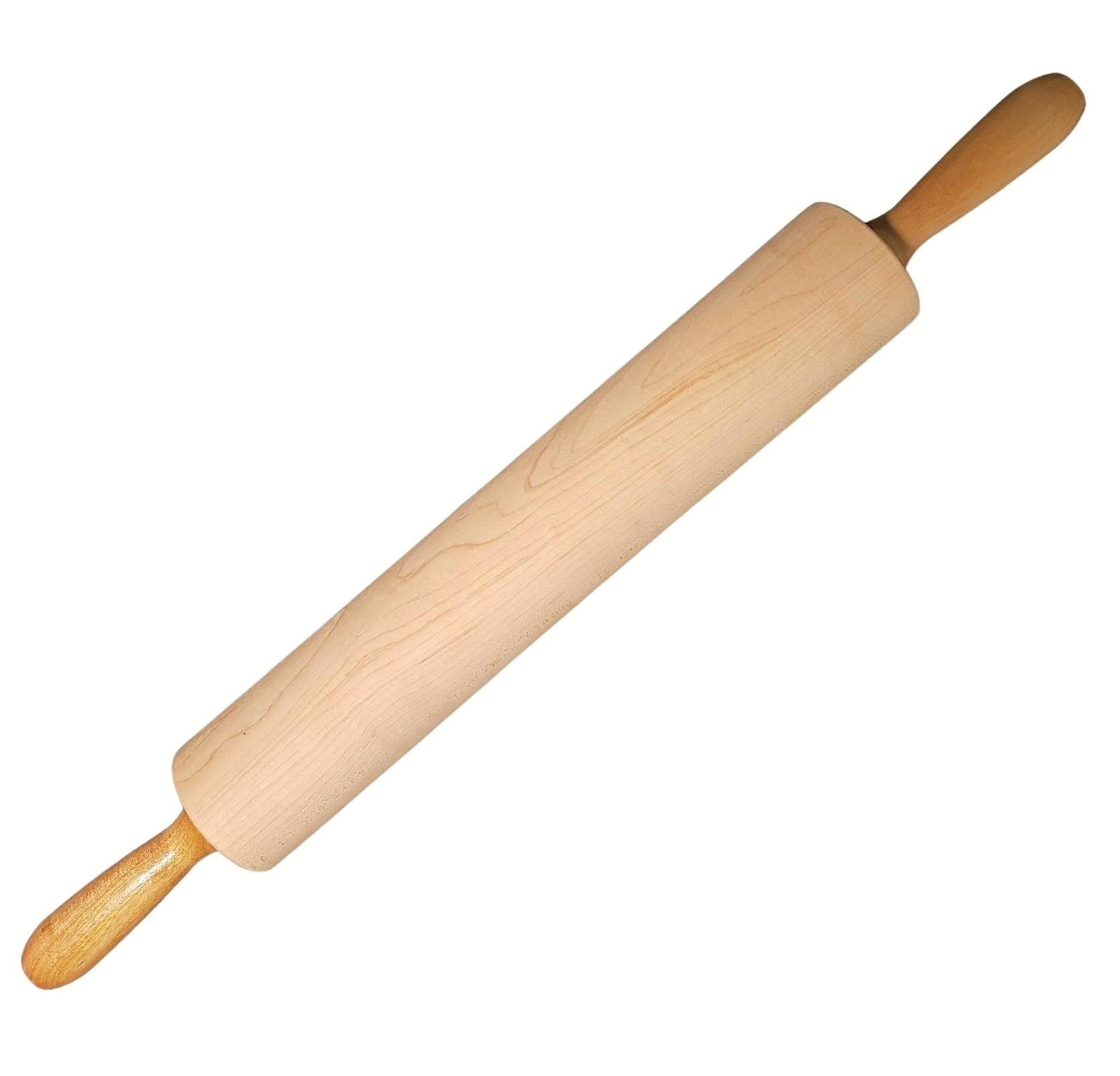
A large-barrel handled pin that glides on nylon bushings for silky-smooth rolling.
This is the only pin on the list with ergonomic handles, and it earns its place by addressing a real problem: handled pins that feel wobbly or scrape against the wood. The Frieling uses nylon bushings (small plastic sleeves) that let the barrel spin freely and quietly without metal-on-wood friction. The barrel itself is 2.75 inches wide and 15 inches long — the widest diameter on this list — which means one forward roll covers a lot of dough. Owners describe it as a “hefty hard maple rolling pin” whose weight “aids rolling doughs/pie crusts without muscle effort.”
The natural wood surface is non-porous and requires minimal flour dusting to prevent sticking. One reviewer who had a 40-year-old rolling pin finally replaced it with this Frieling and called it “better than I expected for the price.” The 24-inch total length (including handles) demands storage space similar to the J.K. Adams pin above. A few owners mention that the nylon bushings, while smooth, add a tiny bit of play compared to a solid one-piece dowel like the Ateco — but for bakers who prefer handles or have limited hand strength, this design is a welcome compromise. The barrel size and smooth action make it particularly effective for large pizza doughs and big batches of pastry.
Easy Glide: Nylon bushings and a wide 2.75-inch barrel make this the smoothest handled pin for large dough projects.
Handled Feel: The bushings add a slight looseness compared to solid dowels; purists may prefer a one-piece design.
Understanding the Specs
French Taper vs Straight Dowel vs Handled
A French tapered pin (like the Muso walnut or KARRYOUNG) narrows at each end, allowing your hands to rest directly on the wood. This gives you more feedback from the dough and lets you control thickness by varying hand pressure. A straight dowel (like the Etens or Fletchers’ Mill) has a constant diameter from end to end, which delivers even thickness across the entire surface — ideal for pasta, pizza, and dumplings. Handled pins (like the Frieling) use bushings or bearings so the barrel spins independently, reducing wrist strain but reducing tactile feedback. Most bakers who switch from handled to a taper or dowel find the control improvement dramatic.
Wood Types and Their Real-World Impact
Maple is the most common premium choice because it is dense, hard, and fine-grained — it resists moisture absorption and polishes to a glassy smoothness. Walnut is slightly softer but still very hard, with a warm dark color that makes an attractive countertop piece. Beech is a strong, smooth hardwood often used for mid-range pins like the Etens; it works well but may show wear faster than maple. Sapele, used in the Muso sapele pin, is a tropical hardwood comparable to mahogany — dense, durable, and naturally lustrous. All wood types benefit from occasional mineral oil treatment, which prevents drying, cracking, and staining while keeping the surface non-stick.
Fixed-Depth Rings and Knobs
Fixed-depth rolling pins have rings or knobs on the ends that maintain a specific distance between the barrel and the rolling surface. The J.K. Adams and Ann Clark pins on this list use this system to guarantee precise dough thickness — 1/8-inch on the Adams, 1/4-inch on the Clark. The advantage is simple to use consistency: every part of the dough ends up the same height, which is critical for even baking. The trade-off is that you cannot create a tapered edge or variable thickness the way you can with a French or dowel pin. If you primarily bake cut-out cookies or need standard-thickness pie crust, fixed-depth pins save time and frustration. If you want versatility for different dough types, choose a free-rolling pin.
Weight and Length Trade-Offs
Heavier pins (over 1 pound) require less downward force from your arms because the weight of the pin itself does the work — the Frieling and Fletchers’ Mill pins are good examples. Lighter pins under 10 ounces (like the Muso walnut pin) are easier to maneuver and store but may need more arm pressure for thick doughs. Length is equally important: a 15-to-17-inch pin fits most kitchen drawers and is easy to control, while an 18-to-24-inch pin rolls larger dough faster but demands dedicated storage space. Choose based on your most common bake: pizza and pie crusts favor longer pins; cookies and fondant work fine with shorter ones.
FAQ
What is the difference between a French rolling pin and a standard rolling pin?
Do I need to oil a new wooden rolling pin before first use?
Can I put a wooden rolling pin in the dishwasher?
What length rolling pin is best for a standard home kitchen?
Is maple or walnut better for a rolling pin?
How do I prevent dough from sticking to my wooden rolling pin?
What does tapered mean on a rolling pin?
What is the best wooden rolling pin for pie crust?
Can I use a wooden rolling pin for fondant and gum paste?
How do I store a wooden rolling pin to make it last?
Final Thoughts: The Verdict
The best wooden rolling pin for most bakers is the Muso Wood Walnut French Pin — its lightweight taper, smooth finish, and intuitive control make every rolling session feel easy. If you prefer a heavier dowel for even thickness across large doughs, the Ateco Maple Dowel Pin is a professional-grade choice. And if your priority is simple to use sugar cookie thickness, the Ann Clark Perfect Cookie Pin with its 1/4-inch fixed-depth knobs is a specialist tool that delivers consistent results every time.
How We Picked
We do not accept paid placement. Every pick is matched to a real buyer and a real use-case; we do not hands-on test units.
Sources & Methodology
Specifications: manufacturer listings and product documentation. Review insights: verified customer reviews, as of July 2026. Pricing: not shown on this page (it changes often); check the current price via the retailer link.
As an Amazon Associate, Calories Fit earns from qualifying purchases. This does not affect which products we feature.