
Our readers keep the lights on and the coffee maker working hard! As an Amazon Associate, I earn from qualifying purchases.
Specs are compiled from manufacturer listings and verified buyer reviews and can change over time — please confirm the key details on the product page before buying.
A wood maple cutting board is one of the few kitchen purchases that genuinely gets better as it ages. The right one stays flat through years of daily chopping, absorbs knife impact without dulling your blades, and develops a patina that tells your kitchen’s story. The wrong one warps, splits, or arrives with a finish you do not trust near your food — and you will not know which is which until the first crack appears.
I’m Mohammad — the founder and writer behind Calories Fit. This guide is built by comparing the manufacturers’ published specifications and the patterns across verified customer reviews, so you get each pick’s real strengths and trade-offs instead of marketing spin.
You want a wood maple cutting board that stays flat, resists knife marks, and lasts for years — so the real choice depends on three things: grain type (how the wood is glued), thickness (how much weight you can handle), and how much maintenance you are willing to do.
Our Picks at a Glance

How To Choose The Best Wood Maple Cutting Board
Maple is the gold standard for cutting surfaces because it is hard enough to resist deep gouges but soft enough that it does not destroy your knife edge the way glass or stone does. But not every maple board is cut the same way.
Grain Direction Rules Everything
Edge-grain boards (strips of wood glued on their sides) are the most common — they offer a solid, flat cutting surface and are generally easier on knives than face-grain. End-grain boards (the wood fibers run vertically) are the premium choice because the knife blade slips between the fibers rather than cutting across them. That means your knives stay sharper longer, and the board hides cut marks over time. End-grain boards cost more and need more oil maintenance, but serious home cooks swear by them.
Thickness Is Stability
A board that is 1 inch thick works fine for light vegetable prep, but it can warp or slide under heavy cleaving. Boards in the 1.5-inch range strike the most popular balance — substantial enough to stay put, heavy enough to absorb impact, but still easy to lift and wash. Premium boards at 1.75 inches or 2.25 inches are essentially butcher blocks; they do not budge and they resist cupping for decades.
Juice Grooves and Reversible Design
A juice groove around the perimeter catches meat juices and fruit pulp so your counter stays dry. A reversible board gives you two usable surfaces — one side with the groove for meat, one side flat for bread or pastry. If you do a lot of carving, a groove is essential. If you mostly chop vegetables, a flat surface gives you more room.
Quick Comparison
| Model | Best For | Dimensions | Thickness | Grain Type | Amazon |
|---|---|---|---|---|---|
| CONSDAN Butcher Block 18×25 | Large custom installs | 25″ x 18″ | 1.5″ | Edge-grain | Amazon |
| CONSDAN Hard Maple 16×12 | Daily chopping with juice groove | 16″ x 12″ | 1″ | Edge-grain | Amazon |
| John Boos B12S Square 12×12 | Small kitchens, heavy duty | 12″ x 12″ | 1.5″ | Edge-grain | Amazon |
| John Boos B12R Round 12×12 | Dual-purpose chopping and serving | 12″ round | 1.5″ | Edge-grain | Amazon |
| Canadian Maple 16x12x1.5 | Eco-conscious buyers | 16″ x 12″ | 1.5″ | Edge-grain | Amazon |
In-Depth Reviews
1. CONSDAN Butcher Block Countertop, 18 x 25 Inches
A counter-filling maple slab that pulls double duty as prep surface and island top.
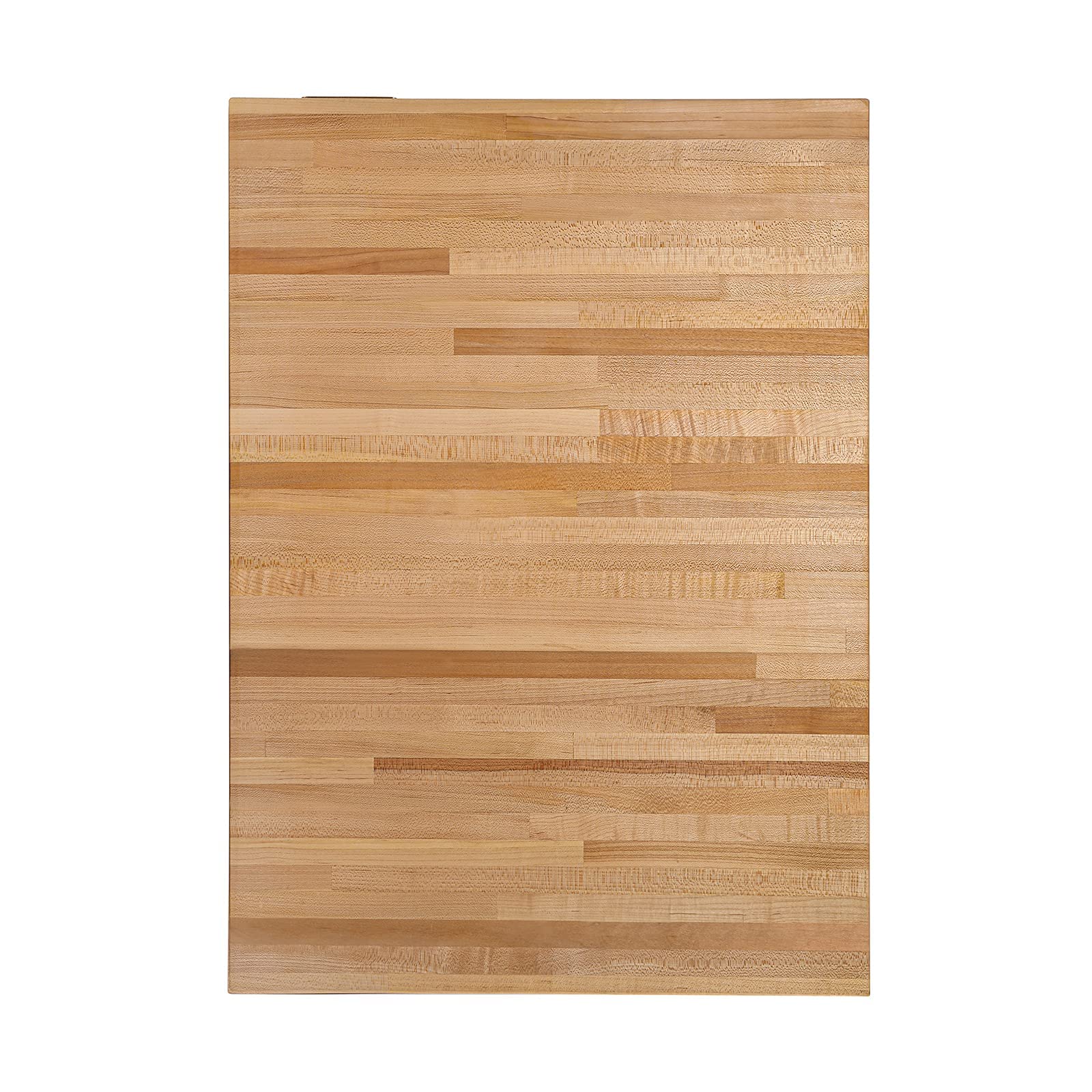
At 25 inches long and 18 inches wide, this is less a cutting board and more a permanent kitchen work surface. The 1.5-inch thickness means there is no flex at all under heavy chopping, and because it is prefinished with food-grade oil, you can use it immediately rather than spending days conditioning it. Buyers report dropping it right on top of existing cabinets, and the consensus is that the quality density is instantly obvious the moment you lift it from the start.
The wood is solid hard maple grown in the USA, which gives it a tight, closed grain that resists staining better than softer domestic woods. It ships without pre-drilled holes, so it is suited for DIY countertop installs — several owners trimmed it to fit over trash compactors or between washing machines with impressive results. At this size, it is not a board you stash in a drawer; it earns a permanent spot.
The occasional caveat is weight — this slab is substantial, and moving it for cleaning takes two hands. But for anyone who wants a single maple surface that does everything from kneading dough to serving charcuterie to replacing a worn countertop, this is the pick.
Built-in destination: The most-mentioned praise is the 110 owners calling out quality — buyers consistently say the feel and finish match or exceed what they expected from a specialty woodworker.
Stay-put workhorse: Reach for this if you are remodeling a kitchen island, laundry room top, or bar and want solid maple that doubles as a prep area. Look elsewhere if you need a portable board you can grab and stow in a cabinet — this one lives on the counter.
2. CONSDAN Hard Maple Wood Cutting Board 16×12
A mid-size maple board that blends clever handling with serious utility, all at a fair price.
At 16 inches by 12 inches and only 1 inch thick, this board is noticeably thinner and lighter than the butcher-block contender above — but it packs features that matter for daily prep. The invisible inner handles are polished grooves on both sides that let you lift and carry it comfortably without visible cutouts breaking the flat surface. The deep juice groove traps liquids from meat and fruit, so your counter stays clean.
The board is prefinished with food-grade wax oil, so it is ready to use from the start. Owners mention it stays flat and beautiful even after a year and a half of use, with the caveat that like any maple board it benefits from generous mineral oiling before the first use. The edge-grain construction is gentle on knife edges — several buyers noted their knives feel better cutting on this than on bamboo.
The main trade-off is the 1-inch thickness. It is stable enough for standard vegetable and meat prep, but it can warp over time if you soak it or leave it in standing water — and a few owners flagged water pooling around the handle grooves as a potential weak point. If you treat it with care and oil it regularly, this board punches well above its price bracket.
Everyday edge
- Invisible handle grooves make lifting and carrying genuinely easy without interrupting the flat surface
- Deep juice groove channels meat and fruit liquids away from the counter — a real mess-saver for avid cooks
- Prefinished with food-safe wax oil so you can start chopping immediately
Honest limits
- At 1 inch thick, it is more prone to warping than heavier boards if exposed to moisture or heat
- Water can collect in the handle grooves if you do not dry it thoroughly after washing
Smart daily prep: Grab this one if you want a versatile mid-size maple board with good features and a lifetime warranty. Bypass it if you need a heavy slab that can take a beating without careful maintenance.
3. John Boos B12S Square 12×12
A square, thick block that stays planted on the counter without taking over the whole kitchen.
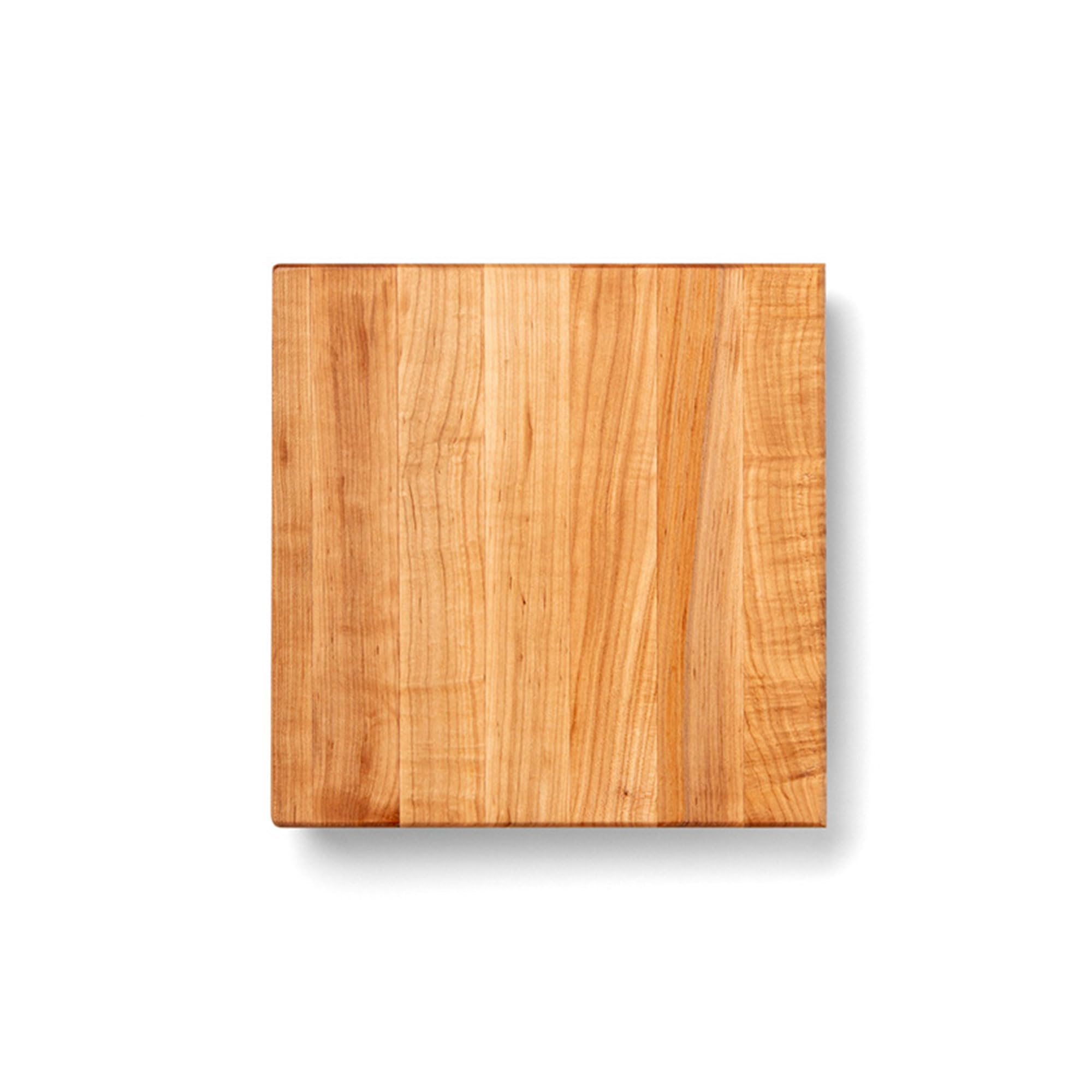
John Boos has been making boards in Effingham, Illinois since 1918, and the B12S is a textbook example of why professional kitchens reach for these. It measures 12 inches square and 1.5 inches thick, which means it is heavy enough to stay rock-solid under rapid dicing but compact enough to leave on the counter full-time. The wood bun feet lift it slightly off the counter, preventing moisture from trapping underneath and allowing air to circulate.
The edge-grain construction uses Northern Hard Rock Maple — a dense, tight-grained wood that resists deep scratches and is widely considered one of the best food-prep surfaces in the world. Owners consistently describe the board as professional-grade, noting that it does not wobble or slide. It ships with a small packet of oil for initial conditioning, and the surface takes a beautiful matte finish after a few treatments.
The downside is durability variance. While most customers note years of trouble-free use, a few have experienced splitting after several months — a risk that increases if the board is exposed to moisture or dishwasher conditions it was never designed for. Still, with the highest rating in this line-up and an overwhelming majority of happy owners, this square block is tough to top for anyone who wants Boos quality in a compact footprint.
Countertop companion: The consistent buyer chorus is that this board feels like an investment that will last a lifetime, as long as you treat it with the respect any hardwood deserves.
Sturdy square: Choose this if you want a thick, small-footprint maple board that stays put for daily prep. Think twice if you need a large surface for big roasts or multiple ingredients at once.
4. John Boos B12R Round 12×12
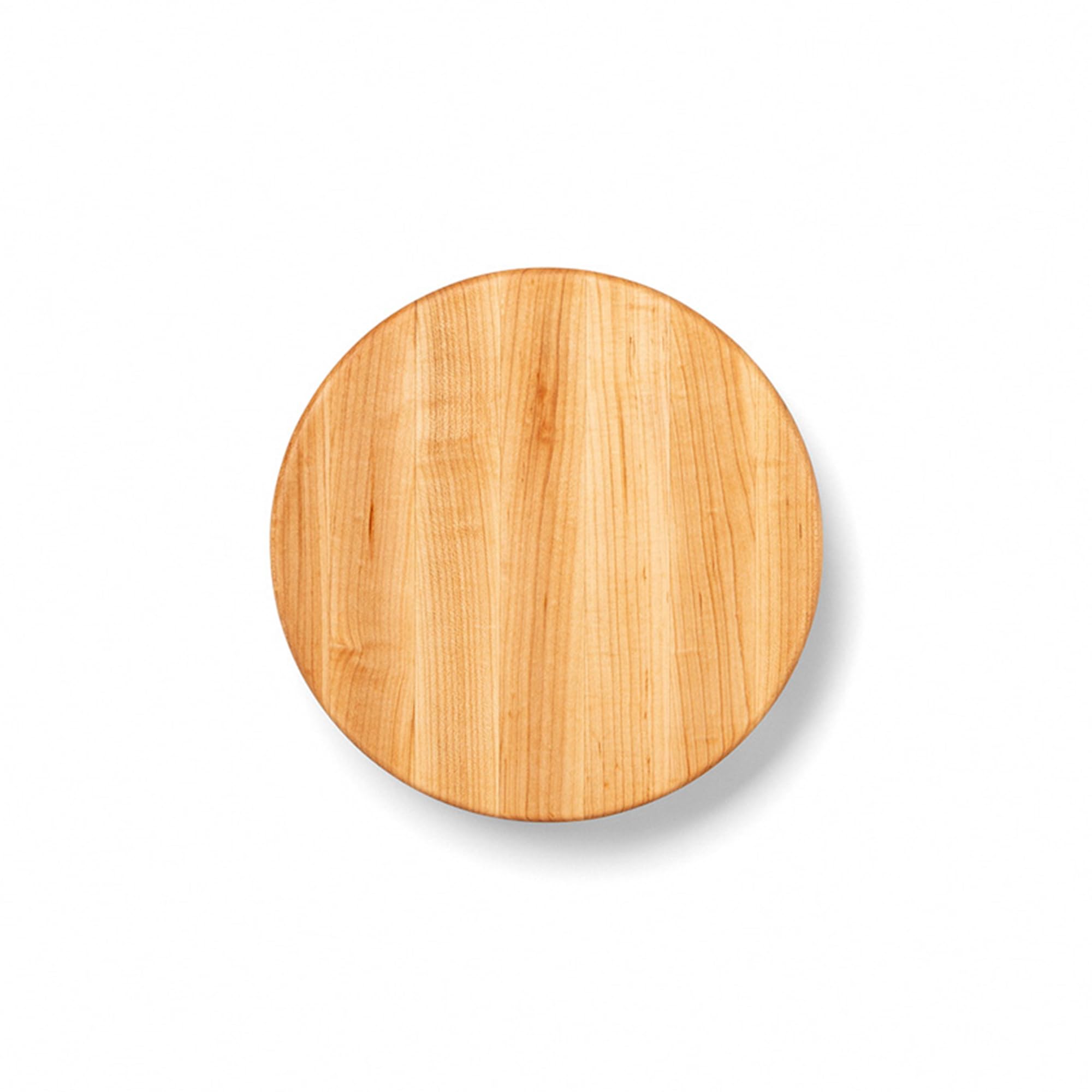
A beautiful round board that transitions from kitchen prep to cheese presentation in seconds.
Same 1.5-inch thickness and same Northern Hard Rock Maple as the square B-series above, but in a round shape that serves a different purpose entirely. The 12-inch diameter sits perfectly next to a cutting station for small-quantity prep — herbs, garlic, a single lemon — but it shines when you carry it to the table as a serving board. Owners frequently mention using it as a cheese tray for small gatherings, and the raised bun feet give it the same stability as the square version.
The round design also means it does not collect crumbs in corners the way a rectangular board does. The edge-grain construction follows the shape smoothly, and the pre-oiled finish is ready for use with a quick wipe. The board is heavy enough that it does not slide around, and the thickness absorbs knife impact without transmitting it to your counter.
The small form factor limits what you can do — this is not a board for breaking down a large roast or batch-chopping a week’s worth of vegetables. And as with other Boos boards, the durability conversation is mixed: some reviewers point out issues with cracking, though it is not the dominant narrative. If your primary need is an attractive dual-purpose board that chops and serves, this round board delivers.
Double duty: Owners mention the round shape is especially forgiving for cheese displays, and the thickness makes it feel substantial in hand.
Round and ready: Reach for this if you want a maple board that dresses up a charcuterie spread just as well as it handles a quick dice. Pass it up if you primarily chop large volumes and need rectangular surface area.
5. Medium Wood Cutting Board from Canadian Maple 16x12x1.5

A thick, FSC-certified maple board that arrives pre-seasoned and ready for daily use.
This board strikes a deliberate balance between eco-conscious sourcing and daily kitchen utility. At 16 inches by 12 inches with a 1.5-inch thickness, it is significantly heavier than the CONSDAN 16×12 and closer to the butcher-block feel of the larger boards. The edge-grain construction is pre-seasoned with a blend of mineral oil and premium beeswax, so you are not left conditioning a raw board before your first chop.
The deep juice groove runs around the perimeter, catching liquids from meat and juicy vegetables. Shoppers say the maple is hard enough to resist deep scratches but forgiving enough to keep knives sharp — one reviewer noted it prolongs knife sharpness compared to bamboo. The FSC certification is a meaningful differentiator if sourcing matters to you; it verifies the wood comes from responsibly managed forests.
The catch is that some units arrive feeling dry and require an additional round of oiling and waxing before they reach peak performance. And because it is edge-grain rather than end-grain, cut marks will show over time. But for the thickness, certification, and prep-ready finish, this is a strong contender for someone who values both performance and sustainability.
Environmentally smart
- FSC Certified hardwood means you are buying from a sustainably managed supply chain
- Prefinished with food-safe mineral oil and beeswax — ready to use after a quick rinse
- 1.5-inch thickness provides stability and weight without being a permanent countertop fixture
What to watch for
- Some boards arrive less saturated than expected and need additional oil before the first use
- Edge-grain shows cut marks more readily than premium end-grain construction
Sourced smart: Pick this board if you want thick Canadian maple with verifiable sustainability credentials. skip it if you prefer a board that is ready to go without any additional oiling on your part.
6. John Boos CB Series Square 15×15

If you want one dependable pick, the best wood maple cutting board is the CONSDAN Butcher Block Countertop 18×25 because it delivers solid USA-grown maple, 1.5-inch thickness, and a wide surface at a price that undercuts premium competition. If you want a reversible board with professional-grade thickness, grab the John Boos CB Series 15×15. And for the heavy-carving enthusiast who wants a board that will never wobble, the John Boos RA-Board 20×15 is the one to reach for. We do not accept paid placement. Every pick is matched to a real buyer and a real use-case; we do not hands-on test units. Specifications: manufacturer listings and product documentation. Review insights: verified customer reviews, as of July 2026. Pricing: not shown on this page (it changes often); check the current price via the retailer link. As an Amazon Associate, Calories Fit earns from qualifying purchases. This does not affect which products we feature.FAQ
What is the best oil for a maple cutting board?
How often should I oil my maple cutting board?
Can I put my maple cutting board in the dishwasher?
What is the difference between edge-grain and end-grain maple?
How thick should a maple cutting board be?
Will a maple cutting board dull my knives?
How do I remove stains or odors from a maple board?
What size maple cutting board do I need?
Can I use a maple cutting board for raw meat?
Why do some maple boards crack or split?
Final Thoughts: The Verdict
How We Picked
Sources & Methodology
Related Guides