
Our readers keep the lights on and the coffee maker working hard! As an Amazon Associate, I earn from qualifying purchases.
Specs are compiled from manufacturer listings and verified buyer reviews and can change over time — please confirm the key details on the product page before buying.
A big wood chopping board should feel like a permanent island in your kitchen — stable enough to take a cleaver without sliding, wide enough to prep a full roast, and dense enough to stay flat for years. But the market is full of thin boards that warp, crack, or dull your knives within months. The real question is which one earns its place on your counter and which one is just another slab of wood.
I’m Mohammad — the founder and writer behind Calories Fit. This guide is built by comparing the manufacturers’ published specifications and the patterns across verified customer reviews, so you get each pick’s real strengths and trade-offs instead of marketing spin.
Here are the three wood large chopping boards that actually deliver on size, stability, and long-term use — from a pro-grade 42-pound maple block to a budget-friendly teak option. Let’s find the right one for your kitchen.
Our Picks at a Glance
How To Choose The Best Wood Large Chopping Board
Picking a wood chopping board is not just about grabbing the biggest rectangle you can find. The board’s thickness, grain orientation, wood type, and surface features all affect how it handles daily use and how long it stays flat. Here is what to look for.
Thickness and Weight Matter More Than Length
A thin board under 1 inch will eventually warp from moisture and heavy chopping. You want at least 1.5 inches of solid wood so the board stays stable and does not slide around. Heavier boards also stay put without needing a damp towel underneath — a real safety plus when you are working with sharp knives.
Edge-Grain vs. End-Grain Construction
Edge-grain boards (strips of wood glued on their sides) are dense and knife-friendly. They resist deep scratches and are easier to maintain than end-grain boards, which show every cut mark. Most large chopping boards use edge-grain because it balances durability with reasonable upkeep.
Wood Type: Maple vs. Teak
Hard maple is the classic choice for butchers and chefs because it is dense, closed-grain, and resists absorbing moisture and odors. Teak is naturally oily, which gives it superior moisture resistance, but it can be louder to cut on. Both are food-safe and durable, but maple is generally easier to re-oil and maintain over decades.
Quick Comparison
In‑Depth Reviews
1. John Boos RA06 Maple Cutting Board
Our pick — over 4.5★ from 400+ verified ratings; the strongest balance of quality and price.
The 42-pound maple slab that turns your counter into a professional butcher block.
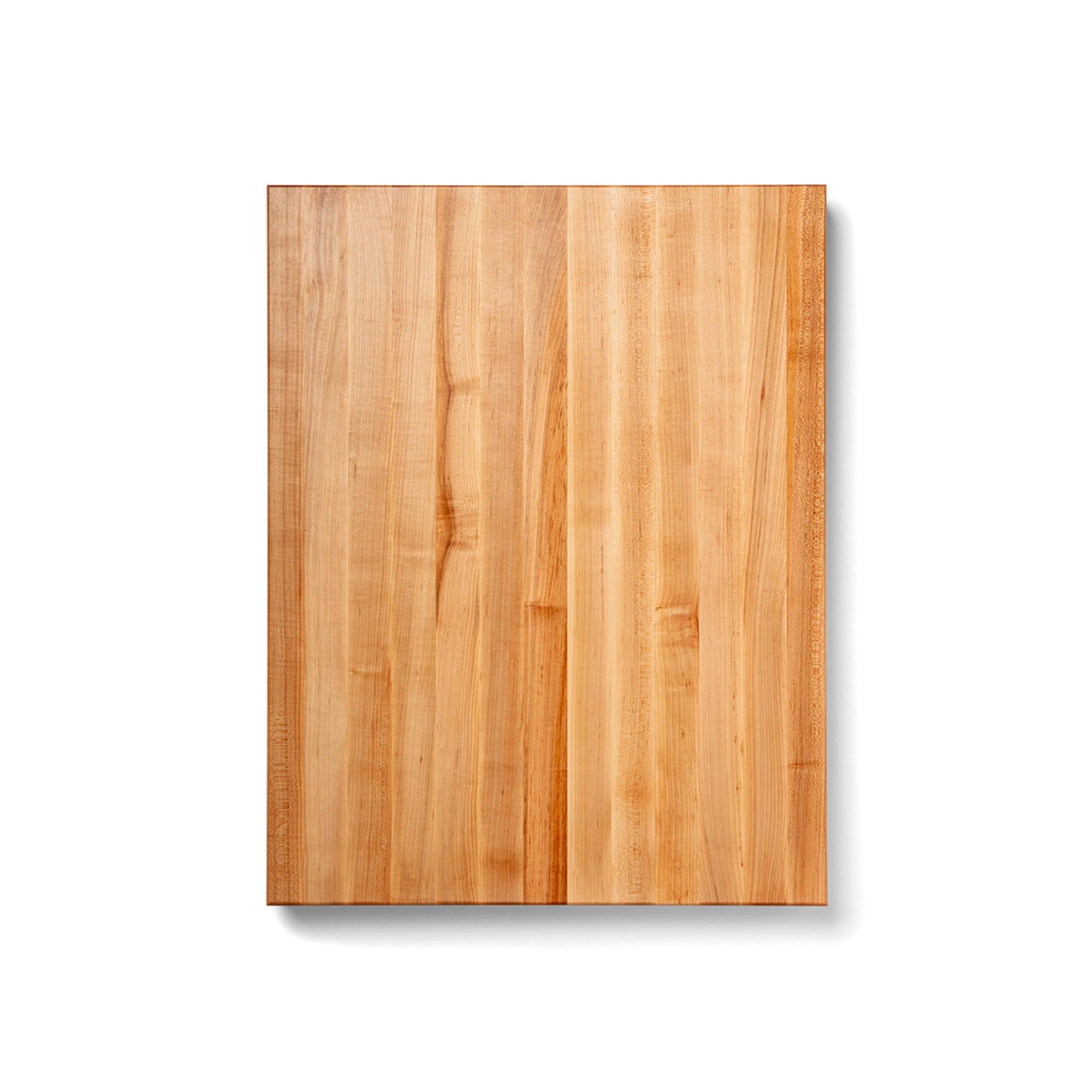
This board is a statement piece. At 30 inches long by 23.25 inches wide and a full 2.25 inches thick, it gives you the kind of workspace most home kitchens never see — room for a whole brisket, a mountain of vegetables, or two cutting stations side by side. The edge-grain construction (strips of wood glued on their sides) makes it forgiving on knife edges, while the reversible design lets you flip to a fresh surface when one side shows wear. Buyers report it feels “massive” and “high-quality with no dents or scratches,” even if the dimensions look intimidating on paper.
The trade-off is real: this board weighs 41.29 pounds. Moving it around the kitchen is a two-hand job, and some owners note it is “difficult for a small person to move it safely.” It also ships bone-dry and demands a serious first oiling session — owners mention the large size needed three days of repeated oil applications before it was ready. But the reviews pages sum it up: “with proper care, lasts a lifetime.” One owner who bought a slightly larger model than usual found the quality so consistent that both sides of the board are usable without defects — rare at this size.
For cooks who view their cutting board as a piece of kitchen architecture — not a disposable slab — the John Boos delivers the kind of stability and craftsmanship you feel on every chop. The crowd favorite earned its reputation here.
Why It Dominates
- 42 lbs of solid maple stays planted — no slipping, no warping
- Reversible edge-grain extends surface life dramatically
- Quality construction is the most-praised trait by a wide margin
The Heavy Reality
- Arrives completely dry; you need 2-3 days of oiling before first use
- 41.29 lbs makes it awkward to move or store
- Premium cost reflects pro-grade materials and US manufacturing
Your counter’s anchor: this is the one for serious home cooks who butcher, batch-cook, or entertain big — and have the counter space to handle a 30-inch board.
Think twice if: you need a board you can stash in a cabinet or move one-handed; the weight and size become a daily chore.
2. WoodForChef Maple Cutting Board 20x16x1.5

The pre-seasoned maple board with a deep juice groove that saves your counter from chaos.
This 20-inch by 16-inch board hits the balance between a compact prep station and a proper workspace. At 1.5 inches thick and 12.5 pounds, it is heavy enough to stay stable on a quartz or granite counter without a towel underneath, yet light enough to move around. The juice groove (a carved channel around the edge that catches meat juices and veggie runoff) runs deep — a real plus when you are slicing a roast or chopping tomatoes — and keeps your counters clean. Buyers consistently call out the quality and appearance first, with one noting it is “heavy, stable, no slipping” after months of use.
Unlike the John Boos above, this board arrives pre-seasoned with mineral oil and beeswax, so you can start cutting immediately. The edge-grain maple resists scratches and, as customers note, “prolongs knife sharpness vs. bamboo” — a tangible benefit for anyone using decent knives. The FSC certification (Forest Stewardship Council, meaning the wood comes from responsibly managed forests) is a nice bonus for sustainability-minded buyers. But the finish can feel dry on arrival; the company itself recommends oiling before first use, and some users find the surface slightly rough compared to higher-end boards.
Durability is the main mixed note here. While many owners say the board holds up well, a share report splitting or cracking over time — something that can happen with any edge-grain board if it sits in a wet sink or gets dishwashered (which the instructions explicitly warn against). At this price, the WoodForChef offers a genuine jump in quality over budget boards without the boutique cost.
What Wins People Over
- Pre-seasoned and ready to use right from the start
- Deep juice groove catches runoff from meat and juicy veggies
- 12.5 lbs is stable without being immovable
The Fine Print
- Some units arrive with a slightly rough surface that needs sanding
- Durability is mixed — a minority report cracking after months
- No included stand or grips to keep the board improve
Smart middle-ground: ideal for home cooks who want real maple thickness and a juice groove without the museum-piece price tag.
skip it if: you need a board that can handle daily heavy cleaving or if you are set on a thicker, more permanent slab like the John Boos.
3. Socisen Teak Cutting Board 17″
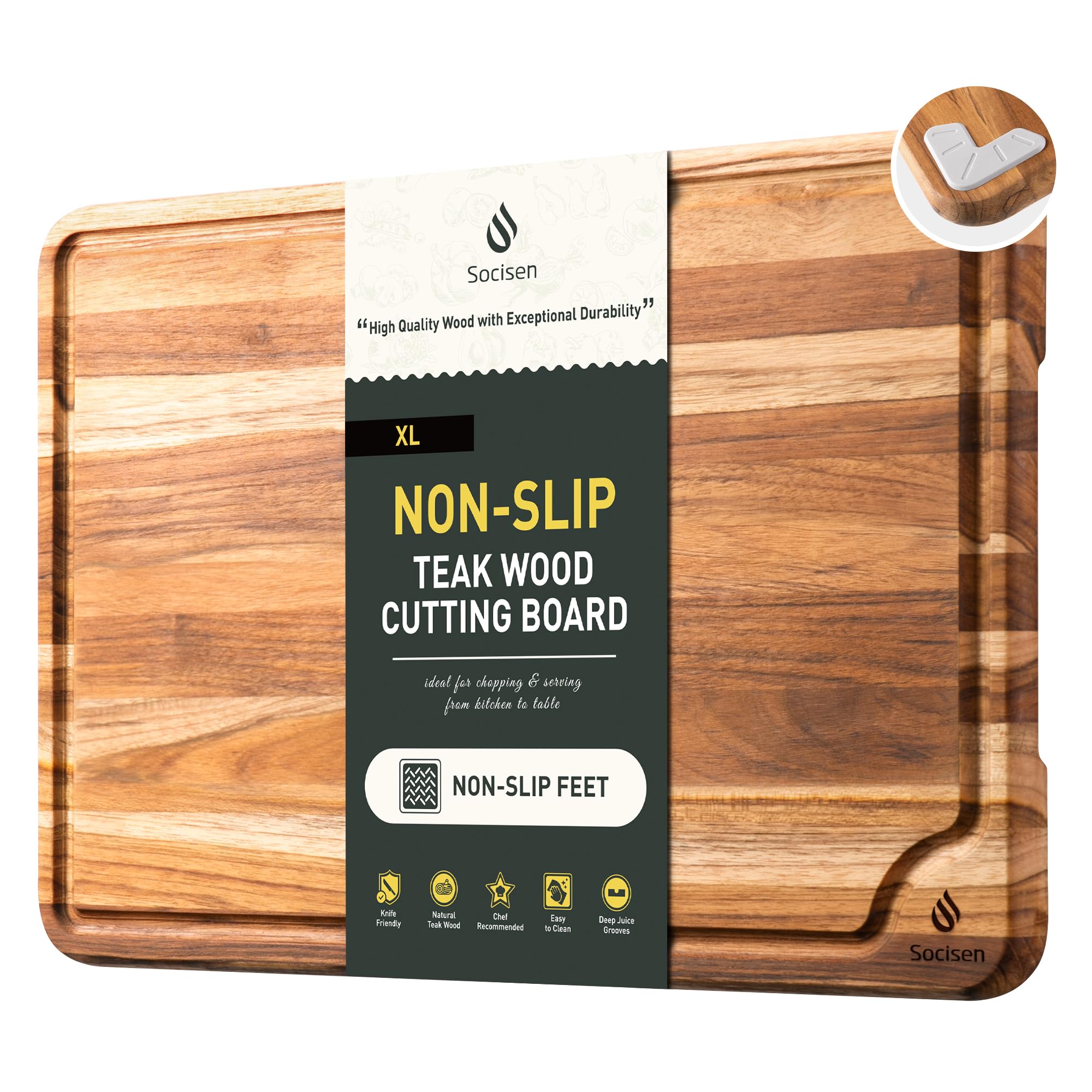
The 17-inch teak board that punches above its weight on looks and non-slip grip.
For anyone who needs a solid wood board without spending triple digits, this teak option delivers a lot for the money. At 17 inches long and 12 inches wide, it is noticeably smaller than the two maple picks — a 76% smaller surface area than the John Boos — but still large enough to prep a whole chicken or a big pile of vegetables. The FSC-certified teak wood is naturally oily, so it resists moisture better than maple does. Buyers call it “gorgeous, solid and well-made” and note the non-slip feet keep it planted during use.
The teak is also noticeably louder when chopping compared to maple, as users point out. But for the price, the build quality impresses, and the non-slip feet (rubber grips built into the base) prevent the rocking movement that thinner boards often suffer from.
What wins people over most is the overall quality per dollar — the most-praised trait by far. It is also a handsome board that “is pretty enough to display in a modern kitchen,” as one owner puts it. If you treat it well (hand wash only, occasional oiling), it should last years. Just do not expect it to survive the same abuse as a 2.25-inch maple block.
Where It Shines
- FSC-certified teak with natural moisture resistance
- Non-slip feet keep it stable on any countertop
- Beautiful natural wood grain — display-worthy
The Compromise
- Only 0.8 inches thick — more prone to warping than thicker boards
- Loud chopping sound compared to maple boards
- Durability is mixed; a share of reviewers point out early cracking
Great entry-point: perfect for budget-conscious shoppers who want real wood, non-slip feet, and a board that looks as good as it cuts.
Not for you if: you need a thick, heavy board for daily heavy chopping or if you want to avoid any risk of warping — step up to the WoodForChef or John Boos.
Understanding the Specs
Thickness and Warp Resistance
A board that is 1.5 inches or thicker stays flat under chopping force and moisture changes. Thin boards (under 1 inch) will eventually bow, especially if left wet or stored vertically. That is not a defect — it is physics. If you want a board that looks the same five years from now, choose something 1.5 inches or more.
Juice Grooves and Reversible Design
A juice groove (a carved channel around the edge) catches runoff from meat, fruit, and juicy vegetables so your counter stays clean. If you cut a lot of raw meat, it is a must-have. A reversible board gives you two working surfaces — if one side gets scratched or stained, flip it and keep going. But juice grooves make one side non-reversible; if you want both, choose a board without a groove on one side.
FAQ
How thick should a wood large chopping board be to avoid warping?
Can I put a wood large chopping board in the dishwasher?
Is teak or maple better for a large chopping board?
How much maintenance does a wood chopping board need?
What is the difference between edge-grain and end-grain construction?
Will a heavy wood board scratch or damage my countertop?
Can I use a wood large chopping board for raw meat?
How do I stop my wood board from sliding on the counter?
Why is my new wood cutting board arriving dry and uncoated?
What is the best size for a wood large chopping board in a standard home kitchen?
Final Thoughts: The Verdict
Across the board, the best wood large chopping board is the John Boos RA06 because its 2.25-inch thickness and 42-pound weight give you professional-grade stability that will last a lifetime with care. If you want a pre-seasoned maple board with a juice groove for a mid-range price, grab the WoodForChef 20×16. And for a budget-friendly teak option that looks great and stays put with non-slip feet, the Socisen 17-inch is the one to reach for.
How We Picked
We do not accept paid placement. Every pick is matched to a real buyer and a real use-case; we do not hands-on test units.
Sources & Methodology
Specifications: manufacturer listings and product documentation. Review insights: verified customer reviews, as of July 2026. Pricing: not shown on this page (it changes often); check the current price via the retailer link.
As an Amazon Associate, Calories Fit earns from qualifying purchases. This does not affect which products we feature.