
Our readers keep the lights on and the coffee maker working hard! As an Amazon Associate, I earn from qualifying purchases.
Specs are compiled from manufacturer listings and verified buyer reviews and can change over time — please confirm the key details on the product page before buying.
Your feet give up first when winter hits hard — no question. When the sidewalk turns to glass and the wind cuts right through your jeans, your boots decide if the day is an adventure or a freezing struggle. The right pair keeps you warm, dry, and stable on snow and ice.
I’m Mohammad — the writer behind Calories Fit. This guide compares published specs and verified customer reviews to reveal real strengths and trade-offs.
After digging through thousands of owner experiences, these women’s winter boots for extreme cold actually deliver on their polar-rated promises and keep you moving when the temperature drops.
Our Picks at a Glance

How To Choose The Best Women’s Winter Boots for Extreme Cold
You need a boot that handles hours in subzero temps while keeping feet dry from the inside out.
Insulation Rating and Layering
The most common spec is grams of insulation (200g, 400g). Higher grams mean more warmth, but the real secret is how the boot layers that insulation. The best extreme-cold models use a combination of foam, fleece, reflective membranes, and a removable liner. A boot rated to -25°F or lower often has a multi-layer system that traps heat while still letting moisture escape.
Outsole and Traction Technology
Ice is the real enemy for traction. Look for outsoles (the bottom part of the boot that touches the ground) designed for low-temperature grip — materials like Vibram Arctic Grip, Polar Rubber, or a compound with microscopic “shards” that dig into ice. A deep, multi-directional lug pattern (the bumps on the sole) helps on snow, but what matters most is how the rubber behaves when the thermometer drops below 0°F, where standard soles turn into hockey pucks.
Seam Seal and Height
Waterproofing is non-negotiable for extreme cold: once moisture gets in, it freezes. Look for “seam-sealed” or “100% waterproof” construction, not just a water-resistant coating. The boot height also matters — taller boots (mid-calf or higher) keep snow from dumping into the top when you step into a drift. A snow collar or drawstring at the top seals the deal.
Quick Comparison
| Model | Best For | Temperature Rating | Weight | Height | Amazon |
|---|---|---|---|---|---|
| Dryshod Arctic Storm Hi | Daily barn & outdoor work | -50°F to 65°F | 1 lb | Mid-Calf | Amazon |
| KEEN Revel 4 | Hiking & active winter use | -25°F | 20.32 oz | 3.94 in | Amazon |
| Kamik Momentum 3 | Everyday snow & slush | — | — | — | Amazon |
| MUCK Arctic Ice Tall | Deep snow & ice fishing | — | 4.5 lbs | 17 in | Amazon |
| The North Face Chilkat V 400 | Sledding & glacier walks | — | 1.63 lbs | — | Amazon |
| Baffin ICEFIELD Tall | Polar-rated extreme cold | — | 4 lbs | 12 in | Amazon |
| Baffin JESS Tall | Snowmobiling & deep cold | Tundra Rated | — | Tall by design | Amazon |
In-Depth Reviews
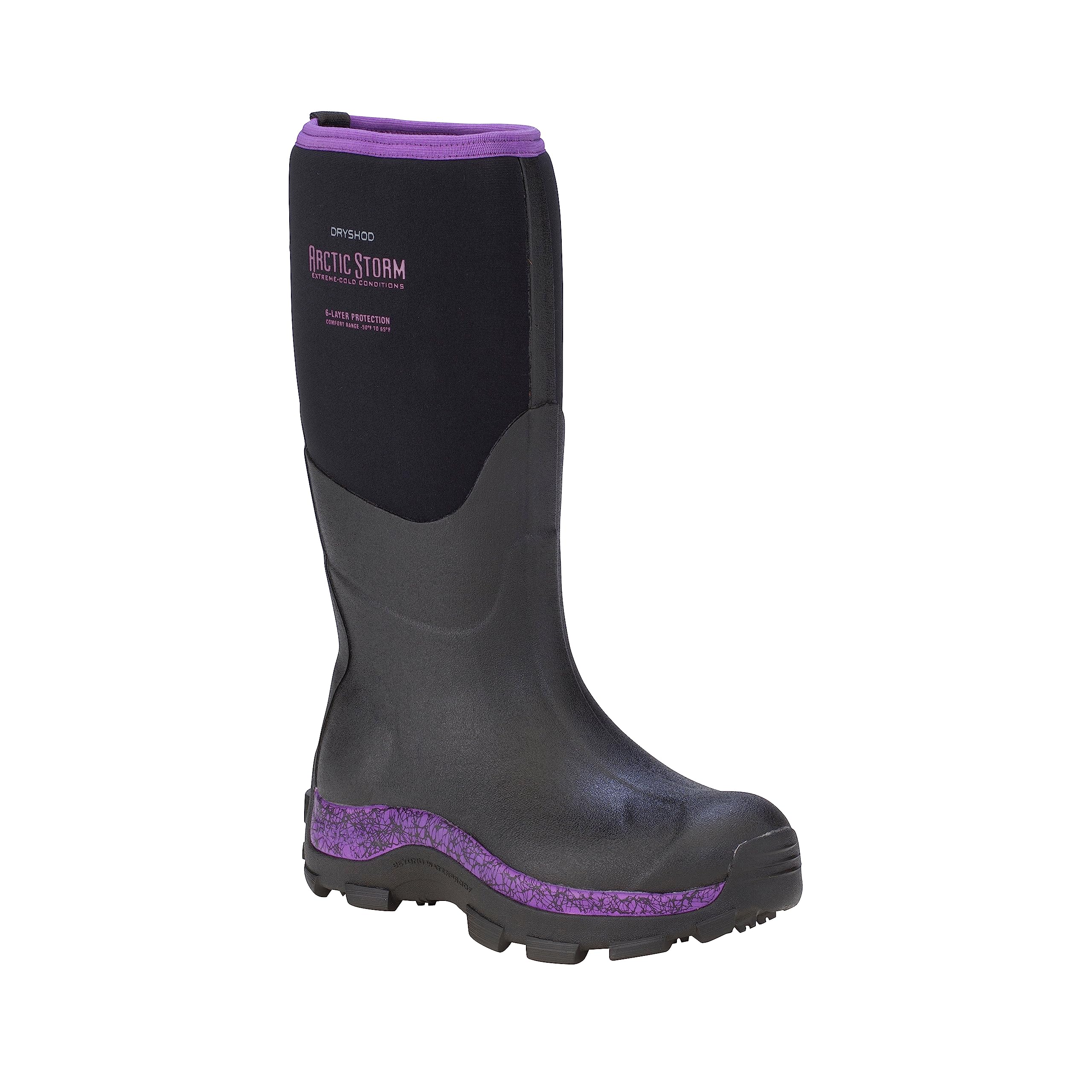
1. Dryshod Arctic Storm Hi Extreme Cold Conditions Women’s Winter Boot
Your feet stay warm in the worst cold — this boot uses 7 layers to keep you comfortable from -50°F up to 65°F.
This boot is built like a fortress for your feet. It has 7 layers of protection — a 5.5 mm bootie (the inner sock-like layer), 2.5 mm DENSOPRENE XD foam (a stretchy foam that insulates and blocks water), 2 mm airmesh (a breathable mesh spacer), 2 mm warm fleece lining, plus an EVA (ethylene-vinyl acetate, a lightweight, shock-absorbing foam) cold-blocking midsole. The result is a comfort range from -50°F up to 65°F, which means you can stand in a frozen paddock or a slushy parking lot and still feel nothing but warmth. The genuine hand-laid natural rubber overlays (no PVC, PU, or TPR here) wrap the bottom, and the DS1 Premium outsole (the bottom rubber) uses a two-piece design: inner lugs (the bumps on the sole) for any-angle grip, outer lugs for lateral stability. The lugs even release mud as you walk, so you are not dragging a snowball under each foot.
The HydroKote water-repellent coating (a finish that makes water bead up and roll off) makes water roll off the nylon exterior and dry in seconds — no ice crust forming on the fabric. Buyers report wearing these every day for six months straight through mud, ice, snow, and rain, and the boots held up. What wins people over is the warmth: 72 owners single that out as the top trait. The fit gets mixed reactions (47 mention it), so if you plan on thick socks, you might want to size up. They weigh just 1 lb, which is remarkably light for a boot with this much armor. The 4-way stretch airmesh lining and roll-down calf pipe make on-and-off easy, and the reinforced heel kick (a hard ridge at the back) gives you something to step on when pulling them off.
Arctic Storm fortress
- 7-layer insulation system rated to -50°F so you stay warm even standing still in polar wind
- 100% waterproof with rapid-dry HydroKote coating — slush and puddles won’t soak through
- Natural rubber outsole sheds mud for better grip, stopping you from slipping on wet ground
Heavy investment needed
- Fit runs mixed — some owners size up for thick socks; plan to try a half-size larger
- Heavier than a standard hiker, normal for this level of protection — the insulation adds bulk
Best for extreme cold: you work outdoors in serious cold and need a boot that survives daily abuse.
Consider lighter option: you have a narrow foot or want a sleek city silhouette — this is built for function, not fashion.
2. KEEN Women’s Revel 4 Mid Height Polar Insulated Waterproof Snow Boots
You get a lightweight hiker that keeps toes warm at -25°F — it weighs 20.32 oz, nearly a pound less than the Dryshod.
If you need a boot that climbs rocks, walks icy sidewalks, and still keeps your feet warm at -25°F, the Revel 4 is the one. It uses 200g of KEEN.WARM recycled PET insulation (polyethylene terephthalate — the same material in plastic bottles, spun into insulating fiber) plus three layers of heat-trapping material underfoot — a system they call Heat Trapolator. The Thermal Heat Shield insole (the removable footbed) captures warmth that would normally escape through the sole. At just 20.32 oz (576g), it is nearly a pound lighter than a traditional rubber snow boot like the Dryshod, which makes a huge difference on a long walk or a snowshoe trek. The KEEN.POLAR TRACTION outsole uses microscopic shards (tiny particles embedded in the rubber) to dig into icy terrain, and the 5 mm multi-directional lugs add bite on packed snow.
The fit is the most praised aspect among owners (77 mention it), with many saying the generous toe box (the front of the boot where your toes sit) leaves room for toes to spread, even with thick socks. The KEEN.DRY waterproof membrane (a thin layer that blocks water but lets sweat escape) and PFAS-free water repellency (a coating without perfluoroalkyl substances, which are chemicals that are bad for the environment) keep feet dry in slush and puddles. However, one reviewer noted: “does not I repeat does not go down to -20 like it advertises” — this owner bought them for an Alaska trip and found they worked well as a work boot but were insufficient for extreme cold. The quality and traction are consistently praised, with 66 owners highlighting its warmth.
Agile mid-height boot: At 20.32 oz with a 3.94 in shaft height (the height from sole to top), this boot lets you move naturally on uneven terrain without the clunk of a tall rubber boot. The heel-to-toe drop (the height difference between heel and toe) is just 0.39 in (10 mm), supporting a more natural stride — unlike the Dryshod which is better for standing still.
Best for active use: you hike, snowshoe, or commute in real winter conditions and want a lightweight boot that handles ice.
Not for deep snow: you need reliable warmth below -10°F all day, or you have wide feet — the toe box is roomy but the rest of the boot runs narrow.
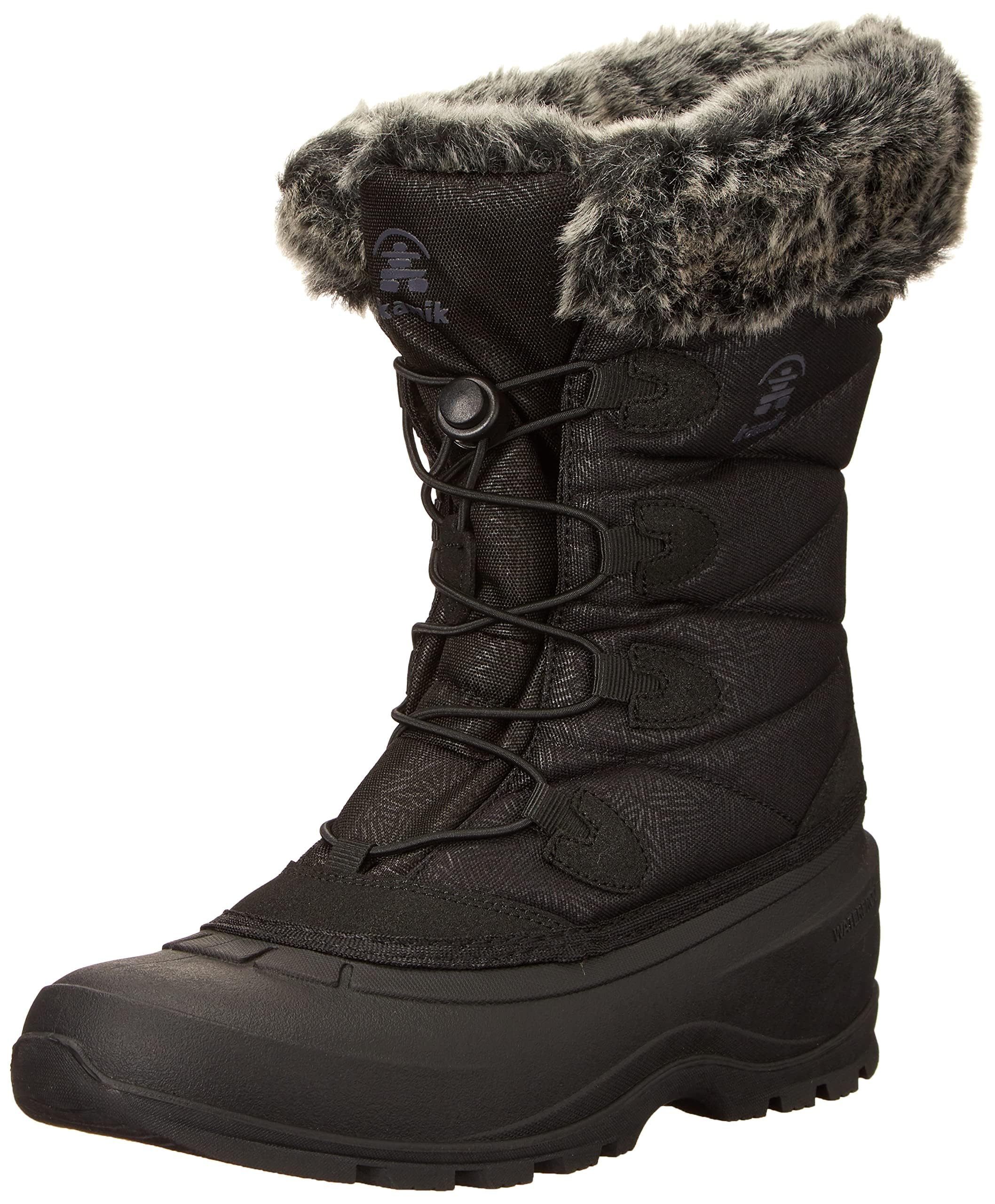
3. Kamik Momentum 3 Insulated Snow Boots
You get solid warmth and waterproofing without spending premium dollars — 123 owners call it the warmest boot they have worn.
The Kamik Momentum 3 uses HEAT-MX technology (a multi-layer insulation system from Kamik) to deliver all-day warmth without making your feet feel like they are wrapped in a sleeping bag. It is fully waterproof with a seam-sealed construction (every stitch is covered with a waterproof tape), and the drawstring closure at the top lets you lock out snow without fussing with laces. Owners rave about the warmth more than anything else — 123 people mention it, making it the single most-discussed trait of any boot on this list. One owner’s daughter walked around snowy Lapland for nine days with no foot pain, no wet socks, and no slipping, calling them “a 10/10.”
The fit runs generally true to size, but several owners recommended going up a full size if you are between sizes or plan on thick wool socks — the lining molds to your foot over time. The traction earns solid marks on snow and ice, and the fuzzy top adds a touch of style while keeping snow out. The honest catch is durability: 27 owners have mixed feelings, and a few report the seam coming apart after a few months of light use. One owner noted they were initially warm at -26°F but started leaking after the seam failed. If you are in deep cold every single day, you may want a more bomb-proof option like the Dryshod. For everyday winter walks, shoveling, and school drop-offs, this is the best value on the list.
Best for daily wear: you want solid warmth and waterproofing without spending premium-tier dollars.
Check fit first: you need a boot that survives daily construction or farm work — the durability is mixed in long-term use.
4. MUCK Women’s Arctic Ice Tall Boot + Vibram Arctic Grip A.T.

You get 17 inches of protection so deep snow never reaches your pants — taller than the 3.94-inch KEEN by a long shot.
When you need to step into deep drifts, the MUCK Arctic Ice Tall is the obvious choice. At 17 inches tall, this boot rises well above the calf, keeping snow from ever reaching your pant leg. The 8 mm neoprene bootie (a stretchy synthetic rubber that insulates even when wet) provides stretch and warmth, while the extended rubber coverage protects the lower portion where water and ice hit hardest. The Vibram Arctic Grip outsole (a rubber compound specifically designed for wet ice) is the star here — it is designed for wet, icy surfaces, and owners confirm it delivers excellent slip resistance even on glare ice. One ice fisherman noted that their feet stayed warm for hours on the ice, and another praised the boot for mucking stalls and shoveling snow in comfort.
The warmth is the most-praised aspect (51 owners call it out), and the fit is a close second (48). Several owners sized down for a snugger fit, while others stayed true to size for thick socks. The calf fit is notably snug — owners with larger calves recommend trying them on in person before buying. The durability gets a mixed reception from 22 owners, with some reporting the rubber cracking after a season. At 4.5 lbs, this is not a light boot — heavier than the 1 lb Dryshod — but the trade-off is serious protection for deep snow and wet conditions.
Best for icy terrain: you deal with deep snow regularly — ice fishing, barn work, or shoveling a long driveway.
Try for narrow calves: you have larger calves, need a lightweight boot for long walks, or want a style that works with slim pants.
5. THE NORTH FACE Women’s Chilkat V 400 Waterproof Snow Boot

This boot packs 400g of insulation — more than double the KEEN’s 200g — for subzero conditions while looking great on the street.
The Chilkat V 400 packs 400g of premium insulation (a synthetic fill that traps body heat), placing it firmly in the very-cold category. It weighs 1.63 lbs, which is light enough for all-day wear yet substantial enough to keep toes warm in subzero conditions. The waterproof construction uses a non-PFC DWR (Durable Water-Repellent, a coating that makes water bead up, without perfluorinated chemicals) treatment, and owners confirm it keeps feet dry in snow and rain. One mail carrier reported working 8-12 hour shifts in snow and ice with warm, comfortable feet, ordering a half-size up to fit two thick socks. Another took these to the Arctic and kept their toes warm and injury-free, using hot hands twice for extra safety.
The warmth is the top praise (82 owners), followed closely by quality (62) and comfort (50). The fit, however, is divided — 46 owners call it mixed, and 45 flag sizing as negative. Most agree you need to size up at least half a size, especially if you want room for thick socks. The outsole provides reliable traction on snow and ice, though one owner noted they are “not fully waterproof” and recommended avoiding deep puddles — a caution compared to the 100% waterproof Dryshod. The style earns consistent praise, with 24 owners calling it great-looking. If you want a winter boot that transitions from the trail to the cafe without looking like a rubber work boot, this is your pick.
Best for casual use: you want a stylish, lightweight, 400g-insulated boot for active winter days and city wear.
Not for hiking: you have wide feet or want to stand in deep puddles — the waterproofing has limits and the fit runs narrow.
6. Baffin Women’s ICEFIELD Tall Waterproof Lightweight Polar-Rated Snow Boots
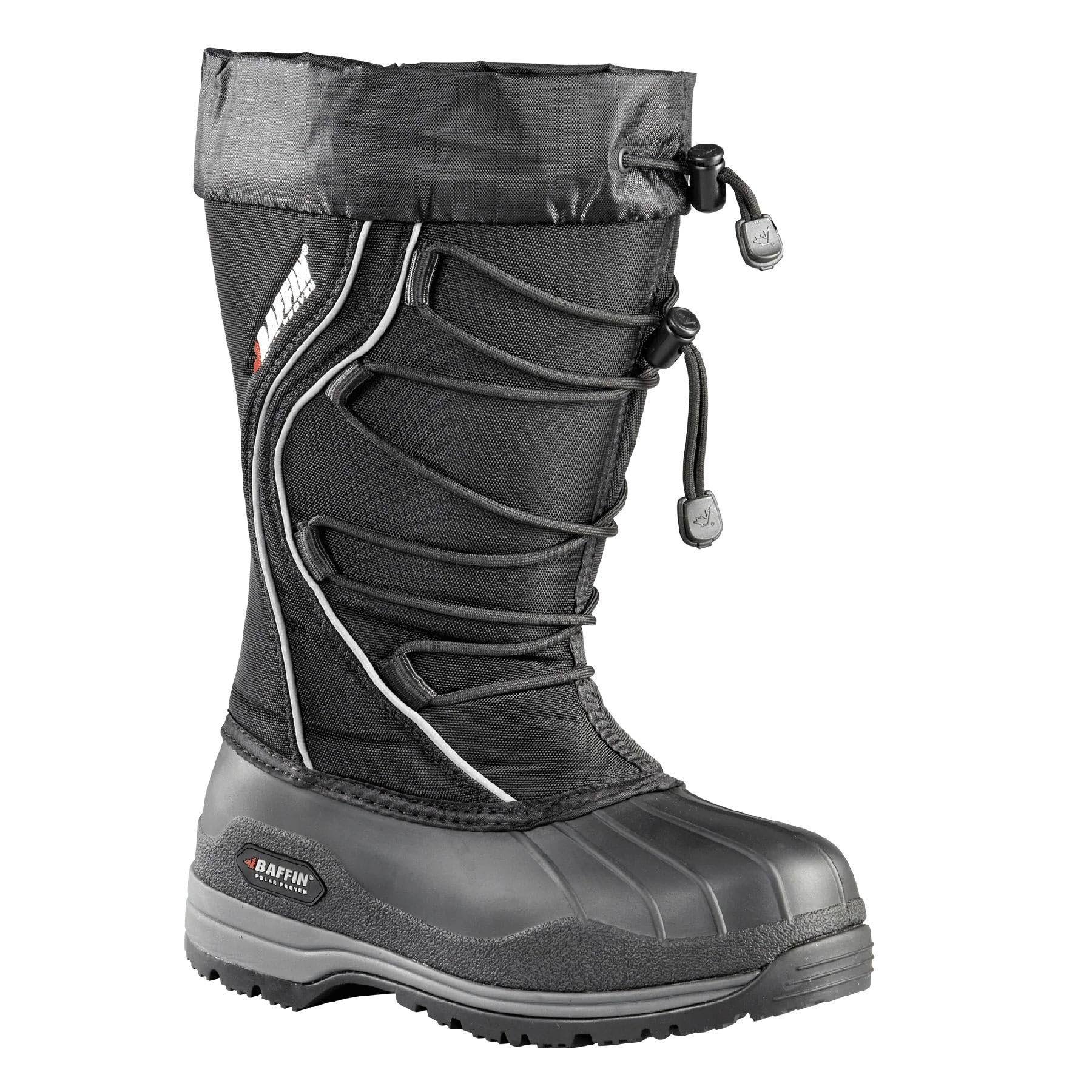
These boots were field-tested at both the North and South Poles — with 133 owners calling them the warmest boots they own, the most on this list.
The Baffin ICEFIELD Tall is not just marketing: the brand says these boots were field-tested at both the North and South Poles. The multi-layer insulation system is the most sophisticated on this list — a removable Comfort-Fit inner boot (a separate boot you can take out for drying) with B-Tek Foam, dual layers of B-Tek Heat for thermal loft (air pockets that trap warmth), a breathable Thermaplush lining, plus PolyWool, DiamondNet, and a Vapourized Aluminum Membrane (a thin layer of aluminum that reflects body heat back at your feet). The tall wind-resistant nylon upper has a drawstring collar that locks out snow, and the Arctic Rubber shell stays flexible in sub-zero temps so it does not crack. The Polar Rubber outsole (rubber made to stay soft in extreme cold) provides maximum grip on ice and rugged terrain.
The warmth is the defining trait — 133 owners mention it, the highest count on this entire list. One ice fisher reported these kept their feet warm on the ice in negative Fahrenheit temps. The quality (72 mentions) and comfort (57 mentions) are also consistently praised. The fit gets a mixed reception from 86 owners, with many noting the toe area runs narrow — several sized up a full size. At 4 lbs, it is heavy — heavier than the 1 lb Dryshod — but the removable inner boot makes drying and customization easy. Several owners noted this boot completely outperformed their Sorel or Columbia boots in extreme North Dakota and Alaskan winters.
Best for walking: you face polar-level cold — ice fishing, snowmobiling, or living where -30°F is a normal Tuesday.
Avoid deep snow: you have wide feet or want a low-weight boot for casual walking — the narrow fit and 4 lb weight demand a trade-off.
7. Baffin Women’s JESS Tall Waterproof Insulated Tundra-Rated Winter Snow Boots
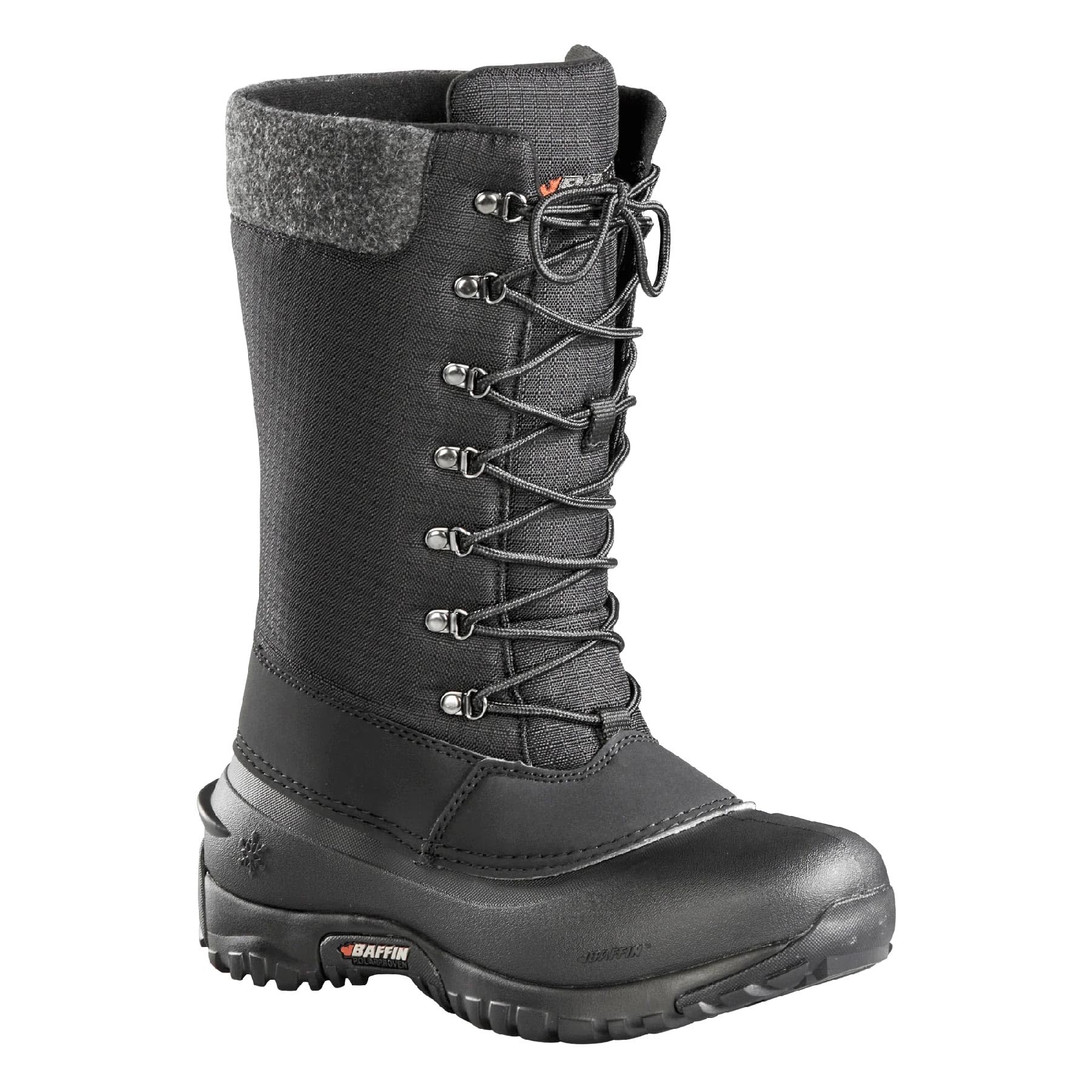
You get a plush faux-fur collar that blocks snow and a Tundra Rating for serious cold, but sizing is a gamble — one owner went from 8.5W to size 11.
The JESS Tall combines Baffin’s hardcore Tundra Rating (the brand’s designation for prolonged sub-zero use) with a more refined look: a tall nylon upper with leather accents and a faux-fur collar that keeps snow from sneaking in. The Polar Rubber outsole and LiteGrip Blend base provide excellent traction on ice and packed snow, while the GelFlex anti-fatigue midsole (a cushioning layer that reduces foot tiredness) helps cushion long hours in the cold. The insulation is removable, which is a nice bonus for drying or switching to a lighter liner on milder days. Owners praise it for snowmobiling and Alaskan winters, with one noting it kept their feet dry and warm in knee-deep snow down to -20°F with windchill.
The quality (9 mentions) and warmth (8 mentions) are the top positives, but the sizing is the story here: 10 owners flag it as negative, and many say it runs very small. One owner normally wears a size 8.5W and ordered an 11 for a perfect fit. Another bought two sizes larger for a good fit. If you order these, plan to go up at least one full size. The lace-up front closure helps prevent snow entry, but the D-ring system (metal loops for laces) is slower to use than a pull-on boot like the Dryshod. One owner noted a bulge forming in the sole after two months, so durability is something to watch.
Best for deep snow: you want Tundra-rated protection with a dressier silhouette and a warm faux-fur collar.
Not for all-day wear: you want a consistent fit without a sizing lottery, or need a boot that requires less lace effort.
8. Baffin Women’s TESSA Waterproof Insulated Warm Cushioned Lightweight Tundra Rated Everyday Cold-Weather Winter Snow Boots
Insulation Weight (Grams)
The best extreme-cold boots use a multi-layer system with different materials (foam, fleece, reflective membrane) rather than just a single thick layer. More layers trap more air, which is what actually insulates your foot.
Outsole Materials
The rubber compound (the material the sole is made from) matters more than the tread pattern in extreme cold. Standard rubber turns hard and slick below 0°F. “Polar Rubber” and “Vibram Arctic Grip” are designed to stay flexible and grab icy surfaces at those temps. “Microscopic shards” (found in KEEN’s Polar Traction) are tiny particles embedded in the rubber that dig into ice like sandpaper. If you walk on ice every day, this is the spec to prioritize over insulation.
Boot Height and Collars
Tall boots (12-17 inches) keep snow out when you step into deep drifts. Mid-height boots (around 4-6 inches) are lighter and let your ankle move naturally for hiking. A locking snow collar or drawstring at the top prevents snow from funneling into the boot when you kneel or step over a log. If you are in deep snow, taller is safer — a 17-inch MUCK boot will keep your pants dry in conditions a 3.94-inch KEEN boot would soak through.
FAQ
How do I size extreme cold winter boots?
Can I wear these boots for hiking or snowshoeing?
What does Tundra Rated mean on a Baffin boot?
Which boot is warmest in the Dryshod vs Baffin comparison?
How long do extreme cold winter boots last?
Are women’s winter boots for extreme cold waterproof?
Can I drive in these boots?
Which boot is best for wide feet?
How do I clean and maintain extreme cold winter boots?
Final Thoughts: The Verdict
If you want one dependable pick, the
Related Guides