
Our readers keep the lights on and the coffee maker working hard! As an Amazon Associate, I earn from qualifying purchases.
Specs are compiled from manufacturer listings and verified buyer reviews and can change over time — please confirm the key details on the product page before buying.
Your feet hurt, nothing fits, and every shoe search ends in the same frustration — too tight across the middle, too narrow at the toes, or simply not built for the conditions that make walking miserable. This guide matches nine of the most trusted wide-width models to the specific foot problems they actually solve, so you walk out of the house without bracing for pain.
I’m Mohammad — the founder and writer behind Calories Fit. This guide is built by comparing the manufacturers’ published specifications and the patterns across verified customer reviews, so you get each pick’s real strengths and trade-offs instead of marketing spin.
Whether you are dealing with bunions, plantar fasciitis, diabetes, arthritis, or just feet that swell by noon, finding the right pair of women’s wide-width shoes for problem feet means matching the exact shape and support your condition demands, not just picking the biggest number on the box.
Our Picks at a Glance


How To Choose The Best Women’s Wide-Width Shoes for Problem Feet
A poorly chosen wide shoe can aggravate foot pain more than wearing no wide shoe at all. Match the shoe’s features to your specific foot condition rather than simply selecting the widest size available. These four questions guide a smart buyer before purchasing.
Your Primary Condition — What Are You Actually Treating?
Plantar fasciitis needs a rigid arch support and a firm heel counter. Bunions need a wide and deep toe box with soft, stretchable uppers. Diabetic neuropathy demands smooth interiors and extra depth for orthotics. Arthritis and swollen feet need easy on-and-off (Velcro or slip-on) plus a roomy upper that does not compress. Pick the shoe that targets your condition first — a general-purpose “comfort shoe” often delivers no real relief.
Width System — 2E, 4E, X-Wide, Wide. What Actually Fits?
There is no universal standard. A “Wide” from one brand may feel like a “Medium” from another. Generally, 2E is a standard wide, and 4E is an extra wide. Some brands (like FitVille) label “Wide” as 2E and “X-Wide” as 4E. Your best bet is to measure the widest part of your foot and compare it to the brand’s specific size chart — never assume the letter matches your last pair.
Closure Style — Lace-Up, Velcro, or Slip-On?
Lace-ups give you the most customizable fit across the instep but can be hard to manage with arthritis or bad hands. Velcro straps are the go-to for edema and swollen feet — you can adjust tightness through the day without retying. Slip-ons are the easiest but often lack the adjustability needed if your feet swell unevenly. If you wear orthotics, make sure the shoe has a removable insole and enough depth to accommodate them.
Cushioning vs. Support — Which Do You Weaken First?
A soft, bouncy sole may feel comfortable initially but can worsen plantar fasciitis and flat feet over extended wear. Your foot requires a supportive base—a firm midsole and structured arch—to prevent over-pronation, with cushioning as a secondary feature. Shoes like the New Balance 928 V3 prioritize motion control and stability. Shoes like the FitVille Rebound Core prioritize plush cushioning. Prioritize support over cushioning based on your specific condition.
Quick Comparison
| Model | Best For | Width Options | Closure Type | Key Support Feature | Amazon |
|---|---|---|---|---|---|
| New Balance 928 V3★ Best Overall | Motion Control & Stability | Wide / X-Wide | Lace-up | ROLLBAR & ABZORB | Amazon |
| FitVille Rebound CoreBest Value | Plush Cushion & Value | 2E / 4E | Lace-up | High-Rebound Sole | Amazon |
| Ortho + Rest DiabeticBest Adjustable | Adjustable Diabetic Fit | Wide (Men’s sizing) | Velcro | Adjustable Strap | Amazon |
| OrthoComfoot Wide Run | Wide Toe Box + Style | Wide | Lace-up | Arch Support Insole | Amazon |
| Propet TravelActiv Axial | Narrow Heel + Wide Toe | Narrow to X-Wide | Lace-up | TravelTek Outsole | Amazon |
| OrthoComfoot Arch Support | Nerve Pain & High Arch | Wide | Lace-up | Double Insole System | Amazon |
| Orthofeet Wichita | Adjustable Orthopedic | Wide / X-Wide | Velcro | Ortho-Cushion System | Amazon |
| Propét Tour Knit | Lightweight & Breathable | Narrow to EW | Slip-on | X25 Open Cell Foam | Amazon |
| Orthofeet Naya | Hands-Free Slip-On | Wide / X-Wide | Slip-on | Anatomical Arch Insole | Amazon |
In‑Depth Reviews
1. New Balance Women’s 928 V3 Lace-up Shoes
Our pick — over 4★ from 3,500+ verified ratings; the strongest balance of quality and price.
The orthopedic workhorse that owners rely on for a decade.
This is the shoe for anyone whose problem is mechanical — over-pronation, fallen arches, or feet that twist with every step. The New Balance 928 V3 pairs ABZORB cushioning (a foam that absorbs impact without collapsing) with a ROLLBAR stability post (a rigid device built into the midsole that controls how your foot rolls inward). The result is a base that feels planted and secure, like the shoe is holding your foot in proper alignment rather than just padding it. The crowd favorite — 4.4 stars across 3,928 owners — with comfort singled out by hundreds as the defining reason.
What wins people over is the roomy toe box alongside a supportive, non-squishy sole. Buyers dealing with plantar fasciitis, accessory navicular bone aggravation, and juvenile arthritis report genuine relief, with one noting the shoe “wears well for plantar fasciitis and aggravated accessory navicular bone.” The hard sole feels great on concrete floors. The fit is a mixed bag — some find the X-Wide too wide and swap to a Wide, while others with narrow heels report a bit of ankle slide — so order from a place with easy exchanges. The 928 holds up better than many newer models; as one decade-long buyer puts it, “I’ve been wearing these for about a decade.”
The biggest knock is that the color options skew conservative, and the price sits at the higher end of the mid-range. But given the motion-control technology and the sheer density of positive feedback from people who have tried everything else, this is the safest recommendation for serious foot problems.
Built for the Long Haul
- Serious motion control and ROLLBAR stability — stops over-pronation
- ABZORB cushioning absorbs impact without feeling mushy
- Large toe box accommodates bunions and orthotics
- Proven track record: buyers report a decade of reliable use
- Supportive on concrete floors for all-day standing
Know Before You Buy
- Fit is hit-or-miss — some need to size down from X-Wide to Wide
- Limited color palette; leans “geriatric taupe” according to some
- Packaging complaints — Amazon shipping can damage the box
Your go-to if: over-pronation, plantar fasciitis, or ankle instability is your main complaint — the stability tech here is class-leading at this price.
Think twice if: you need a super-cushioned, marshmallow-soft ride underfoot — this shoe prioritizes structure.
2. FitVille Women’s Extra Wide Walking Shoes Rebound Core
The budget-friendly cloud that flat feet and plantar fasciitis sufferers praise.
If your primary need is cushion and you are on a strict budget, the FitVille Rebound Core delivers a walking-on-clouds sensation that buyers compare to nothing else. The high-rebound sole (a dense foam that springs back rather than flattening out) and the removable insole make this a strong pick for flat feet and heel pain. One owner who has flat feet and plantar fasciitis puts it plainly: “with these sneakers it’s like walking on clouds with arches!” The wide toe box is generous enough to wiggle toes freely, and the suede-and-fabric upper breathes well.
The brand recommends sizing up half a size from your regular size, and the reviews back that up — fit is the most-discussed aspect, with mixed results. Some buyers with “duck-shaped” feet and narrow heels found the X-Wide too roomy in the midfoot. Others with arthritis and general wide-foot issues call it a perfect fit. The value proposition is clear: comfort is the top positive aspect by a wide margin, and the quality and appearance also earn consistent praise.
The trade-off is noticeable if you care about premium materials. A minority of buyers flagged that what looks like suede and leather is actually synthetic, and one described the materials as “cheap fake leather and flocked suede.” For daily walking and casual wear, that trade-off is easy to live with. For a dressier look or high-mileage training, you might want something with more sturdy construction.
Comfort King for the Price: The cushion is genuinely impressive for the price. The fit is where you need to be careful: read the size chart and consider ordering a half-size up if you have a high instep. The synthetic upper is the main cost-saver; it won’t patina like real leather, but it will get you through thousands of comfortable steps.
Reach for this if: your budget is tight but your feet need serious cushion and a wide toe box — especially for flat feet and plantar fasciitis.
Look elsewhere if: you need a premium, long-wearing material or you have a very narrow heel with a wide forefoot.
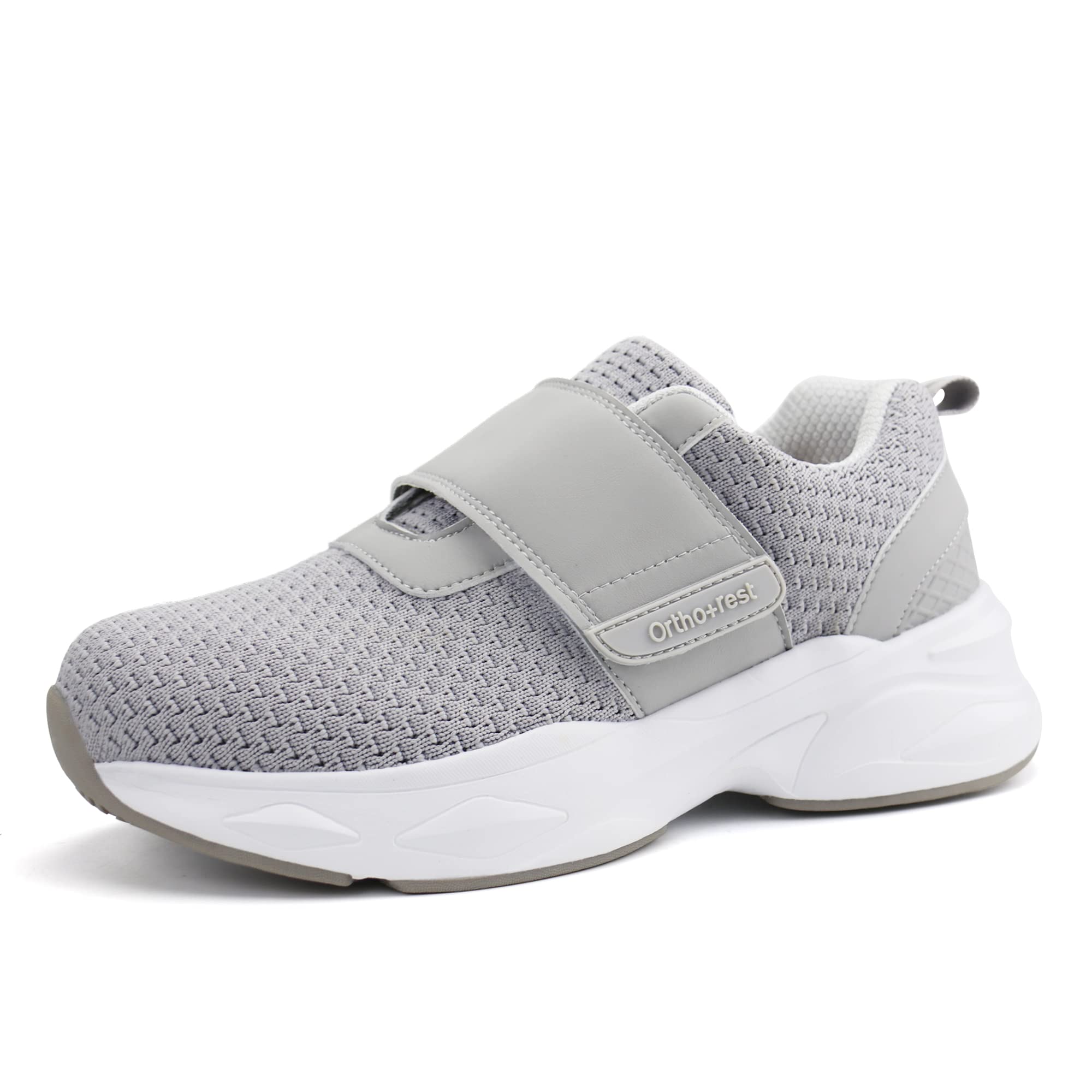
3. Ortho + Rest Women Diabetic Shoes
The Velcro-friendly option for feet that change size by the hour.
Swollen feet, diabetic edema, and post-surgery volume changes demand a shoe you can loosen or tighten without undoing laces. The Ortho + Rest uses an adjustable Velcro strap across the instep, so you can customize the fit morning to night. The toe box is described as “perfect” by a size 9 owner with wide, swollen feet, and the breathable fabric upper helps keep sensitive skin cool. The insole is removable, giving you room for custom orthotics or diabetic inserts.
The biggest gotcha is that this shoe uses men’s sizing. A size 9 Wide fits like a men’s 8.5-9 in 4E width. That means the “Wide” is genuinely very wide — great for feet that need maximum volume, but potentially too loose if you are between sizes. The arch support is present but described as “reasonable” rather than aggressive, and the heel is soft enough that some buyers found it slightly unstable at first. The break-in period is a week or so, and after that, owners mention it becomes a comfortable, go-to sneaker.
The Velcro also gets mixed feedback: some love how easy it is to put on and take off, especially with arthritis or bad hands; others find the strap doesn’t secure the foot tightly enough, leading to heel slippage. “No tying needed” is a major selling point for many, but if you have a very narrow heel, the single strap may not lock you in as well as a lace-up system.
The Case for It: Best pick for fluctuating swelling — the Velcro lets you adjust in seconds. The men’s sizing means extra width for those who need it. The breathable fabric and smooth interior reduce irritation. The catch is the sizing confusion (order by the men’s size chart, not your usual women’s size) and the soft heel that may feel less stable than a rigid counter.
Best if: your feet swell midday or you need a shoe you can get into and out of quickly — the Velcro is a genuine convenience.
skip it if: you have a narrow heel that slips easily, or you need aggressive arch support straight from the start.
4. Women’s Orthopedic Diabetic Wide Running Shoes (OrthoComfoot)
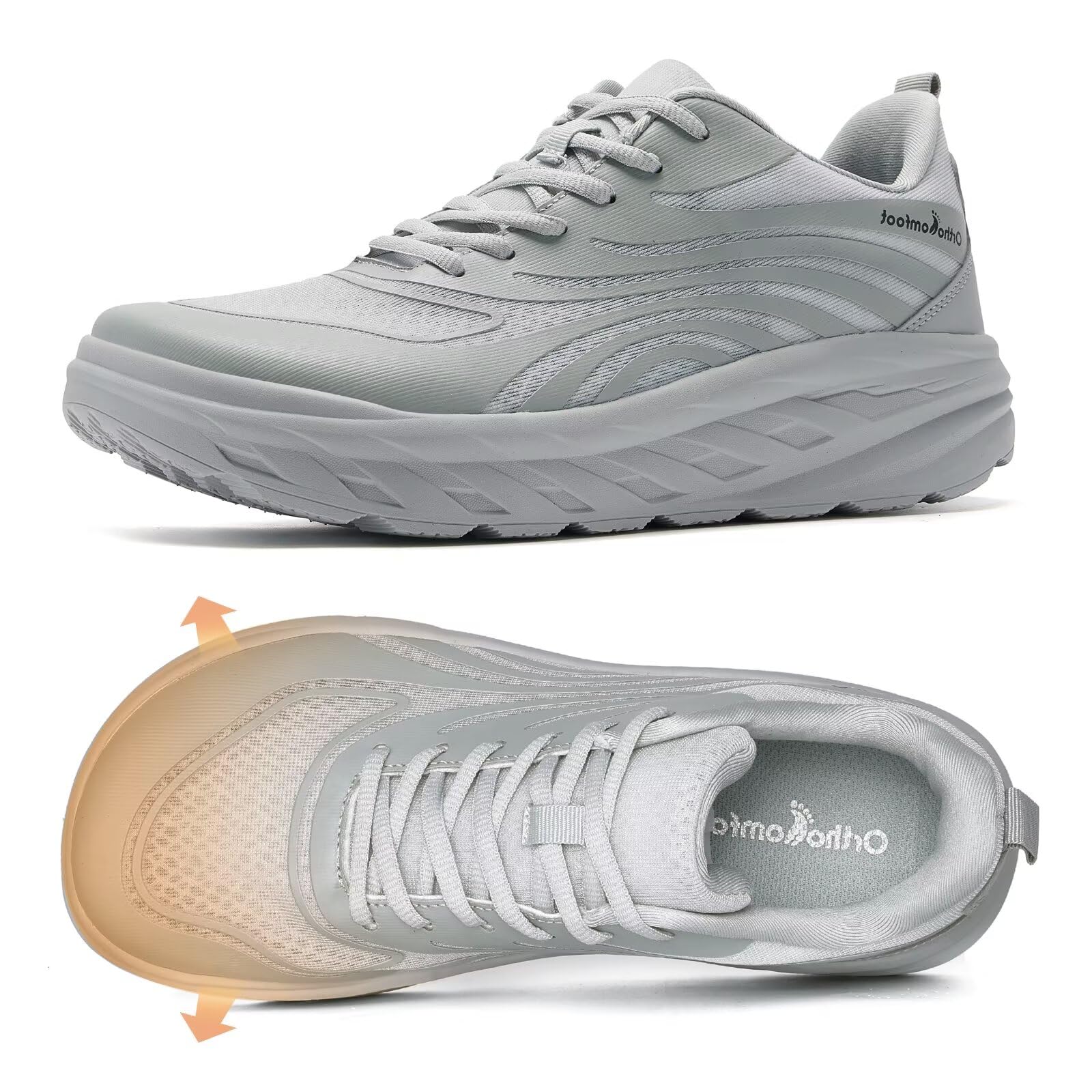
The wide toe box that actually lets bunions breathe without looking clunky.
For bunions, hammertoes, or any condition where toe crowding is the main problem, this OrthoComfoot shoe puts the widest possible forefoot first. The toe width is the second most-praised feature (after comfort), and owners confirm it accommodates bunions and swollen feet without squeezing. The shoe comes with multiple insoles — a standard and a thicker one — so you can adjust the volume for leg length discrepancy or custom orthotics. The lace-up closure gives you fine control over the instep tightness, unlike a slip-on or single Velcro strap.
The cushioning and arch support are both praised, with a bartender reporting “excellent slip resistance on wet floors” and a mobility-challenged owner calling them “miracle shoes if you are on your feet all day.” The lightweight construction (the upper is a thin, breathable mesh) means your feet stay cool even during long shifts. The style is modern enough that you won’t feel like you are wearing medical shoes.
The durability is the clear weak point. Multiple reviews note that the mesh starts ripping at the sides after a few weeks or months, and the rubber on the sole shows wear quickly. “Very comfortable however starts ripping wherever there is fabric,” one buyer summarizes. At this price point, you are trading long-term construction for immediate comfort and a generous fit. If you rotate these with another pair, they will last longer.
Real-World Test: The toe box is genuinely one of the widest available without going to a specialty brand. The cushion is plush and the arch support is noticeable. The Achilles’ heel is the mesh upper — treat these as your everyday walking shoe, not your multi-year workhorse. The price makes the trade-off palatable for most.
Choose this if: bunions or hammertoes make every other toe box painful — this one gives your toes actual space to spread.
Pass if: you need a shoe that will hold up to daily wear for more than a season without the upper wearing thin.
5. Propet Women’s TravelActiv Axial Walking Sneakers

The rare shoe that solves the narrow-heel, wide-toe paradox.
If your forefoot needs width but your heel slides out of every shoe, the Propet TravelActiv Axial is built for you. It comes in Narrow, Medium, Wide, and X-Wide widths, and the design features a firm heel counter that holds the back of the foot in place while the toe box stays roomy. The engineered mesh upper is breathable and supportive, and the Open Cell PU insole wicks moisture away — keeping your feet cooler and healthier over long walks. The lightweight TravelTek outsole combines EVA and rubber for good traction without weighing you down.
Owners with broken ankles, knee problems, and truly narrow feet are the loudest advocates. One buyer with a narrow long foot who could not find a fit anywhere else says “these fit narrow on the heel and across the instep yet had a wide enough toe box that my toes were not squashed.” Another reports relief from favoring a healing leg: “These shoes have really helped and are comfortable for standing at work.” The color options (including a denim-grey) and the attractive silhouette get regular compliments, which is rare for a therapeutic shoe.
The durability concern is the sole. Several reviewers mention the tread wears more quickly than some brands, especially if you wear them to the gym multiple times a week. A small number also report the side of the shoe coming unglued after a week. The sizing can be tricky — some buyers needed to size up two full sizes to get the right length. Treat the size chart as gospel, and consider ordering a half-size up if you plan to add orthotics.
The Trade-Off: For the narrow-heel-wide-toe shape, this shoe is a near-perfect match. The comfort and fit are excellent from the start. The sole wears faster than average, so expect to get a season or two of daily wear before they need replacing.
Best for: anyone who has given up finding a shoe that stays locked at the heel but does not crush the toes — this one genuinely solves that.
Not for: high-mileage walkers who need a sole that lasts 500+ miles without noticeable wear.
6. OrthoComfoot Women’s Orthopedic Diabetic Wide Running Shoes
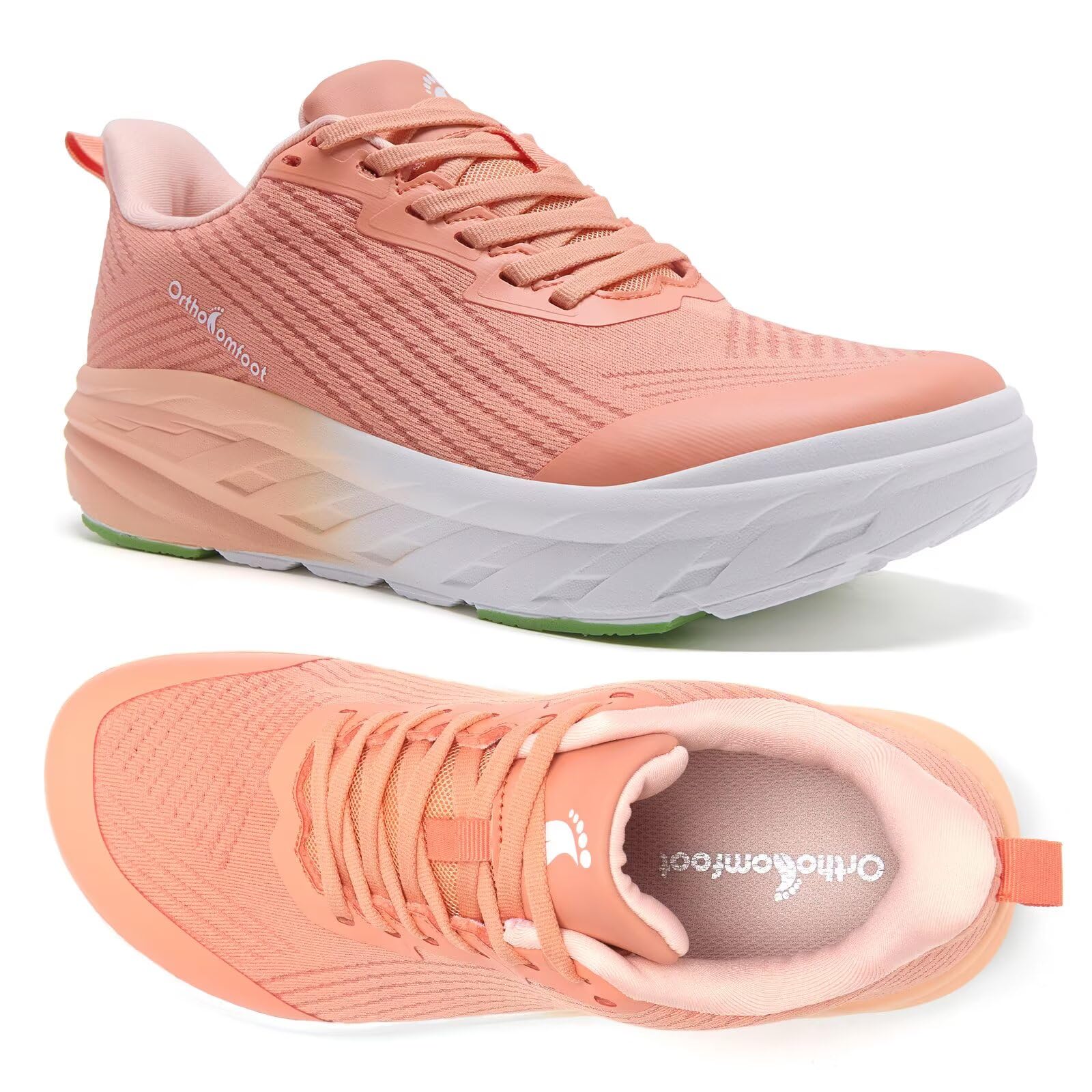
The arch-support specialist that nerve pain and high-arch sufferers rate above Hokas.
This OrthoComfoot model is a different animal from the toe-box-focused pick above. Here, the star is the arch support and cushioning system. The shoe comes with two sets of insoles and arch supports, letting you dial in the exact level of lift and firmness. The wide toe area helps with bunions, but the real magic is in the midfoot support — owners with plantar fasciitis, ankle tendinitis, fallen arches, and nerve foot pain report that it resolves symptoms other shoes could not touch. “Best for nerve foot pain,” one owner says, noting the arch support does not press on the nerve like some other brands.
The outsole is slip-resistant, tested on wet surfaces. The upper is breathable and the cushion is described as “cushiony” without being unstable. The shoe accommodates a foot brace and has enough depth for custom orthotics. The style is contemporary, with color options that look more like a regular athletic shoe than an orthopedic device. The price sits at the higher end of the mid-range, but owners consistently say it is worth it — especially compared to premium brands like Hoka, which cost significantly more.
The durability is a coin flip. The most common negative is that the fabric can develop a hole and the sole can start separating after about four months of daily use. “Almost perfect” sums up the most thorough review: perfect for wide feet and super comfortable, but the right shoe showed fabric damage and sole separation after four months. If you rotate with another pair, they will last longer.
The Verdict: For nerve pain, high arches, and conditions that need a precise, supportive arch, this shoe delivers relief that owners call life-changing. The build quality is the weak link, but the price is fair for the performance.
Reach for this if: nerve foot pain, high arches, or plantar fasciitis is your main issue — the adjustable arch support is genuinely effective.
Pass if: you need maximum durability from a single pair — the upper can wear thin after a few months of daily use.
7. Orthofeet Women’s Orthopedic Wichita Adjustable Stretch Fabric Casual Shoe
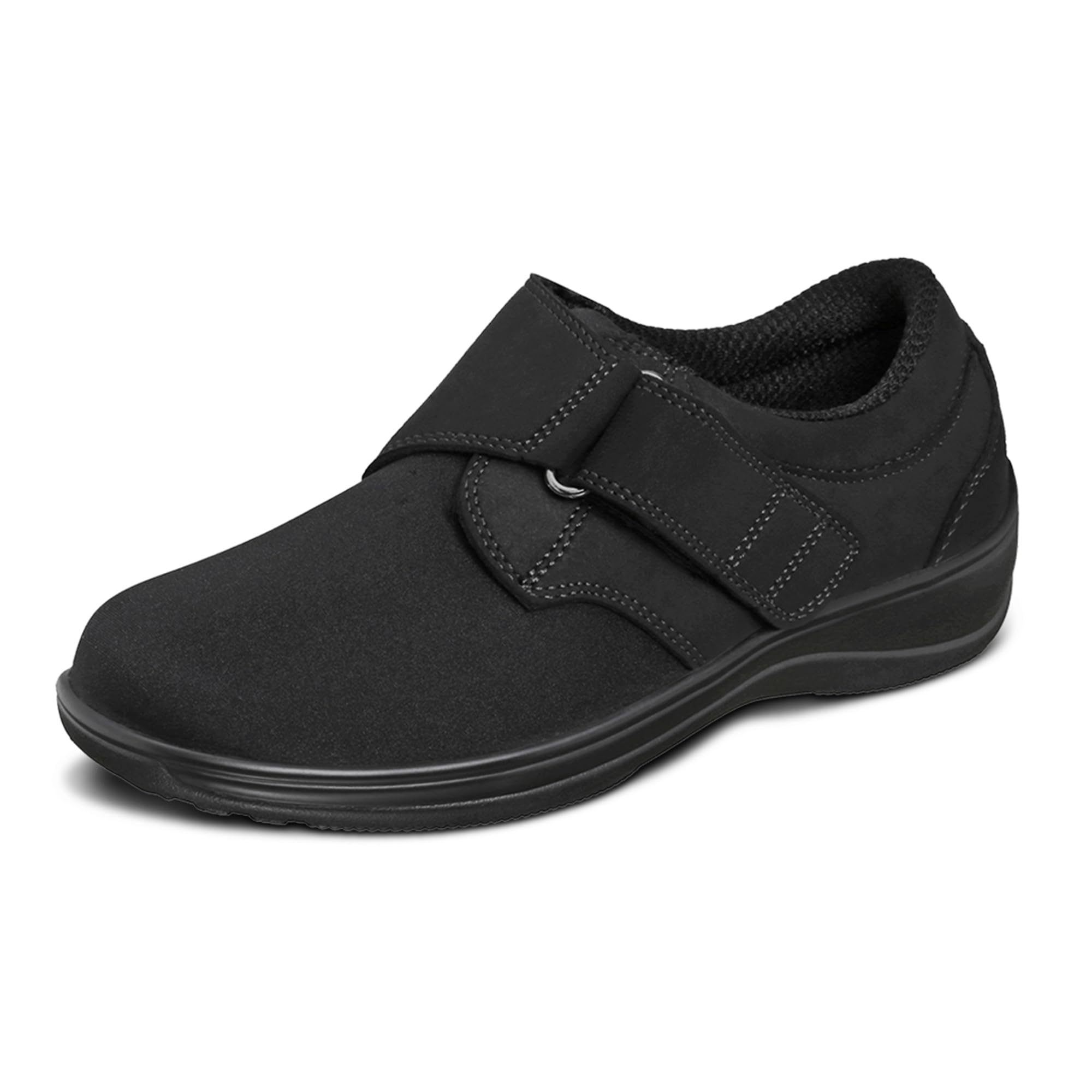
The orthopedic brand with a system — multiple inserts and spacers to fine-tune your fit.
Orthofeet is among the most recognized names in therapeutic footwear, and the Wichita shoe shows why. It comes with the Ortho-Cushion system: a built-in orthotic insole, a shock-absorbing sole, and a pressure-free fit that is roomy through the toe box. The adjustable Velcro strap across the top makes it easy to get in and out of, and the stretchable fabric (a neoprene-like material) prevents blisters on sensitive skin. This is a solid choice for diabetic neuropathy, arthritis, or anyone who needs a shoe that opens wide for an AFO (ankle-foot orthosis).
Owners who stick with it report excellent durability for people on their feet many hours a day. The removable arch support and spacers allow you to customize the degree of correction. The look is more like a casual sneaker than a medical shoe, and the non-sneaker appearance is a point of praise. The breathable fabric is good for misshapen toes that need a large toe box.
The fit is the biggest variable here. A significant number of buyers find it runs large — “TOO BIG LIKE BOATS GET NEED TRIPLE SOCKED TO KEEP ON” is one blunt assessment. Others find the width perfect. A smaller group reports an odor problem with the inserts that is hard to correct. And some buyers with specific foot shapes did not find the arch support comfortable, noting foot pain worsened with all the inserts. This is a shoe that really benefits from trying on or ordering from a place with a good return policy.
The Bottom Line: The Ortho-Cushion system is a genuine asset for customizing your fit. The quality and comfort are there for many owners, but the sizing inconsistency means you should not order this as a blind purchase. The price is premium, but the value is there if the fit works for your foot.
Best for: diabetic neuropathy, AFO compatibility, and anyone who wants an adjustable, non-sneaker look with serious support underfoot.
Skip if: you are not prepared to experiment with sizing — the fit varies significantly and returns may be needed.
8. Propét Women’s Tour Knit Casual Sneaker
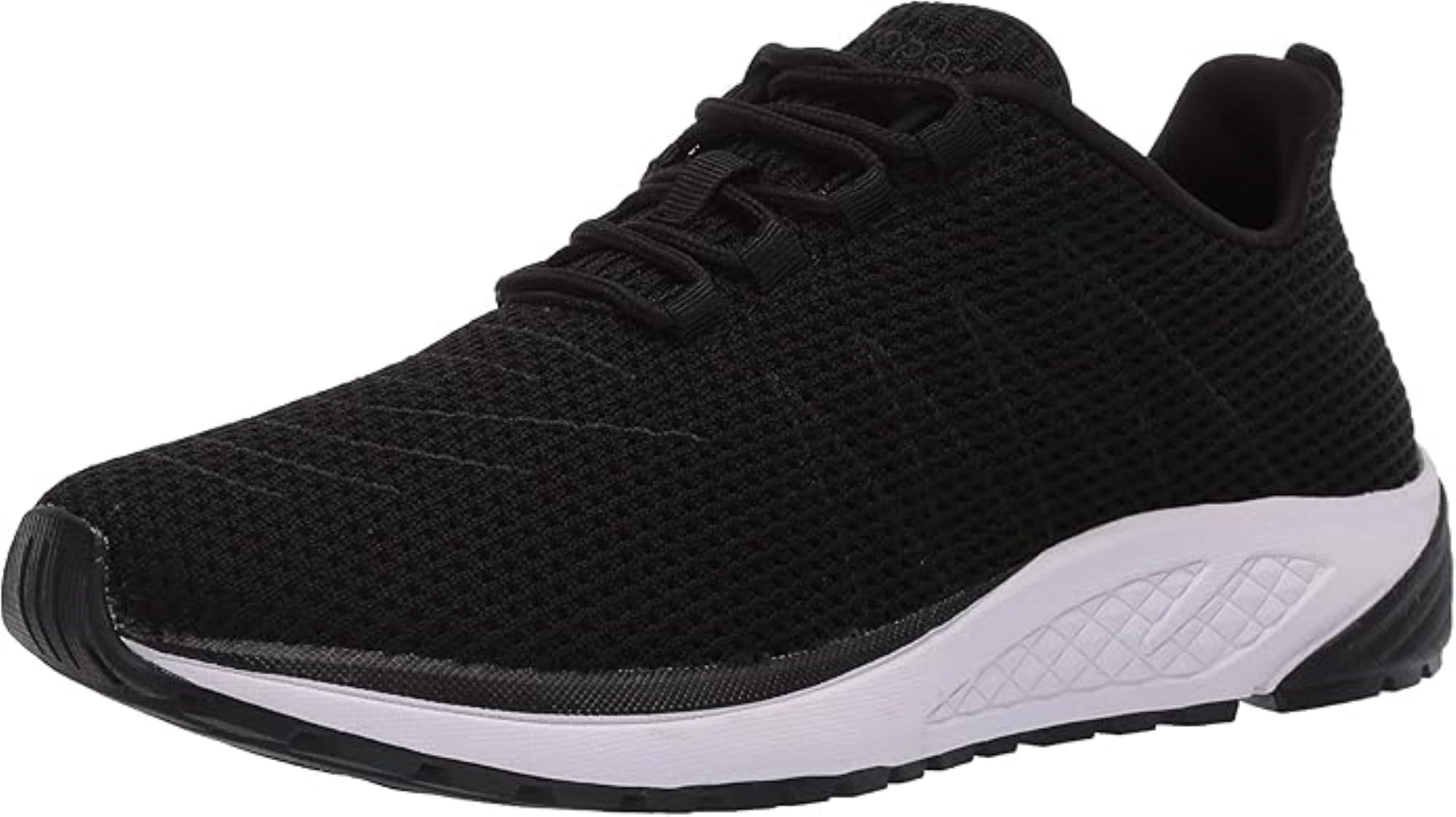
The featherlight knit that feels like a sock but supports like a shoe.
For anyone who wants the lightest possible option — especially for travel or warmer months — the Propét Tour Knit uses a breathable precision knit upper that wraps the foot without feeling restrictive. The X25 Open Cell foam provides high-level cushioning in a thin layer, and the EVA spacer lets you customize the fit slightly. The rubber tread inserts give you grip on various surfaces. The slip-on design with a stretchable collar makes this easy to put on and take off, though it lacks an adjustable closure for fine-tuning.
The Tour Knit is a strong choice for plantar fasciitis specifically. One owner found it “helped cure plantar fasciitis pain,” citing the wide toe box, deep heel cup, and soft cushion as the key factors. The shoe is also noted to accommodate a custom orthotic. The range from Narrow to EW (Extra Wide) means this can fit a variety of foot shapes, and the color selection (including a popular lavender) gets compliments. The weight is noticeably low at 2.13 pounds per pair.
The fit inconsistency is the main issue. Some owners find the EW version too wide overall — “too much volume overall for wide toe box only” — while others find it not wide enough. There are reports of heel slippage in the slip-on design. A smaller number mention the durability of the knit upper as a concern, and the arch support is present but not aggressive — this is not a motion-control shoe. If you have a very specific arch need, you may need to add your own orthotic.
The Take: If lightweight, breathable, and easy-on are your priorities, this is one of the best picks. The cushion-to-weight ratio is excellent. The fit is the gamble — the EW size may feel too roomy for some, but for true wide feet, it works.
Best for: warm-weather walking, travel, and anyone who finds most shoes too heavy — this one disappears on your foot.
Not ideal if: you need aggressive arch support or a precise, lock-down fit — the slip-on design is less customizable than lace-ups.
9. Orthofeet Naya Orthopedic Women Walking Shoes

The hands-free slip-on that stays put — no bending, no lacing, no heel slip.
The Orthofeet Naya is the premium answer to the slip-on category. It features a step-in design that does not require you to use your hands at all, making it ideal for post-surgery recovery, arthritis in the hands, or anyone who struggles with bending over. The anatomical arch support insole is removable and comes with extra inserts and spacers to adjust the fit. The water-repellent upper is stretchable, and the non-binding design prevents pressure points on bunions and hammertoes. The wide toe box is one of the roomiest in this lineup.
Owners with severe bunions, fibromyalgia foot pain, and post-surgery big toes report this shoe is comfortable right away. One says it is “perfect for severe bunions” with no foot slippage, and the ability to adjust the fit with different inserts as the shoe stretches is a big plus. The sturdy, wide sole provides good traction and balance, and the durability is rated highly — one owner reports over two years of use with the shoe holding up well and being machine washable. “Outlasts Skechers” is a typical comparison.
The fit is where you need to be careful. The sizing runs small for some — one reviewer noted “fits smaller than size indicated,” and the arch height is described as “very high” by a few. The ankle opening can be tight for anyone with larger calves or ankles, causing discomfort after a few hours. The shoe is also noticeably heavier than the Propet Tour Knit, which may matter if you are looking for the lightest possible option. The price is the highest on this list, but the consistent quality feedback and the 2-year durability reports make it a solid investment for daily wear.
The Verdict: The best hands-free option for bunions, post-surgery recovery, and anyone who cannot manage laces. The anatomical arch is better than average, and the customization with inserts is a real advantage. The weight and price are the trade-offs, but the durability is proven.
Choose this if: you need a zero-effort slip-on with genuine arch support and a wide toe box — the step-in design is a standout for mobility-limited buyers.
Pass if: you have a high ankle or large calf (the opening may be too tight) or you are trying to minimize weight in your footwear.
Understanding the Specs
Width System (2E, 4E, Wide, X-Wide)
The letters and numbers on the box tell you how wide the shoe is across the ball of your foot. 2E is a standard wide (about an inch wider than a medium). 4E is an extra wide (about two inches wider). Some brands like FitVille label “Wide” as 2E and “X-Wide” as 4E. The problem is that “Wide” is not a regulated term — a size 8 Wide from New Balance fits differently than a size 8 Wide from Orthofeet. That is why the best practice is to measure your foot’s widest point in inches and compare it to the brand’s specific size chart, not just the letter label.
Arch Support vs. Cushioning
Arch support is the firm, structured ridge under your midfoot that prevents your arch from collapsing when you stand or walk. Cushioning is the soft foam or gel layer under your heel and forefoot that absorbs impact. For most foot problems (plantar fasciitis, flat feet, over-pronation), support matters more than cushion — a shoe that feels soft in the store can make arch pain worse after a long day. Look for shoes that describe a “rigid heel counter” or “motion control” or “stability post” if support is your priority. Look for “high-rebound sole” or “X25 foam” if cushion is the main need for your condition.
Removable Insole & Extra Depth
A removable insole is a critical feature if you wear custom orthotics or need more space for swollen feet. Many wide shoes include a thin insole that you can pull out and replace with your own. “Extra depth” means the shoe has a higher internal volume than a standard width shoe, preventing your toes from rubbing against the top of the shoe. This is especially important for diabetic neuropathy and hammertoes, where any pressure point can lead to irritation.
Closure Type (Lace-Up, Velcro, Slip-On)
Lace-ups give you the most control over tightness across the whole foot, which is great for customizing fit and preventing heel slippage. Velcro (hook-and-loop) is the best choice for swollen feet, edema, or arthritis — you can loosen or tighten the strap without retying. Slip-ons are the easiest but offer no adjustability, so your foot shape needs to match the shoe’s shape closely. If you have a narrow heel, a slip-on with a stretchy collar may not hold you securely enough.
FAQ
What is the difference between Wide (2E) and X-Wide (4E) in women’s shoes?
Can I use my custom orthotics in any of these shoes?
Are these shoes good for plantar fasciitis?
How should these wide-width shoes fit?
What does “extra depth” mean for diabetic shoes?
How long do these wide-width shoes typically last?
Will these shoes work for bunions and hammertoes?
Is it better to choose lace-up or Velcro closure for swollen feet?
What is the return policy for these shoes if the fit is wrong?
Are these shoes machine washable?
Final Thoughts: The Verdict
If you want one dependable pick, the women’s wide-width shoes for problem feet winner is the New Balance 928 V3 because its motion control and stability tech are class-leading for over-pronation, plantar fasciitis, and general foot fatigue — supported by a decade of owner loyalty. If you need plush cushion on a budget, grab the FitVille Rebound Core. And for hands-free convenience with genuine arch support, the Orthofeet Naya is the one to reach for.
How We Picked
We do not accept paid placement. Every pick is matched to a real buyer and a real use-case; we do not hands-on test units.
Sources & Methodology
Specifications: manufacturer listings and product documentation. Review insights: verified customer reviews, as of July 2026. Pricing: not shown on this page (it changes often); check the current price via the retailer link.
As an Amazon Associate, Calories Fit earns from qualifying purchases. This does not affect which products we feature.