
Our readers keep the lights on and the coffee maker working hard! As an Amazon Associate, I earn from qualifying purchases.
Specs are compiled from manufacturer listings and verified buyer reviews and can change over time — please confirm the key details on the product page before buying.
That first squelch of cold water seeping through your boot can turn a pleasant hike into a shivering, blister-filled trudge. Women’s waterproof socks fix this by wrapping each foot in a barrier that lets steam out but keeps puddles, slush, and rain entirely at bay. The difference between damp misery and dry comfort depends on one layer of smart fabric engineering — and picking the right pair for your specific adventure.
I’m Mohammad — the founder and writer behind Calories Fit. This guide is built by comparing the manufacturers’ published specifications and the patterns across verified customer reviews, so you get each pick’s real strengths and trade-offs instead of marketing spin.
Whether you face daily commutes in a drizzle or multi-day backpacking trips through river crossings, these are the best women’s waterproof socks with the science to back their claims.
Our Picks at a Glance

How To Choose The Best Women’s Waterproof Socks
The secret to a dry foot is a three-layer sandwich you cannot see. The outer shell takes abrasion. The middle membrane — usually polyurethane (PU) — is the absolute waterproof barrier that also lets vapour escape. The inner lining touches your skin and determines warmth, wicking, and comfort. A breakdown in any layer means a wet foot.
Membrane & Breathability
A sock that is 100% waterproof but traps every drop of sweat leaves you just as wet from the inside. Look for brands that specify a “breathable membrane” — a technical layer that blocks liquid water molecules while allowing water vapour (your foot sweat) to pass through. Budget-priced socks often skip this detail, making them less comfortable for active use.
Seam-Toe & Cuff Design
A smooth, smooth toe prevents chafing and blisters on long hikes, and it is a hallmark of better construction. The cuff seal is equally critical: a silicone “dry guard strip” or ribbed elastic band stops water from sloshing down your calf into the sock. If the opening is too loose, even the best membrane is useless once you step into deep water.
Height & Layering Fit
Ankle socks suit trail running and light showers. Crew (mid-calf) socks work for hiking and wading. Knee-high socks handle serious submersion. Waterproof socks tend to run thicker than normal socks, so check sizing notes — many buyers need one shoe size up. Wearing a thin liner sock underneath can improve comfort and wicking.
Quick Comparison
| Model | Best For | Inner Lining | Height | Waterproof Claim | Amazon |
|---|---|---|---|---|---|
| DexShell Merino Wool★ Best Overall | Cold wet hikes | Merino Wool Terry | Crew | 100% below cuff | Amazon |
| DRYMILE Slim SocksSlim & Sleek | Fashion-fit & commute | Bamboo Charcoal | Crew | 100% below cuff | Amazon |
| SEALSKINZ BirchamPremium Performance | Premium trail running | Merino Wool | Ankle | 100% waterproof | Amazon |
| RANDY SUN Waterproof | Budget backpacking | Polyester blend | Mid-Calf | 100% waterproof | Amazon |
| WrapMe Merino Wool | Versatile day hikes | Merino Wool | Crew | 20K Hydrostatic Head | Amazon |
| SuMade Merino Wool | River crossings & cold | Coolmax Blend | Crew | 100% waterproof | Amazon |
| ABDEEZ Wudhu Socks | Everyday wear & travel | Bamboo Fiber | Crew | 100% waterproof | Amazon |
| Agdkuvfhd Neoprene | Wading & wet work | Coolmax | Crew/Ankle | 100% waterproof | Amazon |
| Jeyiour 2 Pairs | Multi-day wet trips | Polyester blend | Crew (high) | 100% waterproof | Amazon |
In‑Depth Reviews
1. DexShell Waterproof Socks – Merino Wool Lined
Our pick — 4.5★ from 850+ verified ratings; the strongest balance of quality and price.
The crowd-heavy favorite that keeps feet bone-dry even when submerged in icy creeks.
This is the pair that shoppers come back to year after year. The secret is a soft merino wool terrycloth lining wrapped inside a breathable waterproof membrane. The difference from a standard waterproof sock? The merino regulates temperature naturally — buyers report perfectly warm feet in 30-50°F conditions without the clammy feeling other membranes produce. In a category full of plastic-lined tubes, this one feels like a proper winter sock that just happens to be utterly waterproof.
The consensus opinion across thousands of owners is that the DexShell is “100% waterproof and windproof.” A buyer who spent a day wading into 40°F creeks at 20 mph gusts described their feet as dry and warm throughout. The trade-off is real: this is a bulkier sock. You will likely need a half-size larger shoe or boot to accommodate the thicker terry pile. And because the membrane is delicate, hand-washing and 24-hour air-drying are required; a single machine-hot cycle can ruin the seal.
Versus the WRAPME sock below (which shares a similar merino lining), the DexShell has a much longer track record with nearly twice the buyer feedback. The consistent verdict is “works exactly as promised” — an honest rarity in this space.
Why It Wins
- Merino wool terrycloth feels warm and lush next to skin
- Proven sub-zero and submersion performance
- Odor-resistant for multi-day trips
The Trade-Offs
- Runs bulky — plan for roomier footwear
- Hand-wash only; membrane is delicate
- Not breathable enough for summer heat
Your everyday wet-weather partner: Reach for the DexShell when you need proven, all-day warmth and dryness in cold, wet conditions.
Think twice if: You need a slim sock that slips into dress shoes or you live in a hot climate where breathability is the priority.
2. DRYMILE Slim Waterproof Socks
The rare waterproof sock slim enough for dress shoes and sandals.
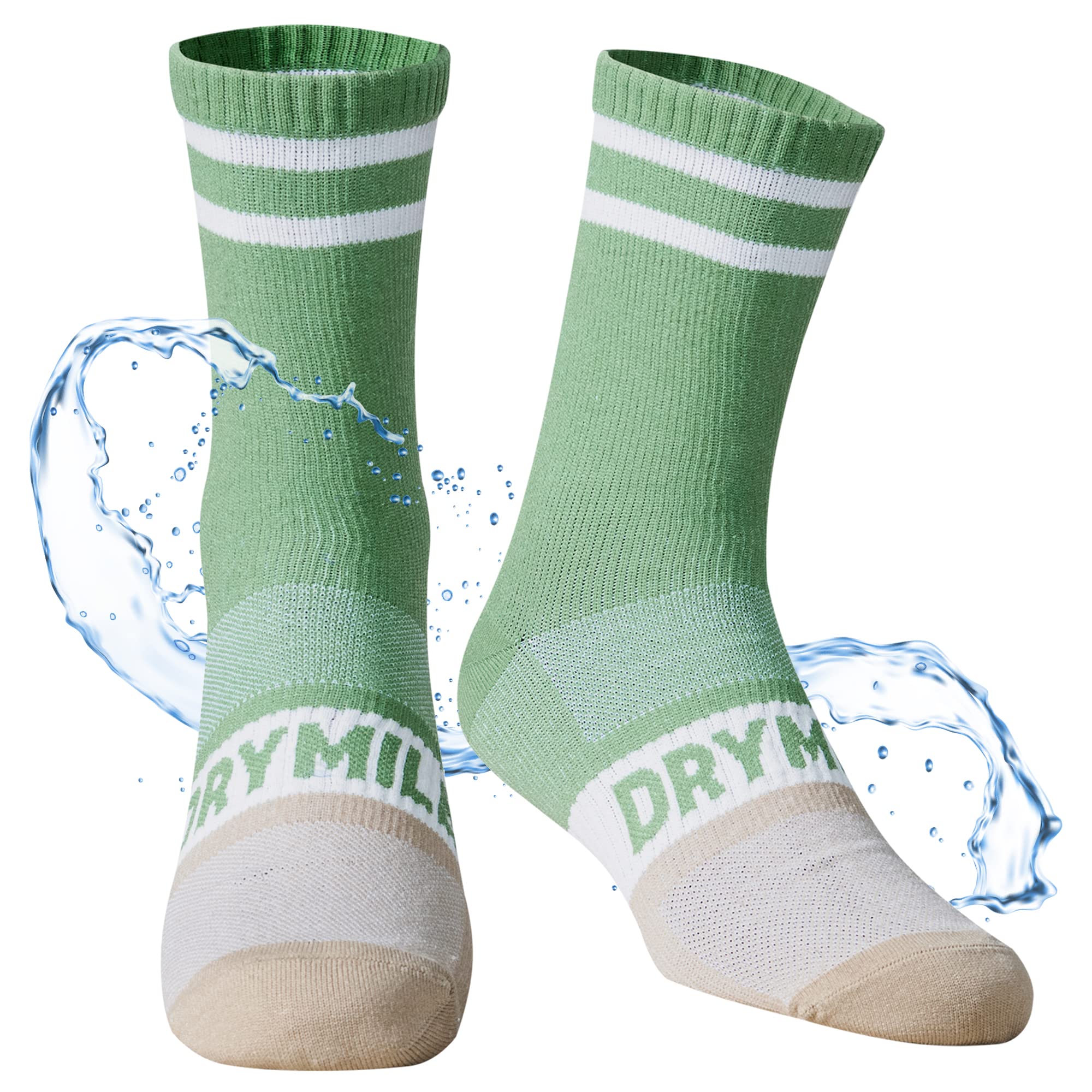
Most waterproof socks are thick, which is fine for boots but impossible for loafers or slides. The DRYMILE Slim reverses that: at 66g per pair (size M), it is notably lighter than the competition and uses a bamboo charcoal yarn for natural odor control. It also adds a silicone “Dry Guard Strip” at the cuff — a flexible seal that stops water from trickling down your calf, an engineering detail missing from most socks at this level.
The breathability compared to the thicker picks is a real step up. Owners who wear it for wet runs and bike rides report “slight humidity” rather than outright dampness, which is about as good as a waterproof membrane gets during effort. One owner wade-fished the Kenai river all day in waders with these underneath and came back with completely dry feet. The catch: the thin construction means less insulation, so this is a three-season sock, not a deep-winter one. A few owners mention replacement pairs after a defective first unit, suggesting QC can be inconsistent.
Why it stands out: the only slim-profile sock that bridges waterproof function with everyday shoe fit — useful for commuting, travel, and golf.
Your go-to for everyday versatility: Perfect if you need waterproofing that vanishes under regular shoes, not just hiking boots.
skip it if: You plan to stand in water for hours in sub-freezing temps — the insulation is modest.
3. SEALSKINZ Bircham Waterproof All Weather Ankle Sock
British military-grade engineering, now ankle-high for trail runners and fast-packers.
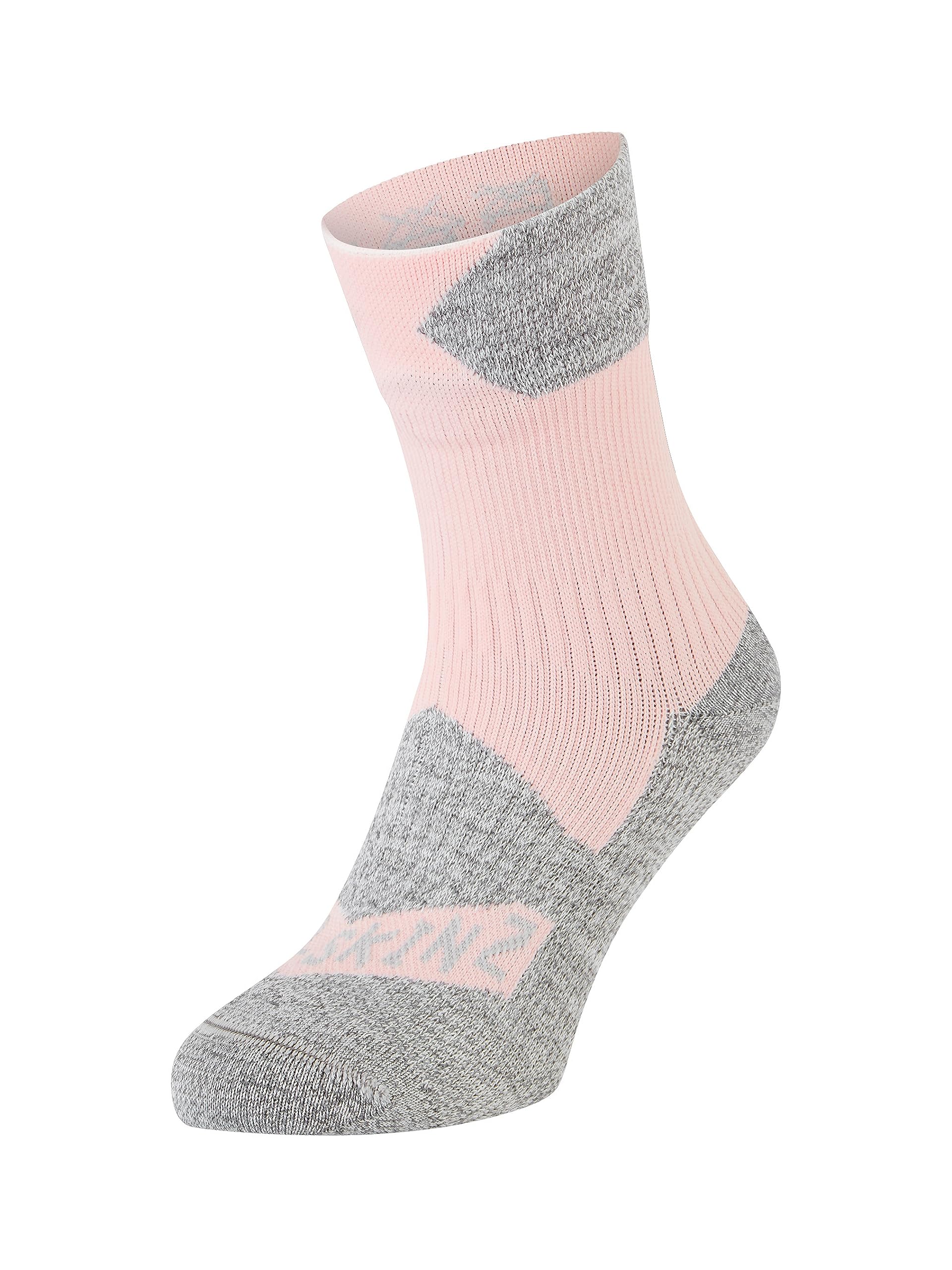
SEALSKINZ holds the rare distinction of being the only sock here with military approval. The Bircham uses the brand’s “Three-Layer Aquasealz” system: a merino wool inner for warmth, a breathable waterproof membrane in the middle, and a tough outer shell. The ankle height makes it more breathable than crew-length socks, and the fit is tuned for motion — no excess fabric to wrinkle inside a snug trail shoe. One owner who runs the Appalachian Trail swears by them for keeping feet dry even when shoes are soaked.
The premium price puts it past the DexShell, but the construction is noticeably more refined. It fits like a performance running sock rather than a winter boot liner, and the merino layer insulates even when wet — a crucial safety feature for cold crossings. A buyer who used them on a Swiss trip through constant rain called them “standouts.” The ankle cut is the main limitation: step into water deeper than the sock height, and the top lets water in. This is not a wading sock; it is an all-weather running and hiking companion.
The real-world edge: the merino insulation that works when wet, combined with the agility of an ankle cut, makes this the pick for active folks who need speed and dryness.
Reach for it when: You run or hike in wet conditions and need a performance fit, not bulk.
Not for you if: You need deep-water wading coverage — go up to a crew length instead.
4. Jeyiour 2 Pairs Waterproof Socks
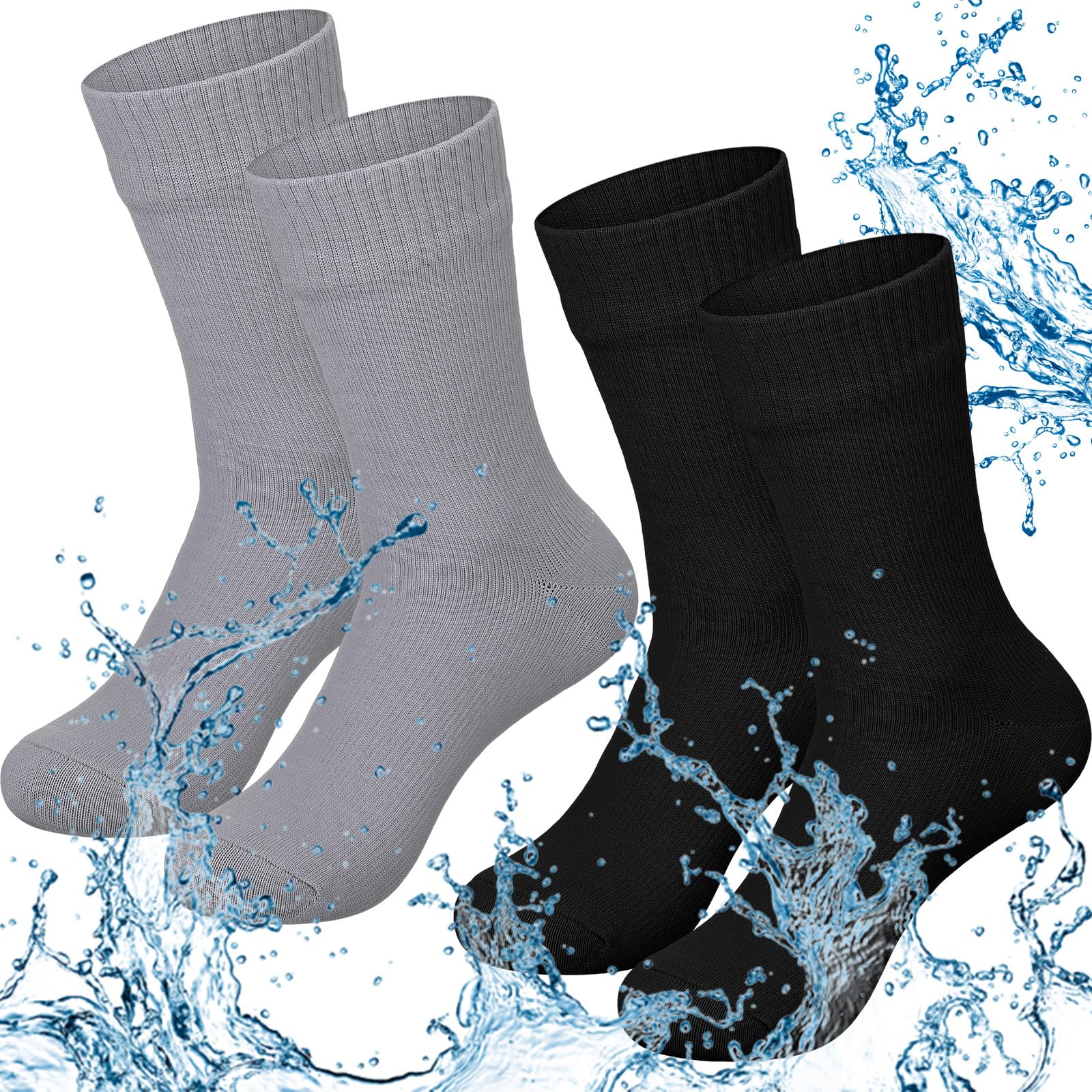
Two pairs for the cost of one premium single; surprising durability for multi-day abuse.
The Jeyiour offers a rare value angle: a 2-pack at a price that usually buys a single pair from the premium brands. The cut is high — nearly knee-high — which gives extra protection against water splashing in from above. Customers note these held up through wet hiking in Patagonia and kept feet dry in pouring rain with non-waterproof boots. One owner noted they kept their father blister-free for a full 7 days in soggy shoes.
The catch with the value is breathability. The consensus among owners is “they do not breathe at all,” making them a poor choice for warm days or high-output runs. The thick padding is great for fall and winter boots but feels heavy in spring. One reviewer noted a 45-minute dry window before saturation set in during steady drizzle on wet grass — a reminder that the seal works best in typical puddle and stream conditions, not sustained downpours.
The Two-Pair Advantage
- Backup pair for multi-day trips
- High cut blocks splash from above
- sturdy padding for heavy boots
Honest Limitations
- Minimal breathability — sweat builds fast
- Too heavy for warm-weather hiking
Best for: Cold-weather hikers and commuters who need a second pair ready without doubling the budget.
Skip if: Breathability matters for summer activities — look at the DRYMILE or SEALSKINZ above.
5. WrapMe Merino Wool Waterproof Socks
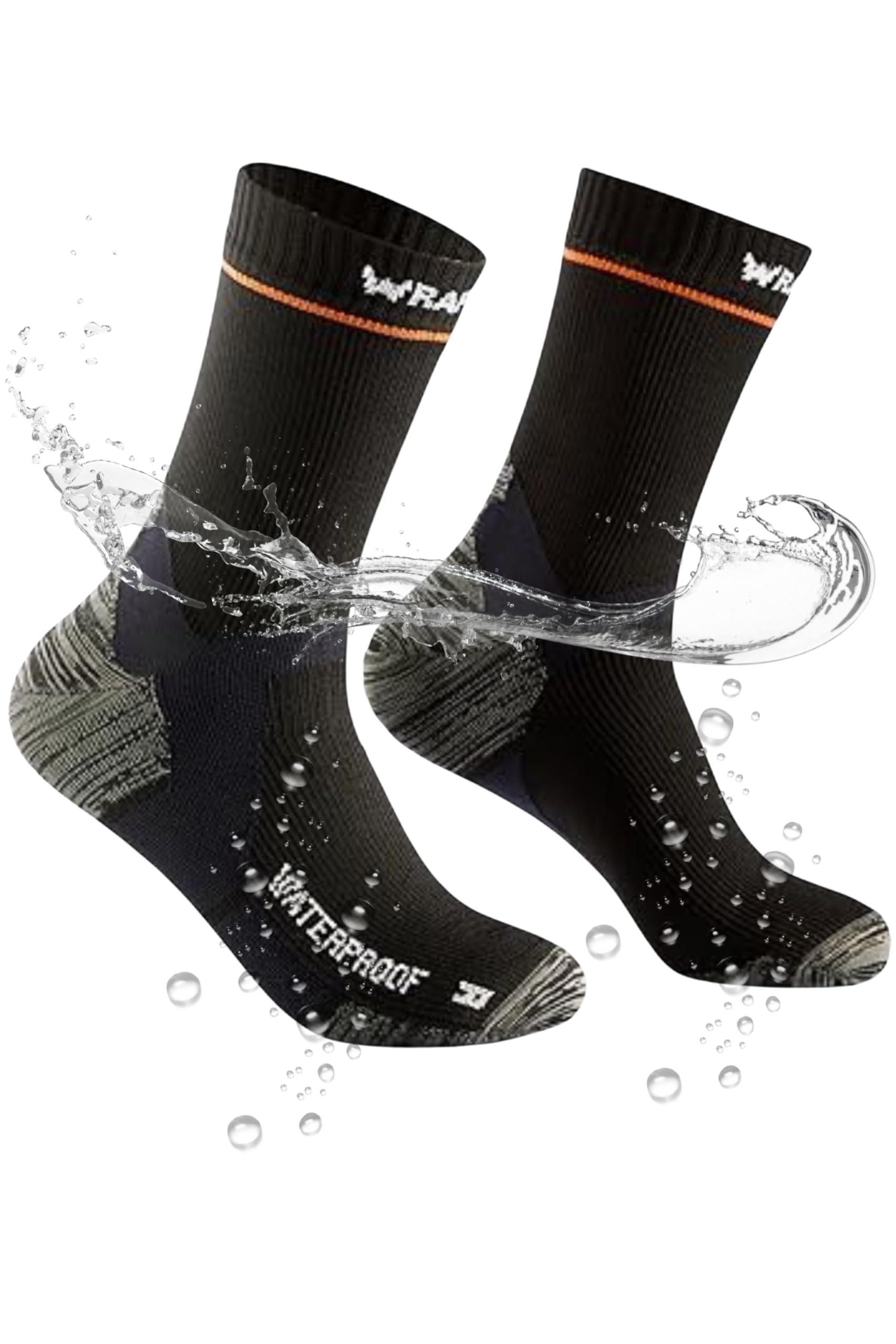
A rating of a 20K hydrostatic head — pressed into real-world kayak and river-test conditions.
The WrapMe is one of the few socks that publishes its hydrostatic head rating (20,000mm on the AATCC 127 scale). That number means the fabric withstands an astonishing amount of water pressure before leaking — far beyond what any puddle or light stream crossing will throw at it. The inner merino wool lining adds warmth, and the “light cushion” balances bulk vs. protection.
A buyer who wore these for a full day of kayaking reported warm, dry feet. One key difference from the DexShell is the 70% membrane breathability rating WrapMe lists — lower than what ideal performance running socks target, but acceptable for hiking and casual use. The fit is where most buyers split: 29 positive water-resistance reviews confirm the seal works, but 13 mixed-fit reviews note a “little tight” feel, especially across the calf. Sizing up for heavy calves is a common workaround.
The decision driver: If you want a published waterproof spec rather than a marketing claim, this sock delivers with the second-best buyer consensus on water resistance we found.
Reach for it if: You need confidence that the spec measures up — the 20K rating is real, and the buyer reviews back it up.
Look elsewhere if: You have larger calves or need a loose, easy pull-on fit.
6. SuMade Merino Wool Waterproof Socks
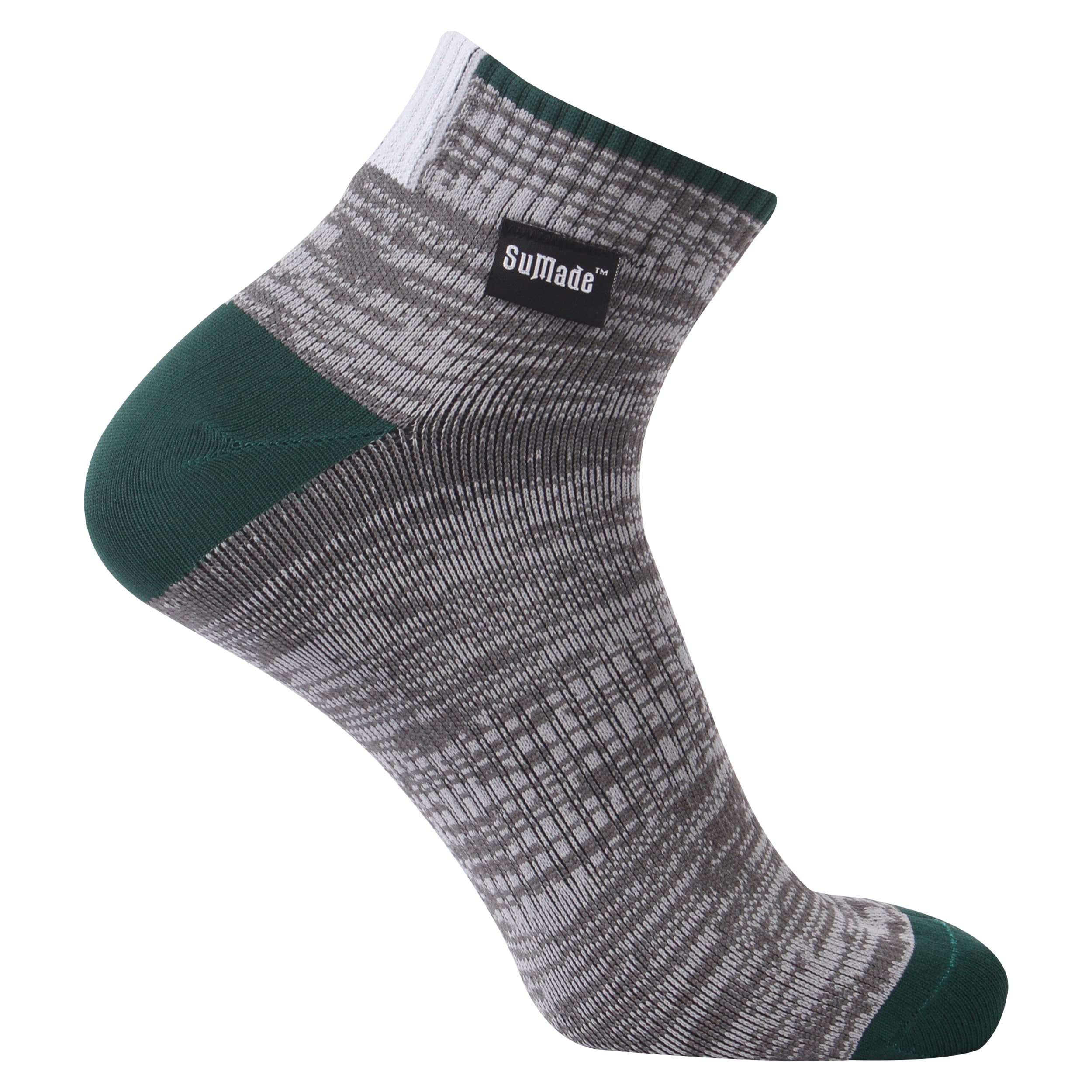
The sock one family used for an 18-hour hike through multiple river crossings — and wore again the next day.
SuMade builds its waterproof sock with a Coolmax inner lining rather than straight merino. Coolmax is a performance fiber engineered to pull sweat away from skin quickly, so this sock handles higher output activities like winter running or fast hiking better than a pure wool design. The smooth toe and reinforced heel add durability in high-wear zones.
The real-world stories are compelling: an 18-hour hike involving hours of wading through rivers kept feet warm and blister-free, and the socks dried overnight for use the next day. Another owner uses them standing in 40-50°F rivers for 1-2 hours collecting rocks — an impossible task with regular socks. The main complaint is an awkward fit: some buyers find the toe section loose and the ankle tight, creating a “slippy” feeling inside boots. Medium fits a men’s 8.5 shoe well, but women with narrower feet may want to size cautiously.
Why this one works: the Coolmax inner wicks faster than wool, making it a better pick for active cold-weather use where sweat would soak a wool sock from the inside.
Ideal for: High-output cold-weather activities like snowboarding, winter trail running, and multi-day river crossings.
Not for: Narrow feet or those who prefer a snug, compressive sock feel.
7. RANDY SUN Waterproof Breathable Socks

The crowd-pleasing entry point that proves you do not need to spend much for dry feet.
RANDY SUN is the most affordable performer here, and with SGS certification backing its waterproof claim, it is a legitimate entry. The three-layer knit uses an outer nylon blend, a middle PU membrane, and an inner polyester blend. At 3.42 oz for a mid-calf pair (size M), it is mid-weight — about on par with the WrapMe but at a lower cost. The 4.4-star consensus across nearly 900 buyers is real: one buyer wore these for a 2-day backpacking trip with non-waterproof boots through very wet conditions and confirmed “feet were dry and warm the entire time.”
The first catch is breathability: the membrane works, but the sock does not vent well during effort. Multiple reviewers point out dampness from sweat after extended walking. The second is material feel — the inner lining lacks the premium softness of merino wool socks. One owner described “slight crackling sound” from the membrane layer. For the price, these are a smart buy for occasional wet conditions, but daily users or cold-weather hikers will prefer a wool-lined option.
The Smart Budget Bet
- SGS certification confirms real waterproofing
- Light enough for 3-season use
- Strong track record from the community
What Gets Compromised
- Limited breathability leads to sweat buildup
- Inner lining not as soft as merino
Great starter waterproof sock: Pick the RANDY SUN if you are testing the category or need a spare pair for unpredictable weather.
Upgrade if: You need all-day warmth, odor resistance, or premium softness; the DexShell or SEALSKINZ will serve you better long-term.
8. ABDEEZ The Wudhu Socks

A bamboo-fiber waterproof sock that fits like a regular sock — a rare thing in this category.
Most waterproof socks are thick and stiff. The ABDEEZ is different: woven from a bamboo fiber blend, it is notably thinner and more flexible. That makes it the closest thing to wearing a normal sock that still blocks water. Shoppers say it “fits like a regular sock” with no need for a larger shoe size — a genuine advantage if you do not want to size up your entire footwear collection. The top positive aspect from owners is quality (22 mentions), followed by fit (18).
The 3-layer waterproof technology is effective for puddles, wet grass, and even wudu (ritual washing), but the thin build means it has less insulation for cold submersion. One buyer who tested them for snow boots found them comfortable but not as warm as thicker merino blends. Durability is a concern for some: the outer layer can wear thin after about 6 months of frequent use. It is a sock better suited to commuters and travelers than backcountry hikers.
Who it serves: Anyone who needs a waterproof sock that does not feel like a second boot — travelers, rain commuters, and those who need daily, low-profile protection.
Your city-weather companion: Grab the ABDEEZ if you want waterproofing that slides into sneakers and sandals without the bulk.
Not built for: Deep winter conditions or extended submersion in cold water.
9. Agdkuvfhd Neoprene Waterproof Socks
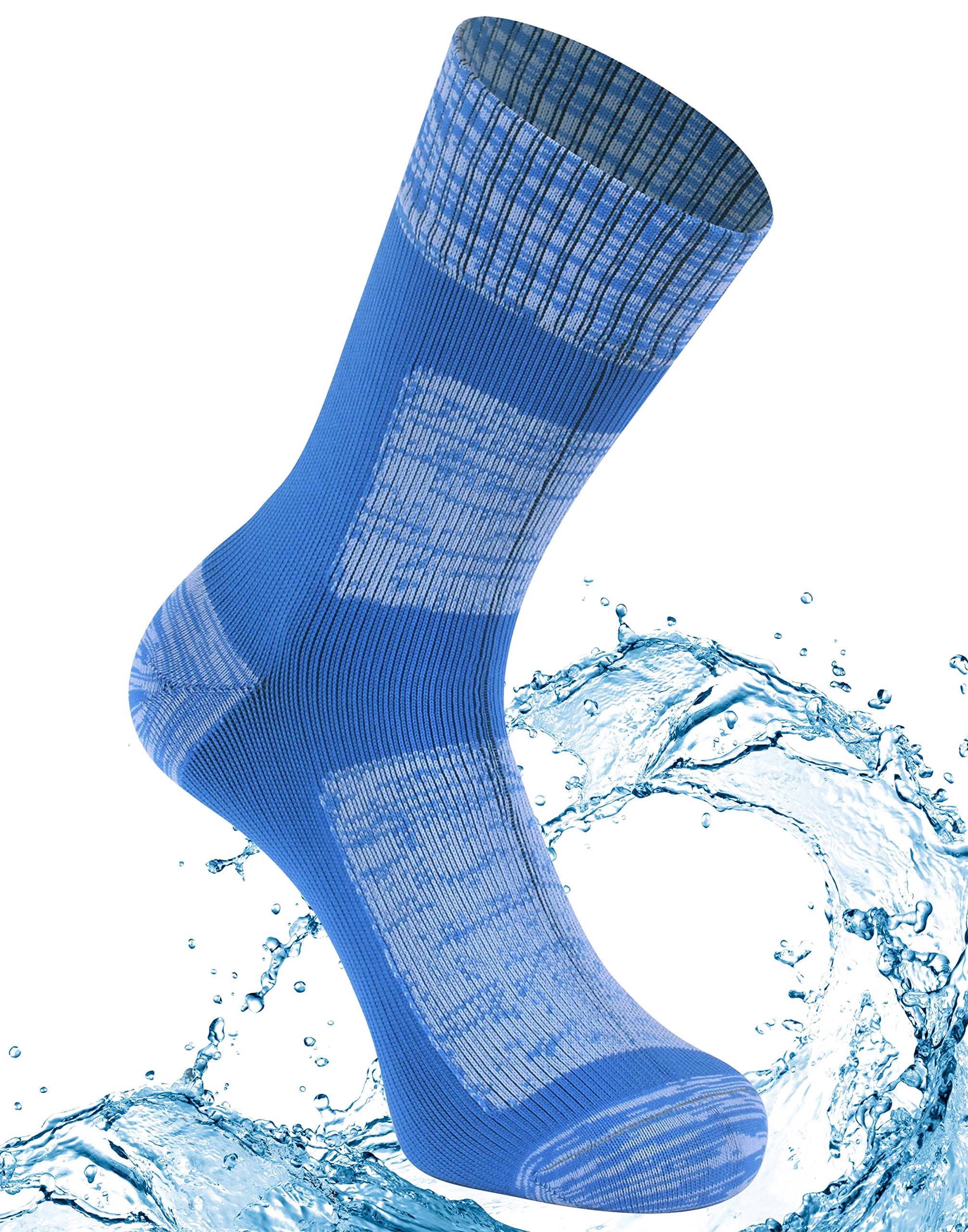
The felt-lined neoprene option one worker kept on for 6-hour shifts standing in water.
This is the brute-force solution to wet feet. The outer shell is 61% waterproof nylon with a 100% PU middle membrane, and the inner uses Coolmax for moisture wicking. The neoprene-like construction makes it thick, insulating, and noticeably warm — one owner uses them for 6-hour shifts standing in water at work and reports completely dry feet. Another buyer uses them to fill the gap in oversized shoes, curing heel-slip and bunions.
The thickness is the defining trade-off. It will not fit comfortably in snug shoes; most buyers need a full size up. A handful of users note the socks are more “resistant” than “proof” — one reported damp feet after about 1 hour in 50°F water. The compression-like tightness on the leg also gets mixed feedback, with some needing to size up one level for comfort. For budget wading and wet work, however, the warmth and cushioning are tough to top.
The honest take: this is the most affordable serious wading option — ideal for fishing, wet gardening, and cold-weather jobs where bulk is acceptable.
Best for: Wading, fishing, and standing work in cold water where raw waterproofing beats fashion.
Not suitable for: Hiking, running, or any activity that needs a trim fit in standard shoes.
Understanding the Specs
Membrane Breathability Rating
This number tells you how easily water vapour passes through the waterproof layer. A rating like “70%” (seen on some socks) means the fabric releases 70% of the vapour a non-waterproof fabric would — good for hiking, but not ideal for high-output running. A sock with no published breathability spec is likely a sweat-trap; if you plan to move, prioritise a brand that states this number.
Hydrostatic Head (e.g., 20K)
This is a lab test that measures how much water pressure a fabric can withstand before a leak forms. 20,000mm (or 20K) is extremely high — enough for heavy rain and shallow submersion. Most waterproof socks do not publish this rating, so when you see it, you know the manufacturer is confident. For puddle-hopping and light hiking, a lower rating is still fine; for river crossings, seek out a published hydrostatic head.
FAQ
Are women’s waterproof socks truly 100% waterproof?
How do I wash and care for waterproof socks?
Will waterproof socks keep my feet warm in winter?
Do I need to buy bigger shoes for waterproof socks?
Can I wear waterproof socks for running or exercise?
What is the difference between waterproof and water-resistant socks?
How long do waterproof socks last?
Are these socks suitable for wudu (Islamic ablution)?
Can I machine dry waterproof socks?
Final Thoughts: The Verdict
For most buyers, the clear choice among women’s waterproof socks is the DexShell Waterproof Socks because it combines proven 100% waterproof performance with a comfortable merino wool lining that a huge community of owners trust season after season. If you need a slim sock that fits dress shoes and everyday footwear, grab the DRYMILE Slim Socks. And for premium, active use — trail running, fast-packing, or wet-weather commuting — the SEALSKINZ Bircham delivers the most refined fit and temperature regulation we have seen from a waterproof ankle sock.
How We Picked
We do not accept paid placement. Every pick is matched to a real buyer and a real use-case; we do not hands-on test units.
Sources & Methodology
Specifications: manufacturer listings and product documentation. Review insights: verified customer reviews, as of July 2026. Pricing: not shown on this page (it changes often); check the current price via the retailer link.
As an Amazon Associate, Calories Fit earns from qualifying purchases. This does not affect which products we feature.