
Our readers keep the lights on and the coffee maker working hard! As an Amazon Associate, I earn from qualifying purchases.
Specs are compiled from manufacturer listings and verified buyer reviews and can change over time — please confirm the key details on the product page before buying.
A pair of women’s trail hiking shoes that actually fit your day — from a sunrise scramble on scree to an afternoon walk in the woods — depends on one thing: how they hold your foot where it matters most. You do not need a stiff leather boot that demands weeks of suffering. You need a shoe built around how a woman’s foot moves, with grip you can trust on wet roots and a sole that does not turn a five-mile hike into a foot ache. The right pick lets you walk from the start and straight onto the trail without a single blister.
I’m Mohammad — the founder and writer behind Calories Fit. This guide is built by comparing the manufacturers’ published specifications and the patterns across verified customer reviews, so you get each pick’s real strengths and trade-offs instead of marketing spin.
Whether you are a weekend day-hiker or a thru-hiker who logs double-digit miles, the best women’s trail hiking shoes share a few non-negotiable traits: a roomy toe box, reliable traction on mixed terrain, and a weight that does not drag on your stride.
Our Picks at a Glance
How To Choose The Best Women’s Trail Hiking Shoes
Picking the right shoe starts with your most common terrain. A shoe that shines on packed dirt may slip on wet granite, and a heavy waterproof boot that feels great in a creek bed will feel like a liability on a fast, dry ridge walk. Focus on these three areas and you will cut through the noise.
The Outsole Grip
The rubber compound and lug pattern are what keep you upright. Look for a high-traction outsole like Continental Rubber or MaxTrac on shoes from adidas or Altra — these materials are designed to bite into loose soil, wet roots, and rock slabs. A deeper, more aggressive lug pattern (4mm or more) gives you braking power on steep descents, while a flatter pattern suits fast, rolling terrain.
Fit and Toe Box Shape
A woman’s foot tends to be narrower at the heel and wider at the forefoot, and a shoe that pinches your toes will ruin any hike. The “roomiest toe box” in this category belongs to the Altra Lone Peak, which uses a FootShape design that lets your toes splay naturally. A wide toe box also helps prevent blisters on the sides of your feet and reduces the risk of black toenails on long descents.
Waterproofing vs. Breathability
A waterproof membrane (like GORE-TEX, B-DRY, or RAIN.RDY) is a lifesaver on wet trails and in morning dew, but it traps heat and takes longer to dry once water gets inside. For arid, hot climates or fast day hikes, a non-waterproof shoe that dries quickly is often the better choice. If your trails involve creek crossings or regular rain, a waterproof shoe earns its place.
Quick Comparison
| Model | Best For | Traction | Waterproof | Toe Box | Amazon |
|---|---|---|---|---|---|
| Columbia Vertisol Trail™★ Best Overall | All-day comfort, no break-in | Traction Rubber Sole | No | Roomy | Amazon |
| Columbia Transverse HikeBest for Wet Trails | Wet-trail grip with ankle support | Omni-Grip | Yes (waterproof-breathable) | True-to-size, wide-friendly | Amazon |
| adidas Terrex Ax4Premium Performance | Alpine scrambles and mixed terrain | Continental Rubber | Yes (GORE-TEX) | Snug (size up half) | Amazon |
| ALTRA Lone Peak 9 | Natural movement, wide feet | MaxTrac | No (dries fast) | Legendarily roomy (FootShape) | Amazon |
| Oboz Sawtooth II Low | Thru-hikers needing arch support | Sawtooth Outsole | Yes (B-DRY) | Wide-width friendly | Amazon |
| New Balance Dynasoft Tektrel V1 | Run-hike hybrids and fast days | Aggressive Lug Design | No | True-to-size (size up for wide) | Amazon |
| adidas Terrex Anylander Mid | Wet trails with extra ankle coverage | Traxion | Yes (RAIN.RDY) | Runs large (size down) | Amazon |
| Merrell Accentor 3 | Short, rocky day hikes on a budget | Grippy Rubber Sole | No | True-to-size, slightly bulky | Amazon |
| NORTIV 8 Waterproof | Entry-level waterproof at a low price | Non-Slip Rubber | Yes | Roomy toe box, runs short | Amazon |
In‑Depth Reviews
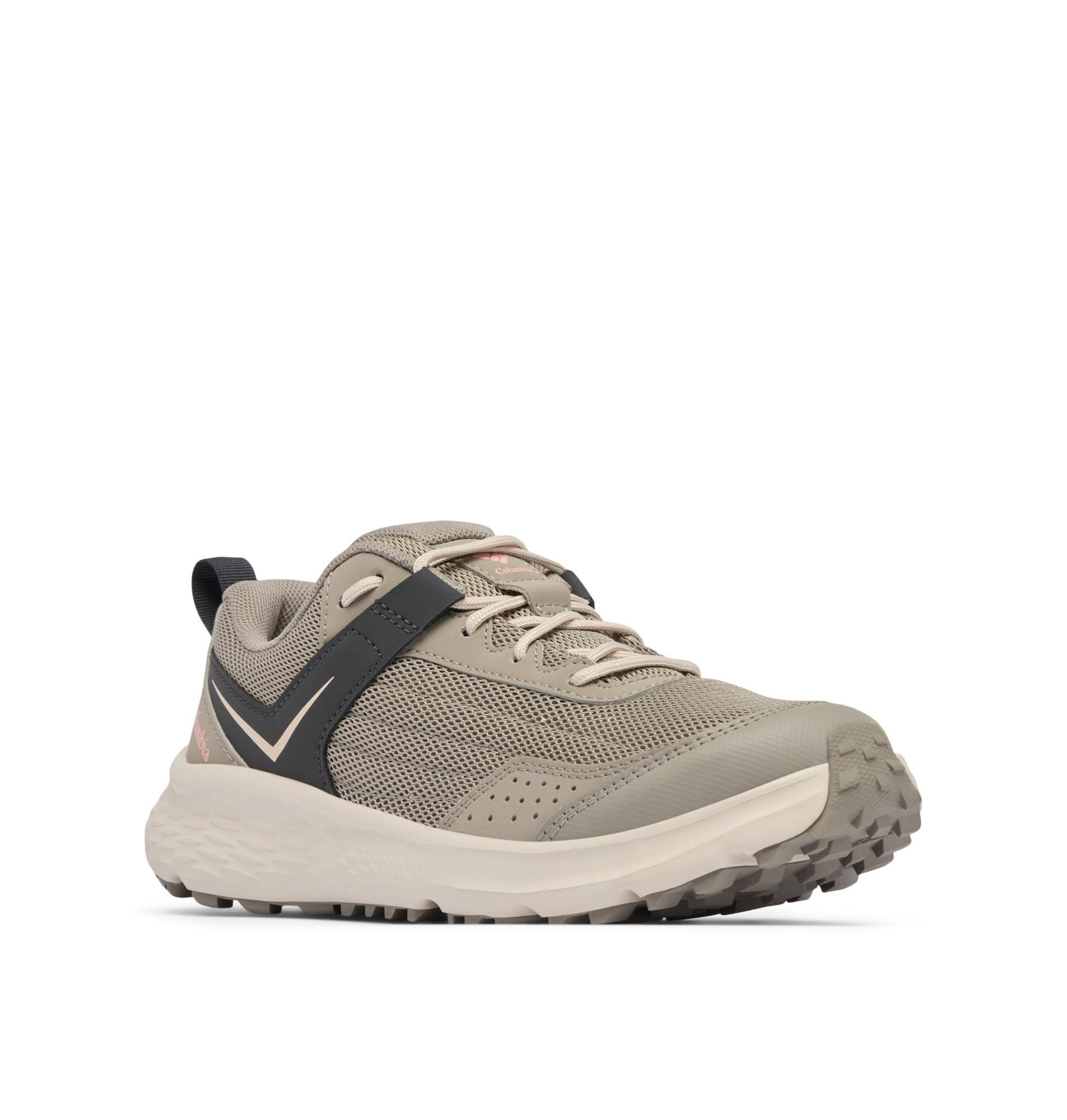
1. Columbia Vertisol Trail™
Our pick — over 4.5★ from 800+ verified ratings; the strongest balance of quality and price.
The shoe that skips the break-in period and goes straight to a seven-mile hike.
Comfort is the headline here — 144 owners single it out, and the reason is a shoe that fits right from the first wear. The engineered underfoot system delivers superior comfort, stability, and rebound, so your feet feel fresh at the end of a long day. The traction rubber sole keeps you sure-footed on paved roads, dirt paths, and slippery slopes alike.
The roomy toe box is a standout for those with wide feet or anyone who uses orthotics; one owner with narrow feet reported being able to tighten the laces enough for a secure fit, a rarity in many shoes. Unlike the stiffer Merrell Accentor 3, the Vertisol comes alive immediately — buyers report heading straight out for a 7-mile hike and following it with a 5.5-mile day without blisters or soreness.
The only real unknown is long-term durability — the shoe is lightweight and cushioned, which may trade off against heavy daily use on sharp rock. But for the price, this is a crowd favorite, earning over 800 ratings.
Where it shines
- Zero break-in needed — comfortable from the start for immediate long hikes
- Roomy toe box accommodates wide feet and orthotics without slipping
- Excellent traction across paved, dirt, sand, and stone trails
The trade-off
- Long-term durability on rough, sharp terrain is unproven
- Not waterproof, so wet-grass mornings may soak through
Reach for this if: you want a do-everything trail shoe that works from a casual walk to a big-mileage day hike without any foot pain or blisters.
Look elsewhere if: you need a waterproof boot for alpine scree or wet, cold conditions day after day.
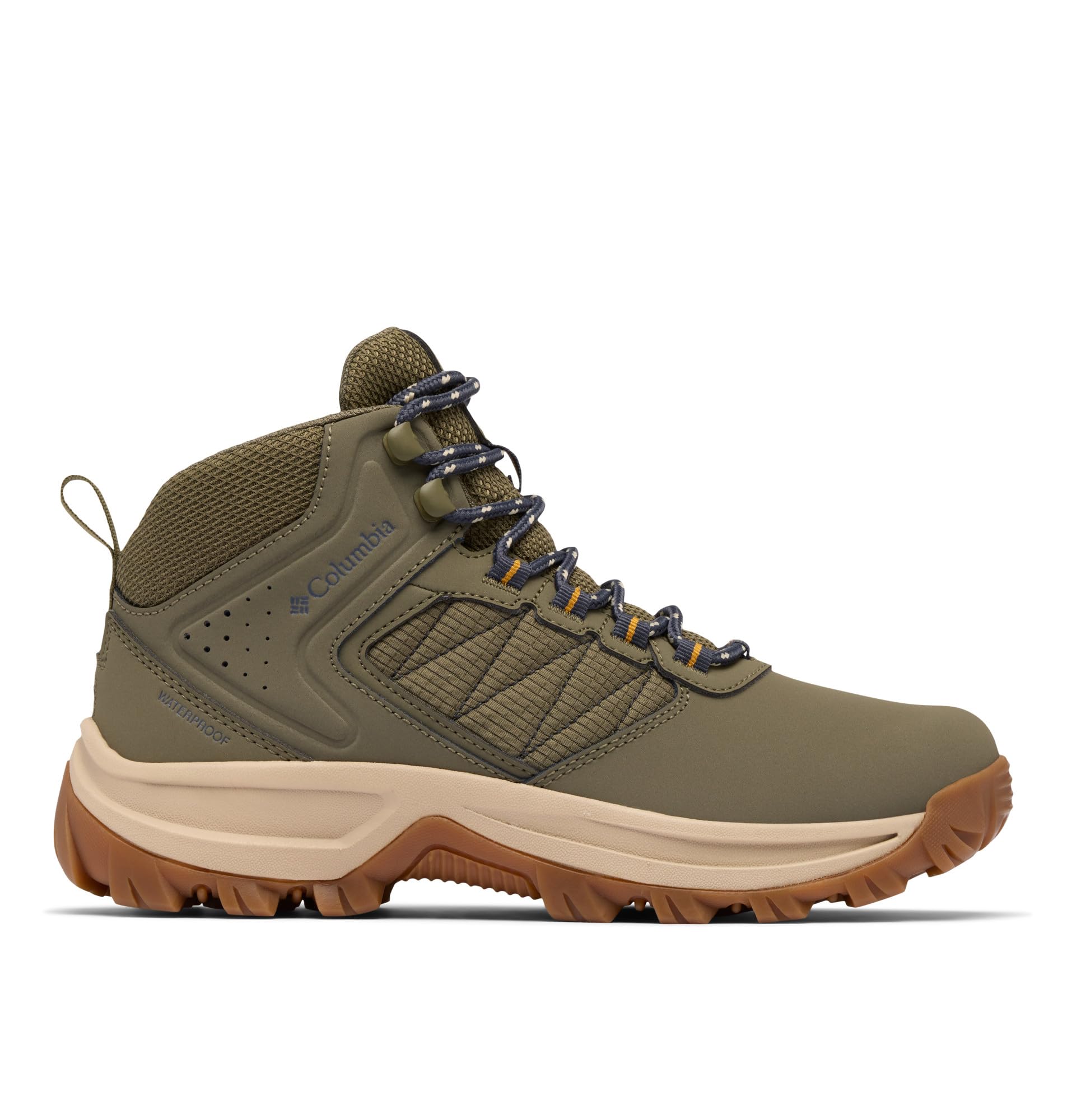
2. Columbia Women’s Transverse Hike Waterproof Hiking Boots
Leather boots that cross a bog and a cobblestone street in the same stride.
These boots go one step beyond the Vertisol with a waterproof-breathable construction and a lightweight leather build. You can take them from the start and “traverse all over Ireland and Scotland through the rain and cobblestone,” as one trip report puts it. They offer responsive cushioning that stays comfortable mile after mile, without the clunky feel of traditional hiking boots.
Ankle support is a strong point — 17 owners praise it — and the fit works well for narrow heels and high arches. The Vertisol has a lighter, sneaker-like profile, while the Transverse gives you a mid-level ankle cuff that handles mud and shallow creek crossings. The trade-off is a slightly narrower fit; a few owners with wider feet found they needed to size to the wide option.
There is minimal arch support, but that did not stop owners from wearing these on two-week trips through Alaska and Ireland with no blisters.
Where it excels
- Waterproof-breathable membrane keeps feet dry in rain and mud
- No break-in time — comfortable from the first wear on long trips
- Ankle support without the heavy, stiff feel of classic leather boots
The catch
- Runs narrow; those with wide feet may need to order a wide size
- Minimal arch support may not suit high-arched feet without an insert
Best for: hikers who face wet conditions and want ankle protection without the weight of a full leather backpacking boot.
Think twice if: your feet need a very wide toe box — the Vertisol gives you more room there.
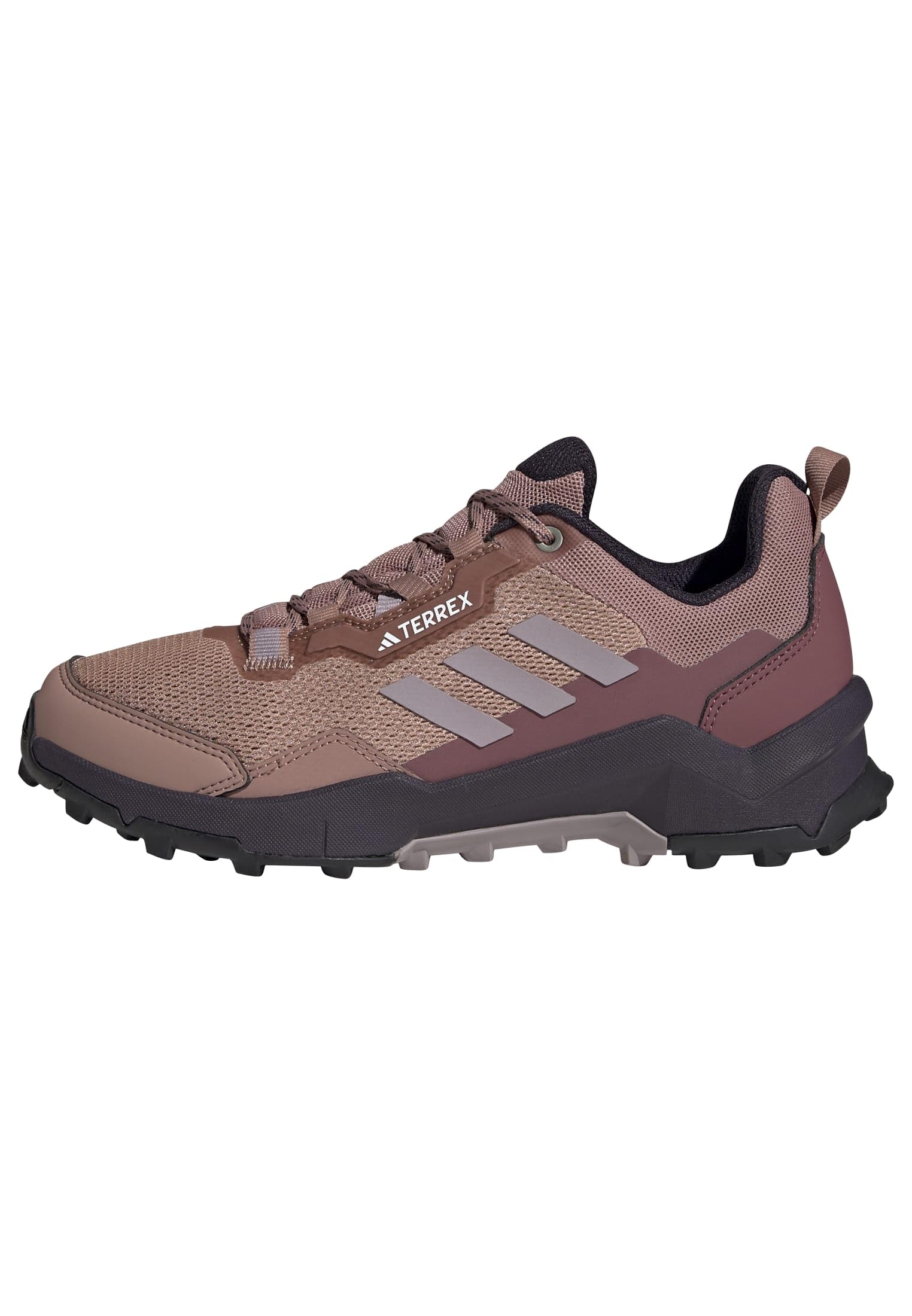
3. adidas Womens Terrex Ax4 Hiking Sneakers
A GORE-TEX hiking shoe light enough for day hikes, tough enough for alpine scrambles.
The Ax4 is the most technically capable shoe in this list, with a GORE-TEX membrane that seals out water and mud while letting your feet breathe. The Continental Rubber outsole gives you all-conditions grip on rocky scree, wet roots, and loose, dusty trails — the same rubber used on car tires, and it shows.
While the Columbia Vertisol is a pure comfort-first shoe, the Ax4 is built for movement. It supports your feet with a lightweight yet rugged and stable design, perfect for via ferratas and high-altitude terrain. The fit runs small — owners recommend sizing up half a size — but the wide toe box gives enough room for flat feet and bunions. Unlike the Terrex Anylander Mid, the Ax4 is a low-cut sneaker, trading ankle coverage for speed and agility.
Long-term waterproofing has drawn a few mixed notes, but the consensus is clear: for a shoe that handles desert heat, mountain mud, and knee-deep slushy snow in one go, the Ax4 is a serious contender.
Where it leads
- GORE-TEX and Continental Rubber outsole handle wet rock, scree, and mud with confidence
- Lightweight and stable for alpine scrambles and multi-day trips
- Accommodates wide feet and bunions without rubbing
The downsides
- Runs small — order half a size up
- Some owners found long-term waterproofing faded with daily use
Reach for this if: your trails involve mixed technical terrain, from rocky scrambles to wet forests, and you want a shoe that can do it all.
Look elsewhere if: you need a zero-drop platform for natural foot movement — the Ax4 has a traditional heel-toe drop.
4. ALTRA Women’s Lone Peak 9 Trail Running Shoe

A legendary zero-drop trail shoe that gives your toes the freedom to splay.
The Lone Peak has built a devoted following on the thru-hiking community, and the 9th edition continues the legacy with a reengineered upper and improved outsole grip. The defining feature is the FootShape toe box — the roomiest in this list — which lets your toes move naturally and helps prevent black toenails on long descents. The zero-drop platform (0mm difference between heel and toe) encourages a more natural running and walking gait, something that separates it from every other shoe here.
The MaxTrac outsole provides sticky grip on all types of terrain, and the Stoneguard insert protects against sharp rocks and debris. At 11.15 oz, it is slightly heavier than the New Balance Dynasoft Tektrel V1, but owners say the fit and comfort make up for it. The trade-off is clear: no waterproofing. It dries fast after a creek crossing, but if you are hiking through constant rain, you may want the Oboz Sawtooth II Low instead.
Owners rave about the roomy toe box handling bunions and extra-wide feet — the most-praised aspect is fit, with 154 owners calling it out.
Where it stands out
- Zero-drop platform with FootShape toe box promotes natural movement and prevents toe pain
- MaxTrac outsole grips wet rocks and uneven trails confidently
- Dries quickly after water exposure — ideal for stream crossings
The cost
- Not waterproof; will soak through in rain and take longer to dry if the membrane gets wet
- Some owners find the toe box too wide in the 9th edition compared to previous versions
Best for: hikers and trail runners who prioritize natural foot mechanics and need room for wide feet or bunions.
Think twice if: you need a waterproof boot for wet, cool climates — the Columbia Transverse is a better fit here.
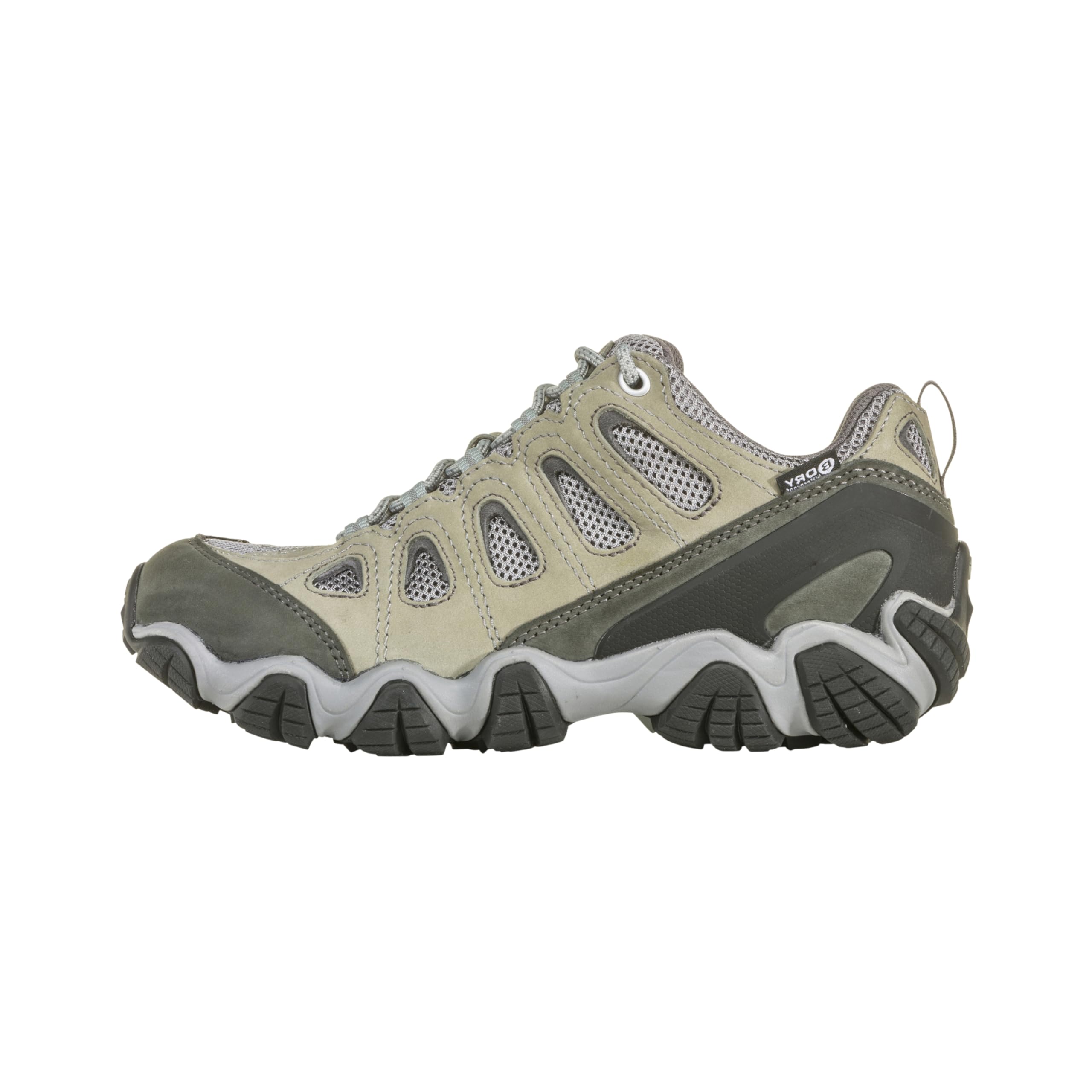
5. Oboz Women’s Sawtooth II Low B-Dry Hiking Shoe
A cult-favorite thru-hiker shoe built for arch support and all-day stability.
The Sawtooth II Low is a dedicated hiking shoe with a B-DRY waterproof membrane that lets sweat escape while keeping moisture out. The O FIT Insole is designed to put your foot in a neutral position, with a high-density EVA sculpted arch and a deep heel cup that boost stability. Owners with plantar fasciitis specifically praise how these shoes reduce pain compared to other models.
At 15.7 ounces, it is noticeably heavier than the ALTA Lone Peak 9, but the stability is a trade-off that pays off on rocky, uneven terrain. The Sawtooth outsole features a map of the Sawtooth mountain range molded into the bottom — a fun detail that reflects the shoe’s rugged identity. The fit can be tight at first, and owners recommend a break-in of 10-12 miles for the uppers to soften, though many report going straight into a 5.2-mile hike with 1,500 feet of elevation gain.
The most-praised aspects are comfort and durability, with 93 and 36 mentions respectively, making this a solid pick for someone who takes hiking seriously.
Where it delivers
- B-DRY waterproofing is reliable on wet trails and stream crossings
- O FIT insole provides excellent arch support for flat feet and plantar fasciitis
- Durable construction that holds up to long-distance use
The downsides
- Heavier than most trail shoes — 15.7 oz will be felt on long days
- Initial stiffness requires a short break-in period for the upper
Reach for this if: you have a history of foot pain or need serious support for multi-day, rocky backpacking trips.
Look elsewhere if: you want a lightweight, flexible shoe for fast day hikes — the New Balance Tektrel is a better match.
6. New Balance Women’s Dynasoft Tektrel V1 Suede
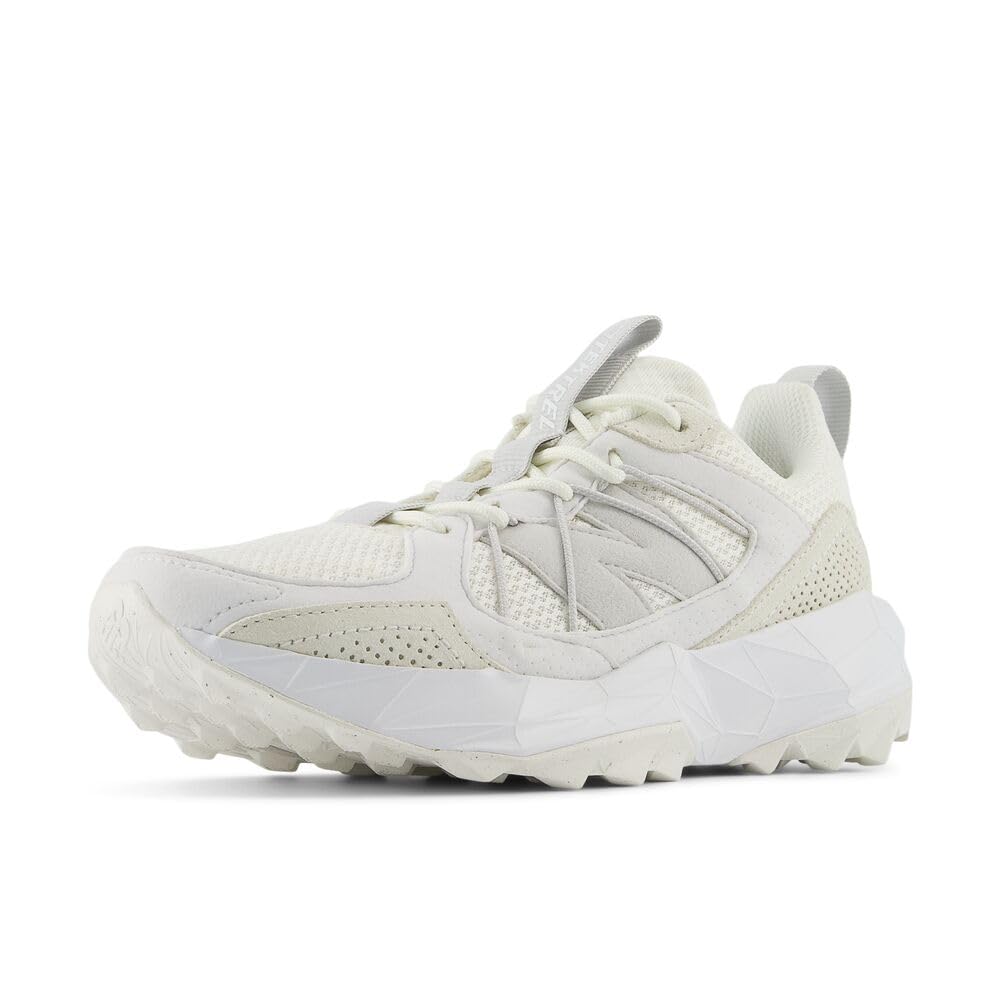
A fast, aggressive trail shoe that moves with you instead of against you.
The Tektrel is built for the runner-hiker who wants to cover ground quickly. The aggressive lug design and dynamic midsole make it feel more like a trail running shoe than a traditional hiking shoe, and at just 2.1 pounds (the pair), it is one of the lighter options here. The Dynasoft midsole provides a soft yet responsive feel that owners describe as “bouncy” on the trail.
Fit is the most-discussed aspect, and it is mixed — the shoe runs small, and owners recommend sizing up at least half a full size. A wide platform helps with stability on uneven terrain, and the grip on wet surfaces (including asphalt and rain puddles) is consistently praised. One owner even noted no foot pain after hiking on “uneven rocky terrain,” though the shoe can get a bit hot for breathability.
Compared to the ALTA Lone Peak 9, the Tektrel has a traditional heel drop (10mm or so), which some runners prefer for a faster stride. It is not waterproof and the shoelaces tend to untie easily, but those are minor gripes on an otherwise excellent fast-day shoe.
Where it excels
- Aggressive lug pattern and responsive midsole feel fast on packed and loose terrain
- Lightweight design (2.1 lb) reduces fatigue on long, fast days
- Wide platform provides stability on uneven ground
The catch
- Runs small — order at least half a size up
- Shoelaces tend to untie; double knots are necessary
Best for: hikers who run sections of the trail and want a shoe that feels light, fast, and stable.
Think twice if: you need waterproofing or a wide toe box — the Lone Peak beats it on both fronts.
7. Adidas Women’s Terrex Anylander Mid Top Rain.rdy Hiking Sneakers
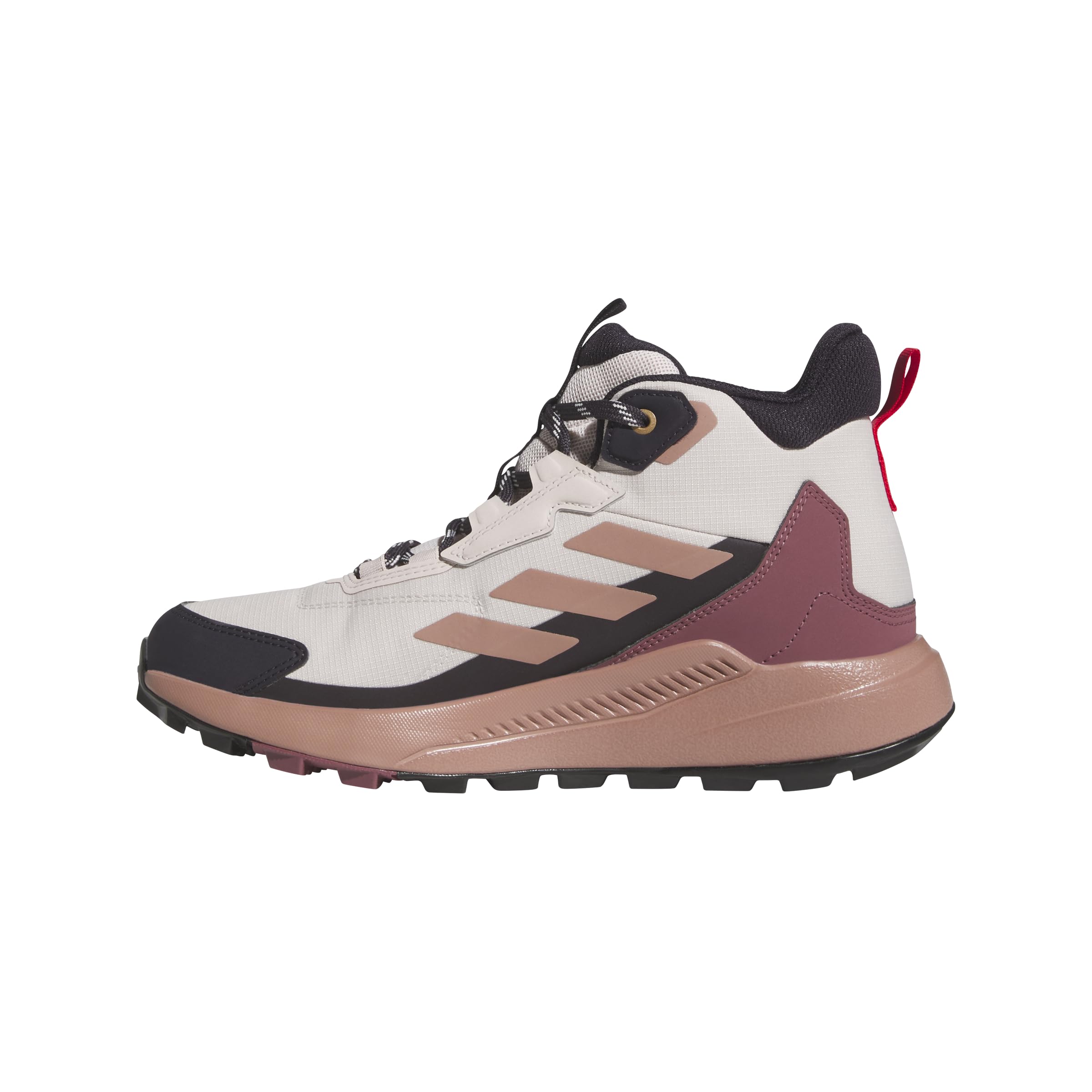
A mid-top sneaker that keeps your feet dry in a downpour without weighing you down.
The Terrex Anylander Mid is the rain-ready sibling of the Terrex Ax4. It uses RAIN.RDY technology to keep your feet dry, while the Traxion outsole provides grip on wet and muddy terrain. The EVA midsole offers lightweight cushioning that makes it comfortable for all-day wear — one owner reports wearing them for 16-hour workdays.
Fit is the biggest consideration here. The shoe runs large, and many owners find that adding an extra insole or wearing thick socks makes the fit perfect. The roomy toe box is appreciated, but the overall shape feels slightly off to some. The Terrex Ax4 is a more technically capable shoe for alpine terrain, while the Anylander Mid focuses on comfort and weather protection for everyday hiking in wet conditions.
The most-praised aspects are comfort (29 mentions) and durability (16), with owners noting that they hold up well in an EMS or outdoor work environment.
Where it stands out
- RAIN.RDY membrane keeps feet dry in rain, mud, and puddles
- Traxion outsole grips well on wet and uneven terrain
- Mid-top design provides ankle coverage without the weight of a full boot
The trade-off
- Runs large — many owners need to size down
- Insole is thin; adding an aftermarket insole improves comfort
Reach for this if: you hike in consistently wet weather and want a mid-top shoe that keeps water out without being clunky.
Look elsewhere if: you need a precise, athletic fit — the Ax4 offers a more locked-in feel.
8. Merrell Women’s Accentor 3 Hiking Shoes
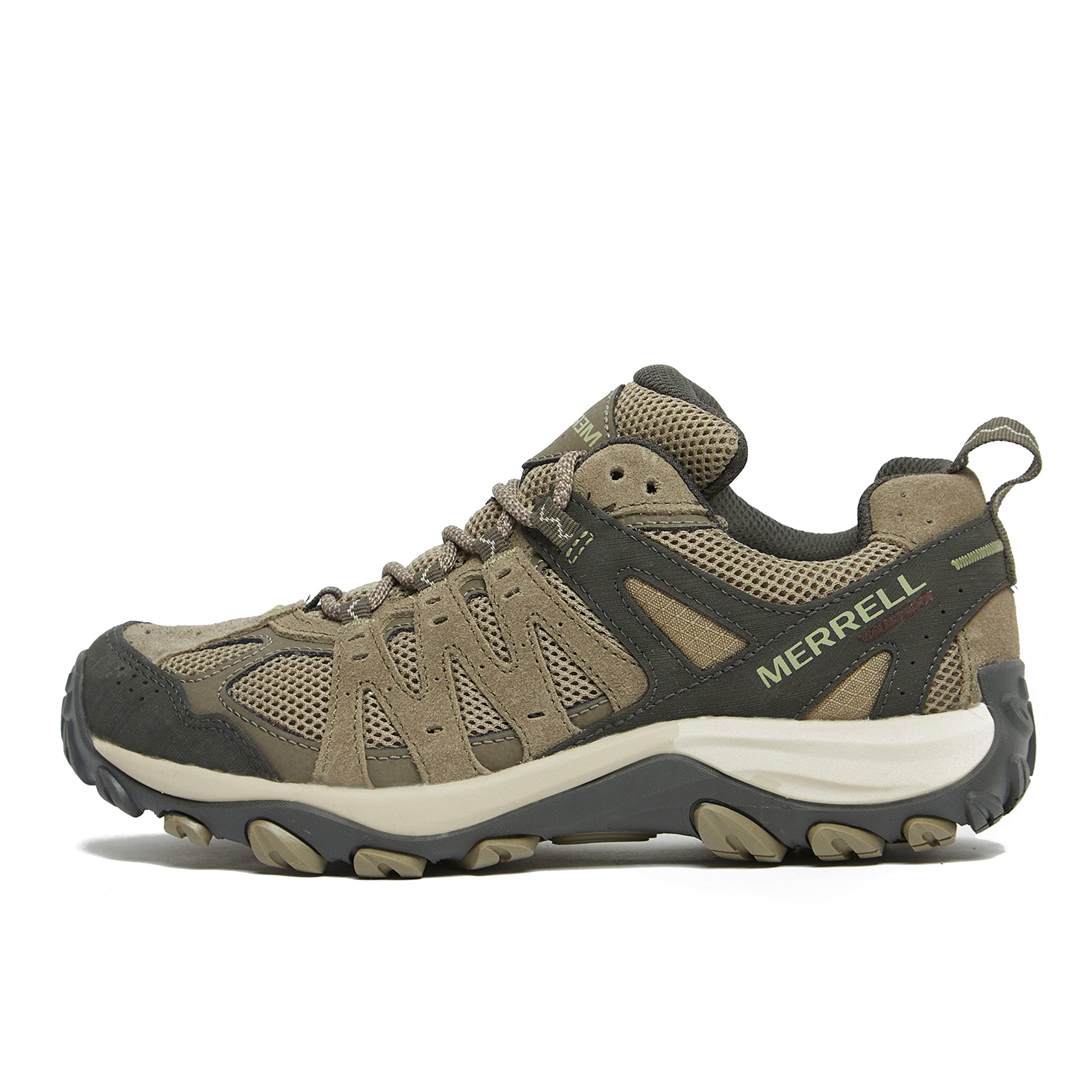
A no-frills suede-and-mesh shoe that delivers solid comfort at a gentle price.
The Accentor 3 is Merrell’s entry-level trail shoe, and it does not try to be anything flashy. The suede-and-mesh upper is built for breathability, and the grippy rubber sole handles packed dirt and rocky paths well. Owners mention wearing them straight to the Grand Canyon without issues, and the true-to-size fit makes online ordering less of a gamble.
The shoe is not waterproof — a fact some owners found disappointing after expecting it from the advertising — so it is best suited for dry, warm trails. It is also slightly bulky compared to the sleeker New Balance Tektrel V1, though the bulk translates to a roomy toe box that is comfortable for wide feet.
One consistent note: these shoes run narrow for some, and a few owners with wider feet found them comfortable nonetheless. The most-praised aspects are comfort and quality, with 90 and 52 mentions respectively, though durability is less certain for heavy daily use.
Where it works
- True-to-size fit and roomy toe box suit wide feet
- Breathable suede-and-mesh upper works well in warm, dry conditions
- No break-in period — comfortable from the first wear
The limits
- Not waterproof despite some owners expecting it to be
- Slightly heavier than other trail shoes in this price bracket
Best for: dry-weather day hikes where you want a comfortable, reliable shoe without spending premium money.
Think twice if: you face wet trails — the Columbia Transverse is worth the extra dollars.
9. NORTIV 8 Women’s Waterproof Hiking Shoes
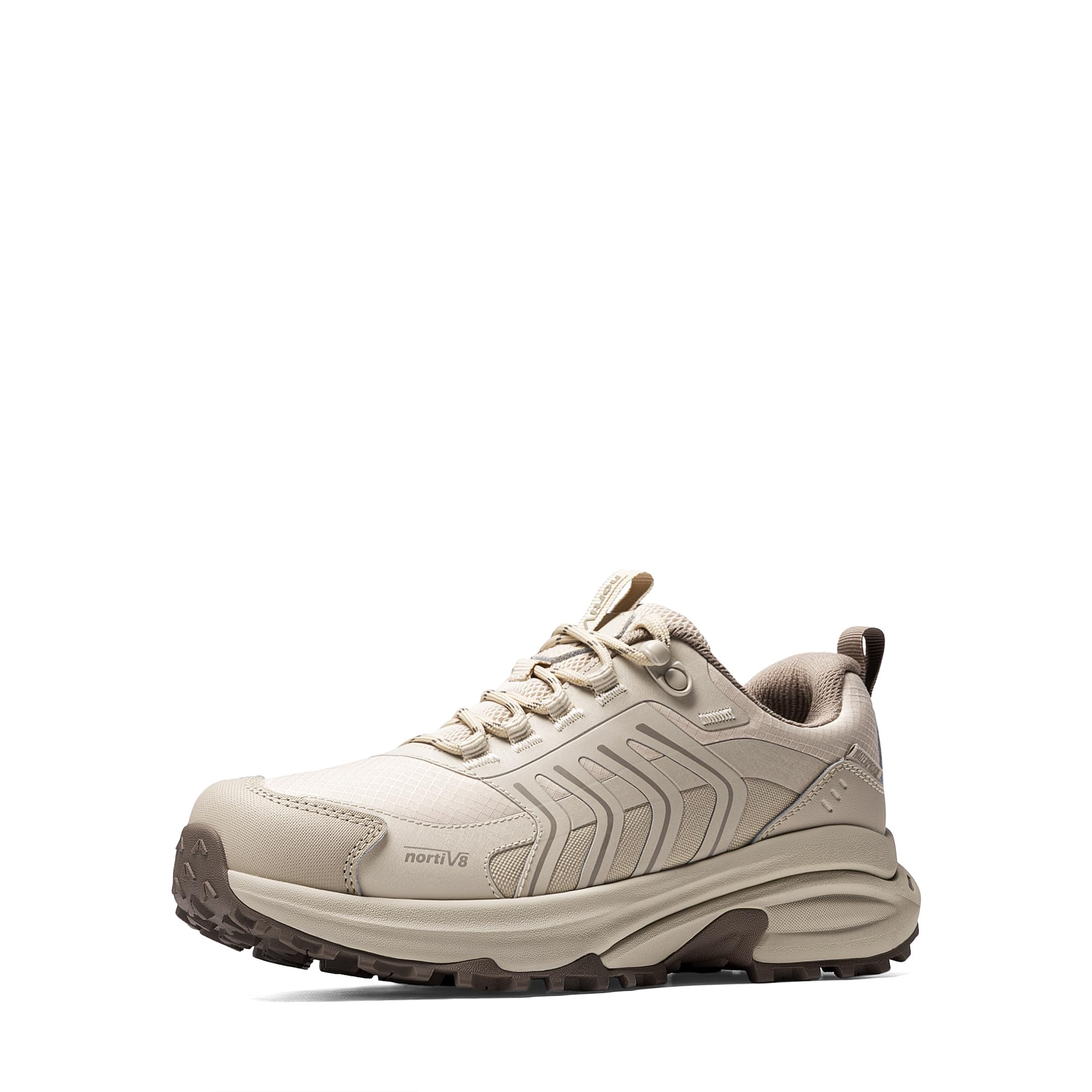
An entry-level waterproof shoe that outperforms pricier rivals.
The NORTIV 8 brings a waterproof membrane and 4-in-1 Rebound Tech to a price point that undercuts almost everything on this list. Owners praise the comfort — 37 call it out — and the roomy toe box that accommodates wide feet and thick socks. The shoe performs well on all surfaces, with great traction on cobblestones and golf courses, and the waterproof feature appears reliable in wet conditions.
Fit requires attention: the shoe runs short, and many owners recommend sizing up half a size. One owner normally wears a size 6.5 but found the 6.5 too big even with socks, sizing down to a 6 for the perfect fit. A few customers note ankle blisters from the collar rubbing, so thick socks are recommended for the first few wears.
Compared to the Columbia Vertisol, the NORTIV 8 is a heavier shoe, but the waterproofing gives it an edge for rainy day hikes. For the price, the quality and features are hard to argue with.
Where it delivers
- Waterproof membrane keeps feet dry in wet conditions for the price
- Roomy toe box fits wide feet and thick socks comfortably
- Great traction on varied surfaces, including cobblestones and grass
The downsides
- Runs short — plan to order half a size up for the best fit
- Ankle collar may rub and cause blisters until broken in
Reach for this if: your budget is tight but you still want waterproof protection and decent comfort for light hiking.
Look elsewhere if: you need a shoe for big-mileage days where weight and long-term durability matter more.
Understanding the Specs
Zero-Drop Platforms
A zero-drop shoe has the same height under your heel and your forefoot — the stack height is the same front to back. This encourages a more natural, midfoot or forefoot strike when you walk, which can reduce impact on your knees and hips. The ALTRA Lone Peak 9 is the most prominent zero-drop shoe here, and fans of the platform say it helps strengthen your feet and calves over time. If you are used to traditional running shoes (which typically have a 10-12mm drop), ease into zero-drop gradually.
Waterproof Membranes (GORE-TEX, B-DRY, RAIN.RDY)
A waterproof membrane is a thin layer sandwiched inside the shoe that blocks liquid water from entering while allowing water vapor (sweat) to escape. GORE-TEX is the most famous, used by adidas on the Terrex Ax4. B-DRY is Oboz’s own version, and RAIN.RDY is adidas’s alternative on the Terrex Anylander Mid. All three are effective at keeping feet dry in rain and puddles, but they trap heat — a waterproof shoe can feel stuffy on a warm, dry trail. If you hike in the desert or on well-drained trails, a non-waterproof shoe that dries fast is often a better choice.
FAQ
How should trail hiking shoes fit compared to regular sneakers?
Are waterproof trail shoes worth it?
What is a zero-drop trail shoe and should I try one?
How long do trail hiking shoes typically last?
What is the difference between a trail running shoe and a hiking shoe?
Can I wear my trail hiking shoes for everyday walking?
Do trail shoes come in wide widths?
How do I clean my trail hiking shoes?
Final Thoughts: The Verdict
For most buyers, the best women’s trail hiking shoes winner is the Columbia Vertisol Trail™ because it combines immediate comfort, a roomy toe box, and solid traction at a price that makes it nearly impossible to beat on value. If you need waterproofing and ankle support for wet, uneven terrain, grab the Columbia Women’s Transverse Hike. And for the natural-foot enthusiast who wants zero drop and the most spacious toe box on the trail, the ALTRA Lone Peak 9 is the one to reach for. The right pair is waiting — this list just saved you the trial-and-error.
How We Picked
We do not accept paid placement. Every pick is matched to a real buyer and a real use-case; we do not hands-on test units.
Sources & Methodology
Specifications: manufacturer listings and product documentation. Review insights: verified customer reviews, as of July 2026. Pricing: not shown on this page (it changes often); check the current price via the retailer link.
As an Amazon Associate, Calories Fit earns from qualifying purchases. This does not affect which products we feature.