
Our readers keep the lights on and the coffee maker working hard! As an Amazon Associate, I earn from qualifying purchases.
Specs are compiled from manufacturer listings and verified buyer reviews and can change over time — please confirm the key details on the product page before buying.
If your feet roll inward with every step—what podiatrists call overpronation—a neutral sneaker will leave you sore by lunch. Stability shoes use firmer foam and supportive frames to guide your foot back to center, and that makes all the difference between a walk that hurts and one that feels easy. This guide breaks down the top stability walking shoes by how they actually feel on your feet, what owners really say after months of wear, and which support features matter most.
I’m Mohammad — the founder and writer behind Calories Fit. This guide is built by comparing the manufacturers’ published specifications and the patterns across verified customer reviews, so you get each pick’s real strengths and trade-offs instead of marketing spin.
The right pair of women’s stability walking shoes can turn daily walks, long shifts, and travel days into comfort instead of a chore, and this guide shows you exactly which ones deliver.
Our Picks at a Glance
How To Choose The Best Women’s Stability Walking Shoes
Stability shoes are built for feet that roll inward too much—a movement called overpronation that can strain your arches, ankles, and knees. The right pair uses firmer foam or a support frame on the inner side to keep your foot aligned, making daily walking noticeably smoother.
Support Technology: Frames vs. Posts vs. Guide Rails
Different brands use different tricks to control pronation. Hoka uses a stabilizing H-frame™ woven into the midsole, Saucony relies on a dual-density post under the arch, and Brooks uses a wide base and sturdy midsole to keep you steady. All of them work, but they feel different—some are firmer under the arch, others softer with guidance built in—so try the feel, not just the name.
Heel-to-Toe Drop and Cushioning
The drop is the height difference between your heel and toe—a 10 mm drop encourages a heel-first stride typical of walking, while a lower drop like 8 mm feels closer to the ground and engages your calf more. Cushioning foam matters too: firmer foams like Brooks’ MoGo return energy on every step, while softer foams like PWRRUN feel plush but may wear faster for heavier walkers.
Quick Comparison
| Model | Best For | Weight | Drop | Support Tech | Amazon |
|---|---|---|---|---|---|
| Hoka Arahi 8★ Best Overall | All-day cushioning & style | 1.63 lbs | — | H-Frame™ | Amazon |
| Saucony Omni 21Best Value | Budget-friendly daily support | 2.43 lbs | — | Dual-density PWRRUN | Amazon |
| Vionic Walk MaxPodiatrist Favorite | Orthotic-level arch support | — | — | VIO MOTION footbed | Amazon |
| Ryka Devotion X Max RS | High-performance fitness walking | 8.6 oz/shoe | 10 mm | RE-ZORB® cushioning | Amazon |
| Saucony Guide 18 | Overpronation with cloud-like softness | — | — | Center-Pass technology | Amazon |
| Gravity Defyer Mighty Walk | Pain relief & all-day standing | — | — | VersoShock® + Orthotics | Amazon |
| ASICS GT-2000 14 | Lightweight daily training | 8.5 oz | 8 mm | FF BLAST MAX foam | Amazon |
| Brooks Addiction Walker V-Strap 2 | Easy on/off with firm support | 1.8 lbs | — | MoGo midsole | Amazon |
In‑Depth Reviews
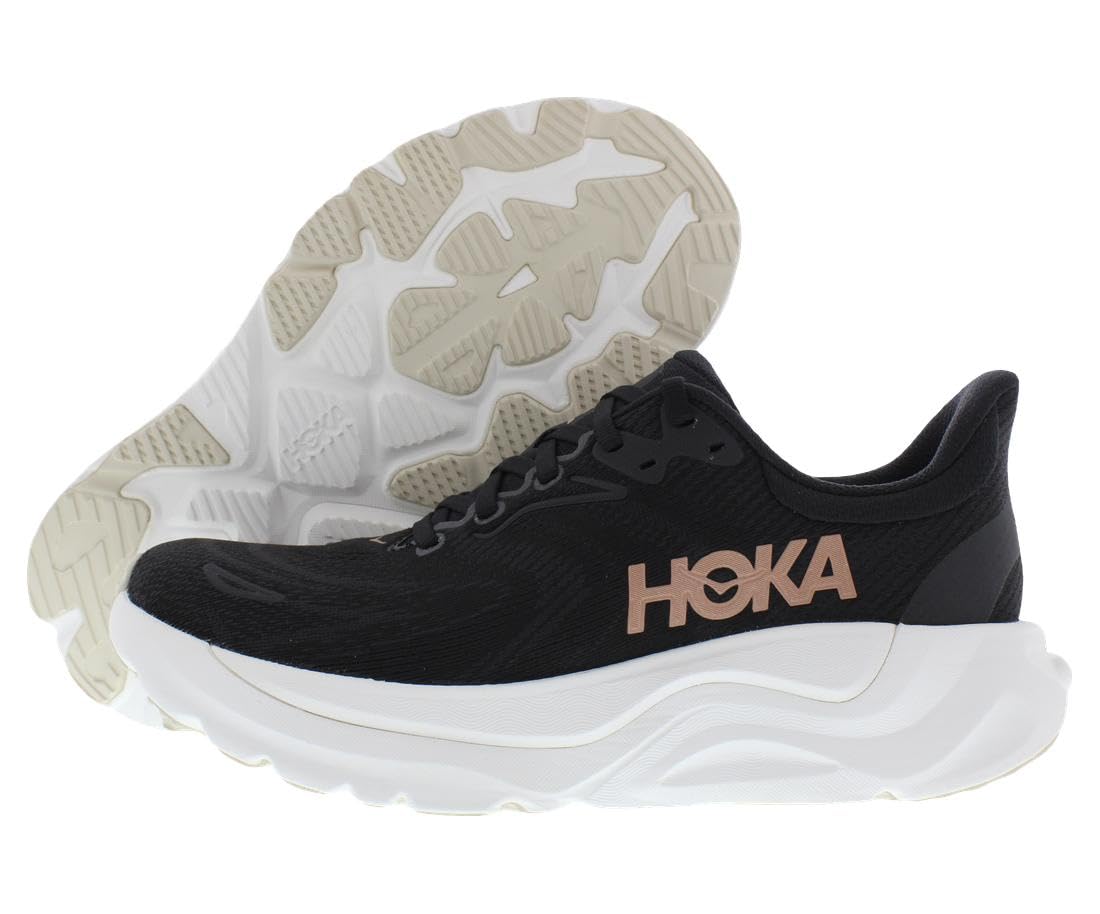
1. Hoka Womens Arahi 8
Our pick — 4.5★ from 300+ verified ratings; the strongest balance of quality and price.
The stability shoe that feels nothing like a stability shoe — soft, sleek, and seriously supportive.
You get real stability without the stiff, board-like feel of many support shoes. The Arahi 8 uses an H-frame™ (a firm frame built into the midsole) to control overpronation — when your foot rolls inward too much — while softer foam around it keeps the ride cushioned. Owners say comfort is the top reason they buy it, with support and fit close behind.
At just 1.63 pounds, it’s dramatically lighter than the Saucony Omni 21’s 2.43 pounds, which you’ll feel on long walking days. The upper is a double jacquard mesh made from 62% recycled nylon, with reflective details that help you stay visible on early-morning or evening walks. The dual-density compression molded EVA midsole pairs with a super abrasion rubber outsole, so the cushioning holds up mile after mile.
Real buyers back this up: one wrote, “Perfect fit, great support, comfortable for 10 full days of walking in England.” Others report foot and ankle pain easing within two weeks, and a few found them great for Zumba. The main gripe: some owners say the color in person can differ from the product photos.
Why it wins
- Plush cushioning that protects feet and ankles on all-day walks
- Sleek jacquard upper that doesn’t look orthopedic
- Roomy, breathable fit that suits wide flat feet and plantar fasciitis
What to watch
- Color can look different in person than in photos
- Moderate arch support — very high arches may want more
Grab these if: you want max cushioning with real stability for walking, work, and everything in between.
Think twice if: you need a very firm, pronounced arch post — this one guides more than it pushes.
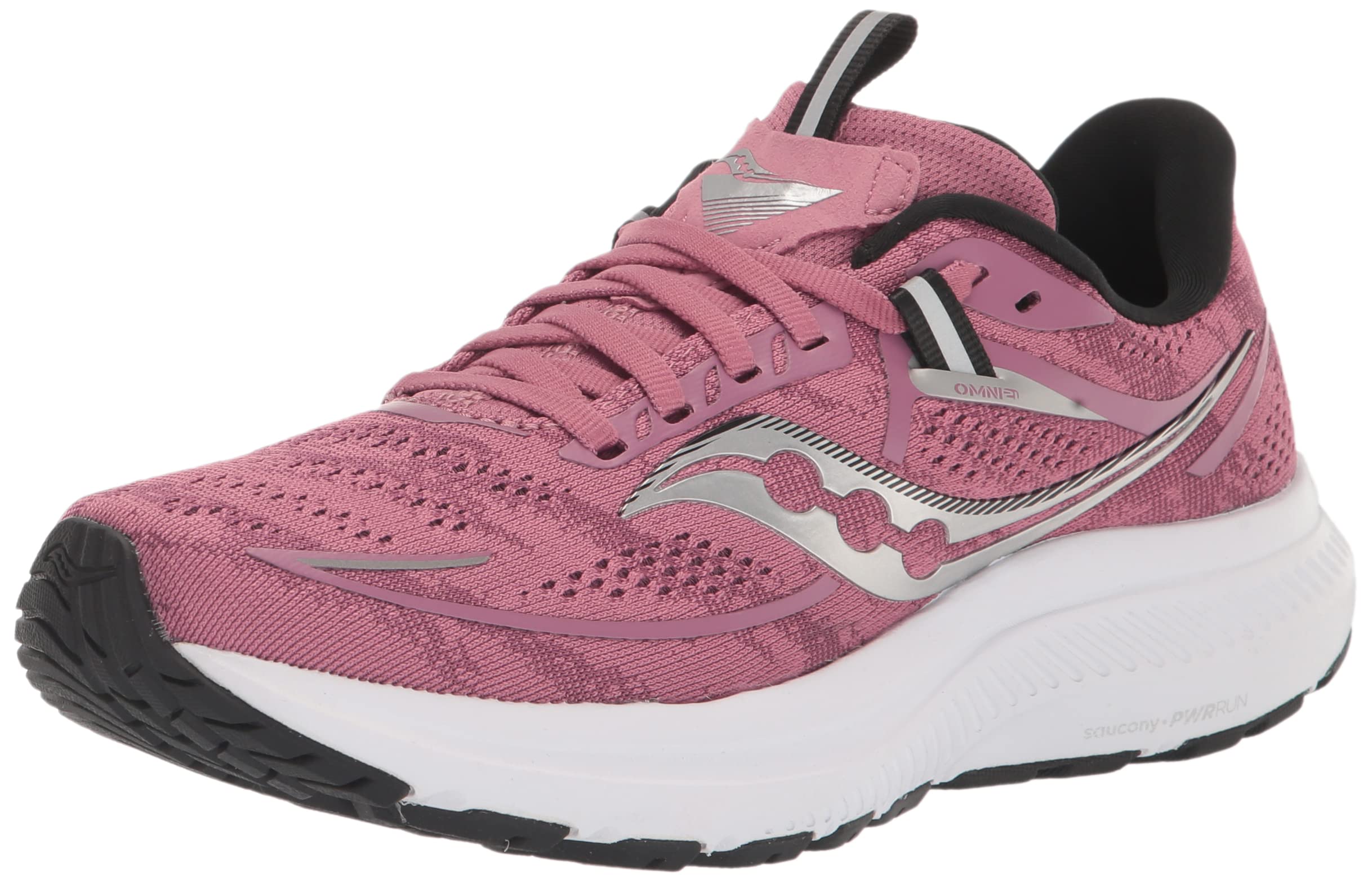
2. Saucony Women’s Omni 21 Running Shoes
A workhorse stability shoe with a dual-density post that won’t break your budget.
The Omni 21 is Saucony’s long-running stability workhorse, and its dual-density PWRRUN cushioning does double duty: plush underfoot with a firmer section that guides your stride. Owners consistently praise the comfort and quality, and it’s a particularly strong match for high-arched feet and walkers who log daily miles. The grey colorway hides dirt well, which practical walkers notice after a few muddy outings.
This shoe is noticeably more substantial than the Arahi 8 above — 2.43 pounds versus just 1.63 pounds — which means a firmer, more grounded feel rather than a feather-light one. That’s not a flaw if you want structure, and the wide toe box option works well for wide feet or bunions. Some buyers do note the standard toe box runs a touch narrower than previous Saucony models, so consider sizing up if you’re between sizes.
Arch support is the second-most-praised feature, with owners reporting relief for flat feet and the ability to fit custom orthotics inside. The one recurring complaint is durability: a few owners who wore the shoe daily as nurses found the sole separating within the first month. That’s the trade-off at this price point — great support and feel, but not the toughest outsole in the lineup.
Solid daily driver: supportive, comfortable, and genuinely versatile — ideal if you want one shoe for walking, gym sessions, and errands without spending premium money.
Reach for this if: you want dependable stability and arch support at a value price, especially for daily walking.
Look elsewhere if: your shoes take heavy daily punishment — a few buyers report the sole wears down fast.
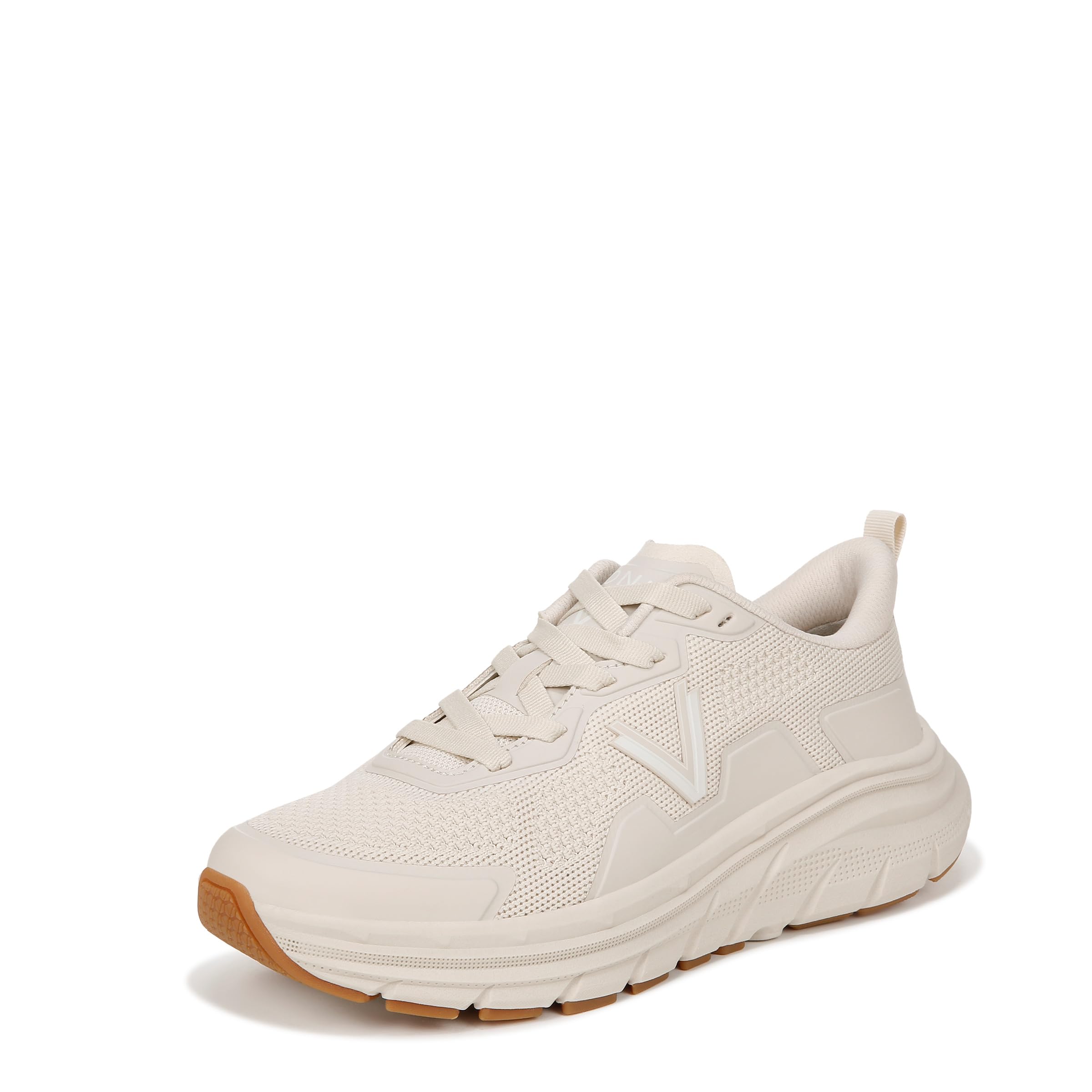
3. Vionic Women’s Walk Max Sneaker
Orthotic-grade arch support with a nitrogen-infused midsole that bounces with every step.
The real-world proof is striking: “I walked 15 hours in the volcanic towns of Lake Atitlan with these. They were a miracle. I have no foot pain at all.” That’s the kind of day these are built for. The breathable mesh upper and water-repellent coating add versatility, and the 1.8-inch heel height gives a slight lift. One honest note: Vionic recommends a 1-2 week break-in period for full orthotic comfort, and a few owners found they run large and recommend sizing down.
Compared to the Hoka Arahi 8, the Walk Max offers more pronounced, corrective arch support — it actively aligns your foot rather than just cushioning it. The trade-offs are a thicker platform feel and a thin tongue that some owners found slides down. For all-day standing, travel, and anyone with a history of foot pain, this is the most therapeutic option here.
Correction-first design: if your priority is arch support and alignment over pure softness, this is the shoe to beat.
Choose this if: you want podiatrist-level support for long walking days, travel, or foot pain.
skip it if: you prefer a low-profile, ground-hugging shoe — this one sits higher and feels more like a platform.
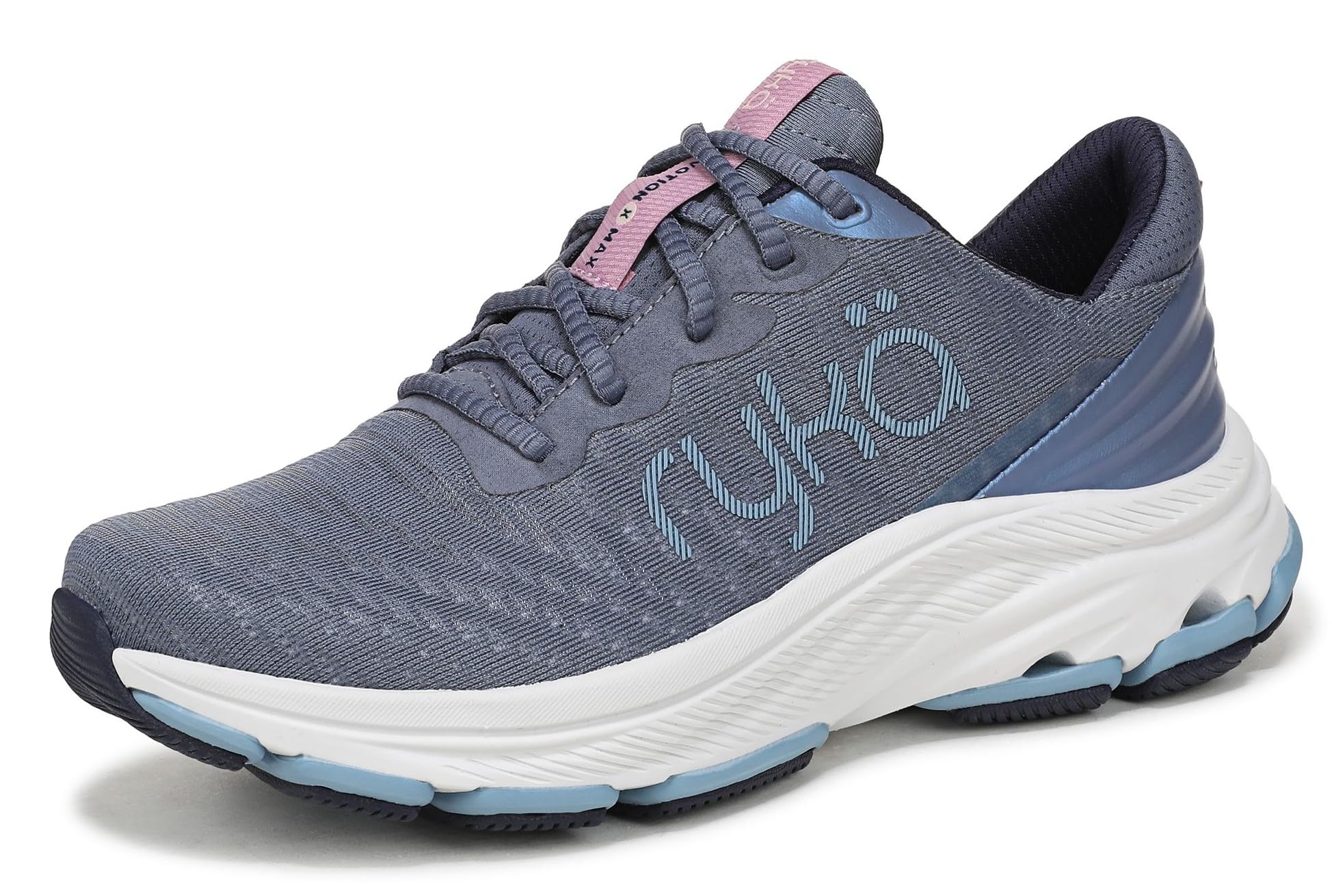
4. Ryka Devotion X Max RS Walking Shoe
Purpose-built for high-performance fitness walking, with cushioning that feels like walking on air.
Ryka designs shoes specifically for women’s feet, and the Devotion X Max RS is their amped-up walking model. It’s built for high-performance fitness walking, with full-length RE-ZORB® responsive cushioning for shock absorption plus lightweight RE-ZORB® LITE pads in the forefoot and heel. The 10 mm heel-to-toe drop encourages that natural heel-first walking stride, and owners describe the feel as “walking on air.” Comfort is by far the most-praised feature here, with arch support second.
The fit is where this shoe divides opinion. Some owners love the roomy toe box, while others — particularly those with narrow feet — found the toe box too wide and the laces puckered. It also runs slightly small for some, who sized up a half. But for walkers logging 4-6 miles daily, the plush comfort and heel support earn genuine devotion: “Holy Grail of Comfort” is how one owner put it, noting plantar fasciitis pain eased within two days.
At 8.6 oz per shoe, it’s a lightweight option that disappears on your feet. The removable insole means you can swap in custom orthotics, and the machine-washable build keeps it fresh. The honest downside is durability — a few owners mention the foam wearing out within five months of heavy use, so this is a comfort-first shoe rather than a decade-long investment.
Built for the miles
- Plush RE-ZORB® cushioning that kills heel and knee pain
- Lightweight at 8.6 oz per shoe with a breathable air-mesh upper
- Removable insole fits custom orthotics
Watch the fit
- Toe box runs wide — narrow feet may find it too roomy
- Some customers note foam wearing out within months
Best for: fitness walkers who want maximum cushioning and a wide, breathable toe box.
Not for: anyone needing a narrow fit or expecting years of heavy-duty durability at this price.
5. Saucony Women’s Guide 18 Sneaker
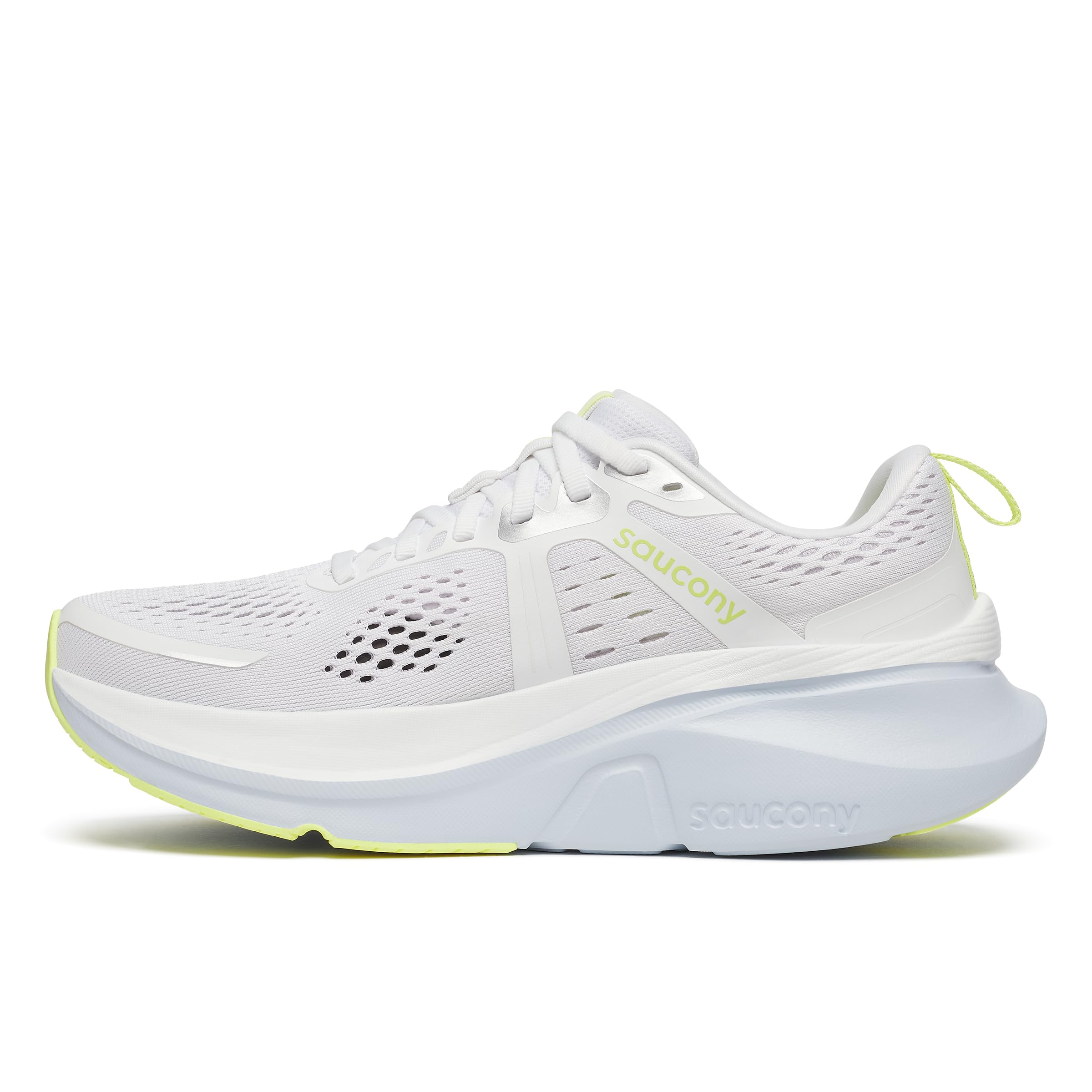
A stability trainer so soft it feels like walking on clouds — without letting your foot roll.
The Guide 18 pairs maximum cushioning with real pronation control through Saucony’s Center-Pass technology, which maintains a standard midline and improve the sidewall to keep your foot centered. The rocker-shaped outsole propels you forward on every step. It’s the rare stability shoe that owners with Ehlers-Danlos syndrome — a condition causing extreme joint looseness — say lets them ditch custom orthotics entirely.
The wide toe box gets frequent praise, especially from those who find most brands too narrow. Long-time Saucony buyers call it “life changing” for overpronation, and one 17-year veteran notes the stable cushioning prevents rolling even on 6+ mile daily runs. Comfort is the most-mentioned positive, with arch support a close second. There’s a real following here, and the quality shows in how many owners come back to it year after year.
Two honest caveats. First, some owners find the outsole slippery on wet or smooth floors — one runner couldn’t safely stretch on a treadmill because the shoe slid. Second, a few treadmill users say the forefoot feels less supportive than the heel, calling it “two different shoes.” Sizing splits opinions: many find it true to size with a roomy toe box, others find it tight, so consider the wide version if you’re between widths.
Cloud-like stability: if you want serious pronation control wrapped in the softest cushioning possible, this is the standout.
Reach for these if: you have overpronation plus sensitive feet that need cloud-like softness, especially for long walks.
Look elsewhere if: you walk on slick surfaces — the outsole grip is the weak point here.
6. Gravity Defyer Mighty Walk Walking Shoes for Women
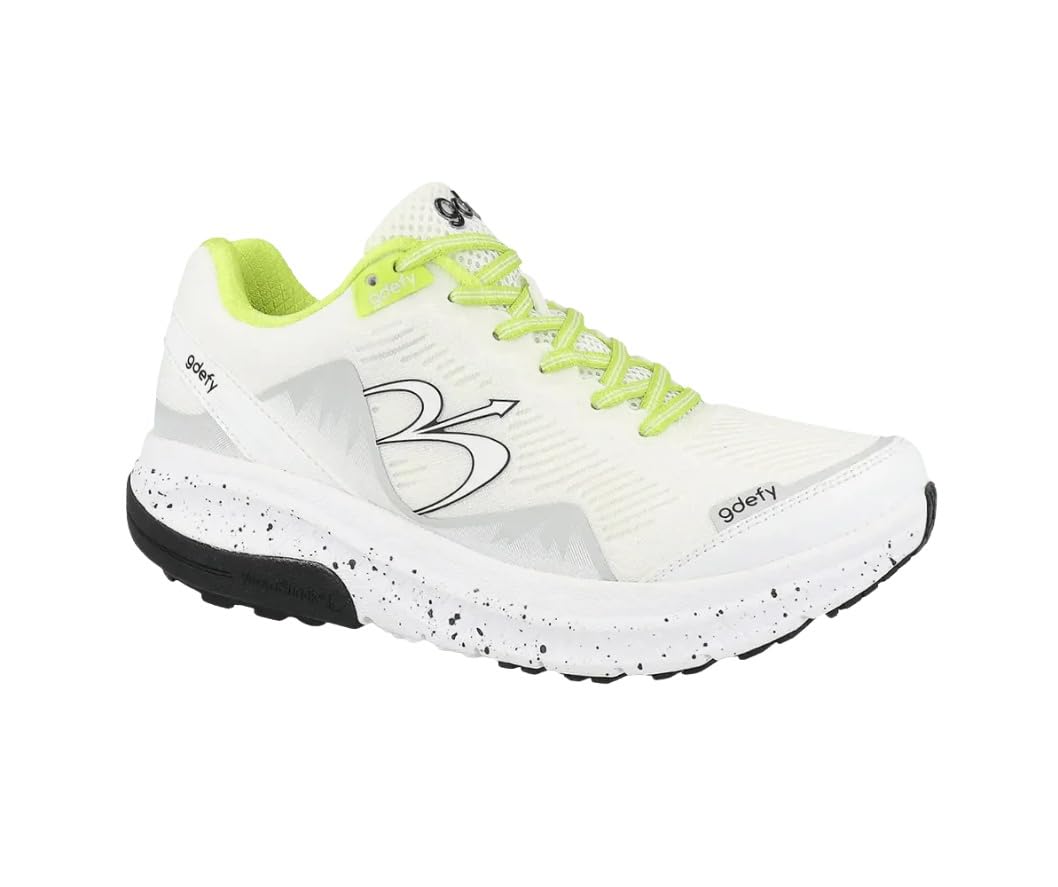
A pain-relief specialist with VersoShock® cushioning and three orthotic insoles built for all-day standing.
The Mighty Walk is Gravity Defyer’s answer for people whose feet, knees, and backs hurt after a day on their feet. It uses VersoShock® cushioning — a spring-loaded style foam system — plus three included orthotic insoles and a rocker sole that promotes a natural heel-to-toe gait. With 18759 ratings, it’s by far the most-reviewed shoe here, and the consensus is clear: comfort is king, with knee and back pain relief the most-cited benefit. Owners describe eliminating plantar fasciitis pain within 17 days and managing 14-hour standing days.
You also get three orthotic insoles, width options M, W, and XW (W is about ¼” wider, XW about ½” wider than standard), and HSA/FSA eligibility — so you can pay with a medical savings account. The rocker sole (a curved bottom that helps you roll forward) takes a few days to get used to; the brand suggests 1-2 hours daily for the first 3-5 days. A higher heel helps if you have Achilles issues, and the cushioned-yet-supportive feel wins over skeptics.
The honest caveats: fit is the most mixed aspect. Some owners find them true to size, but others report a narrow midfoot and rubbing at the ankles despite ordering wide. A few find the arch support insufficient and the rocker doesn’t relieve their heel pain. For anyone with back, knee, or foot issues who wants serious cushioning with orthotic options, though, this is the most committed pain-relief design in the lineup.
Pain-first design: the VersoShock® system plus three orthotic insoles make this the most therapeutic all-day option — if the fit works for you.
Choose this if: you have back, knee, or foot pain and want a cushioning system plus orthotic insoles built in.
pass on it if: you have narrow feet or a low ankle collar preference — some owners find the fit too snug through the midfoot.
7. ASICS Women’s GT-2000 14 Running Shoes
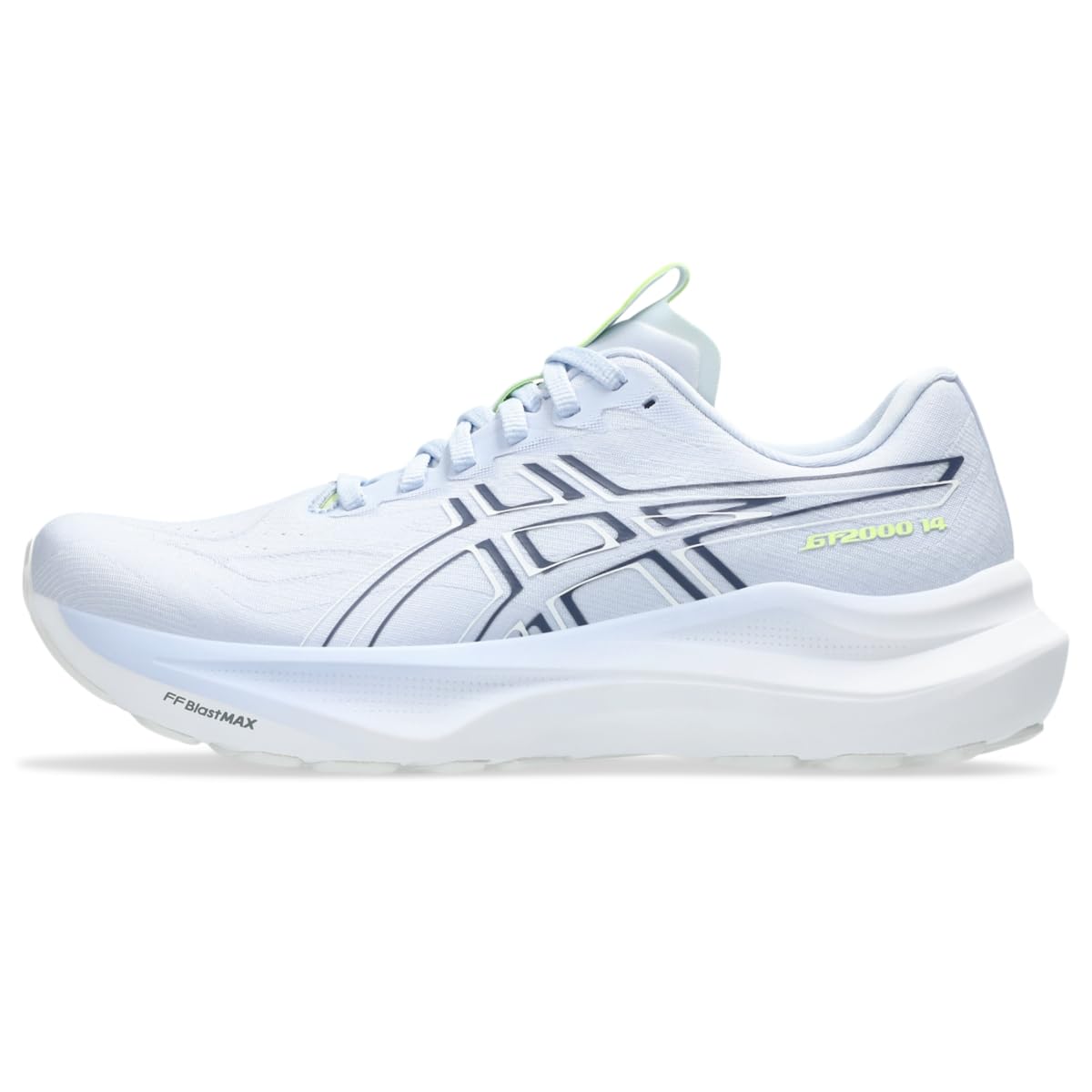
A lightweight daily trainer that supports overpronators without weighing them down.
The GT-2000 14 is ASICS’ lightweight stability trainer, built for people whose feet roll inward (overpronation) but who don’t want a heavy, clunky shoe. At 8.5 oz with an 8 mm drop, it balances responsive cushioning with a secure fit. Quality is the most-praised aspect — owners consistently describe it as a well-made shoe that holds up to daily walking and running. It’s also APMA Accepted, meaning the American Podiatric Medical Association found it promotes good foot health, and its carbon footprint is 29% lower than the industry average.
Owners love the color options and sleek design, and many with plantar fasciitis or flat feet report genuine relief — one calls it “the best running & walking shoe with arch support,” praising its light, bouncy, responsive feel. It’s a versatile pick: great for daily walks, all-weather jogs, and converting friends who try it. Sizing runs consistent, with most owners ordering a half size up from dress shoes.
The mixed feedback centers on support and warmth. A long-time ASICS user found the GT-2000 14 lacks the arch support of older models, describing it as “mushy” with no real stance support. Another owner — no overpronation — found the stability feature forced her foot to roll outward, causing soreness. And the mesh material runs warm, which one nursing-shift wearer found uncomfortable for 12-hour stints. This is a lighter, more flexible stability shoe rather than a firm, corrective one.
Light and responsive: the best choice if you want stability for daily training without the heavy, bulky feel of traditional support shoes.
Best for: walkers and runners with mild overpronation who want a light, breathable, versatile daily shoe.
Not ideal if: you need firm, corrective arch support — this one guides gently rather than locking you in.
8. Brooks Women’s Addiction Walker V-Strap 2 Walking Shoe

A firm, stable walker with easy Velcro straps that gets you out the door in seconds.
The Addiction Walker V-Strap 2 is Brooks’ everyday walking shoe with a purpose: firm support for low arches and pronation control you can feel. Its MoGo cushioned midsole returns energy with every step, while the durable full-grain leather upper and reliable non-slip sole make it a sturdy, long-lasting choice. The adjustable Velcro closure is the defining feature — it’s the shoe you can slip into without bending down, which owners with arthritis, shoulder surgery, or limited mobility genuinely appreciate.
The honest trade-offs: it’s a firmer, more orthopedic-feeling shoe than the cloud-soft options above, and it only comes in white and black — a practical but limited palette. Some reviewers point out a squeak with certain walking styles, and one found the heel rubbed after switching from the lace version. For anyone who prioritizes easy on/off, firm support, and longevity, though, this is a proven companion.
Function-first design: if Velcro ease and firm, durable support matter more than style, this is the most practical walker here.
Reach for these if: you want an easy-on/easy-off walking shoe with firm arch support that lasts for years.
Look elsewhere if: you want soft, plush cushioning or more color options than white and black.
Understanding the Specs
Heel-to-Toe Drop
The drop is the height difference in millimeters between your heel and your forefoot. A higher drop like 10 mm encourages a heel-first stride and takes strain off your calf — a natural fit for walking. A lower drop like 8 mm puts you closer to the ground and engages more of your lower leg. If you have tight calves or Achilles issues, a higher drop often feels more comfortable.
Support Technology
Stability shoes use different tools to stop your foot rolling inward. Some use a firm post under the arch, others weave a stabilizing frame through the midsole, and a few use higher sidewalls to guide your foot. All control overpronation, but they feel different — firmer is more corrective, softer is more comfortable. Choose by how the support feels against your arch.
FAQ
What is the difference between stability and neutral walking shoes?
How do I know if I overpronate?
What does a heel-to-toe drop of 10 mm actually mean for walking?
Are stability shoes good for flat feet?
How long does a stability walking shoe last?
Should I size up in stability walking shoes?
What is the difference between a stability shoe and a motion control shoe?
Can I wear stability walking shoes for running?
What makes a walking shoe different from a running shoe for stability?
Do I need to break in a new stability shoe?
Final Thoughts: The Verdict
For most walkers, the women’s stability walking shoes winner is the Hoka Arahi 8 — it pairs genuine stability with cloud-like comfort, and 4.5 stars across hundreds of owners backs that up. If you need podiatrist-level corrective arch support for long travel days, the Vionic Walk Max is your pick. For easy on/off with firm, durable support, the Brooks Addiction Walker V-Strap 2 fits the bill.
How We Picked
We do not accept paid placement. Every pick is matched to a real buyer and a real use-case; we do not hands-on test units.
Sources & Methodology
Specifications: manufacturer listings and product documentation. Review insights: verified customer reviews, as of August 2026. Pricing: not shown on this page (it changes often); check the current price via the retailer link.
As an Amazon Associate, Calories Fit earns from qualifying purchases. This does not affect which products we feature.