
Our readers keep the lights on and the coffee maker working hard! As an Amazon Associate, I earn from qualifying purchases.
Specs are compiled from manufacturer listings and verified buyer reviews and can change over time — please confirm the key details on the product page before buying.
If you have ever stacked plates under your heels to hit depth on a squat, you already know the problem a proper lifting shoe solves. A raised, solid heel puts your ankles in a better position, your knees track more safely, and your feet stop wobbling on squishy running-shoe foam. This guide sorts the best women’s squat shoes by what actually matters on leg day: heel height, platform stiffness, and how the fit locks your foot down.
I’m Mohammad — the founder and writer behind Calories Fit. This guide is built by comparing the manufacturers’ published specifications and the patterns across verified customer reviews, so you get each pick’s real strengths and trade-offs instead of marketing spin.
Squat stability hinges on heel rise, sole rigidity, and how well the straps lock your midfoot. The right pair turns a shaky grind into a steady, confident push.
Our Picks at a Glance
How To Choose The Best Women’s Squat Shoes
Your daily trainer is built to absorb impact, which is exactly why it is the wrong tool for a heavy squat. The foam compresses under load and steals your power. A squat shoe uses a hard, flat platform and a raised heel so your force goes straight into the floor.
Heel Height and Your Mobility
The raised heel is the defining feature of this category. It shifts your weight forward so you can reach proper depth without your chest collapsing, especially if your ankles are tight. Beginners often start with a lower rise, around 0.6 inches, while more experienced lifters prefer a taller platform like 1.4 inches for deeper positioning.
Stiffness and Straps
A solid outsole with zero compression keeps you planted during the lift. Look for a secure closure system — velcro straps over the midfoot hold your foot in place so it does not slide forward during the movement. Breathable mesh on the upper keeps long sessions from turning into a sweat bath.
Quick Comparison
| Model | Best For | Heel Height | Closure | Fit Note | Amazon |
|---|---|---|---|---|---|
| Adidas Powerlift 5★ Best Overall | All-around training and support | Low rise | Lace-up | Snug midfoot | Amazon |
| Osterland | Deep squats with ankle support | 1.4 inches | Velcro + lace-up | Runs wide | Amazon |
| Generic Powerlifting Shoe | Budget-friendly stability | improve | Velcro + lace-up | Wide toe box | Amazon |
In‑Depth Reviews
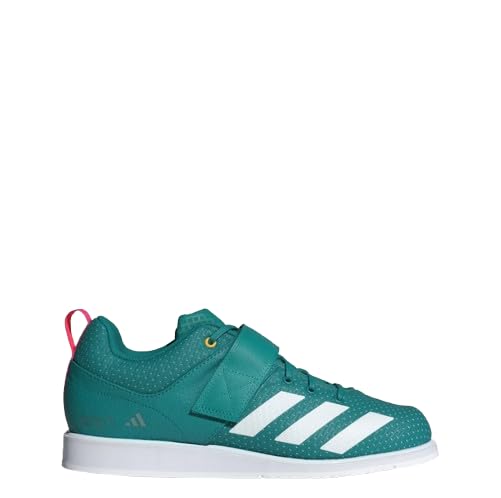
1. Adidas Unisex-Adult Powerlift 5 Weightlifting Shoes
Our pick — over 4.5★ from 350+ verified ratings; the strongest balance of quality and price.
The proven crowd favorite that turns plate-stacking squats into stable, quad-focused reps.
The low heel here wins people over — it gives you just enough rise to improve depth without stressing older or sensitive knees. Buyers report it is a genuine upgrade over running shoes, with one noting it “Definitely helps me focus more on quad isolation while squatting, size fit perfectly, very comfortable.” The flat, firm sole keeps your feet glued to the floor.
This is a workout-only shoe, and owners are clear about that trade-off. It is uncomfortable for walking long distances or doing cardio, so treat it as a dedicated piece of gym kit. The secure lace-up fit is praised constantly, though a few with wider midfoots find it slightly tight — a good starting point to help increase squat depth.
At roughly one pound per shoe, it is light enough that you forget it is there during a long leg day. The construction holds up over years, with repeat buyers grabbing pair after pair. It is the smart choice if you want one dependable shoe that handles squats, presses, and deadlifts without fuss.
What owners love
- Secure, comfortable fit that locks the foot in place
- Stable flat sole with zero heel curve for heavy lifts
- Durable build that lasts through years of training
Keep in mind
- Not meant for walking, running, or cardio sessions
- Midfoot runs slightly tight for wide feet
Reach for this if: you want a versatile, proven lifting shoe that helps you hit depth while protecting your knees.
Look elsewhere if: you need a shoe for cross-training that includes running or long walks.
2. Osterland Weightlifting Shoes
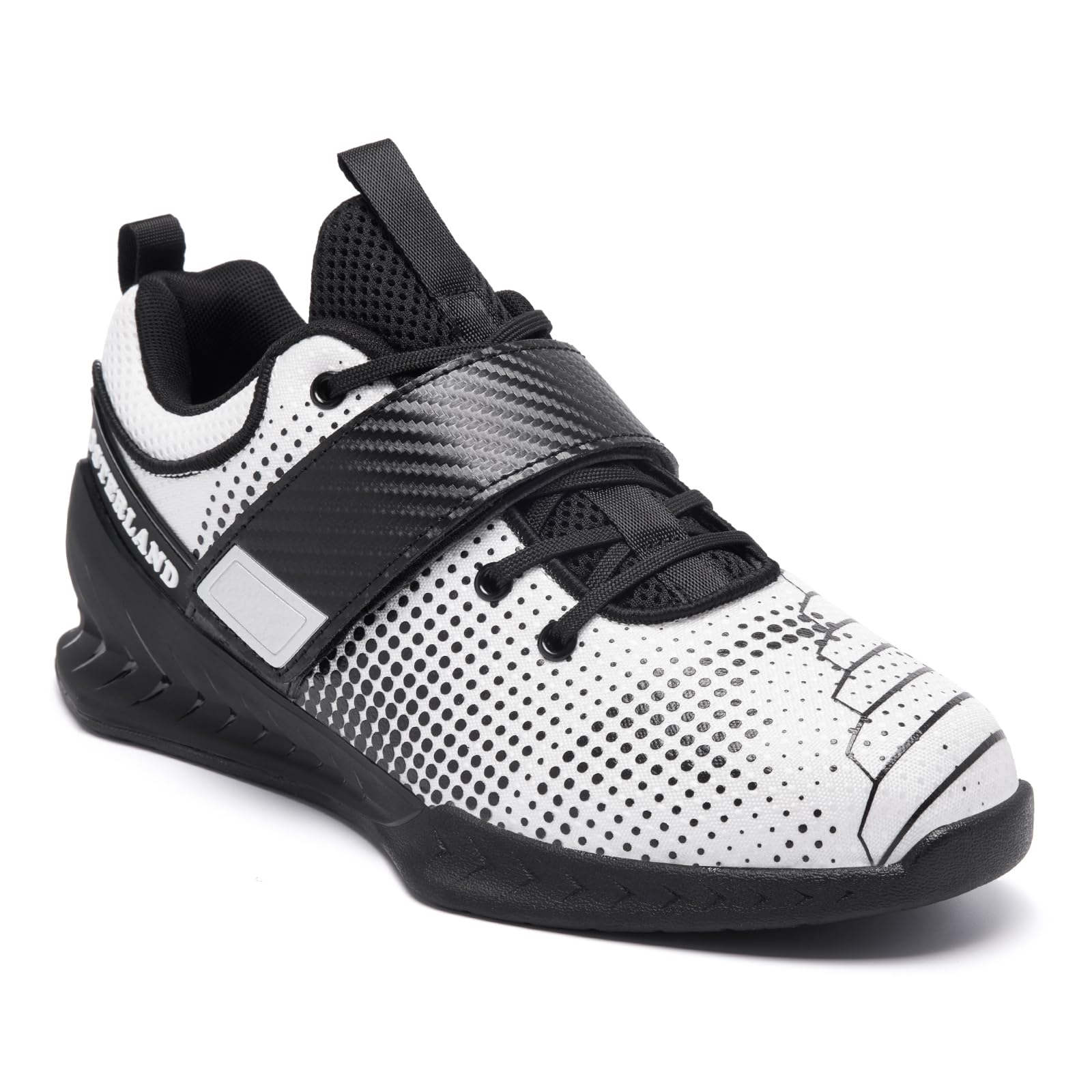
A tall 1.4-inch heel that lets tight-ankled lifters sink into deep squats with total stability.
The standout spec here is the 1.4-inch heel rise, which is substantially taller than the Adidas above. That extra height supports deeper squats, improves posture, and enhances force transfer during heavy lifting — making it ideal if your ankle mobility is the limiting factor. The design also uses a solid hard rubber outsole with no compression, unlike soft running shoes.
What buyers rave about is the stability: “No slipping or sliding with weights or resistance bands,” and the fit stays secure through the velcro and lace-up closure. Quality and fit are the most-praised aspects, with the shoe running true to US sizing — though owners with wide feet recommend going half a size up.
The honest trade-off here is durability over time. One owner reported the pull tab on the tongue ripped after about 3 months of once-a-week use, even while praising the overall construction. The breathable mesh and microfiber upper keep feet dry during long sessions, though a stiff toe box can cause pressure for some.
Best for: lifters who need a taller heel to fix ankle mobility and want a stable, wide-friendly fit for squats and leg presses.
The catch: the pull tab is a known weak point, so handle it gently during that initial break-in period.
3. Weightlifting Shoes for Crossfit Lifting
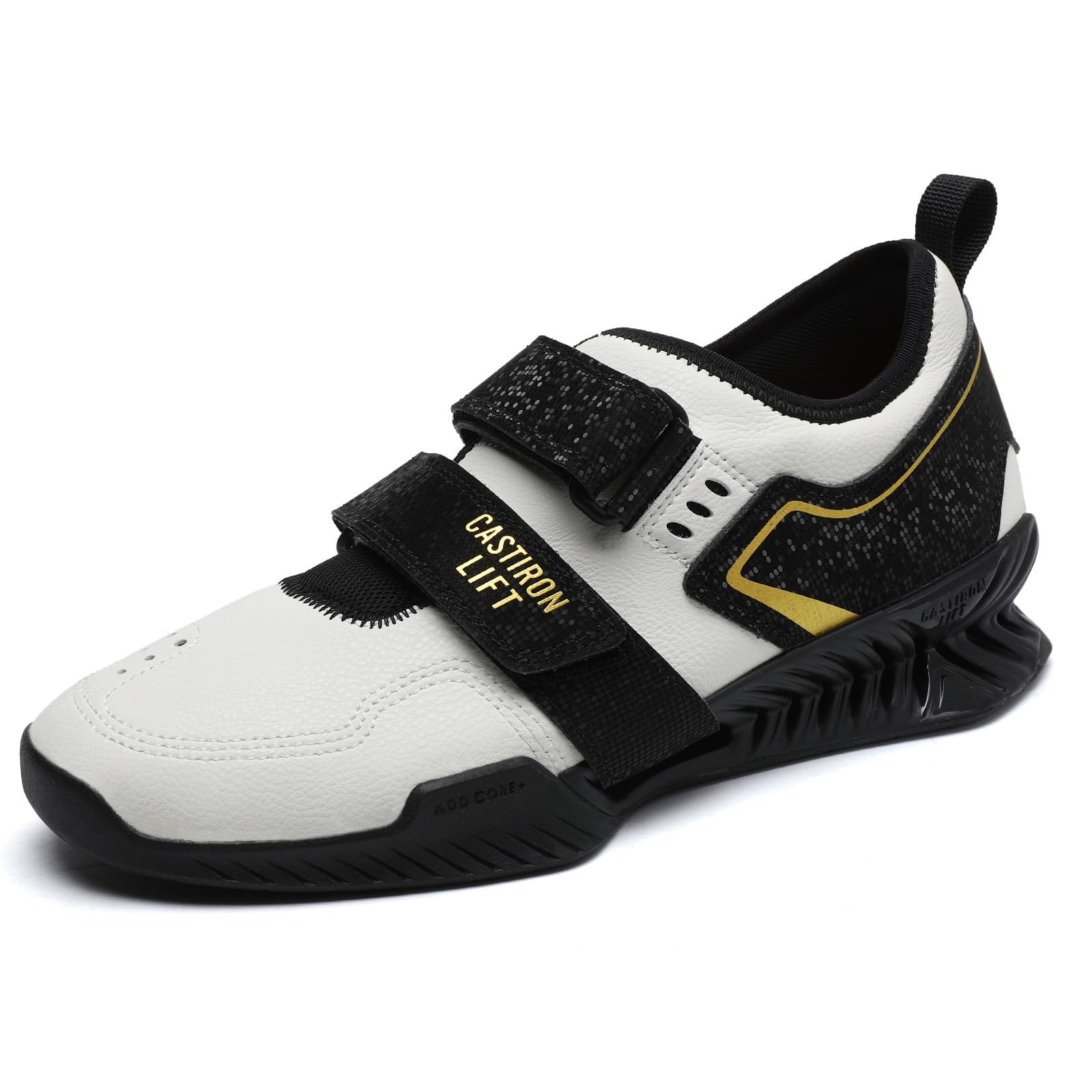
A budget-friendly platform with a wide toe box that fits like a snug glove on broader feet.
If you have a wide foot, this is the pick that gets the fit right. Owners mention: “TRUE TO SIZE. I have a wide 8.5 women’s foot. In men’s I’m a 6. These fit like a snug, perfect glove.” The wide fit that is not too narrow through the toe is a recurring highlight, paired with genuine arch support that earns constant praise.
The velcro straps are a big part of the appeal — they work great at locking your foot down and hold up well over time. The improve heel aids deeper squats, especially for low-bar positioning, though owners note it is not a fix for poor mobility or form. At a budget-friendly price, it delivers surprising quality.
The main caveat is cosmetic: some owners found the color shades mismatched, with one noting the straps clashed so badly they painted them black. After a year or more of heavy use across squats, Olympic lifts, and powerlifting, the construction holds up — just size up half a size if your feet are wide.
Who it suits: wide-footed lifters on a budget who want solid stability, arch support, and a secure velcro fit without the premium price tag.
Think twice if: you care a lot about precise color matching straight from the start.
Understanding the Specs
Heel Height (Heel Rise)
This is the measurement from the heel to the floor, typically ranging from about 0.6 inches on beginner shoes up to 1.4 inches on more advanced platforms. A taller heel lets you reach depth with less ankle flexibility, which is why it is the first number serious lifters compare.
Sole Stiffness and Compression
A squat shoe’s outsole should be solid hard rubber that does not compress under heavy weight. Soft running-shoe foam absorbs your force and makes you unstable. The stiffer the platform, the more of your power goes straight into the floor.
Closure System
Most lifting shoes use a combination of velcro straps over the midfoot plus traditional laces. The straps lock your foot in place so it does not slide forward when you drive up out of the hole. This is a key difference from everyday sneakers.
Fit and Sizing
These shoes run differently than casual footwear. Many run true to size, but wide-footed lifters often need to go half a size up. Some listings carry men’s sizing, so women typically size down by one and a half to two sizes for the equivalent fit.
FAQ
Will squat shoes actually help me squat deeper?
How do I convert my women’s size to a men’s squat shoe?
Are squat shoes good for running or cardio?
What is the difference between a low heel and a 1.4-inch heel?
Should I size up if I have wide feet?
How long do squat shoes last?
Can I use squat shoes for deadlifts?
Why do the velcro straps matter on a lifting shoe?
Final Thoughts: The Verdict
For the majority of shoppers, the women’s squat shoes winner is the Adidas Powerlift 5 because the low heel protects your knees while the stable sole improves your form — and it holds up through years of training. If your ankle mobility is the blocker, grab the Osterland for its taller 1.4-inch heel. And for a wide foot on a budget, the velcro-strap option is the one to reach for.
How We Picked
We do not accept paid placement. Every pick is matched to a real buyer and a real use-case; we do not hands-on test units.
Sources & Methodology
Specifications: manufacturer listings and product documentation. Review insights: verified customer reviews, as of August 2026. Pricing: not shown on this page (it changes often); check the current price via the retailer link.
As an Amazon Associate, Calories Fit earns from qualifying purchases. This does not affect which products we feature.