
Our readers keep the lights on and the coffee maker working hard! As an Amazon Associate, I earn from qualifying purchases.
Specs are compiled from manufacturer listings and verified buyer reviews and can change over time — please confirm the key details on the product page before buying.
Fog is the enemy. You are halfway down a run, your vision turns milky, and you either lift the goggles or ski blind. The right pair keeps your lens clear and your ride smooth. This guide cuts through the specs and hype to find the seven best women’s snowboard goggles based on real buyer reports and manufacturer data.
I’m Mohammad — the founder and writer behind Calories Fit. This guide is built by comparing the manufacturers’ published specifications and the patterns across verified customer reviews, so you get each pick’s real strengths and trade-offs instead of marketing spin.
Here are the seven pairs you should actually consider for the best women’s snowboard goggles, ranked by what real riders experience on the mountain.
Our Picks at a Glance

How To Choose The Best Women’s Snowboard Goggles
Light changes fast on the mountain. You go from glare on a sunny bowl to flat grey light in a tree run in fifteen minutes. A good goggle handles both without making you stop to squint or fiddle with layers. Here is what separates the pairs that work from the ones you will end up returning.
VLT — The Number That Controls Your Day
VLT (Visible Light Transmission) is the percentage of light that reaches your eye through the lens. A 10% VLT lens blocks most light for bright sun. A 70% VLT lens lets in a lot of light for overcast, flat conditions. For mixed conditions, a mid-range lens around 30-40% VLT keeps you from swapping lenses every run. A quick-change magnetic system makes that swap take seconds.
OTG — Fit Matters More Than You Think
If you wear prescription glasses under your goggles, look for an OTG (Over-The-Glasses) design. The frame is cut deeper to fit eyeglass arms without pinching your temples. That extra air volume also helps reduce fogging because warm moist air has more room to circulate before hitting the cold lens. Without OTG clearance, your glasses push the goggle away and the seal breaks.
Anti-Fog Technology — The Difference Between Fun and Frustration
Fog happens when the inside lens is cooler than the warm air near your face. A permanent anti-fog coating on the inner lens stops this. Look for dual-lens construction — two plastic panes with a sealed air gap between them. That air layer creates a thermal barrier that keeps the inner surface temperature closer to your face, reducing the temperature gap that causes condensation.
Quick Comparison
| Model | Best For | Lens Tech | Fit Type | VLT Range | Amazon |
|---|---|---|---|---|---|
| OAKLEY O-Frame 2.0 PRO★ Best Overall | All-day anti-fog reliability | HDO | OTG | N/A | Amazon |
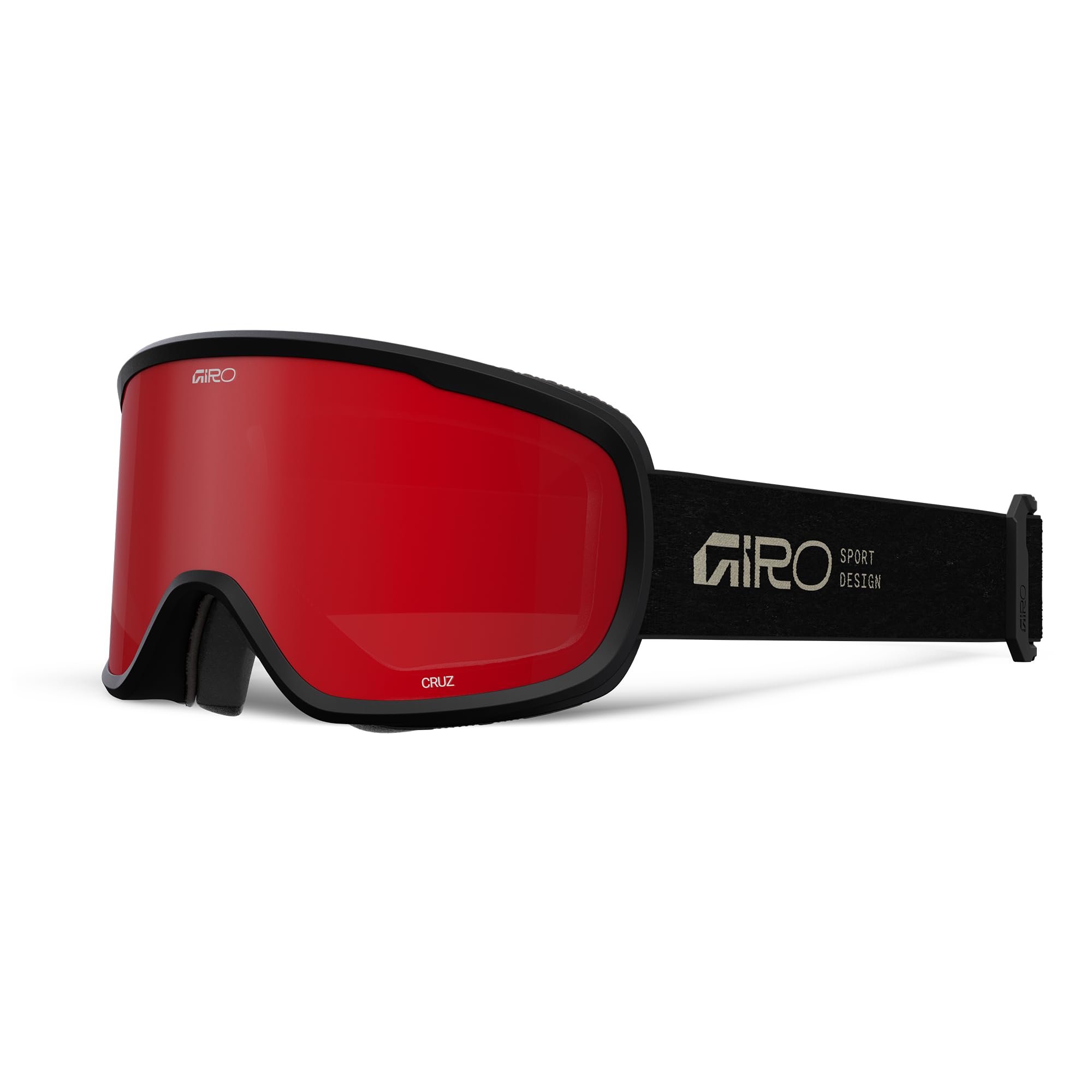
| Giro CruzBest Value | Budget-friendly helmet pairing | Anti-Fog Coating | OTG | 39% | Amazon |
| findway OTG | Quick magnetic lens swaps | Dual Lens | OTG | 8% (included) | Amazon |
| ZIONOR X11 | Budget-friendly magnetic lenses | Dual-Layer | Standard | 6-86% | Amazon |
| Wildhorn Roca Pro | Ultra-wide 185° field of view | Dual-Lens + Scratch Coat | Standard | N/A | Amazon |
| SMITH Squad ChromaPop | Premium optical clarity and contrast | ChromaPop | Standard (OTG option) | N/A | Amazon |
| OAKLEY Line Miner | Premium build with Prizm lenses | HDO + Prizm | OTG | N/A | Amazon |
In‑Depth Reviews
1. OAKLEY O-Frame 2.0 PRO Ski Goggles
Our pick — over 4.5★ from 500+ verified ratings; the strongest balance of quality and price.
The pair that refuses to fog, even after a full day in variable snow.
Your goggles need to stay clear. The OAKLEY O-Frame 2.0 Pro delivers. Buyers consistently report that the lenses do not fog in flat light, snow, or sun — the most important test a goggle can pass. The silicone-lined strap grips your helmet so you are not adjusting mid-run. The frame’s OTG (Over-The-Glasses) design sits comfortably over prescription glasses without pressing on your temples.
The anti-fog coating is the main reason buyers choose this pair. They note that the lenses stayed clear in damp conditions, which is the biggest annoyance with cheaper models. HDO (High Definition Optics) removes the distortion you normally get with curved plastic lenses, so the terrain looks natural.
One catch: it ships with a microfiber pouch, not the soft case some listings show — a small irritation given the performance. Compared to the OAKLEY Line Miner below, this pair costs less while still using Oakley’s coating technology.
What wins people over
- Permanent anti-fog coating that buyers report works in wet snow
- HDO optics eliminate the distortion common in budget cylindrical lenses
- Wide silicone strap keeps the goggle locked to the helmet through rough terrain
The honest trade-off
- Does not include the pictured soft case — only a microfiber bag
- Lens is not interchangeable, so you commit to one tint
Your best all-rounder: handles overcast, sunny, and mixed light without fogging. The data points to this as the top pick.
Choose a different pair if: you need to swap lenses between morning sun and afternoon clouds — you would need a second pair or a magnetic model.
2. Giro Cruz Ski Goggles
A budget-friendly goggle that fits helmets smoothly, praised for both style and function.
Buyers consistently say this pair fits around a helmet “perfect and super comfy.” That is a rare accolade. The Giro Cruz uses a silicone-backed strap to prevent slipping. The double-layer face foam with microfleece facing seals softly against your cheekbones without feeling clammy.
The Amber Scarlet lens at 39% VLT (Visible Light Transmission) is a balance for mixed clouds and sun. It is light enough to see snow texture in flat light but dark enough to cut glare on a bright afternoon. Buyers also report that the anti-fog coating holds up on long days. The OTG (Over-The-Glasses) fit accommodates prescription frames comfortably. The OAKLEY O-Frame above has a stronger anti-fog track record, but the Giro gives you OTG convenience at a lower price.
The trade-off: it ships with only one lens, so variable conditions from dawn to dusk require a second pair. Some owners also note it is best for beginner to intermediate riders.
The biggest praises
- Described as fitting “perfect” over helmets — a specific buyer accolade
- 39% VLT Amber Scarlet lens works well in mixed sun-and-cloud conditions
- No reported fogging issues across hundreds of riders
The honest trade-off
- Single-lens model — you cannot swap for changing light
- Best suited for beginner to intermediate riders
Smart wallet move: if you ride mostly midday and want a comfortable, fog-free goggle that pairs well with your helmet, this is your best budget option.
Not for you if: you ride from first chair to last and see sun, cloud, and snow in the same day — you need a quick-change lens system.
3. ZIONOR X11 Snowboard Goggles

A magnetic-lens goggle delivering reliable anti-fog performance.
One buyer sums it up: “I’m an avid snowboarder… I bought these on a last minute trip and they worked perfect!” The ZIONOR X11 uses a dual-layer lens design that creates a thermal barrier against fogging. The cylindrical shape keeps peripheral vision clear without the distortion of cheaper spherical lenses.
The magnetic lens-swap system changes lenses in seconds. You can switch from a dark lens (6% VLT) for sunny laps to a clear lens (86% VLT) for overcast runs. The triple-layer foam seals against wind without feeling tight on smaller faces.
A few customers note that magnetic lenses can pop out after hard falls. The plastic border around the lens may crack during the second season.
What riders praise most
- Magnetic lens system works quickly for changing light
- Available in VLT options from sunny 6% to overcast 86%
- Reviewers point out zero fogging after full days in clear and snowy conditions
The honest trade-off
- Lenses can detach on hard wipeouts
- Plastic lens border is prone to cracking during the second season, per some owners
Best for the price-conscious lens-swapper: you get the versatility of quick lens changes without the premium price tag.
Reconsider if: you are a park rider who falls hard and often — a lens popping out mid-run is a real risk here.
4. Wildhorn Roca Pro Ski Goggles
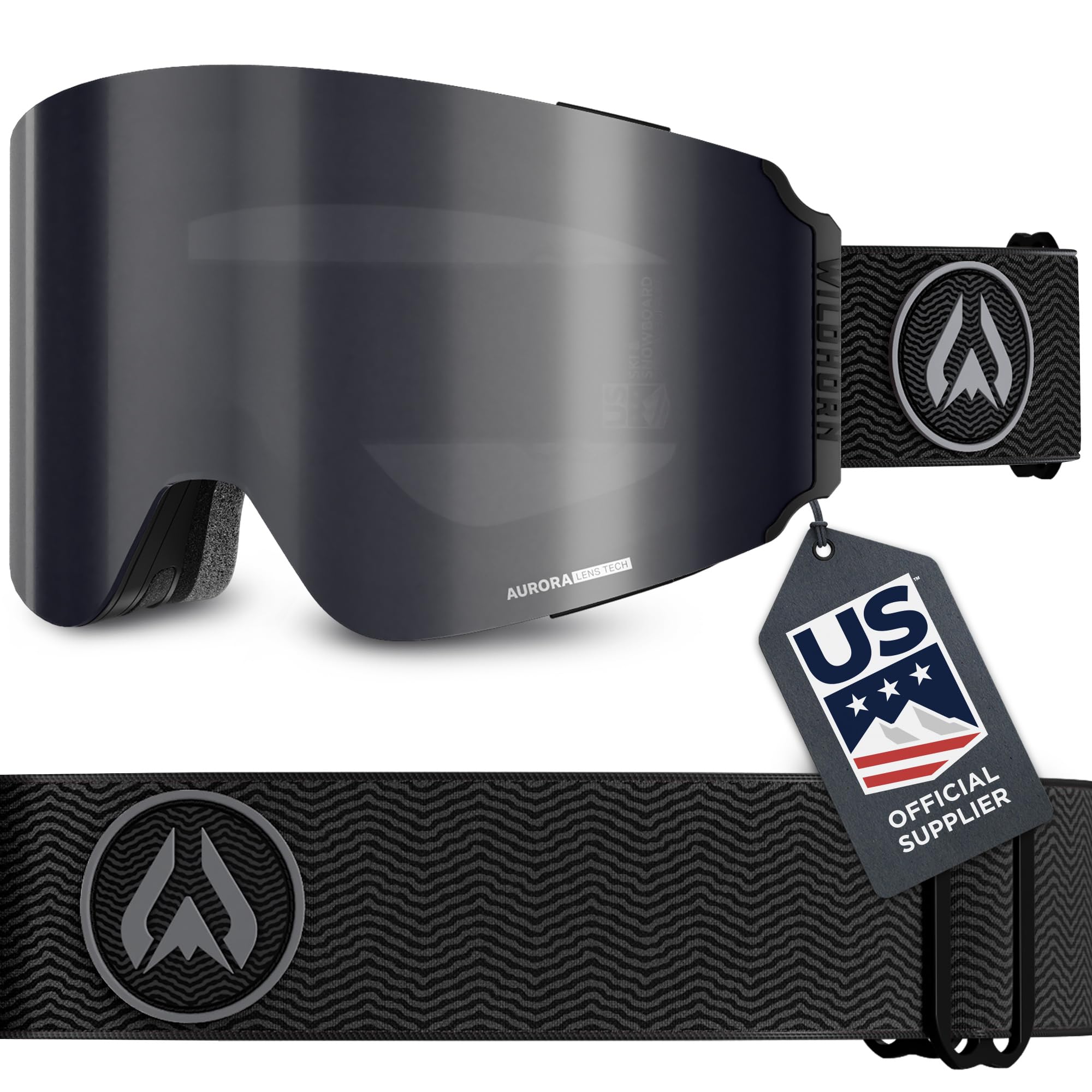
A 185-degree field of view eliminates tunnel vision, making tree runs feel open.
The Wildhorn Roca Pro gives you a panoramic view. Buyers call it “super wide” and note it “didn’t fog up” even after a full day in mixed Utah conditions. The goggle uses eight N45 rare earth magnets to lock the lens in place — double the magnet count of the ZIONOR X11 above, making the lens noticeably more secure during hard riding.
The Aurora dual-lens construction includes a scratch-resistant clear coat on the outer layer and triple the standard anti-fog treatment on the inner base layer. According to the manufacturer, this model is an official competition supplier to the U.S. Ski & Snowboard Team. A 185-degree field of view lets you see obstacles and terrain changes sooner.
The size can be a problem for smaller faces.
The defining strengths
- Ultra-wide 185° field of view is significantly broader than standard goggles
- Eight N45 magnets keep the lens in place on rough landings
- Dual-layer anti-fog treatment rated at 3x standard resistance, per the manufacturer
The honest trade-off
- Large frame fits poorly on smaller faces — the medium model is safer for most women
- Magnetic connection is fast but the frame depth can interfere with low-profile helmets
Best for the rider who wants to see everything: the broad field of view and secure magnetic lock make this a strong pick for tree runs and variable terrain.
Think twice if: you have a narrow face or prefer a flush, low-profile goggle — this frame reads large on most faces.
5. SMITH Squad Goggles with ChromaPop Lens

ChromaPop lens technology enhances contrast so subtle rolls in flat light become visible.
Owners call the optical clarity “unreal.” The red ChromaPop lens makes terrain features pop in both sun and shade. The panoramic field of view is noted by 22 buyers. The anti-fog coating holds up through alpine spring conditions and heavy snowfall. One buyer skied 48 miles without fogging.
The SMITH Squad uses a non-magnetic lens retention system with J-hooks. Many owners find this more secure than magnetic frames during hard landings. The lens swap takes more effort — buyers describe needing patience to avoid scratching — but the lens stays put once locked.
A significant minority struggle with the lens exchange, calling it “very difficult” and warning about scratching the internal hooks. The soft case offers minimal protection for a premium goggle. If you prioritize quick lens swaps, the ZIONOR X11 or Wildhorn Roca Pro will frustrate you less. If you want uncompromised optical quality and the lens stays in most of the day, the SMITH is tough to top.
Why riders spend more here
- ChromaPop lens technology delivers exceptional contrast and clarity in flat light
- Panoramic field of view rivals the widest goggles on the market
- Non-magnetic J-hook frame is more durable and secure than magnetic models for heavy use
The honest trade-off
- Lens swap is difficult and risks scratching the hooks — not a quick-change system
- Soft case provides minimal protection for a premium goggle; a hard case is a wise add-on
The performance pick: if clear, distortion-free optics are your top priority and you do not mind a fiddly lens swap, this is the goggle that delivers the best view on the mountain.
Look elsewhere if: you change lenses frequently throughout the day — the J-hook system is not designed for speed.
6. findway Ski Goggles OTG
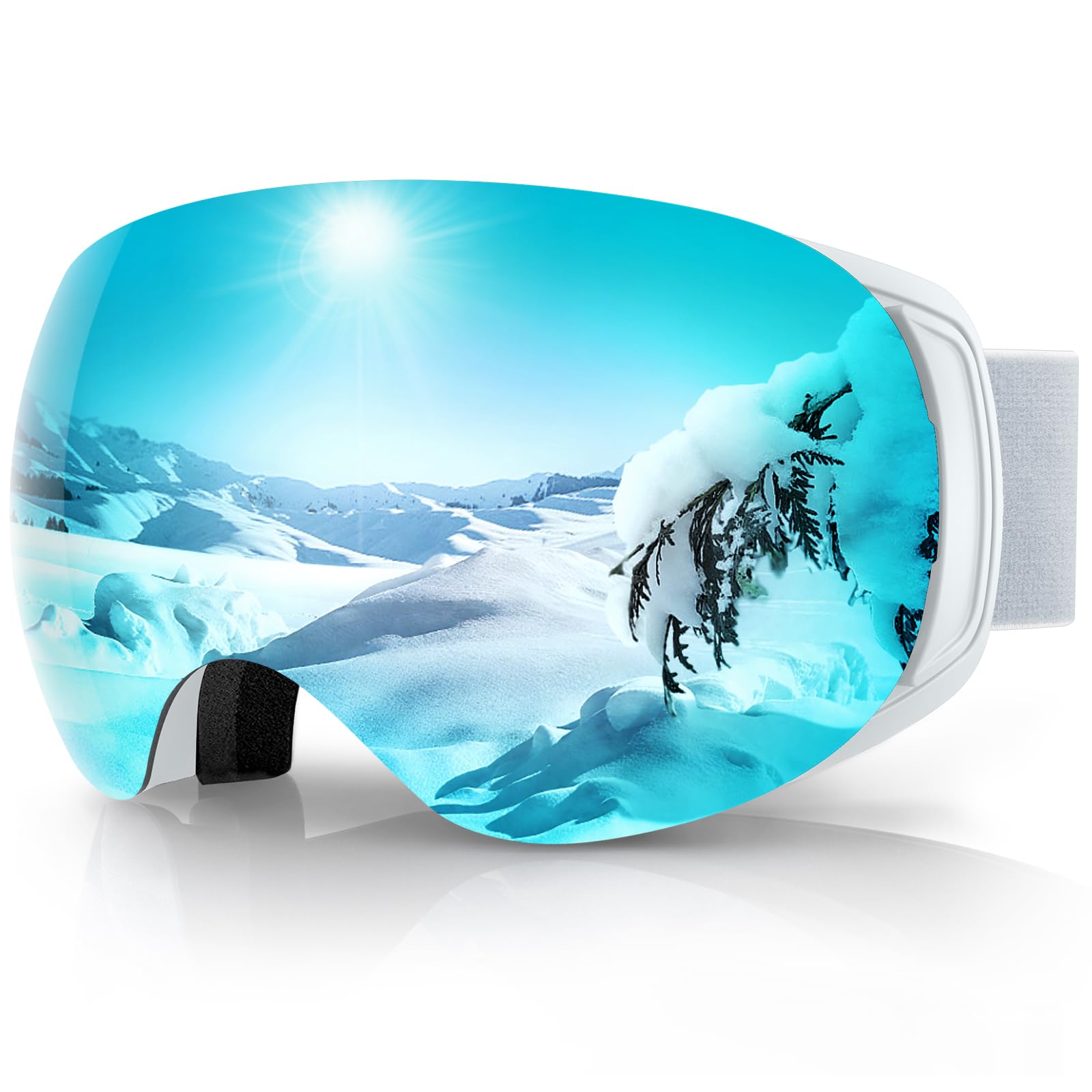
Sixty seconds to swap a lens, strong enough to survive a crash, and genuinely comfortable for glasses wearers.
Buyers used these on a Utah ski trip during a snowstorm and say they “worked wonders.” The integrated clip locking system uses six N45 magnets and a side-clip design that keeps the lens seated even during falls, jumps, and spins. This is a real advantage over the ZIONOR X11, which uses magnets alone and can pop loose on harder impacts.
The frame is made from TPU (Thermoplastic Polyurethane), a durable material that resists deformation under pressure. The OTG (Over-The-Glasses) cut provides space for prescription frames without pressing into your nose bridge. The spherical dual-lens design with 100% UV protection gives you an undistorted view across the full lens — an upgrade from the cylindrical lenses on lower-priced models.
A few shoppers say scratching the lens quickly. One reviewer noted “already scratched” alongside a “love the look” compliment. The included lens has a VLT of 8%, which is dark and great for bright sun but poor for overcast or night riding. Most buyers will want an additional lens for low-light days. At this price, it competes directly with the Giro Cruz on value but adds the lens-swap versatility that the Giro lacks.
The biggest selling points
- Clip-locking lens system holds lenses securely through hard falls and jumps
- TPU frame is more impact-resistant than standard polycarbonate frames at this price
- Spherical dual-lens design produces a wider, distortion-free field of view
The honest trade-off
- Included 8% VLT lens is too dark for overcast or night skiing — budget for an extra lens
- Several buyers report scratching the lens quickly
Best for glasses wearers who ride sunny terrain: the OTG fit is spacious, the clip lock is impact-rated, and the 8% VLT lens handles bright sun well.
Not ideal if: you mostly ski in flat light or under cloud cover — you will need to buy a higher-VLT replacement lens.
7. OAKLEY Line Miner Ski Goggles
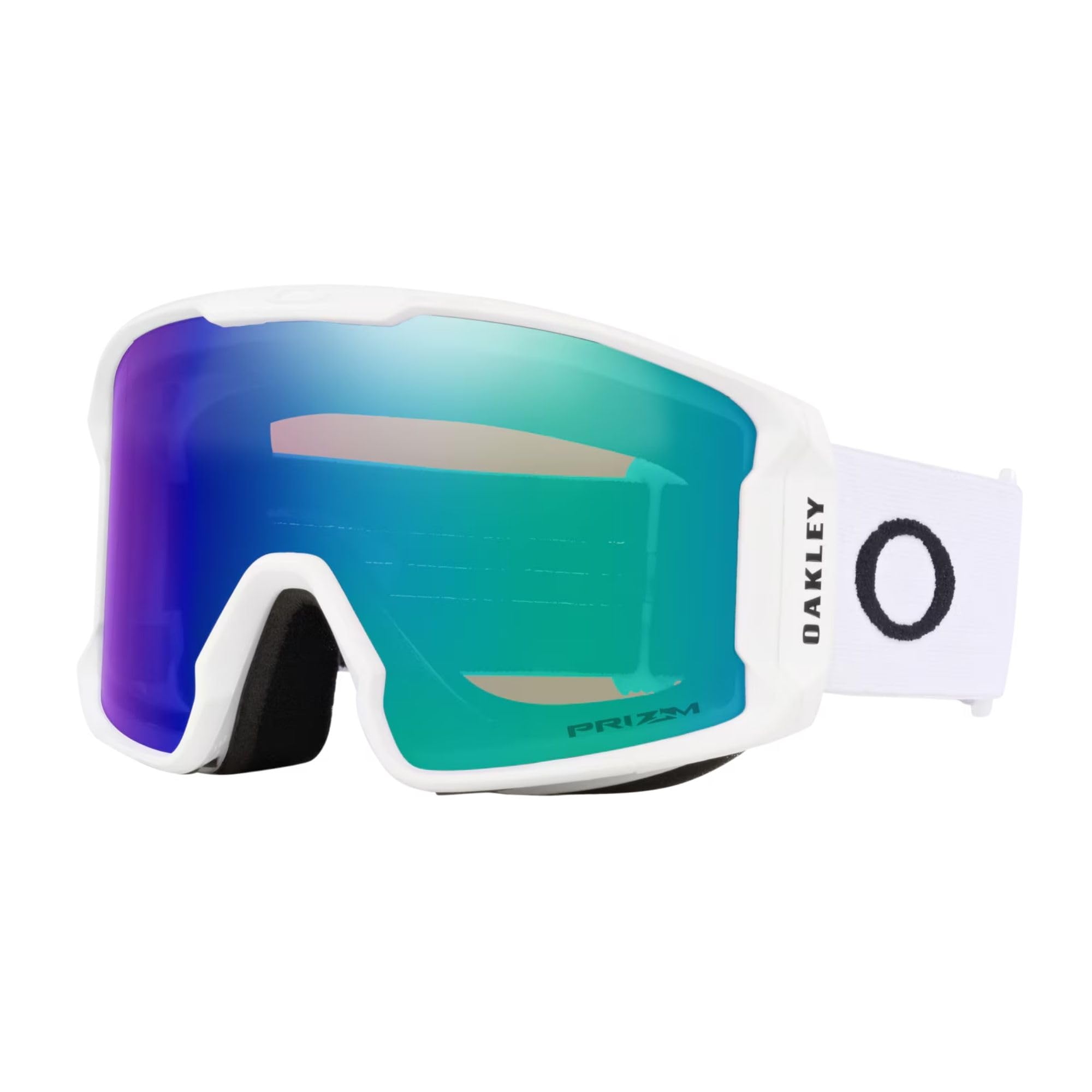
Prizm lens technology shifts how you see snow — colors are more distinct, shadows less ambiguous.
This is the premium OAKLEY offering. It adds Prizm lens technology on top of the HDO (High Definition Optics) platform from the O-Frame 2.0 Pro. Buyers who upgraded from other brands describe the difference as immediately noticeable. Prizm lenses selectively tune color to enhance contrast in snowy environments, making bumps and ice patches stand out. One owner noted “great clarity, glasses fit great under goggles” when describing the OTG compatibility.
The frame uses a wide silicone strap for helmet grip and a permanent anti-fog coating. Owners mention it holds up through three trips in cold, heavy snow without any fogging between the lens layers. The Line Miner comes in Medium and Large frame sizes, making it easier to get a correct facial seal than the single-size findway or ZIONOR models. The included microfiber pouch and lens leash kit are nice bonuses.
There is an inconsistency in buyer reports: most praise the optical clarity, but a few describe the optics as “fake/defective” or report fogging between the lens layers. A small number say the strap barely fits a ski helmet at maximum tension. The price is the highest here by a notable margin. The Prizm upgrade may not feel worth it if you ride mostly sunny, well-groomed slopes.
What the premium buys
- Prizm lens technology enhances snow contrast, making terrain features more visible
- HDO optics deliver distortion-free vision across the full field of view
- Permanent anti-fog coating holds up through multiple cold, heavy-snow days
The honest trade-off
- Significantly more expensive than any other pair here, and the Prizm benefit varies by rider
- Limited reports of fogging between lens layers and strap fit issues on some helmets
Best for the rider who needs every terrain advantage: if you ski variable conditions where reading subtle snow texture saves energy and falls, the Prizm optics earn their premium.
skip it if: your riding is mostly sunny, wide-open groomers — the color enhancement matters less, and the budget-friendly options perform nearly as well.
Understanding the Specs
VLT — Visible Light Transmission
This percentage tells you how much light the goggle lets through. A low VLT (around 6-10%) works for bright, sunny days — it cuts glare so you are not squinting. A high VLT (60-86%) is for overcast or night riding when you need every photon to see terrain contours. For mixed conditions, a mid-range 30-40% VLT lens is a good daily driver that handles both sun and cloud.
OTG — Over The Glasses Design
OTG goggles have a deeper frame cutout that creates extra space for your prescription eyeglass frames. That extra interior volume also helps control fog: warm, moist air has more room to circulate before hitting the cold lens surface and condensing. Without OTG clearance, your glasses force the gasket away from your nose, breaking the seal and letting cold air and snow in.
Magnetic vs Clip Lens Systems
Magnetic systems use embedded rare-earth magnets (usually 4 to 8) that let you swap lenses in seconds. The trade-off is that on hard impacts, some magnetic lenses pop loose. Clip systems (like the J-hooks on the SMITH Squad) are more secure but require more force to change and risk scratching the lens. Your choice depends on whether you value quick changes or absolute lens retention.
Dual-Lens Construction
A dual-lens goggle has two panes of polycarbonate with a sealed air gap between them. That air layer acts like a thermal barrier — the inner lens stays closer to your face temperature, reducing the temperature difference that causes fogging. Single-lens goggles are lighter but fog far more easily. Every performance goggle in this guide uses a dual-layer design.
FAQ
Can I wear my prescription glasses under snowboard goggles?
What VLT should I choose for mixed sun and clouds?
How do I stop my goggles from fogging?
Are magnetic lenses better than clip-on lenses?
Do I need a spherical or cylindrical lens?
How do I know which size goggle fits my face?
Will cheap goggles perform as well as expensive ones?
Can I use ski goggles for snowboarding?
How often should I replace my snowboard goggles?
Final Thoughts: The Verdict
The OAKLEY O-Frame 2.0 Pro is the one to buy if you want reliable anti-fog, a comfortable OTG fit, and HDO optics without the premium price tag. If you prefer the widest field of view and locking magnetic lenses on a budget, the Wildhorn Roca Pro is your go-to. For uncompromised optical clarity with ChromaPop contrast enhancement, the SMITH Squad is the one to reach for.
How We Picked
We do not accept paid placement. Every pick is matched to a real buyer and a real use-case; we do not hands-on test units.
Sources & Methodology
Specifications: manufacturer listings and product documentation. Review insights: verified customer reviews, as of July 2026. Pricing: not shown on this page (it changes often); check the current price via the retailer link.
As an Amazon Associate, Calories Fit earns from qualifying purchases. This does not affect which products we feature.