
Our readers keep the lights on and the coffee maker working hard! As an Amazon Associate, I earn from qualifying purchases.
Specs are compiled from manufacturer listings and verified buyer reviews and can change over time — please confirm the key details on the product page before buying.
You know the midday squeeze — your feet swell and suddenly your morning shoes feel too small. Millions of older women face this daily struggle, and the solution goes beyond just sizing up. The right shoe has an adjustable closure, a wide toe box, and forgiving materials that accommodate swelling without irritation. This guide highlights the best women’s shoes for seniors with swollen feet that deliver real relief.
I’m Mohammad — the founder and writer behind Calories Fit. This guide is built by comparing the manufacturers’ published specifications and the patterns across verified customer reviews, so you get each pick’s real strengths and trade-offs instead of marketing spin.
We looked at features like hook-and-loop closures that let you dial in the fit, roomy toe boxes that stop rubbing, and lightweight soles that make each step easier. The goal was to find the best women’s shoes for seniors with swollen feet that offer real relief, not just a larger size.
Our Picks at a Glance

How To Choose The Best Women’s Shoes for Seniors with Swollen Feet
A shoe that looks comfortable is worthless if you can’t get it on by midday. Focus on three things: how the shoe opens and closes, how wide it actually is through the toe and midfoot, and how much give the material has. Here is what matters most.
Prioritize an Adjustable Closure
Fixed laces or narrow slip-on openings are the enemy of a swollen foot. Look for a hook-and-loop strap (the fuzzy-and-hooky fastener you know as velcro) that lets you loosen the shoe when your foot is at its largest and tighten it later. A fully opening front panel is even better — it means you never have to force your foot past a tight collar.
Understand Width vs. Toe Box Room
A shoe can be marked “wide” but still squeeze your toes if the toe box is shallow. The real win is a shoe with both extra width (look for 2E or 4E in the sizing, which mean extra-wide) and a roomy toe box that gives your toes space to spread. A wide toe box also helps if you have bunions, hammertoes, or neuropathy (nerve damage that makes rubbing painful).
Check the Sole for Support and Safety
Soft, flexible soles offer comfort but may lack stability for those with balance concerns. A sole with some stiffness and a textured tread gives you a stable base and reduces the chance of slipping. If you wear custom orthotics (prescription shoe inserts) or arch supports, look for a shoe with a removable insole so you can swap them in.
Quick Comparison
| Model | Best For | Width Available | Closure Type | Sole Material | Amazon |
|---|---|---|---|---|---|
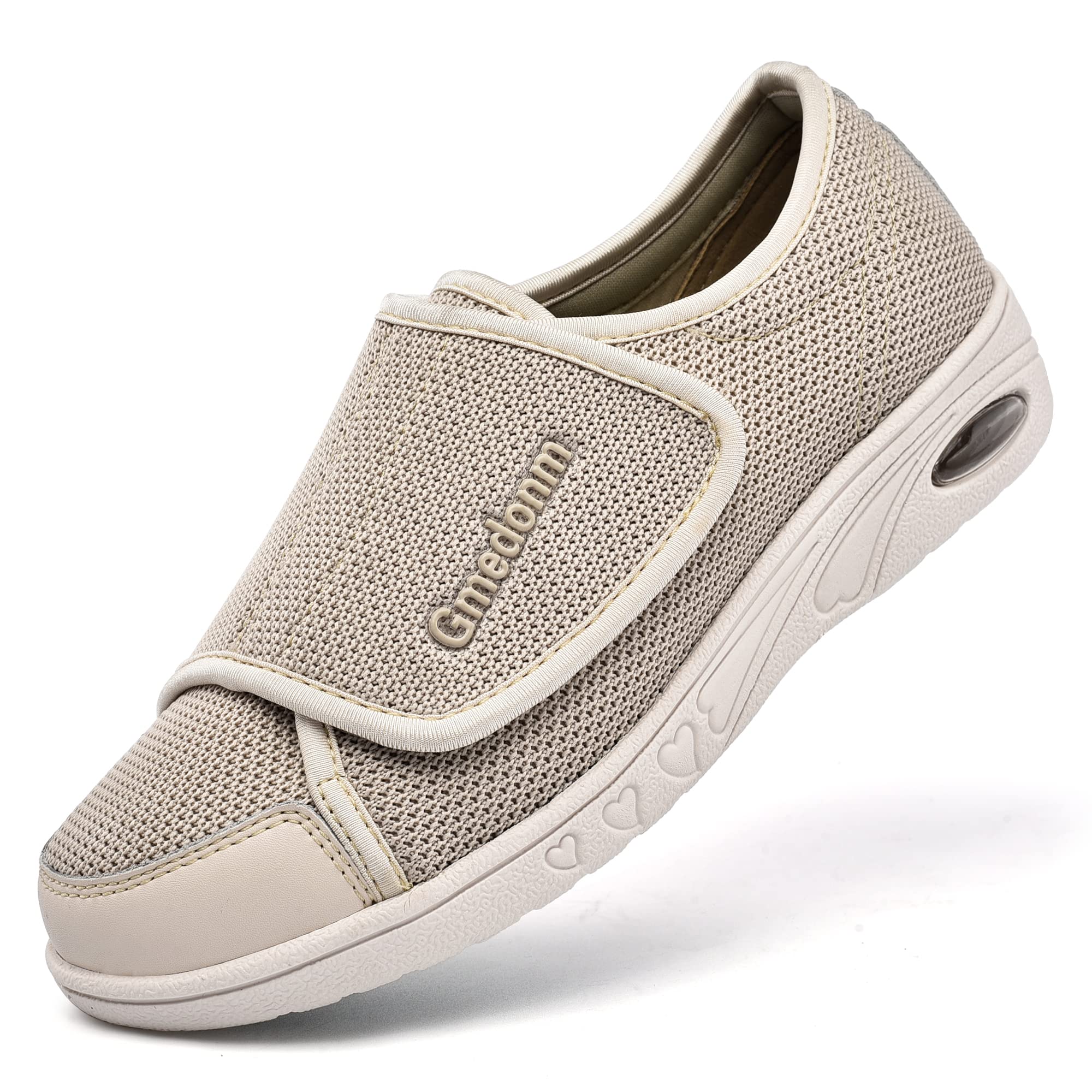
| Women’s Wide Shoes for Diabetic Edema★ Best Overall | Best Overall — daily walking & nursing | Wide (US 6-10) | Hook & Loop Strap | Air Cushion | Amazon |
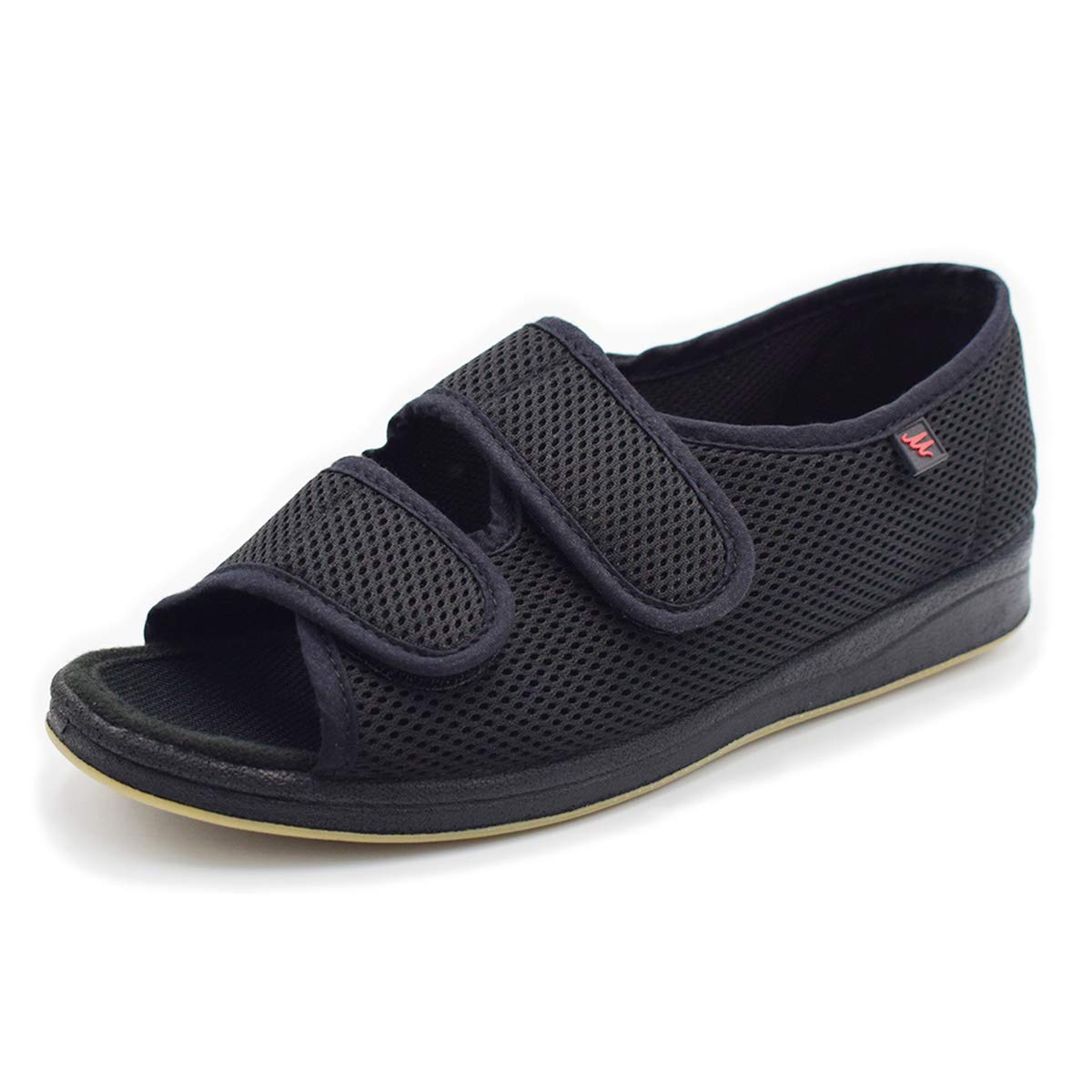
| Mei MACLEOD Open Toe SlippersBest Slipper | Indoor house slippers | Wide | Adjustable Velcro | Soft Rubber | Amazon |
| FitVille Diabetic SandalsBest Sandal | Warm weather & post-surgery | Wide | Dual Adjustable Straps | Rigid (orthopedic) | Amazon |
| EasyTop Wings Diabetic Shoes | Customizable fit with 3 insoles | Wide | Velcro Frontal System | Textured Rubber | Amazon |
| GSFY Memory Foam Sneakers | Severe edema — fully opens | Wide (US 6-10.5) | Velcro (full front) | Non-slip | Amazon |
| FitVille EasyTop Wings V2 | Premium comfort & arch support | Wide, X-Wide | Hook & Loop | EVA, Rubber | Amazon |
| Ortho + Rest Diabetic Shoes | Premium build & high instep | Very Wide | Adjustable Velcro | Supportive | Amazon |
In‑Depth Reviews
1. Women’s Wide Shoes for Diabetic Edema Swollen Feet
Our pick — over 4★ from 800+ verified ratings; the strongest balance of quality and price.
This crowd favorite lets a swollen foot slip inside easily.
This is the pair that owners keep coming back to — the sort where women order a second pair before the first wears out. The velcro strap adjusts across the top to make room as swelling rises, and the air cushion sole (a sole with air pockets that soften each step) gives a little spring in each step. One buyer recovering from a broken foot put it plainly: “First time I could get a shoe on since June 1.” That’s the real test, and this shoe passes with flying colors.
The fit leans a touch generous — some found the sizing runs a half-size larger — which actually works in your favor if your feet swell by evening. The design is clean enough for daily wear around the house or out to a doctor’s appointment, and the lightweight build means you are not dragging dead weight with each step. It handles neuropathy (nerve pain) and arthritis without rubbing or pinching, and owners with diabetes report all-day comfort with no sore spots.
Real-world relief: The velcro opens wide enough for a heavily bandaged or broken foot, then cinches down once swelling subsides. The comfort level earns consistent praise — the kind of shoe you forget you are wearing.
One honest trade-off: The velcro strap could be a touch longer for those with very high-volume feet; a few owners wished for a bit more reach.
Reach for this if: you need a do-everything shoe that handles morning-to-night swelling changes, diabetic foot care, and light walking without fuss.
Not your pick if: you have an extremely narrow or small foot — the roomy fit may feel loose even on the tightest velcro setting.
2. Mei MACLEOD Women’s Diabetic Slippers Open Toe
An open-toe house slipper that gives your toes freedom and your arch room for an insert.
These slippers solved a specific problem for one buyer: “I need open toe slippers that I could put arch supports in because I have plantar fasciitis (heel pain from a strained ligament).” The insert fit without bulging, and there was even space for a pair of socks underneath. The adjustable velcro strap lets you loosen the fit as edema (fluid swelling) builds, and the soft cloth upper does not rub against sensitive skin.
They weigh just 1.1 pounds per pair, so they feel like nothing on your feet during a day around the house. The open-toe design is a blessing for bunions or hammer toes that cannot tolerate any pressure. A few found the toe area a touch narrow for the widest feet, and the strap length may not reach across the most voluminous instep. But for moderate swelling and daily indoor use, the comfort is tough to top at this level.
Smart design: Machine-washable construction means you toss them in on a gentle cycle and air dry — no scrubbing by hand.
Who should skip: If your swelling is extreme and requires the widest possible opening, the velcro strap may not have enough reach to close securely.
Best suited for: indoor lounging, post-surgery recovery, and anyone who needs to fit custom orthotics into a soft slipper.
skip it if: you need a closed-toe shoe for outdoor walking or have very wide feet at the toe area.
3. FitVille Diabetic Sandals for Women Wide Width with Arch Support
A sandal that wraps around wrapped feet and swollen ankles without squeezing.
This sandal is the standout for warmer months or post-surgery recovery when you cannot bear a closed toe. The dual adjustable straps let you dial in the fit around the midfoot and the ankle independently. One owner dealing with lymphedema (chronic limb swelling) said: “These shoes are perfect for feet and legs that are wrapped due to lymphedema.” She sized up a half-size to accommodate bandages and still had good arch support — a feature that earns consistent praise.
The sole is intentionally stiff and rigid, which is ideal for orthopedic recovery like a metatarsal stress fracture (a crack in the long foot bones). That stiffness means it is stable underfoot, though a few found it not soft enough for all-day standing. The open toe is a welcome relief for neuropathy (nerve pain) and lets you monitor foot health without removing the shoe. At just above the mid-range, the value is strong given the build quality and the adjustable fit.
What wins people over: The adjustability — you can loosen or tighten each strap independently as swelling changes, which is rare in a sandal.
Honest note: The stiff sole is great for stability but not a cloud-like walking experience; if you want maximum cushion, look at the sneaker-style picks instead.
Grab these for: summer wear, post-op recovery, or anytime your feet need to breathe while still getting arch support and a secure fit.
Think twice if: you need a plush, soft walking shoe for long distances — the rigid sole is not a cushioned cruiser.
4. EasyTop Wings Diabetic Shoes for Men and Women
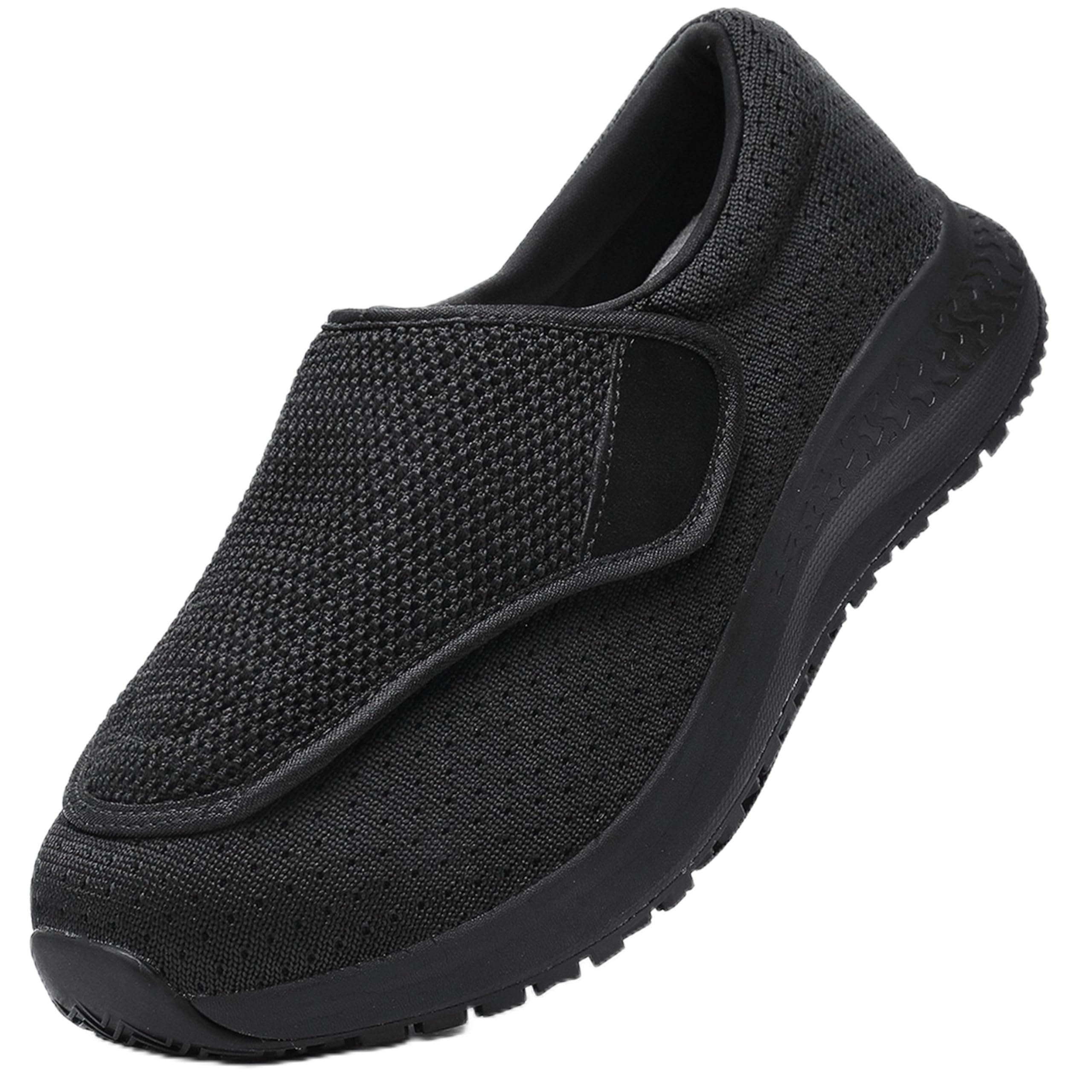
Three insoles let you custom-tune the width and height as your foot changes shape.
This shoe comes with three pairs of removable insoles (the foam footbed you lift out) so you can literally build the fit. The velcro opens from the front, making it easy for someone with limited mobility to slide in without bending. Owners with dementia or post-knee-surgery restrictions find this closure a godsend.
The build is on the lighter side, which some appreciate and a few find a bit flimsy compared to heavier-duty brands. The sizing runs a touch small — order up a half or full size if you have any doubt — and unlike the looser Women’s Wide Shoes above, this one demands accuracy. The textured rubber sole provides good traction, and the wide toe box prevents that dreaded toe-rubbing that makes walking miserable.
Why this stands out: No other shoe in this lineup gives you three insole layers to fine-tune the volume. That level of adjustability is rare at this price tier.
The catch: The seams can rub if you have very sensitive skin; wearing a thin sock or sizing up solves it.
Reach for this if: your feet swell unevenly or you need to accommodate orthotics (prescription inserts) plus a swollen foot at the same time.
Pass if: you need a heavy-duty outdoor walking shoe — this is best for indoor and light outdoor use, not rugged terrain.
5. GSFY Women’s Diabetic Shoes Wide Width Memory Foam

The shoe that opens completely flat so you step in without bending or forcing.
This is the pair that caregivers love because the entire front of the shoe opens up — you lay it flat, place the foot in, then close the velcro over the top. That design is a lifesaver for someone with severe edema (fluid swelling) who cannot bend down or wiggle a swollen foot through a narrow opening. The memory foam insole (a footbed that molds to your foot shape) adds a soft cradle, and the lightweight build makes it feel like a slipper that you can walk outside in.
Owners with 94-year-old family members report it handles wheelchair use well thanks to good traction on the sole. The fit, however, can be unpredictable: a few found the size ran very large, while others found the velcro sat too high on the top of the foot. The consensus is to read the sizing chart carefully and be prepared to try a half-size down if you are between sizes. For the price, the combination of full-open access and memory foam comfort is hard to match.
Why this matters: Unlike the Women’s Wide Shoes (which open via a strap), the full-front opening design is the most accessible in the lineup — no struggling, no shoehorn required.
Who should be cautious: The sizing inconsistency is the main headache; order with free returns in mind so you can swap sizes easily.
Reach for this if: you or your loved one has severe mobility issues, can’t bend, or needs a shoe that opens completely flat.
Look elsewhere if: you want a precise, predictable fit without playing the size-swap game.
6. FitVille EasyTop Wings V2 for Women

The one that made a 90-year-old reject a dozen other shoes and finally say yes.
This is the shoe that keeps earning repeat buyers — one 85-year-old owner now has three pairs in different colors. The hook-and-loop closure is intuitive, the 0.8-inch heel is low enough to feel stable, and the EVA-and-rubber outsole (EVA is a lightweight foam, rubber adds grip) provides solid traction without being heavy. The roomy toe box is the standout feature: it lets toes spread naturally, which is critical for bunions and neuropathy (nerve pain).
FitVille recommends sizing up half a size from your usual shoe size, and most owners find that advice spot-on. The interior fabric could be slightly softer for barefoot wear, but the comfort level is high enough that physical therapy staff thought the shoe was custom-made. A few buyers with very narrow heels found the heel a bit wide, but the velcro strap handles most of the adjustment. For the premium price, you get a well-engineered shoe that balances support and ease of use beautifully.
The standout spec: The 0.8-inch heel gives a subtle lift that takes pressure off the Achilles tendon, while the EVA outsole absorbs shock without feeling mushy.
Honest downside: The heel can slip if you have a very narrow foot, and the fabric is not the softest against bare skin — thin socks solve both.
Pick this if: you want a premium, well-tested shoe with arch support that looks good enough for daily errands and feels stable on your feet.
pass on it if: you have a very narrow heel that tends to slide out of wide shoes.
7. Ortho + Rest Women Diabetic Shoes

A well-constructed sneaker with a high instep that gives swollen feet the vertical room they need.
Many shoes for swollen feet focus only on width, but this one also adds extra depth — a high instep (the top curve of the shoe) that accommodates a swollen top-of-foot without pressure. The adjustable velcro fastener is generous, letting you open the shoe wide enough for easy entry. Owners with very wide feet (4E, an extra-wide width label) find the fit works well, and the hint of pink on the black version adds a feminine touch that draws compliments.
The cushioning is plush right from the start, and the wide toe box prevents that cramped feeling. However, the insoles can wear down faster than expected, and some buyers noted small debris sneaking in through the mesh. The sizing runs a half-size small, so ordering up is a good idea. For someone who needs a closed-toe walking shoe with both width and height, this delivers a premium feel at a fair price.
What stands out: The high instep is a rare feature — most wide shoes are wide but shallow, and this one gives your foot room to rise.
Fair warning: The insoles may compress faster than you’d like; budget for a replacement pair of orthotic inserts down the line.
Choose this if: you need a closed-toe shoe with serious vertical room for a high instep or top-of-foot swelling.
Look elsewhere if: you have a narrow foot — this runs very wide even for a wide-width shoe.
Understanding the Specs
Closure Type: Hook & Loop vs. Velcro
These terms mean the same thing — the fuzzy-and-hooky fastener that replaces laces. For swollen feet, a hook-and-loop closure is non-negotiable because you can adjust the tightness minute by minute as your foot expands. A full-front opening (where the shoe opens completely flat) is the most accessible option for those who cannot bend or have very limited mobility.
Width Designations: 2E, 4E, X-Wide
Women’s standard width is B. Wide is usually D, and extra-wide is 2E. Some brands go further to 4E or even 10X. If you have moderate swelling, 2E is often enough. For significant edema or bandaged feet, look for 4E or wider. A “wide” label without a number can vary wildly between brands, so check the sizing chart and reviews from people with similar foot volumes.
Removable Insoles: Why They Matter
A removable insole lets you replace the stock foam with your own orthotics (prescription inserts), arch supports, or a thinner insole if you need more depth. This is important when your foot changes size — you can remove an insole to gain a few millimeters of vertical room without buying a new shoe. Some shoes, like the EasyTop Wings, even include multiple insoles so you can mix and match heights.
Sole Stiffness: Support vs. Cushion
A very soft, bendy sole feels great in the store but can feel unstable if you have balance issues. A stiffer sole, like the one on the FitVille sandals, gives you a stable platform that reduces wobbling. If you walk mostly indoors on even floors, a softer sole is fine. If you venture outside on pavement or uneven ground, a stiffer sole with a textured tread is safer.
FAQ
Will these shoes fit if my feet swell a full size larger by late afternoon?
Can I wear these shoes with custom orthotics or arch supports?
How do I know which width to choose — wide, 2E, or 4E?
Are these shoes machine washable?
How long do these shoes typically last for daily wear?
Can I wear these shoes outside, or are they just for the house?
What if the shoe is too wide but I need the length for my toes?
Are these shoes suitable for people with dementia or Alzheimer’s who cannot manage laces?
Final Thoughts: The Verdict
For the majority of shoppers, the best women’s shoes for seniors with swollen feet is the Women’s Wide Shoes for Diabetic Edema because it combines the most accessible velcro closure, air cushion comfort, and a fit that works for both nursing home wear and daily errands. If you need a sandal for warmer weather or post-op recovery, grab the FitVille Diabetic Sandals with dual straps and genuine arch support. And for those with extremely wide feet (3X to 10X) who refuse to settle for a clinical look, the FitVille Women’s Walking Shoes are the ones to reach for — they prove that accommodating width does not mean sacrificing style.
How We Picked
We do not accept paid placement. Every pick is matched to a real buyer and a real use-case; we do not hands-on test units.
Sources & Methodology
Specifications: manufacturer listings and product documentation. Review insights: verified customer reviews, as of July 2026. Pricing: not shown on this page (it changes often); check the current price via the retailer link.
As an Amazon Associate, Calories Fit earns from qualifying purchases. This does not affect which products we feature.