
Our readers keep the lights on and the coffee maker working hard! As an Amazon Associate, I earn from qualifying purchases.
Specs are compiled from manufacturer listings and verified buyer reviews and can change over time — please confirm the key details on the product page before buying.
That first step out of bed in the morning shouldn’t feel like stepping on a knife. If you’re dealing with plantar fasciitis, the right shoes can be the difference between a day of aching heels and a day you barely think about your feet. This guide cuts through the noise to find the support and cushioning that actually holds up.
I’m Mohammad — the founder and writer behind Calories Fit. This guide is built by comparing the manufacturers’ published specifications and the patterns across verified customer reviews, so you get each pick’s real strengths and trade-offs instead of marketing spin.
You’ll discover which features matter most for relief, from deep heel cups to firm arch support, and see how they stack up in the best women’s shoes for plantar fasciitis.
Our Picks at a Glance

How To Choose The Best Women’s Shoes for Plantar Fasciitis
The right shoe won’t cure plantar fasciitis, but it reduces daily strain on the plantar fascia, the thick band of tissue along the bottom of your foot. You want a shoe that supports your arch, cushions your heel, and doesn’t cramp your toes.
Start with the Arch Support
Your arch absorbs shock and distributes weight with each step. When it collapses or over-stretches, the tension pulls on your heel. A firm, well-molded arch support keeps that tissue from over-extending with every step. Look for a shoe that has explicit arch support built into the midsole or an insole that molds to your foot.
Check the Heel Cushioning
Plantar fasciitis pain lives in the heel. That means the shoe needs to absorb the impact of your foot striking the ground, not just feel soft. A deep heel cup cradles the fat pad under your heel, while shock-absorbing foam or gel reduces the force traveling up your leg. The goal is a firm, supportive base that gives just enough to soften each step.
The Toe Box is Just as Important
Your toes should be able to spread out when you walk. A narrow, pointed toe box squeezes the front of your foot and can alter your whole stride. A wide toe box lets your toes splay naturally, which helps you push off more evenly and takes pressure off the arch and heel. A wide toe box prevents toe crowding, which can alter your stride and worsen heel pain.
Quick Comparison
| Model | Best For | Arch Support | Heel Cushioning | Fit / Width | Amazon |
|---|---|---|---|---|---|
| New Balance Roav★ Best Overall | All-day everyday wear | Removable insole | Ultra Heel design | Runs small, size up | Amazon |
| FitVille Rebound CoreWide Width Pick | Extra-wide feet & flat arches | Built-in, removable | High rebound sole | Wide (2E) / X-Wide (4E) | Amazon |
| OrthoComfoot WideBunion Friendly | Swollen feet & bunions | Built-in arch support | Plush cushion | Wide toe box | Amazon |
| Womens Arch Support Sneaker | Hiking & uneven terrain | Firm arch support | Shock-absorbing midsole | True to size, wide feet OK | Amazon |
| Orthopedic Plantar Sneaker | Nurses & long shifts | Adjustable inserts | Squishy, wedge sole | Runs large, size down | Amazon |
| Ryka Devotion X Max RS | High-performance fitness walking | Anatomical heel + arch | RE-ZORB® full-length | Mixed feedback, some too narrow | Amazon |
| Skechers Max Cushioning Arch Fit | Chores, errands & daily life | Podiatrist-certified | Ultra Flight cushioning | Runs small, a bit narrow | Amazon |
| ASICS GT-2000 14 | Overpronation & daily running | Stability-focused | FF BLAST MAX foam | Mixed, some too snug in toes | Amazon |
| gdefy Orthopedic Shoes | Severe pain & standing all day | 3 orthotic insoles | VersoShock® energy return | True to size, wide options | Amazon |
In‑Depth Reviews
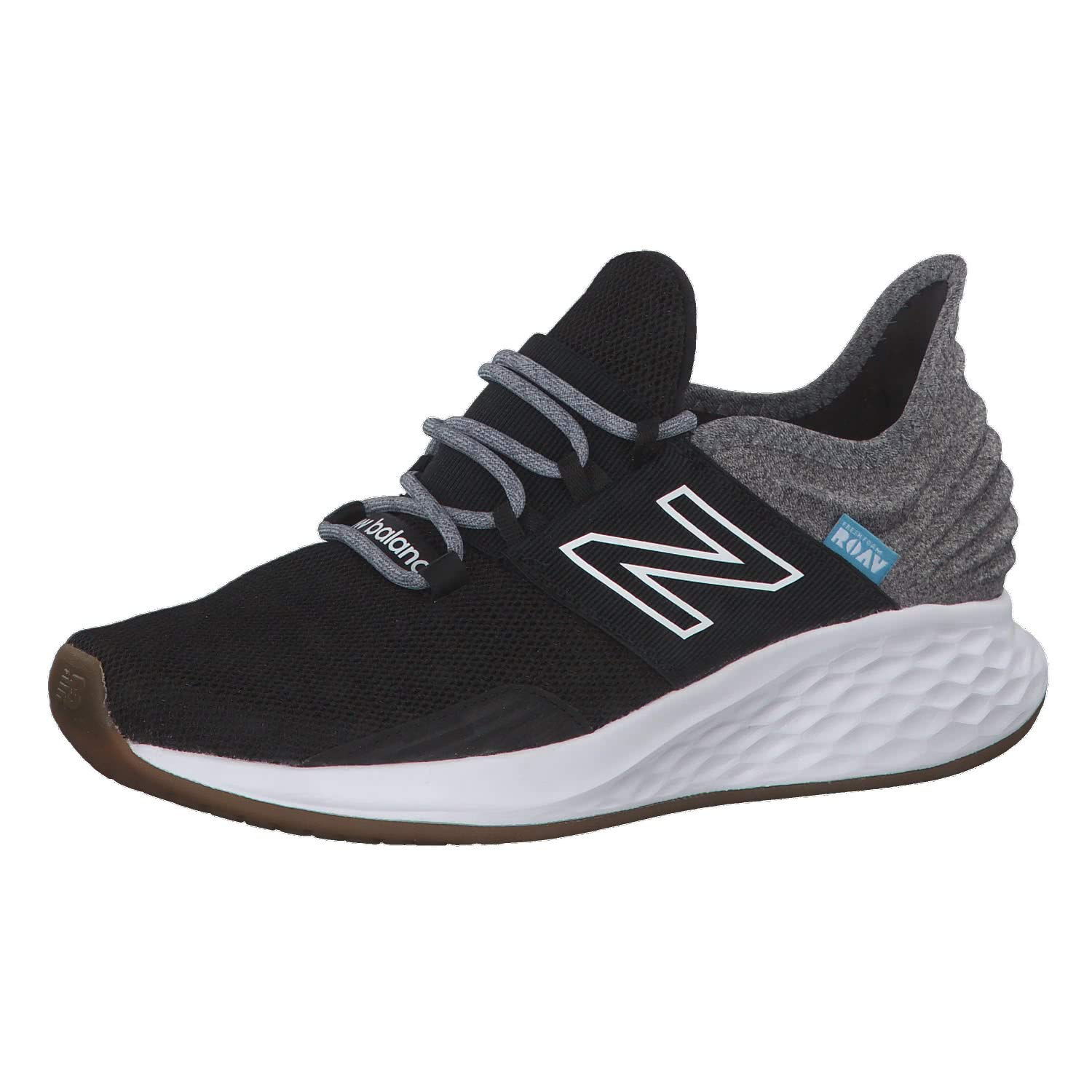
1. New Balance Women’s Fresh Foam Roav Running Shoe
Our pick — 4.5★ from 34,000+ verified ratings; the strongest balance of quality and price.
The crowd-pleasing daily driver that blends plush heel cushioning with a removable insole for your own orthotics.
If you have plantar fasciitis, this New Balance balances cushioning and support better than most. The Fresh Foam midsole (the layer of foam between your foot and the ground) soaks up impact on every step, so your heel doesn’t take the brunt. The bootie construction (a sock-like upper that hugs your foot) keeps things snug, while the Ultra Heel design—a structured cradle around your heel—holds it steady during long walks.
Owners praise the comfort levels here, especially in the heel cushioning and soft sole, and many say it’s helped with their foot pain. It’s also a favorite for wide feet, with reviews noting it doesn’t cause blisters like other shoes. The durability gets mixed marks from the community, so treat them as a comfortable daily companion rather than a rugged trail boot.
Why It Wins
- Plush Fresh Foam midsole softens every heel strike
- Removable insole fits custom orthotics perfectly
- Bootie construction wraps the foot for a secure, sock-like feel
- Very lightweight, so feet don’t fatigue as fast
Keep In Mind
- Runs small — plan to order a half to full size up
- Limited ankle support, so not ideal for long-distance runs
- Some owners note durability issues over time
Your best bet if: you want one reliable, cushioned sneaker for daily life that accepts your own orthotic inserts.
Why someone might pass: if you need deep ankle support for serious mileage, this is more of an everyday comfort shoe.
2. FitVille Women’s Extra Wide Walking Shoes Rebound Core
The extra-wide pick that gives flat feet and bunions room to breathe without looking orthopedic.
If you have flat feet or wide feet, this FitVille is built with you in mind. It comes in Wide (2E) and X-Wide (4E) widths, so you’re not squeezing into a narrow fit and making your arch problems worse. The “crazy wide toe box” is a recurring point of praise — owners say they can fully wiggle their toes inside while the rest of the shoe stays secure. That’s a big deal for plantar fasciitis, because cramped toes alter your gait.
The high rebound sole provides the spring and shock absorption your heel needs, and the arch support is built right in. The insole is removable, so you can drop in your own orthotic brace if you need more structure. A common recommendation is to size up half a size from your regular size to give your orthotics extra room. Buyers report these are comfy the moment they go on, with many saying they work on their feet all day with zero foot pain.
There’s a durability caveat, though. Some owners found the heel support inside didn’t hold up as well after many hours on their feet. A few also found the fit simply too wide — if you don’t have wide feet, these could feel like clown shoes. This width is ideal for wide feet but feels sloppy for narrow ones.
The big win: you get rare width choices (2E and 4E) plus a roomy toe box, so your toes spread out naturally and take pressure off flat arches.
The trade-off: the heel support can compress after heavy use, and standard-width feet will find the fit sloppy.
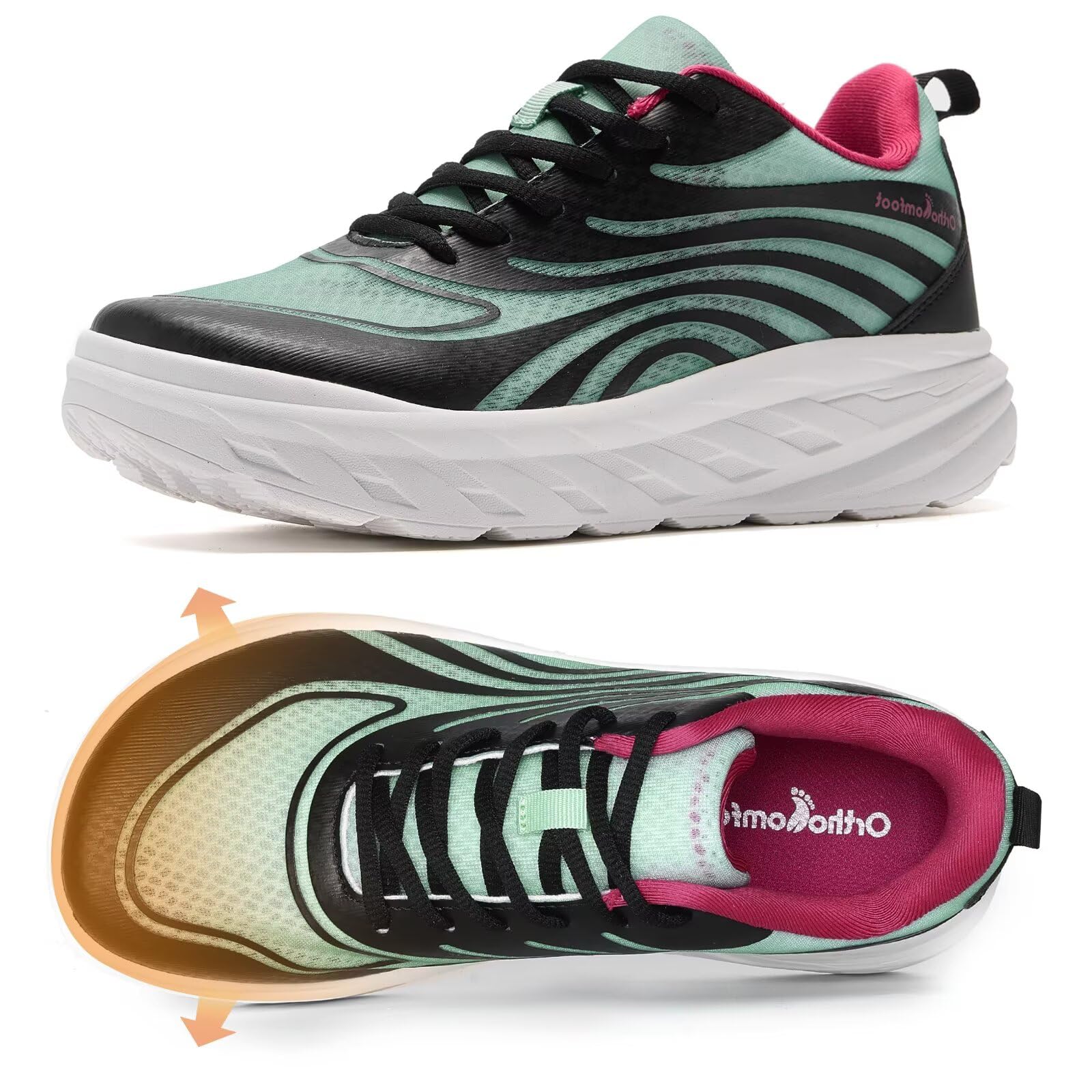
3. Women’s Orthopedic Diabetic Wide Running Shoes (OrthoComfoot)
The wide-toe-box specialist for swollen feet, bunions, and the toughest concrete-floor work shifts.
These OrthoComfoot sneakers are designed for feet that need room and gentle support. The large toe box is the standout feature, accommodating swollen feet and bunions without rubbing. One owner with plantar fasciitis called them their “favorite work sneakers,” tackling 10-hour days on concrete floors — a brutal test for any shoe. The breathable mesh keeps feet cool, and the adjustable fit helps you dial in the right amount of snugness.
The arch support is built to help with plantar fasciitis relief, and the cushioning is noticeably soft and comfortable right from the start. Buyers with mobility issues and spinal stenosis have found them the only tennis shoes they can wear for 8-13 hour shifts. The wide toe box makes a real difference for those nursing a bunion, giving the joint space instead of squeezing it.
Durability is the honest weakness here. The fabric mesh on the sides has a reputation for wearing out prematurely, with some owners reporting rips after limited use. If you’re hard on shoes and need them to last through heavy daily wear, this might not be your long-term answer. But for sheer comfort and toe room, it’s a strong contender.
Reach for these if: you have bunions, swelling, or wide feet and spend long days on unforgiving surfaces like concrete.
Look elsewhere if: you need a shoe that can survive a year of heavy wear — the fabric’s durability has drawn criticism.
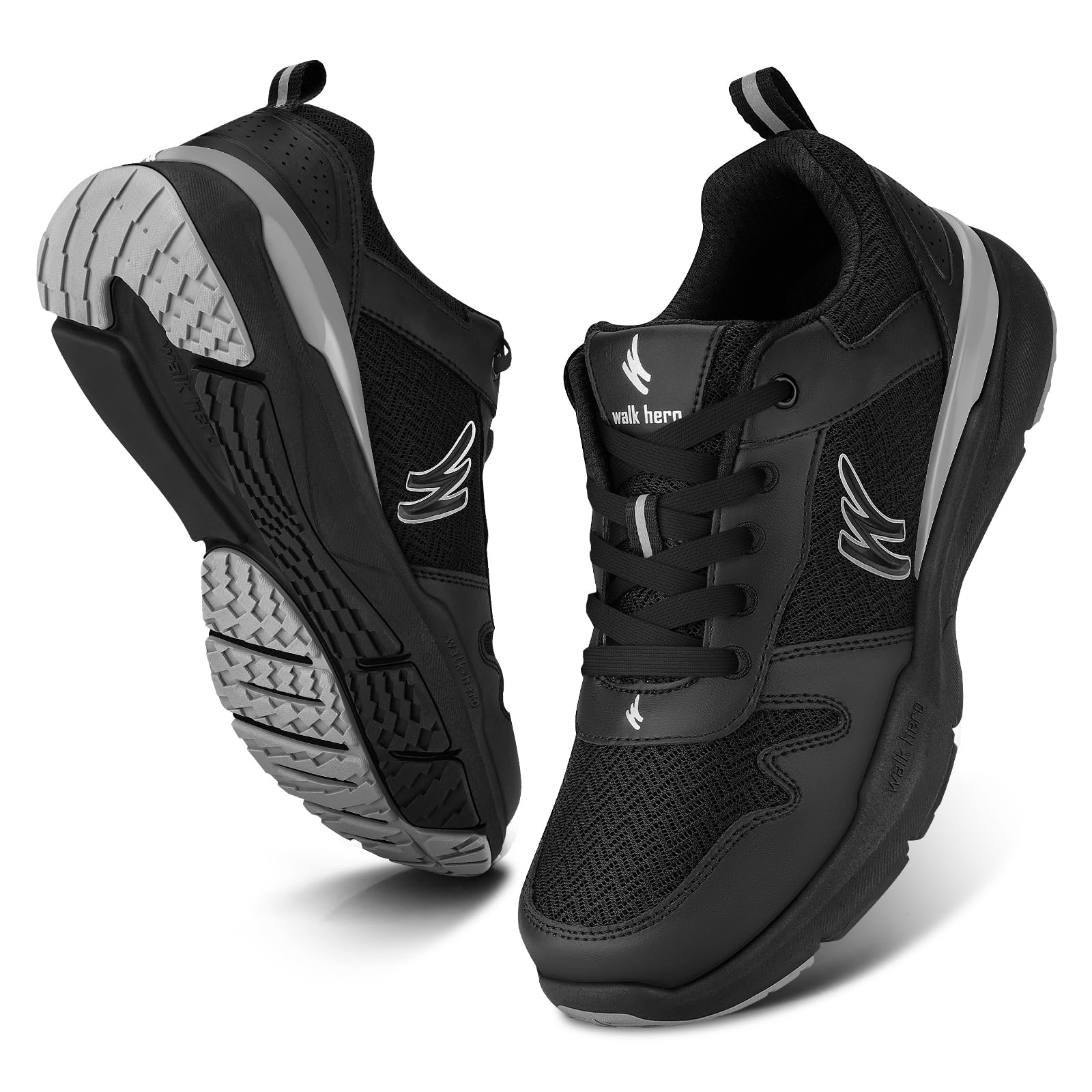
4. Womens Walking Shoes, Arch Support Sneakers for Plantar Fasciitis
The supportive sneaker that vanishes on uneven trails and keeps feet pain-free for hours of walking.
These walking shoes earn their place with a shock-absorbing midsole and firm arch support that handles both flat sidewalks and uneven terrain. The non-slip outsole (the bottom grippy layer) provides excellent traction on hiking paths, making them a versatile option for outdoor enthusiasts. One reviewer noted their feet “no longer hurt” after their 2-3 mile daily walks — a clear win for plantar fasciitis sufferers.
They’re true to size, which is a relief in a category where sizing is all over the map. Even those with size 11.5 feet found a “very pleased” fit. The support works well for those with low arches, pronation (when your feet roll inward), and bunions, with one owner calling them the best-fitting sneakers they’ve found for a large bunion. They don’t require a break-in period — comfort arrives on the first step.
The honest catch? The grip isn’t restaurant-safe. One owner noted they’re not slip-resistant enough for working in a kitchen or restaurant, and found the support lacking without adding their own inserts. If you’re on slippery commercial floors, this isn’t the pick. For general walking, light hiking, and daily errands, it’s a comfortable, supportive choice.
Best for: walkers and hikers who want arch support and shock absorption on varied terrain without a break-in period.
Not for: slippery commercial kitchens — the outsole isn’t rated for that environment.
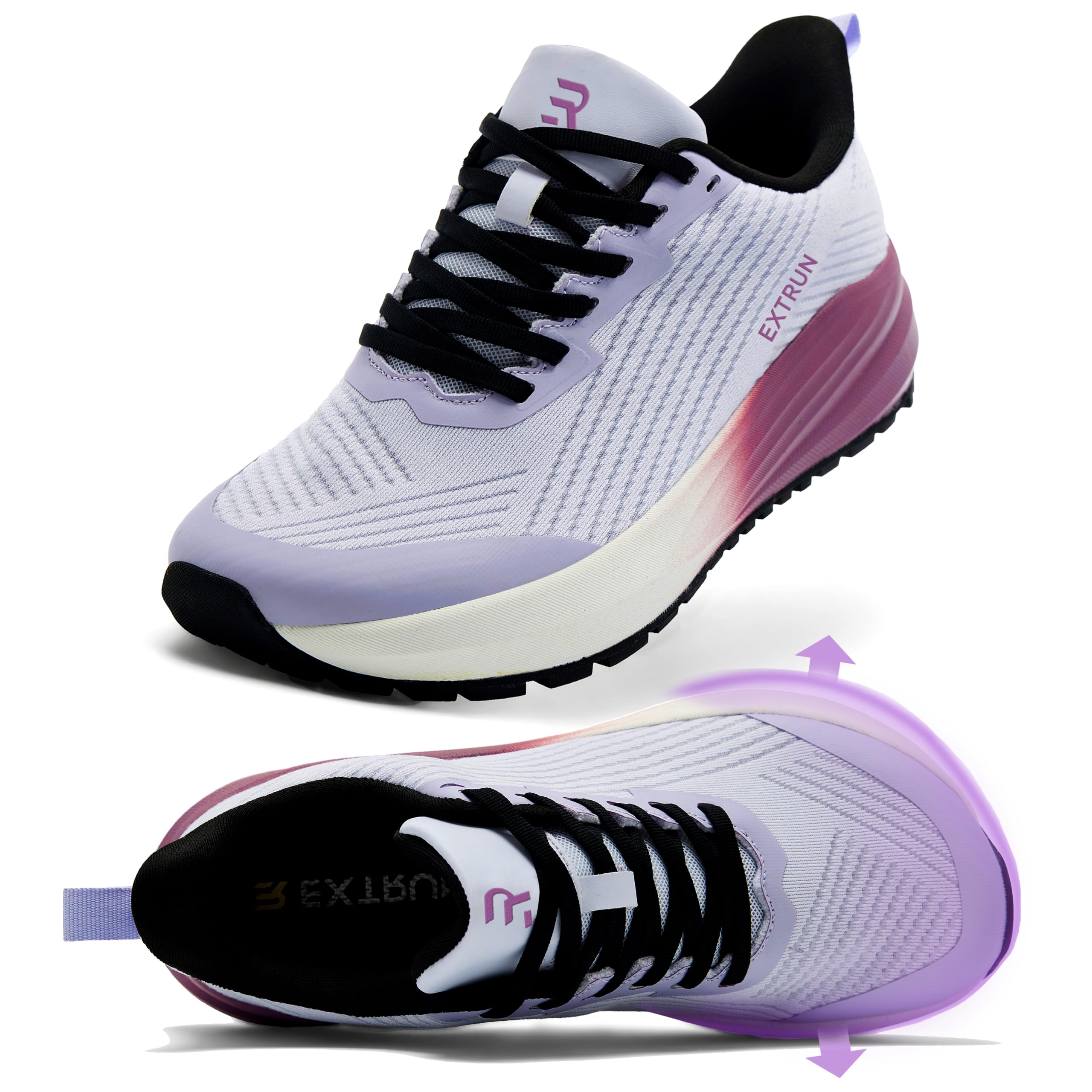
5. Women’s Orthopedic Plantar Fasciitis Shoes (Trail Athletic)
The custom-fit orthopedic sneaker with backup insoles that nurses swear by for 12-hour shifts.
These orthopedic sneakers take customization seriously. They come with adjustable inserts — including heel stabilizers and 2-3 different insole thicknesses — so you can fine-tune the support to your exact arch height. That’s rare at this price point. The high wedge sole provides the support and cushioning comparable to Hoka running shoes, according to owners, at a lower price. It’s a firm, squishy cushion that holds up for 14,000-step nursing shifts.
The wide toe box is another strong point, giving bunions room and preventing the heel from digging in. The breathable mesh and padded ankle add all-day comfort. Reviews consistently note the cloud-like feel right from the start with no break-in needed. It runs large, so plan to order half a size down — that’s the most consistent advice across the reviews.
The look splits opinions. The thick, chunky sole gets called “toddler shoes” by some, and the fabric stains easily. It also runs warm, so skip it for scorching summer days. But if you want function, support, and fit options, this is among the most carefully built shoes here.
Choose this for: long work shifts and serious daily walking where adjustable orthotic support matters more than sleek styling.
Who should skip: anyone who wants a slim, fashion-forward silhouette — this sole is intentionally chunky and supportive.
6. Ryka Devotion X Max RS Walking Shoe
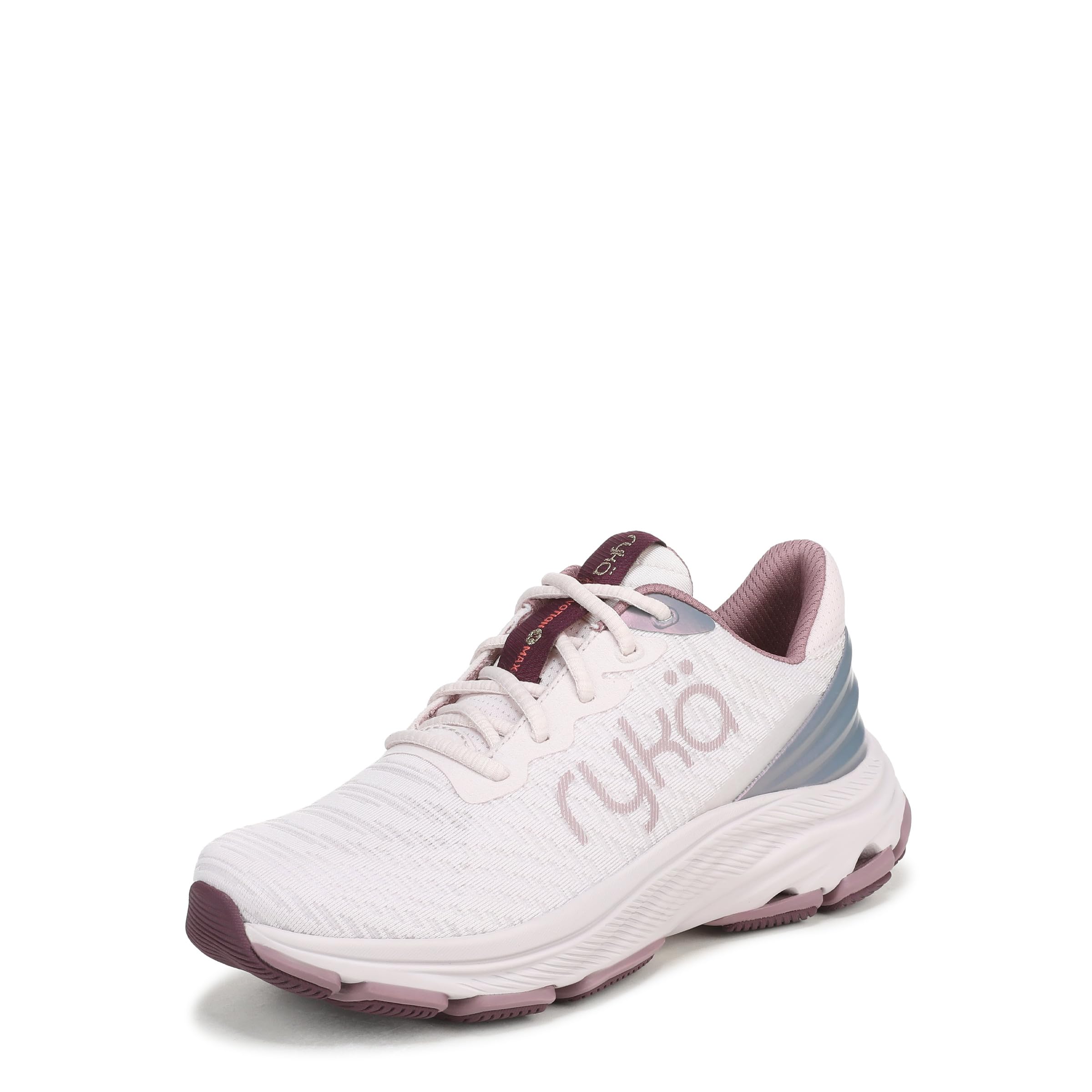
The lab-tested walking shoe engineered to absorb impact and deliver very high perceived cushioning.
Ryka built the Devotion X Max RS specifically for high-performance fitness walking, and the tech list backs it up. The full-length RE-ZORB® responsive cushioning handles shock absorption and impact protection, with extra RE-ZORB® LITE pads in the forefoot and heel for targeted softness. It’s been lab-tested to provide low deceleration, braking, and impact forces — meaning your heel doesn’t take the full brunt of each step. The anatomical heel with extra arch support is exactly what plantar fasciitis needs.
At 8.6 oz per shoe, it’s impressively light for this level of cushioning, with a heel-to-toe drop of 10 mm. The breathable air mesh upper and padded tongue keep things comfortable for long walks. Owners mention feet not hurting at all and heel pain disappearing, with some using them for 12-hour days. The arch support and soft footbed are recurring highlights.
Fit is the live debate here. Some find them true to size, while others say they run too narrow — so if you have wide feet, this may not be the stop. The two-piece rubber outsole with compression channels is built for grip, but a few owners note durability could be better. For standard-width feet wanting serious shock absorption, this is a top contender.
Performance Highlights
- Full-length RE-ZORB® cushioning absorbs heel-strike impact
- Anatomical heel cup adds arch support and stability
- Just 8.6 oz per shoe — light for max cushion
- Breathable air mesh keeps feet cool on long walks
Fit Caveats
- Mixed fit feedback — some owners find them too narrow
- Durability gets mixed marks from the community
- Designed for fitness walking, not heavy trail work
7. Skechers Womens Max Cushioning Arch Fit Roslyn
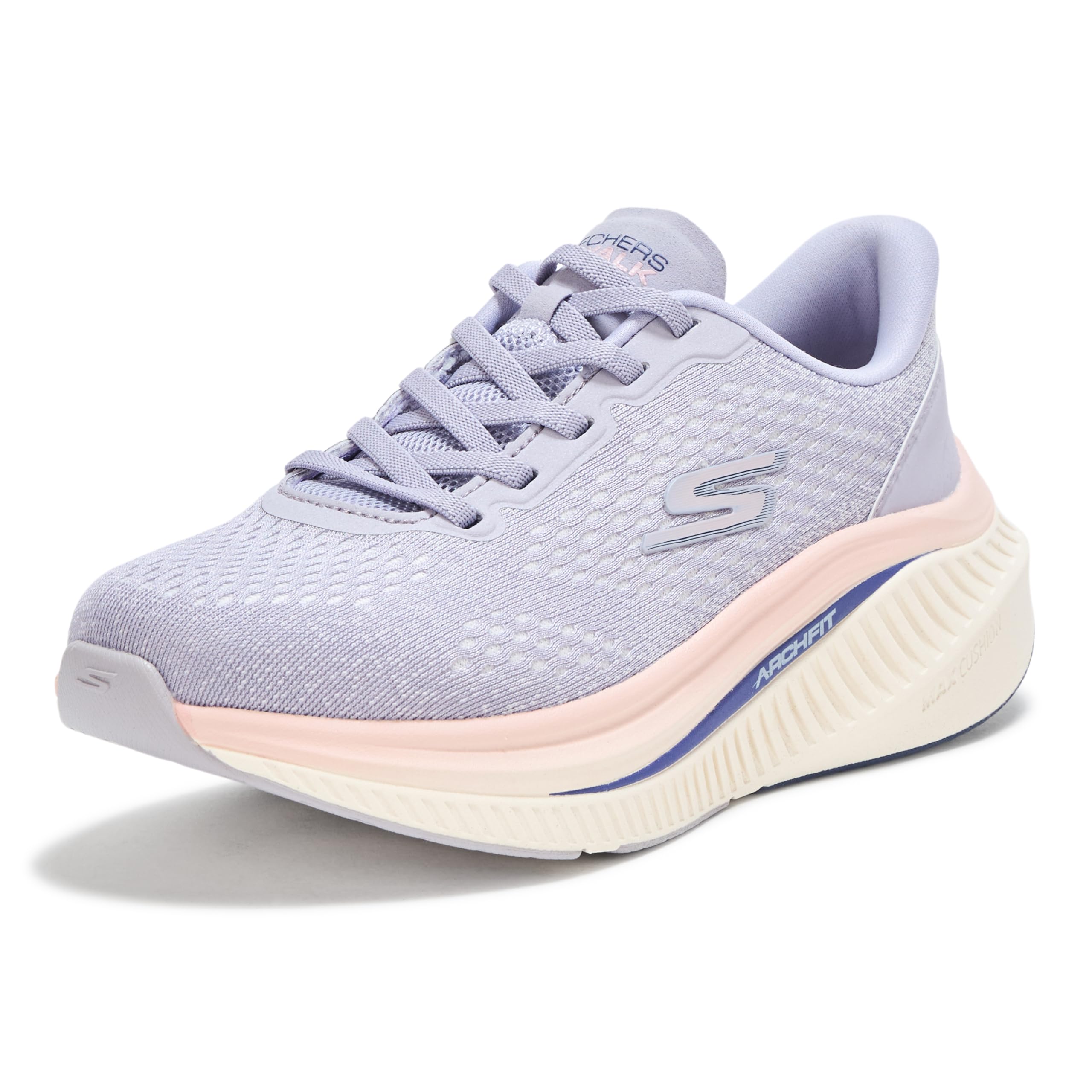
The slip-on wonder with podiatrist-certified arch support and a cushioned ride that needs zero break-in.
If bending down to tie laces is a pain, the Skechers Roslyn solves it with a slip-on design and bungee laces — you just step in and go. The Arch Fit technology delivers podiatrist-certified arch support, which is a meaningful credential for plantar fasciitis. The Ultra Flight cushioning provides the plush, responsive feel underfoot, while Hyper Arc technology adds a bit of propulsion to each step. It’s a combination that owners call “Cinderella’s slipper” for overworked feet and ankles.
The support is particularly praised by those with high arches, one of the harder foot types to fit. The cushioning is soft enough for sensitive balls of feet yet stable enough for walking, with one owner walking 2 miles on the first wear with no break-in needed. It’s machine washable and made with vegan materials, which adds practicality for daily wear. For chores and errands, it’s an excellent daily companion.
The fit runs small and a bit narrow, so sizing up is the smart move — and it’s note this is not stable enough for hiking. The cushioning is also described as only “adequate” by some who prefer a firmer feel. But for daily life, errands, and all-day comfort, this is a standout for high arches and sensitive heels.
The stand-out feature: podiatrist-certified arch support in a machine-washable, slip-on package you can wear straight from the start.
The honest limit: runs small and narrow — size up, and don’t plan on rugged trails.
8. ASICS Women’s GT-2000 14 Running Shoes
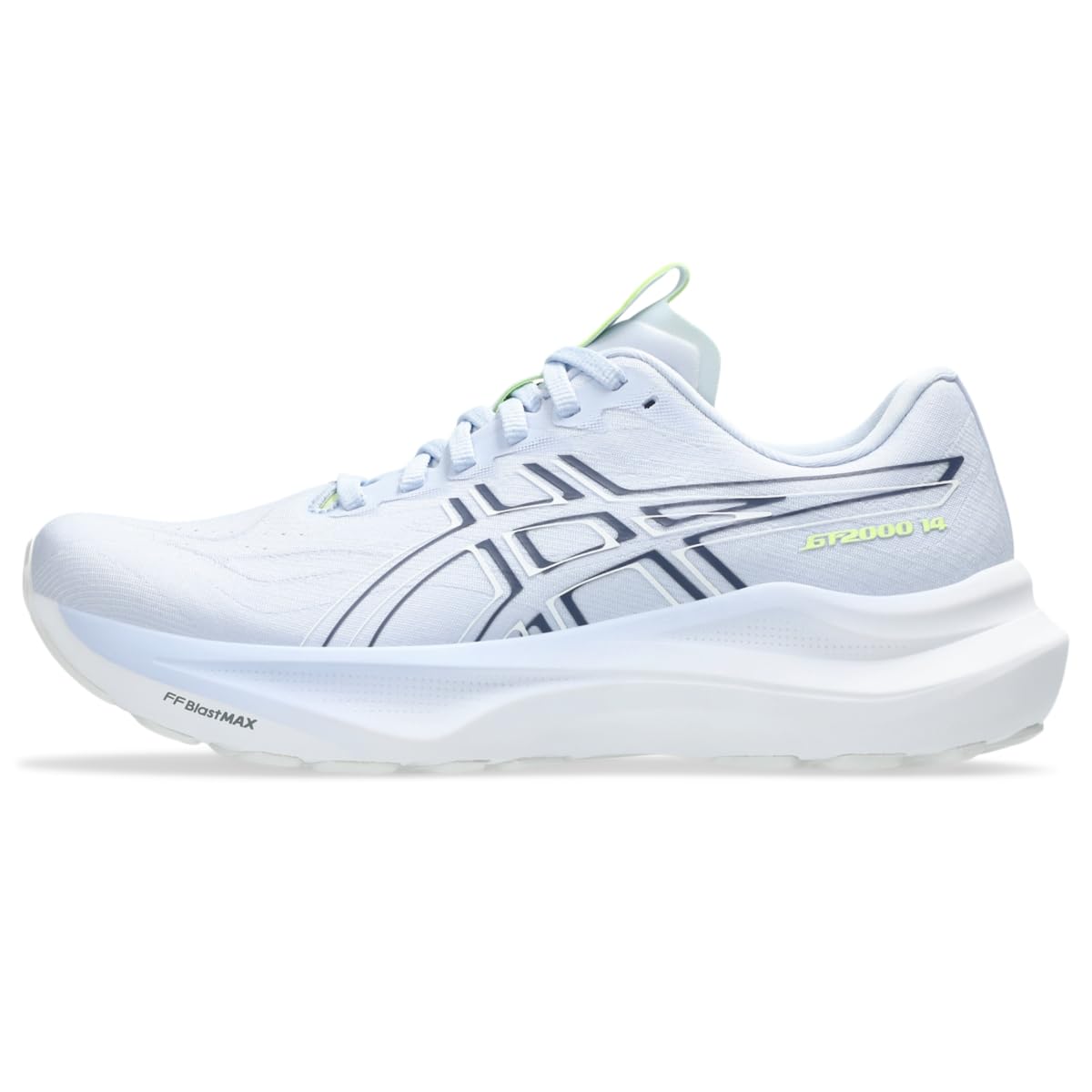
The stability runner for overpronators, APMA-accepted and built to guide every stride.
ASICS GT-2000 14 is a stability shoe, meaning it’s engineered for runners whose feet roll inward excessively (overpronation) — a common contributor to plantar fasciitis. It provides extra support in the midfoot to keep your stride aligned. The FF BLAST MAX foam delivers a responsive, cushioned ride, and the shoe is APMA Accepted, meaning the American Podiatric Medical Association found it promotes good foot health. APMA acceptance signals the shoe promotes good foot health.
The cushioning is a highlight, with owners praising the out-of-box comfort, great impact absorption, and reduced fatigue. It’s a lightweight option at 8.5 oz with an 8 mm drop, designed for daily training and various distances. Owners with wide feet have found the fit perfect, and the sleek design draws compliments. For daily walking workouts and running, this is a versatile, high-quality choice.
There’s a divide on the support. While many find the arch support great for flat feet, a long-time ASICS user felt the redesign lost the firm arch support of earlier versions, describing it as “mushy” and noting their feet rolled outward within days. Fit is also debated — some find it snug in the toes. If you want a firm, structured support, the GT-2000 12 might serve better; if you want max cushion with light guidance, the 14 delivers.
Pick this if: you overpronate and want an APMA-accepted running shoe with modern, responsive cushioning.
Think twice if: you need firm, rigid arch support — the cushioning leans soft and plush rather than structured.
9. gdefy Orthopedic Shoes for Women with Arch Support
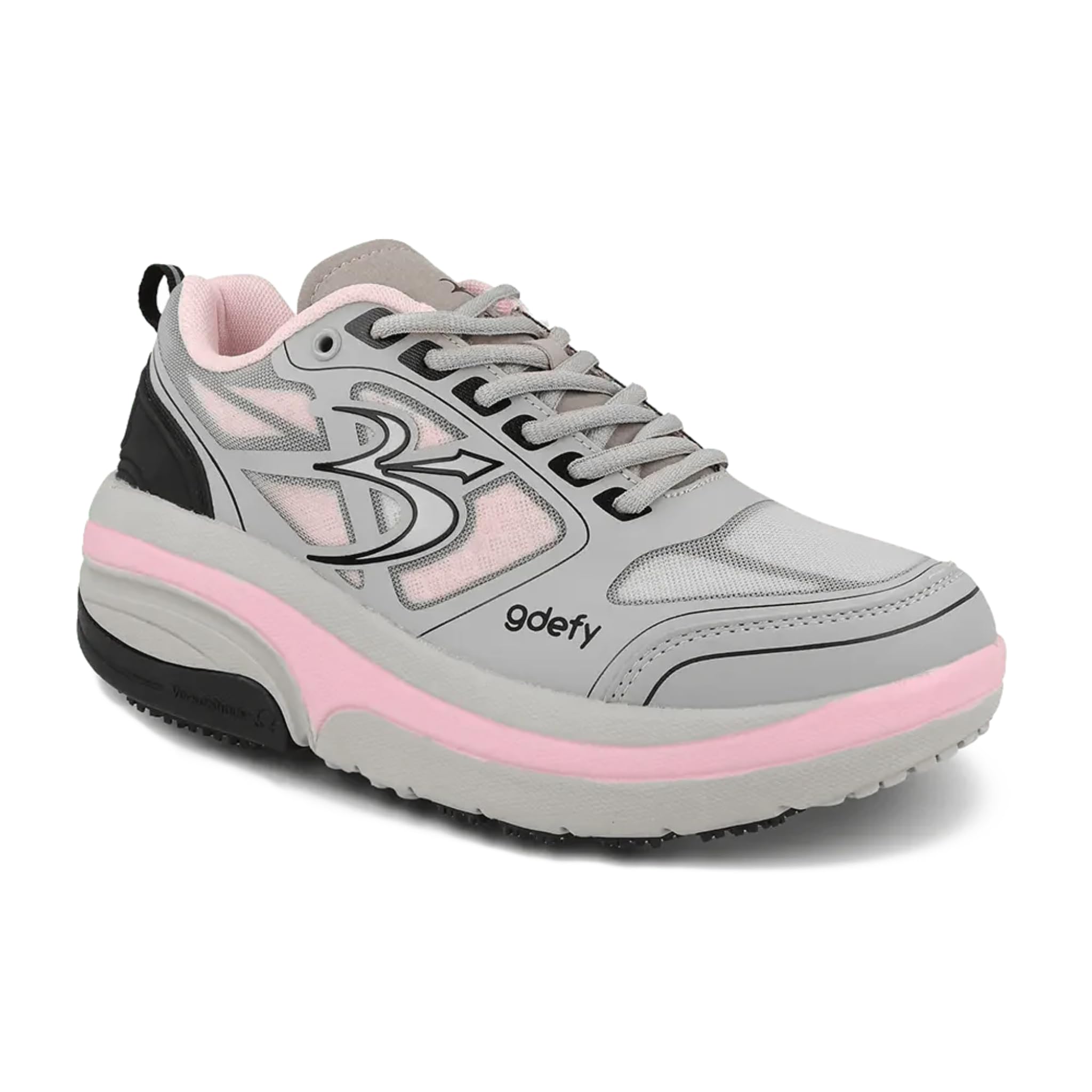
The rocker-sole specialist with three orthotic insoles, built for severe plantar fasciitis and all-day standing.
gdefy takes a different engineering approach with VersoShock® technology — a rocker sole that promotes a natural heel-to-toe gait and smooth transitions as you walk. This rocker motion reduces the strain on the plantar fascia by guiding your foot through each step. The real standout is the inclusion of 3 orthotic insoles (comfort, corrective, and anti-slide), letting you customize the support level for your foot. For severe plantar fasciitis, bone spurs, and Achilles tendinitis, owners describe the relief as “life-changing,” with pain-free walking after years of discomfort.
The shoe is designed for those who stand on concrete all day. One buyer called them the best shoes for working on concrete, citing exceptional comfort and relief for fallen arches. The roomy toe box accommodates wide feet and bunions, and many find no break-in period is needed. The VersoShock® energy return adds a springy feel that reduces foot fatigue during long shifts.
There’s a break-in adjustment, though. The rocker sole feels noticeably different at first; the company recommends wearing them 1-2 hours daily for the first 3-5 days so your body adapts. Durability is the bigger concern, with reports of the sole material deteriorating after about a year of heavy use. They also run true to size but wide — if you have narrow feet, you may need to size down. It’s a higher-priced option for those needing severe, daily pain relief.
The big idea: a rocker sole plus three interchangeable orthotic insoles that adapt to your foot — powerful for severe, chronic heel pain.
The honest trade-off: the sole feels odd at first, needs an adaptation period, and durability over years of heavy use has drawn mixed reviews.
Understanding the Specs
Heel-to-Toe Drop
This is the difference in height between your heel and your forefoot inside the shoe. A higher drop (like 10 mm) shifts pressure toward your heel, which some find relieves the Achilles tendon. A lower drop (like 8 mm) encourages a more natural midfoot strike. For plantar fasciitis, the right drop depends on where your pain is — a higher drop often takes tension off the calf and heel.
Removable Insole
This is the layer inside the shoe that your foot rests on. When it’s removable, you can take out the stock insole and replace it with your own custom orthotics or doctor-prescribed inserts. This is critical for plantar fasciitis because everyone’s arch is different, and a one-size-fits-all insole rarely provides the exact support your foot needs.
Wide Toe Box vs. Wide Fit
A wide toe box gives your toes extra room to spread out in the front of the shoe, which helps with bunions and natural foot mechanics. A wide fit (like 2E or 4E) widens the whole shoe — the heel, midfoot, and toe. If you need toe room but have a normal heel, look for a wide toe box. If your entire foot is wide, you need a wide fit.
Shock Absorption & Cushioning
Cushioning is how soft the sole feels. Shock absorption is how well it dissipates the impact force when your heel hits the ground. For plantar fasciitis, you want both — a soft cushion for comfort and real shock absorption (like RE-ZORB® or VersoShock®) to protect the plantar fascia from repeated impact. Soft alone isn’t enough; the foam needs to rebound and support.
FAQ
Is a high arch or flat arch better for plantar fasciitis shoes?
Can I use my own orthotic inserts in these shoes?
What does the heel-to-toe drop mean for heel pain?
How quickly should I break in shoes for plantar fasciitis?
Are these shoes good for standing all day on concrete?
Why does a wide toe box matter for plantar fasciitis?
Should I size up in plantar fasciitis shoes?
What’s the difference between cushioning and arch support?
How long do these shoes typically last?
Are these shoes machine washable?
Final Thoughts: The Verdict
For most people, the women’s shoes for plantar fasciitis winner is the New Balance Roav because it pairs plush Fresh Foam cushioning, a supportive Ultra Heel design, and a removable insole (so you can drop in your own orthotics) in a light everyday shoe. Thousands of owners back it up—it’s a comfort favorite. If you have wide feet or flat arches, the width options and roomy toe boxes of the FitVille or the Orthopedic Plantar Sneaker fit you better. For severe, chronic heel pain, the gdefy—with its rocker sole and three orthotic insoles—delivers the most engineering, though it costs more.
How We Picked
We do not accept paid placement. Every pick is matched to a real buyer and a real use-case; we do not hands-on test units.
Sources & Methodology
Specifications: manufacturer listings and product documentation. Review insights: verified customer reviews, as of August 2026. Pricing: not shown on this page (it changes often); check the current price via the retailer link.
As an Amazon Associate, Calories Fit earns from qualifying purchases. This does not affect which products we feature.