
Our readers keep the lights on and the coffee maker working hard! As an Amazon Associate, I earn from qualifying purchases.
Specs are compiled from manufacturer listings and verified buyer reviews and can change over time — please confirm the key details on the product page before buying.
Your daily run should feel like a release, not a chore — but the wrong shoe can turn every footstrike into a nagging ache. The real trick is knowing which combination of cushioning, support, and fit actually works for your gait, your arches, and your regular route. This guide cuts through the noise to find the pair that keeps you moving without the soreness.
I’m Mohammad — the founder and writer behind Calories Fit. This guide is built by comparing the manufacturers’ published specifications and the patterns across verified customer reviews, so you get each pick’s real strengths and trade-offs instead of marketing spin.
The list ahead focuses on the models that earn their keep on pavement, trail, and treadmill, helping you find the ideal pair among the many options for best women’s running shoes — without falling for a pretty silhouette that fails on mile three.
Our Picks at a Glance
How To Choose The Best Women’s Running Shoes
Picking a running shoe is a personal equation of your foot shape, your mileage, and the surface you pound most. Before you scroll through reviews, get clear on three big factors that separate a shoe that cradles your foot from one that fights it.
Your Arch Type and Pronation
Your arch dictates how your foot rolls inward when you land — that is your pronation. Flat feet tend to overpronate and need more stability or structured support. High arches usually underpronate and crave plush cushioning to absorb shock. The wrong support level can turn a great shoe into a source of shin splints.
Cushioning Feel: Soft vs. Responsive
Some midsoles feel like marshmallows (great for recovery days and joint sensitivity), while others spring back quickly (better for picking up pace). The foam type — whether it is fresh foam, blown rubber, or a gel capsule — changes how much road buzz you feel in your knees.
Heel-to-Toe Drop for Your Stride
Drop is the height difference between your heel and forefoot. A higher drop (8mm to 12mm) suits heel-strikers and takes strain off the Achilles. A lower drop (0mm to 4mm) encourages a midfoot or forefoot strike and is popular with trail runners. Zero drop requires stronger calves and a bit of adaptation.
Quick Comparison
| Model | Best For | Cushioning Type | Heel-to-Toe Drop | Weight | Amazon |
|---|---|---|---|---|---|
| Nike Quest 6★ Best Overall | Versatile everyday run | Softer ride, increased midsole | — | — | Amazon |
| ALLSWIFIT Slip-OnHands-Free Hero | Hands-free walking comfort | 50% high rebound | — | Lightweight | Amazon |
| ASICS Gel-Cumulus 27Plush Ride | Plush road running | PureGEL + FF BLAST PLUS | — | Lightest GEL-CUMULUS ever | Amazon |
| Brooks Anthem 8 | Neutral daily trainer | Balanced, soft and dynamic | 10mm | 8.8 oz / 249.5g | Amazon |
| ALTRA Lone Peak 8 | Trail running and hiking | Balanced Cushioning (EGO foam) | 0 mm | 10.7 oz / 303 g | Amazon |
| ASICS NOVABLAST 4 | Energetic, bouncy runs | Trampoline-inspired midsole | — | Lightweight | Amazon |
| Saucony Triumph 22 | Long-distance plushness | High-cushion, impact-dampening | — | Lightweight | Amazon |
| New Balance 880v15 | All-day comfort for wide feet | Fresh Foam X | — | — | Amazon |
| On Cloudmonster | Max-cushion road cruising | CloudTec + Helion | — | — | Amazon |
In‑Depth Reviews
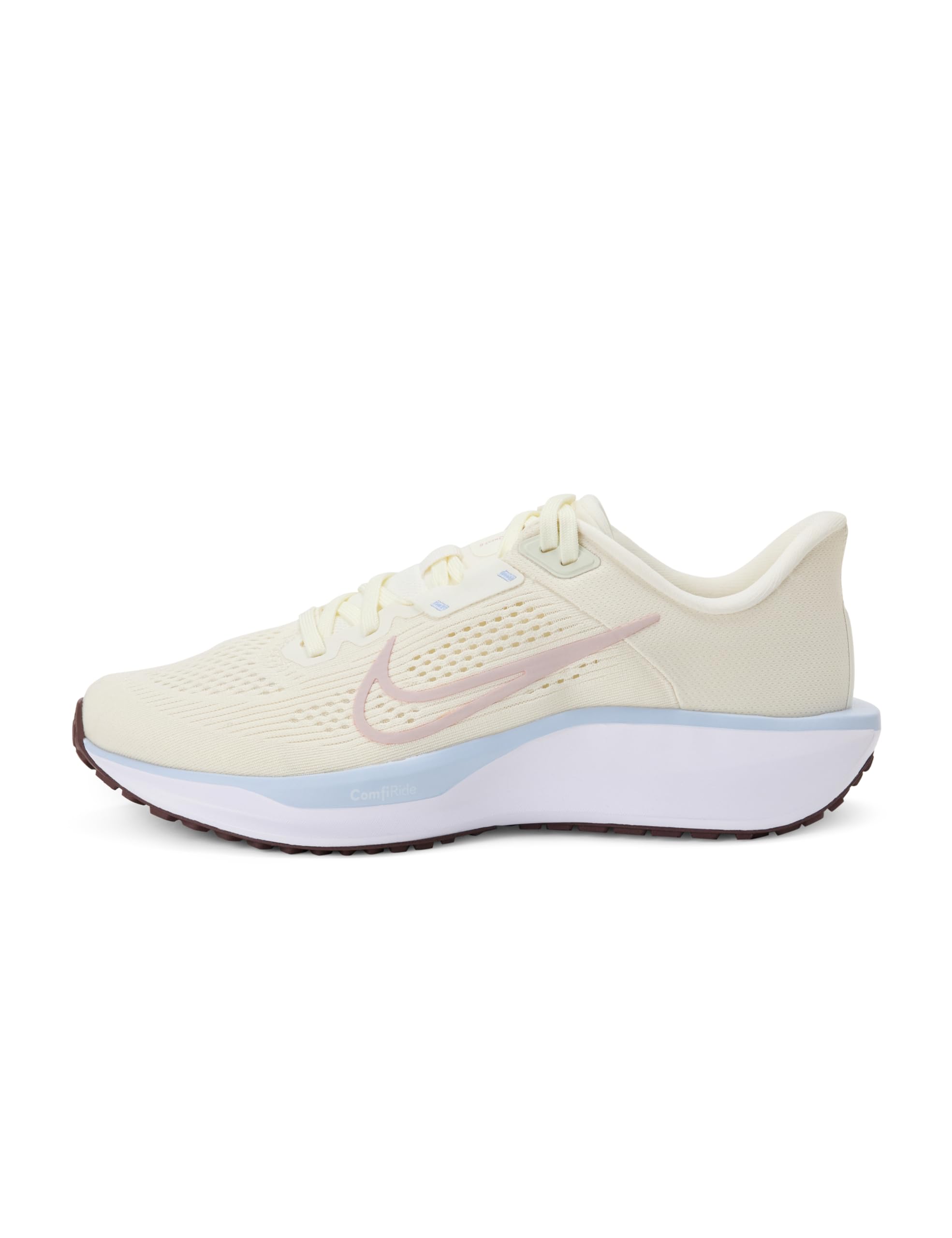
1. Nike Women’s Quest 6 Road Running Shoes
Our pick — over 4.5★ from 550+ verified ratings; the strongest balance of quality and price.
The crowd-pleaser that delivers two-hour comfort while staying affordable.
The Quest 6 stands out for its near-unanimous praise on comfort — buyers report running for two hours straight without foot pain, a rare feat at this level. The increased midsole height softens each landing while the outsole traction keeps you glued to pavement, making these an ideal daily trainer that transitions easily into casual wear. What wins people over here is the fit: the midfoot band cinches tighter as you pull the laces, locking the heel in place without pressure points.
Durability earns real-world proof from owners who have washed these repeatedly in a machine and report they “still look great” after ten months. The versatility also shines — the same pair handles a 5K and a trip to the grocery store without looking out of place. The real trade-off is that runners needing aggressive stability for severe overpronation may want a more structured guide shoe.
What Runners Love Most
- Two-hour comfort without pain is the standout feature; comfort is the most-discussed aspect by far.
- Midfoot band locks the foot securely as laces tighten, reducing slip inside the shoe.
- Machine-washable construction holds up after multiple cycles with no visible wear.
A Fair Caution
- Best suited for neutral gaits; the soft midsole lacks the rigid guidance for heavy overpronators.
Reach for these if: you want a supremely comfortable, do-it-all shoe for daily runs, walking, and everyday wear that stays comfortable for hours without a break-in period.
Think twice if: your stride requires heavy motion-control features; the midsole leans toward a soft neutral ride rather than corrective support.
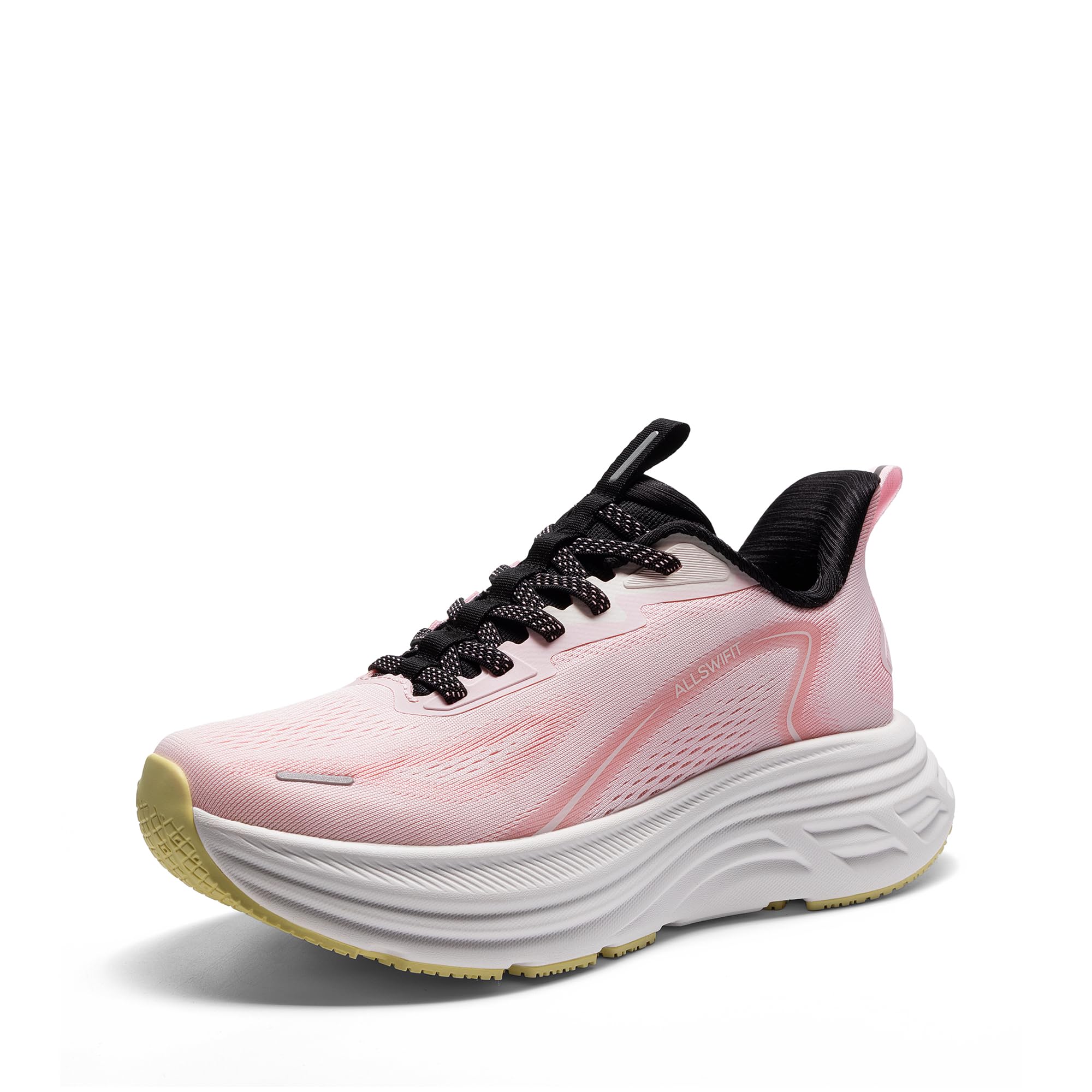
2. ALLSWIFIT Women’s Slip On Walking Shoes Running Sneakers
The no-tie wonder that brings Hoka-level bounce to a budget-friendly price.
The ALLSWIFIT earned its reputation by combining 50% high-rebound cushioning with a slip-on design that takes one second. Owners walking daily for three months report they hold up well, and several compare the feel directly to Hokas for a fraction of the price — calling them “just like my Hokas without the price tag.” The wide base provides smooth, stable walking that reduces foot fatigue, making them a top choice for long shifts and all-day theme park visits.
The thing everyone raves about is the comfort: it is the most-discussed aspect with over 250 mentions. The cushioning is described as “like a cloud,” and the arch support works especially well for high arches. A recurring note is the slip-on convenience — ideal for quick exits with toddlers or early-morning gym sessions. The main limitation for a few is width, with some finding the standard size too narrow for their foot, so wide-footed buyers may want to size up for a proper fit.
Why They Win
- One-second slip-on design eliminates laces entirely; no tying or adjusting needed.
- Cushioning rivals expensive brands like Hoka; owners cite comparable softness for much less.
- Arch support gets consistent praise, particularly for high-arched feet needing a lift.
The Fit Note
- Some owners mention the standard width feels tight on wider feet; consider sizing up.
Grab these for: slip-on convenience and pillowy-soft comfort for walking, standing for hours, or daily wear without laces.
Skip them if: you have extra-wide feet and prefer a generous toe box; the fit leans slightly narrow for some.
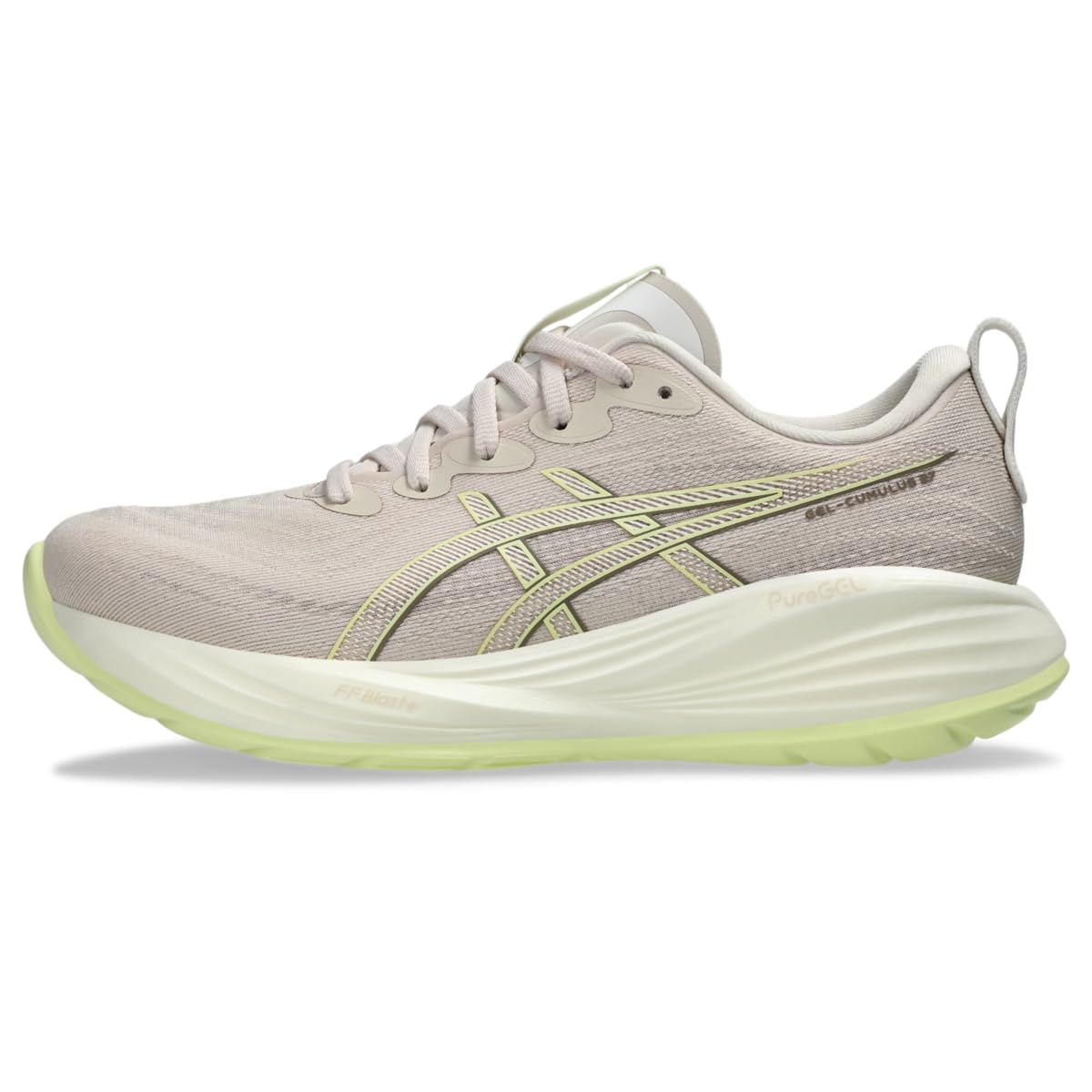
3. ASICS Women’s Gel-Cumulus 27 Running Shoes
The lightest Gel-Cumulus ever made, built for joint-friendly impact absorption.
ASICS calls this their lightest and most padded Gel-Cumulus model, and the reviews back it up. The PureGEL technology increases softness and shock absorption to reduce stress on joints, while the FF BLAST PLUS foam combined with a FLUIDRIDE outsole delivers comfort over long distances. Owners describe wearing them from the start for a 3-mile run with “no soreness,” and several note the shoe resolves ball-of-foot pain and hip pain — a strong testament to the cushioning engineering.
Comfort is the leading talking point by a wide margin, with quality and fit close behind. The shoe provides good arch support and keeps the foot stable even at quicker paces. The catch is the toe box: a vocal segment of owners find it narrow for long runs. One runner who overpronates noted they “might not hold up great for me on longer runs,” though the shoe works beautifully for walking and shorter distances. Durability also receives mixed marks, so heavy trainers may see faster wear than the plushness suggests.
Best for neutral to high arches: the PureGEL midsole delivers joint-saving softness that satisfies both road runners and walkers, as long as your toes are not cramped.
Choose these if: you want the lightest possible plush ride with proven joint protection for daily road running.
Look elsewhere if: you need a roomy toe box or run high-mileage weeks and worry about midsole durability over 300 miles.
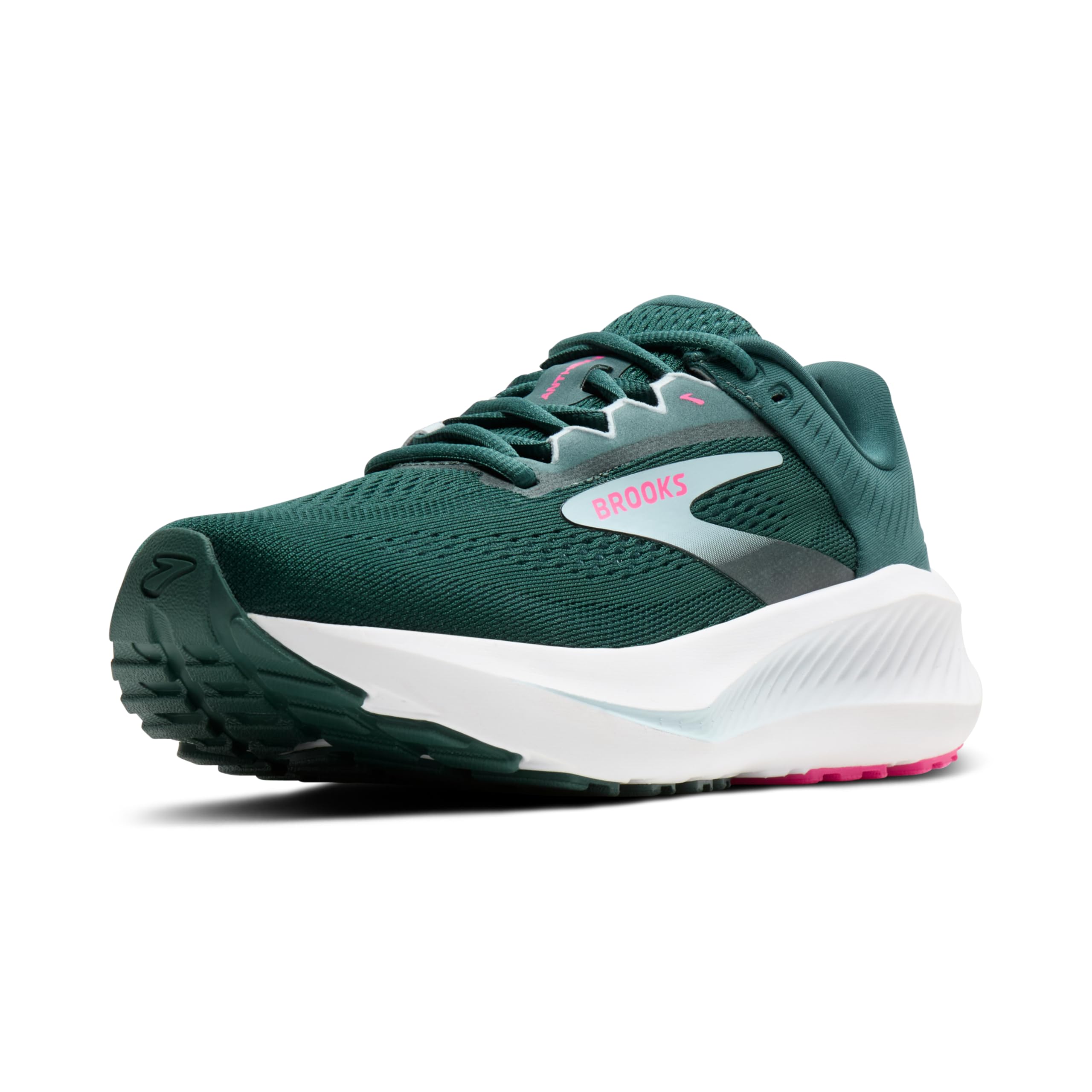
4. Brooks Women’s Anthem 8 Neutral Running Shoe
A neutral trainer that instantly relieves joint pain and fits a wide toe box.
Brooks designed the Anthem 8 as a balanced, soft, and dynamic shoe for road runs, daily miles, and introductory training — and owners confirm it delivers. One runner with a swollen foot reported immediate pain relief, another wore them to Disney without foot pain, and a parent noted fewer playground injuries since switching their child from generic shoes. At 8.8 oz (249.5g) with a 10mm drop, it strikes a middle ground that suits heel-strikers looking for a smooth transition.
Comfort is the dominant theme with over 130 mentions, but the shoe also earns strong marks for its wide toe box — a detail owners specifically highlight as a relief for bunions and swelling. The versatility is another win: the Anthem 8 works for walking, running, and all-day wear. The honest caveat is that arch support is moderate; one owner using it for exercise mentioned it is “great for casual use” but less supportive for intense workouts. The 10mm drop also means it is not ideal for runners who prefer a low-to-the-ground feel.
Balanced and secure: the 10mm drop and wide toe box make this a forgiving, everyday neutral shoe that relieves joint stress without feeling too stiff or too marshmallowy.
Ideal for: neutral runners who want a lightweight daily trainer with a generous toe box and a 10mm drop that supports heel striking.
Not for: runners who need high arch support or a low-drop platform; the cushioning leans balanced, not corrective.
5. ALTRA Women’s Lone Peak 8 Trail Running Shoe
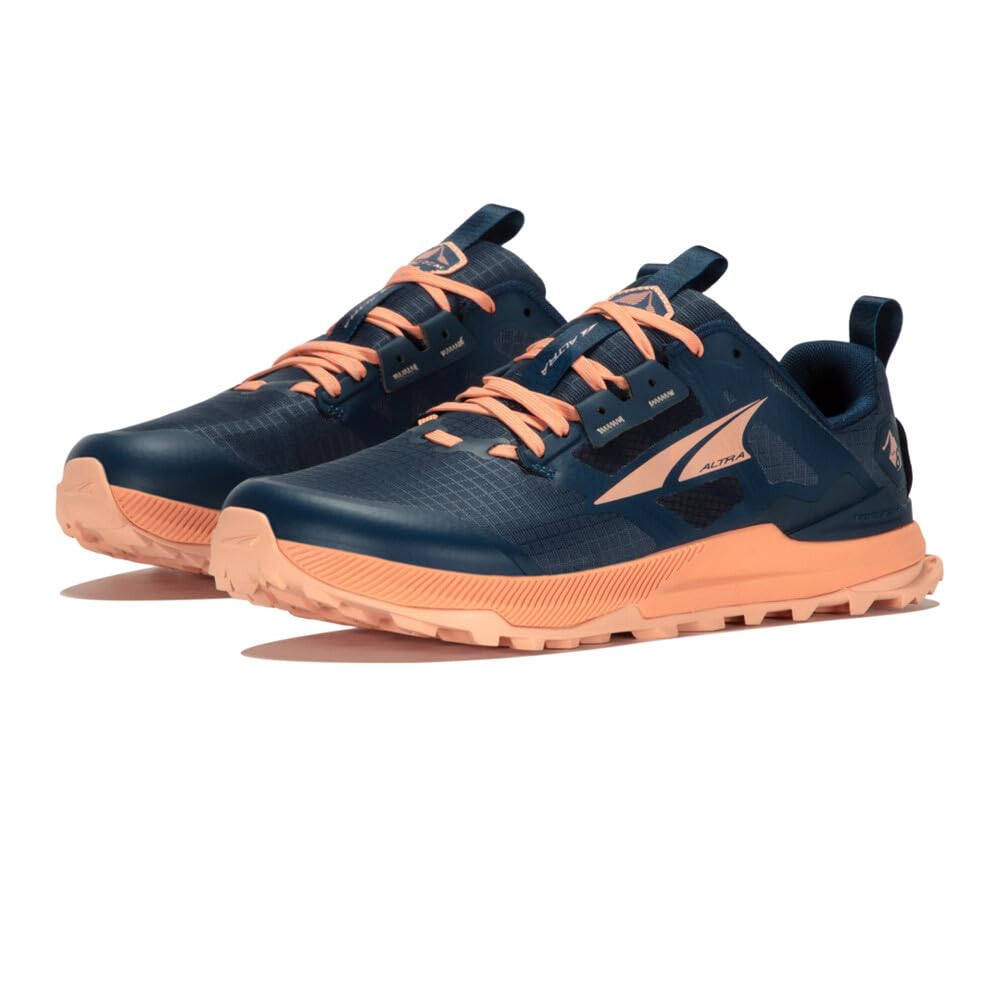
The legend returns with a zero-drop platform and the widest toe box on the trail.
The Lone Peak 8 is a cult favorite among trail runners and hikers for its 0mm drop (heel and forefoot sit at the same height) and its trademark FootShape toe box that lets toes spread naturally. A refined ripstop mesh upper adds durability, while the MaxTrac outsole delivers sticky traction on loose dirt and rocky paths. Owners consistently buy multiple pairs — one is on their sixth — because the wide toe box prevents “hiker’s toe” and reduces foot fatigue on steep, rocky terrain.
Comfort and fit are the top two most-discussed aspects, and for good reason: the zero-drop design and megacushion midsole (25mm stack height) encourage a natural, low-impact stride. The shoe is versatile enough for 5-mile trail runs and multi-week European travel. The biggest consideration is the zero-drop geometry — if your calves and Achilles are not accustomed to running with no heel lift, you will need a gradual transition period. Some owners with custom insoles also note side-to-side sliding inside the shoe, though the fit works perfectly otherwise.
Trail-Ready Strengths
- Wide FootShape toe box — the roomiest in the game — stops toe pinching and black toenails on descents.
- MaxTrac outsole provides superior grip on loose dirt, rock, and gravel; owners call the traction “stellar.”
- Balanced Cushioning with a 25mm stack height and zero drop encourages a natural, low-impact stride.
The Adjustment
- Zero-drop geometry demands gradual adaptation; runners used to a high heel drop may experience calf strain initially.
- Some owners with custom orthotics report your foot can slide side-to-side inside the shoe.
Perfect for: trail runners and hikers who want a zero-drop, wide-toe-box shoe that grips rugged terrain and lets toes splay naturally.
Not for: runners who prefer a high heel-to-toe drop or who need a quick transition from a traditional 10mm shoe without an adaptation period.
6. ASICS Women’s NOVABLAST 4 Running Shoe
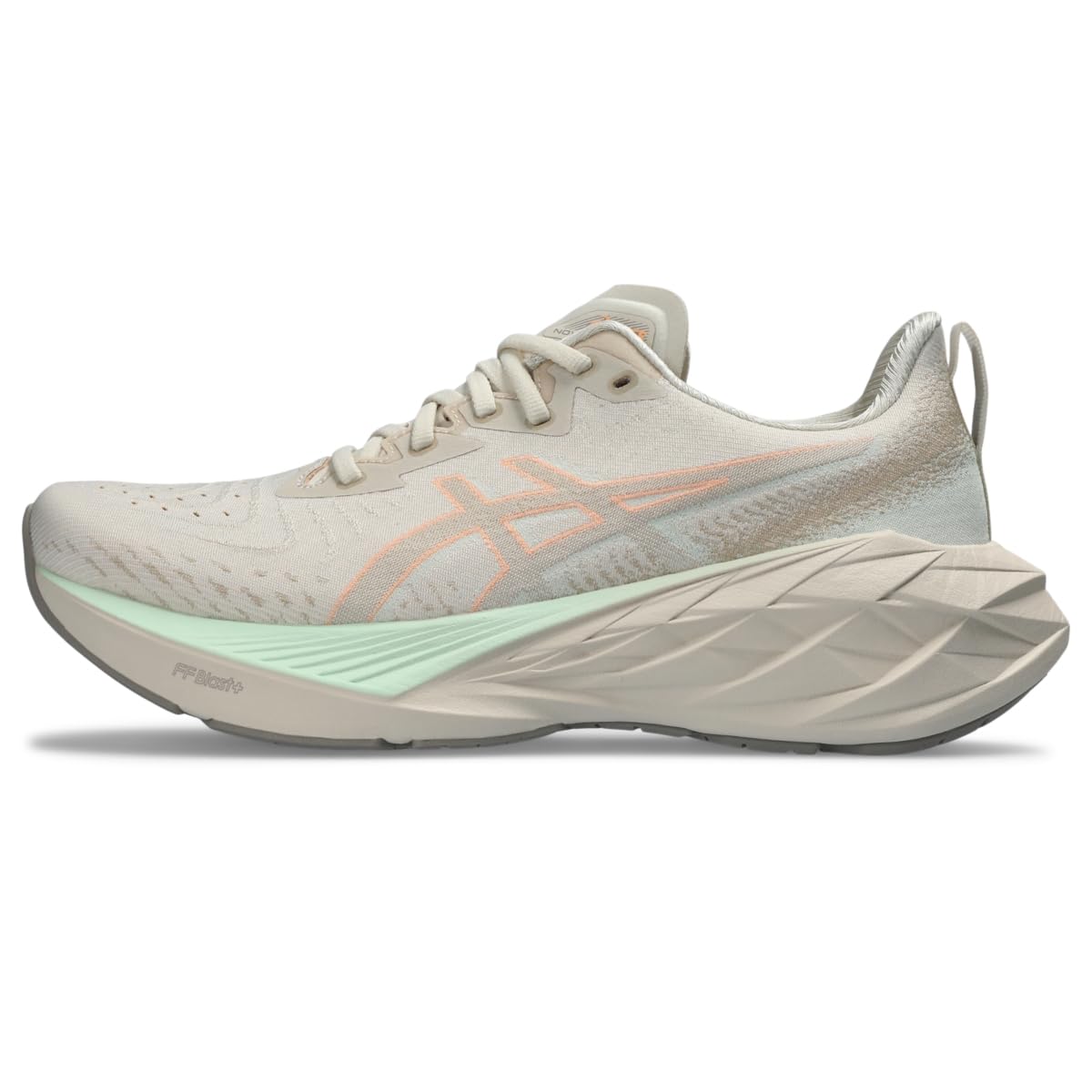
The trampoline-inspired midsole that makes every step feel spring-loaded.
The NOVABLAST 4 is built for the runner who wants an energetic, fun ride. ASICS designed the midsole with a trampoline-like geometry that delivers an extra boost with every stride, and owners confirm it: the shoe “propels forward” and reduces impact on a surgery leg, according to one runner. Another who works 12-hour shifts says the cushion eliminates pain. The feedback is that it runs large, so ordering a half-size down or going with your normal size is a common strategy.
Comfort and quality dominate the conversation, with cushioning as a close third. The shoe works for treadmill runs, road miles, and all-day standing alike, which accounts for its versatility score. The bounce is genuine but comes with a trade-off on grip — the outsole traction suffers on wet surfaces, so take corners carefully in rain. A few owners also mention the color gets dirty fast, though the lively palette offsets the maintenance for most.
Spring-loaded energy return: the trampoline-inspired midsole delivers noticeable propulsion that keeps runs feeling lively, though wet pavement requires cautious footing.
Buy these for: the energetic, bouncy ride that makes daily miles feel fun and reduces impact on joints — especially if you run on treadmills or dry pavement.
Skip them if: you frequently run in wet conditions or need maximum outsole traction on slick surfaces.
7. Saucony Women’s Triumph 22 Sneaker
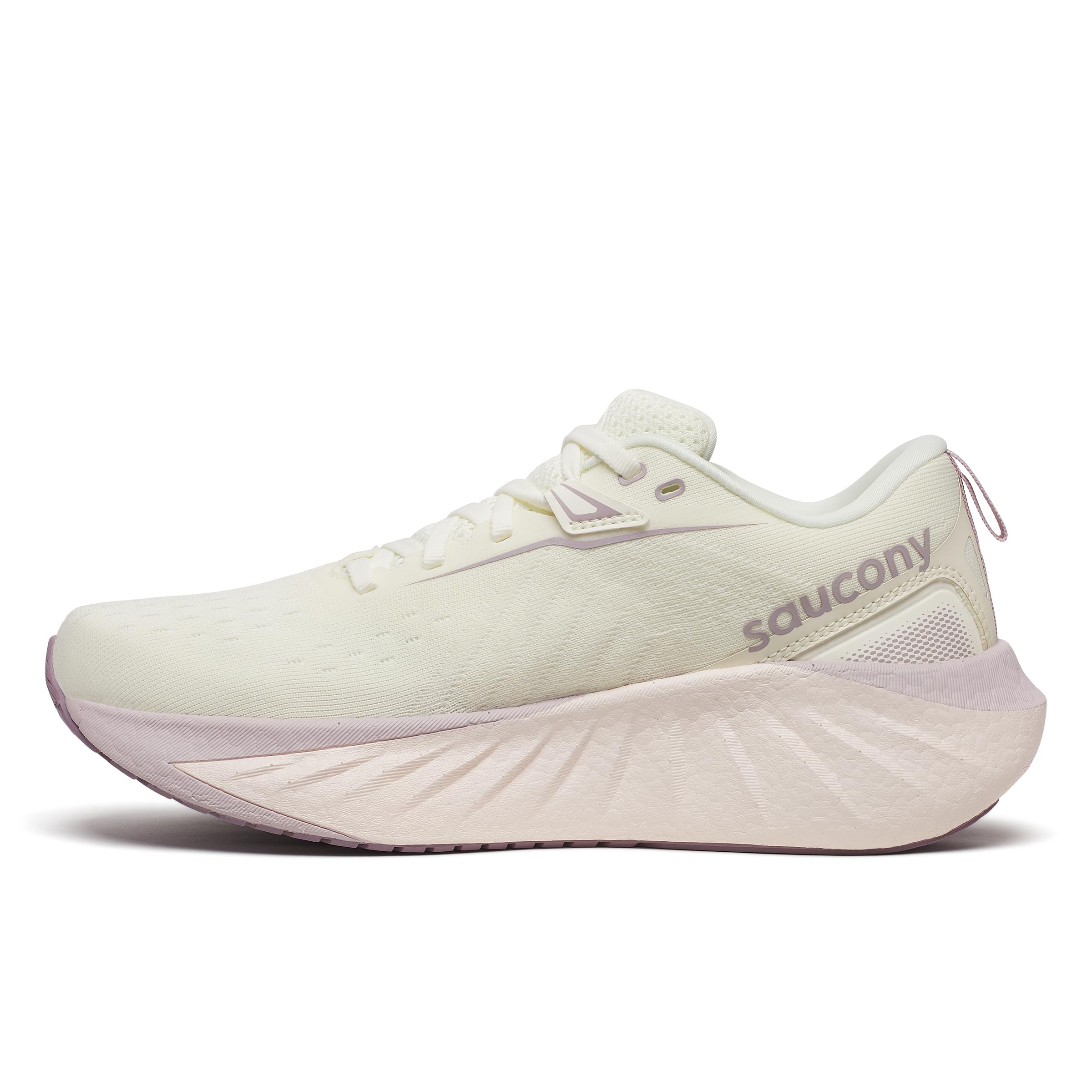
A high-mileage trainer that still feels plush after 300 miles on the road.
The Triumph 22 is a max-cushion workhorse built for long-distance comfort. Customers note logging 300 miles with only minor outsole wear and the same plush feel underfoot — outlasting competitors like Hoka Clifton, Brooks Glycerin, and Ghost. The shoe provides excellent arch support and a generous toe box that accommodates Morton’s neuroma, eliminating stinging nerve pain for one runner. At a competitive price compared to specialty running stores, it is a strong value for marathon training.
Comfort and fit are the most-praised aspects, with cushioning a close third. The shoe is described as “springy and bouncy,” motivating runners to push through heavy-leg days. The main trade-off is the toe box fit — owners give it mixed feedback, with some finding it narrower than previous Triumph models. Traction is also limited on trails and ice, so keep these on pavement. The new model is also slightly harder to slip into than earlier versions, per returning buyers.
Why Long-Distance Runners Love It
- Proven 300-mile durability; reviewers point out the cushion holds up after extensive use, outlasting competitors.
- Generous toe box and arch support work for nerve pain conditions like Morton’s neuroma.
- Springy, bouncy midsole motivates faster turnover even on tired legs.
What to Know
- Traction is poor on trails, ice, and wet surfaces — keep these strictly on pavement.
- The toe box receives mixed feedback; some find it narrower than previous versions.
Go with these if: you want a long-distance, max-cushion trainer that maintains its plushness for 300+ miles of road running.
Look elsewhere if: you run on trails or often face wet, icy roads; the outsole grip is pavement-only.
8. New Balance Women’s Fresh Foam X 880v15 Running Shoe
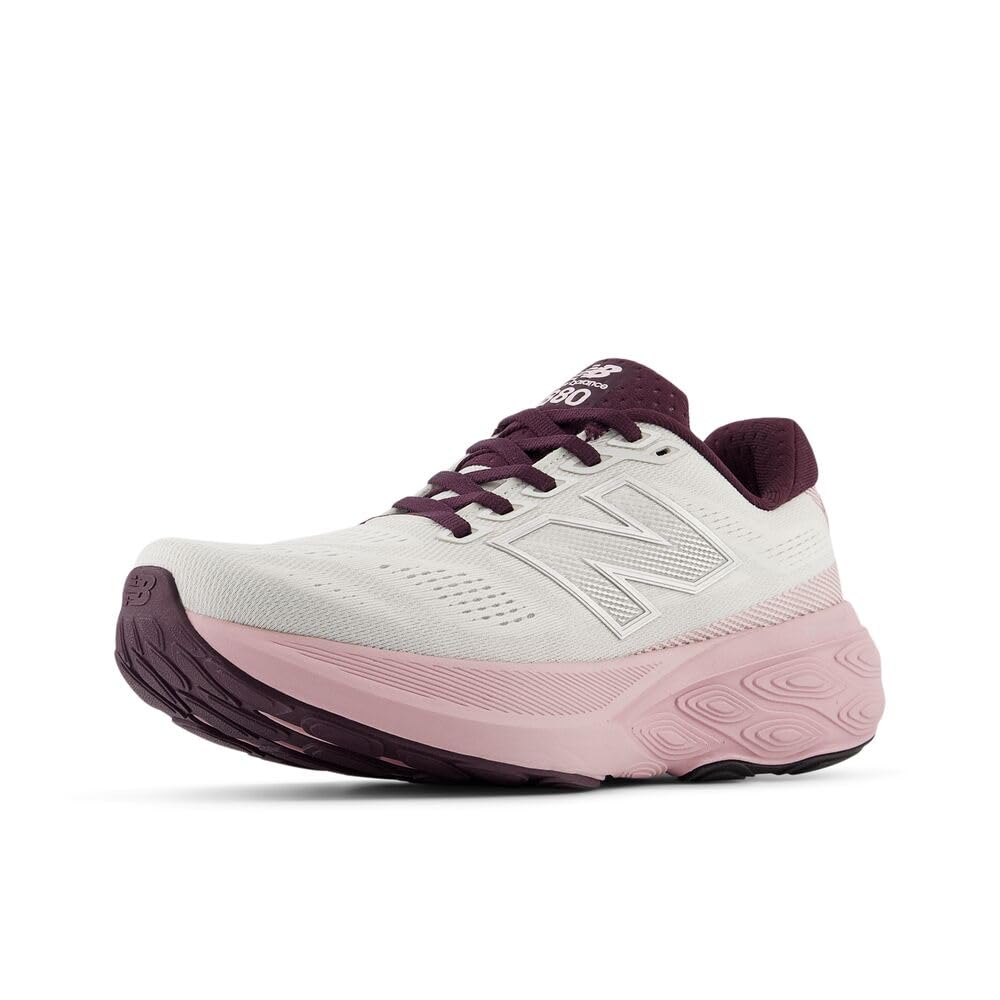
A plush, wide-friendly shoe that feels like little pillows underfoot from the first step.
The 880v15 is New Balance’s workhorse daily trainer, and owners consistently praise how comfortable it is right from the start — no break-in needed. One runner describes them as “little pillows for your feet,” and another reports no foot pain after 12 hours of standing. The Fresh Foam X midsole delivers a soft yet supportive ride that is less chunky than Hoka, making it a favorite for those who want cushion without the exaggerated sole height.
Comfort is the number-one talking point, with supportive feel close behind. The shoe is especially popular among runners with plantar fasciitis, who appreciate the stable platform and good arch support. The extra-wide sizing options are a big draw for those needing toe room. The main issue is fit consistency: some owners find the shoe feels short for their size and suggest going up half a size, while a few note the ankle collar rubs on the ankle bone — a fit consideration rather than a build flaw.
Pillowy support for wide feet: the Fresh Foam X midsole offers a stable, non-chunky ride that suits neutral runners and those with plantar fasciitis, but test the size carefully as some need a half-step up.
Best for: runners who want a plush, stable daily trainer with excellent out-of-box comfort and extra-wide sizing options.
Be aware: some owners need to size up half a step, and the collar can rub on certain ankle shapes — try them on with your usual running socks.
9. On Women’s Cloudmonster Sneakers

The weirdest On shoe yet — more clouds, more cushion, and a monster forefoot rocker.
The Cloudmonster is On’s max-cushion statement piece, featuring the brand’s biggest Clouds ever combined with a Helion supramolecular foam and a Speedboard for explosive takeoffs. The radical forefoot rocker keeps you rolling forward, making it ideal for recovery runs and long easy days. Over 30% of the entire shoe uses recycled materials. Owners who buy one pair often come back for more — at least one buyer snapped up four pairs for family members, calling the comfort addictive.
The cushioning gets consistent praise, particularly for ground impact protection. One runner with knee discomfort found relief in these. The fit is the primary debate: some find them true to size, while others with wide feet feel tightness by the end of a shift. On’s recommendation to order a half-size larger than your normal shoe is a common tip among owners. The complaint to flag is quality control from third-party sellers, with an isolated instance of thin fabric tearing after a few days — stick to the official listing or a trusted seller.
Max cushion, max roll: the Cloudmonster’s oversized pods and aggressive rocker create a unique, propulsive feel that suits recovery and easy runs, though fit requires careful sizing.
Choose these if: you want On’s most cushioned, rocking ride for recovery days and long easy runs, with a sustainability angle from recycled materials.
Size with care: most owners recommend going half a size up, and stick to the official seller to avoid third-party quality issues.
Understanding the Specs
Heel-to-Toe Drop
Drop is the height difference (measured in millimeters) between the heel and the forefoot. A higher drop, like 10mm or 12mm, shifts your weight toward the heel and suits runners who land heel-first. A lower drop, like 0mm or 4mm, encourages a more natural midfoot or forefoot strike, which can help strengthen your lower legs over time.
Cushioning Materials
The foam or gel in the midsole determines how much road shock reaches your joints. Terms like PureGEL, Fresh Foam X, or EGO foam refer to density and energy return. Soft foams feel luxurious on recovery days; denser, springier foams return energy for faster paces. The trade-off is that ultra-soft midsoles often wear faster than firmer compounds.
FAQ
How much toe box room do I need for running?
Can I use trail running shoes for pavement?
What is the difference between neutral and stability shoes?
How often should I replace my running shoes?
Do I need to break in new running shoes?
What does zero-drop mean for my running form?
How important is the outsole tread?
Are slip-on running shoes as secure as laced ones?
Final Thoughts: The Verdict
If you want one dependable pick, the best women’s running shoes winner is the Nike Quest 6 because it delivers proven two-hour comfort, a secure fit, and durable construction that holds up to washing cycles — all at a friendly price point. If you want that hands-free slip-on convenience with a bouncy, Hoka-like ride, grab the ALLSWIFIT. And for trail runners who crave a zero-drop, wide-toe-box platform, the ALTRA Lone Peak 8 is the one to reach for.
How We Picked
We do not accept paid placement. Every pick is matched to a real buyer and a real use-case; we do not hands-on test units.
Sources & Methodology
Specifications: manufacturer listings and product documentation. Review insights: verified customer reviews, as of July 2026. Pricing: not shown on this page (it changes often); check the current price via the retailer link.
As an Amazon Associate, Calories Fit earns from qualifying purchases. This does not affect which products we feature.