
Our readers keep the lights on and the coffee maker working hard! As an Amazon Associate, I earn from qualifying purchases.
Specs are compiled from manufacturer listings and verified buyer reviews and can change over time — please confirm the key details on the product page before buying.
The best riding boots deliver a comfortable fit without a painful break-in period. You need a boot that locks your heel in the stirrup, supports your arch through a long lesson, and looks sharp enough for the show ring—all without a huge investment. This guide covers the best women’s riding boots, from waterproof workhorses to competition-ready leather.
I’m Mohammad — the founder and writer behind Calories Fit. This guide is built by comparing the manufacturers’ published specifications and the patterns across verified customer reviews, so you get each pick’s real strengths and trade-offs instead of marketing spin.
Whether you are a weekend trail rider, a daily barn worker, or a competitor chasing points, this breakdown of the best women’s riding boots will help you find the pair that actually fits your foot, your calf, and your budget.
Our Picks at a Glance
How To Choose The Best Women’s Riding Boots
Riding boots are the most critical piece of gear for any rider. A poor fit compromises your saddle position, stirrup safety, and on-ground comfort. Here is what to check before you buy.
Calf Fit Is Everything
Most riding boots are designed for a narrow-to-average calf. If you have athletic or muscular calves, measure your widest point before ordering. A boot that is too tight in the calf will be uncomfortable to ride in and may not zip up at all. Many brands offer wide-calf options, and elastic gussets (a stretchy panel sewn into the shaft) can provide a little extra room.
Leather vs. Synthetic
Full-grain leather forms to your foot over time, lasts for years if cared for, and looks more polished in the show ring. The trade-off is a longer break-in period and a higher price. Synthetic materials (often called “faux leather”) are lighter, cheaper, and require almost no break-in, but they won’t mold to your foot the same way and can wear out faster at stress points like the ankle.
Paddock vs. Tall Boots
Paddock boots (ankle-height) are the starting point for most riders. They are versatile for lessons, barn chores, and everyday wear, and they work with half-chaps if you want a tall boot look. Tall field or dressage boots go up to your knee, providing more support and a cleaner line in the saddle. Tall boots are usually required for showing in most English disciplines.
Quick Comparison
| Model | Best For | Height | Material | Waterproof | Amazon |
|---|---|---|---|---|---|
| ARIAT Scout Zip Paddock★ Best Overall | Best Overall / Everyday Lessons | Ankle | Full-Grain Leather | No | Amazon |
| Ariat Women’s Terrain Ease WaterproofBest for Barn & Trail | Barn Chores & Wet Ground | Ankle | Leather/Synthetic | Yes | Amazon |
| HORZE Rover Field BootsTop Performer | Premium Synthetic Tall Boot | Knee-High | Synthetic Leather | No | Amazon |
| Shires Moretta Gianna Leather | Skinny Calves & Slim Fit | Knee-High | Leather | No | Amazon |
| TuffRider Starter Back Zip Field | Budget Tall Boot for Beginners | Knee-High | Synthetic Leather | Water-Resistant | Amazon |
| Equistar All-Weather Synthetic Field | Value for Growing Youth | Knee-High | Faux Leather | No (Dry-Tex) | Amazon |
| HORZE Synthetic Dressage Tall | Dressage-Style on a Budget | Knee-High | Faux Leather | Water-Resistant | Amazon |
| Ovation Moorland II Tall | Premium Full-Grain Leather | Knee-High | Full-Grain Oiled Leather | Yes | Amazon |
| Anthem Shortie II Waterproof Western | Western Work & Wet Conditions | Ankle | Leather | Yes | Amazon |
In‑Depth Reviews
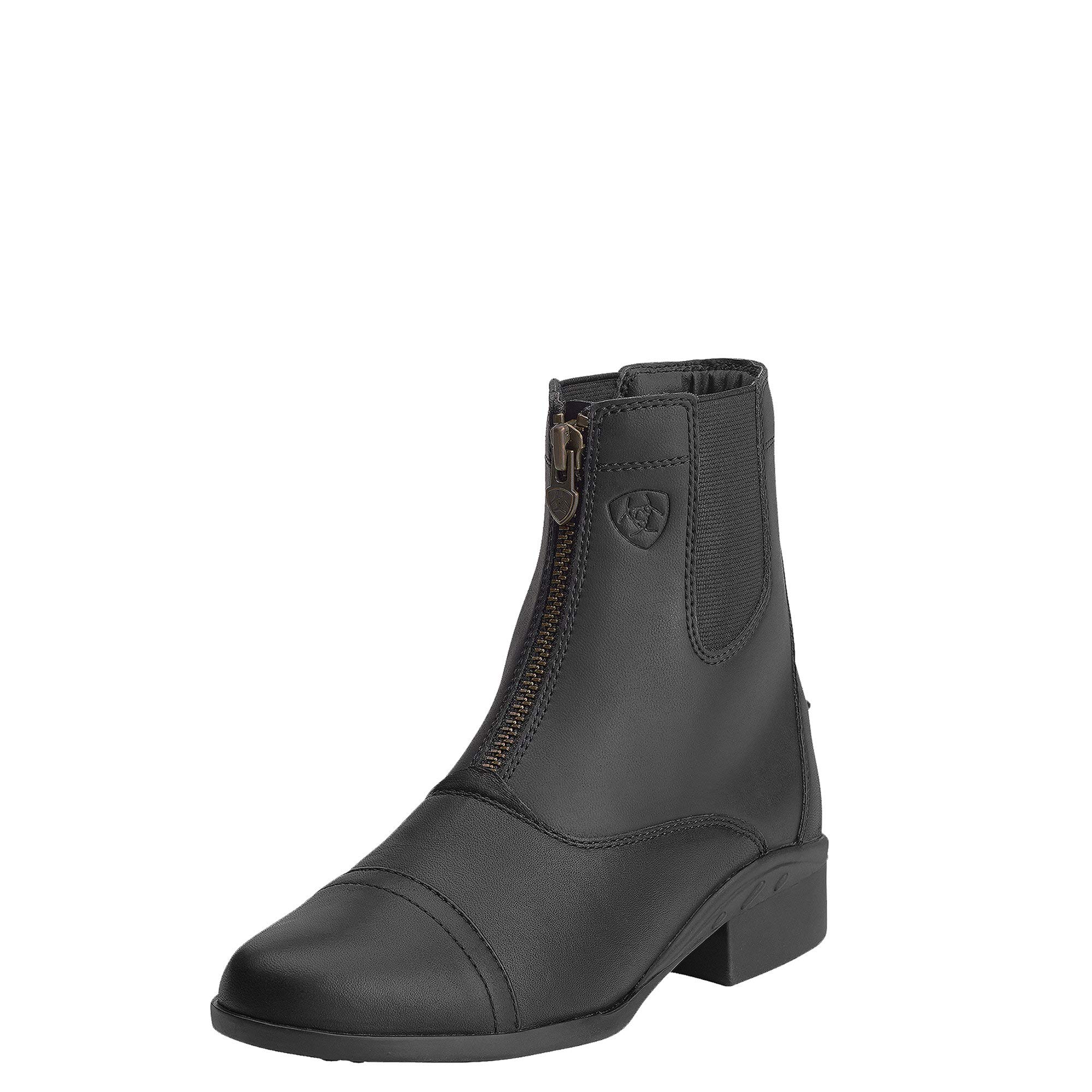
1. ARIAT Scout Zip Paddock
Our pick — over 4.5★ from 600+ verified ratings; the strongest balance of quality and price.
The paddock boot that riders reach for year after year, season after season.
You get a full-grain leather upper that molds to your foot over time, plus a moisture-wicking lining that keeps your feet comfortable during long days at the barn. The antiqued brass zip and Duratread rubber sole look polished enough for the stirrup or the stable. The 4LR technology (a four-layer footbed system) gives you arch support where you need it, and the lateral motion control system keeps your foot stable in the stirrup. The thing everyone raves about is the quality and comfort — it is the most-discussed aspect by a wide margin across the feedback. That said, this boot runs a half-size large for many, so if you wear a size 8, you may want to try a 7.5 first. As the review pages sum it up: these are “tried and true” boots that hold up to mud, sand, and severe snow work for a year and a half or more. Buyers report the sole can detach after heavy, wet daily use — treat them well, and they’ll treat you well.
The crowd favorite, backed by 600+ owners: class-leading quality and comfort in a classic paddock boot that needs almost no break-in.
Who should size up: If you’re between sizes, go down; these run slightly large, especially in the toe.
Reach for this if: You want a durable, comfortable paddock boot for lessons, everyday barn work, or pairing with half-chaps. This is the benchmark.
Look elsewhere if: You need a waterproof boot or plan to submerge them in mud and water daily — the leather can hold up, but the sole glue may not.
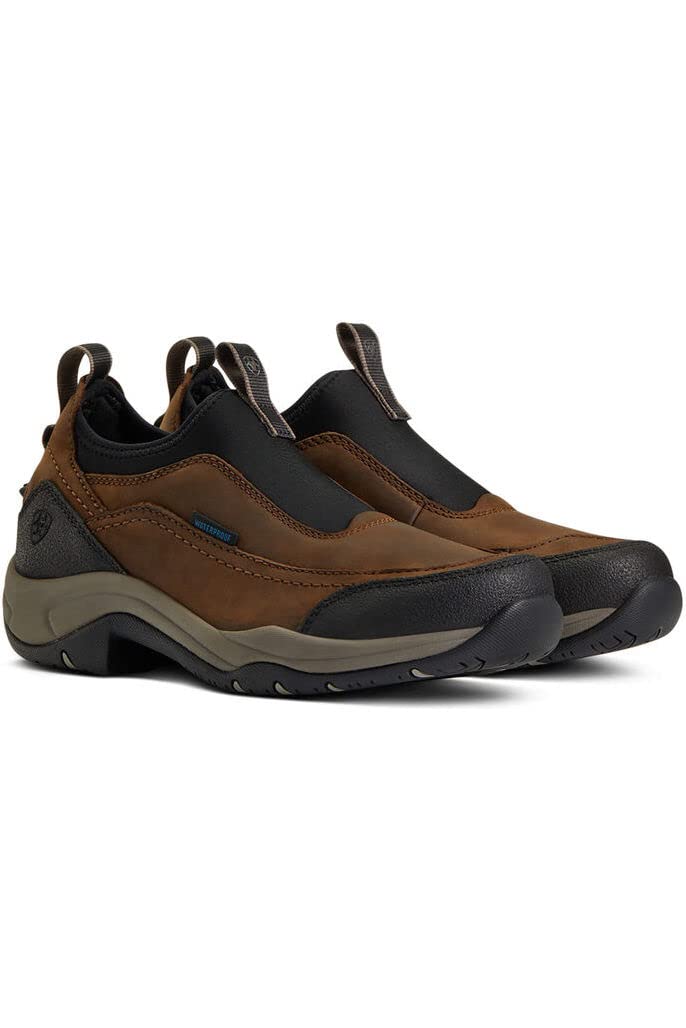
2. Ariat Women’s Terrain Ease Waterproof
The slip-on waterproof boot that saves your feet from wet pastures and muddy stalls.
Designed to pull on and off easily, the Terrain Ease is the boot you grab when you need to turn out a horse in the rain, clean a stall, or walk the dogs on a soggy trail. The waterproof construction keeps your feet dry in wet pastures, and the sturdy sole resists mud packing — a small detail that saves you from slipping. It is also breathable, so your feet do not sweat in warmer weather. The stretchy top works well if you have a high arch, and the supportive sole is comfortable enough for all-day wear. Where this boot truly outshines the Anthem Shortie II (which weighs 4.9 Pounds) is its lighter feel and ease of use — you just pull it on with no zipper to fuss with. Owners in Oregon coast conditions confirm they stay dry through walking wet logging roads. The recurring trade-off is fit: if you have narrow feet, you will love it (many say it fits perfectly), but average-to-wide feet may find the toe box snug. It runs true to size for most, though a handful of owners had to size up half a size. The comfort is the top praised aspect, and the boot holds up well for at least six months of steady barn use.
The waterproof workhorse: True waterproofing and solid arch support in a boot you can slip on in seconds.
Fit note for wider feet: This boot is built for a narrow-to-normal width; if your feet are wide, order a half-size up or look at the wide-calf options elsewhere.
Get this boot if: You need waterproof, pull-on footwear for barn chores, trail riding, or everyday wet-weather use.
skip it if: You need a show-ring boot or have wide feet that don’t fit a narrow profile — the toe box may pinch.
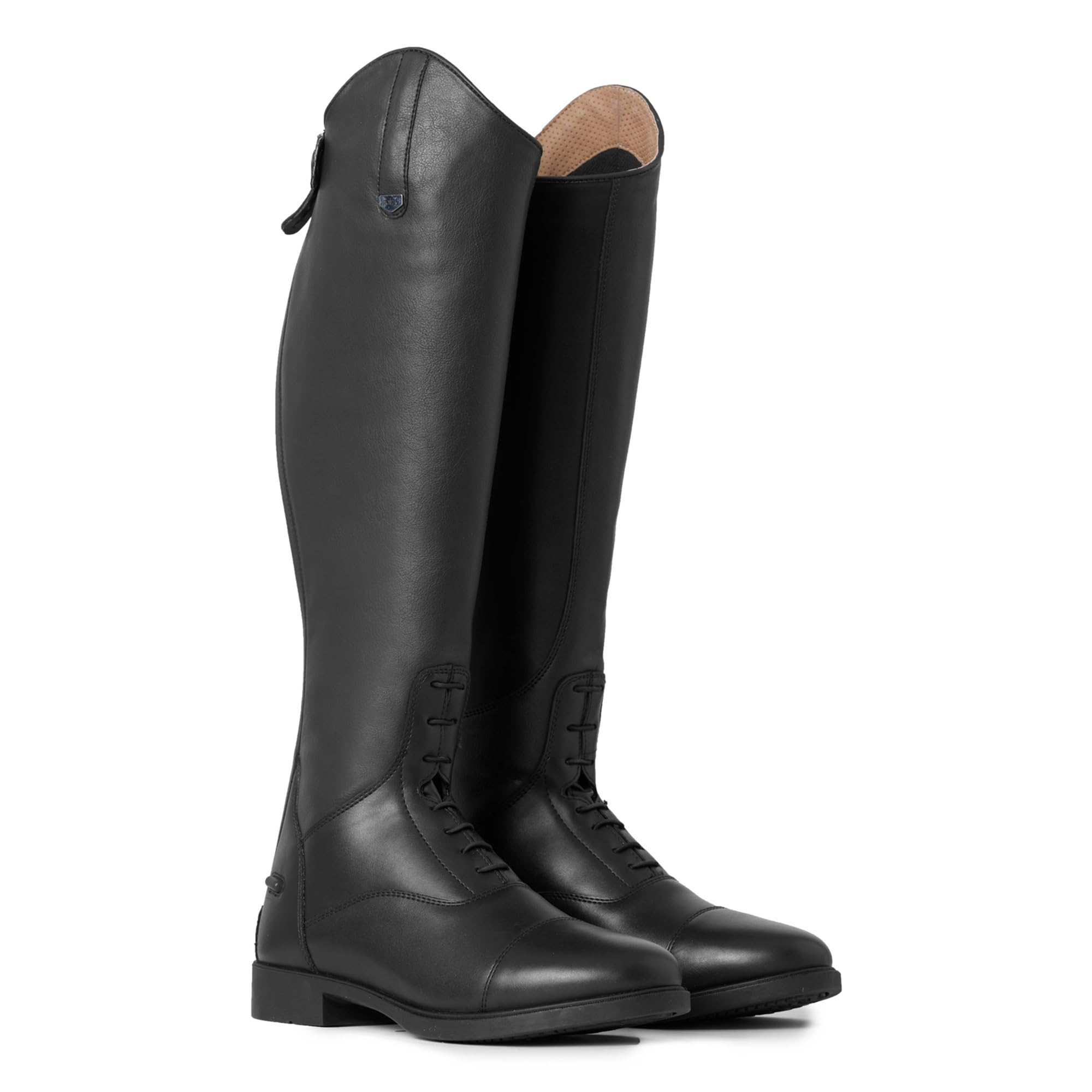
3. HORZE Rover Women’s Synthetic Leather Equestrian Boots
A tall synthetic boot that feels like a glove and looks sharp from the start.
Made from synthetic leather, it requires almost no break-in — one owner noted it was “extremely supple” and flexible right away, which is a massive advantage if you have mobility issues or just hate the stiff, painful first month of a leather boot. It features a spur rest support and a riding grip sole, both of which keep your foot secure in the stirrup. The full back zipper makes getting in and out simple, and the boot is tall enough for the show ring or everyday training. Compared to the HORZE Dressage boot, the Rover is more supple and glove-like, but it has a visibly cheaper cosmetic appearance — it is not real leather, and the finish shows it if you inspect closely. Owners love how it looks from a few feet away, though. The catch is the calf fit: this boot runs tight around the calf, especially if you have athletic legs. The calf measurements can be unreliable, so measure before you buy. It is ideal for riders with slim-to-average calves. One owner has used theirs for multiple English shows over two summers and says they have “held up” well.
Instant comfort, tall style: A flexible, ready-to-ride synthetic boot that beats expensive leather on break-in time.
The calf caveat: Tight in the calf with limited stretch; not a good match if you have muscular or wider calves.
Best for: Riders with slim-to-average calves who want a comfortable, affordable tall boot for showing and school.
Not for: Anyone with larger calves or a need for accurate calf measurements — check the size chart carefully.
4. Shires Women’s Moretta Gianna Leather Riding Boots

The leather tall boot that finally fits a narrow calf without bagging at the ankle.
If you have skinny calves and have spent years watching tall boots gape around your leg, the Moretta Gianna is your answer. This boot is built with “UltraFit leg panels” and a contoured leather engineering that hugs a slim leg. It uses a YKK zipper (a reliable Japanese brand known for durability) and has security tabs at the top of the zip to keep it from sliding down. The ActiveFlex insoles with an Impact Support System provide a comfortable footbed, and the shock-absorbing rubber sole is good for both stirrup work and walking on hard ground. Compared to the TuffRider Starter, which can feel bulky in the ankle, the Shires boot has a much slimmer profile from calf to heel. Owners note it works well for “skinny but muscular calves” that other boots just can’t accommodate. It is also surprisingly roomy in the toe. The trade-off is height: at 7 inches, it can be too tall for shorter riders under about 5’6″, potentially hitting the back of the knee when you bend. A buyer who is 5’9″ found it a perfect height. It also comes with a one-year warranty.
Slim-fit specialist: A contoured leather boot that solves the baggy-ankle problem for narrow-legged riders.
Height check: Not ideal for shorter riders — measure your leg length against the 7-inch shaft before buying.
Reach for these if: You have slim to average calves and want a comfortable, well-fitting leather tall boot for schooling or competition.
Think twice if: You are under 5’4″ or your calf measures over 16.5 inches around — the shaft may be too tall and the calf too narrow.
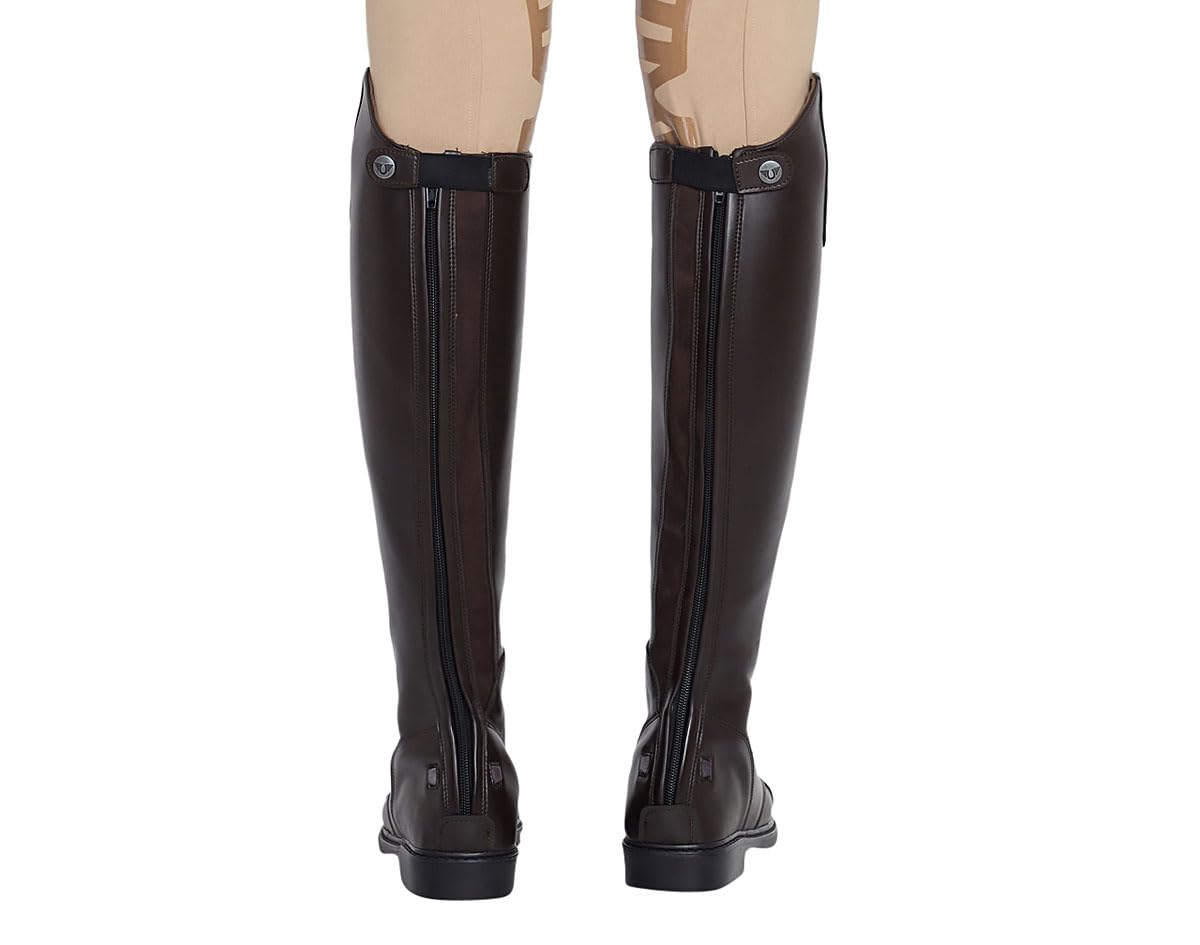
5. TuffRider Women’s Starter Back Zip Field Boots in Synthetic Leather
The budget-friendly tall boot that keeps going lesson after lesson.
For riders who need a tall boot for showing or lessons but do not want to drop hundreds of dollars on leather, the TuffRider Starter is a reliable choice. It is made from a water-resistant faux leather that looks and feels like real leather from a distance. The sculpted calf gives a long, elegant look in the saddle, and the full back zip makes it easy to pull on. The flex construction and performance footbed mean you get an immediate break-in — no painful first rides. An owner’s update says the boot is “still strong after 2 years of weekly lessons,” which is impressive at this price point. Where this boot lags behind the HORZE Rover is in the calf fit — the TuffRider runs small in the calf, and some owners had to order up a size or go with a wide option to get it to zip. The zipper itself is a YKK (good quality), but a few owners had initial zipper failures that were fixable. The ankle can feel bulky for some riders, making it less ideal for show-ring perfectionists. But for schooling, barn work, or a first competition boot, it is tough to top the value.
Two years and counting: A synthetic tall boot that outlasts its price tag, surviving weekly lessons without rips or leaks.
The calf fit catch: Runs narrow in the calf — if you have average or muscular calves, order the wide version or size up.
Ideal for: Beginner to intermediate riders (especially teens) who need an affordable, good-looking tall boot for lessons and local shows.
Not ideal for: Riders with large calves or those needing a competition boot with a sleek, slim ankle profile.
6. Equistar Women’s All-Weather Synthetic Field Equestrian Riding Boot

A lightweight, budget-friendly tall boot that looks expensive in the saddle.
The Equistar boot uses Dry-Tex for moisture management (cushion lining in the shaft that wicks sweat), and the EquiStar Sole System is designed to be lighter and more flexible than standard soles. The boot weighs just 3.79 Pounds, making it significantly lighter than the Anthem Shortie II which is 4.9 Pounds — a noticeable difference if you spend hours in the saddle. The memory foam insole adds comfort from day one. This boot is a popular choice for growing youth — it looks like an expensive boot but costs a fraction of the price, and it is easy to clean while holding its shape. The biggest trade-off is the “very narrow profile in the leg,” as the manufacturer states. If you have anything beyond a slim calf, this boot will not zip. Buyers also note the color can look artificially wrinkled, and the tall height may pinch the back of your knee on shorter riders. It runs small, so ordering up is a common recommendation.
Youth-friendly value: A lightweight, good-looking tall boot that grows with a young rider and cleans up like new.
Narrow calf only: The leg profile is genuinely slim — measure your calf before buying, and size up if you are between sizes.
Best suited for: Youth riders, teens, or adults with very slim calves who need a budget-friendly boot for lessons and low-level shows.
Not for: Riders with average or wide calves, or those who need a boot that fits like a true size 8 — order a half to full size up.
7. HORZE Synthetic Leather Dressage Tall Riding Boots
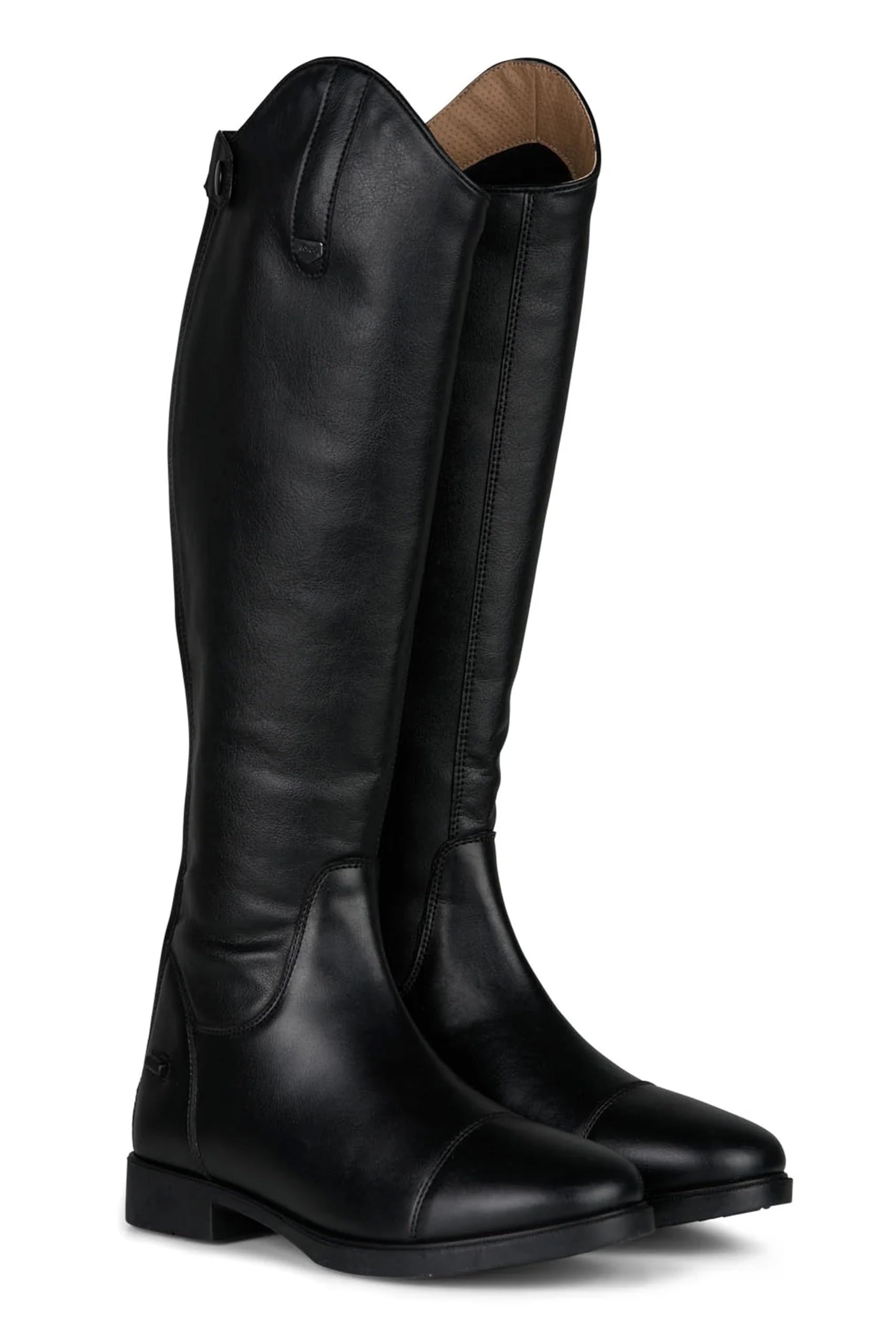
A dressage tall boot that brings competition-ready style without the competition-ready price.
The HORZE Dressage boot is designed to encourage a better leg position — the tall shaft restricts ankle movement, which helps your leg stay still and correct in the saddle. It is made from 100% synthetic leather that has “plenty of stretch” and an easy break-in. The suede-like inner leg is reinforced with elastic, and a spur rest adds security in the saddle. The back zipper and elastic calf panel make getting the boot on easier than a traditional pull-on style. Compared to the HORZE Rover, this dressage boot is a tighter fit overall — the shaft is narrower, especially in the calf. It is good for schooling or entry-level showing, and owners say the zipper operates smoothly. The problem is the fit consistency: multiple owners mention the calf is too narrow for an athletic build (one 5’7″, 135 lb rider could not zip it), and the ankle can feel too loose even when the calf is tight. The boot also runs tall, and a 5’0″ rider had it hit the back of her knees. Buyers also warn about a hefty return shipping fee, so check the size chart carefully and consider ordering up.
Dressage on a dime: A slim, stretchy synthetic boot that looks sharp in the ring and helps lock your leg in place.
Fit gamble: Narrow calves and inconsistent sizing mean you may need to order up or return; factor in the return cost.
Reach for this if: You have very slim calves, are 5’6″ or taller, and want an affordable dressage boot for school or low-level shows.
pass on it if: You have athletic or muscular calves, are under 5’3″, or hate dealing with complex returns.
8. Ovation Women’s Moorland II Highrider Tall Riding Boot

A premium full-grain leather tall boot built to handle the elements.
The Ovation Moorland II is a serious investment for the committed rider. It is crafted from full-grain oiled leather with grippy suede panels, giving it a refined, rugged look. The boot is both waterproof and breathable, which is rare in a tall leather boot — it keeps your feet dry through wet grass and mud, though a few owners note it soaked through in heavy rain after six months. The integrated elastic gusset and side zipper with a hook-and-loop closure make entry easier than a standard pull-on tall boot, and the high-traction outsole gives you grip on uneven terrain and in the stirrup. Compared to the Shires Moretta Gianna, the Ovation has a wider calf due to the elastic gussets, which makes it a better fit for riders with larger calves. Owners love the quality and appearance. The biggest issue is sizing: this boot runs extremely small, to the point where owners recommend going up two sizes. Even a US 9 could not accommodate a foot that normally wears an 8. The ankle can feel roomy while the toe is tight, so the fit is not for everyone. A 5’1″ rider finally found a tall boot that hits at her knee crease — a win for shorter equestrians — but a 5’9″ rider wished it was a bit taller.
Full-grain, fully featured: A waterproof, breathable leather tall boot with a classic look and premium materials.
Size up — a lot: Plan to order two sizes larger than your street shoe; returns are straightforward if the fit doesn’t work.
Ideal for: Riders who want a premium waterproof leather boot and are prepared for a long break-in period and careful sizing.
Not for: Anyone who wants a quick, easy fit or hates dealing with sizing exchanges — this boot demands patience and measurement.
9. Anthem Shortie II Waterproof Western Boot
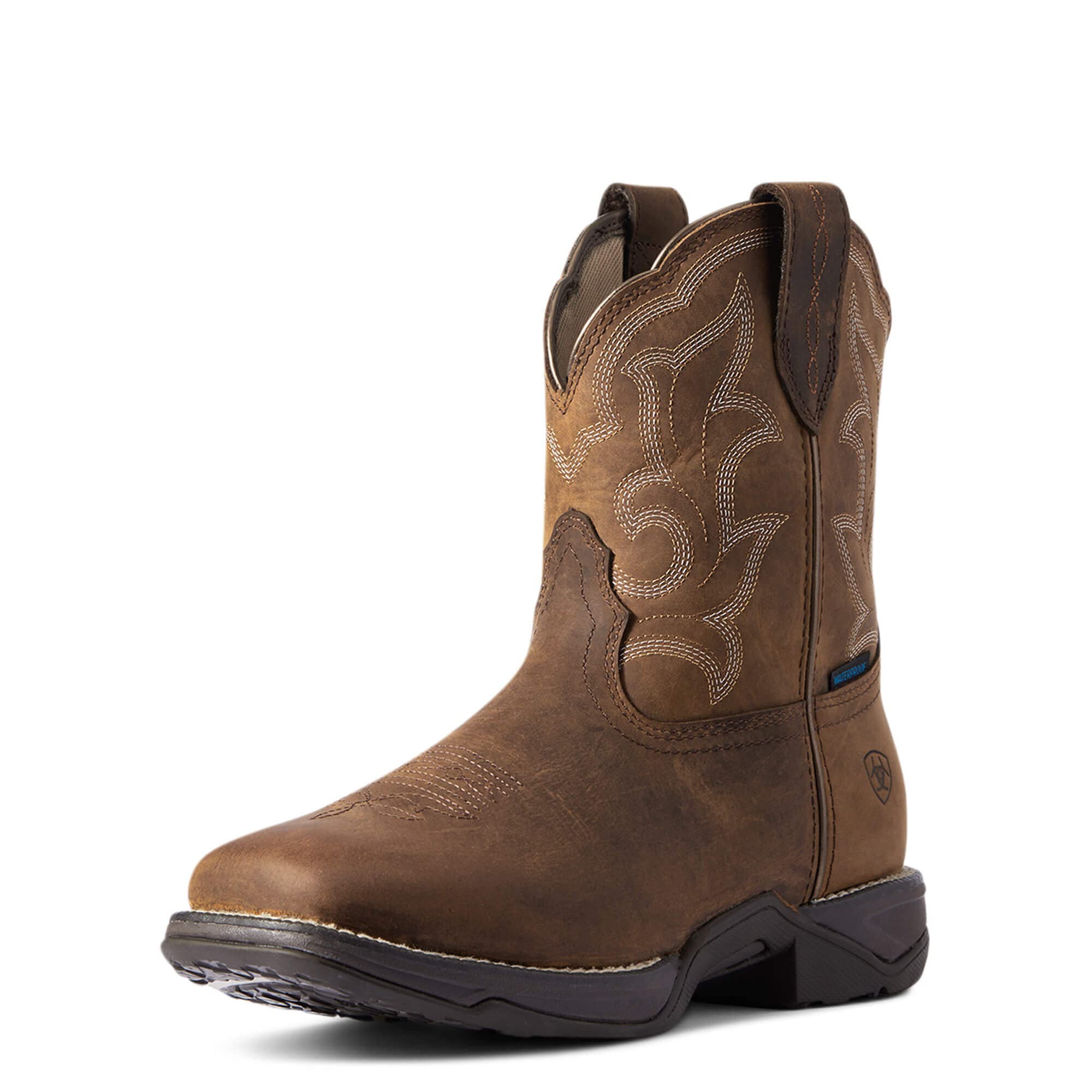
A waterproof western work boot that takes the slip out of slick surfaces.
The Anthem Shortie II is the boot for the western rider who needs waterproofing and non-slip grip. The rubber sole offers “more skid prevention than any other cowboy boots,” according to a buyer who uses them for work. The 4.9-pound boot is heavier than the competition but feels solid and supportive. It is comfortable enough for a 10-hour work day right from the start with almost no break-in, and the waterproofing keeps toes dry in wet, snowy conditions. Compared to the Ariat Terrain Ease, the Anthem is bulkier and has a higher shaft, meaning it is less of a quick slip-on and more of a pull-on western boot. The fit runs slightly small — many owners order a half size up. The main durability concern is real: an owner who wore them just 2-3 times a month found the inner upper trim disintegrating after a year. The scuffs also show easily. But for the price, the comfort and waterproof performance are tough to top for daily barn or construction work.
Waterproof and slip-free: A western-style boot that keeps you dry and upright through a full work day in wet conditions.
Durability watch: The inner trim can break down over a year of light use — not a boot for heavy-duty abuse.
Best for: Western riders or anyone needing a comfortable, waterproof, non-slip boot for work or wet barn chores.
Think twice if: You need a boot that will last multiple years of daily use, or you want a lighter, more flexible boot for long trail rides.
Understanding the Specs
Calf Circumference
This is the single most important measurement for tall boots. Measure the widest part of your calf while sitting in a riding position (knee bent at 90 degrees). A boot that is too tight will cut off circulation; too loose will slip and cause blisters. Many synthetic boots have elastic gussets that give a bit, while leather boots should fit snugly from day one as they will stretch slightly over time.
Shaft Height
Tall boots come in various shaft heights. The boot should hit just below the back of your knee when you are in the saddle. If the shaft is too tall, it will dig into the back of your knee when you bend your leg, causing pain and restricting movement. Short riders (under 5’4″) often struggle with standard tall boots and may need a “short” or “highrider” version.
Waterproofing vs. Water-Resistance
Fully waterproof boots will keep your feet dry through puddles, wet grass, and light rain. Water-resistant boots, often made from synthetic leather, can handle a splash but will soak through with prolonged exposure. If you work in a wet barn or ride in rainy climates, look for a boot that explicitly says “waterproof” and has sealed seams. If you only ride in an indoor ring, water-resistance is usually enough.
Full-Grain vs. Synthetic Leather
Full-grain leather is the top layer of the hide — it is strong, breathable, and molds to your foot over time. It lasts for years if cleaned and conditioned. Synthetic (faux) leather is lighter, cheaper, and needs almost no break-in, but it does not breathe as well and can crack or peel at flex points like the ankle after a season or two.
FAQ
How should riding boots fit around the calf?
Do riding boots run true to size?
Can you wear riding boots for walking?
How long do synthetic riding boots last compared to leather?
What is the difference between a field boot and a dressage boot?
Are paddock boots and half-chaps a good alternative to tall boots?
How do I break in new leather riding boots?
Can riding boots be resoled?
Why do my riding boots hurt the back of my knee?
How should I clean and store my riding boots?
Final Thoughts: The Verdict
For most riders, the best women’s riding boots winner is the ARIAT Scout Zip Paddock because it blends full-grain leather durability, all-day comfort, and a trusted fit that thousands of owners swear by. If you need a waterproof boot for barn chores and wet trails, grab the Ariat Women’s Terrain Ease. And for a budget-friendly tall boot that can handle weekly lessons for two years, the TuffRider Starter Back Zip Field Boot is the one to reach for.
How We Picked
We do not accept paid placement. Every pick is matched to a real buyer and a real use-case; we do not hands-on test units.
Sources & Methodology
Specifications: manufacturer listings and product documentation. Review insights: verified customer reviews, as of July 2026. Pricing: not shown on this page (it changes often); check the current price via the retailer link.
As an Amazon Associate, Calories Fit earns from qualifying purchases. This does not affect which products we feature.