
Our readers keep the lights on and the coffee maker working hard! As an Amazon Associate, I earn from qualifying purchases.
Specs are compiled from manufacturer listings and verified buyer reviews and can change over time — please confirm the key details on the product page before buying.
Your feet spend their whole life crammed into tight, improve shoes. The best women’s minimalist shoes fix that: they give your toes room to spread, keep your heel level with your toes, and let you feel the ground. The payoff is stronger feet, better balance, and less strain on your knees and back.
I’m Mohammad — the founder and writer behind Calories Fit. This guide is built by comparing the manufacturers’ published specifications and the patterns across verified customer reviews, so you get each pick’s real strengths and trade-offs instead of marketing spin.
Whether you hit trails, the gym floor, or city pavement, these picks show you which shoe fits your foot. This is your clear, honest guide to finding the best women’s minimalist shoes.
Our Picks at a Glance
How To Choose The Best Women’s Minimalist Shoes
Picking your first pair is not about grabbing the cheapest model or the wildest colors. You are asking your feet to work differently, so a few specs matter more than style. Focus on these three things and you will land on a shoe that helps, not hurts.
The Drop and Stack Height
The “drop” is the height difference between your heel and your toes. Zero-drop (0mm) means your foot stays level, which encourages a midfoot or forefoot strike instead of a jarring heel slam. The “stack height” is the total sole thickness under your foot. A lower stack (around 15mm) gives you more ground feel and forces your foot muscles to stabilize you. A higher stack (25mm-30mm) adds cushion for longer pavement miles but keeps the zero-drop platform. If you have been running in thick trainers, start with a medium stack to let your calves adjust.
The Toe Box Shape
A tapered toe box crushes your toes together, which can lead to bunions, neuromas, and balance problems. A truly minimalist shoe lets your big toe point straight ahead and gives your smaller toes room to splay. Look for words like “FootShape” or “anatomical toe box.” The widest toe boxes are on Altra and Xero Shoes. If you have wide feet or bunions, this should be your top priority.
The Flexibility of the Sole
You should be able to bend the shoe in half with one hand. A rigid sole fights your foot’s natural motion and defeats the purpose of going minimalist. The sole needs rubber lugs or a textured tread for grip, but the shoe should twist and fold easily with your stride. Some models use a “barefoot” sole (around 4-8mm thin) for extreme flexibility, while others add more rubber for trail protection. Choose flexibility over cushioning every time.
Quick Comparison
| Model | Best For | Drop | Cushion Level | Weight (oz) | Amazon |
|---|---|---|---|---|---|
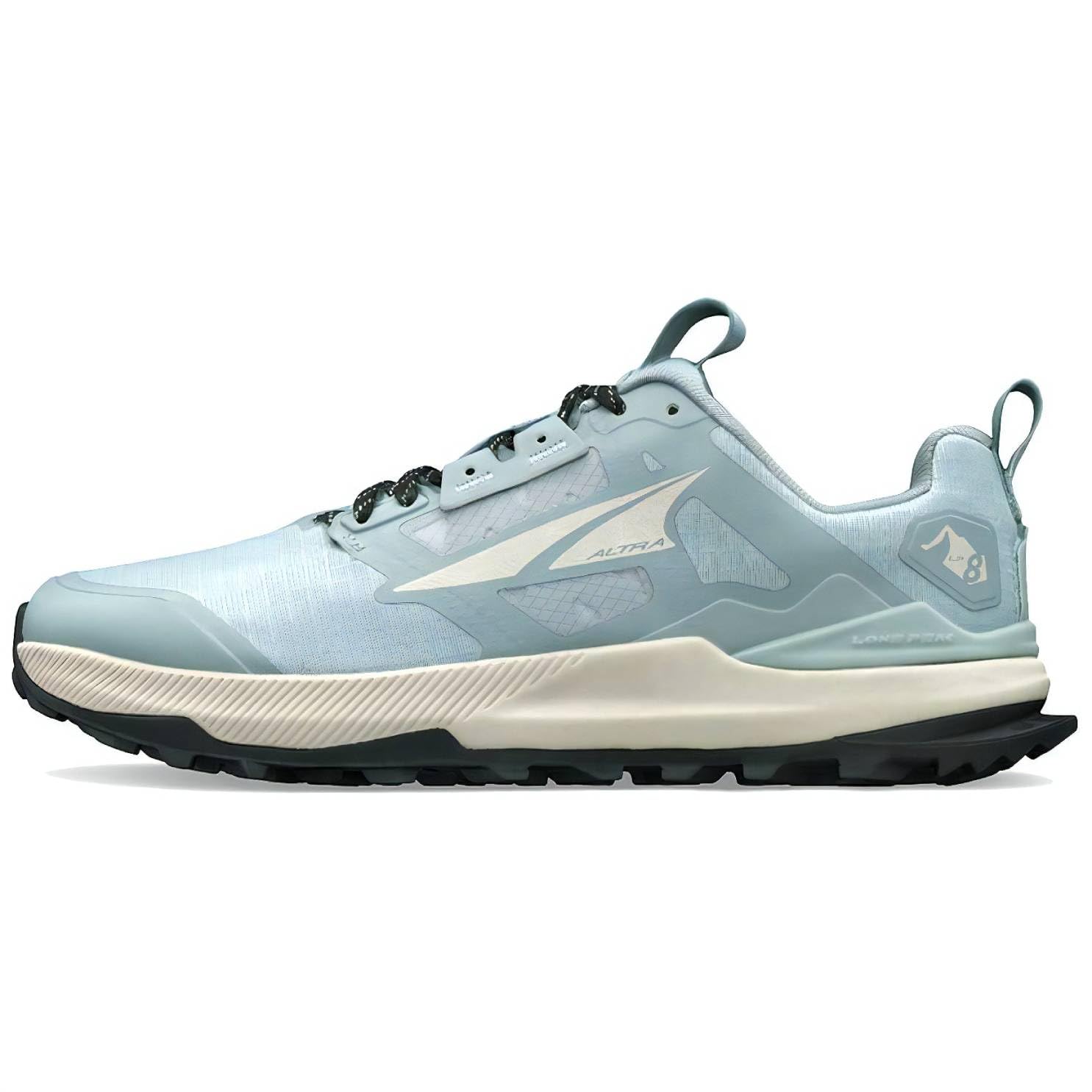
| ALTRA Lone Peak 8★ Best Overall | Trail hiking & running | 0 mm | Mid | 10.7 oz | Amazon |
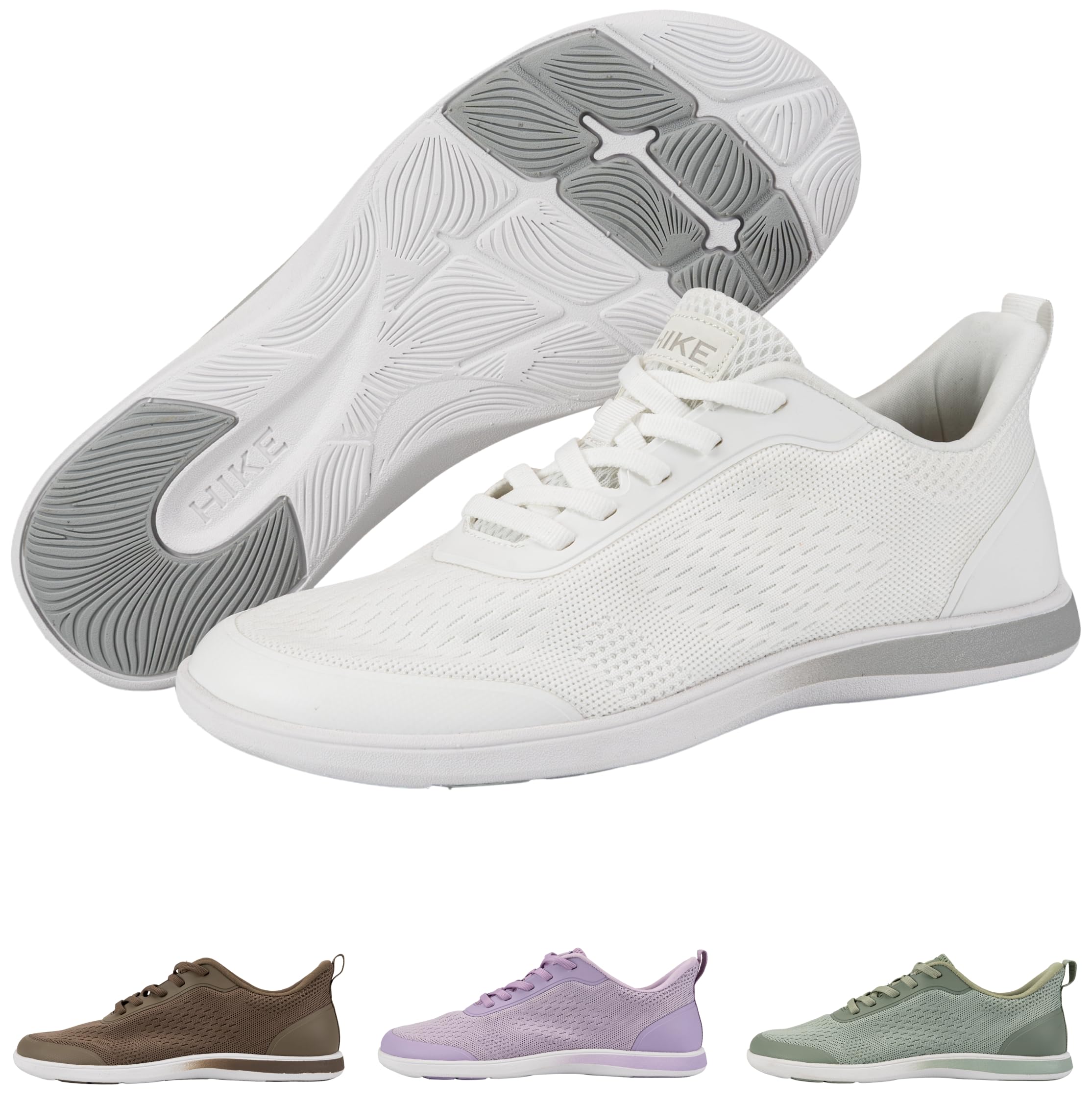
| Hike Footwear FlameBest Start for Beginners | Everyday barefoot walking | 0 mm | Minimal | — | Amazon |
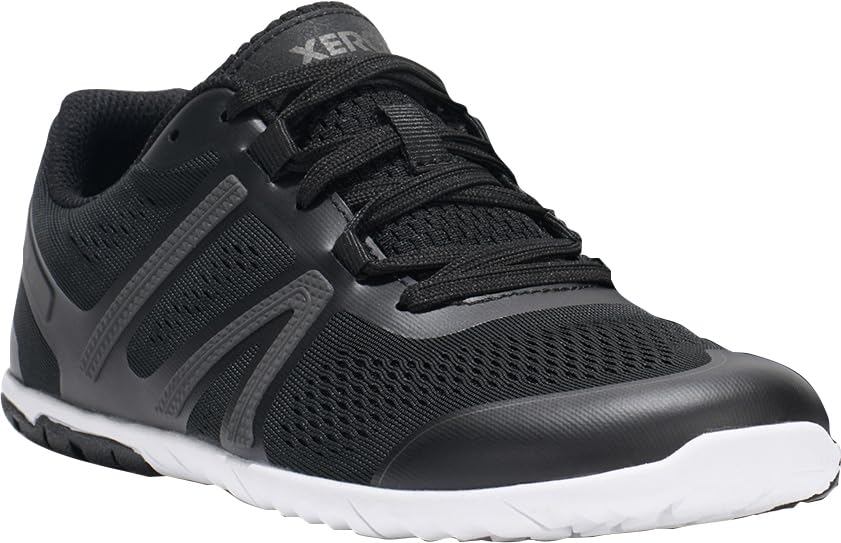
| Xero Shoes HFS OriginalBest for Road Running | Road running & cross-training | 0 mm | Minimal | — | Amazon |
| Vivobarefoot Primus Lite 3.5 | Gym training & dynamic movement | 0 mm | Minimal | — | Amazon |
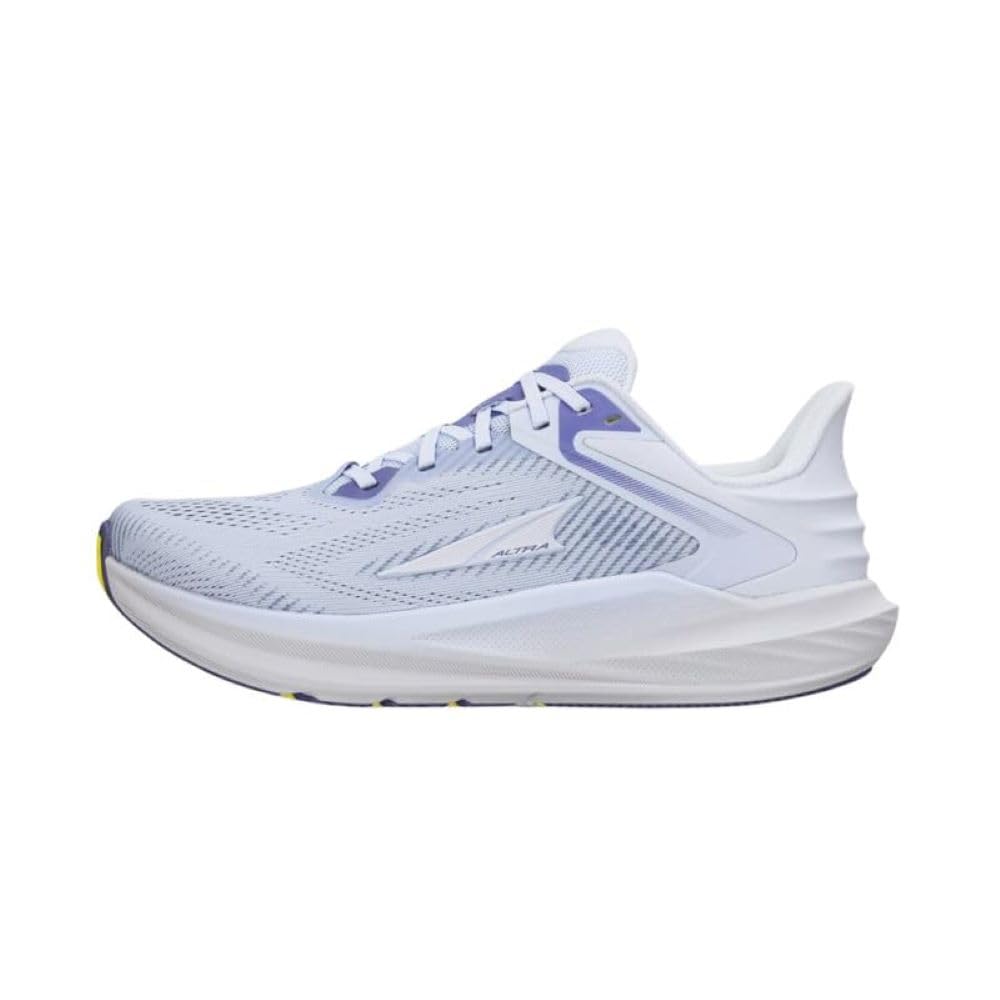
| ALTRA Torin 8 | Road running & daily wear | 0 mm | High | 8.4 oz | Amazon |
| Flux Adapt Graphene XT | Gym, HIIT & cross-training | 0 mm | Minimal | — | Amazon |
| Notace Yama 1 | Trail running & hiking | 0 mm | Minimal | 7.58 oz | Amazon |
| Vivobarefoot Primus Lite II | Vegan everyday barefoot shoe | 0 mm | Minimal | — | Amazon |
In-Depth Reviews
1. ALTRA Women’s Lone Peak 8 Trail Running Shoe
Our pick — over 4.5★ from 750+ verified ratings; the strongest balance of quality and price.
The trail legend that gives your toes room to breathe while keeping you stuck to the ground.
This shoe owns the trail category because of the roomiest toe box in the game. The FootShape fit lets your toes fan out naturally while the 0mm drop encourages a midfoot strike on rocky climbs. The MaxTrac outsole bites into loose dirt and slick rock with aggression that casual hikers will love and thru-hikers will depend on. The refined ripstop mesh upper shrugs off branches better than earlier versions, and the 25mm stack height (heel and forefoot matched) provides enough cushion to handle miles of talus without turning the shoe into a marshmallow.
Buyers report that the wide toe box “eliminates hiker’s toe pain on steep, rocky hikes up to 5+ miles.” The rubber lugs under the metatarsals (the TrailClaw system) add a noticeable edge on descents. At 10.7 ounces per shoe, it is light enough for a daily training run but sturdy enough for multi-day pack carries. The Velcro gaiter trap at the heel keeps debris out on dusty summers.
The soft Altra EGO midsole foam is responsive without feeling dead, and the zero-drop platform transitions smoothly from a brisk trail run to a long, slow hike. The crowd is overwhelmingly on board — 4.6 stars across thousands of owners — and the single most common thread is comfort, which nearly 150 owners bring up. They call it the shoe that ends the search for wide-footed hikers.
grippy trail performer
- Widest toe box in the game — no pinching, no blisters, even after 10 miles
- MaxTrac outsole delivers sticky grip on loose dirt, wet rock, and gravel
- 25mm stack with zero drop hits the balance between ground feel and cushion
narrow toe box
- Mid foot runs tighter than the toe box — a few owners need to size up for the perfect fit
- Color options are limited, especially if you want a non-neon palette
reach for this if: you hike or trail run on varied terrain and your current shoes leave your toes sore by mile 5.
think twice if: you have narrow feet or need a road-only shoe — the lug pattern is aggressive for pavement miles.
2. Hike Footwear Flame – Healthy Barefoot Shoes for Women
The easy-entry barefoot shoe that lightens your step and steadies your balance.
The Hike Footwear Flame is an approachable entry into the barefoot world, especially if you have never worn a zero-drop shoe before. The slip-on design eliminates lace-tugging frustration, and the thin, flexible sole gives you a clear sense of the ground without leaving your feet exposed. The wide toe box lets your toes splay naturally during walking, and the zero-drop platform keeps your hips stacked.
Owners mention it is “lightweight, barefoot feel; good for balance issues like Essential Tremors” and report clear reductions in knee strain during daily walks. The upper is breathable and the sole flexes easily in your hand. At a price point that sits below most competitors, it lowers the barrier to trying minimalist footwear. The arch support gets positive mentions from a handful of owners who find it helps their posture.
The honest trade-off is sizing. Some customers note it runs large and the return process requires a trip to the post office rather than a UPS drop-off. A smaller group notes the sole lacks enough structure for uneven sidewalks. This is a great first step for those ready to leave thick trainers behind.
your first barefoot shoe if: you want to test the zero-drop feel without spending over and prefer a slip-on for ease.
consider another pick if: you have high arches or need serious arch support — the flexible sole offers minimal structure.
3. Xero Shoes Women’s HFS Original Barefoot Running Shoes
The barefoot runner that evaporated years of foot, knee, and back pain for thousands of owners.
The Xero Shoes HFS Original has a cult following because of an exceptionally flexible sole that lets your foot bend the way it wants to. Reviewers point out that “after 10 years and 54 shoe orders, Xero shoes eliminated all foot, knee, and back pain.” One logged 720 pain-free miles in the first 100 days. The wide toe box accommodates bunions and supination without seams rubbing against sensitive spots. The mesh upper stretches slightly to accommodate toe splay, and the entire shoe weighs almost nothing on your foot.
The trade-off is the thin insole — a few owners swap it for a cushioned insert for longer pavement miles. The shoe is built for a natural stride, not a heavy heel strike, so runners transitioning from maximalist trainers need to ease into it over a few weeks to let their calves and Achilles adapt. The sizing is a known variable: the brand recommends ordering a half size up, and it is worth measuring your foot against their chart.
Reviews highlight zero blisters after 9 miles a day, fast muscle recovery, and a sturdier feel than traditional flat sneakers. The flexibility is the key spec — you can roll the shoe into a tube — which is exactly what your foot needs for natural motion.
lightweight road trainer
- Extreme flexibility allows natural foot bending — no rigid shank fighting your stride
- Wide toe box prevents blisters and toe-jamming, even at mile 9
- Ultra-light construction makes it feel like a second skin
thin sole
- Thin insole may feel harsh on concrete — plan to swap or add an insert
- Sizing varies between styles; measure your foot and follow the brand’s size chart carefully
grab these for: road running and daily walking if you want zero-drop without cushion and your feet need room to spread.
skip if: you run half marathons on cement — the minimal sole lacks shock absorption at that distance.
4. Vivobarefoot Women’s Primus Lite 3.5 Barefoot Training Shoe

A performance trainer that strengthens your feet during every squat, lunge, and sprint.
The Primus Lite 3.5 is built for the gym floor. The thin, wide, and flexible sole gives you a stable foundation for lifting while still allowing your foot to move naturally during dynamic movements. Owners with wide flat feet and bunions report it feels “comfortable from the start” for strength training without pain or instability. The wide footbed is particularly useful for exercises that require a broad base — deadlifts, lunges, and kettlebell swings feel locked in.
The balance improvement is a recurring theme. One buyer says “my balance has changed dramatically” within a week of swapping to this shoe. The synthetic mesh upper is breathable and the whole shoe is lightweight enough for a warm-up run. Vivobarefoot constructs the shoe with a focus on circular design — you can see the recycled plastic content in the upper.
The downside that comes up most is the slippery laces; a few owners swap them for elastic no-tie versions. The sizing runs long — a few buyers had to size down after ordering their usual size. The tongue is longer than the previous version, which some find less comfortable. Still, for gym-goers who want a barefoot feel with zero heel elevation, this is the training partner to beat.
ideal for: lifters and cross-trainers who want a stable, wide platform and natural ground feedback.
not for: those with high-volume feet or anyone who wants arch support built into the shoe.
5. ALTRA Women’s Torin 8 Road Running Shoe
The zero-drop road shoe that delivers high cushion without turning your foot into a noodle.
If you need a shoe that works for road miles, gym sessions, and standing all day, the Torin 8 is the most versatile zero-drop option in this list. It uses a 30mm stack height of Altra EGO MAX foam — their bounciest, softest midsole — but keeps the 0mm drop and FootShape toe box. The result is a high-cushion shoe that still feels stable because your heel and forefoot stay at the same level. Owners with plantar fasciitis (arch pain) and Morton’s neuroma (nerve pain between toes) report it resolves years of foot pain.
The Jacquard mesh upper is breathable, the rubber outsole provides solid grip on wet pavement, and the heel collar molds around your Achilles without creating pressure points. At 8.4 ounces per shoe, it is noticeably lighter than the trail-oriented Lone Peak 8. The FootPod technology under the forefoot lets the shoe flex with your natural stride, so you are not fighting a rigid plate. The crowd is clearly happy — 4.6 stars from hundreds of owners.
One honest note: the mid foot is tighter than the toe box. A few owners with higher-volume feet find it compresses the top of their foot. The heel collar sits a bit taller than some competitors, which can cause Achilles irritation for a small subset. Size up half a size if you want extra room through the mid foot.
plush cushioned ride
- 30mm stack with zero drop gives you plush landings without sacrificing alignment
- Roomy toe box prevents neuroma and bunion flare-ups on long walks
- Lightweight at 8.4 oz — disappears on your foot for daily wear
less ground feel
- Mid foot is snugger than the toe box — high arches may feel compression
- Heel collar sits tall; some owners find it rubs the Achilles on first wears
perfect for: road runners and all-day walkers who want high cushion with zero-drop alignment.
consider the lone peak 8 inste: you spend more time on trails than pavement — the Torin’s outsole is designed for roads.
6. Flux Adapt Graphene XT Barefoot Shoes
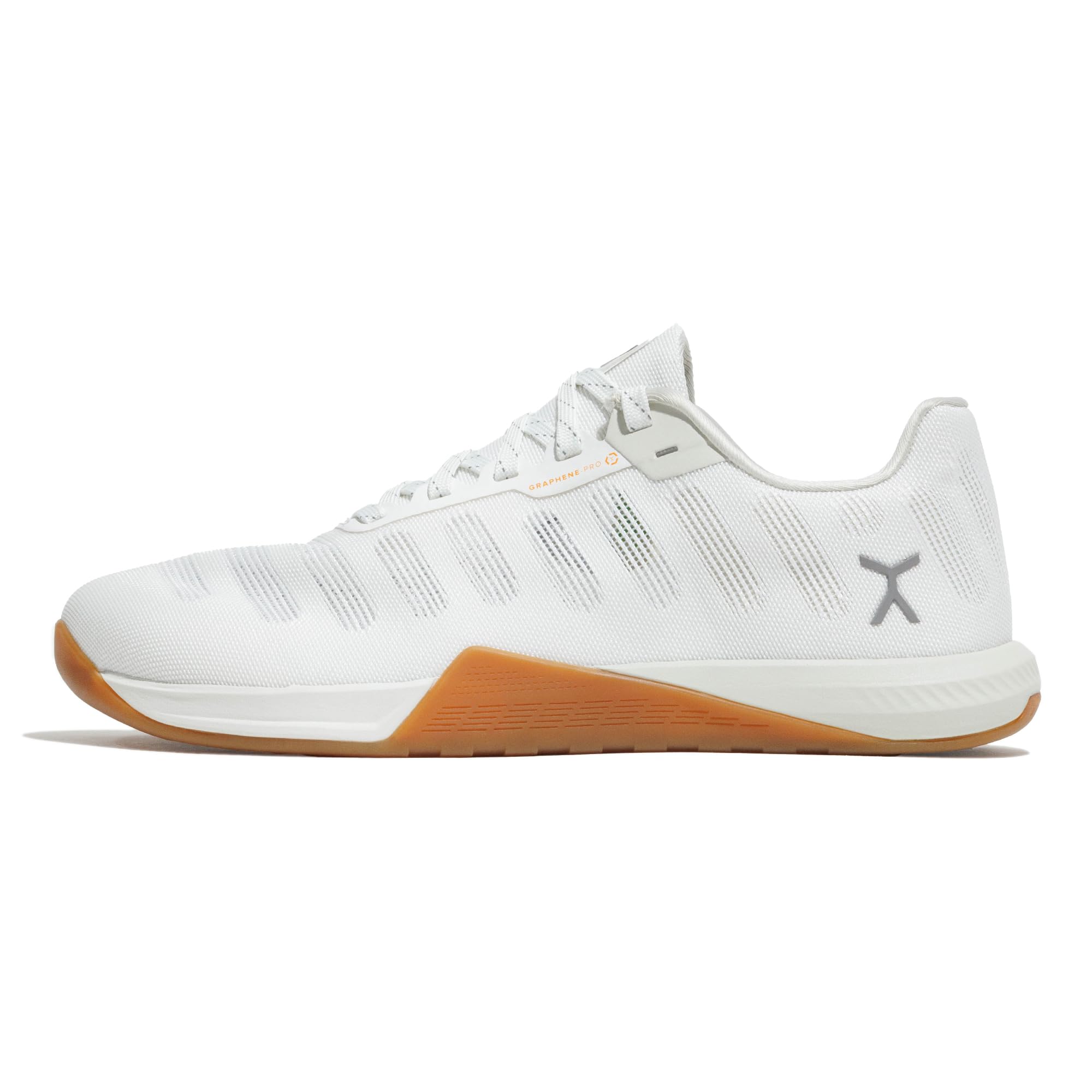
A graphene-reinforced trainer that survives heavy gym use without wearing down.
The Flux Adapt Graphene XT takes durability seriously. The outsole uses graphene, which the brand notes is 200x stronger than steel in a single-atom layer, and the real-world result is a sole that shows almost zero wear after six months of gym use. The ballistic mesh upper resists tearing from dropped weights and barbell contact. This is a shoe built to earn its price tag through longevity.
The toe box is genuinely wide. Owners with bunions and toe discomfort say the shoe completely solved their pain. The zero-drop platform and textured inside sole keep your foot locked in for lifts, while the flexible sole still allows the natural foot motion needed for lunges and jumps. It is not a shoe for distance running — the sole lacks the cushion for half marathons — but for everything from deadlifts to box jumps, it is a standout.
The sizing chart is the main friction point. The brand recommends going up half a size, which works for most buyers, but a few report the shoe still runs long even after scaling up. The ankle collar sits higher than some expect, which can rub the lateral malleolus (the outer ankle bone) on the wrong foot shape. The rest of the feedback is overwhelmingly positive, especially from owners who value ground feel and width.
durable graphene outsole
- Graphene outsole shows almost zero wear after six months of regular gym use
- Wide toe box allows natural toe spread and eliminates jamming during dynamic moves
- Stable and secure for heavy lifts, flexible enough for lateral drills
snug fit
- Size chart runs long for some buyers despite the “size up” recommendation
- Ankle collar sits high and may rub the outer ankle bone on some foot shapes
best for: gym-goers who want a minimal, wide shoe that does not get destroyed by dropping weights or repeated HIIT sessions.
think twice if: you plan to run road miles — this is a training shoe, not a distance runner.
7. Notace Women’s Yama 1 Shoe
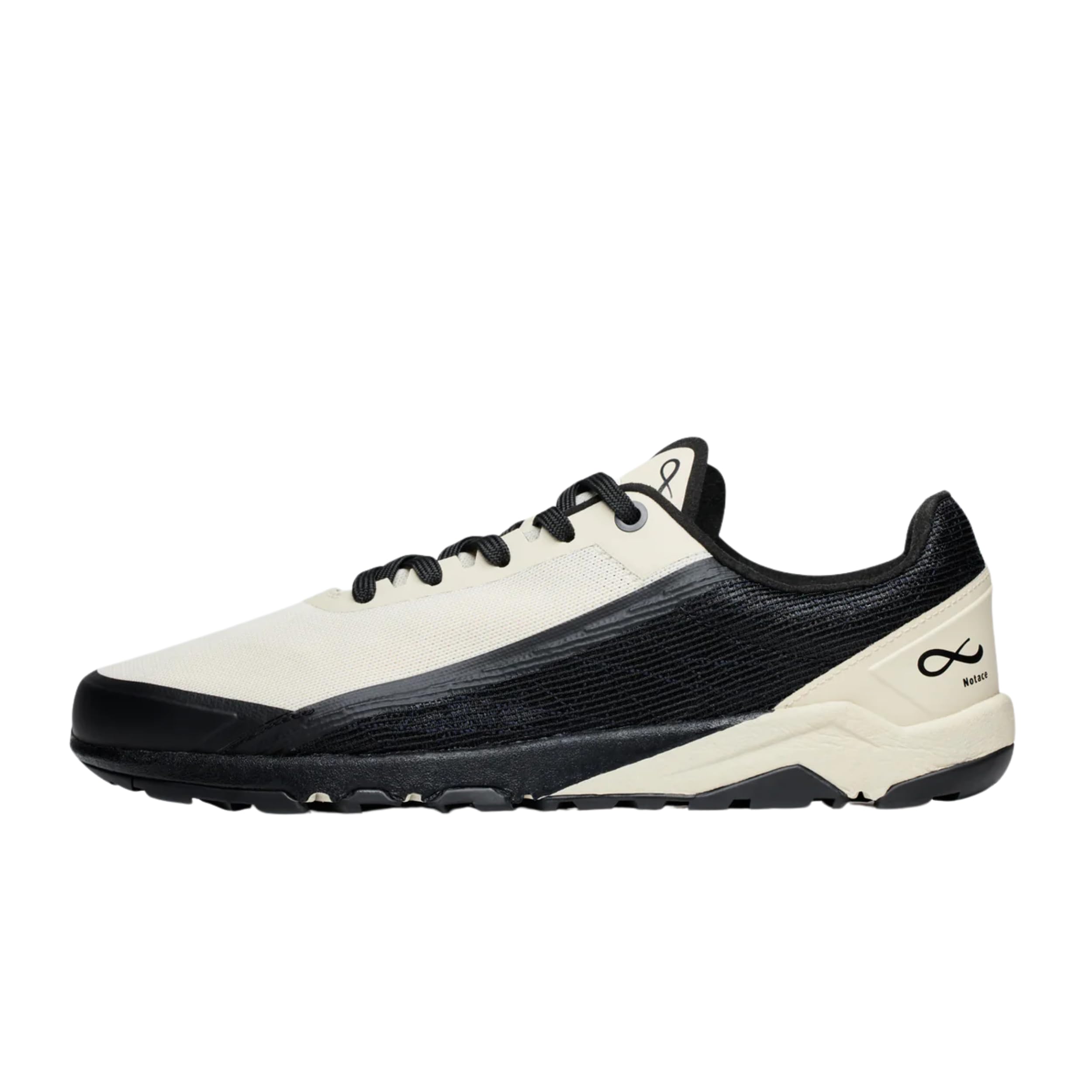
A 7.58-ounce trail machine that feels like a moccasin but grips like a hiking boot.
The Notace Yama 1 is one of the lightest trail-capable minimalist shoes on the market. The 15mm stack height gives you a low, connected feel while the eTPU midsole (a light, responsive foam) provides just enough underfoot dampening to smooth out gravel paths. The 3mm angled lugs are tune for uphill tracking and downhill braking, so you do not slide on loose terrain. The 0mm drop keeps your foot in a natural position.
The synthetic suede heel liner locks your heel in place without slipping, and the wide toe box lets your toes spread for stability on uneven ground. The shoe works for walking, running, and gym use. Owners note that the wide toe box “accommodates toe socks” comfortably, which is a fun detail for barefoot fans. At 7.58 ounces, you will forget you are wearing a shoe with real trail lugs.
The only consistent negatives are minor: the seam at the toe-sole junction is noticeable to some, and the laces need a mid-hike re-tighten for longer excursions. A few owners with very narrow feet find the “wide” toe box too loose in the heel. It is built for a natural stride, not a heavy heel strike — if you land hard on your heels, your calves will feel the difference.
reach for this if: you want an ultralight trail shoe with solid lugs and a low stack that lets you feel every root and rock.
consider the lone peak 8 if: you carry a heavy pack or need more midsole protection for technical, rocky terrain.
8. Vivobarefoot Primus Lite II
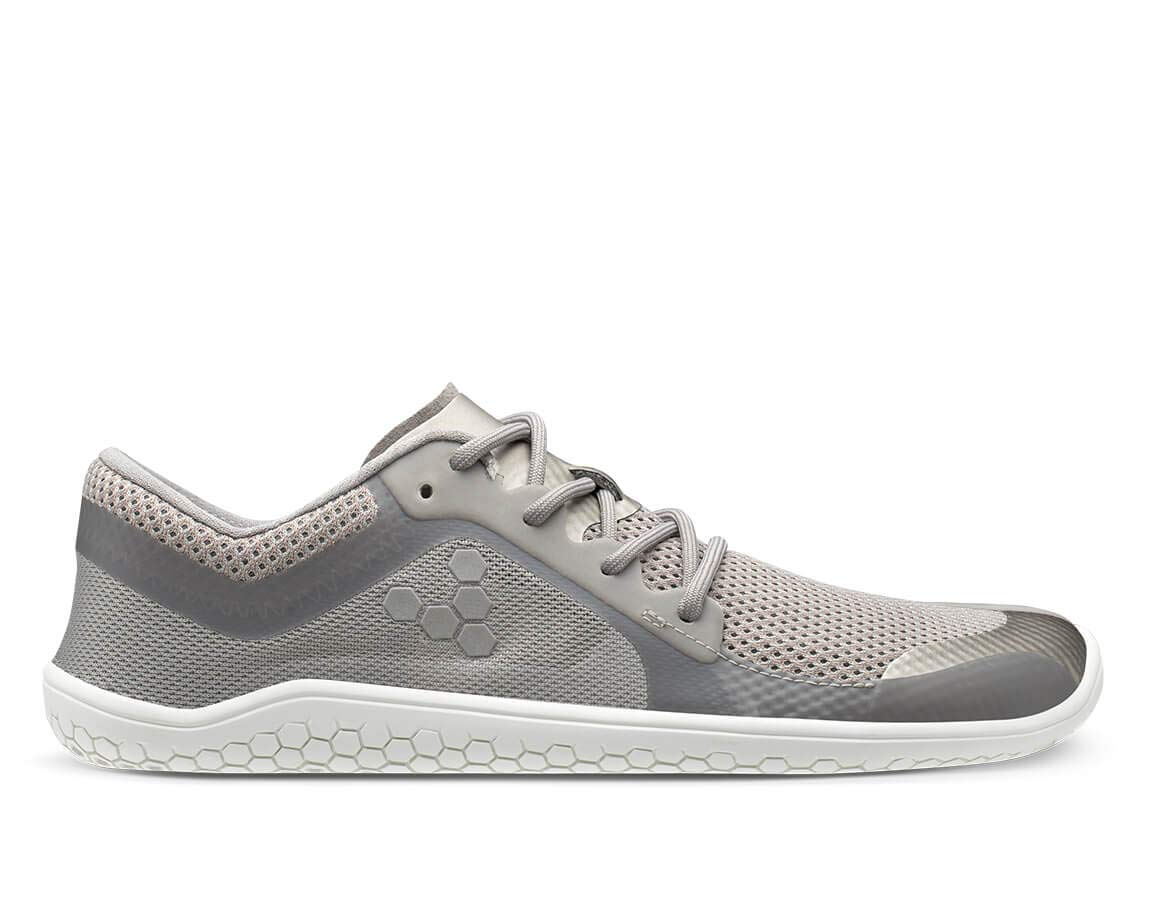
The barefoot classic that uses recycled plastic bottles to deliver a lightweight, comfortable ride.
The Primus Lite II is the shoe that turned many people into Vivobarefoot fans. It uses PET (polyethylene terephthalate) plastic bottles recycled into a breathable mesh upper, making it a vegan shoe that performs as well as it looks. The thin, flexible barefoot sole gives you exceptional ground feel, while the wide toe box accommodates natural splay. It feels like walking barefoot, but with a thin layer of protection between you and the pavement.
Owners describe it as “light, comfortable, stylish” and “perfect for all types of athletic activity.” The shoe works for running, walking, and gym sessions, though it lacks the exaggerated tread of a trail shoe. The upper is machine washable on a gentle cycle — a useful trick for keeping the white color fresh. The shoe is about as close to a minimalist moccasin as you can wear in public.
The one consistent friction is the toe box. While it is wider than conventional shoes, it does not match the extreme width of an Altra FootShape fit. A handful of owners with bunions or very wide forefeet find the arch area too tight. It is also one of the pricier options here. If your feet are average width and you want a barefoot feel with a polished look, this is a great investment.
ideal for: vegans and eco-conscious buyers who want a breathable, lightweight barefoot shoe for daily activities.
not for: those with very wide feet or bunions — the toe box, while better than average, is not the widest.
Understanding the Specs
Zero-Drop vs Stack Height
Zero-drop means the heel and forefoot sit at the same height off the ground, so you strike with your midfoot or forefoot instead of slamming your heel. Stack height is the total sole thickness under your foot, measured in millimeters. A lower stack (15mm or less) gives you more ground feel and forces your foot muscles to work. A higher stack (25-30mm) adds cushion for longer pavement miles. You want zero-drop for alignment, but you choose the stack height based on how much road you cover and how sensitive your joints are.
Toe Box Width and Shape
The toe box is the front section where your toes sit. A wide toe box allows your toes to spread naturally, which improves balance and reduces the risk of bunions, neuromas (pinched nerves), and hammertoes. Different brands shape the toe box differently — Altra’s FootShape is the widest and most anatomical, while Vivobarefoot uses a more tapered shape that still surpasses standard trainers. If you have bunions or wide feet, prioritize the widest toe box you can find.
Flexibility and Ground Feel
A minimalist shoe should flex easily in your hand, especially under the ball of your foot. A rigid sole with a shank plate fights your natural stride. The “ground feel” is the sensory feedback you get through the sole — a thin, flexible sole transmits the texture of the trail or pavement so your nervous system can adjust your stride in real time. The trade-off is protection from sharp rocks, so trail-oriented shoes add a bit more rubber underfoot without becoming stiff.
Outsole Lugs and Tread
The outsole is the rubber bottom of the shoe, and the lugs are the raised bumps or chevrons that provide grip. For road shoes, you want a flat or lightly textured rubber, not deep lugs that will wear down on asphalt. For trail shoes, you want angled lugs (around 3-4mm deep) that bite into loose dirt and push you forward on climbs. Cheaper outsoles use generic rubber that loses grip in wet conditions; better ones use branded compounds like MaxTrac or Vibram.
FAQ
What is the difference between barefoot and minimalist shoes?
How do I transition to zero-drop shoes without injury?
What is stack height and why does it matter?
Will wide toe box shoes fix my bunions?
Can I wear minimalist shoes for hiking?
How do I clean my minimalist shoes?
What is the difference between Altra’s FootShape and Vivobarefoot’s toe box?
Do minimalist shoes work for people with flat feet?
How long does a minimalist shoe typically last?
Can I use minimalist shoes for CrossFit or weightlifting?
Final Thoughts: The Verdict
If you want one dependable pick, the best women’s minimalist shoes pick is the ALTRA Lone Peak 8 because it combines the widest toe box in the category with a versatile trail outsole and balanced midsole cushion — it works for hiking, running, and everyday wear without compromise. If you want a road-running daily trainer with more cushion, grab the ALTRA Torin 8. And for gym training and heavy