
Our readers keep the lights on and the coffee maker working hard! As an Amazon Associate, I earn from qualifying purchases.
Specs are compiled from manufacturer listings and verified buyer reviews and can change over time — please confirm the key details on the product page before buying.
If you are new to climbing or just moving past rental shoes, the biggest question is simple: which ones actually fit well and help you climb better without torturing your feet? The good news is that you do not need to spend a fortune to get a solid pair that will last through your first year of gym sessions and outdoor routes. This guide breaks down seven of the most popular women’s-specific climbing shoes, using real owner feedback and published specs to help you pick the right fit for your foot shape, skill level, and budget.
I’m Mohammad — the founder and writer behind Calories Fit. This guide is built by comparing the manufacturers’ published specifications and the patterns across verified customer reviews, so you get each pick’s real strengths and trade-offs instead of marketing spin.
Whether you boulder at the gym two nights a week or are planning your first outdoor sport climb, these reviews will help you zero in on the best women’s climbing shoes for your needs without guessing at sizing or falling for hype.
Our Picks at a Glance


How To Choose The Best Women’s Climbing Shoes
Picking your first pair of climbing shoes — or upgrading from rentals — is a different decision than buying any other shoe. Fit is everything. A shoe that fits your foot shape well will feel supportive and let you trust small footholds. One that does not match your foot profile will hurt or slip, no matter how good the rubber is.
Understand Women’s-Specific Fit
Women’s climbing shoes are built on a last (the mold the shoe is formed around) that is narrower in the heel and lower in volume overall than unisex or men’s models. This matters because a loose heel can make you slip off tiny edges. A women’s-specific shoe gives you a tighter heel pocket and a lower arch, which helps you feel the rock through your foot more directly.
Snug vs Painful — Getting Sizing Right
Climbing shoes should feel snug, with your toes lightly curled at the tips. But they should not be so tight that the pain distracts you on the wall. A common mistake among beginners is sizing down too aggressively. Most brands recommend starting at your street shoe size or just half a size down, then adjusting as the shoe breaks in and the leather or synthetic upper stretches slightly.
Flat vs Downturned Profile
A flat last (no downturn) is best for all-day comfort and beginner use. It lets you stand on holds without your toes screaming. A moderate downturn gives you more power on steep terrain and overhangs, but it is less forgiving for long sessions. If your climbing is mostly vertical gym routes and easy outdoor slabs, stay with a flat or low-downturn shoe.
Quick Comparison
| Model | Best For | Sole Rubber | Closure | Profile | Amazon |
|---|---|---|---|---|---|
| La Sportiva Tarantulace★ Best Overall | Beginner all-around | 5mm FriXion RS | Lace | Moderate Downturn | Amazon |
| Black Diamond MomentumPremium Pick | First shoe, gym climber | 4.3mm Rubber | Strap | Flat | Amazon |
| SCARPA Helix | Trad & sport beginner | 3.5mm Vibram XS Grip 2 | Lace | Flat | Amazon |
| BUTORA Endeavor | Wide feet, all-day comfort | NEO Fuse Sticky | Speed Lace | Flat | Amazon |
| Evolv Elektra | Aggressive fit, bouldering | Evolv Rubber | Strap | Moderate | Amazon |
| La Sportiva Tarantula Boulder | Intro bouldering, wider foot | 5mm FriXion RS | Hook & Loop | Flat | Amazon |
| SCARPA Origin | Gym beginner, wide toe | 5mm Vision | Strap | Flat | Amazon |
In‑Depth Reviews
1. La Sportiva Womens Tarantulace Rock Climbing Shoe
Our pick — 4.5★ from 150+ verified ratings; the strongest balance of quality and price.
The lace-up that lets you dial in a custom fit on two different-sized feet.
This shoe is the crowd favorite for a reason: it strikes the hardest balance between beginner comfort and real climbing performance. The lace system gives you control right down to the toe, which is a huge plus if one foot is a touch smaller than the other — buyers on the review pages specifically call out being able to tighten the smaller foot for a snug feel. The moderate downturn in the toe gives you enough shape for small footholds without the aggressive curl that makes a shoe painful to wear between climbs.
The 5mm FriXion RS rubber is sticky enough for both gym plastic and outdoor granite, and owners note it offers “good slip resistance” compared to strap-on models. Fit is the aspect that gets the most praise — the shoe runs medium-to-accommodating in width, so it works for feet that are not super narrow. The catch is the stiffness: after about six months of regular use, as some buyers report, the toe loses some of its rigidity and begins to bend at the toes, meaning this is not a shoe that will hold elite-level edging performance for multiple seasons. For a beginner climbing one to two times a week, that timeline is fair.
comfortable all-day lace
- Laces let micro-adjustments for uneven feet
- 5mm rubber offers real grip on small holds
- Moderate downturn helps on steeper routes without punishing toes
softens precision edges
- Toe softens noticeably after months of regular use
- Too soft for hard outdoor edging on tiny crystals
best for: new climbers and weekend gym-to-crag climbers who want one versatile shoe they can wear for long sessions without wanting to tear them off.
think twice if: you need a stiff platform for sharp, tiny outdoor edges — the toe will bend before you stick the move.
2. BLACK DIAMOND Women’s Momentum Strap Rock Climbing Shoes
An airy, knit upper that breathes while a pointed toe goes hunting for holds.
The Momentum is Black Diamond’s answer to the beginner who wants something that feels modern, breathable, and less intimidating than a classic leather shoe. The engineered knit upper is a genuine departure from the suede or synthetic norm — it lets air move through the shoe so your feet stay cooler during long gym sessions. The flat last and low asymmetry make this a comfortable all-rounder, and the pointed, hard toe is surprisingly good at locking onto small edges for a shoe at this level.
Sizing, as with most climbing shoes, requires attention. Owners mention that the knit stretches over time, so the initial snug fit is normal. Many reviewers advise going down a full size from your street shoe, or at least half a size. One common note is that the strap closure does not cinch as tightly as a lace system would, so if you have very narrow heels or low-volume feet, you may feel some looseness. That said, the color options and the low-profile look earn frequent compliments — this is a shoe people enjoy wearing around the gym between climbs.
The 4.3mm rubber outsole is slightly thinner than the 5mm you see on the La Sportiva picks, so you get more sensitivity on holds but slightly less durability over a long season. For a beginner who is mostly climbing indoors a couple times a week, that is a fair trade for the extra comfort.
grab these if: you want a breathable, low-profile shoe that feels more like a modern sneaker — and you plan to climb mostly indoors on gym walls.
not your shoe if: you need a stiffer sole for long afternoons of outdoor trad climbing, or you have narrow feet that need a tight heel pocket.
3. SCARPA Women’s Helix Lace Rock Climbing Shoes

A neutral, leather lace-up that molds to your foot after a few sessions — and stays comfortable.
The Helix is a classic for good reason: it is a flat-last shoe that does everything reasonably well without punishing your feet. The leather upper (1.8mm suede) stretches roughly half to a full size over its life, so the initial snug fit becomes a custom, glove-like feel. Laces let you adjust the tension at the toe, the instep, and the heel independently — a huge advantage if you have one foot slightly larger than the other.
Where this shoe really stands out from the Tarantulace is the outsole: the 3.5mm Vibram XS Grip 2 rubber is softer and more sensitive, meaning you feel the holds more directly. But it is also less durable than the thicker 5mm FriXion RS — a trade-off you accept for better feedback on tiny edges. Owners consistently praise the grip and the comfort for long days, with several noting it is “the most comfortable neutral climbing shoe for average-shaped feet.”
The downside is fit inconsistency. The shoe runs small — buyers recommend sizing up at least half a size, and in some cases a full size. A few owners also received shoes that appeared pre-worn or had construction flaws (a piece of material irritating the heel). That quality-control note is worth factoring in when you compare it with the more consistent La Sportiva options.
reach for the helix if: you want a comfy lace-up for trad, sport, and gym days — one that will mold to your foot over time — and you value ground feel over ultimate durability.
look somewhere else if: you need a shoe that fits perfectly straight from the start without any sizing guesswork, or you need an outsole that will survive months of abrasive granite edges.
4. BUTORA Women’s Endeavor Rock Climbing Shoe

The hemp-lined shoe that fits wide feet without the usual curled-toe agony.
If you have ever tried to squeeze a wide forefoot into a narrow climbing shoe, you know the pain of toes pinching against the side of the upper. The Butora Endeavor is one of the few women’s-specific shoes built with genuinely wide-friendly dimensions. Owners with bunions and wider metatarsal spreads report that this shoe lets their toes lie flat without curling under, even after a full day at the crag.
The 100% organic hemp lining is not just a sustainability talking point — it controls stretch and odor far better than standard synthetic linings. Several owners note that even after months of use, the shoe still does not smell, and the edge is still sharp. The NEO Fuse sticky rubber offers solid smearing capability and decent edging (though owners note it is slightly less precise than the stiffer Evolv Kiras).
Comfort is the most-praised aspect here — 19 owners single it out. The split leather footbed and 3D injection molded ABS midsole give good torsion rigidity for standing on small edges, while the speed lace closure offers a quick, secure fit. The main headache is the sizing confusion: the shoe uses a dual male/female sizing system, and you need to read the chart carefully. Most buyers with wide feet size up 1 to 1.5 sizes from their street shoe for the right length and width.
perfect for: climbers with wide feet or bunions who want a comfortable shoe that still performs on 5.11 routes.
skip it if: you have a narrow foot — the Endeavor is cut wide by design, and a narrow foot will slide inside.
5. Evolv Elektra Climbing Shoe – Women’s
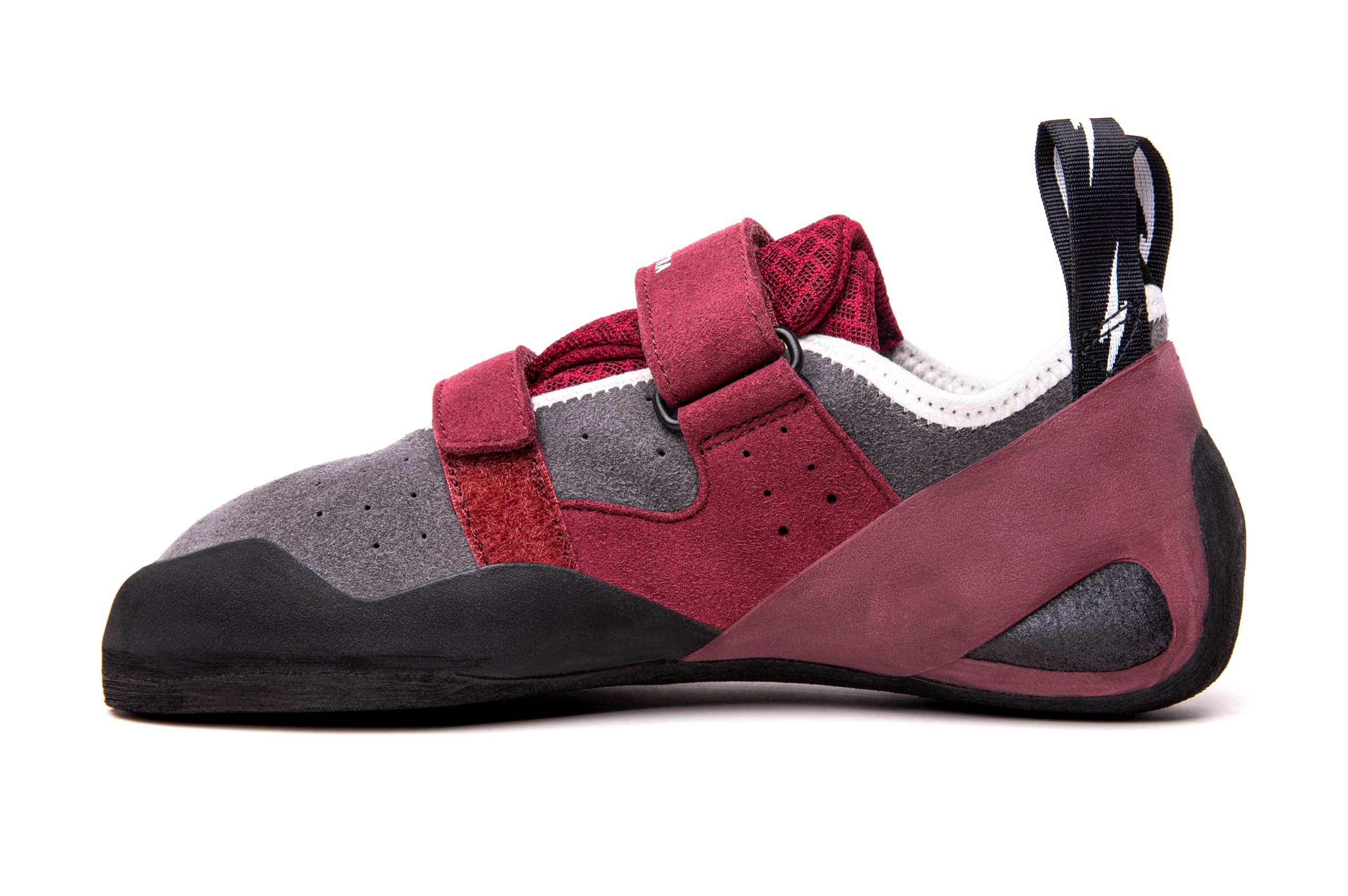
A performance shoe that expects you to size up — way up — for a crushing fit.
The Elektra is the most polarizing shoe on this list because of its sizing. The reviews are clear: you need to order up 1.5 to 2 full sizes from your street shoe to get the fit right. A size 8.5 street shoe owner reports that a women’s 10.5 fits perfectly. Ignore this rule and you will be staring at a shoe that will not even go onto your foot. That said, once you nail the sizing, the performance is real.
This is not a shoe for casual walking around the gym. The moderate downturn and asymmetrical shape pull your toes into the classic climbing curl, which gives you excellent power transfer onto small edges. Owners who got the size right say the shoe “improves bouldering performance” and fits “like a glove.” The material quality and strap closure earn praise for durability and ease of use. If you are already projecting V3s or harder in the gym and want a shoe that will not hold you back, the Elektra delivers.
But the sizing gamble is real. Several buyers could never get a pair that fit, no matter how much they sized up, because the shoe runs dramatically small relative to the size chart. You need to be willing to measure your foot against the brand’s specific sizing guide rather than just ordering your go-to shoe size.
best for: intermediate climbers who already understand aggressive-fit shoes and are willing to navigate the sizing chart carefully to get a performance upgrade.
pass on it if: you want a shoe that fits on the first try without research, or you have any hesitation about sizing up two whole sizes.
6. La Sportiva Womens Tarantula Boulder Climbing Shoe
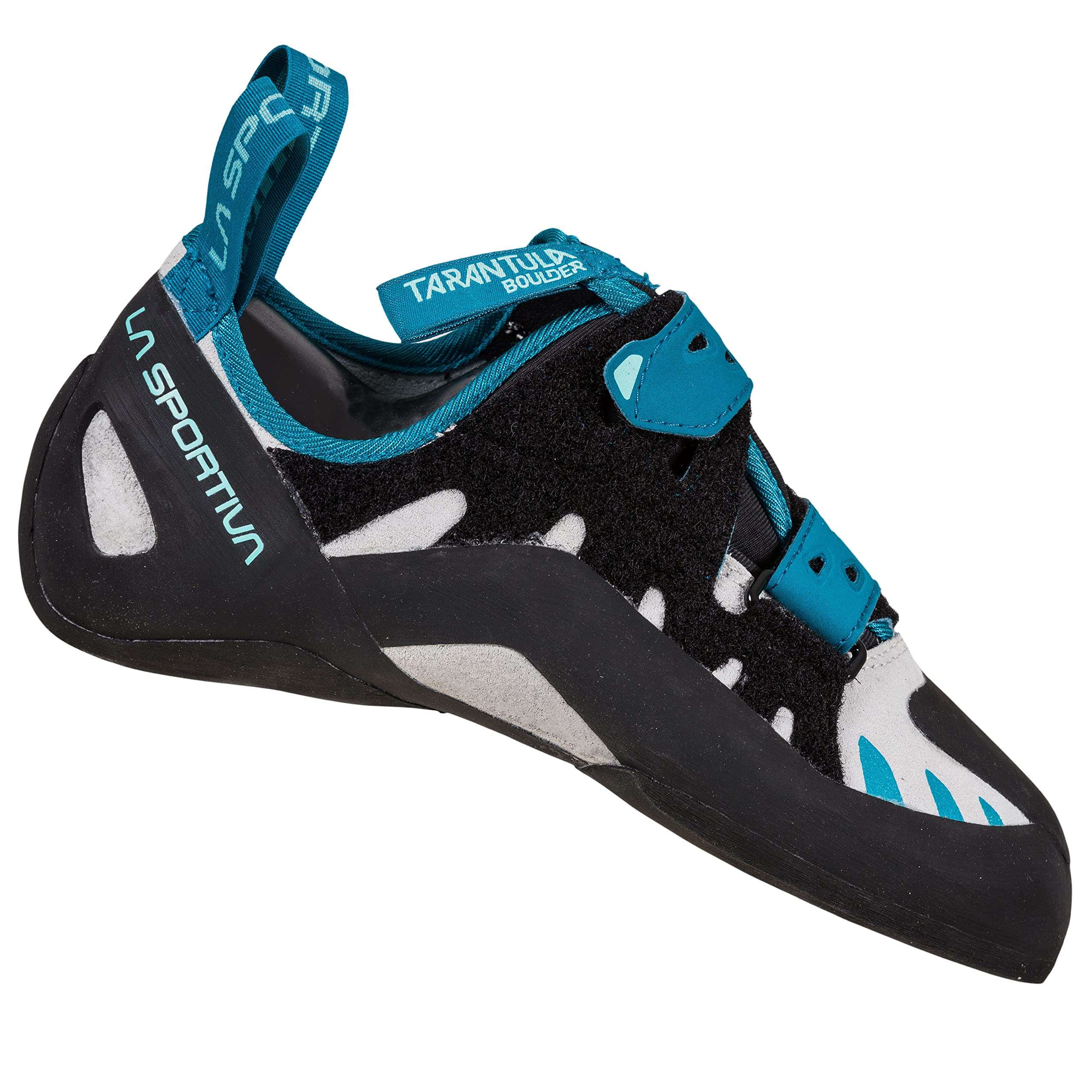
A roomy, flat beginner shoe with hook-and-loop speed and thick rubber.
The Tarantula Boulder is basically the strap-on sibling of the Tarantulace. It shares the same 5mm FriXion RS rubber and the same flat, rounded last, but it swaps laces for a two-strap hook-and-loop system. That makes it faster to get on and off between climbs — a small but real convenience when you are in a busy gym session.
The shoe is designed for introductory bouldering and people who have not yet developed a trained foot. The volume is higher than average, and the width is medium-to-wide, so it works well for feet that feel squeezed in narrower models like the Black Diamond Momentum. Quality is the aspect most consistently praised, and several owners describe it as “the best shoes to climb” at this price point.
The honest trade-off is comfort: a few owners find that the back of the shoe digs into the heel or rubs the ankle, causing discomfort during longer sessions. That feedback is mixed, not universal — many other buyers find the shoe very comfortable. If you have sensitive heels or a history of Achilles irritation, you may want to try these on before committing.
grab these if: you are a new boulderer who wants fast on-off convenience and a roomy toe box that does not crush your toes sideways.
think twice if: you have lingering heel pain or you need a shoe that disappears from your awareness entirely during a two-hour session.
7. SCARPA Women’s Origin Rock Climbing Shoes
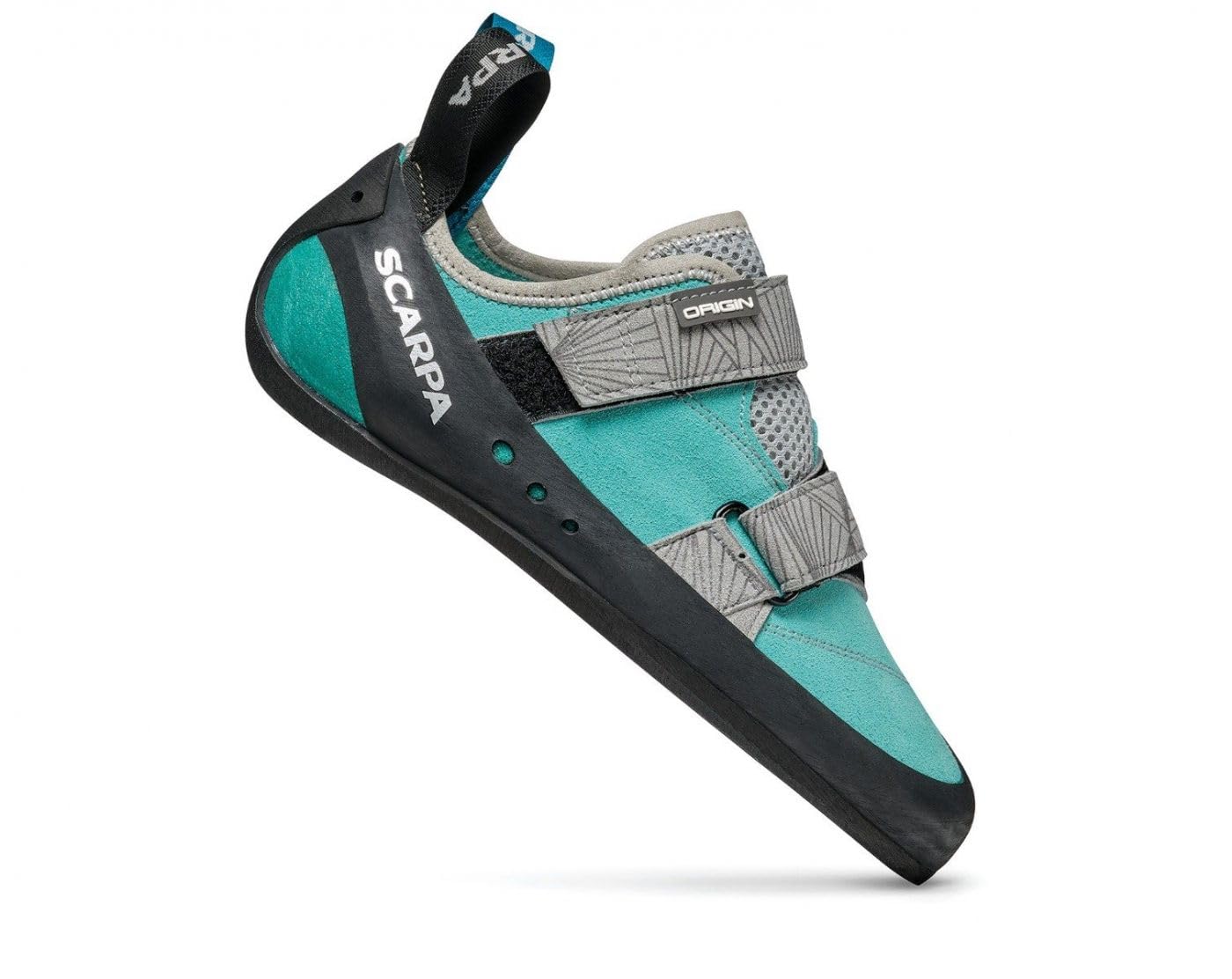
A wide-toe strap shoe that runs small — but rewards you with comfort after break-in.
The Origin is SCARPA’s entry-level strap shoe, designed for gym and sport climbing. It uses a 5mm Vision outsole that is thick enough to handle regular gym wear without wearing down quickly. The flat last and slight asymmetry give you a comfortable neutral stance that works well for beginners learning to trust their feet on small holds.
The standout feature here is the wide toe box. Owners with wider feet or bunions report that the Origin alleviates pressure across the forefoot — a rare find in climbing shoes, which tend to taper aggressively. The suede upper (1.8mm) stretches over a few sessions, so that initial snugness becomes a more relaxed fit. The sizing is the biggest sticking point: the shoe runs very small, and 12 owners (the most-discussed aspect) flag this as a challenge. Most buyers recommend going up a full size from your street shoe, and even then a few found the shoe too short.
If you are just starting out and you have a wider foot, the Origin is a solid choice once you get past the sizing hurdle. The quality is consistently praised, and the strap system is simple enough that you can adjust tightness between climbs without re-lacing.
go for the origin if: you have a wider forefoot or bunions and want a comfortable gym shoe that lets your toes splay naturally.
it’s not for you if: you are not willing to size up a full size — ordering your normal street shoe will result in a shoe that is too short to climb in.
Understanding the Specs
Rubber Thickness and Compound
The outsole rubber (measured in mm) determines how long your shoe lasts and how much feel you get from the rock. A thicker sole (5mm) is more durable and better for beginners, while a thinner sole (3.5mm) lets you feel edges more but wears faster. The compound name — FriXion RS, Vibram XS Grip, Vision — is a blend formula that affects stickiness; softer compounds grip better but wear quickly, harder compounds last longer but can feel slippery on polished holds.
Last Profile and Downturn
The last is the mold that gives the shoe its shape. A flat last (no downturn) is the most comfortable and works best for beginner use and multi-pitch trad routes. A moderate downturn curves your toes slightly, which gives you more power on steep overhangs at the cost of all-day comfort. A high-downturn, asymmetrical shoe is for aggressive bouldering and sport performance, not for beginners.
Closure System
Laces give you the most precise fit — you can tighten the toe box independently from the heel. Straps (hook-and-loop or buckle) are faster to take on and off, which gym climbers love, but they cannot fine-tune fit across different parts of the foot. Speed laces (a single-pull system) are a middle ground: faster than laces but still adjustable.
Volume and Width
Women’s-specific shoes are built with lower volume overall (less material in the heel and instep) and narrower heels than unisex models. Within that category, individual shoes still differ: some are “medium/high volume” (more room for a full foot) and some are “low volume” (for thin, narrow feet). Matching volume to your foot shape is more important than the size number on the tag.
FAQ
How should women’s climbing shoes fit compared to street shoes?
Should I buy a women’s-specific shoe or a unisex model?
What is the difference between a flat shoe and a downturned shoe?
Do climbing shoes stretch over time?
Which rubber compound lasts longest?
Can I use beginner climbing shoes for outdoor sport climbing?
How do I clean climbing shoes without ruining the rubber?
What does “low volume” mean in a climbing shoe?
Final Thoughts: The Verdict
For most buyers, the best women’s climbing shoes are the La Sportiva Tarantulace because they combine lace-up precision, a balanced moderate downturn, and thick 5mm rubber that sticks to gym holds and outdoor rock alike — all at a price that does not punish a beginner’s budget. If you want a breathable, modern strap shoe for indoor climbing, grab the Black Diamond Momentum. And for wide feet that struggle to find a comfortable women’s-specific shoe, the BUTORA Endeavor is the one to reach for.
How We Picked
We do not accept paid placement. Every pick is matched to a real buyer and a real use-case; we do not hands-on test units.
Sources & Methodology
Specifications: manufacturer listings and product documentation. Review insights: verified customer reviews, as of July 2026. Pricing: not shown on this page (it changes often); check the current price via the retailer link.
As an Amazon Associate, Calories Fit earns from qualifying purchases. This does not affect which products we feature.