
Our readers keep the lights on and the coffee maker working hard! As an Amazon Associate, I earn from qualifying purchases.
Specs are compiled from manufacturer listings and verified buyer reviews and can change over time — please confirm the key details on the product page before buying.
Sliding on a patch of hidden ice is the moment every winter boot buyer fears. The right pair stops that dread before it starts, blending a grippy outsole with real insulation so your feet stay warm and planted from the sidewalk to the trail. This guide breaks down nine of the most talked-about women’s winter boots, comparing traction, warmth, and fit so you can pick the pair that matches how you actually spend your winter days.
I’m Mohammad — the founder and writer behind Calories Fit. This guide is built by comparing the manufacturers’ published specifications and the patterns across verified customer reviews, so you get each pick’s real strengths and trade-offs instead of marketing spin.
You need boots that keep you warm and steady on ice, but you don’t want to pay for extras you’ll never use. Here’s how to pick the best women’s boots for ice and snow for your winter routine.
Our Picks at a Glance

How To Choose The Best Women’s Boots for Ice and Snow
Winter boots only earn their place if they solve three problems at once: keeping you upright on slick surfaces, keeping your feet warm in the cold, and keeping moisture out entirely. Most buyers focus on the brand or the style first, but the real decision lives in the outsole, the insulation, and the fit.
Start with the outsole: it is your only contact with the ice
Look for deep, multi-directional lugs (the raised rubber nubs on the bottom) because they bite into snow and grip icy patches. Some brands use special rubber compounds with microscopic particles designed to dig into frozen ground — a feature worth seeking out if you face ice regularly rather than just powder.
Match the insulation to your climate and activity level
Insulation is measured in grams — the higher the number (like 200g vs 400g), the warmer the boot. But if you are actively walking, shoveling, or hiking, your body generates heat, so a lighter boot with 200g insulation often feels more comfortable than a heavier 400g one that makes your feet sweat.
Never skip the waterproofing check
Slog through slush, puddle splashes, or deep snow and you will feel the difference between a waterproof membrane and a water-resistant coating. A seam-sealed construction or a waterproof breathable membrane keeps feet dry for hours, while merely water-resistant boots will eventually let moisture through.
Quick Comparison
| Model | Best For | Insulation | Traction Tech | Weight | Amazon |
|---|---|---|---|---|---|
| Columbia Red Hills Omni-Heat★ Best Overall | All-day warmth and grip | Thermal-reflective lining | Grippy rubber outsole | Lightweight | Amazon |
| MUCK Arctic Ice TallPremium Pick | Severe wet and icy conditions | 8mm Neoprene bootie | Vibram Arctic Grip | 4.5 lb | Amazon |
| The North Face Chilkat V 400Top Performer | Deep-cold, high-activity use | 400g insulation | Non-slip wet traction | 1.63 lb | Amazon |
| KEEN Greta Waterproof | Hiking on icy trails | 200g insulation | Cold-weather traction | 1.26 lb | Amazon |
| KEEN Revel 4 Mid Polar | Snow and ice grip | 200g KEEN.WARM | KEEN.POLAR TRACTION | 20.32 oz | Amazon |
| Sorel Whitney II Tall | Harsh, deep-snow winters | 200g insulation | Moulded rubber sole | 3.75 lb | Amazon |
| Columbia Ice Maiden Slip III | Quick slip-on city wear | Rich insulation | Omni-Grip rubber | Lightweight | Amazon |
| Kamik Momentum 3 | Sub-zero everyday warmth | HEAT-MX technology | Non-slip traction | Lightweight | Amazon |
| Carhartt Pellston | Warm, casual snow wear | 200g 3M Thinsulate | Sturdy winter sole | — | Amazon |
In‑Depth Reviews
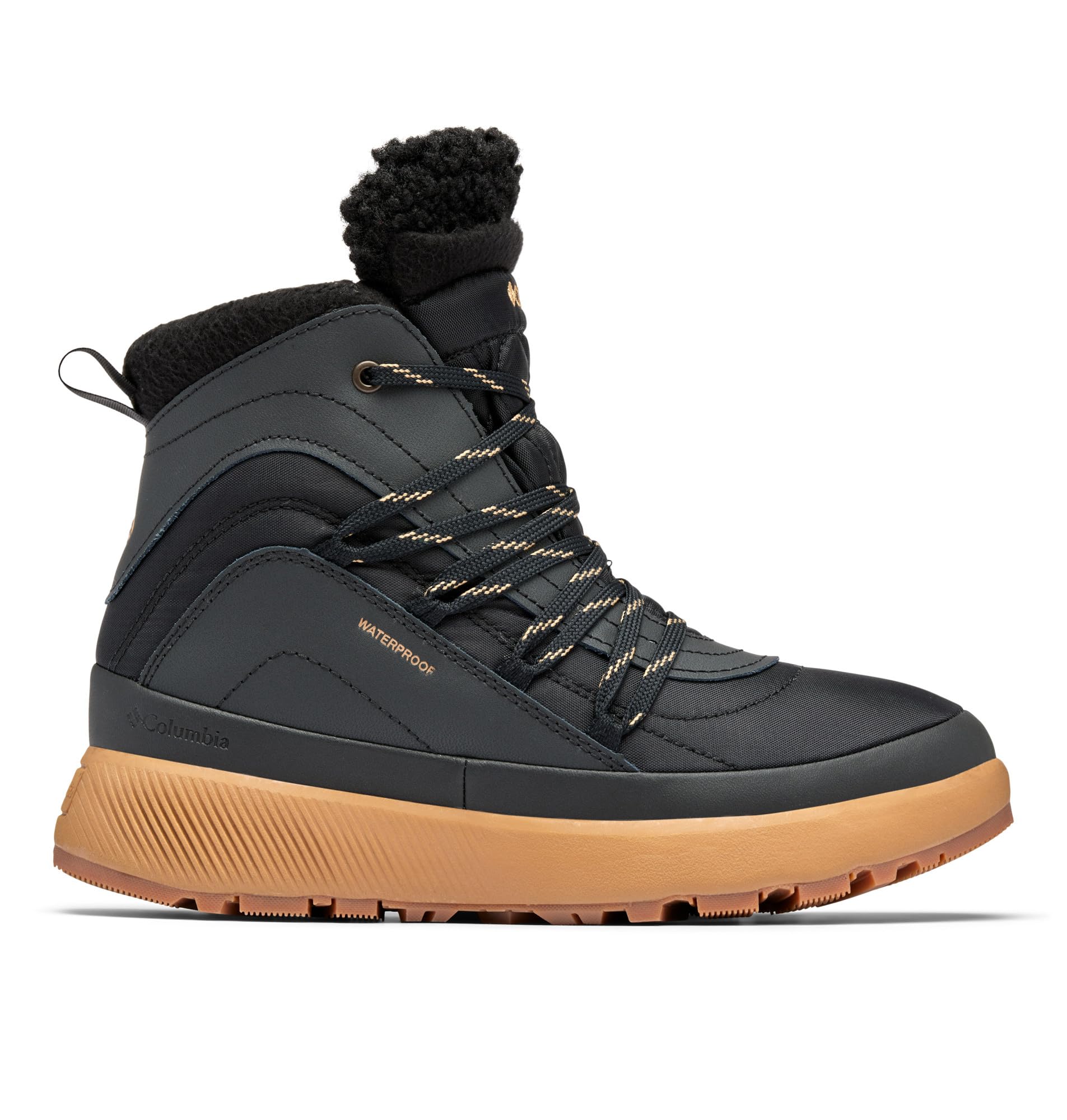
1. Columbia Women’s Red Hills Omni-Heat Snow Boots
Our pick — over 4.5★ from 350+ verified ratings; the strongest balance of quality and price.
The crowd favorite that balances warmth, grip, and all-day comfort without the winter-boot clunk.
The defining feature here is the thermal-reflective lining — a layer that bounces your body heat back at you, which is why buyers consistently report toasty feet even in frigid conditions. The warmth is the single most praised trait, and it is backed by a plush collar that seals in coziness around the ankle. What wins people over is how the boot pairs that warmth with a grippy sole that handles slush and ice without slipping.
Comfort runs a close second in the owner feedback, with several buyers describing a cushioned ride and solid arch support that works for long walks — even one 2.5-mile outing with a 20lb vest. The waterproofing holds up too, with the high ankle blocking puddle splashes and keeping feet dry in freezing slush. It is also notably lightweight for a winter boot, which makes it easy to wear all day.
The main fit advice from owners is consistent: size up. Most buyers who ordered a half or full size up found a more secure fit, especially when wearing thicker socks. The laces run a little long on some pairs, and the ankle runs slim, so if you have a wider foot or prefer a roomy fit, plan accordingly. The review pages sum it up: buyers report “Comfy, warm, fully waterproof in -10°C slush/ice.”
Why owners love it
- Warmth is the standout — rated the top positive trait by a wide margin
- Lightweight feel despite real insulation, great for distance walking
- Waterproofing holds through slush, puddles, and snow shoveling
Fit notes to know
- Sizing runs small for many — plan to size up a half or full size
- Slim ankle and looser laces may not suit wider feet
- Some buyers needed a short break-in period
Reach for this if: you want a do-everything winter boot that stays warm, dry, and comfortable from city sidewalks to light trails.
Think twice if: you have wide feet or a high instep, since the slim ankle and snug fit may feel restrictive.
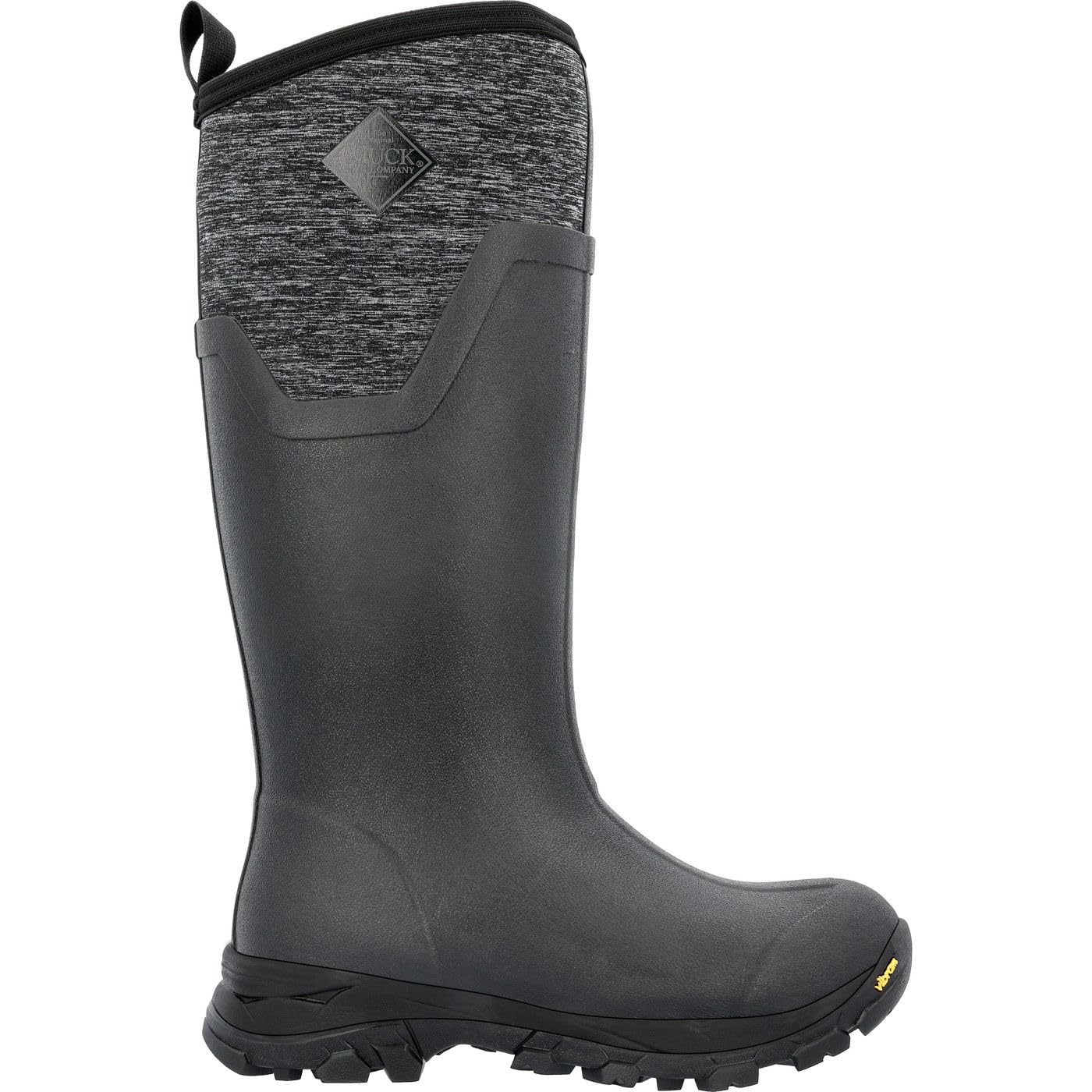
2. MUCK Women’s Arctic Ice Tall Boot + Vibram Arctic Grip A.T.
The tall, serious-workhorse boot with a specialized sole that treats glare ice like dry pavement.
Its secret weapon is the Vibram Arctic Grip A.T. outsole, a rubber compound engineered with microscopic particles that dig into icy surfaces — the same technology that earns consistent praise for slip resistance in the harshest wet conditions. This is the boot for severe, wet, icy weather, with an 8mm neoprene bootie (a thick, stretchy, insulating layer) that wraps your foot and lower leg in warmth and flexibility.
Warmth and fit are what owners rave about most. The 17-inch shaft height means you can wade through knee-high snow without snow getting in, and the fleece embellishment adds comfort at the top edge. It runs slightly large, so many buyers size down a half size. The trade-off for all that coverage is weight — at 4.5 pounds, these are not a light boot, and the tight calf shaft means they suit narrower legs best.
The durability story is admittedly mixed. Some owners mention years of hard use — one buyer got four years from a previous pair — while others mention the rubber cracking over time. If you need a boot that survives ice fishing, barn work, and serious snow, this is a top contender. The review pages sum it up: customers note “very warm to -30°F with wool socks” and “slip-resistant” on ice.
For serious winter work: the Vibram Arctic Grip outsole and tall waterproof shaft make this the most capable pick on ice and in deep snow.
The honest trade-off: at 4.5 lb with a snug calf, it is heavy and not for narrow-fit-sensitive or short-legged wearers.
Pick this if: you face severe wet and icy conditions and want maximum coverage, warmth, and specialized ice grip.
Pass it by if: you want a light, easy-walking boot or have larger calves that will not fit the snug shaft.
3. THE NORTH FACE Women’s Chilkat V 400 Waterproof Snow Boot
The heavy-insulation pick that shrugs off the deepest cold while still gripping slick snow and ice.
The headline number here is 400g of premium insulation — double what most winter boots carry — which is precisely why reviewers point out warm feet during long, stationary stints in freezing weather. A mail carrier in Colorado logged 8- to 12-hour days in these without cold complaints, and another owner used them for five years in the Rocky Mountains with soles still intact and the inside still not shredding. That durability is the stuff of legend.
Traction earns its keep on wet pavement and glacier walks alike. The sole is consistently described as non-slip on slick snow and ice, with one owner praising them on actual glacier trekking. They are also great for wide feet, a genuine rarity in this category, and the waterproofing holds up through puddles and snow. The stiffness breaks in, but the boot remains heavy and bulky — two things you feel when driving or walking long distances on dry pavement.
Sizing is the one thing you must get right: the consensus is to order a full size up. Nearly every owner who sized up found the perfect fit with thick socks, while those who bought their normal size found them too tight. The review pages sum it up: shoppers say “great on glacier walks and slick snow/ice; no slipping” and “keeps foot dry in snow/rain.”
What stands out
- 400g insulation makes it one of the warmest boots in this lineup
- Proven durability — years of use without sole or lining failure
- Wide-foot friendly and genuinely non-slip on ice
What to watch
- Runs small — order a full size up for thick sock wear
- Heavy and bulky, which complicates driving and long dry walks
- Not fully waterproof in deep puddles, just highly water-resistant
Choose this when: you need serious warmth for long hours in deep cold — this is the heaviest insulation you can get.
skip it if: you mostly drive or walk on dry pavement all day; the bulk and weight will wear you out.
4. Sorel Women’s Whitney II Tall Lace Waterproof Boots
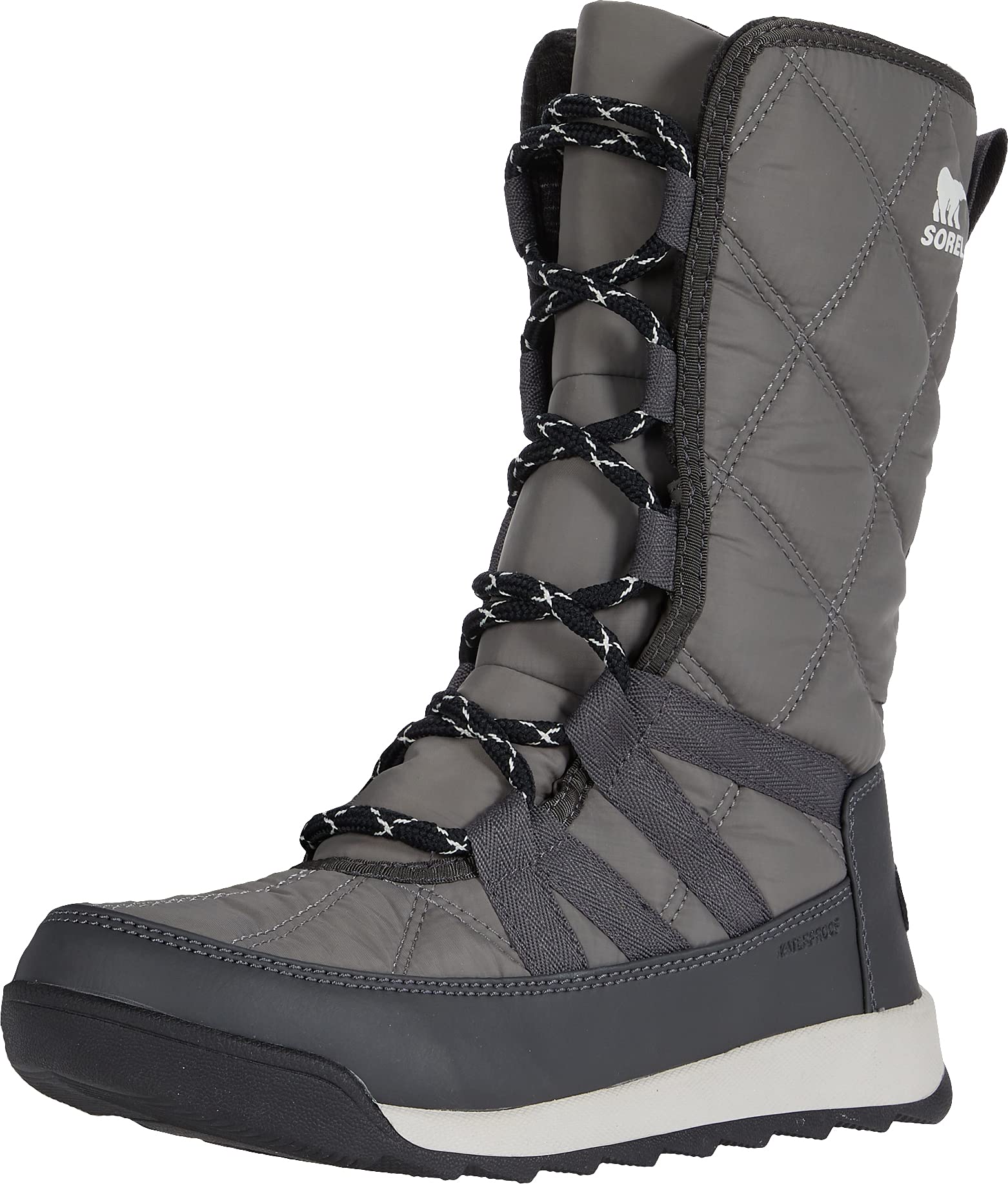
A tall, stylish lace-up that turns strenuous snow walks into easy rides with serious warmth to match.
Comfort is the thing owners rave about most — the cushioned EVA footbed (a soft, shock-absorbing foam layer) and microfleece lining earn consistent praise for long-distance wear without blisters or foot pain. One buyer hiked for a week in Northern Ireland with zero foot or back trouble. The 200g insulation keeps feet warm well below freezing, with owners reporting toasty toes at 4°F during hours of snowmobiling and comfort to the low 20s°F.
The moulded rubber sole delivers dependable traction on snow and a slip-resistant feel on ice, and the tall shaft handles 4-6 inches of snow with ease. At 3.75 pounds, it is on the heavier side, but buyers consistently describe it as “super lightweight” and durable for its class. The boot runs slightly narrow; owners with narrow feet find it perfect, while others note it widens with use.
The honest caveats are few. The fit is the most-discussed topic — it is narrow from the start, so wide-footed buyers should size up or skip. A couple of owners mention the soles feeling thin under the balls of the feet, and the lining can separate if you pull the back loop too hard — pull the sides instead. The review pages sum it up: buyers report “toasty warm at 4°F for 4 hrs snowmobiling” and “dry in 4-6 inches of snow.”
All-day comfort leader: the cushioned footbed and microfleece lining make this the pick for long walks and all-day wear.
Know before you buy: it runs narrow initially, so plan to size up or break them in gradually.
Grab these for: a tall, warm, comfortable boot that handles deep snow and long walks without hurting your feet.
Look elsewhere if: you have wide feet — the narrow fit is the recurring theme.
5. KEEN Greta Waterproof Boot
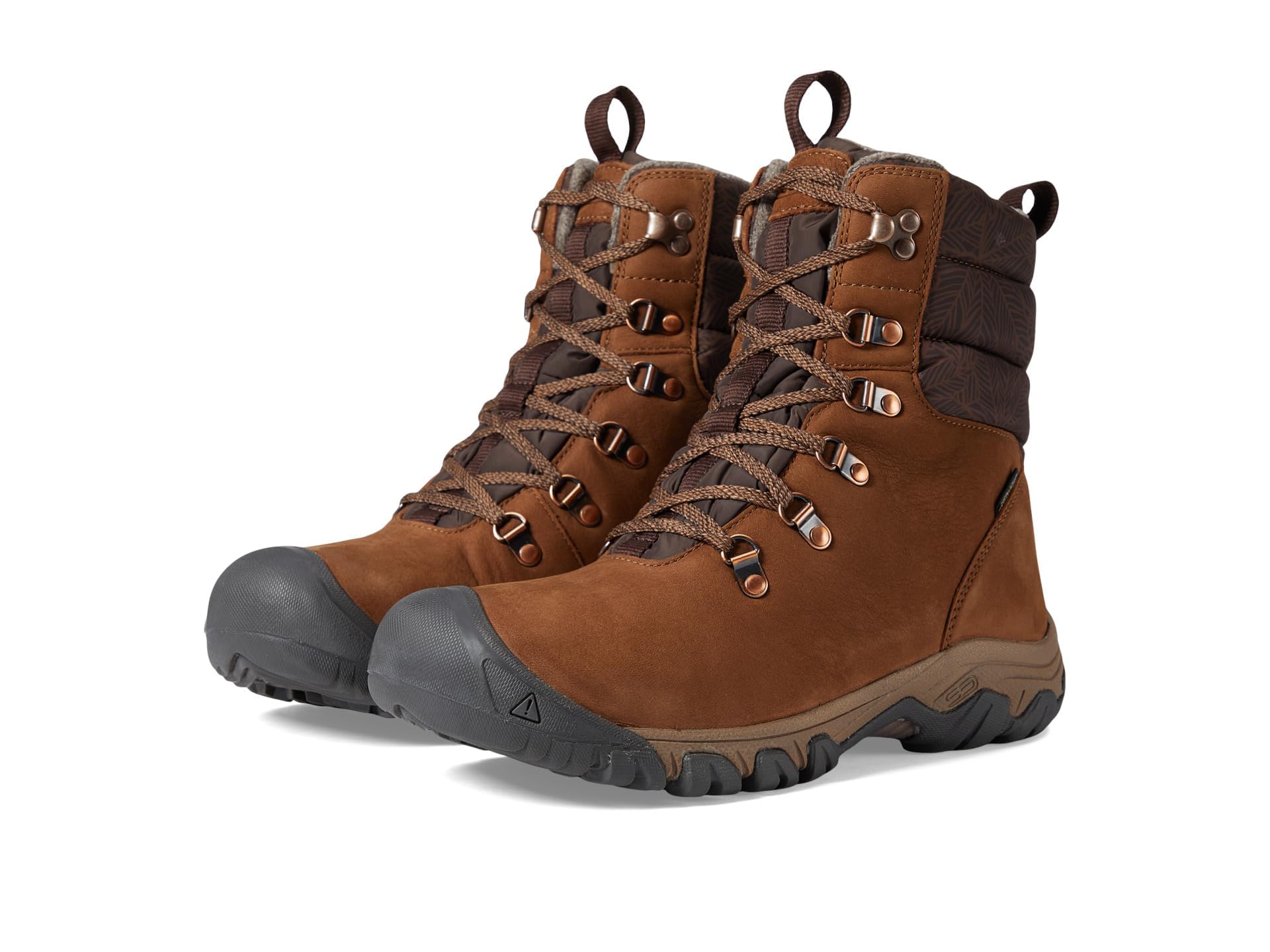
The winter hiker with a perfect grip that makes icy rocks and slippery trails feel manageable.
The grip on the bottom is what wins people over — one owner hiked Iceland in winter and never worried about ice or slippery rocks, and another pairs them with snowshoes for solid traction. That confidence on slick terrain is backed by a cold-weather traction sole and a waterproof leather upper, making this a true winter hiker rather than just a snow boot. At 1.26 pounds, it is notably lighter than most insulated boots in this lineup.
Quality is the most-discussed positive trait, with owners praising the sturdy laces, roomy toe box, and classic brown-and-mauve design that looks smart enough for town. The 200g insulation keeps feet warm through normal winter activity, and the built-on KEEN wider form gives generous space across the forefoot — a relief if you have wide toes. It fits true to size for most, and the break-in is minimal.
The catch is the cold rating honesty. While the boot is rated for sub-zero temperatures, an owner who stood outdoors at 30-35°F reported frozen feet despite the rating — so this is best for active use rather than long stationary stints in deep cold. Another buyer found the boots too stiff at first and recommends ordering your actual size, as sizing up made them too big. The review pages sum it up: owners mention “the grip on bottom is perfect, was not worried about ice or slippery rocks.”
Where it shines
- Ice-ready grip trusted on Iceland winter hikes and with snowshoes
- Roomy toe box on KEEN’s wider foot shape
- Light at 1.26 lb with a minimal break-in
Where it falls short
- Cold rating disappointed one owner standing still at 30-35°F
- Stiff leather needs some breaking in
- Leather upper can scuff with hard use
Best for: active winter hikers and walkers who want a light, grippy, wide-toe boot for trails and snowy towns.
Not the one if: you stand still outdoors in deep cold for long stretches — the insulation is not arctic-grade.
6. KEEN Women’s Revel 4 Mid Height Polar Insulated Waterproof Snow Boots

Agility of a light hiker with the warmth of a down jacket, purpose-built to grip icy, frigid terrain.
This boot’s grip comes from KEEN.POLAR TRACTION rubber, which uses microscopic shards that dig into ice, so you stay upright on slick patches. It also earns the most positive fit mentions in the lineup, with owners praising a secure, comfortable fit that leaves room for thick socks. Inside, 200g of KEEN.WARM recycled PET insulation (a synthetic fill rated to -25°F) pairs with a Thermal Heat Shield footbed (a layer that captures warmth underfoot) to keep your feet cozy in punishing cold. One owner wore them at 20°F with thin socks and stayed warm.
You get solid snow and ice grip from 5mm multi-directional lugs (the deep rubber nubs on the outsole), and the mid-height shaft suits shorter statures—it keeps deep snow out without feeling clunky. The 0.39in heel-to-toe drop and 2.17in heel height create a natural walking stride, while the back notch lets your Achilles move freely. Customers note wearing these for three-plus seasons and buying a second pair.
Reviews split on the toe box. The brand’s “Original Fit” promises generous forefoot space, but several owners found it snug and not wide—one review explicitly notes “toe box snug, not wide.” A few also call the boot heavy and boxy, with a thick tongue that hinders closure. Sizing runs true for thin socks, so if you plan thick wool socks, size up. Buyers sum it up: “very warm (20°F with thin socks); good snow/ice grip; ideal height for short stature.”
Engineered ice grip: the KEEN.POLAR TRACTION outsole with 5mm lugs is purpose-built for slippery frozen ground.
Fit reality check: despite the “Original Fit” promise, the toe box runs snug — size up if you want thick socks.
Reach for these if: you want a winter boot rated to -25°F with specialized ice grip for snowshoeing and deep-cold walks.
Think twice if: you have wide feet or want a roomy toe box — snug is the recurring fit note.
7. Kamik Momentum 3 Insulated Snow Boots
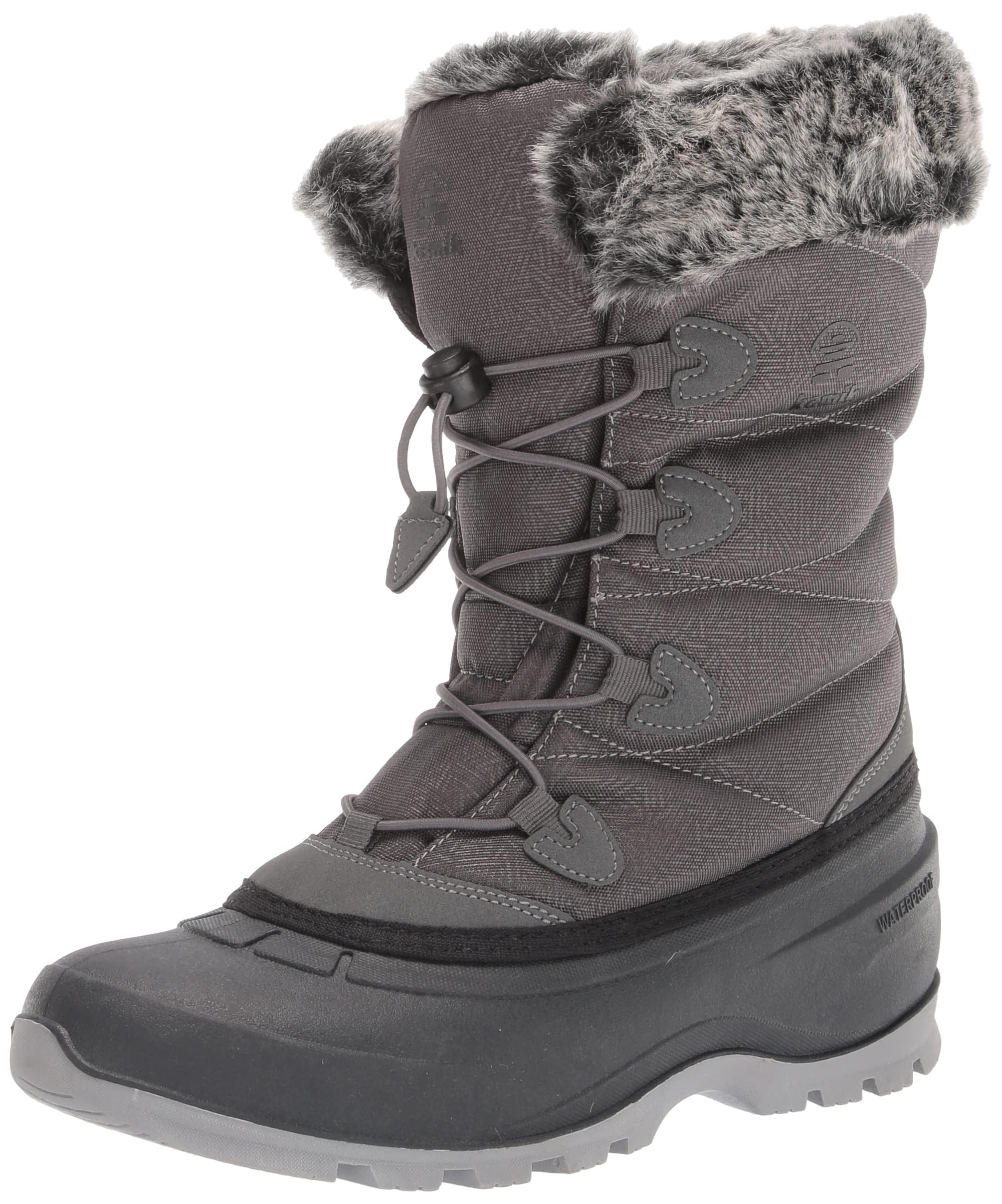
The warmth champion that keeps feet toasty barefoot in sub-zero weather, at a friendly price.
Warmth is the runaway top positive aspect here — the most-praised trait in the whole lineup — with owners reporting feet that stay warm even in sub-zero conditions, some wearing them barefoot. The HEAT-MX technology delivers all-day warmth without bulk, and the seam-sealed waterproof construction means you can tromp through slush and deep snow without wet socks. One family walked nine days in snowy Lapland with zero complaints of foot pain or wet socks.
Comfort and fit earn strong follow-up praise, with a fur lining that extends to the toes and a thick sole that provides cushioning. The drawstring zip closure makes them easy to get on and off, and reviewers point out they mold to your feet over time. At a light weight for an insulated boot, they are comfortable for hours of walking — one owner logged 3 miles below freezing with no blisters.
The sizing advice is consistent: size up, especially if you are a half size or plan on thick socks. One owner found a size 9 tight in the toe box and moved to a 10. Durability is the mixed note — while most report solid construction, an occasional pair develops a seam issue after a few months of use. Minimal arch support is the other recurring trade-off, with some owners adding their own insoles. The review pages sum it up: shoppers say “They were warm, and her socks never got wet… No slipping or sliding on ice.”
The big wins
- Warmth is the standout — the most-praised trait across the entire lineup
- Lightweight with a fur-lined interior and easy zip closure
- Solid traction on ice and snow for the price
What to weigh
- Sizing runs small — size up a half or full size for thick socks
- Durability is mixed; an occasional pair shows seam wear
- Minimal arch support — plan on adding an insole
Choose this for: maximum warmth at a value price, especially if you face sub-zero temperatures regularly.
pass on it if: you have high arches or need serious arch support from the start.
8. Carhartt Women’s Pellston Waterproof Insulated Winter Boots
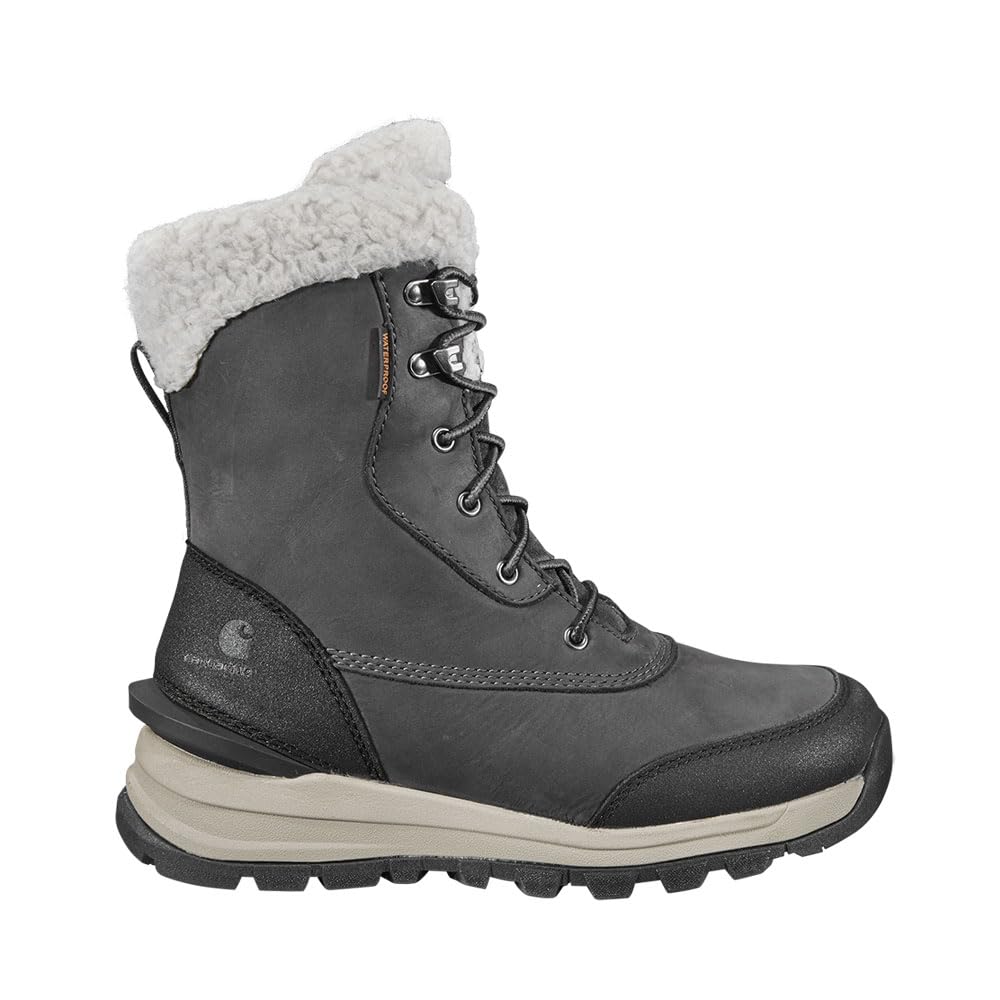
A cozy, fleece-lined winter boot from a workwear legend that keeps feet warm without the weight.
The defining features are the fleece lining and the 200g 3M Thinsulate insulation (a thin, heat-trapping synthetic layer), which together deliver the kind of warmth owners describe as surprising for the boot’s light feel. Several buyers report the full fur lining extends into the heel, and the Storm Defender waterproof membrane keeps snow and rain out. One owner called them “the best winter boots I have owned,” praising the warmth and the tall enough shaft to keep snow out.
The Insite Footbeds — insoles that shape to your feet over time — earn consistent praise for arch support and comfort, with one owner noting they don’t rub against the ankle bone. The big heel looks clunky but serves a real purpose: a kick-off tab on the back makes them easy to remove without scuffing the leather. They are sturdy and surprisingly light, sliding on easily, and versatile across snow, rain, and mud.
The trade-off is the toe room. Multiple owners mention the toe area runs narrow, with one describing it as “very small” and another noting both a 7 and 7.5 squished their pinky toes. The boot also runs small overall, so sizing up is the consistent advice. The rigid build needs some break-in before it feels fully comfortable. If you have wide feet, this is the one to approach with caution. The review pages sum it up: customers note “warm even without thick socks” and “sturdy, not too heavy, and easy to use.”
Cozy and capable: the fleece lining and 3M Thinsulate make this a genuinely warm winter boot that slides on easily.
The fit hurdle: a narrow toe box and small sizing mean you should size up, especially for wider feet.
Pick these if: you want a warm, light-feeling, easy-on winter boot with real arch support.
Pass if: you have wide toes or between sizes — the narrow toe box is the dominant complaint.
9. Columbia Women’s Ice Maiden Slip III Snow Shoe
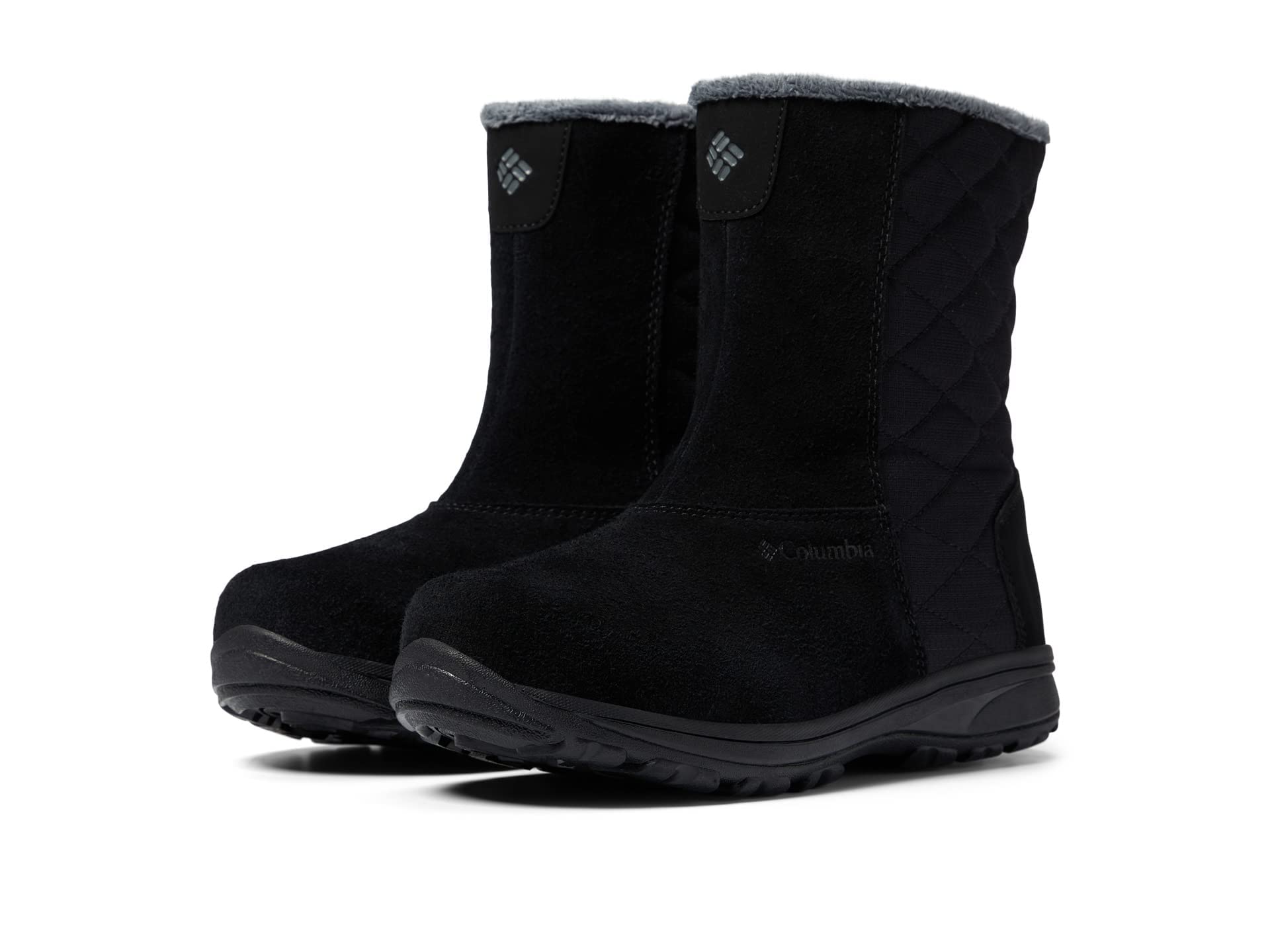
The waterproof slip-on with a tennis-shoe feel that handles the wettest, coldest winter weather.
The defining appeal here is the slip-on design — no laces to tie, just step in and go — combined with a high-traction Omni-Grip outsole (a non-marking rubber compound) and a TechLite midsole (a lightweight, cushioned foam layer). Owners describe the ride as having a “tennis-shoe feel, not clunky,” which makes it a genuinely comfortable choice for daily winter wear. The seam-sealed membrane bootie construction keeps water out while the waterproof leather and textile upper shrug off slush.
Durability is a real strength, with one owner using a pair daily for over two years in freezing mountain temps and it still looking new. Another uses them for daily horse paddock work, hosing them clean and finding them dry and good-looking after years of use. Warmth is reliable in freezing conditions, and the boot accommodates thick socks comfortably.
The fit is the recurring tension. The boot mouth (the opening) is narrow, and several reviewers point out the heel catching on entry even a half size up. Others describe the boot as running narrow and stiff overall, with one owner unable to achieve a comfortable break-in after weeks. The consensus advice is to buy your normal size, or a half size up if your feet are between sizes. The review pages sum it up: shoppers say “waterproof/warm in rain” and “flexible sole, good grip, tennis-shoe feel.”
Best if: you want a no-lace, easy-on winter boot with proven durability and a comfortable, non-clunky ride.
Not for: wide feet or anyone who struggles with snug boot openings — the narrow mouth is the dominant fit complaint.
Understanding the Specs
Insulation Weight in Grams
The “200g” or “400g” number tells you how much insulation is packed into the boot. Higher numbers trap more heat, so 400g boots are built for deep cold and long stationary periods, while 200g boots suit active walking where your body generates its own warmth. Pick the rating that matches how long you actually spend outside, not the coldest temperature you can imagine.
Outsole Traction
The rubber pattern on the bottom is your only contact with ice and snow. Look for deep, multi-directional lugs (raised rubber nubs) that bite into the surface. Some brands add specialized compounds — like KEEN.POLAR TRACTION with microscopic shards, or Vibram Arctic Grip — designed specifically to grip wet ice where regular rubber slides.
FAQ
Should I size up when buying winter boots for ice and snow?
What does 200g insulation actually mean for warmth?
Are waterproof and water-resistant the same thing?
What makes a boot’s sole good for ice and snow?
How do I know if a winter boot will fit my calves?
Are winter boots on the heavier side always warmer?
Can I use these boots for snowshoeing or hiking on icy trails?
What is the difference between Omni-Heat and regular insulation?
How long should a good pair of winter boots last?
Final Thoughts: The Verdict
For most buyers, the women’s boots for ice and snow winner is the Columbia Red Hills Omni-Heat—it balances warmth, grip, waterproofing, and all-day comfort with the strongest owner consensus here. If you need serious ice-grip tech for trails and snowshoeing, the KEEN Revel 4 Mid Polar is your pick. For extreme cold demanding maximum warmth, the North Face Chilkat V 400 is the one to grab.
Whichever you choose, remember the two rules that matter most: check the outsole for real ice-grip technology, and size up to make room for thick socks. The right pair will keep you warm, dry, and upright all winter — and that is worth more than any brand name.
How We Picked
We do not accept paid placement. Every pick is matched to a real buyer and a real use-case; we do not hands-on test units.
Sources & Methodology
Specifications: manufacturer listings and product documentation. Review insights: verified customer reviews, as of August 2026. Pricing: not shown on this page (it changes often); check the current price via the retailer link.
As an Amazon Associate, Calories Fit earns from qualifying purchases. This does not affect which products we feature.