
Our readers keep the lights on and the coffee maker working hard! As an Amazon Associate, I earn from qualifying purchases.
Specs are compiled from manufacturer listings and verified buyer reviews and can change over time — please confirm the key details on the product page before buying.
Picking the wrong pack can turn a dream trail into a literal pain in the back. The single biggest factor is a women’s-specific suspension geometry — that’s a frame and hip belt shaped for shorter torsos and wider iliac crests (the top edge of your hip bones), so the load stays on your hips, not your shoulders. Without that, you will spend the whole hike fighting your pack instead of enjoying the view.
This guide compares manufacturer specs and patterns from verified customer reviews. Every pick below shows real strengths and trade-offs, not marketing spin.
The eight packs here represent the best women’s backpacking backpacks you can buy today. They cover multi-day through thru-hike capacities with suspension systems that actually fit a woman’s frame. best women’s backpacking backpacks.
Our Picks at a Glance
How To Choose The Best Women’s Backpacking Backpacks
A well-fitted pack feels weightless because the suspension transfers load to your hips. A poor fit forces weight onto your shoulders, causing pain within the first few miles. The difference is a suspension system designed for a woman’s shorter torso and wider hips.
Women’s-Specific Fit: It’s Not a Gimmick
A women’s pack uses a shorter torso and a curved hip belt that sits on your natural waist, not your ribs. A unisex pack often rides too high, transferring load to your ribs instead of your hips. Look for packs labeled “women’s-specific” or “SL” (that stands for Slim Line on Deuter packs) with hip belts that curve to fit a woman’s pelvic shape.
Torso Length: The Foundation of Comfort
Your pack’s suspension spans from your C7 vertebra to your iliac crest. Premium packs often feature an adjustable torso panel that slides to match your spine length. Fixed-torso packs are lighter but demand an exact measurement before purchase. If you are between sizes or sharing a pack, adjustability is the safer bet.
Suspension and Ventilation: Sweat vs. Load
Three backpanel designs dominate: trampoline mesh (AirSpeed style) holds the pack away from your back for maximum airflow but can feel less stable under heavy loads. Foam panels with channels (AirScape or Aircontact style) keep the load closer to your center of gravity for better weight transfer but trap a bit more heat. Heavier loads (over 35 lbs) favor the stability of foam; hot-weather hiking favors the breeze of trampoline mesh.
Volume: Match It to Your Trip Length
A 35-45 liter pack handles a weekend (1-2 nights) if you pack lean. A 48-58 liter pack is the balance for multi-day trips (3-5 nights). A 65+ liter pack lets you carry a bear canister, winter gear, or supplies for a week. Buy for your longest typical trip — a half-empty 65L pack compresses down with straps; a stuffed 35L pack leaves no room for food.
Quick Comparison
| Model | Best For | Volume | Weight | Suspension Type | Amazon |
|---|---|---|---|---|---|
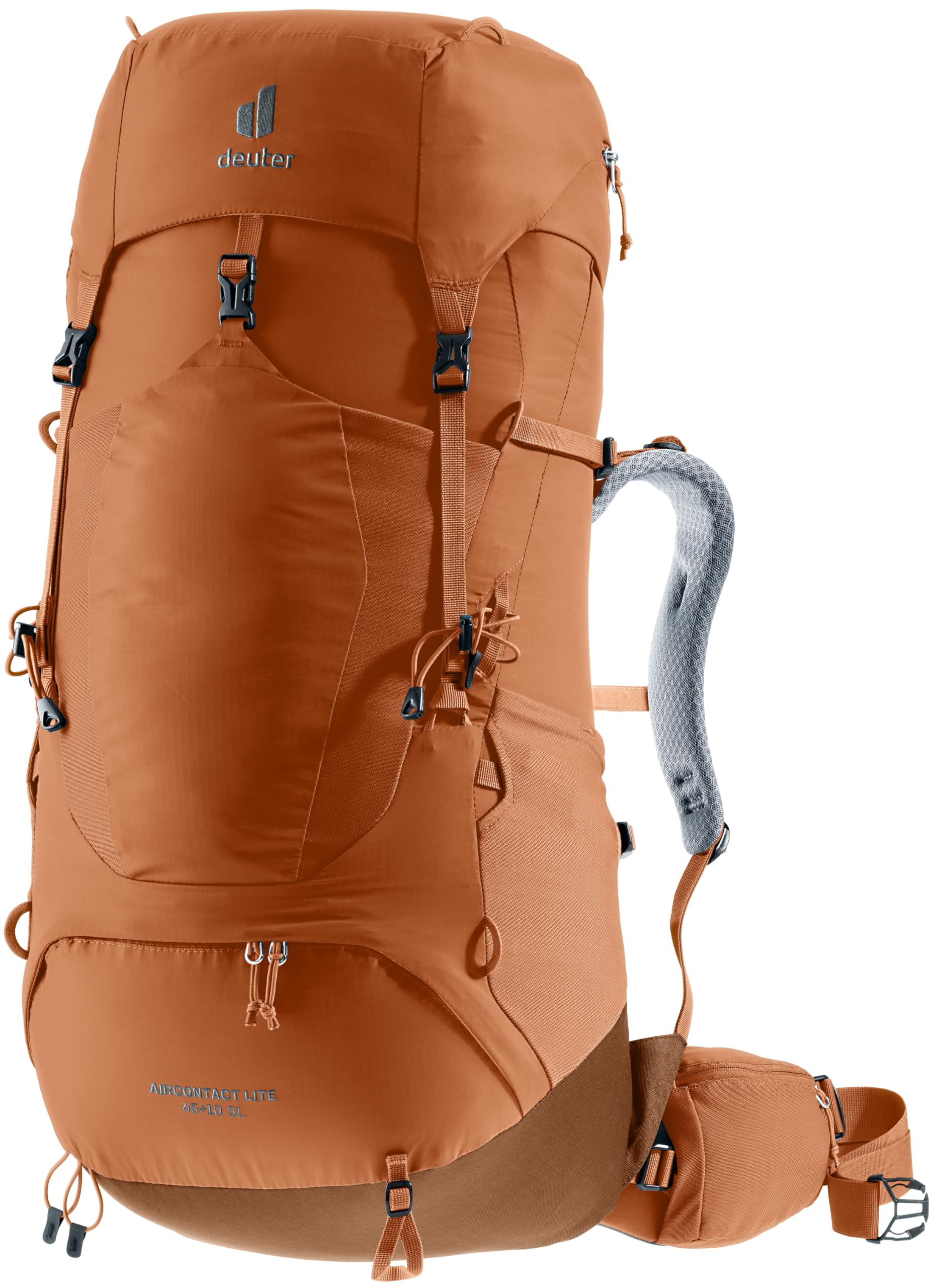
| Deuter Aircontact Lite 45+10 SL★ Best Overall | All-day comfort with expandable volume | 45+10 L | 3.4 lb | Aircontact foam | Amazon |
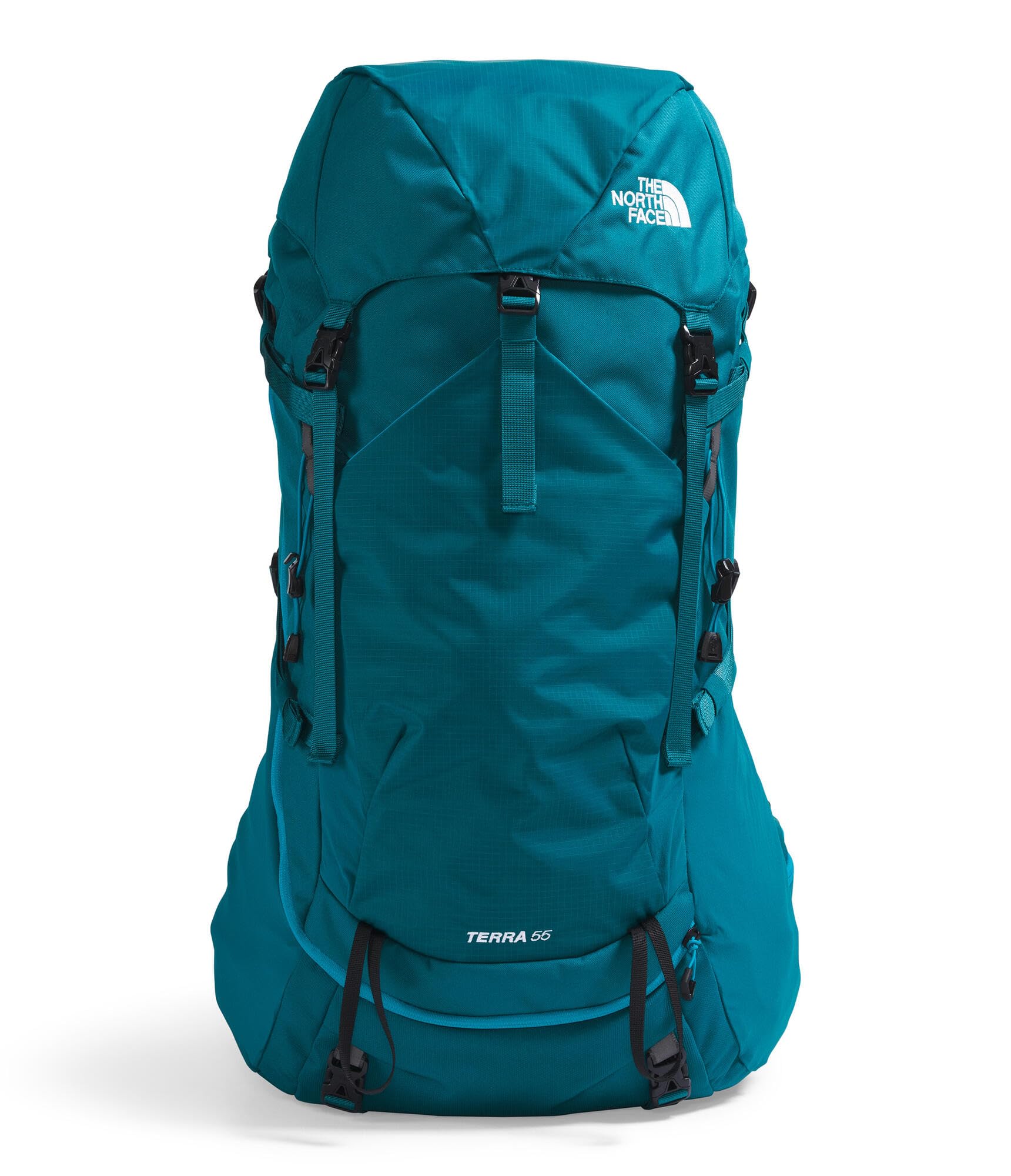
| The North Face Terra 55Budget Multi-Day | Budget-friendly multi-day travel | 53-57 L | 3 lb 14 oz – 4 lb | Foam framesheet | Amazon |
| Osprey Ariel 55L | Heavy loads with custom fit | 55 L | 4.77 lb | AirScape foam + Fit-on-the-Fly | Amazon |
| Deuter Aircontact Core 65+10 SL | Expedition-grade carry for big loads | 65+10 L | 5.14 lb | Aircontact foam + Y-frame | Amazon |
In‑Depth Reviews
1. Deuter Women’s Aircontact Lite 45 + 10 SL
Our pick — over 4.5★ from 300+ verified ratings; the strongest balance of quality and price.
The pack that carries like it is glued to your spine and breathes like a mesh lawn chair.
This is the pack over 300 owners call the most comfortable they have worn. The secret is the Aircontact back system — hollow-chamber foam cushions that use your own movement to pump air, reducing sweat while keeping a 30+ pound load locked tight against your center of gravity. Buyers report taking it to Havasupai, loading it with 30+ pounds, and hiking 10 miles each way without any hip or shoulder pain. The “SL” (Slim Line) designation means the shoulder straps are shorter and the hip fins curve inward for a narrower frame, so it does not sag or gap around the shoulders the way a unisex pack often does.
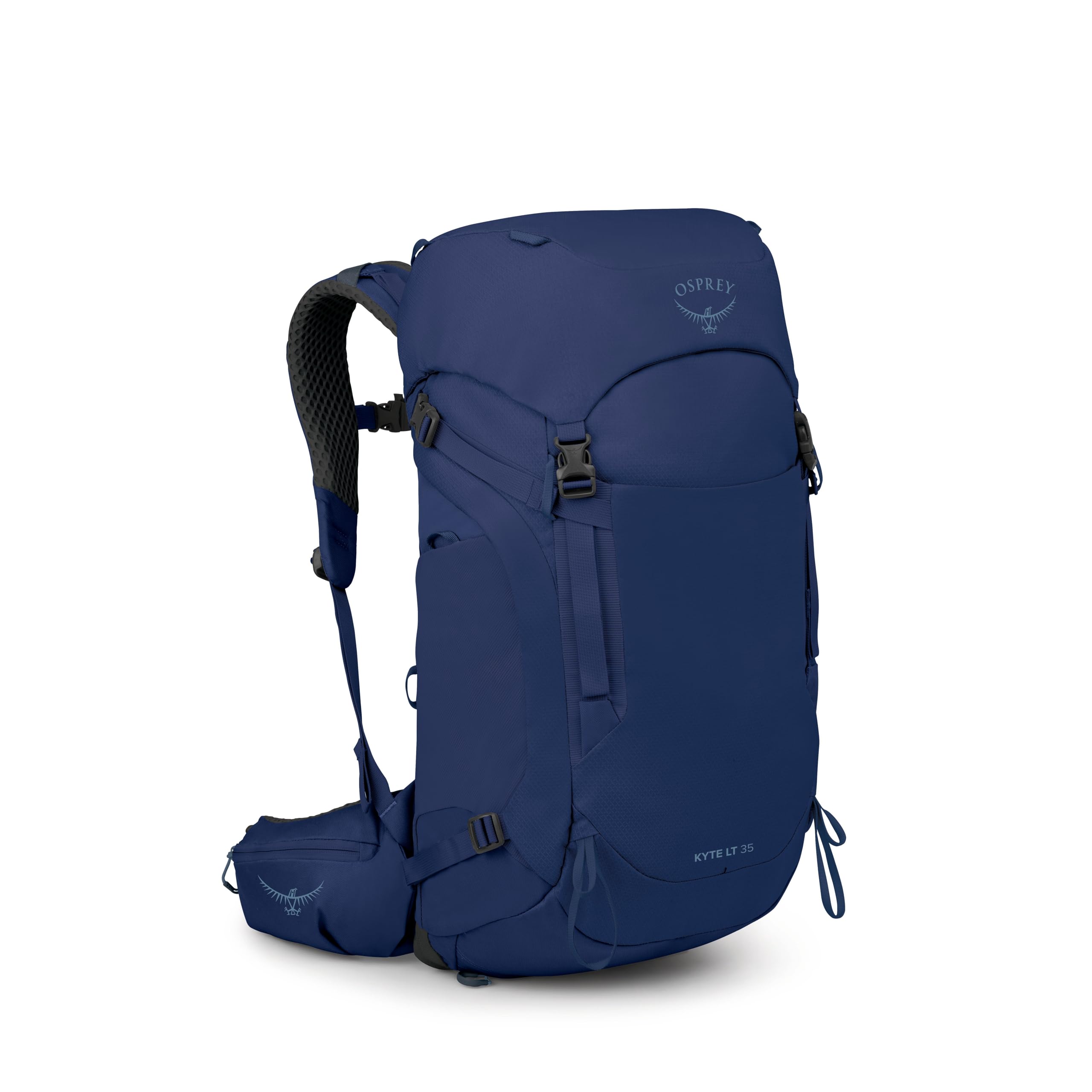
The 45+10 liter volume gives you a height-adjustable lid that adds 10 liters of expansion when you need to stash extra food or a puffy jacket, but the pack stays trim when you cinch it down. The 3.4-pound weight is not the lightest here — the Osprey Kyte LT 35L is significantly lighter for shorter trips — but that weight buys a separate bottom compartment, a removable lid, two zippered hip belt pockets, and an internal valuables pocket. It also includes an SOS label on the inside, a small but reassuring detail for solo hikers. The main trade-off is the strap padding — a few owners found the shoulder straps lacking cushion for very heavy loads, easily fixed with aftermarket strap covers.
Trail-tested confidence: The most-reviewed pick here with a near-perfect score. If you want one pack that stays comfortable across years of multi-day trips without needing to tweak the fit every morning, this is it.
Who should look elsewhere: If your trips are always under 2 days and you prioritize a featherlight carry over pocket organization, the Kyte LT 35L below saves over a pound.
Your best bet if: You are a woman with a narrow-to-average frame looking for a cushioned, breathable carry for 3-7 day trips with room to expand.
Think twice if: You prefer a trampoline mesh backpanel that holds the pack fully away from your back — the Aircontact foam sits closer to your body.
2. Osprey Kyte LT 35L Women’s Backpacking Backpack
A big-volume pack that keeps your back dry while hauling gear for a week.
The defining feature here is the AirSpeed suspension — a tensioned trampoline mesh panel that holds the entire pack about an inch off your back. On a hot, sweaty climb, that gap makes a massive difference in comfort compared to a foam panel. The trade-off is that the load sits slightly further from your center of gravity than foam-backed packs like the Deuter Aircontact Lite, which some hikers notice when carrying 30+ pounds. Still, the LightWire frame transfers weight effectively to the padded hip belt, and buyers consistently report it is comfortable even at 25 pounds on a first trip. The quality and storage capacity are the most-praised aspects among owners — the 65-liter main compartment plus a zippered sleeping bag compartment with a floating divider let you organize gear for 5-7 days easily.
This pack beats the similarly sized Osprey Kyte 58L on weight, coming in at 3.6 pounds compared to 4.59 pounds — a nearly one-pound savings that adds up over miles. The integrated raincover is a welcome inclusion, though a small number of units arrived missing the cover, requiring a customer service call. The Renn also features the Daylite-compatible attachment system, so you can clip a smaller daypack onto the front for side trips from base camp. Petite hikers (around 5’1″) found the shoulder straps could not tighten enough for a truly secure fit, making this better suited for women of average height and above.
The breathability king: If you hike in warm climates or run hot even in cool weather, the ventilated backpanel makes the Osprey Renn 65L the most comfortable choice for multi-day trips.
The catch: The trampoline mesh reduces back sweat but shifts the load slightly away from your body — heavy loads feel less stable than on a foam-backed pack.
Grab it for: Any warm-weather trip longer than 2 nights where ventilation matters more than ultralight weight.
Pass if: You are under 5’2″ — the harness may not cinch small enough for a secure fit on a very short torso.
3. The North Face Women’s Terra 55 Backpack
A spacious trail companion with a U-zip that saves you from digging to the bottom.
The North Face Terra 55 is a straightforward, no-surprises pack designed around a women-specific padded back panel and shoulder straps. what separates it from the more expensive options is the full-length two-way U-zip that lets you access the main compartment from the top, side, or bottom without pulling everything out — a feature usually reserved for packs at a higher price tier. The removable lid converts the pack into a lightweight summit bag when you want to shed bulk, and the external stuff-it pocket tightens with a simple S/R buckle for quick storage of a rain jacket or shell. At 53-57 liters (depending on size), it sits between the 48L and 58L Osprey Kyte models in capacity, making it a capable choice for 3-5 day trips.
The trade-off becomes clear when you load it up. The foam framesheet provides decent support, but the adjustment options are limited compared to the Osprey or Deuter packs above — owners with longer torsos found the fit felt “short.” The hip belt is padded and comfortable, but it lacks the fine-tuned adjustability of the Fit-on-the-Fly systems on the premium Osprey packs. For the price, you get a durable 100% polyester build, internal hydration sleeve, trekking pole attachments, and two stretch bottle pockets. Owners describe it as a “great backpack” that looks and feels solid right from the start, but if you need a truly dialed-in fit for a very short or very long torso, the extra cost of an adjustable suspension is worth it.
Best for the budget-conscious multi-day hiker: The U-zip access alone makes packing and unpacking faster than any cinch-top pack in this price range.
The limitation: The hip belt and shoulder straps are comfortable but not fine-tune adjustable — get the fit right before you buy because you cannot customize it much later.
Choose it if: You want a versatile 55-liter pack with easy access features and are comfortable settling for a fixed torso range that fits most average frames.
skip it if: You have a very short (under 16″) or very long (over 19″) torso — the limited adjustments may leave the pack sitting wrong.
4. Osprey Kyte 48L Women’s Backpacking Backpack
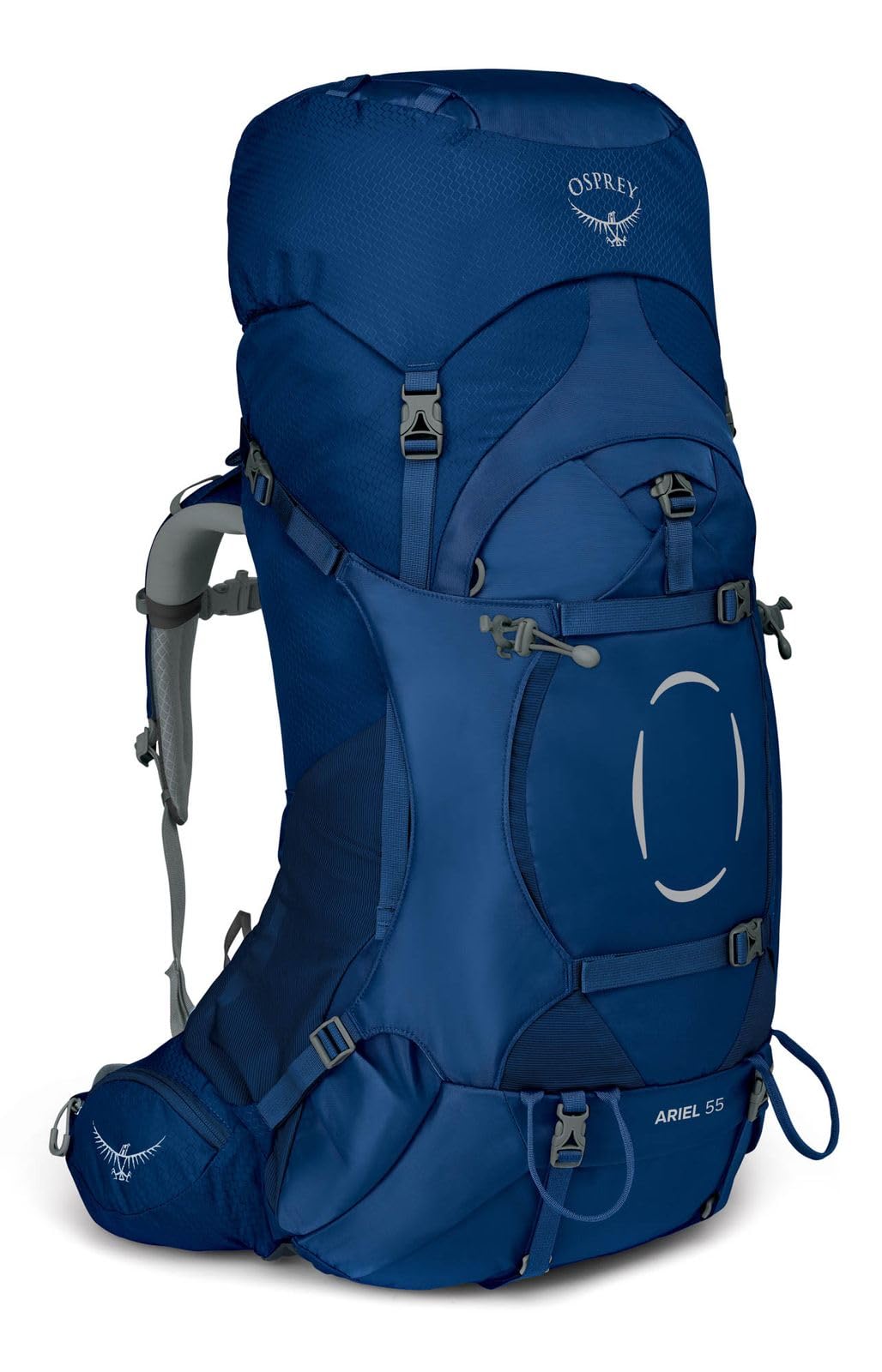
A custom-fit suspension that makes 45 pounds feel like they belong to your body.
The Osprey Ariel 55L is designed for one thing: carrying heavy loads with unwavering stability. Where the Kyte packs offer adjustability in the hip belt, the Ariel adds Fit-on-the-Fly customization to the shoulder straps as well — you can adjust the anchor point of the shoulder harness to match your shoulder width and torso curve. This triple-level adjustability (torso length, hip belt, shoulder straps) makes it the most dial-in-able pack on this list, which is why it is favored by hikers with back issues or those who carry camera gear, expedition food, or technical climbing equipment. The AirScape foam backpanel is firmer and denser than the Kyte series, providing a stable platform that does not sag under 45+ pounds. The 4.77-pound weight is the highest here, but when you are carrying a heavy load, that grams-to-stability trade-off is worth it.
Owners praise the “triple adjustability” and call it a “well thought out” pack with tons of loops, zipper pockets, and compression straps. The zippered sleeping bag compartment has a removable divider, so you can keep a wet tent separate from your clothes or combine the compartments for a single large cavity. The included raincover and the emergency whistle built into the sternum buckle are thoughtful touches. The Ariel is not the best choice for ultralight trips — the weight and the firm suspension are overkill for a 20-pound load. But for week-long expeditions where comfort under heavy weight is non-negotiable, it outperforms every other pack here.
The heavy-duty champion: Fit-on-the-Fly shoulder straps plus hip belt means this pack can be tuned to fit body types that no other pack here can match.
The trade-off: The heaviest pack on the list at 4.77 pounds. Overkill for lightweight kits, essential for heavy loads.
Choose it if: You consistently carry 35+ pounds on technical terrain and need a pack that you can dial in to your exact body shape.
Avoid it if: You are an ultralight backpacker — the weight and stiffness of the suspension are unnecessary for sub-25-pound loads.
5. Deuter Women’s Aircontact Core 65+10 SL Trekking Backpack
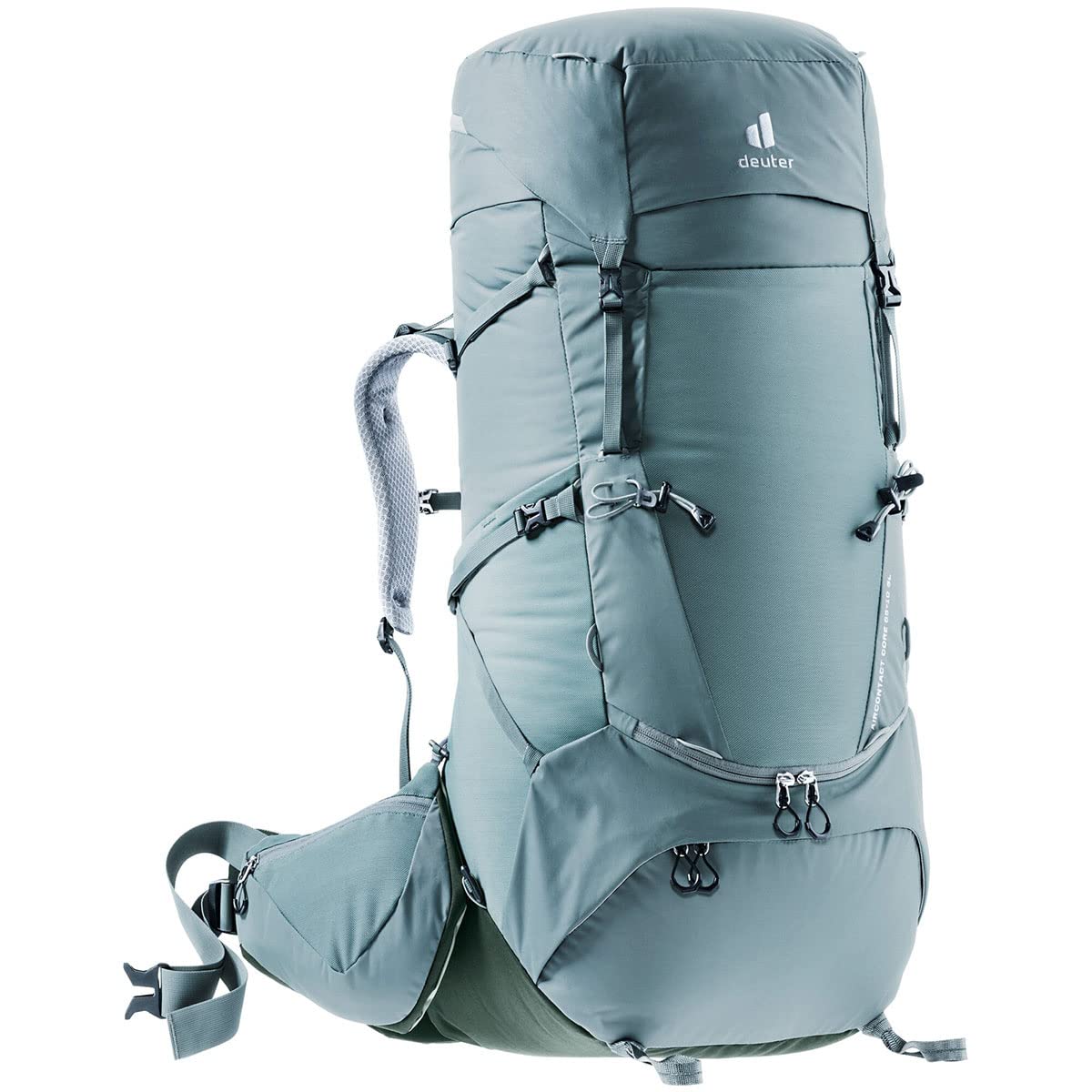
The expedition pack that distributes 44 pounds so evenly your spine barely notices.
The Deutscher Aircontact Core 65+10 SL is a serious tool for serious trips. The 5.14-pound weight is the highest here, but the Y-frame suspension system is a different beast than the Osprey packs: it uses a rigid alloy frame that transfers load directly to the pelvis through a trapezoidal lumbar pad, while the VariFlex ECL hip fins move with your body as you climb, reducing the feeling of a rigid box strapped to your back. Owners mention carrying upwards of 20 kg (44 pounds) on hard treks and not feeling the weight in their back at all. The VariSlide system lets you adjust the back length instantly, without tools, so you can dial in the fit for different layers or share the pack between trips. The J-shaped front zipper is a standout feature — it gives you panel-loading access to the entire main compartment without unpacking the top, unlike any of the Osprey top-loaders on this list.
The 65+10 liter volume (the +10 comes from the expandable top lid) makes this the largest pack here by total capacity, ideal for winter expeditions or trips requiring a bear canister, ice axe, and full climbing gear. The main material is made from over 50% recycled fabrics and is bluesign-certified, so you are carrying a lighter environmental footprint along with your gear. The hip belt is movable and snug-fitting, with a “leg cut-out” shape that gives you freedom of movement when scrambling — a detail that separates it from the Osprey packs which use a more traditional flat hip belt shape. The trade-off is straightforward: this is a premium, expedition-grade pack for a premium price. It is overkill for a weekend trip, and the weight makes it a poor choice for ultralight travel. But for a long expedition where every ounce of weight needs to be carried comfortably for days on end, it is the most capable pack in this lineup.
The expedition standard: The Y-frame, the VariSlide back adjustment, and the J-zipper access make this the most feature-rich heavy hauler here.
The cost of capacity: The heaviest and most expensive pack on the list. Reserve it for trips where you need the suspension and volume.
Buy it for: A major expedition or thru-hike where you will carry 40+ pounds for weeks. The load distribution is class-leading.
Skip it for: Short weekend trips or ultralight kits — the weight and capacity are unnecessary for loads under 30 pounds.
Understanding the Specs
Torso Length vs. Hip Belt Fit
Your torso length (C7 to iliac crest) determines whether a pack’s suspension sits at the right height. A pack that is too long rides up and digs into your shoulders. A pack that is too short lets the hip belt sag below your hips, turning the shoulder straps into the primary load-bearer. Women’s-specific packs have shorter torso ranges and curved hip belts that wrap around the natural waist at a steeper angle than unisex packs, keeping the load on your skeletal structure where it belongs. Always measure your torso before choosing a pack — it matters more than your height or weight.
Suspension Types: Foam vs. Trampoline
Foam suspension systems (AirScape, Aircontact) use molded foam panels with channels or hollow chambers. They keep the load close to your body for efficient weight transfer and stability, making them better for heavy loads on technical terrain. Trampoline suspension systems (AirSpeed) use a mesh panel stretched over a frame, creating a gap between your back and the pack. This reduces sweat dramatically but moves the load slightly away from your center of gravity, which you can feel as a slight sway when carrying heavy weight. For warm-weather hiking with light to moderate loads, trampoline wins. For cold-weather or heavy-load backpacking, foam is more stable.
FAQ
How do I measure my torso length for a backpack?
Can I use a women’s backpack if I am a man?
What volume pack do I need for a 5-day trip?
How much weight should a women’s backpacking backpack carry?
Do I need a backpack with a frame?
Can I pack a women’s backpacking backpack into a carry-on?
How long should a backpacking backpack last?
Should I buy a backpack with or without a raincover?
Final Thoughts: The Verdict
If you want one dependable pick, the best women’s backpacking backpacks winner is the Deuter Aircontact Lite 45+10 SL because it combines a breathable, comfortable suspension with expandable volume and the highest owner satisfaction in this lineup. If you want a lightweight pack for fast weekend trips, grab the Osprey Kyte LT 35L. And for a ventilated big-volume pack that keeps you dry on multi-day treks, the Osprey Renn 65L is the one to reach for.
How We Picked
We do not accept paid placement. Every pick is matched to a real buyer and a real use-case; we do not hands-on test units.
Sources & Methodology
Specifications: manufacturer listings and product documentation. Review insights: verified customer reviews, as of July 2026. Pricing: not shown on this page (it changes often); check the current price via the retailer link.
As an Amazon Associate, Calories Fit earns from qualifying purchases. This does not affect which products we feature.