
Our readers keep the lights on and the coffee maker working hard! As an Amazon Associate, I earn from qualifying purchases.
Specs are compiled from manufacturer listings and verified buyer reviews and can change over time — please confirm the key details on the product page before buying.
Choosing a wireless smoke detector means balancing convenience with real safety capability. You want something that actually wakes you up when there is real danger, ignores your Sunday pancakes, and doesn’t demand a master electrician to install. This guide highlights the wireless smoke detectors that real owners trust most.
I’m Mohammad — the founder and writer behind Calories Fit. This guide is built by comparing the manufacturers’ published specifications and the patterns across verified customer reviews, so you get each pick’s real strengths and trade-offs instead of marketing spin.
The top battery-powered models balance smart features like 10-year sealed batteries and interconnected alarms with proven dependability. These are your best wireless smoke detectors based on real owner experiences and verified safety data.
Our Picks at a Glance


How To Choose The Best Wireless Smoke Detectors
When you pick a wireless smoke detector, “wireless” usually means it runs on batteries (so you do not need an electrician to install it) and often links alarms wirelessly so one alarm sets off all the others. Your real choices come down to battery type, sensor technology, and whether you also need carbon monoxide (CO) detection.
Sealed vs Replaceable Batteries
A sealed lithium battery lasts the full 10-year life of the unit, meaning zero battery changes and zero late-night low-battery chirps. Detectors that take AA or 9V batteries are cheaper upfront but require you to remember to swap them out. The trade-off is convenience versus initial cost — sealed units are simpler long-term.
Photoelectric vs Ionization vs Dual Sensors
Photoelectric sensors are better at detecting slow, smoldering fires (like a cigarette in a couch) and are much less prone to false alarms from cooking. Ionization sensors respond faster to fast-flaming fires but are more sensitive to steam and burnt toast. Dual-sensor detectors combine both for maximum coverage, but cost more and can false-alarm more often.
Smoke Only vs Smoke & Carbon Monoxide Combo
A combination detector gives you two layers of protection in one unit. Carbon monoxide is odorless and deadly, so having a CO sensor in your detector — especially near sleeping areas — is a huge safety upgrade. The main downside is that if the unit fails, you lose both protections at once, so brand reliability matters more here.
Quick Comparison
| Model | Best For | Detection Type | Battery Life | Special Feature | Amazon |
|---|---|---|---|---|---|
| SimpliSafe Smoke & CO★ Best Overall | Smart system users | Smoke + CO | Long lasting (replaceable) | 24/7 professional monitoring | Amazon |
| SITERLINK GS525ABest Value | No-budget-fuss simple setups | Smoke (Photoelectric) | 10 Years (Sealed) | AI false alarm reduction | Amazon |
| Kidde 20SDRBudget Champion | Budget-friendly essential | Smoke | AA Batteries | 85 dB alarm | Amazon |
| X-Sense SC06 | Simple combo protection | Smoke + CO | 10 Years (Sealed) | UL 217 & UL 2034 certified | Amazon |
| First Alert SMCO100 | Trusted brand simplicity | Smoke + CO | Battery Powered | Precision Detection tech | Amazon |
| SITERWELL GS525A (2-Pack) | Multi-room photoelectric | Smoke (Photoelectric) | 10 Years (Sealed) | Magnetic mounting kit | Amazon |
| Kidde 30CUDR-V | Voice alerts for hazards | Smoke + CO | AA Batteries | Voice: “Fire” or “CO” | Amazon |
| X-Sense SC01-W (3-Pack) | Whole-home interconnectivity | Smoke + CO | 10 Years (Sealed) | Wireless interconnect (no Wi-Fi) | Amazon |
In‑Depth Reviews
1. SimpliSafe Smoke & Carbon Monoxide Detector
Our pick — over 4.5★ from 500+ verified ratings; the strongest balance of quality and price.
This smart detector calls for professional help when you cannot.
This detector is the only pick on the list that pairs directly with a security system. It works exclusively with the SimpliSafe Gen 3 system, meaning it ties into a 24/7 professional dispatch service. If smoke or CO is detected, your phone gets an alert immediately, and the monitoring center can send emergency services even if you are on vacation. The built-in siren inside the detector also triggers the Base Station siren — so the whole house knows.
At 10.4 ounces, it is heavier than the standard Kidde (which is 9.12 ounces), mostly because it packs both a smoke and CO sensor. Buyers report that it ignores burning food well, and it logs daily system checks automatically so you always know it is alive. The catch is that without the SimpliSafe base system, this unit is just a paperweight. It is not a standalone purchase — it is an ecosystem upgrade.
Owners mention that one of five units failed within weeks, but the premium monitoring plan includes a lifetime warranty, so replacements come free. This is a system for the buyer who wants full-time professional backup, not just a local siren.
Ecosystem Perk: Instant phone alerts plus 24/7 professional dispatch if you have a monitoring plan.
The Catch: Requires the SimpliSafe Gen 3 base system — this is not a standalone detector.
Reach for this if you already own or plan to buy the SimpliSafe security system and want professional monitoring for smoke and CO.
Look elsewhere if you need a standalone detector or do not want a monthly monitoring subscription.
2. SITERLINK Smoke Detectors 10 Year Battery Operated, GS525A
This detector runs for a decade on one sealed battery.
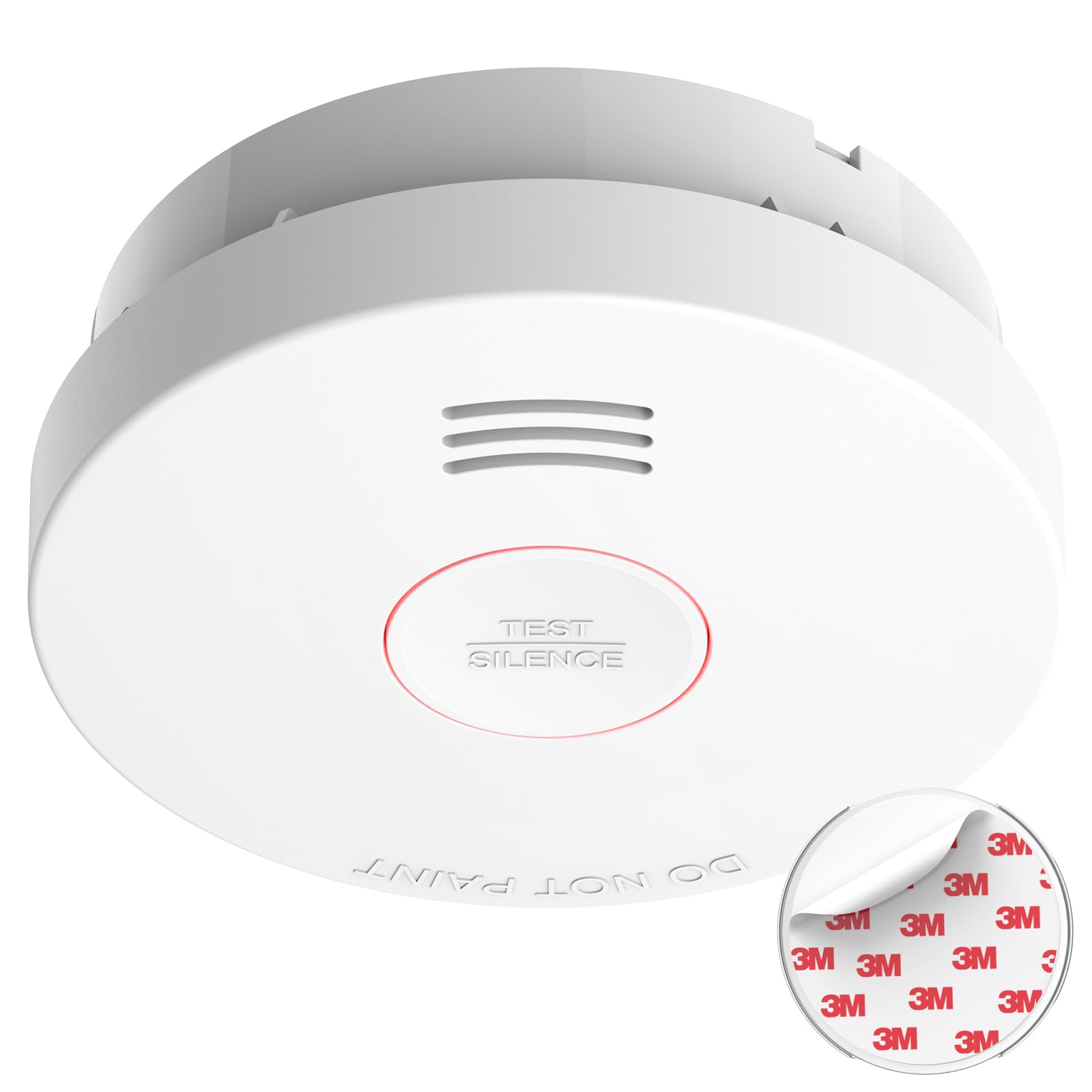
This model uses a 10-year sealed lithium battery, so you install it once and never touch it again until end-of-life. It is powered by a photoelectric sensor, which means it is better at catching smoldering fires and far less likely to scream at you when you steam vegetables. It also includes a feature described as advanced AI technology that learns your home environment to cut down on false alarms from dust and steam.
Compact at just 1.38 inches high — noticeably thinner than the Kidde 20SDR which stands 1.88 inches tall — it slips into tight ceiling spaces easily. The installation is genuinely tool-free if you use the included magnets and adhesive plate; owners repeatedly say the magnetic backing makes it a one-minute job. One owner joked that it is “ez installation and no batteries to worry about.”
The main trade-off is that this detector picks up smoke only — it does not sense carbon monoxide (CO). If you need CO protection, skip this model. But for straightforward, no-fuss fire detection at a low price, it is a strong choice.
Zero-Maintenance Setup: The 10-year battery and magnetic mount mean you install it and forget it for a decade.
Missing Piece: No carbon monoxide sensor — this is smoke detection only.
Reach for this if you want a simple, long-life smoke alarm with no wiring, no battery changes, and minimal hassle.
Look elsewhere if you need combination smoke and CO protection in a single unit.
3. Kidde Smoke Detector, AA Battery Powered, 20SDR
This budget-friendly detector delivers an 85-decibel alarm.
Kidde is a household name for a reason, and the 20SDR sticks to the basics. It runs on two AA batteries that come in the box, so you can have it beeping on the ceiling in under five minutes. At 5 inches wide and 1.88 inches tall, it is a standard footprint that fits most existing mounting brackets — owners say it replaced their old Kidde units without new holes.
The alarm sounds at 85 dB, which is loud enough to wake a deep sleeper. The Hush button lets you silence a false alarm from burnt pancakes without disabling the unit entirely. Owners note it “worked when tested with smoke from a match,” and another confirmed the test button is responsive. The trade-off is that some units have reported false alarms or shorter-than-expected battery life — a few owners mention batteries dying within two months, though others report normal long life.
The weight difference with the SimpliSafe is noticeable: 9.12 ounces vs 10.4 ounces, making this a lighter, simpler install. But it is smoke-only, and the mixed reliability reports mean you may want to test it immediately after installation.
Simple Setup: Includes two AA batteries and an 85 dB alarm for immediate, no-wire installation.
Watch For: Mixed reports on battery life and some owners experiencing occasional false alarms.
Reach for this if you need a low-cost, fast-to-install smoke detector from a trusted brand.
Look elsewhere if you want sealed-battery convenience or combined CO detection.
4. X-Sense Smoke & Carbon Monoxide Alarm, SC06
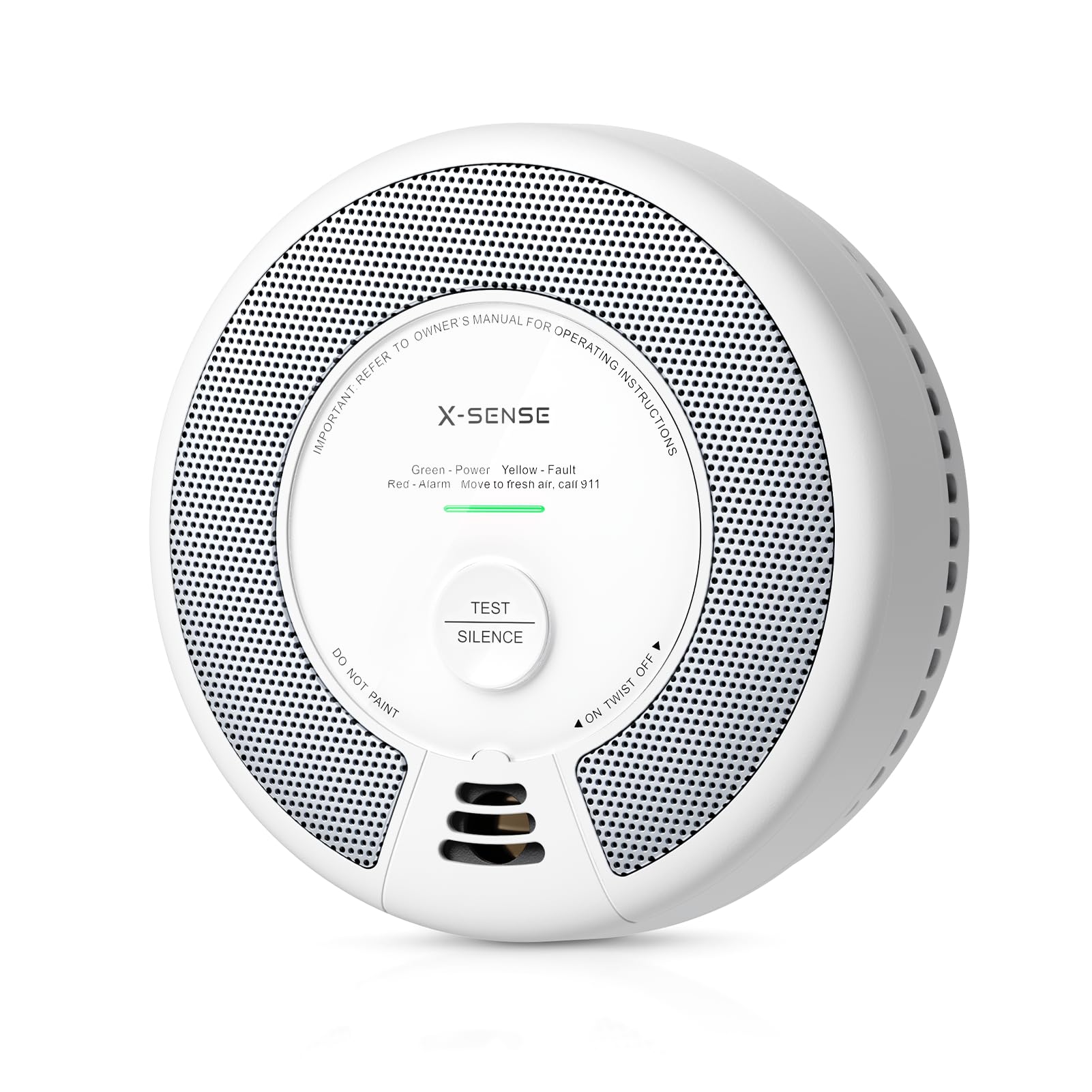
A decade of dual-threat protection without ever touching a battery.
This X-Sense model gives you both smoke and carbon monoxide detection in one compact unit, powered by a sealed lithium battery that lasts the full 10-year life. It uses a photoelectric sensor for smoke and an electrochemical sensor for CO — each tuned to its specific threat. It is certified to both UL 217 (smoke) and UL 2034 (CO) standards, which is the gold standard for home safety.
Installation is genuinely simple: buyers describe it as a “quick easy set up” with no wires to connect. The alarm reaches 85 dB (loud enough to wake you from a deep sleep), and a single button handles both testing and silencing. Reviewers praise the build quality, calling it “solid, well made, not cheap-looking.” The 5-year quality warranty and lifetime technical support back it up.
The only caution is that a few units arrived with packaging damage, and since the battery is sealed, you cannot test it separately before mounting. The aspect most praised is installation (21 mentions), but reliability is mixed (14 mentions) — a handful of shoppers say the unit not working after installation.
Long-Term Simplicity: One sealed battery, 10-year life, and dual smoke/CO detection in a single unit.
Watch For: A small number of buyers report units arriving dead or failing early — test immediately after installation.
Reach for this if you want the simplest possible combo detector with a decade of battery life.
Look elsewhere if you prefer a replaceable battery or need professional monitoring.
5. First Alert Battery Combination Smoke & Carbon Monoxide Alarm, SMCO100

First Alert’s SMCO100 is a no-nonsense smoke and CO combo that just works.
The SMCO100 lives up to First Alert’s trusted reputation. It uses their Precision Detection technology, which is designed to reduce nuisance alarms from cooking while still providing early warning for real fires. It detects both smoke and carbon monoxide in one battery-powered unit, making it a straightforward upgrade for any home.
Installation is a ceiling-mount affair that owners call “easy” and “clear” — the instructions are well-laid-out. The 10-year warranty from date of purchase is a strong vote of confidence. One owner who installed it in an RV said it was an excellent replacement unit. The test/silence button is simple to use, and the end-of-life warning chirps when it is time to replace the whole unit.
The ionization sensor inside is not as resistant to steam false alarms as photoelectric sensors, and a few owners note false alarms from oven heat when installed near the kitchen. But for a trusted brand with over 900 ratings, this is a solid, safe bet.
Brand Assurance: First Alert’s Precision Detection reduces cooking false alarms while providing early fire warning.
The Fit Note: Ionization sensor can false alarm from steam or heat; best placed away from the kitchen.
Reach for this if you want a trusted brand in a simple, affordable smoke and CO combo detector.
Look elsewhere if you need a sealed battery or photoelectric-only sensor for steam-prone areas.
6. SITERWELL Smoke Detector, 10 Year Battery, GS525A (2 Packs)
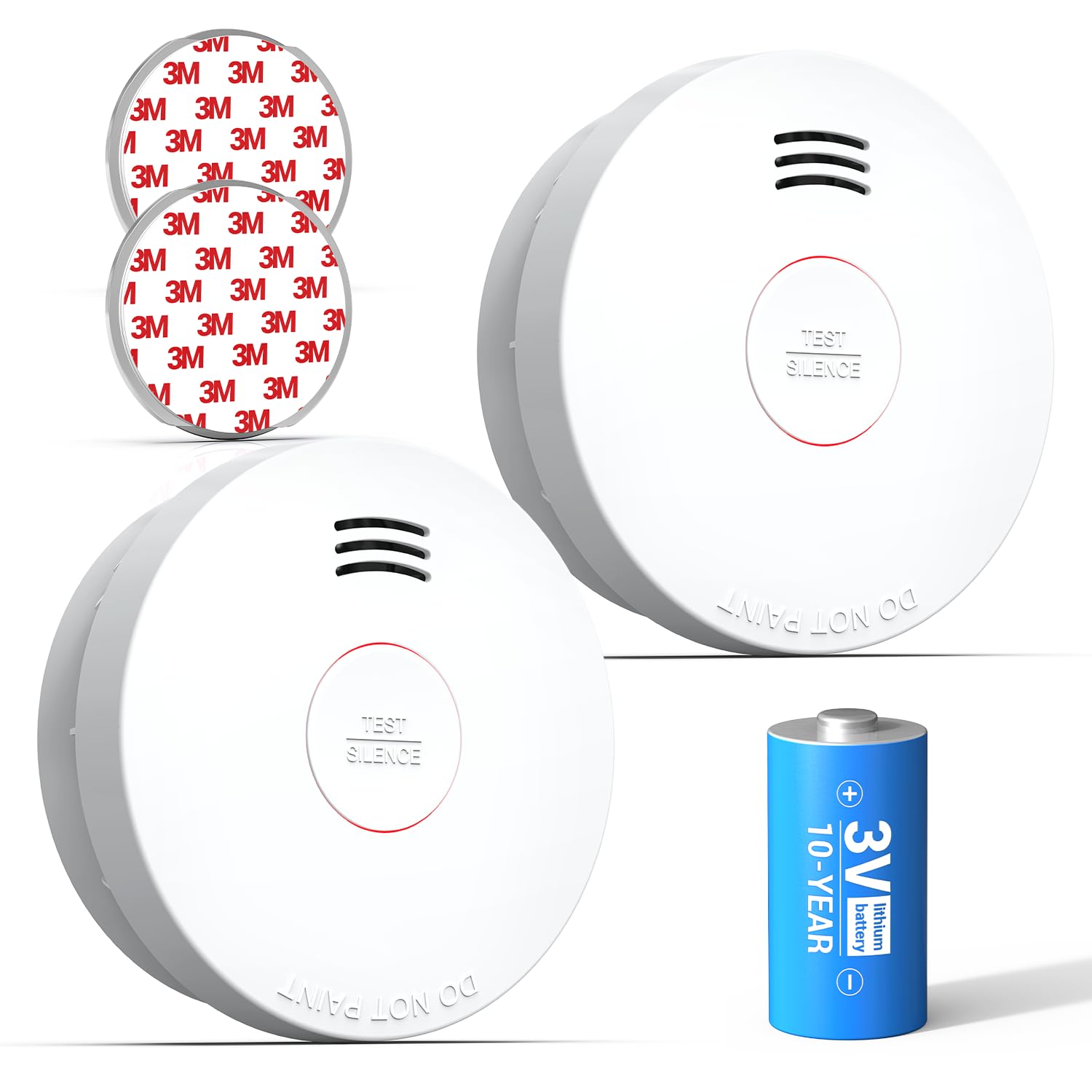
A two-pack of fire sentinels that stick without a single screw.
This SITERWELL twin pack uses the same core as the SITERLINK above — a 10-year sealed 3V lithium battery and a photoelectric sensor — but adds a clever magnetic mounting kit. Owners love the strong adhesive pads and magnet; it makes installation a literal stick-and-click job. The unit is lightweight at just 6.4 ounces and compact at 3.93 inches wide and 1.38 inches tall.
It is UL 217 listed, meaning it meets rigorous safety testing standards. The test/mute button is easy to reach, and the low battery and fault warnings chirp to let you know when the unit needs replacing. The photoelectric sensor is specifically better at detecting slow, smoldering fires, which owners appreciate for its lower false alarm rate compared to ionization models.
Owners rate installation as the top positive aspect (56 mentions), followed by reliability (34 mentions) and quality (29 mentions). The biggest recurring note is that the alarm is very loud — a feature, not a bug. A minority mention the noise level as a mixed point, and some note the battery life is not always as advertised.
easy Mounting: The magnetic backing and adhesive pads mean no drilling, no screws, just stick and test.
Consider This: Like its single-pack sibling, this is smoke only — no CO sensor — and the battery is non-replaceable.
Reach for this if you want a quick, drill-free installation for multiple rooms and do not need CO detection.
Look elsewhere if you need a combination smoke and CO detector.
7. Kidde Smoke and Carbon Monoxide Detector, AA Battery, 30CUDR-V

A detector that speaks the threat so you react faster.
This is the same 5-inch form factor as the Kidde 20SDR, but upgraded with dual detection (smoke and CO) and voice alerts. When it detects smoke, it says “Fire” in a clear voice. When it detects carbon monoxide, it says “Warning, Carbon Monoxide.” That specificity helps you and your family know exactly what is happening without having to guess from the beep pattern. The alarm hits 85 dB with a red LED flashing on the same hazard.
It runs on two AA batteries (included) and is tested to UL 217 10th Edition and UL 2034 5th Edition standards. The advanced sensing is engineered for over 25% faster smoke detection compared to older standards. Owners who replaced failed First Alert units found this easy to install and appreciated the loud voice alerts. The 10-year limited warranty from purchase date is solid.
The drawback is that a small number of owners mention multiple units having fault alarms despite correct installation, and some found Kidde customer service unhelpful. But the vast majority find it a reliable, well-designed upgrade over simpler beeping detectors.
Clear Communication: Voice alerts announce “Fire” or “Carbon Monoxide” so you know the threat instantly.
The Risk: A small percentage of customers note persistent fault alarms; test right after installation.
Reach for this if you want a voice-alert combo detector from a major brand with replaceable batteries.
Look elsewhere if you prefer a sealed battery or want professional monitoring integration.
8. X-Sense Interconnected Smoke and CO Detector Combo, SC01-W (3-Pack)
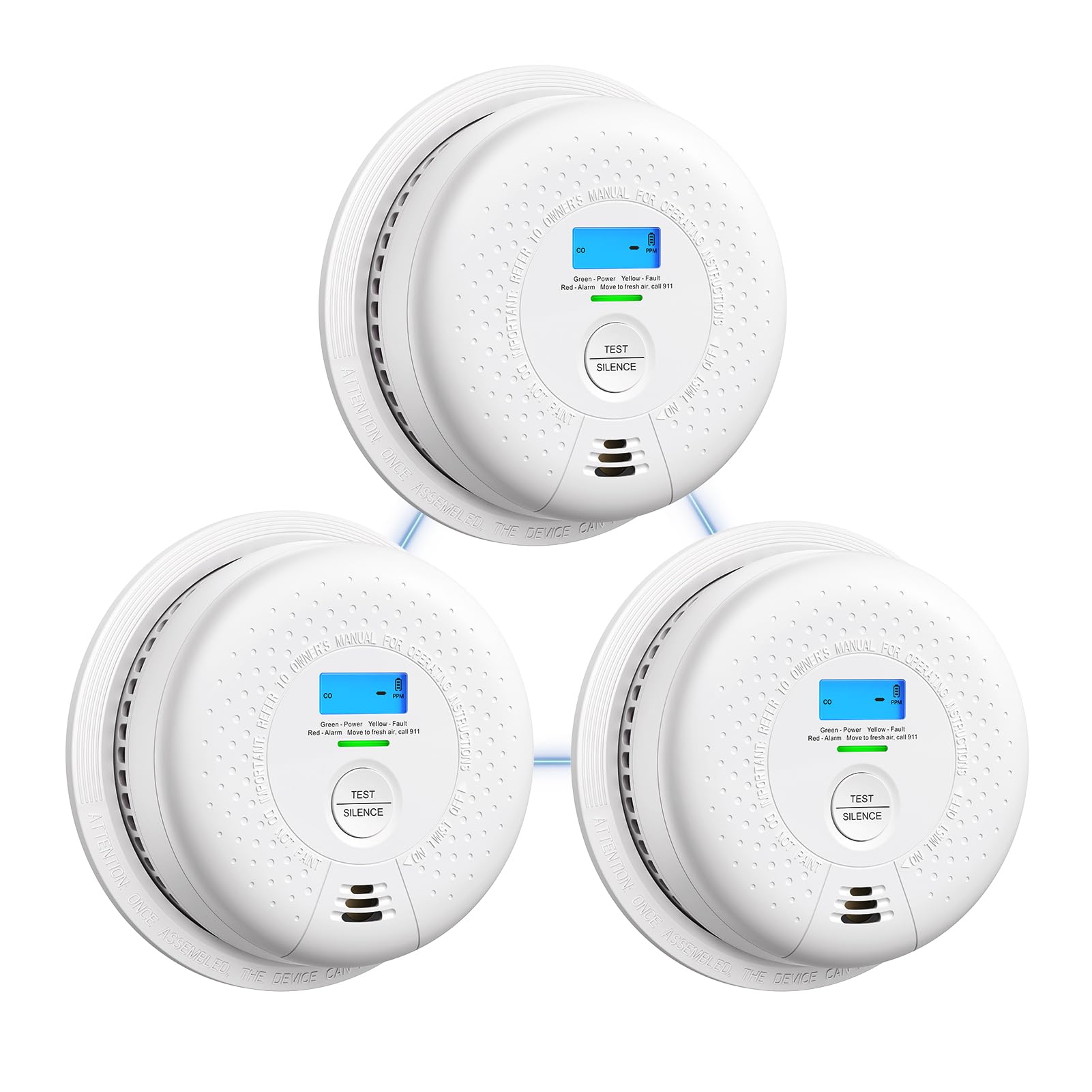
Three detectors that talk to each other so every room hears the alarm.
This is the most advanced package on the list for whole-home coverage. The SC01-W units communicate wirelessly with each other (not via Wi-Fi — they use a proprietary RF link), so when one detector senses smoke or CO, all three alarms go off simultaneously. You can link up to 18 X-Sense Link+ devices for maximum coverage, making it a true whole-home system without hardwiring.
Each unit has a 10-year sealed lithium battery, so you get a decade of interconnected protection with zero battery swaps. They are certified to UL 217 and UL 2034, and the 85 dB alarm is loud enough to wake the entire house. Owners say the synchronization process is “straightforward” and that the 3-pack is a cost-effective alternative to wired interconnected systems (which require an electrician).
The main trade-off is that the mounting plate is slightly small for old round electrical boxes, and the LCD display — which shows CO levels — is small and hard to read when ceiling-mounted. A few reviewers point out false alarms occurring twice a week, though most find the interconnectivity works flawlessly.
Networked Safety: One alarm triggers all three — and up to 18 total — without any wiring or Wi-Fi.
Know This: The mounting plate may not cover older electrical boxes, and some units have reported false alarm frequency.
Reach for this if you want whole-home interconnected smoke and CO protection without hiring an electrician.
Look elsewhere if you only need a single detector or prefer a simpler, non-interconnected setup.
Understanding the Specs
Photoelectric vs Ionization Sensors
A photoelectric sensor uses a beam of light to spot smoke particles — it catches slow, smoldering fires (like a wire heating inside a wall) better and rarely false-alarms from steam or cooking. An ionization sensor uses a tiny amount of radioactive material to detect fast-moving particles from flaming fires; it reacts faster to open flames but can go off from burnt toast. Most detectors use one type; premium models combine both for full coverage.
10-Year Sealed Battery
A sealed lithium battery is built into the detector for its entire 10-year lifespan. You never change the battery — when the unit reaches end-of-life, you replace the whole detector. This eliminates the most common cause of smoke detector failure (missing or dead batteries) and stops the 3 a.m. low-battery chirp. Detectors with replaceable AA or 9V batteries are cheaper upfront but require annual maintenance.
FAQ
Can I install a wireless smoke detector without an electrician?
How often should I test my wireless smoke detector?
What does UL 217 and UL 2034 certified mean?
Will a wireless smoke detector work during a power outage?
How do I know if my smoke detector is end-of-life?
Can I link multiple wireless smoke detectors together?
Should I place a smoke detector in the kitchen?
How many smoke detectors do I need for an average home?
Final Thoughts: The Verdict
If you want one dependable pick, the wireless smoke detectors winner is the SimpliSafe Smoke & Carbon Monoxide Detector because it combines professional monitoring with dual-threat detection and genuine smarts — though it only works within the SimpliSafe ecosystem. If you want a standalone, set-and-forget option, the SITERLINK GS525A delivers a 10-year sealed battery and tool-free magnetic install for smoke-only protection. And for whole-home interconnected coverage without hiring an electrician, the X-Sense SC01-W 3-Pack is the one to reach for.
How We Picked
We do not accept paid placement. Every pick is matched to a real buyer and a real use-case; we do not hands-on test units.
Sources & Methodology
Specifications: manufacturer listings and product documentation. Review insights: verified customer reviews, as of July 2026. Pricing: not shown on this page (it changes often); check the current price via the retailer link.
As an Amazon Associate, Calories Fit earns from qualifying purchases. This does not affect which products we feature.