
Our readers keep the lights on and the coffee maker working hard! As an Amazon Associate, I earn from qualifying purchases.
Specs are compiled from manufacturer listings and verified buyer reviews and can change over time — please confirm the key details on the product page before buying.
You want a heart rate sensor that stays put and reads true during your workouts, but the first choice is simple: a chest strap that measures your heart’s electrical signal, or an armband that reads blood flow through your skin. Your pick changes how your indoor cycling, running, or strength sessions feel and how reliable your training zones are. Here, we compare the top chest straps and armbands on real specs and the patterns in thousands of owner experiences, so you can choose the one that fits your routine.
I’m Mohammad — the founder and writer behind Calories Fit. This guide is built by comparing the manufacturers’ published specifications and the patterns across verified customer reviews, so you get each pick’s real strengths and trade-offs instead of marketing spin.
Find out which wireless heart rate sensor delivers the most accurate beats per minute for your cycling, running, or gym sessions without the pairing headaches.
Our Picks at a Glance


How To Choose The Best Wireless Heart Rate Sensor
Your first decision is the form factor. A chest strap (often called an ECG or EKG strap) measures the electrical impulses of your heartbeat, which is why it is considered the gold standard for accuracy. An optical armband measures blood flow with light sensors, which is more convenient for all-day wear and for people who find chest straps uncomfortable or awkward to put on under clothes.
Battery Life: Rechargeable vs. Replaceable
Battery life varies wildly in this category, so it pays to check before you buy. Some armbands need a charge every 20 hours of use, while premium chest straps can run for 400 hours on a single button-cell battery, and one budget strap claims a remarkable 1000 hours. If you train daily and hate hunting for chargers, a long-life strap removes that mental load entirely.
Connectivity: Bluetooth and ANT+
Most modern sensors broadcast over two wireless standards. Bluetooth connects to your smartphone and most smartwatches, while ANT+ is the protocol many dedicated bike computers (like Garmin or Wahoo head units) and gym equipment rely on. If you want to record on both your phone and a bike computer at the same time, you need a sensor that supports both simultaneously.
Quick Comparison
| Model | Best For | Form Factor | Battery Life | Connectivity | Amazon |
|---|---|---|---|---|---|
| Wahoo TRACKR★ Best Overall | Rechargeable strap for road cyclists | Chest Strap | 200 hours | ANT+ & Bluetooth | Amazon |
| Magene H603Best Value | Budget dual-stream chest strap | Chest Strap | 1000 hours | ANT+ & Bluetooth | Amazon |
| CYCPLUS H1 | Fast-charging armband with color zones | Armband | 110 hours | ANT+ & Bluetooth 5.1 | Amazon |
| COOSPO HW807 | Armband for gym equipment and yoga | Armband | 20 hours | ANT+ & Bluetooth 5.0 | Amazon |
| POWR LABS HW805 | Auto-on armband for multi-device setups | Armband | — | ANT+ & Bluetooth | Amazon |
| Suunto Smart Sensor | Suunto watch owners wanting a reliable strap | Chest Strap | — | Bluetooth | Amazon |
| Polar H10 | Maximum accuracy for serious athletes | Chest Strap | 400 hours | ANT+ & Bluetooth & 5 kHz | Amazon |
In‑Depth Reviews
1. Wahoo TRACKR Heart Rate Monitor
Our pick — over 4★ from 700+ verified ratings; the strongest balance of quality and price.
The rechargeable chest strap that riders trust for thousands of miles without a battery swap.
The Wahoo TRACKR is the crowd favorite among cyclists because its rechargeable battery ends the constant hunt for button cells. You get up to 200 hours of active life on one USB-C charge — trail runners and road cyclists report going weeks between charges. The LED indicator shows battery status and confirms your connection is live before you start.
Buyers report it is “light, accurate,” with one rider logging 3,000 miles without issues, connecting cleanly to a Garmin 840 and Mac mini. The slim strap sits secure during intense exercise, though the hook mechanism takes a moment to figure out the first time. It broadcasts over both ANT+ and Bluetooth, so it pairs with Zwift from the start and syncs to phones, bike computers, and gym equipment without fuss.
The honest trade-off: accuracy, reliability, and connectivity all draw mixed feedback in the reviews, and the strap runs short for larger builds — some owners swap in a third-party strap to get a proper fit. If you have a bigger chest circumference, plan for that extra purchase. For most athletes, the combination of top-level accuracy, real rechargeability, and a comfortable strap makes this the easiest recommendation.
Why riders switch to it
- USB-C rechargeable, ending battery swaps for good
- 200-hour active battery life between charges
- Broad ANT+ and Bluetooth pairing with Zwift, Garmin, and phones
What to check before buying
- Strap fits snugly on larger chests — may need a longer third-party strap
- Setup hook can feel unintuitive on the first wear
Reach for this if: you want a rechargeable strap that pairs with everything and lasts weeks between charges.
Look elsewhere if: you have a larger chest and want a strap that fits straight from the start.
2. Magene H603 Chest Strap
A split-design chest strap with a battery life that dwarfs every rechargeable rival here — 1000 hours.
The Magene H603 is the budget pick that delivers premium features at a low price, and the headline number is the battery: 1000 hours of claimed life from a single unit. That is a 9.1x gap over the 110-hour CYCPLUS armband below — at one hour per day, four days a week, Magene works out to roughly 2.5 years of training before you think about a replacement. The split chest strap design (the sensor pod detaches from the band) makes washing the strap easy and keeps the expensive electronics dry.
Accuracy holds up well for the money, with owners confirming the readings match their Apple Watch and Garmin head units during rides. It broadcasts two data copies at once over ANT+ and Bluetooth, so you can record on a bike computer and a training app (Strava, Zwift, Wahoo, TrainerRoad) simultaneously. The colorful shell resists scratches and fading even in sweaty environments, and the whole sensor carries an IP67 waterproof rating for rainy rides.
The catch is longevity: many owners mention zero corrosion on the contact points after weeks of daily use, but some units fail after about a month, with erratic readings that jump 30 to 40 beats high before matching a watch again. It is a real quality-control gamble at this price. Weigh that against the fact that it performs as well as a Garmin strap for a fraction of the cost — buyers who get a good unit are thrilled.
True value play: the battery life and dual-stream ANT+/Bluetooth alone justify the price, and happy owners call it as accurate as straps costing three times more.
Best for: budget-minded cyclists who want 1000-hour battery life and dual-device recording.
Think twice if: you need guaranteed long-term reliability — a minority of units quit within a month.
3. CYCPLUS Heart Rate Monitor Armband H1

An armband that keeps your wrist free, charges in half an hour, and runs for 110 hours straight.
The CYCPLUS H1 solves the two biggest armband annoyances: charging time and battery anxiety. A full charge takes just 30 minutes and then lasts over 110 hours — owners who train daily go weeks without thinking about the charger, and the magnetic charging cable clicks on easily. It is an optical sensor (reads blood flow through the skin) that claims accuracy within ±1 bpm during exercise, and the single-button design means you slip it on your upper or lower arm and go.
What wins people over is the color-coded heart rate zone tracking. A green LED shows your heart rate at 80 bpm or below, orange lights up between 80 and 140 bpm, and red signals 140 bpm and above — you glance at your arm and instantly know your effort zone without staring at a phone. It connects via Bluetooth 5.1 and ANT+, pairing reliably with Garmin and Wahoo devices, and customers note their bike computers recognized it immediately with zero dropouts mid-ride.
The durability feedback is mixed, with the main recurring gripe being the strap itself rather than the sensor — some units stop working after a few months of use. The silicone band is comfortable and the build quality earns genuine praise, but treat the strap gently to get the longest life. For anyone who finds chest straps intrusive, this armband is the comfortable, low-maintenance alternative.
Pick this if: you want armband convenience with zone-colored LEDs and a 30-minute recharge that lasts 110 hours.
skip it if: you demand multi-year durability — a few owners saw failures within months.
4. COOSPO Heart Rate Monitor Armband HW807

The armband that gym-goers and yoga fans swear by for connecting straight to Peloton and DDP Yoga.
The COOSPO HW807 is built for gym versatility, with compatibility that spans Peloton bikes, Concept2 rowers, Nordic track treadmills, Bowflex trainers, and iFIT equipment — plus the usual smartphones, Garmin and Wahoo watches, and more than 200 training apps including Strava, Polar Beat, and DDP Yoga. It is an optical sensor with ±1 bpm claimed accuracy, and owners consistently rate it as accurate as chest strap monitors, matching pulse oximeter readings during zone 2 running.
Comfort is a real selling point here: the box includes two soft arm straps, which is rare at this price. The color-coded zone LED lets you check your effort at a glance, and the sensor works through tattoos without dropping the signal. It carries an IP67 waterproof rating for rainy training, though it is not meant for swimming. Battery life is the trade-off — 20 hours per charge is the shortest in this lineup, so expect to recharge weekly with daily 90-minute sessions.
The most-discussed downsides are the weak velcro on the strap and a finicky magnetic charger, plus occasional accuracy complaints from individual owners. For the money, however, the two straps, broad gym compatibility, and dependable zone tracking make this the armband to beat for indoor training. Owners who got two years out of their first unit simply bought another one.
Gym workhorse: two included straps and direct pairing with Peloton and Concept2 make it the most flexible armband for studio and home equipment.
Best for: gym members and yoga practitioners who need broad equipment compatibility and two straps included.
Not for: endurance athletes who train daily and need more than 20 hours between charges.
5. POWR LABS Rechargeable Heart Rate Armband HW805
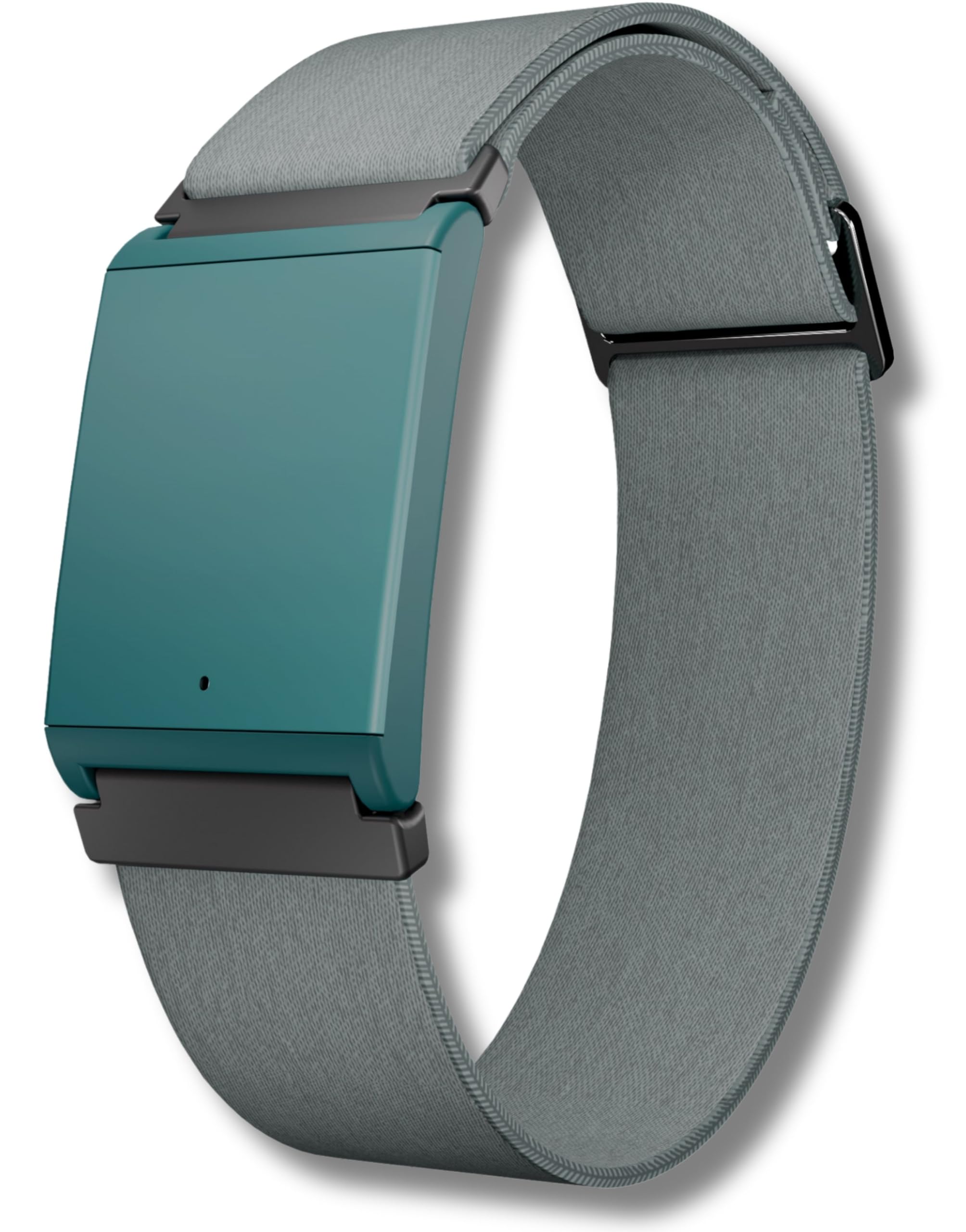
An armband that turns on the moment it touches your skin and broadcasts to three devices at once.
The POWR LABS HW805 is the most modern-feeling armband here, thanks to auto-wear detection: intelligent sensors wake the device the instant it touches your skin, so there is no power button and no pairing ritual at the start of a workout. It supports dual Bluetooth plus ANT+, connecting to up to three devices at once, so your data flows to a bike computer, a phone app, and a smartwatch simultaneously without interruptions.
The defining spec is the build: the housing is polyamide 66 reinforced with glass fibers (PA66+GF), a rugged composite that shrugs off drops, while the soft-touch medical-grade silicone strap sits flush against the arm without bouncing or pinching during high-intensity intervals. Owners confirm accuracy matches their Apple Watch readings, and the auto on/off works cleanly with a Peloton treadmill — the sensor even powers down automatically if it loses skin contact, saving battery.
The trade-off is battery discipline. Some reviewers point out needing a charge every two weeks even when the display shows over 50% battery, because a low charge can cause Bluetooth failures. The 20-gram weight is barely noticeable, but the band itself is non-elastic and may deteriorate over time. For under half the price of the premium pick, you get professional-grade dual-band connectivity and a rugged build.
Choose this if: you want a zero-friction armband that auto-wakes and streams to multiple devices at once.
Pass on it if: you forget to charge gear — this one needs regular top-ups to keep Bluetooth stable.
6. Suunto Smart Heart Rate Belt

A purpose-built chest strap for Suunto watch owners who want reliable heart data without third-party guesswork.
The Suunto Smart Sensor is the pick for anyone already living inside the Suunto ecosystem. Owners pairing it with a Suunto 9 Baro watch report it connected instantly and delivered readings that matched a pharmaceutical-grade reference device during testing. It is a chest strap, so it reads the electrical signal of your heart for the accuracy that optical sensors chase but rarely match.
The strap itself earns consistent praise for comfort and build quality, and unlike many budget straps, Suunto sells a replacement band separately — so when the fabric wears out, you replace only the strap and keep the electronics. At 40.6 grams it is not the lightest here, but it sits securely during gym sessions and trail runs, with owners describing flawless operation across multiple workouts.
This is a leaner data package: the official specs omit a battery life figure, and the connectivity list is limited to smartphones with no stated ANT+ support, which matters if you use a non-Suunto bike computer. Its real strength is the guaranteed handshake with Suunto watches. If you do not own a Suunto device, a more universally compatible strap is the smarter buy — but for Suunto users, this is the smooth fit.
Ecosystem-first: instant pairing with Suunto watches and a replaceable strap make this the lowest-friction choice for that brand’s owners.
Best for: Suunto watch owners who want a comfortable, accurate chest strap that connects instantly.
Not for: riders using Garmin or Wahoo head units, since ANT+ support is not confirmed here.
7. Polar H10 Heart Rate Monitor Chest Strap
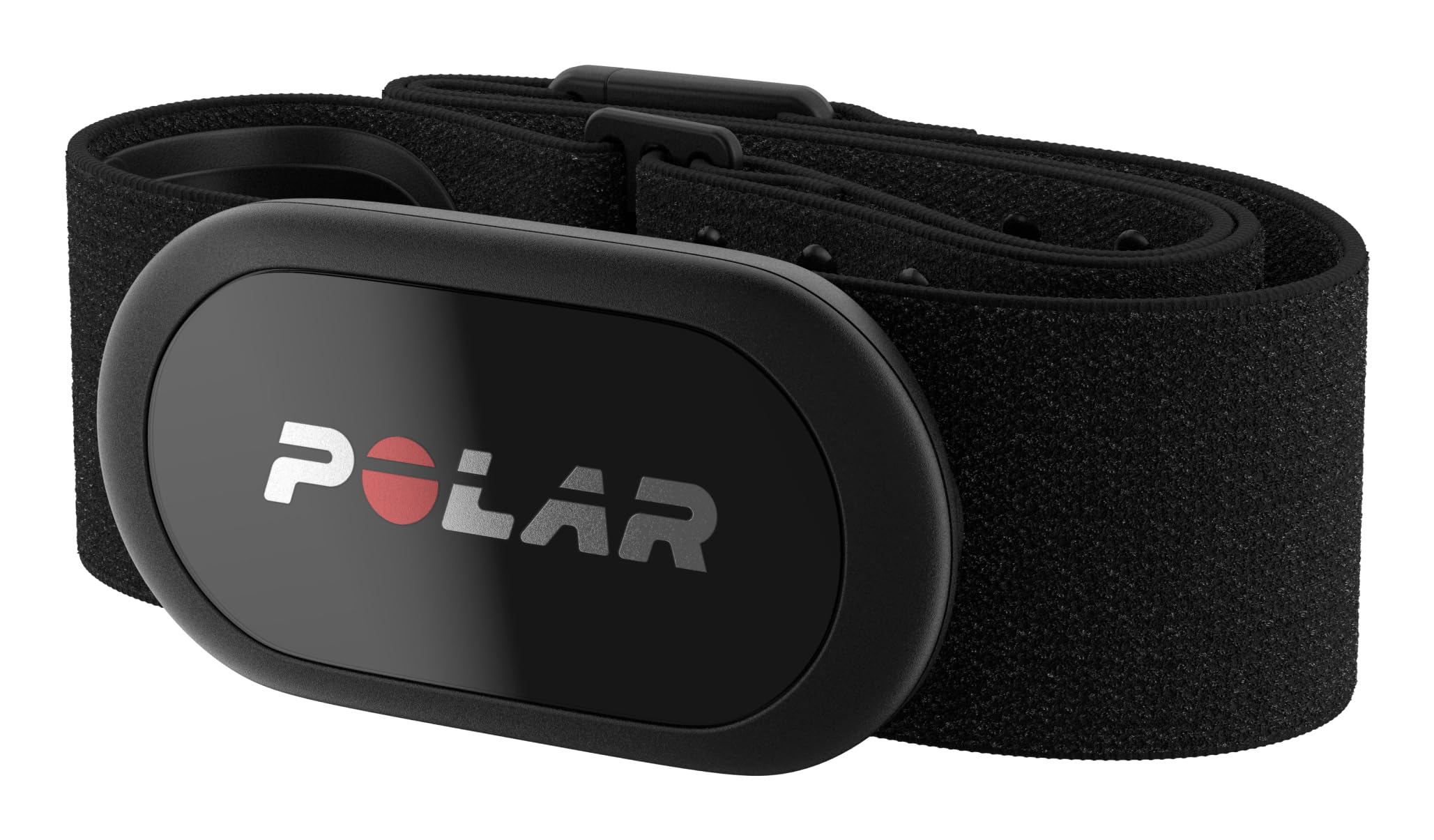
The most accurate heart rate sensor Polar has ever made, with dual Bluetooth plus ANT+ plus 5 kHz.
The Polar H10 is the reference standard for chest-strap accuracy, widely recognized for top precision in lab tests and the most accurate sensor Polar has ever made. It is the pick for serious athletes, with owners reporting accuracy of 99.3% in cycling, 92.9% in running, and 95.3% in weight training, and a CR2025 button cell battery (included) delivering 400 hours of life. It is waterproof to 30 meters, so swimmers can log heart rate in the pool.
Connectivity is its superpower: Bluetooth, ANT+, and 5 kHz transmission work simultaneously, meaning you can broadcast to a smartphone, a bike computer, and gym equipment all at once, or run two Bluetooth connections at the same time. The Pro Chest Strap has improved electrodes, an easy buckle, and silicone dots that keep it interference-free and comfortable. It even stores one session in internal memory if your phone drops out mid-workout.
The recurring caveat is the strap, not the sensor: some owners see the fabric strap fail after months, which causes erratic readings — but a replacement strap fixes it completely. A minority report fast battery drain or intermittent connectivity after a year. The sensor unit itself is the most trusted sensor among serious athletes, and with the crowd behind it, those strap failures read as a consumable part rather than a systemic flaw.
Why pros choose it
- Benchmark accuracy in running, cycling, and lifting
- Triple connectivity: Bluetooth, ANT+, and 5 kHz all at once
- 400-hour battery from a replaceable CR2025 cell
- Waterproof to 30 meters with internal memory for one session
The honest catch
- Strap fabric can fail after months, needing a replacement band
- Occasional battery drain or connectivity issues after a year of use
Buy this if: you want the most accurate heart data available in a consumer strap and train across cycling, running, and strength.
Consider the trade-off: you will likely replace the strap at some point, and a fresh CR2025 battery is part of ownership.
Understanding the Specs
ECG Strap vs. Optical Armband
A chest strap measures the electrical signal of your heartbeat (ECG), which is why it is the accuracy benchmark. An armband uses optical sensors that shine light through your skin to read blood flow, which is more convenient but can lag or spike during abrupt intensity changes. If your training depends on precise zone data, a chest strap wins.
Battery Life and Charging
Battery figures in this category range from 20 hours to 1000 hours, and the gap changes your habits. A 20-hour armband needs a weekly charge; a 400-hour strap runs for months on a coin cell; a 1000-hour strap can last years. Rechargeable units use USB-C or magnetic cables, while straps often use replaceable CR2025 button cells.
ANT+ vs. Bluetooth
Bluetooth connects to phones and smartwatches; ANT+ is the protocol dedicated bike computers and gym equipment use. Sensors with both let you record on two devices at once — a phone app for tracking and a bike computer for live data. Check that your bike computer or treadmill supports the same standard your sensor broadcasts.
Water Resistance (IP Ratings)
An IP67 rating means the sensor is fully protected from dust and can survive immersion in water up to one meter for 30 minutes — fine for heavy sweat and rain, but not for swimming. If you swim, look for a sensor rated waterproof to a depth like 30 meters, which some premium chest straps offer.
FAQ
Will a chest strap work with my Garmin or Wahoo bike computer?
What is the difference between a chest strap and an armband?
How long does a heart rate sensor battery last?
Can I connect a heart rate sensor to my phone and bike computer at the same time?
Are armband heart rate monitors as accurate as chest straps?
Is an IP67 heart rate sensor safe to wear in the rain?
Do heart rate sensors work with Peloton bikes and gym equipment?
What do the LED colors on an armband mean?
How do I know if a heart rate sensor will fit my arm or chest?
Final Thoughts: The Verdict
If you want one dependable pick, the wireless heart rate sensor winner is the Wahoo TRACKR because it combines benchmark chest-strap accuracy with a genuine 200-hour rechargeable battery, ending the coin-cell swap ritual for good. If you want armband convenience with a 30-minute charge and 110-hour runtime, grab the CYCPLUS H1. And for maximum precision across cycling, running, and strength training, the Polar H10 is the one to reach for.
How We Picked
We do not accept paid placement. Every pick is matched to a real buyer and a real use-case; we do not hands-on test units.
Sources & Methodology
Specifications: manufacturer listings and product documentation. Review insights: verified customer reviews, as of August 2026. Pricing: not shown on this page (it changes often); check the current price via the retailer link.
As an Amazon Associate, Calories Fit earns from qualifying purchases. This does not affect which products we feature.