
Our readers keep the lights on and the coffee maker working hard! As an Amazon Associate, I earn from qualifying purchases.
Specs are compiled from manufacturer listings and verified buyer reviews and can change over time — please confirm the key details on the product page before buying.
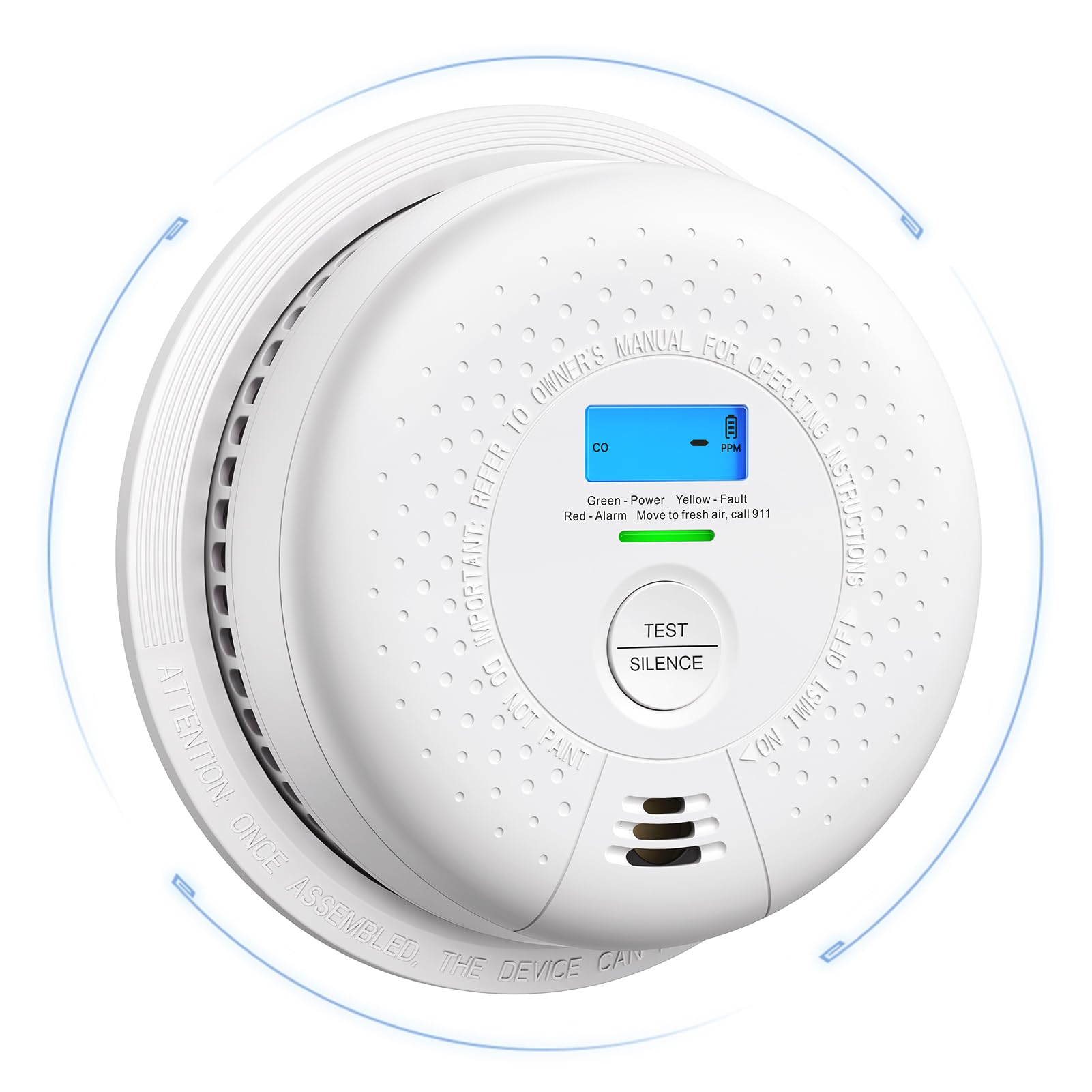
A carbon monoxide detector is not the kind of gadget you buy for fun. You buy it because the gas is invisible, odorless, and potentially deadly — and your nose gives you zero warning. This guide focuses strictly on battery-powered (wireless) models that install in minutes and keep working even when the power goes out, so you can put real protection in every sleeping area without calling an electrician.
I’m Mohammad — the founder and writer behind Calories Fit. This guide is built by comparing the manufacturers’ published specifications and the patterns across verified customer reviews, so you get each pick’s real strengths and trade-offs instead of marketing spin.
You need a detector that wakes you up if carbon monoxide builds up while you sleep. The most reliable picks here combine electrochemical sensors (a type of sensor that measures CO gas accurately), a decade of battery life, and loud alarms — and that is exactly what you will find in this breakdown of the best wireless carbon monoxide detector options available right now.
Our Picks at a Glance


How To Choose The Best Wireless Carbon Monoxide Detector
The right CO detector does not need a hardwired connection or a complex setup. It just needs to sense gas accurately, wake you up, and keep running without constant upkeep. Here is what actually matters when you sort through the options.
Sensor Type — Electrochemical vs. Other
Nearly every reliable CO-only or combo alarm uses an electrochemical sensor. That technology measures CO concentration in parts per million (ppm) and triggers the alarm at specific thresholds. Skip anything that does not specify the sensor type — it is the difference between a device that actually detects CO and one that makes noise without real protection.
Power Source — Sealed Battery vs. Replaceable
A sealed lithium battery powers the unit for a full ten years and then the whole alarm gets replaced. That eliminates the twice-a-year battery check. Replaceable AA models (like the First Alert SMCO100) are easier to keep alive past a decade, but you have to remember to swap the batteries. Both work — the question is if you want zero maintenance or long-term flexibility.
Interconnection — When All Units Sound Together
Wireless interconnection means if one detector finds CO (or smoke), every linked unit in the house goes off. That is a genuine life-safety upgrade for multi-story homes. Not every model offers it, and the ones that do (like the X-Sense SC06-W and SC01-W) require you to pair each unit during setup. If you live in a single-story apartment, a standalone unit is fine.
Quick Comparison
| Model | Best For | Sensor Type | Power Source | Interconnection | Amazon |
|---|---|---|---|---|---|
| First Alert SMCO100★ Best Overall | Best Overall Combo Value | Precision Detection | AA Batteries | No | Amazon |
| X-Sense SC06-WInterconnected | Wireless Interconnection | Electrochemical | 10-Year Sealed Lithium | Yes | Amazon |
| X-Sense SC01-WPro Link | Whole-Home Link | Electrochemical | 10-Year Sealed Lithium | Yes | Amazon |
| USI MC304SB | CO-Only Simplicity | Electrochemical | 10-Year Sealed Alkaline | No | Amazon |
| First Alert SMCO200 | Slim Profile Combo | Ionization | AA Batteries | No | Amazon |
| Kidde 30CUDR | Faster Smoke Detection | Electrochemical | AA Batteries | No | Amazon |
| Siterwell GS828A | Travel / Portable | Electrochemical | Battery Powered | No | Amazon |
| Kidde 900-CUDR-V | Voice Alerts | Electrochemical | AA Batteries | No | Amazon |
| TOPTES CT-580 | Diagnostic / Spot Check | DDS Electrochemical | Rechargeable | No | Amazon |
In‑Depth Reviews
1. First Alert Battery Combination Smoke & Carbon Monoxide Alarm (SMCO100)
Our pick — over 4.5★ from 850+ verified ratings; the strongest balance of quality and price.
The crowd-favorite combo alarm that protects against two threats with one ceiling mount.
This is the unit that nearly 900 owners have made the most popular pick in the lineup — and the reason is simple: it covers both smoke and carbon monoxide in a single battery-powered device. First Alert’s Precision Detection technology is designed to reduce nuisance alarms from cooking while still giving an early warning during an actual fire. The result is a detector that stays quiet when you fry fish (as some owners note) but screams when it matters.
Battery life is a genuine strong point here. One owner reported “good battery life over 2 years already,” and because it runs on standard AA batteries, you are not locked into a replacement schedule. The 8.32-ounce weight and 5.6-inch diameter make it unobtrusive on a ceiling. The end-of-life chirp tells you when the unit needs replacing. The main trade-off is that it does not interconnect with other units — each alarm operates independently, so a multi-story home may want a linked system instead.
What wins owners over: simple installation (a 30-second battery job) and the dual protection that covers both deadly risks in a single device — at a price that makes outfitting a whole house affordable.
The honest limit: no wireless linking to other alarms, and the cooking-sensitivity reduction means it may not sound for every small kitchen smoke event.
Grab it for: straightforward two-in-one protection with long-running AA batteries and a trusted brand name.
Pass if: you need interconnected alarms that all sound together when one detects danger.
2. X-Sense 1-Pack Interconnected Smoke and CO Detector (SC06-W)
A sealed 10-year battery that pairs with others so the whole house alerts at once.
The standout feature here is the wireless interconnection — when one SC06-W detects smoke or CO, every paired unit in the system sounds off. That is a genuine safety upgrade for two-story homes, especially since the setup does not require any wiring. Buyers report linking six units across three floors, and the activation triggers all of them reliably.
The 10-year sealed lithium battery means you install it once and forget it for a decade. As owners put it: “no batteries to replace — designed to run for 10 years straight.” That eliminates the twice-a-year battery check entirely. The unit is also certified to UL 217 and UL 2034 safety standards and sounds an 85 dB alarm. The dimensions are compact at 4 inches across by 2 inches deep, while the SC01-W measures 5.7 inches across. Owners do note the base plate is slightly larger than the unit itself, but it mounts easily with the included screws and anchor plugs.
The thing owners praise most: setup and pairing (57 owners single it out as easy). The 10-year battery eliminates annual changes.
The honest caveat: reliability gets mixed feedback — some owners mention units that malfunction or false-alarm. Consider buying from a retailer with easy returns.
Reach for this if: you want whole-home interconnection without hiring an electrician, and you prize zero-maintenance battery life.
Look elsewhere if: you prefer replaceable batteries or need a model with fewer reports of early failures.
3. X-Sense Interconnected Smoke and CO Detector Combo (SC01-W)
A 2-in-1 alarm that can link up to 24 units for max whole-home coverage.
This is X-Sense’s larger interconnected combo at 5.7 inches across, built from a heat-resistant PC plastic that withstands high temperatures and corrosion. The wireless RF interconnection supports up to 24 Link+ alarms — so you can mix smoke detectors, CO detectors, and combos across a large home and have them all talk to each other. That is a level of scalability that beats the SC06-W, which also links but is a dedicated 2-in-1 without quite the same platform breadth.
The 10-year sealed lithium battery powers the unit for its entire lifespan. The LCD screen shows real-time CO levels, though some owners find it a little hard to read at a glance. Mounting requires a drill and a 1/4-inch bit for the included anchors, and the base ring twists into place to activate the battery. Several owners note the mounting plate is too small for old round electrical boxes — you may need a cover plate if replacing a hardwired unit.
What Owners Applaud
- Straightforward sync process — alarms come pre-synced for easy pairing
- Dual LED indicators show fire (red) and CO separately
- Scalable to 24 units across a large home
What to Watch For
- Mounting plate may not cover old round junction boxes
- Small LCD can be tricky to read from floor level
- Some customers note false alarms occurring twice a week
Best for: large homes that want a unified alarm network with a decade of sealed battery power.
Skip if: you need a simple standalone unit or are replacing a hardwired alarm without a cover plate.
4. Universal Security Instruments 10 Year Tamper Proof CO Alarm (MC304SB)

A CO-only alarm with a distinct form that fits on a wall or sits on a nightstand.
If you already have smoke detectors and only need carbon monoxide protection, this USI model keeps it simple. It is a dedicated CO alarm with no smoke sensor, powered by sealed alkaline batteries that last the full 10-year product life. The design is versatile — it can be mounted on a wall with a single nail or screw, or placed on a flat surface as a tabletop unit. Owners appreciate that it comes ready to use: pull the activation strip and it starts.
The “smart alarm” technology resists nuisance triggers, so it stays quiet unless there is real CO. The sealed alkaline batteries are noted as more eco-friendly to dispose of than lithium types at end-of-life. The 10-year limited warranty matches the product lifespan. One owner noted their previous unit from the same brand lasted over nine years, so the performance track record is solid.
What every owner notices: the sleek, compact look that blends in on a bookshelf or wall — it is a visual reminder of CO protection that does not scream “safety device.”
The honest limit: CO-only — if you also need smoke detection, you will need a separate unit or a combo model.
Choose this for: a maintenance-free CO-only alarm that sits on a table or mounts in seconds.
Not for you if: you want a combination smoke and CO alarm in a single device.
5. First Alert Battery Combination Smoke & Carbon Monoxide Alarm (SMCO200)

A slim-profile combo alarm that sits at 1 inch deep versus the standard 2 inches.
This is the more streamlined version of the SMCO100. At just 1 inch deep (versus the standard 2 inches), it sits flush against the ceiling and looks significantly less bulky — a detail that owners consistently mention as a visual upgrade over older units. The Precision Detection technology is the same as the SMCO100, designed to reduce nuisance alarms from cooking while still catching real fire threats early.
It runs on AA batteries (no wiring needed), so it keeps working during power outages. The sensor type here is ionization, which detects visible fire particles associated with fast-flaming fires. Reliability is the top aspect owners praise — 24 owners single it out. The slim design also gets positive notes (6 mentions), and the installation is fast: mount the bracket, twist the unit on, and test. The main trade-off is that a few owners find the mounting process slightly less straightforward than they expected.
Why Owners Like It
- Slim profile is 1 inch deep versus the standard 2 inches — much cleaner look on the ceiling
- Battery-operated so it works even when the power is out
- Reliable dual protection that owners trust across brands
A Few Notes
- No wireless interconnection with other units
- Mounting plate may require a little extra adjustment for some ceiling layouts
Ideal if: you care about ceiling aesthetics and want a flush, low-profile dual alarm.
Think twice if: you need interconnection or prefer a sealed battery that never needs replacement.
6. Kidde Smoke and Carbon Monoxide Detector (30CUDR)

A 2-in-1 detector that claims faster smoke detection with a loud 85-decibel wake-up call.
Kidde is a well-established name in fire safety, and this model (30CUDR) brings advanced sensing that distinguishes real smoke from cooking steam. The maker claims over 25% faster smoke detection, and the 85-decibel alarm is paired with a red LED for visual confirmation. It runs on two included AA batteries, so installation is just a matter of mounting the bracket and inserting the batteries.
The unit meets UL 217 10th Edition and UL 2034 5th Edition standards. At 5 inches square by 1.88 inches deep, it is a fairly compact footprint. Owners appreciate the easy install and the safety features, though feedback on reliability is mixed — some units trigger false alarms from cooking, while others work flawlessly. The 10-year limited warranty covers the alarm itself (not the batteries). The old Kidde mounting plate is not always compatible, so you may need to swap it out during installation.
What stands out: the 85 dB alarm with red LED — owners say it is loud enough to wake you from deep sleep.
The honest caveat: mixed reports on false alarms from cooking; note that green LED indicator behavior may differ from older Kidde models.
Pick this for: a name-brand 2-in-1 alarm with enhanced smoke detection speed and a proven manufacturer.
Not ideal if: you need a sealed battery that never requires replacement or you are sensitive to false alarms from cooking.
7. Siterwell Carbon Monoxide Detector (GS828A) — 2-Pack
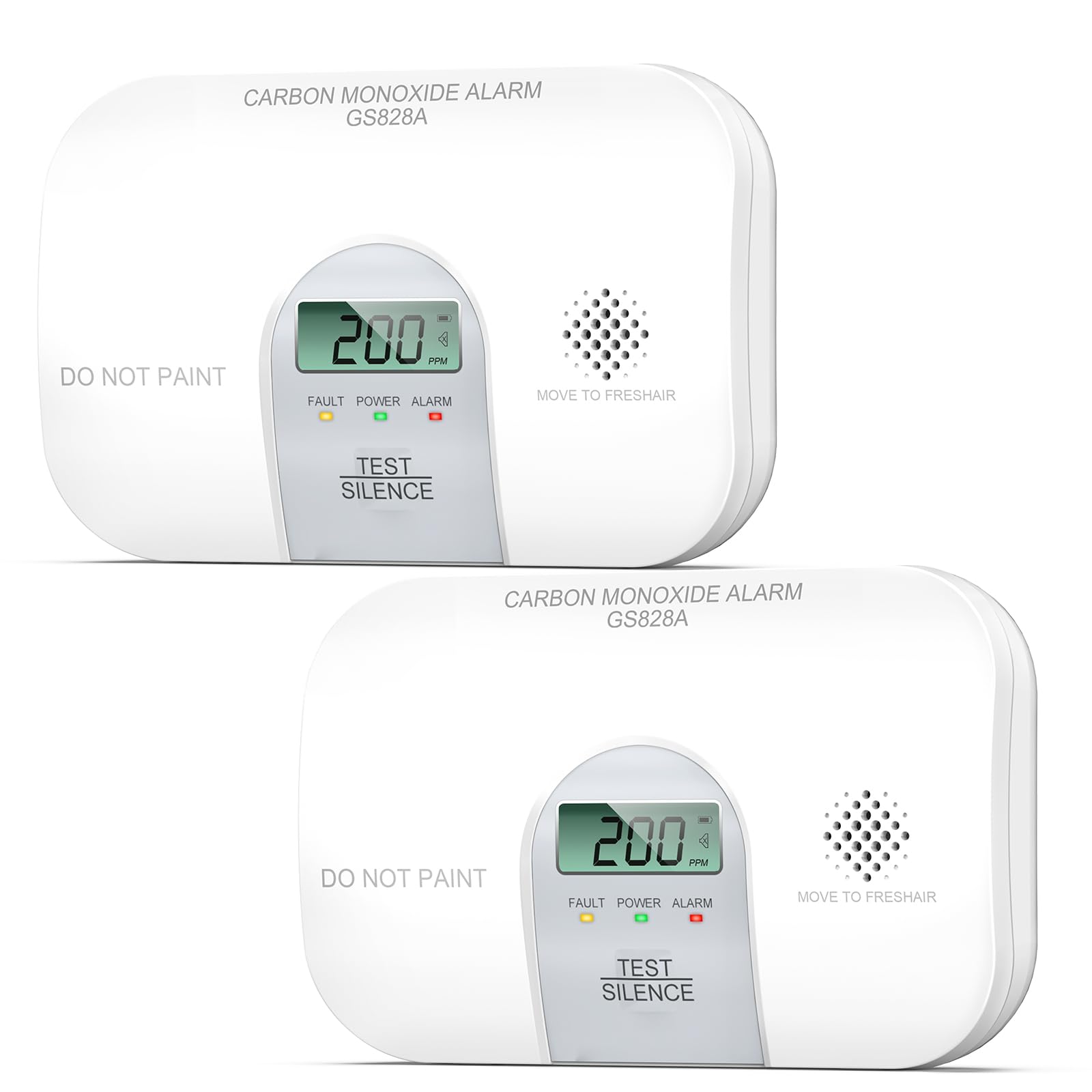
A compact, portable CO detector with an LCD screen for travel, camping, and tight spaces.
This Siterwell model is different from the others on this list because it is designed for portability as much as home use. At 4.8 inches wide and 1.7 inches deep, it fits easily in a bag. It features an LCD digital display that shows real-time CO levels, plus a three-colored LED that flashes red (alarm), green (power), or yellow (fault). The built-in electrochemical sensor conforms to ETL standards, and the alarm sounds at no less than 85 dB at 3 meters.
It comes with batteries already installed — just pull the tab, wait for the 30-second air sampling, and it is operational. You can set it on a table or mount it to the wall. Owners appreciate the accuracy (9 owners praise it) and the easy setup. A few note that the flashing light every 40 seconds can be a distraction in a dark bedroom. The 7-year product life is shorter than the 10-year sealed units, but it still covers the recommended replacement cycle for CO alarms.
What owners love most: the compact size and clear LCD — one owner uses it to check their car for exhaust leaks, and another keeps it on a boat to pinpoint engine CO sources.
A small trade-off: the flashing green light every 40 seconds can bother light sleepers; an occasional defective unit slips through.
Reach for this if: you need a portable CO detector for camping, RV, or travel where a fixed alarm won’t help.
Pass if: you want a permanent home mount with the full 10-year sealed battery.
8. Kidde Smoke & Carbon Monoxide Detector with Voice Alerts (900-CUDR-V)

A talking alarm that announces “Fire!” or “Warning Carbon Monoxide” so you know which danger to act on.
Voice alerts set this Kidde model apart. Instead of a generic beep, the unit announces the specific hazard: “Fire! Fire! Fire!” for smoke or “Warning Carbon Monoxide!” for CO. That distinction matters in an emergency — you respond differently to fire than to a CO leak. The alarm also calls out “Low Battery” when the two AAs need replacing.
The unit features 24/7 self-testing that constantly checks its own electronics (though Kidde notes this is not a substitute for a manual push test). The photoelectric sensor detects visible fire particles from smoldering fires, while the electrochemical sensor handles CO. At 5.6 inches square by 2 inches deep, it is a standard-sized detector. The mounting bracket supports four orientations, and the mounting holes are 3 inches apart (older Kidde mounts used 3.25 inches, so you may need to drill new holes if replacing an older unit).
Why Owners Applaud
- Voice alerts clearly distinguish smoke from CO — a true safety advantage
- Easy replacement for older Kidde detectors using the same mounting hardware
- 85-decibel alarm with LED warning indicators (green/amber/red)
What to Watch For
- Some units produce false alerts after a few months — may require battery removal to reset
- Mounting hole spacing changed from older Kidde models, so you may need to drill
Choose this for: the spoken hazard announcement that tells you exactly what is happening without second-guessing a beep pattern.
Not for you if: you want a sealed battery that lasts a decade, or if you prefer a simpler alarm without voice features.
9. TOPTES CT-580 Portable Carbon Monoxide Detector

A handheld CO sniffer with a 0.3-second response and a TFT screen for leak hunting, not just monitoring.
This is not a ceiling-mounted alarm — it is a portable diagnostic tool that detects CO concentrations from 0 to 1000 PPM. The built-in DDS electrochemical sensor responds within 0.3 seconds, making it fast enough to pinpoint the exact source of a leak. Owners use it to find CO problems in RVs, boats, and cars. One owner traced a cabin CO alarm to a specific engine leak on their boat; another found a propane water heater leak in their RV that triggered the fixed alarm.
It offers three alarm modes: audible, visual (indicator light), and vibration, so you can run it silently if needed. The TFT color display shows real-time readings, and adjustable screen brightness plus an auto-off feature help conserve battery. The rechargeable battery and USB-C charging mean you never buy replacement cells. The protective case and Type-C cable are included. Accuracy gets mixed feedback — some owners find it reliable for locating leaks, while others report occasional inconsistent readings. The device is certified by a national accredited lab.
What owners rave about: the speed and portability — “super easy to use and accurate” for finding CO leaks that fixed alarms could not locate. The vibration alarm is a smart feature for noisy environments.
The honest caveat: not a replacement for a fixed, UL-listed home CO alarm. Use it as a spot-check tool alongside permanent detectors.
Reach for this if: you need a portable CO sniffer for RV, boat, or vehicle diagnostics and want fast, rechargeable operation.
Not a fit if: you want a set-and-forget home CO alarm. This is a tool, not a permanent safety device.
Understanding the Specs
Electrochemical Sensor
This is the technology inside most CO alarms. It measures carbon monoxide levels in parts per million (PPM) using a chemical reaction that generates an electrical signal. The sensor only reacts to CO, so it does not false-alarm from humidity, steam, or other gases. When CO hits a dangerous threshold (usually 70 PPM after 60-240 minutes), the alarm sounds. Any wireless CO detector worth buying uses an electrochemical sensor.
Sealed 10-Year Battery vs. Replaceable Batteries
A sealed lithium battery lasts the full 10-year product lifespan and then the entire alarm gets replaced. There is no battery door, no chirp for a dying cell — just consistent power. Replaceable AA models let you extend the alarm’s life beyond a decade, but you have to stay on top of battery changes. The trade-off is convenience versus long-term flexibility. Both meet UL standards, so the choice is about your maintenance habits.
FAQ
How many wireless CO detectors do I need in my home?
Can a wireless CO detector work during a power outage?
What is the difference between a CO detector and a CO alarm?
Will a wireless CO detector work with my existing smoke detectors?
How do I know when a sealed-battery CO alarm has reached the end of its life?
Are wireless CO detectors as reliable as hardwired ones?
Can I use a portable CO detector for camping or in an RV?
What does the LCD display on a CO detector actually show?
How often should I test my wireless CO detector?
Is a combination smoke and CO detector better than separate units?
Final Thoughts: The Verdict
For most buyers, the best wireless carbon monoxide detector is the First Alert SMCO100 because it delivers reliable dual protection (smoke and CO) with a trusted brand, easy AA battery operation, and a price that makes outfitting a whole house painless. If you want whole-home interconnection and zero battery swaps, the X-Sense SC06-W with its 10-year sealed battery is the smarter pick. And for portable use, leak hunting, or travel, the TOPTES CT-580 is the handheld diagnostic tool that fixed alarms cannot replace. Make sure every sleeping area in your home has a certified CO detector — this is one purchase where the only wrong move is putting it off.
How We Picked
We do not accept paid placement. Every pick is matched to a real buyer and a real use-case; we do not hands-on test units.
Sources & Methodology
Specifications: manufacturer listings and product documentation. Review insights: verified customer reviews, as of July 2026. Pricing: not shown on this page (it changes often); check the current price via the retailer link.
As an Amazon Associate, Calories Fit earns from qualifying purchases. This does not affect which products we feature.