
Our readers keep the lights on and the coffee maker working hard! As an Amazon Associate, I earn from qualifying purchases.
Specs are compiled from manufacturer listings and verified buyer reviews and can change over time — please confirm the key details on the product page before buying.
You step outside on an icy morning, and in one second, your whole day can change from a bad slip. The metal or polymer between your sole and the ground makes that difference. These are specialized tools — the right grip for a city sidewalk is different from a mountain trail, and a low-profile walking cleat is nothing like an aggressive mountaineering crampon.
I’m Mohammad — the founder and writer behind Calories Fit. This guide is built by comparing the manufacturers’ published specifications and the patterns across verified customer reviews, so you get each pick’s real strengths and trade-offs instead of marketing spin.
Walking on glare ice, hiking a packed-snow trail, or jogging an icy road all demand different grip. This guide breaks down nine proven picks, from low-profile cleats for city sidewalks to aggressive crampons that bite into mountain ice.
Our Picks at a Glance


How To Choose The Best Winter Traction Devices
Winter traction devices break into two camps: what you wear on your feet and what you put under your tires. The wrong category will leave you frustrated or unsafe. Nail down your primary use first.
Match the device to your terrain
Walking on a flat, icy sidewalk demands a different spike pattern than ascending a sloped hiking trail. Devices with many small studs — like tungsten carbide tips (an extremely hard, long-lasting material) — are quiet and safe on bare pavement between icy patches. Larger, aggressive spikes like carbon steel crampons are better for deep snow and uneven ice but can feel slippery on polished concrete.
Footwear compatibility and sizing
A traction device that fits too loosely will shift under your boot. One that is too tight can damage the rubber upper. Most brands have sizing charts tied to your shoe or boot size. Heavier winter boots require a larger size than your everyday sneaker. Look for adjustable straps or elastomer (stretchy rubber) harnesses that stretch while staying affordable.
Spike count and terrain
More spikes are not always better. Cleats with 15 to 19 stainless-steel spikes, like the Cimkiz and WIN.MAX, bite hard into glare ice and packed trails, while lower-profile grips with a handful of studs, like the SILANON, are easier to walk in on mixed pavement and slush. Match the spike density and length to where you actually walk: aggressive spikes for ice and hills, shorter studs for city sidewalks and hard-packed snow needs stiffer teeth.
Quick Comparison
| Model | Best For | Spikes / Teeth | Material | Weight | Amazon |
|---|---|---|---|---|---|
| Hillsound Trail Crampon I★ Best Overall | Hiking & icy trails | 11 carbon steel spikes, 17mm | Carbon steel | 16 oz | Amazon |
| Yaktrax AdventureBest for Trails | Urban & moderate trails | 19 stainless steel triangular teeth | Stainless steel, TPE (thermoplastic elastomer) | — | Amazon |
| Cimkiz Ice CleatsBest All-Round | All-round ice & trail grip | 19 stainless spikes | Stainless steel + TPE | ~0.7 lb | Amazon |
| Winter Walking Low-Pro | Everyday ice & sidewalk | 26 tungsten carbide studs (very hard, wear-resistant metal studs) | Tungsten carbide | — | Amazon |
| WIN.MAX Ice Crampons | Aggressive grip on hard ice | 19 steel teeth | Stainless steel + TPE | ~0.7 lb | Amazon |
| Kahtoola NANOspikes | Road running & city streets | 10 tungsten carbide spikes per foot | Tungsten carbide | — | Amazon |
| Snow-Chains Auto Fixing | Passenger car / SUV snow chains | — | Manganese steel alloy (strong, hard steel blend) | 3.86 kg | Amazon |
| SILANON Ice Cleats | Easy everyday walking | 9 stainless studs | Stainless steel + rubber | ~0.5 lb | Amazon |
| TRIWONDER Ice Cleats | Budget backup pair | Steel studs (+10 spare) | Stainless steel + TPE | ~0.4 lb | Amazon |
In‑Depth Reviews
1. Hillsound Trail Crampon I Ice Cleat Traction System
Our pick — over 4.5★ from 950+ verified ratings; the strongest balance of quality and price.
The spike-heavy crampon that feels transparent underfoot but digs deep into ice.
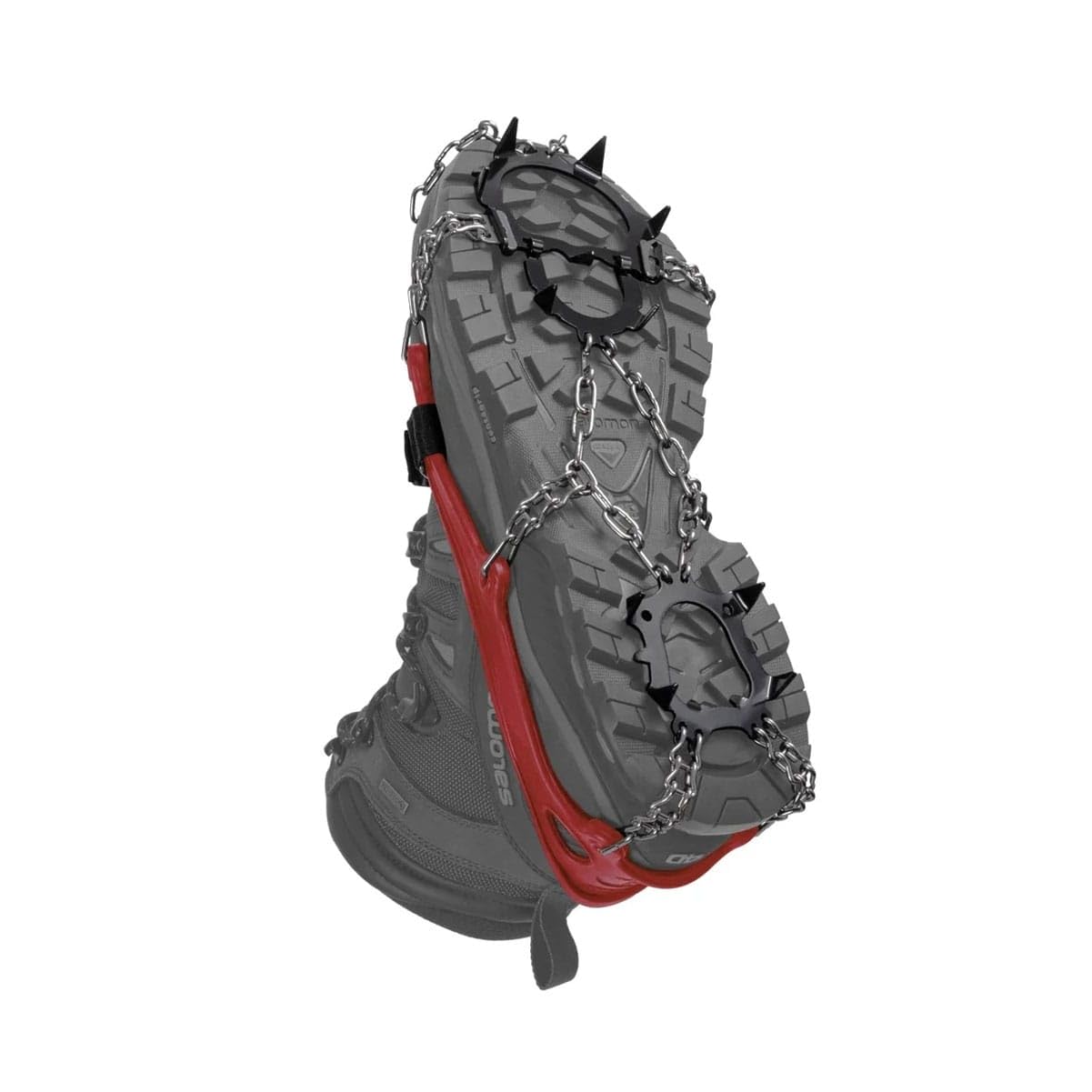
You get 11 carbon steel spikes, each 17mm long, arranged across a hinged front plate that flexes with your foot on steep snowy trails. That plate-and-chain system keeps the spikes taut under your boot, so you do not get the wobble cheaper chain models can have. The toe bar — a double-chain system at the front — plus an adjustable velcro strap across the foot lock the cleat on securely even through deep snow. The elastomer (stretchy rubber) harness stays flexible in sub-zero temperatures, the kind of cold that turns ordinary rubber into brick, so the fit remains snug.
Owners consistently say this cleat feels more confident than the Yaktrax chains many have used before. The Medium fits a size 9.5 boot snugly without shifting on long walks. A carry bag is included, and that matters because the steel spines need drying after use to prevent rust — owners who left them wet found spots forming. The spike design makes them less ideal for indoor or polished concrete floors; they bite hard, so you will want to take them off before stepping inside.
What wins people over
- Quality is the most mentioned positive — 144 owners call it out for solid construction.
- Superior traction on deep snow, uneven ice, and slick surfaces; the plate keeps chains taut and adds stability.
- Easy on/off — owners say it takes about 30 seconds to attach them.
The honest trade-off
- Rust can form if you do not dry them after use.
- Not true climbing crampons — best for hiking and walking, not technical ice climbing.
Reach for this if: you hike on icy trails, wear insulated winter boots, and want a spike that stays put mile after mile.
Consider another option if: you mostly walk on cleared sidewalks and need to cross bare pavement often — the tall spikes can feel slippery on concrete.
2. Yaktrax Adventure Grip
Nineteen stainless teeth that bite into ice but still let you walk into a store.
Each foot holds 19 triangular stainless steel teeth that are half an inch long, strategically angled to grip on slopes and rough terrain. The upper is made from durable thermoplastic rubber (TPR) that stays supple in freezing temperatures, so it does not crack after a season of use. It stretches over various winter footwear — buyers report a snug fit on size 12 and 14 boots alike.
The traction on crusty snow and ice gets the top praise, with 43 owners calling it out. The full-coverage design means the teeth are everywhere you step, not just under the ball of your foot. A few owners find the fit tight on certain deck boots and note that putting them on requires a strong pull, so it may be tough for anyone with hand issues. The sizing can be inconsistent — some found the large ran small, so check the size chart closely.
One real-life verdict: Owners mention they work great on icy driveways and snowy trails, and they are easy to remove when you get back in the car.
Great for: hikers who want a balance of ice grip and pavement compatibility.
Think twice if: you have arthritis or weaker grip strength — the rubber requires significant effort to stretch over a boot.
3. Cimkiz Ice Cleats (19 Spikes)
The most-reviewed slip-on cleat here, with 19 steel spikes that bite glare ice and packed trails alike.
The Cimkiz is the default recommendation for a reason — with more than 13,000 ratings at 4.6 stars, it is one of the most trusted slip-on cleats sold. Each foot carries 19 hardened stainless-steel spikes on a firm chain grid, so weight is spread evenly and you get a confident bite on glare ice, packed snow, and angled trails. The harness is thermoplastic elastomer roughly 5 mm thicker than ordinary rubber, which keeps it from cracking in deep cold.
Getting them on is a two-second job: stretch the front over your toe, pull the heel up, and they grip any shoe or boot from sneakers to mountaineering boots. They fold down to pocket size for stashing in a bag or glovebox. Owners consistently call them secure and durable; the usual cautions are to size correctly so the strap stays snug, and to take them off on bare pavement, since metal spikes on concrete are both slippery and hard on the studs.
Bottom line: A hugely proven, do-everything ice cleat — 19 aggressive spikes, a cold-tough harness, and the highest review count on this list.
Perfect for: anyone who wants one reliable, aggressive cleat for icy sidewalks, trails, and winter chores.
Not ideal for: long stretches of bare pavement, where a lower-profile stud cleat is more comfortable.
4. Winter Walking Low-Pro Ice Cleat

Twenty-six tiny tungsten studs that give you ice traction without the clatter.
This cleat uses 26 permanently embedded tungsten carbide studs — an extremely hard material that resists wear far longer than standard steel. The design keeps the studs minimally exposed, which means you can walk across dry pavement or concrete between icy patches without the slippery, skating sensation you get from tall spikes. Owners praise the traction on all surfaces: ice, snow, concrete, and pavement. One reviewer noted no damage to floors when going in and out of the house.
The dual-elasticity construction gives the upper lots of stretch for easy on/off, while the sole area is firmer to resist abrasion. It is popular for everyday winter use — walking the dog, clearing the driveway, and commuting. Some reviewers point out that the cleats are tough to put on if you have hand problems, and durability is a mixed topic in the reviews, with some owners wanting longer life from the studs.
Smart buy for: anyone who needs to walk confidently on ice but also crosses bare pavement and does not want to remove their cleats every 50 feet.
Pick this if: transitional traction — moving from ice to concrete to ice — is your daily reality.
Look elsewhere if: you need maximum bite on deep, uneven ice without any bare pavement walking.
5. WIN.MAX Ice Crampons (19 Teeth)

Nineteen steel teeth on a double-chain frame for a locked-in grip on the iciest days.
The WIN.MAX takes the aggressive-spike approach and adds a double-chain frame, so the 19 stainless-steel teeth per foot stay locked flat under your sole instead of rolling to the side on off-camber ice. The teeth are tall enough to dig into rutted, frozen trails and driveways, making these a strong pick for the harshest conditions rather than a light dusting. The TPE material stays flexible across a wide temperature range.
The TPE shoe covers stretch over hiking boots, work boots, and everyday shoes, and they pack down small for a jacket pocket or car door. Rated 4.6 stars across more than 1,700 reviews, owners highlight the secure, no-slip feel on genuine ice. As with any tall-spike cleat, they are overkill for bare sidewalks and should come off once you are on cleared ground.
Who it fits: People who face real ice — steep driveways, frozen trails, off-camber paths — and want maximum bite from 19 teeth and a stable double chain.
Best for: serious winter walkers and hikers who want the most aggressive grip on hard ice.
Not for: mostly-pavement commutes, where tall spikes feel clumsy — choose a lower-profile stud cleat instead.
6. Kahtoola NANOspikes Footwear Traction

Ten low-profile spikes that disappear into rubber lugs until you hit ice.
Kahtoola designed these for athletes — specifically road runners and city walkers who need traction on hard-packed snow and glare ice without altering their natural stride. Each foot holds 10 concave tungsten carbide spikes; they sit recessed into rubber lugs on dry ground and only engage when you step on ice, giving you directional grip on ascents and descents. The new elastomer (stretchy rubber) harness is redesigned for a better heel fit and stays stretchy down to -22°F. A heel tab makes removal easier than previous generations.
The traction on ice gets the most praise, with owners noting zero slippage during half-marathon training on untreated winter roads. They also compress into the rubber lugs, so crossing dry pavement does not damage the spikes or feel awkward. Sizing can be tight — one owner said a size 9 Crocs fit the medium with some effort — so check the chart. For everyday winter walking or running on icy sidewalks, they are arguably the most comfortable option here.
Praised most
- Traction is the standout feature — 46 owners single it out for confidence on ice.
- Ultra-low profile does not affect your gait or foot strike, even during running.
The trade-off
- Tight fit on some footwear; may require sizing up.
- Best for hard surfaces and packed snow, not deep powder or uneven trail ice.
Who this fits: runners, walkers, and seniors who want secure ice grip on sidewalks without the clunky feel of traditional cleats.
skip it if: you need aggressive spikes for backcountry hiking or deep snow.
7. AUVEBY Snow-Chains Auto Fixing 1 Min Quick Fit
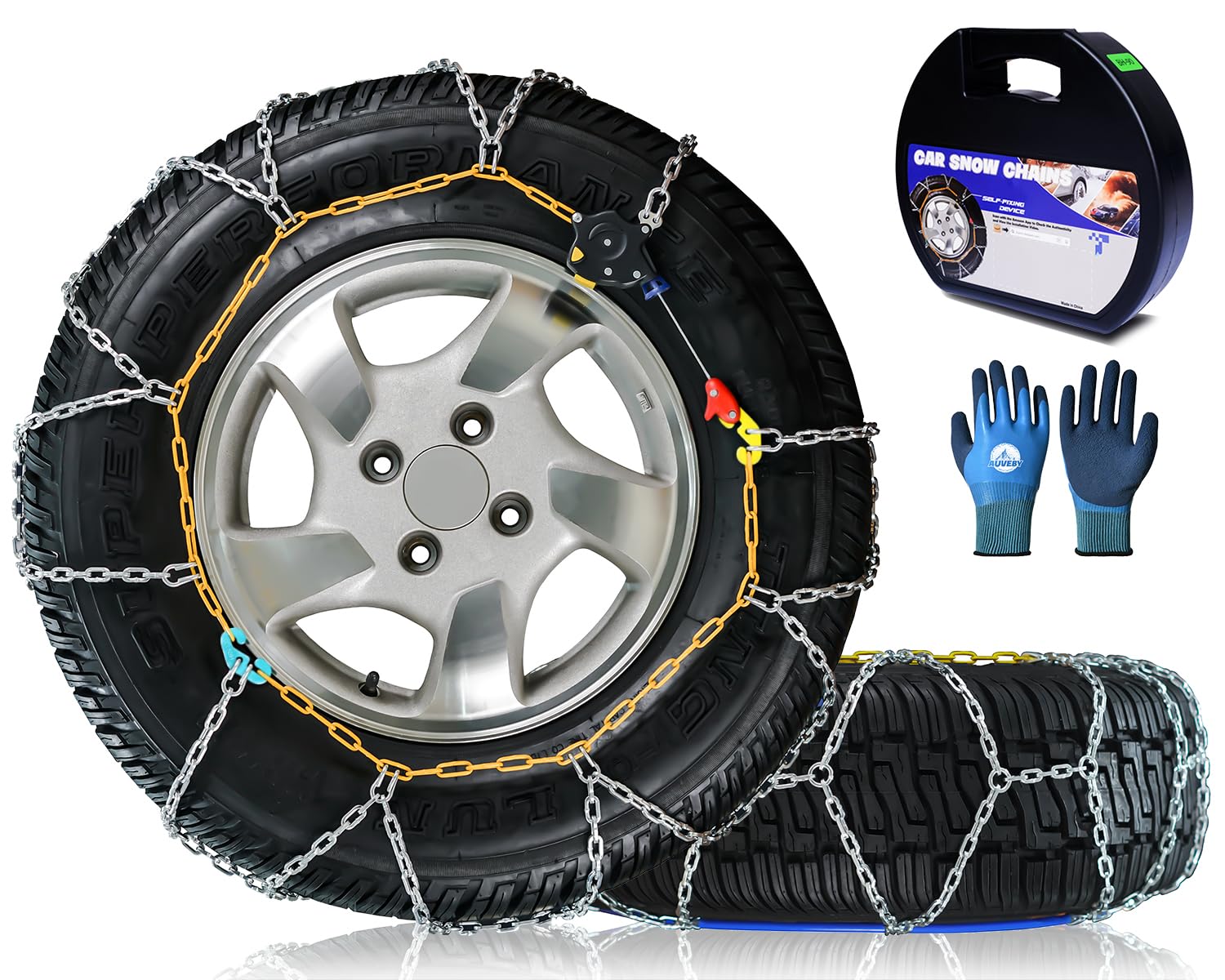
Snow chains you can install in under a minute without moving your vehicle.
Traditional tire chains require you to drive over them and then crawl out to tighten. This set from AUVEBY uses an auto-fixing device that clicks on from the side, so you can install both chains in about a minute without rolling the car forward. The chains are made from thick alloy manganese steel — a very strong steel blend that provides a strong bite on snow, mud, sand, and ice. A self-tightening mechanism keeps them snug as you drive — you do not need to stop and re-tension them after a few miles.
Shoppers say successful 3-hour drives through heavy snow on 2WD vehicles, with the chains performing perfectly on mountain roads and sheer ice. The set comes with a pair of work gloves, replacement buckles, and a hard-shell storage case. The main limitation: the manufacturer specifies a maximum speed of 50 km/h (31 mph) and advises against extended use on bare pavement, which is standard for all snow chains. Some owners noted the fit is tight on certain tire sizes, so check the sizing chart.
The verdict: A practical, fast-installing snow chain system that removes the most annoying part of chain use — rolling the car over the links.
Best for: drivers who encounter sudden snow and need chains they can put on roadside without lying in the slush.
Not for: dry pavement driving or speeds above 31 mph — the chains are designed for snow and ice only.
8. SILANON Ice Snow Cleats (9 Studs)
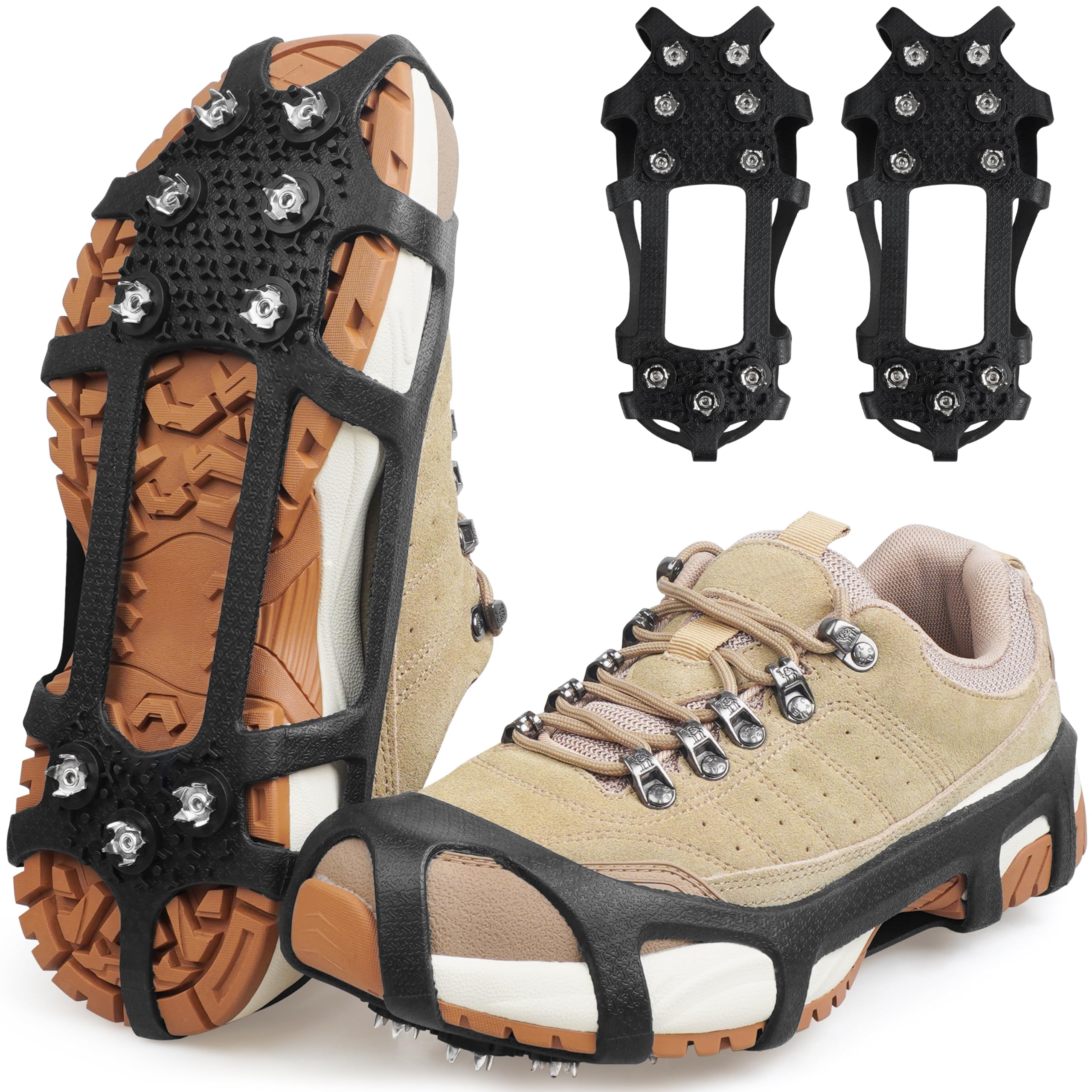
A low-profile, nine-stud cleat that slips on in two steps and walks easily on mixed ground.
Not every icy day calls for tall crampon spikes, and the SILANON is the easygoing option: nine plum-shaped stainless-steel studs set into a 2.5 mm cold-resistant rubber sole. The lower-profile studs grip snow, slush, and light ice without the awkward, stilted feel that aggressive spikes give you on mixed pavement, so these are the ones you can actually walk normally in around town.
The stretchy rubber pulls on in two quick steps and fits shoes or hiking boots, and the cold-rated compound stays flexible instead of cracking. Rated 4.5 stars, owners like how comfortable and unobtrusive they are for daily winter walking and dog-walking. The trade-off is bite: nine shorter studs cannot match a 19-spike crampon on glare ice or steep frozen trails.
Takeaway: The comfortable, low-profile everyday cleat — quick to slip on and easy to walk in on sidewalks and packed snow.
Ideal for: daily commuters and dog-walkers who want easy on-off grip for sidewalks, slush, and light ice.
Consider the terrain: for glare ice or steep frozen trails, a taller 19-spike cleat grips harder.
9. TRIWONDER Ice Cleats

A pocket-money price with steel studs and ten spare studs in the box.
At around seven dollars, the TRIWONDER is the budget entry — and a genuinely useful one. Steel studs on a stretchable TPE frame bite into icy and snowy surfaces well enough for everyday walking, and the cold-resistant material holds up better than the price suggests. Crucially, the set ships with ten replacement studs, so when a few wear down you re-stud them instead of buying a new pair.
The stretchy band pulls over most shoes and boots and packs away to nothing, making these an easy extra set to keep in a car, a backpack, or by the door for guests. Rated 4.3 stars across nearly 1,500 reviews, they are not as burly as a 19-spike crampon, but for occasional ice and light snow at this price they are hard to argue with.
Final word: The value pick — steel-stud grip, cold-tough TPE, and ten spare studs in the box for a few dollars.
Reach for this if: you want a cheap, keep-everywhere backup cleat for occasional ice and light snow.
Think twice if: you face heavy ice daily — a taller 19-spike cleat will grip harder and last longer under constant use.
Understanding the Specs
Spike material and count
The number and material of spikes directly affect traction and longevity. Carbon steel is tough and affordable but can rust. Stainless steel resists corrosion. Tungsten carbide is extremely hard, retaining sharpness much longer — ideal for high-mileage users who walk on abrasive pavement between icy patches. More spikes generally mean more contact points, but spacing matters too: 11 long spikes are better for uneven ice, while 26 small studs suit flat, hard-packed surfaces.
Strap fit and durability
An ice cleat is only as good as the harness that holds it on. Look for a thick, cold-resistant TPE or rubber upper that stays stretchy in freezing temperatures — cheap rubber cracks in deep cold. A double-chain or wide-strap design, like the WIN.MAX, keeps the spike plate from twisting underfoot, and models such as the TRIWONDER include replacement studs so you can extend their life instead of replacing the whole pair.
FAQ
Can I wear winter traction cleats on bare pavement between ice patches?
How do I know which size traction cleat to buy for my boots?
Are ice cleats one-size-fits-all?
How long do winter traction cleats last before the spikes wear out?
Can I use snow chains on dry pavement to drive to the snow?
What is the difference between traction cleats and crampons?
Can I wear ice cleats indoors or on bare pavement?
How do I attach traction cleats to my boots easily?
Final Thoughts: The Verdict
For most buyers, the winter traction devices winner is the Hillsound Trail Crampon I because it delivers the most aggressive, long-lasting spike grip for hiking and icy trail use, backed by the highest quality scores from 144 owners who praised its solid construction. If you want a lighter, city-friendly option that handles bare pavement as well as ice, grab the Kahtoola NANOspikes. And for the most-reviewed all-round grip, the Cimkiz Ice Cleats pair 19 stainless-steel spikes with a stretchy TPE harness at a budget price.
How We Picked
We do not accept paid placement. Every pick is matched to a real buyer and a real use-case; we do not hands-on test units.
Sources & Methodology
Specifications: manufacturer listings and product documentation. Review insights: verified customer reviews, as of July 2026. Pricing: not shown on this page (it changes often); check the current price via the retailer link.
As an Amazon Associate, Calories Fit earns from qualifying purchases. This does not affect which products we feature.