
Our readers keep the lights on and the coffee maker working hard! As an Amazon Associate, I earn from qualifying purchases.
Specs are compiled from manufacturer listings and verified buyer reviews and can change over time — please confirm the key details on the product page before buying.
Winter running demands socks that prevent numb toes and blisters from damp cotton. The best winter running socks wick sweat, trap warmth, and stay put mile after mile. This guide reviews six top contenders for cold-weather pavement and trail running.
I’m Mohammad — the founder and writer behind Calories Fit. This guide is built by comparing the manufacturers’ published specifications and the patterns across verified customer reviews, so you get each pick’s real strengths and trade-offs instead of marketing spin.
Whether you are logging early-morning road miles or pushing through a snowy trail loop, the right pair changes everything — and this is the definitive breakdown of the best winter socks for running you can buy right now.
Our Picks at a Glance


How To Choose The Best Winter Socks for Running
Choosing a cold-weather running sock is about balancing warmth, moisture management, and fit.
Fiber Matters: Merino vs. Synthetics vs. Alpaca
Merino wool is the industry standard because it insulates when wet and naturally resists odor. Synthetic blends (acrylic, polyester, nylon) add durability and stretch. Alpaca fiber is a newer premium option that claims even better moisture-wicking and thermoregulation than merino — but it often comes at a higher price and can be less durable over time.
Cushioning and Compression: Targeted vs. Full
Targeted cushioning places extra padding only on high-impact zones like the heel and ball of the foot, keeping the rest of the sock thin for a better shoe fit. Full cushioning wraps the entire foot for maximum warmth but can make your shoes feel snugger. Light compression (15-20 mmHg) helps circulation and reduces foot fatigue on long runs.
Height: Ankle vs. Crew
Ankle socks are lighter and work well with low-cut running shoes, but they leave the Achilles exposed to cold and debris. Crew socks rise above the ankle bone, offering more coverage and warmth, and are the better choice for trail running or deep snow.
Quick Comparison
| Model | Best For | Material | Height | Cushion | Amazon |
|---|---|---|---|---|---|
| Alvada Men’s Merino Wool Crew★ Best Overall | Maximum warmth & value | Merino Wool | Crew | Full | Amazon |
| Smartwool Men’s Run Targeted Cushion AnklePremium Pick | Performance running fit | 55% Merino Wool | Ankle | Targeted | Amazon |
| Socks Daze Men’s Women’s Merino Wool Ankle | Versatile daily training | 40% Merino Wool | Ankle | Full | Amazon |
| Merino Wool Hiking Running No Show | Low-profile winter warmth | Merino Wool Blend | No Show | Full | Amazon |
| Compression Ankle Socks Cozy Cushioned | Compression & support | Merino Wool Blend | Ankle | Targeted | Amazon |
| HOLLOW Alpaca Ankle Socks | Moisture-wicking premium | Alpaca Fiber | Ankle | Light Compression | Amazon |
In‑Depth Reviews
1. Alvada Men’s Merino Wool Crew Socks
Our pick — over 4.5★ from 36,500+ verified ratings; the strongest balance of quality and price.
The Alvada crew sock balances warmth, durability, and a budget-friendly price.
The Alvada crew socks top the list because they deliver everything a winter runner needs — and they do it while staying affordable. Owners consistently praise the warmth (over four thousand call it out), and the lighter weight of 1.02 pounds per three-pair pack means they pack easily for a cold-morning run. The merino wool blend is described as itch-free and odor-resistant, which matters when you are layering up for repeated sessions.
You get comfort and blister prevention here. The cushioning sits at the arch, heel, and toe, and buyers report the socks stay put without bunching or slipping inside boots and running shoes. A minority of owners note that heels can wear thin over time, so durability is not infinite at this price point — but the overall consensus is that the value is tough to top.
The thing that wins people over is the versatility: these socks work just as well for a 10-hour shift in non-breathable boots as they do for a winter trail run. They are not the most technical option, but they are the most reassuring one.
Why They Win
- Warmth is the most mentioned positive by a wide margin — over four thousand owners single it out
- Itch-free merino that handles sweat and odor across a full day
- Reinforced heel and toe stitching for extended wear
The Trade-off
- Some owners mention heel holes developing after months of heavy use
- Crew height may be too short for tall winter boots after the first wash
Best for: Runners who want a warm, comfortable, affordable workhorse that does one job well — keeping feet happy in the cold.
Think twice if: You need a sock built for years of daily abuse; occasional heel wear is the main long-term complaint.
2. Smartwool Men’s Run Targeted Cushion Ankle Socks
The Smartwool ankle sock is built for blister-free miles in all conditions.
Smartwool is a name that running veterans trust, and this ankle sock shows why. At 55% merino, the blend is tune for breathability and moisture management — customers note it keeps feet dry even during humid 80°F walks, so you can wear it on milder winter days without overheating. The targeted cushioning places extra padding only on the heels and balls of the feet, leaving the top thin for a snug, low-bulk fit inside a performance running shoe.
Durability stands out here. Reviewers point out these socks lasting six months to over ten years of regular use, and the fit stays consistent even after many washes — no shrinkage, no lost elasticity. The snug ankle height stays up without strangling the calf, and the smooth toe construction (no raised seam to rub against) is a big win for anyone prone to rubbing.
Owners consistently rank quality as the top aspect (nearly eighty mention it), and it is the reason the premium price tag feels justified. As one regular put it, these socks “look sharp and keep your feet comfortable in all conditions.”
Performance edge: The targeted cushion means you get protection exactly where you strike the ground, without extra bulk under the arch or instep. The lighter overall weight compared to the Alvada crew sock makes it the sharper choice for a runner who values feel over all-out insulation.
Reach for these if: You log consistent miles and want a sock that disappears on your foot — no bunching, no blisters, just reliable performance run after run.
Look elsewhere if: Your primary need is maximum warmth for deep-subzero starts; the ankle height leaves the Achilles exposed compared to a crew sock.
3. Socks Daze Men’s Women’s Merino Wool Ankle Running Socks
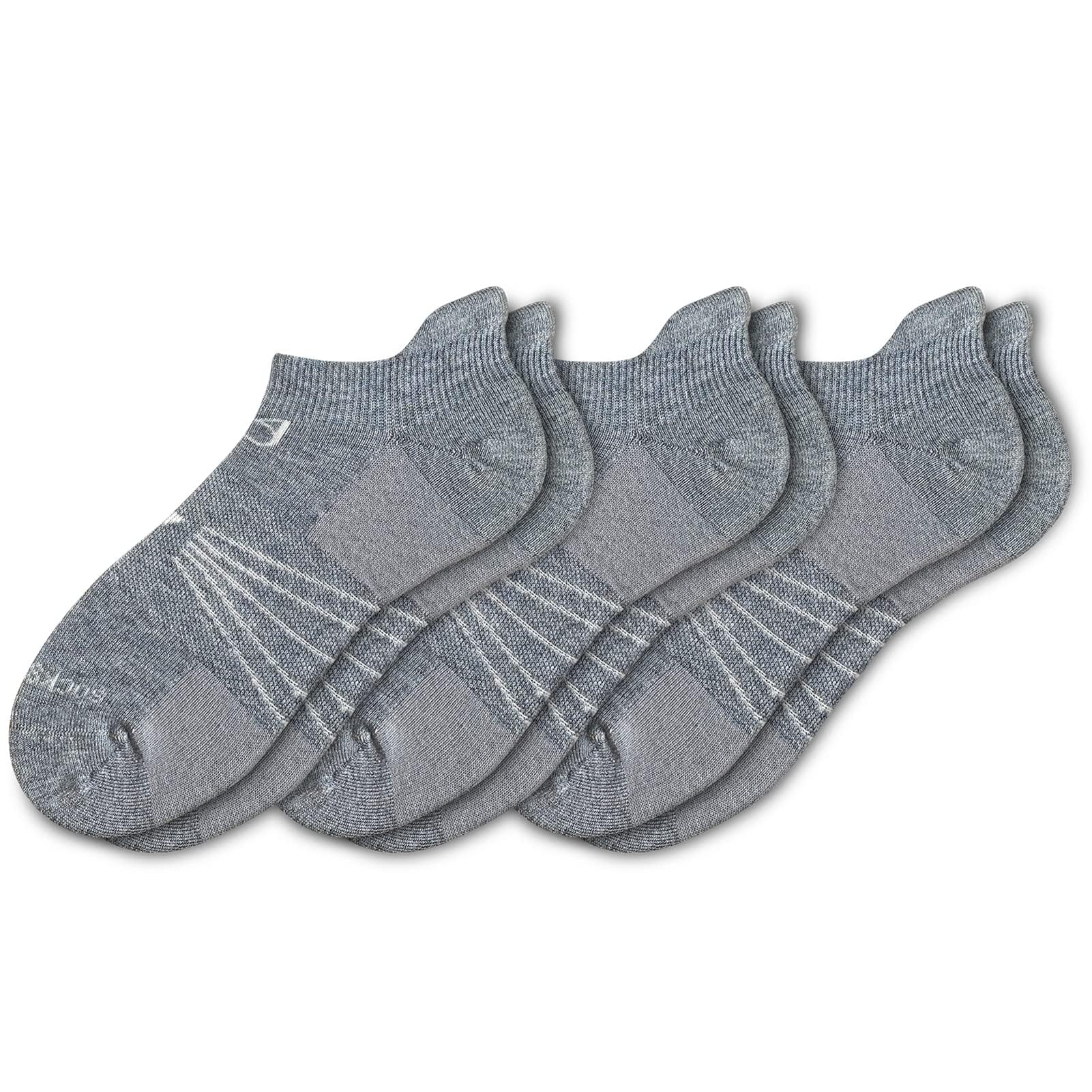
A versatile training sock that bridges cold-weather warmth and year-round comfort.
The Socks Daze ankle sock hits a balance for the runner who wants merino performance without the premium price. Made from 40% merino wool (a natural fiber that insulates when wet and resists odor), it offers enough natural insulation for winter runs while remaining breathable enough for humid 90°F days. The fit is secure — no bunching under the toes — and the full cushioning throughout the footbed adds a plush feel that owners love for road miles and light hiking alike.
Comfort is the most-praised aspect here, and the numbers back it up: over a hundred owners call it out specifically. The material is described as soft and non-scratchy, unlike some raw wools, and the sock stays in place even during high-movement activities like dancing or a long run. Durability is a mixed bag — some shoppers say pilling after a single wear, though others say the socks hold up well over time. The real value is in the price per pair, which undercuts most merino competitors while delivering a similar everyday experience.
This is the sock to buy when you want to replace your entire drawer without guilt. Buyers have noted identical performance to a cheaper alternative, which only reinforces the value story.
What Stands Out
- Extra padding at the top and heel prevents shoe rub — a frequent mention from owners
- Good moisture management for both winter warmth and summer humidity
- Unisex sizing spans a wide range
The Catch
- Some pilling after first wear reported by a few buyers; durability is good but not bulletproof
- Not as targeted in cushioning as the Smartwool option
This one is for: The runner who wants a comfortable, breathable merino sock for daily training and occasional trail use, at a price that makes a multi-pack buy easy.
skip it if: You need bombproof construction for the heaviest weekly mileage; the Alvada or Smartwool offer more proven long-term durability.
4. Merino Wool Hiking Running No Show Socks
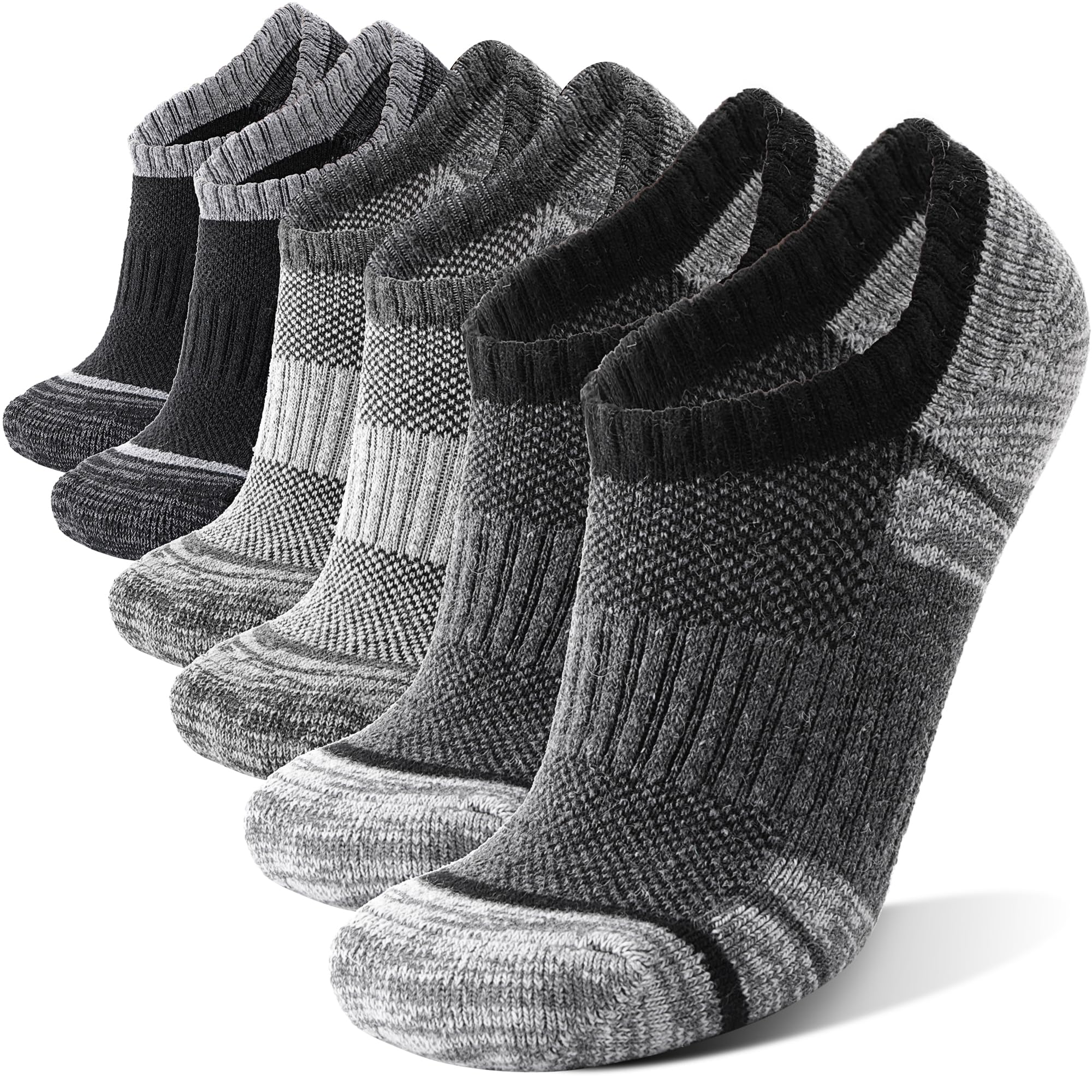
A low-profile winter liner that slips into your favorite sneakers without adding bulk.
Not every runner wants a tall crew sock. This no-show option brings merino warmth to a cut that sits below the ankle, making it ideal for low-cut running shoes where you want insulation without the visible sock line. Owners describe the fabric as soft and cozy — one called it “a warm hug for your feet” — and the wool blend breathes effectively enough to be worn in both winter and summer conditions.
The fit is where this sock divides opinion. While many find the snug stretchy fit stays in place, others note the opening lacks enough elastic, causing it to slip down when removing shoes. A size 10 buyer reported the large barely covering the heel, so sizing up is the smart move if you are on the edge. Durability takes a hit in a small share of reviews: some report holes after just a few washes. But for the price — especially the six-pair pack — the value equation remains strong for runners who prioritize a low-cut feel.
Buyers consistently mention warmth and breathability as the dual strengths, and the no-show height is a genuine differentiator in this category.
Where it fits: This is a great secondary sock — wear it on milder winter days with road shoes, or as a warm liner for casual runs when you do not want the heft of a crew sock. The breathable panel on the top helps regulate temp, so it scores well for transition-season running.
Best for: Runners who prefer a low-cut feel and want wool’s natural warmth without a tall sock covering their ankle.
Not for: Trail runners needing deep-snow protection, or anyone with a wide foot who may find the fit too snug.
5. Compression Ankle Socks – Cozy Cushioned Hiking Running
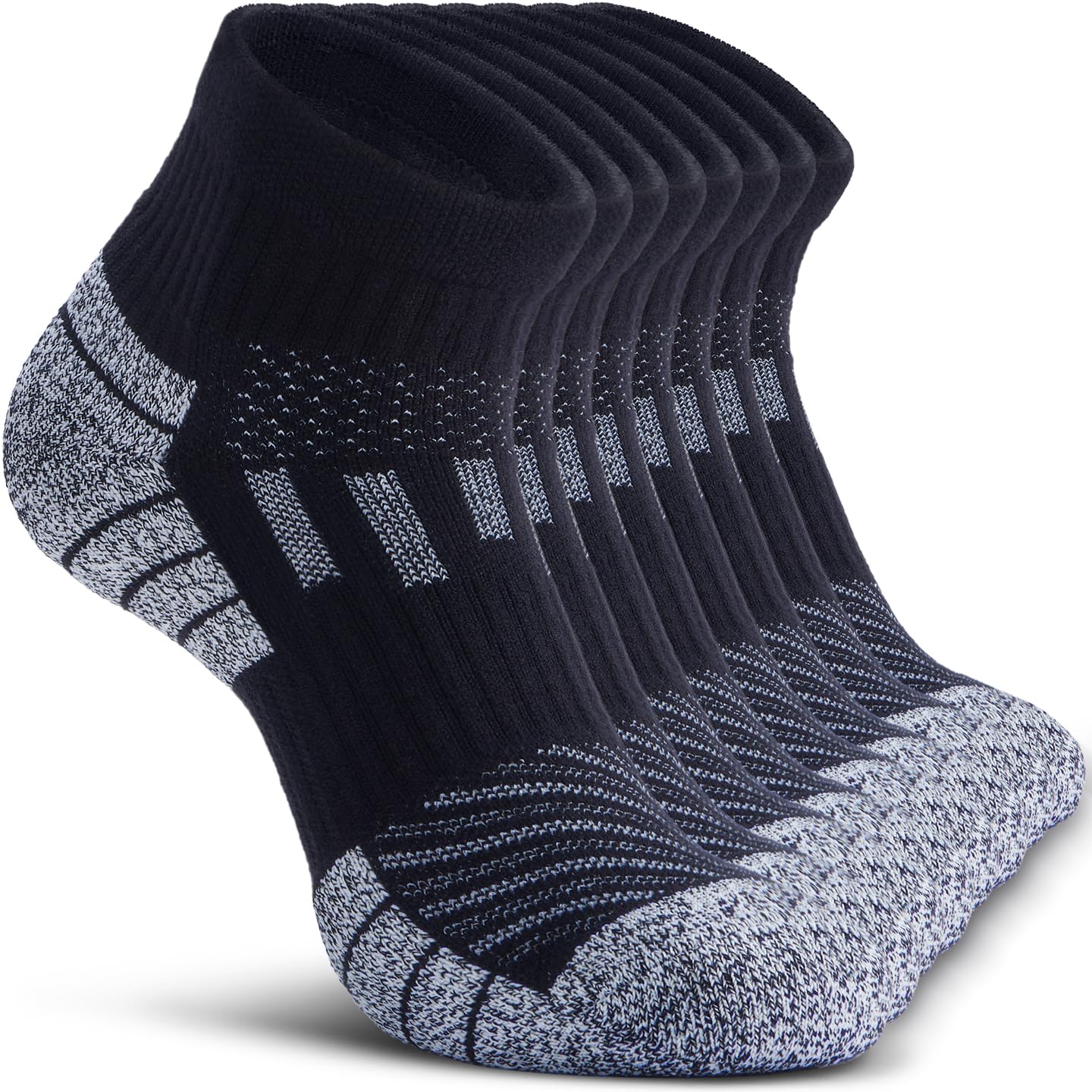
A thick, supportive sock that adds a compression layer to your winter run kit.
This ankle sock brings something most winter running socks do not — graduated compression that owners say helps with foot fatigue and even nerve pain. The blend includes merino wool for warmth and moisture wicking, but the stand-out feature is the compression band around the arch and the foot-specific left/right markings that ensure a targeted fit. It is a thicker sock, with a medium-to-lightly heavy cushion on the sole that feels plush underfoot.
Quality and comfort are the two most-praised aspects (forty-plus owners call out each), and the compression is frequently mentioned as a plus for longer runs or recovery. One owner described the compression as “noticeable but not too tight,” and another reported that it helps minimize foot pain during activity. The fit can be polarizing: some find it too tight across the toes or calf, especially if you are between sizes, and the sizing chart has drawn mixed feedback. A small number of buyers also report abrasion or fraying after one use, though this is not the majority experience.
If compression is a priority — whether for circulation, fatigue, or a specific condition — this sock stands alone in this list.
Why It Works
- Arch support band and foot-specific design for a precise fit
- Thick, cushiony sole provides warmth and impact protection
- Merino blend manages sweat better than a synthetic-only compression sock
Consider This
- Fit is the most-discussed mixed issue — some find it too tight, others size incorrectly
- A few buyers report material fraying after initial use; the 90-day support policy helps cover this
Ideal for: Runners who want the dual benefit of insulation and graduated compression, or anyone managing foot fatigue or nerve discomfort during runs.
Probably not for: Runners with a wide forefoot or high instep who may find the fit restrictive rather than supportive.
6. HOLLOW Alpaca Ankle Socks
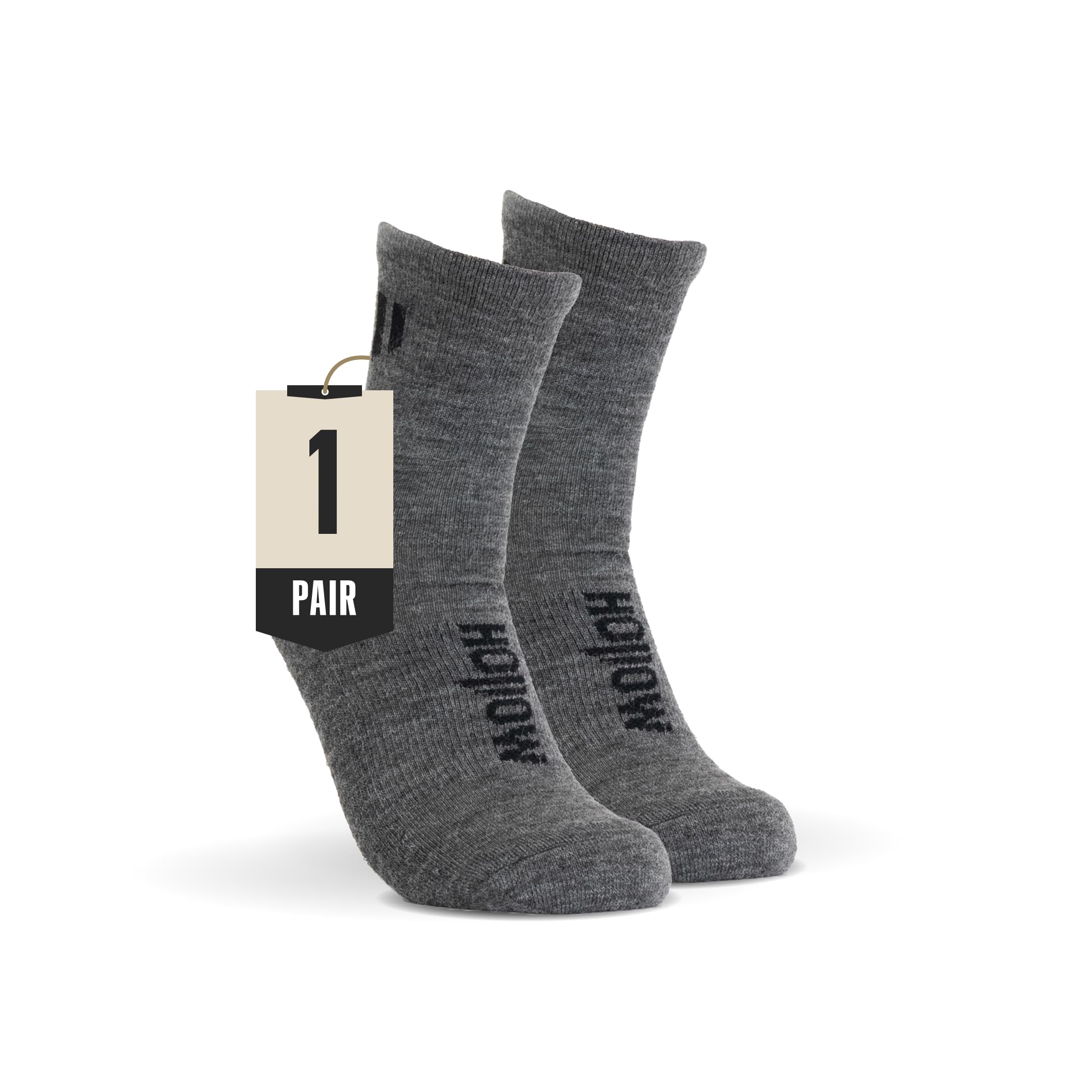
An American-made alpaca sock that bets on superior moisture-wicking for cold-weather runs.
Alpaca fiber is the wildcard in the winter sock world, and the HOLLOW ankle sock is a strong argument for it. The brand claims alpaca outperforms merino in moisture-wicking and thermoregulation, and owners back that up — describing the sock as temperature-controlling, breathable, and soft. It features 15-20 mmHg of graduated compression to keep blood moving during a run, which adds a circulation benefit most standard wool socks lack.
Comfort is the runaway strength: over 120 buyers call it out, and the softness is a close second. The sock is designed for cool to cold weather (20°F to 40°F), making it a solid choice for winter pavement and trail. It also fits well for moderate foot shapes. Durability is the main concern — owners mention the heel wearing thin after five months or piling after a few hikes. It is not as tough as Darn Tough or Smartwool, which is the recurring trade-off for alpaca’s plush feel.
For the runner who values moisture management above all else, and who runs in moderate cold rather than deep-freeze, the HOLLOW sock is a thoughtful alternative to the merino mainstream.
The stronger argument for alpaca: Owners consistently report that their feet stay drier and less sweaty compared to merino, and the sock feels softer against the skin. The light compression is a genuine bonus for mid-run circulation — it does not squeeze, just supports.
Perfect for: Runners who prioritize moisture-wicking and softness over raw durability, or anyone with a sensitivity to wool who wants a natural-fiber alternative.
Probably not for: High-mileage runners who need a sock to last a full season of daily training without wear — durability is the clear weak point here.
Understanding the Specs
Merino Wool vs. Alpaca Fiber
Merino wool is the most common winter-sock material because it naturally insulates when wet, wicks moisture away from the skin, and resists odor. It is soft and breathable. Alpaca fiber is a premium alternative that claims even higher moisture-wicking and better temperature regulation — but it tends to pile and wear faster, so it suits lower-mileage runners better.
Targeted vs. Full Cushioning
Targeted cushioning places extra padding only on the heel and ball of the foot, keeping the top of the sock thin for a better shoe fit. This is ideal for performance running. Full cushioning wraps the entire footbed in padding, giving more warmth and plush impact protection — but it can make your shoes feel tighter, so check your fit.
Crew vs. Ankle Height
Crew socks rise above the ankle and offer more coverage against cold, snow, and debris — the best choice for trail running and deep winter. Ankle socks sit below the ankle bone and work well with low-cut road shoes, but they leave the Achilles exposed. Your shoe type and typical weather dictate the right pick.
Graduated Compression (15-20 mmHg)
This is a mild compression level that gently squeezes the foot and lower leg to promote blood flow and reduce fatigue during long runs. It is common in socks designed for recovery or extended activity. A higher mmHg number means tighter compression; 15-20 is the lightest tier, noticeable but not restrictive.
FAQ
Can I wear winter running socks in non-winter shoes?
How often should I wash merino wool running socks?
Are 55% merino wool socks warm enough for below-freezing runs?
Will compression socks help with cold feet during a run?
What is the difference between 40% and 55% merino wool in a sock?
Which is better for trail running: crew or ankle socks?
How do I know if a sock is too tight for my running shoe?
Do no-show socks stay in place during a winter run?
Are alpaca socks worth the extra cost over merino wool?
How do I prevent pilling on merino wool running socks?
Final Thoughts: The Verdict
For most runners, the best winter socks for running is the Alvada Merino Wool Crew because it delivers reliable warmth, itch-free comfort, and a crowd-tested value that is tough to top across over 36,000 ratings. If you want a performance-oriented fit that disappears inside your shoe, grab the Smartwool Run Targeted Cushion Ankle — its targeted padding and proven durability make it the sharp choice for consistent mileage. And for the runner who prioritizes moisture-wicking and softness above all, the HOLLOW Alpaca is the thoughtful wildcard that delivers a noticeably dry foot on cold pavement.
How We Picked
We do not accept paid placement. Every pick is matched to a real buyer and a real use-case; we do not hands-on test units.
Sources & Methodology
Specifications: manufacturer listings and product documentation. Review insights: verified customer reviews, as of July 2026. Pricing: not shown on this page (it changes often); check the current price via the retailer link.
As an Amazon Associate, Calories Fit earns from qualifying purchases. This does not affect which products we feature.