
Our readers keep the lights on and the coffee maker working hard! As an Amazon Associate, I earn from qualifying purchases.
Specs are compiled from manufacturer listings and verified buyer reviews and can change over time — please confirm the key details on the product page before buying.
Stepping into snowshoes on a frozen trail is one thing; stepping out of the parking lot with cold, wet feet is another. The right winter snowshoeing boot locks in warmth, sheds slush, and grips packed snow to keep ankles comfortable for hours. This guide ranks the top insulated, waterproof boots that perform under a snowshoe binding, based on owner reviews and technical specs.
I’m Mohammad — the founder and writer behind Calories Fit. This guide is built by comparing the manufacturers’ published specifications and the patterns across verified customer reviews, so you get each pick’s real strengths and trade-offs instead of marketing spin.
Find the best fit for your winter adventures with this focused breakdown of winter snowshoeing boots that balance insulation, waterproofing, and traction for cold-weather comfort.
Our Picks at a Glance

How To Choose The Best Winter Snowshoeing Boots
Snowshoeing is a low-impact cardio workout that only works if your feet stay warm and dry throughout. A boot for shoveling the driveway often fails on a two-hour trek, so prioritize insulation, waterproofing, and traction.
Match Insulation to Your Climate and Activity Level
Insulation weight in grams indicates how much cold the boot can withstand. A 200-gram boot suits mild hikes where you generate heat; a 400-gram boot handles single-digit temperatures. For deep winter snowshoeing in extreme cold, choose 800 grams or more to handle static periods like lunch breaks.
Waterproofing Is Non-Negotiable
Snowshoeing involves post-holing through powder and stepping on wet slush. A waterproof membrane — like KEEN.Dry, B-DRY, or a waterproof bootie — keeps moisture out while letting sweat escape. Without it, snow melts against the boot’s surface and soaks through, chilling your feet fast.
Traction and Binding Compatibility
Snowshoes strap onto your boots, so the boot’s sole shape matters. A sturdy heel and a flat, wide toe box give bindings a secure anchor point. On the trail, aggressive lugs (like Vibram Ice Trek or a multi-directional outsole) grip packed snow and icy patches, especially on descents where your weight shifts forward.
Quick Comparison
| Model | Best For | Insulation | Waterproofing | Traction | Amazon |
|---|---|---|---|---|---|
| KEEN Revel III★ Best Overall | All-around winter hikes | KEEN.Warm + Heat Trapolator | KEEN.Dry membrane | Dual compound snow & ice grip | Amazon |
| Columbia Minx IVStyle Pick | Style meets cold comfort | Insulated (not specified) | Water resistant | Omni-Grip (not specified) | Amazon |
| TIDEWE Rubber HuntingExtreme Cold | Extreme cold & wet | 800g insulation | 7mm Neoprene & Rubber | Adjustable strap heel lugs | Amazon |
| SOREL Tivoli V Tall | Deep snow & city style | Insulated (not specified) | Waterproof | Durable traction | Amazon |
| ROCKY Blizzard Stalker | Hunting & winter treks | 1200g Thinsulate Ultra | Rocky Waterproof construction | Multi-directional Blizzard outsole | Amazon |
| North Face Bergen | Hiking & snowshoeing | Insulated (not specified) | Waterproof leather | 4.5mm lugs | Amazon |
| North Face Chilkat V | Women’s snowshoeing | 400g insulation | Waterproof | Ice grip outsole | Amazon |
| Merrell Nova 3 Thermo | Light hiking & trails | 100g insulation | Waterproof (mixed reviews) | Vibram Ice Trek outsole | Amazon |
| Oboz Bridger 10″ | Backcountry winter hikes | 400g Freeze Guard | B-DRY waterproof membrane | Granite Peak Outsole | Amazon |
| Baffin ZONE | Snowshoe-specific design | B-Tek Heat hollow-fibre | Waterproof breathable membrane | Polar Rubber outsole | Amazon |
| Baffin Control Max | Extreme Arctic conditions | Removable (multi-layer) | Waterproof (full grain leather) | Polar Rubber outsole | Amazon |
In‑Depth Reviews
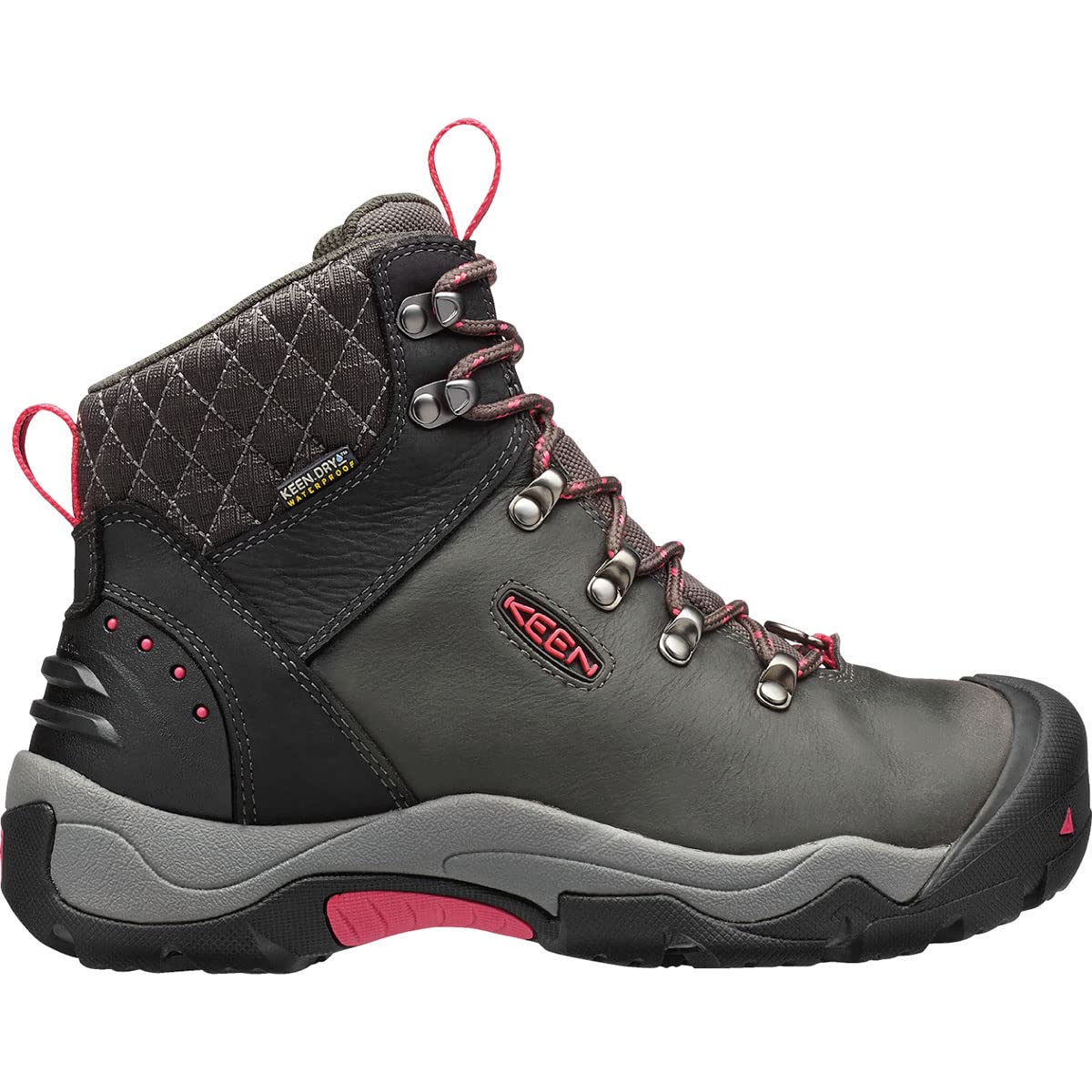
1. KEEN Women’s Revel III Cold Weather Hiking Boot
Our pick — over 4.5★ from 850+ verified ratings; the strongest balance of quality and price.
The crowd-favorite that turns slushy sidewalks and packed trails into a stable, dry walk.
This boot earns the top spot because owners consistently report dry, warm feet on real winter treks — including wet Wisconsin winters — thanks to the KEEN.Dry waterproof, breathable membrane that keeps moisture out while letting sweat escape. The dual compound snow and ice grip outsole holds its ground on icy patches, and the tri-layer Heat Trapolator system underfoot helps cut the chill when you pause on the trail.
Fit is the defining feature here, with the roomy toe box praised by those with wider feet; one owner noted a size 11 fit perfectly for icy sidewalks, while another sized up half a size for thick socks. Warmth is the second most-praised trait, with a 25°F snow hike keeping toes happy — though a few found extra socks necessary at 9°F with frequent stops. The trade-off is that the ankle-height cut is not built for deep powder, and some found the boots run wide, requiring a size down or a second sock layer.
The waterproofing earns real-world proof: one owner hosed them off after a muddy trek, and the boots held up fine for 2-3 mile walks. Arch support and ankle support are praised repeatedly, and the appearance gets compliments — this is a snowshoeing boot that transitions to the coffee shop without looking out of place.
What Wins People Over
- Fit is the most-praised feature — a roomy toe box that accommodates wide feet and thick socks
- Genuinely dry in slush and wet spring weather
- Comfortable straight from the start with no break-in period
The Real Trade-offs
- Runs wide — some owners size down or add a second sock
- Ankle-height cut is not ideal for deep snow or post-holing
- A few owners with narrow feet found them too roomy
Reach for these if: you want a do-everything winter boot that handles snowshoeing, icy sidewalks, and daily wear without a break-in period.
Think twice if: you regularly trek through deep powder above the ankle — a taller boot will serve you better.
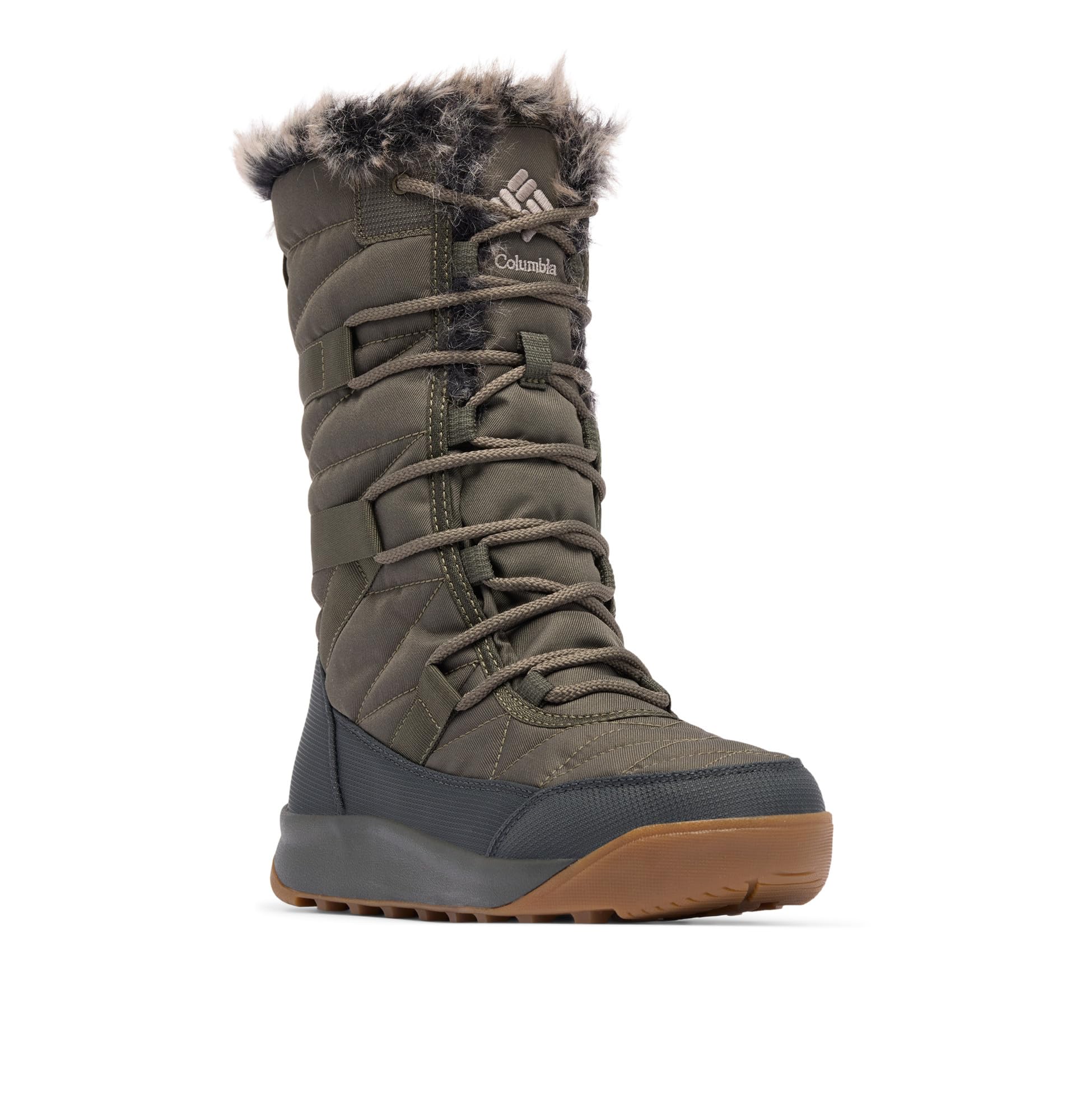
2. Columbia Minx IV
A mid-calf winter boot that feels like a sneaker while keeping feet toasty in record lows.
What stands out here is the sneaker-like feel that owners repeatedly mention — this is not a stiff, clunky snow boot, but a flexible, comfortable one you can slip on easily and wear all day. Quality and warmth are the two most-praised aspects, with one owner noting they were toasty warm without thick socks even in record-low temperatures.
The fit is the one mixed note: some find it perfect for wide feet, while others say it runs narrow and recommend ordering the wide version or a half size up. One owner found the boots slippery on ice despite great performance on snow, so this is a boot for packed trails rather than sheer ice.
Compared to the KEEN Revel III above, the Minx IV is lighter and sleeker, but it trades some of the KEEN’s hardcore waterproofing for a water-resistant build that handles typical winter slush. It’s the pick for someone who wants winter protection without the “moon boot” look.
Best for mild-to-cold days: buyers report extra socks only become necessary below -15°F, which covers most recreational snowshoeing.
Grab these if: you want a stylish, comfortable boot that works for snowshoeing and everyday winter wear.
Look elsewhere if: your routes involve steep icy descents — the grip is better on snow than ice.
3. TIDEWE Rubber Hunting Boots, Waterproof Insulated Sturdy Outdoor
The 800-gram beast that keeps feet warm in single digits with just one wool sock.
This boot is built for serious cold. The 800g insulation is the standout spec here, and owners confirm it works: one detailed a single-digit-temperature outing with just one wool sock and stayed warm throughout. The 7mm neoprene and rubber construction makes it fully waterproof and flexible enough that your feet and legs move naturally, unlike stiffer rubber styles.
Quality is the most-praised aspect — owners describe solid craftsmanship and durability for the money — but the fit is the mixed note. Some find it true to size, while others say it runs a half size big; wide-footed owners mention ordering up for a comfortable fit with heavy socks. The rubber material carries a strong smell from the start, though owners note it fades with use.
This is the budget-friendly cold-weather specialist of the list, delivering far more insulation than boots at a similar price point. The heel lugs are the one caveat — they can feel slippery when wet on hard surfaces, so pack extra care on icy rock.
A true cold-weather tool: owners use these for hunting, work, and wet-cold conditions, praising the flexibility that other rubber boots lack.
Best if: your snowshoeing happens in deep winter at low temperatures and you prioritize warmth above all else.
skip it if: you need a boot for casual city walking — the rubber build and smell are more at home on the trail.
4. SOREL Women’s Tivoli V Tall Waterproof Boot
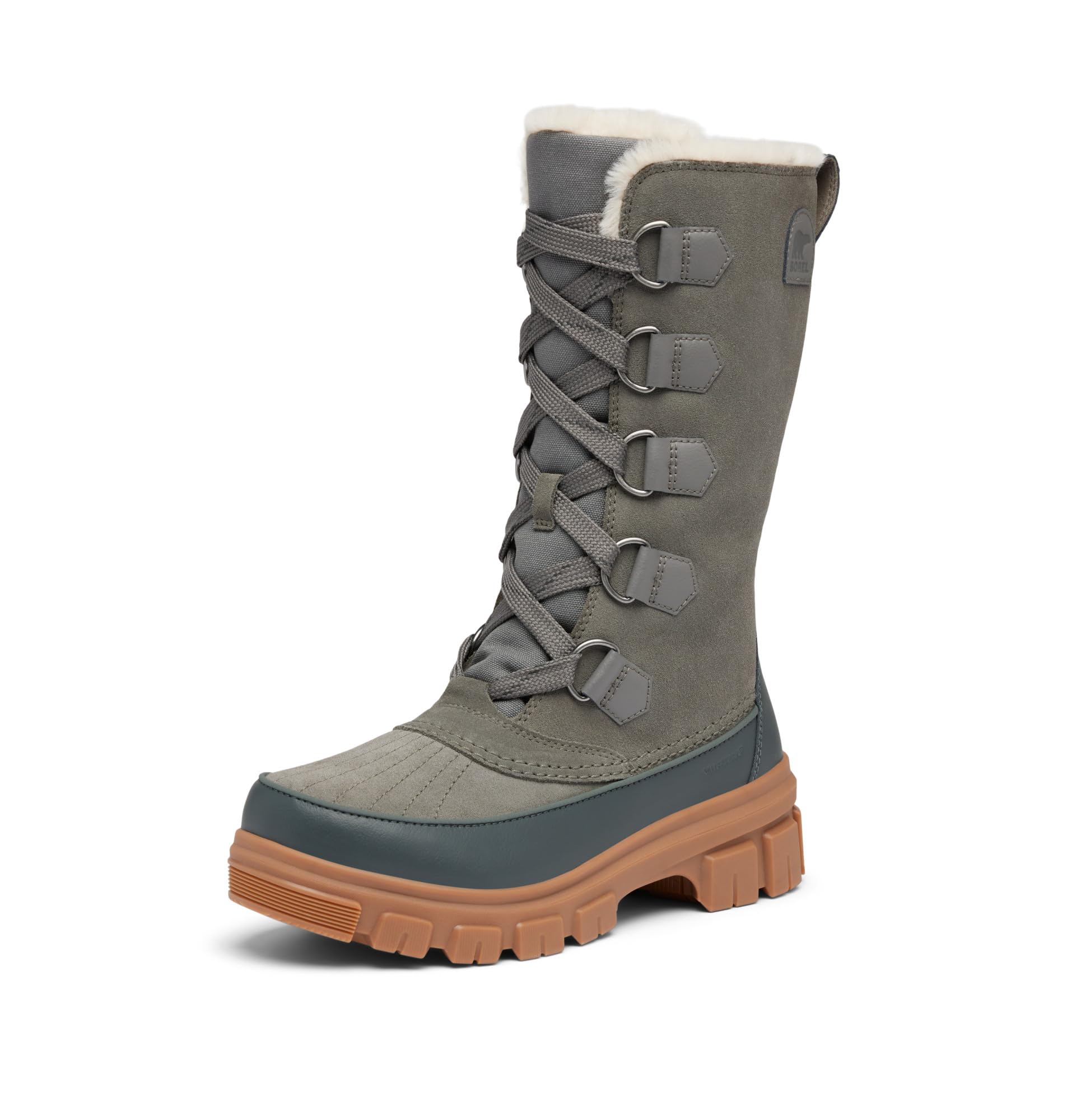
A tall, snug-fitting boot that earns compliments while handling deep snow and hours of walking.
You get a boot that keeps your feet dry and warm in deep snow, thanks to a tall shaft that lets you tuck your pants in for extra protection. Owners praise the “super soft” interior, and one notes the thick laces “don’t freeze in colder temps” — a real help when you’re adjusting bindings mid-trail.
You can walk for hours in these — one owner confirmed they’re “just fine to walk around in for hours,” and another praised the traction on a snowy hunt. The fit is mostly true to size, though some owners with wide feet or thick socks recommend sizing up; the toe box expands after a bit of wear.
Compared to the KEEN Revel III, the Tivoli V runs taller, giving better deep-snow protection at the cost of a little extra weight. It’s the best-looking option here for someone who wants a winter boot that works on the trail and at dinner afterward.
Compliment magnet: customers note getting lots of positive feedback on the appearance while the boot handles snow and cold weather with ease.
Choose these if: you want a tall, stylish boot that manages deep snow and long walks in cold temps.
Pass if: you need a lightweight day-hiker — this boot is more substantial than the sneaker-style options above.
5. ROCKY Blizzard Stalker Waterproof 1200G Insulated Boot

A 1200-gram warmth monster that survived snowmobiling at -25°F with toes still warm.
This boot keeps your feet warm in extreme cold, backed by 1,200 grams of Thinsulate Ultra insulation (a thick synthetic layer that traps heat). Owners confirm comfort during snowmobiling at -25°F and ice fishing in Colorado. The multi-directional Blizzard outsole grips snow and uneven ground, while the molded foam padded collar cushions your ankles on long treks.
There’s a durability debate that’s note honestly: some owners have had a pair last 15 years of hard cold-weather use, while a couple of others report the rubber separating from the upper after heavy use. The fit also runs large, so most owners size down, and the 5.4-pound pair weight makes them feel bulky — the trade-off for that extreme insulation.
The removable mesh PU footbed with a TPU heel stabilizer keeps your heel locked in place, which is a real asset on uneven snowshoe terrain. This is a serious cold-weather tool for hunters and winter sports enthusiasts, not a casual city boot.
Where It Excels
- Serious warmth from 1200g Thinsulate Ultra insulation
- Solid traction on snow with the Blizzard outsole
- Comfortable all-day wear, even on frozen concrete
Honest Downsides
- Runs large — size down for a secure fit
- Bulky and heavy at 5.4 pounds per pair
- Some reviewers point out durability issues after heavy use
Pick this if: you routinely face extreme cold — snowmobiling, ice fishing, or deep-winter hunts — and need guaranteed warmth.
Reconsider if: you want a lighter boot for active snowshoeing where you generate lots of body heat.
6. THE NORTH FACE Men’s Bergen Leather Waterproof Hiking Boot
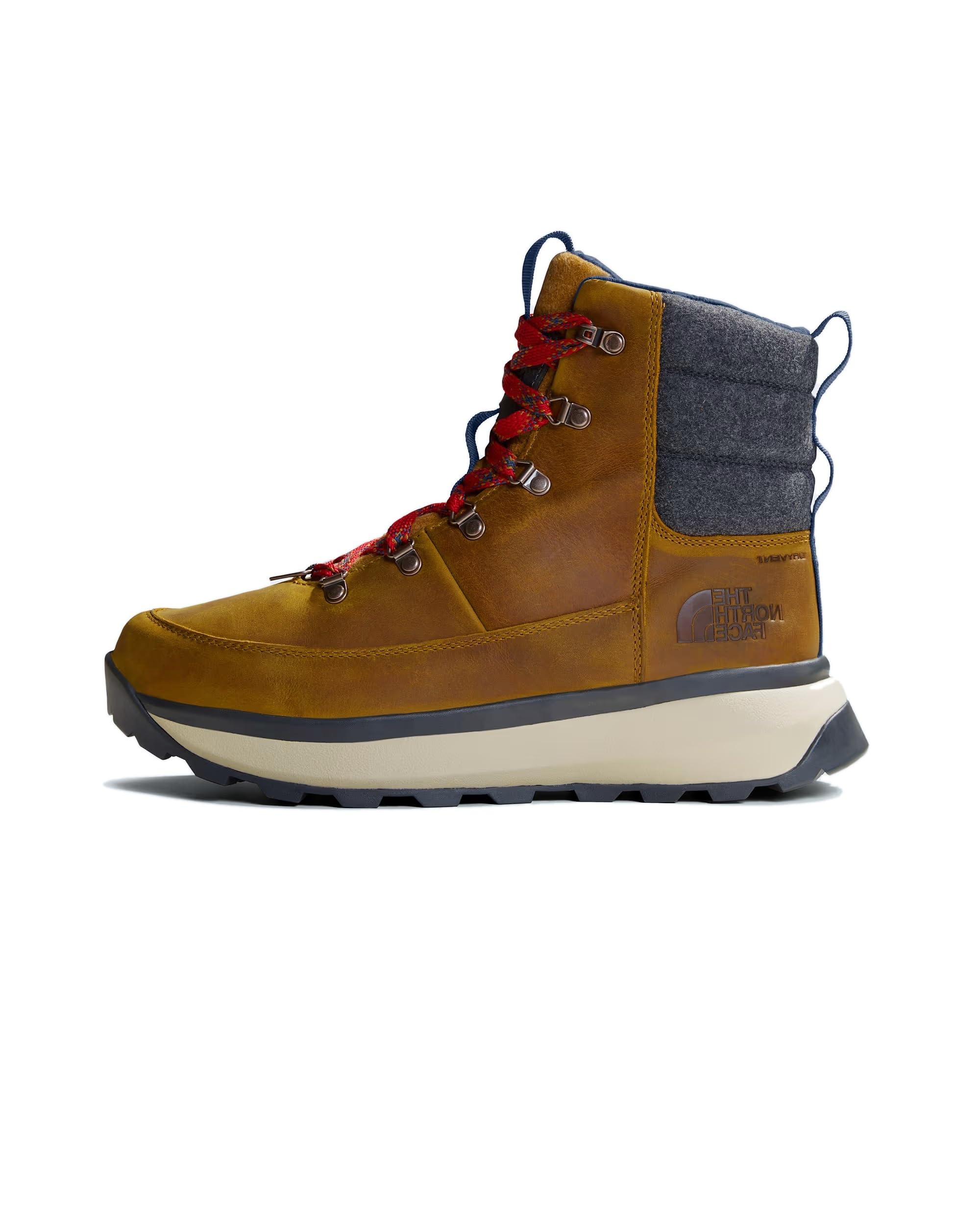
A leather hiking boot with sneaker-level comfort and 4.5mm lugs for confident snowshoe strides.
Comfort is the overwhelming theme across owner feedback — the word “sneaker” comes up repeatedly, and one reviewer noted their adult son wears these instead of his work boots because they’re that comfortable. The 4.5mm lugs provide serious bite on packed snow and trail surfaces, making this a natural fit for snowshoeing where grip matters on every step.
Quality and warmth round out the most-praised aspects, with owners describing a solid build and warm feet on winter walks. The waterproof leather upper handles slush and wet snow, though a couple of owners recommend a waterproofing treatment for extended deep-snow use.
Unlike the taller TIDEWE or ROCKY boots on this list, the Bergen is a shorter, lighter option that feels more like a hiking boot than a snow boot. It’s the right pick for mixed terrain — snowshoe trails that transition to packed paths — where you want ankle mobility and a lower profile.
Style and function blend: owners praise the look — one noted it “makes him look taller” — and the comfort that makes long walks easy.
Best for: snowshoers who also hike on mixed winter trails and want one boot that does both well.
Not ideal if: you regularly break trail in deep powder — the shorter cut leaves your ankle exposed.
7. THE NORTH FACE Women’s Chilkat V 400 Waterproof Snow Boot

The 400-gram insulated boot that handled five Colorado winters and glacier walks without slipping.
Durability is the headline here — one owner reported five years of Colorado winters with soles intact, waterproofing holding, and interiors in fine shape. The 400g premium insulation keeps feet warm and toasty, with another owner praising them for glacier walks and slick roads with zero slipping.
Quality is the most-praised aspect, followed by warmth, and owners consistently describe a sturdy, well-built boot. The sizing, however, is the recurring complaint: many owners say the boots run small and recommend sizing up significantly — one normally wearing 7.5 ordered a 9.5 for a snug fit with thick socks.
Compared to the KEEN Revel III, the Chilkat V offers a taller cut and more rugged sole for snowshoeing, though the fit is less forgiving for wide feet. It’s a serious winter workhorse that owners describe as “super light weight” despite the sturdy build.
Built to Last
- Proven durability across multiple Colorado winters
- Excellent traction on ice and slick roads
- Warm and comfortable for long walks
Fit Warning
- Sizing runs small — most owners size up at least one full size
- Some shoppers say it’s not fully waterproof in deep puddles
- Initially narrow, though it adjusts with wear
Reach for these if: you want a durable, warm snowshoeing boot that holds up for years of winter use.
Be careful if: you’re between sizes — order up to avoid a tight fit.
8. Merrell Men’s Nova 3 Thermo Mid Waterproof

A trail-running-inspired winter boot that’s light, flexible, and comfortable for daily winter walks.
If you want a boot that feels light on your feet, this “trail running style” option is the lightest-feeling on the list. The Vibram Ice Trek outsole (a rubber compound that stays grippy on ice) provides strong traction when temperatures drop, and the 100g insulation suits mild-to-moderate cold — one owner used them for 6-7 mile daily walks through a Minnesota winter and stayed comfortable.
Comfort is the most-praised aspect, and owners consistently describe a boot that feels broken-in from day one. The side zip is a standout feature for easy on/off, and the wide toe box suits those with broader feet. The trade-off is the insulation: at 100g, this is not a deep-cold boot, and a few buyers report it’s more water-resistant than truly waterproof after prolonged rain.
Compared to the ROCKY Blizzard Stalker above, the Nova 3 is dramatically lighter and more flexible — better for active snowshoeing where you generate heat, but not the pick for sitting still in single-digit temps.
Versatile winter sneaker-boot: one owner tested six brands — North Face, Nike, Sorel, Columbia, Sperry, and Merrell — and rated this the top for comfort and style.
Choose this if: you want a light, flexible boot for active winter walks and moderate snowshoeing.
pass on it if: your winter means deep cold — the 100g insulation is meant for milder days.
9. Oboz Men’s Bridger 10″ Insulated B-DRY Hiking Boot

A 10-inch backcountry boot with 400g Freeze Guard insulation and multi-day comfort built in.
The 10-inch height is the defining feature here, giving you deep-snow protection that shorter boots simply can’t match. The 400g Freeze Guard insulation keeps feet warm even in below-zero temperatures, with one owner reporting no cold toes during extended winter exposure. The B-DRY waterproof membrane pairs with a DWR nubuck leather upper for serious wet-weather protection.
Quality is the most-praised aspect, and the durability story is strong — one owner’s previous pair lasted 800+ miles over two years and remained waterproof until the sole eventually delaminated. The O FIT Insole Thermal traps and reflects heat, and the Granite Peak Outsole with a TPU chassis keeps you stable on snow, ice, or frozen tundra.
The fit runs narrow, so owners recommend sizing up half a size, and the 26.9 oz weight per boot makes this a substantial option. Compared to the Baffin boots later in this list, the Bridger offers better ankle support and a more hiking-specific feel, making it ideal for technical winter treks.
Serious Winter Specs
- 10-inch height for genuine deep-snow protection
- 400g Freeze Guard insulation handles below-zero temps
- Proven durability — one pair lasted 800+ miles
Considerations
- Runs narrow — size up half a size
- Heavier than shorter hiking boots
- Tongue can rub the shin until lacing is adjusted
Best for: serious winter hikers and backcountry snowshoers who need tall protection and proven durability.
Not for: casual city walks — this is a purpose-built winter trekking boot.
10. Baffin Men’s ZONE Insulated Waterproof Winter Sports & Hiking Boots
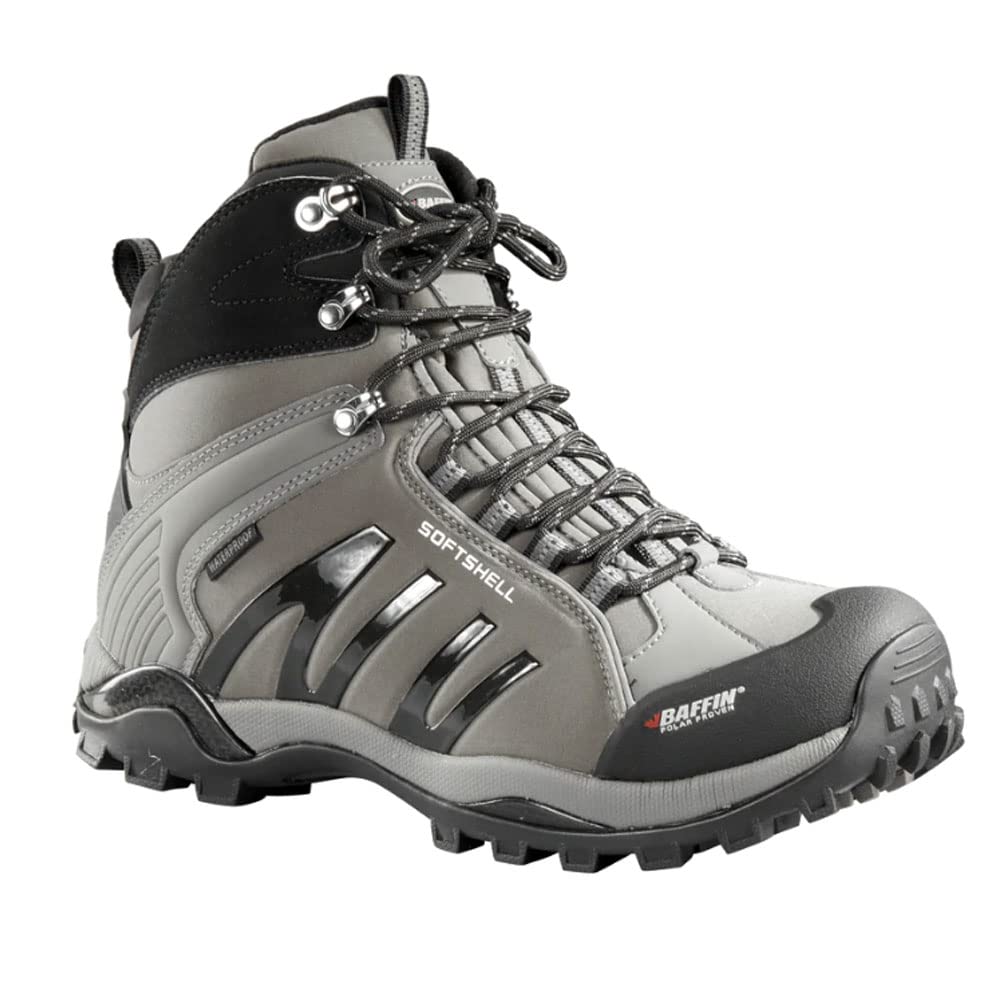
Engineered specifically for snowshoe bindings with a tendon guard, ledge, and lightweight build.
This is the only boot on the list designed explicitly with snowshoe compatibility in mind — the tendon guard and ledge at the heel make binding attachment easy and secure, which is a huge convenience on the trail. The B-Tek Heat insulation uses a 4-channel hollow-fibre design for warmth across a broad temperature range, and the Polar Rubber outsole boost grip in cold conditions.
Warmth is the most-praised aspect, with one owner confirming flawless performance at -15°C in Greenland with two sock layers. The boot is remarkably light for its warmth — one owner called them “feather light” — and the speed-lace system makes them quick to secure. The fit runs small, so sizing up is recommended.
The durability picture is mixed: most owners are happy, but a few report seam and sole separation after months of heavy use, and one owner found the insulation saturated after multi-day winter camping. This is a day-hike and snowshoe boot, not a multi-day expedition boot.
Built for the sport: tested by Baffin ambassadors in Arctic and Antarctic marathons, and owners confirm the traction on icy surfaces with no slips.
Pick this if: snowshoeing is your primary winter activity and you want a boot that integrates perfectly with bindings.
Reconsider if: you plan multi-day winter camping — some owners found the insulation struggles with overnight moisture.
11. Baffin Men’s Control Max Snow Boot
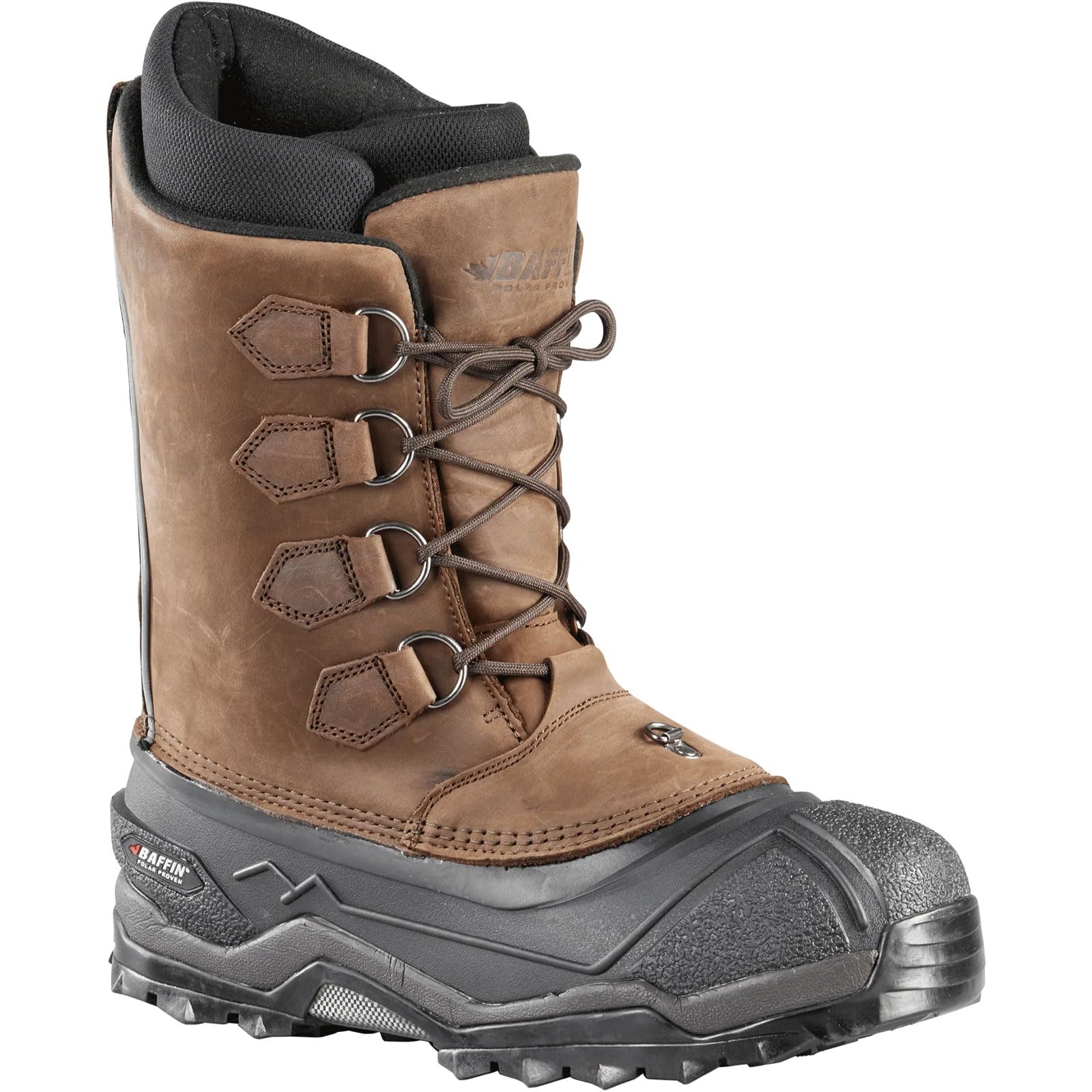
An Arctic-rated boot that feels like walking on pillows while holding -16°F for hours.
This is the premium cold-weather specialist, rated for Arctic conditions and praised by owners as among the best winter boots they’ve ever owned. The removable insulation system lets you dial in warmth, and the full-grain insulated leather upper with a nylon locking snow collar keeps snow out even in deep powder. Owners describe the comfort as “walking on pillows,” with one confirming they held -16°F for hours with never-cold feet.
Quality and warmth are the two most-praised aspects, with consistent feedback about a well-made, serious boot. The fit runs snug, so ordering a half size up is the standard advice — one owner with an 11 1/8-inch foot found a size 12 still snug but workable. The trade-off is bulk: this is an overkill boot for mild winters or casual city walking, and the thick calf insulation makes pulling pants over the top a bit of a workout.
Compared to the Rocky Blizzard Stalker, the Control Max offers a removable liner and a taller, more protective build, making it the better choice for extreme cold and extended outdoor exposure. One owner called it “the best PACs in 50 years of hunting.”
Serious Cold Protection
- Arctic-rated with removable multi-layer insulation
- Held -16°F for hours with warm feet
- Full-grain leather upper with locking snow collar
The Hefty Side
- Bulky and overkill for mild or suburban use
- Runs snug — order a half size up
- Thick calf makes it hard to pull pants over
Choose this if: you face extreme winter conditions — snowmobiling, ice fishing, or long cold-weather hunts — and need guaranteed warmth.
Pass if: your winter is mild or you want a lighter boot for active snowshoeing.
Understanding the Specs
Insulation Weight (Grams)
The number before “g” tells you how much cold the boot can hold off. Higher numbers mean more warmth: 100g is for mild active days, 400g handles single-digit temps, and 800g to 1200g is for extreme cold. The trade-off is weight and bulk — higher insulation means a heavier, clunkier boot.
Waterproof Membranes
Names like KEEN.Dry, B-DRY, or Gore-Tex refer to a thin layer inside the boot that blocks water from getting in while letting sweat escape. This “breathable waterproofing” is what keeps your feet dry during active snowshoeing, where your feet sweat even in freezing temps.
FAQ
What insulation weight do I need for snowshoeing?
Can I use any winter boot with snowshoe bindings?
How much should I size up for thick winter socks?
What does waterproof mean vs water-resistant?
How long do insulated winter boots last?
Are taller boots better for deep snow snowshoeing?
What makes a boot good for icy trails?
How do I care for my winter snowshoeing boots?
Final Thoughts: The Verdict
Across the board, the winter snowshoeing boots winner is the KEEN Revel III because it balances warmth, waterproofing, and out-of-the-box comfort for the widest range of winter activities. If you want a boot specifically designed for snowshoe bindings, grab the Baffin ZONE. And for extreme cold conditions, the ROCKY Blizzard Stalker is the one to reach for.
How We Picked
We do not accept paid placement. Every pick is matched to a real buyer and a real use-case; we do not hands-on test units.
Sources & Methodology
Specifications: manufacturer listings and product documentation. Review insights: verified customer reviews, as of August 2026. Pricing: not shown on this page (it changes often); check the current price via the retailer link.
As an Amazon Associate, Calories Fit earns from qualifying purchases. This does not affect which products we feature.