
Our readers keep the lights on and the coffee maker working hard! As an Amazon Associate, I earn from qualifying purchases.
Specs are compiled from manufacturer listings and verified buyer reviews and can change over time — please confirm the key details on the product page before buying.
Cold hands are the fastest way to end a winter ride early, and the fix is a glove that seals out wind without turning your fingers into stiff clubs. The real challenge is keeping dexterity so you can still feather the brakes and click shifters. This guide breaks down the winter mountain biking gloves that hold up on cold descents, with honest notes on sizing and warmth limits.
I’m Mohammad — the founder and writer behind Calories Fit. This guide is built by comparing the manufacturers’ published specifications and the patterns across verified customer reviews, so you get each pick’s real strengths and trade-offs instead of marketing spin.
You’ll learn which insulation levels fit your local winter, how to read palm padding, and why sizing up is the most common fix for a bad glove. Here is the breakdown of the best winter mountain biking gloves for keeping your hands warm and in control.
Our Picks at a Glance


How To Choose The Best Winter Mountain Biking Gloves
Before you buy, ask yourself: what temperatures do you actually ride in? A glove that feels great on a 40°F commute will leave your fingers numb on a 20°F trail, and a bulky lobster claw (a glove with two finger compartments for extra warmth) is overkill on a mild autumn day. Match the insulation to your coldest regular ride, not the extremes you imagine.
Windproof vs. Insulated
The number one mistake is buying thick gloves that let wind cut right through. A windproof shell traps the heat your body generates, which is why a thin windproof glove can feel warmer than a bulky fleece one. Look for a glove that blocks drafts at the cuff too — an elasticated or hook-and-loop wrist seals the gap where cold air sneaks in.
Palm Padding and Grip
Long descents and rough terrain send vibration into your palms, causing numbness and fatigue. Gel padding like 4mm DoctorGel or 6mm silicone absorbs shock and keeps blood flowing to your fingers. A silicone print on the palm stops your hand from slipping when you squeeze the brakes hard.
Quick Comparison
| Model | Best For | Insulation | Palm Padding | Waterproofing | Amazon |
|---|---|---|---|---|---|
| 100% BRISKER★ Best Overall | Cold-weather trail grip | Lightly insulated soft-shell | Single-layer Clarion | Water-resistant | Amazon |
| INBIKEBest Value | Windproof value | Fleece lining | 3-piece gel and EVA | Waterproof | Amazon |
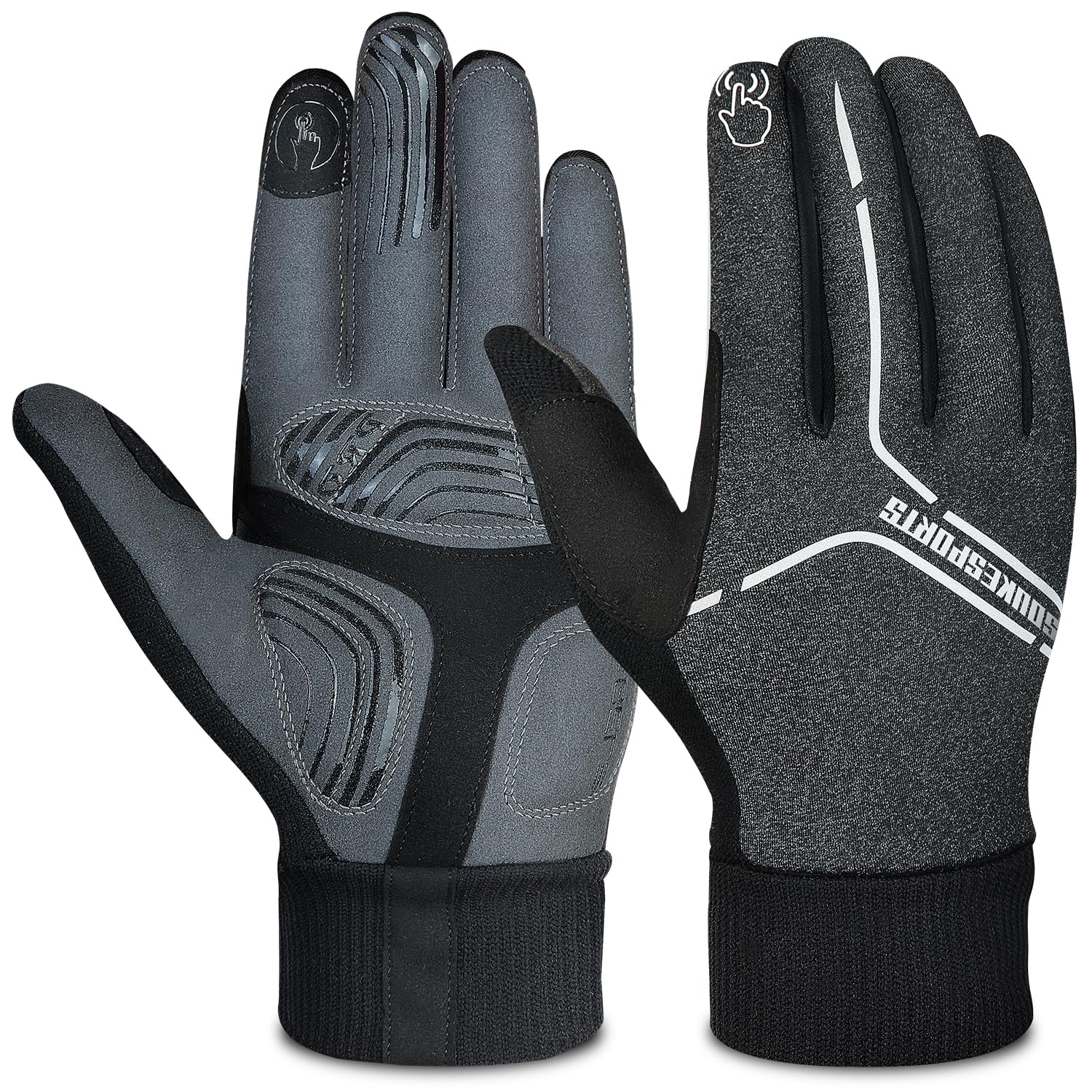
| Souke SportsCommuter Pick | Moderate cold commutes | Fleece lining | 5mm foam | Water-resistant | Amazon |
| ROCKBROS | All-around winter wear | Thermal cotton lining | 6mm gel pad | Windproof | Amazon |
| GripGrab Ride Windproof | Precise bar feel | Thermal fleece | 4mm DoctorGel | Windproof | Amazon |
| GripGrab Waterproof Knitted | Rainy, muddy rides | Knitted thermal layer | Gripper print | Waterproof membrane | Amazon |
| PEARL IZUMI AmFIB Lobster | Deep winter dexterity | 170g PrimaLoft Gold | 3D shaped gel pad | Windproof | Amazon |
In-Depth Reviews
1. 100% BRISKER Cold Weather Gloves
Our pick — over 4.5★ from 750+ verified ratings; the strongest balance of quality and price.
The trail-tested all-rounder that shrugs off wind without turning your hands into stiff clubs.
This is the glove that balances warmth and control so well it works for most of the riding year. The lightly insulated soft-shell top hand fights off colder temps, while the single-layer Clarion palm keeps a direct, comfortable feel on the bars. An adjustable TPR (a firm, molded plastic) wrist closure with hook-and-loop backing locks the fit so cold air can’t creep down your sleeve.
The fit is the one thing to get right — buyers report it runs small, with some saying to size up one or even two sizes for the snug, no-slack fit that makes it ride so well. The warmth range is broad but not arctic: owners call it genuinely “good to 18°F (cold but not freezing),” and note it’s wind-resistant and water-resistant rather than fully waterproof. The touchscreen thread in the fingers works, which saves you from bare-handing your phone at a trailhead.
What wins people over is the combination of a grippy silicone palm and a fit that stays put — no bunching, no flapping material. It’s the pick that disappears on your hands and just lets you ride, which is exactly what you want from a winter glove.
What Riders Rave About
- Grippy silicone palm keeps a secure hold on the bars
- Good to 18°F when you size correctly
- Touchscreen fingertips that actually work
- Adjustable TPR wrist closure seals out drafts
Fair Warning
- Runs small — plan to size up one or two sizes
- Water-resistant, not waterproof, in heavy rain
Your best all-rounder: grab these for cold-but-not-brutal trail days where you need to feel the bars.
Think twice if: you ride through deep-winter subzero stretches — this is a 7/8-of-the-year glove, not an arctic shell.
2. INBIKE Winter Cycling Gloves
The windproof fleece-lined workhorse that gives premium protection without the premium ticket.
These gloves nail the basics of winter riding: a windproof composite fabric blocks cold air while a fleece interior locks in warmth. Three pieces of gel and EVA (a firm foam) padding sit in the palm to absorb shock, and a lengthened wrist band with a hook-and-loop fastener seals the gap against drafts. A reflective stripe on the back helps cars see your hand signals on dark winter commutes.
Buyers describe them as exactly what you want from a rider’s glove: “Warm, windproof, well padded, snug (but not too snug), finger length just right.” The gel padding earns consistent praise for soaking up vibration on rough trails. The honest limit is the temperature range — they shine from roughly 32°F up, but owners mention fingertips getting cold below freezing, making them a mild-to-moderate winter glove rather than a deep-cold specialist.
For the money, you get a lot of function: touchscreen fingertips, real windproofing, and palm protection that rivals gloves costing more. The trade-off is the fit, which runs snug and has little room for liner layers underneath.
Best budget shield: these deliver windproofing, palm padding, and warmth for chilly but not extreme rides.
The honest catch: below about 32°F, you’ll want liner gloves or a heavier option.
3. Souke Sports Winter Cycling Gloves
The flexible all-rounder for 5-to-10-mile commutes where bulk is the enemy.
If your winter rides are short and brisk rather than epic and arctic, this glove is built for you. The water-resistant outer shell has a fleece lining that traps warmth without adding bulk, and the extended elasticated cuff tucks under your jacket sleeve to stop drafts. Riders with very large hands report it fits well, and the thin profile keeps your fingers nimble on shifters.
The 5mm foam padding in the microfiber palm adds abrasion resistance and cuts impact shock on rough terrain, while anti-skid silicone lines on the palm keep your grip locked when you brake hard. A thoughtful micro-fibre thumb doubles as a nose wipe for glasses and sweat. Customers note it’s reliably warm down to about 40°F, with one rider comfortable at 28°F in a snowstorm, though another found it not warm enough below 60°F — a reminder that personal circulation changes everything.
The water resistance has a specific limit: the seams and cuffs aren’t waterproof, so heavy rain will leak in. For light snow and drizzle, it’s more than enough for a commute to the trailhead.
Why Commuters Love It
- Thin and flexible — shifter and brake feel stay precise
- Water-resistant shell handles light snow and drizzle
- Extended cuff tucks under jacket sleeves to block drafts
- Anti-slip silicone lines keep a secure bar grip
The Limit
- Seams and cuffs are not waterproof in heavy rain
- Not warm enough for truly cold days below ~40°F for some riders
Reach for these if: your winter rides are quick, cool, and need agility over arctic warmth.
Look elsewhere if: you face deep-freeze mornings and need serious sub-30°F insulation.
4. ROCKBROS Thermal Gel Pad Gloves
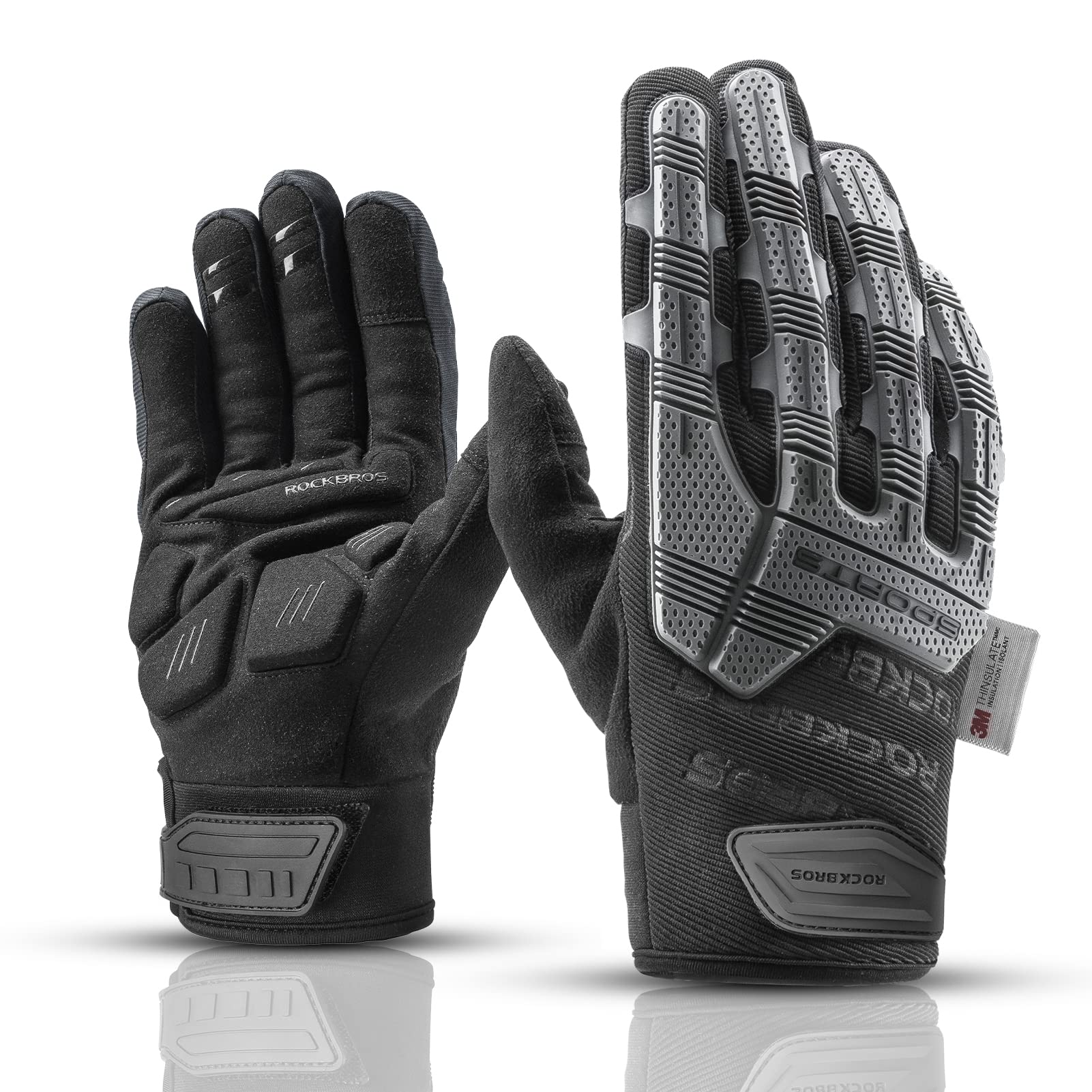
The insulated hybrid that jumped from the bars to skiing and sailing without missing a beat.
You will grab these gloves for more than cycling. The 6mm gel pad in the palm is thickened silicone that absorbs shock and prevents hand numbness on long, rough rides — and it cushions your grip just as well when you hold a ski pole or a sail sheet. The thermal cotton lining traps heat while staying lighter than ordinary fabrics, and the Velcro wrist keeps the fit secure so they do not slip off mid-ride.
The back of the hand uses a 3D printing flocking process with a one-piece rubber mold, which reviewers point out bends freely after wearing without feeling jerky or stiff. The touchscreen index finger and thumb let you operate your phone without pulling a glove off, and the skin-friendly terry cloth thumb is there for wiping sweat. One rider bought these specifically for cold MTB hands and now wears them for “sailing, snow skiing, running, hiking, walking.”
This is a thick, warm glove, and that’s the trade-off. A few owners call it too bulky and too hot for aggressive mountain biking — it’s a warmth-first design, not a precision instrument. Sizing also runs tricky, so check the Asia-to-US conversion carefully.
Warmth-first all-rounder: ideal when your hands run cold and you want one glove for many winter activities.
Who should pass: riders wanting maximum bar feel and minimal bulk on fast, technical trails.
5. GripGrab Ride Windproof Gloves

The close-fitting performer that stops the wind dead while keeping bar feel razor sharp.
Here’s a glove that proves thin can still be warm. It’s 100% windproof, which is the single biggest factor in cold hands — the wind can’t strip away your body heat. Strategically placed 4mm DoctorGel padding sits exactly where you need it to prevent numbing and pain on long rides, and the tight, performance fit means no excess material flopping around your palms.
The elongated cuff closes the gap between your jersey and the glove, and a soft fleece insert on the thumb works as a sweat-wiper for your nose and mouth. Buyers rate it surprisingly warm for its slim profile — good down to about 20°F for 20-minute commutes and comfortable into the 30s for a couple of hours on the trail. One rider took it to the mid-30s with zero frozen fingers.
Compared to the bulkier options on this list, this is the one that keeps you nimble. The flip side: it’s windproof, not a heavy insulator, so on truly frigid days you’ll want it inside pogies (handlebar mitts) or over a liner for extra warmth. Sizing up from your summer glove size is the common recommendation.
The Precision Factor
- 100% windproof shell stops cold air from stripping heat
- 4mm DoctorGel padding placed to prevent numb hands
- Snug performance fit keeps bar feel precise
- Fleece thumb doubles as a sweat-wiper
Know Before You Buy
- Windproof but not a heavy insulator on its own
- Close-fitting — plan to size up from summer gloves
Grab these for: cold, windy trail rides where you refuse to give up shifter feel.
Skip them if: you need standalone arctic warmth — they’re a windproof layer, not a puffy mitten.
6. GripGrab Waterproof Knitted Gloves

The wet-weather specialist that stays warm and grippy when the rain turns to misery.
When the trail turns to mud and the sky opens up, this is the glove you want on your hands. A wind- and waterproof membrane blocks rain, spray, and muck, while the knitted fabric adds a soft insulating layer that keeps windchill from freezing your fingers. The gripper print on the palm keeps you in control even on slick, wet bars, and the high-vis yellow color with reflective graphics makes your hand signals stand out in dark, rainy traffic.
Buyers confirm the waterproofing works in a light rain, keeping hands at a comfortable temperature across a 20°F to 50°F range. The tight fit is especially snug around the fingers, which helps insulation but means touchscreens won’t respond through the thick fabric — this is a glove for riding, not for scrolling. The seams are placed to avoid ripping along the sides of the fingers, a durability detail riders notice on other gloves.
The honest limit is heavy rain. A few shoppers say getting thoroughly soaked in a full downpour, so treat this as excellent for drizzle and spray rather than a monsoon shell. The trade-off for all that weather protection is a thicker feel that sacrifices some dexterity.
Your rainy-day layer: dependable warmth and grip in light rain, spray, and muddy conditions.
Fair warning: heavy downpours can overwhelm it, and the thickness means no touchscreen use.
7. PEARL IZUMI AmFIB Lobster Gloves

The lobster-claw heavyweight that brings mitten warmth while keeping shifters within reach.
This is the serious cold-weather tool for riders who refuse to hang up the bike when the mercury tanks. The clever design gives you the warmth of a mitten while leaving enough finger separation to operate shifters and brake levers. It’s powered by 170g PrimaLoft Gold insulation with Cross Core technology — a high-end fill that boost warmth per ounce without the bulk of traditional insulation.
Buyers confirm it handles serious winter, with one rider reporting comfort on a 34°F ride and another praising it for sub-freezing conditions from -8°C to 5°C. The 3D shaped gel pad in the palm provides bar comfort without adding bulk, and the Ax Suede Laredo synthetic leather palm gives durable grip. The touchscreen-compatible index finger and thumb are there for quick phone checks, though owners note it’s not always reliable through so much insulation.
The durability story is remarkable — one rider bought this as a replacement for a pair that lasted 16 years of Minnesota winters. The trade-offs are the steep price and a fit that runs very small, with some buyers needing to size up one or two sizes even at XL. The lack of a thumb terry cloth also means no built-in nose wipe, a small miss on an otherwise excellent design.
The Deep-Cold Winner
- 170g PrimaLoft Gold delivers serious warmth with minimal bulk
- Lobster design keeps shifter dexterity
- 3D gel pad adds bar comfort without bulk
- Built to last years of hard winter riding
Weigh the Cost
- Premium price tag for the premium insulation
- Runs very small — size up one or two sizes
- No thumb terry cloth for wiping sweat or nose
Splurge on these for: deep-winter riding in the teens and single digits where nothing else keeps your fingers alive.
Hold off if: your winters are mild — this is more glove (and more cost) than a 40°F commute needs.
Understanding the Specs
Windproof vs. Waterproof
These two words change which glove you should buy. Windproof means the fabric blocks cold air from cutting through and stealing your body heat — it’s the most important feature for dry, cold riding. Waterproof adds a membrane that also stops rain and spray, but it usually makes the glove thicker and less breathable, so your hands may sweat. Choose windproof for dry cold, waterproof for wet cold.
Insulation Weight
Insulation is measured in grams (like 170g PrimaLoft Gold in the PEARL IZUMI above). Heavier grams mean more warmth but more bulk, which reduces finger dexterity for shifting and braking. Lighter gloves with fleece linings (like the INBIKE) are nimble but top out in mild cold. Match the insulation weight to your coldest regular ride — not the one extreme cold snap you imagine.
Palm Padding
Palm padding absorbs trail vibration that causes numbness and fatigue. Common specs you’ll see are 4mm DoctorGel (a gel pad placed strategically for shock absorption) or 6mm gel and EVA (a firm foam) pads. More padding means more comfort on rough terrain but less bar feel. A silicone or gripper print on the palm also stops your hand from slipping when you brake hard.
Touchscreen Fingertips
Most winter gloves add a conductive thread in the index finger and thumb so you can use your phone without taking them off. The reality: this works well on thin gloves and gets unreliable on heavily insulated ones. If navigating with your phone mid-ride matters, pick a lighter glove; if warmth is everything, don’t count on the screen working.
FAQ
Do winter mountain biking gloves run small?
What temperature range should winter biking gloves handle?
What is the difference between windproof and waterproof gloves?
What is a lobster-style cycling glove?
How much palm padding do I need for mountain biking?
Can I use my phone with winter biking gloves on?
Are waterproof cycling gloves worth the extra cost?
How do I keep my hands warm in very cold weather?
Final Thoughts: The Verdict
Most riders will be happiest with the winter mountain biking gloves from 100% BRISKER, because they balance warmth, grip, and a functional touchscreen at a price that suits everyday trail riding. If your winters bring rain and mud, the GripGrab Ride Waterproof keeps hands dry without the sweat. And if you ride through deep, single-digit cold, the PEARL IZUMI AmFIB Lobster is the warmest, most durable option on this list — just budget for it and size up.
How We Picked
We do not accept paid placement. Every pick is matched to a real buyer and a real use-case; we do not hands-on test units.
Sources & Methodology
Specifications: manufacturer listings and product documentation. Review insights: verified customer reviews, as of August 2026. Pricing: not shown on this page (it changes often); check the current price via the retailer link.
As an Amazon Associate, Calories Fit earns from qualifying purchases. This does not affect which products we feature.